
The Divine Play of Colors 2026 Dallas, inspired by Rang Avadhoot Maharaj’s eternal devotion and bliss.
The festival of colors holds a special place in the heart of Sanatan Dharma. While Holi celebrates the victory of good over evil, Ranga Panchami, celebrated five days later, as Rang Panchmi holds special spiritual importance in relation to Rang Avadhoot Maharaj because the very word “Rang” signifies divine color, bliss, and total immersion in devotion, which was the essence of his teachings.
Rang Avadhoot Maharaj, a great saint of Gujarat and an ardent devotee of Dattatreya, taught that true spiritual life means being permanently colored in the love of God and the grace of the Guru. Celebrated on the fifth day after Holi, Rang Panchmi symbolizes not merely the outer play of colors but the inner transformation of the soul through bhakti, purity, and surrender. At Nareshwar, where he lived and guided countless devotees, this day is observed with devotional singing, chanting, and offering of gulal, representing the coloring of the heart with faith and divine joy. For his followers, Rang Panchmi is a reminder to wash away ego, negativity, and worldly attachments and instead absorb the eternal color of devotion, unity, and spiritual bliss that Rang Avadhoot Maharaj embodied and preached throughout his life.
Radha Krishna Temple of Dallas Invites the community to experience the spiritual essence of Shri Avdhoot Maharaj during Ranga Panchami 2026 in an atmosphere of devotion and community harmony
As we prepare to shower each other with colors, we also take this opportunity to reflect on the life of a great saint who himself lived immersed in the colors of devotion: Shri Rang Avadhoot Maharaj. His life, teachings, and literary contributions offer profound insights that beautifully complement the path of Bhakti Yoga taught at the Radha Krishna Temple.
The Divine Incarnation: Who Was Shri Rang Avadhoot Maharaj?
From Pandurang Valame to Rang Avadhoot: A Journey of Sacrifice
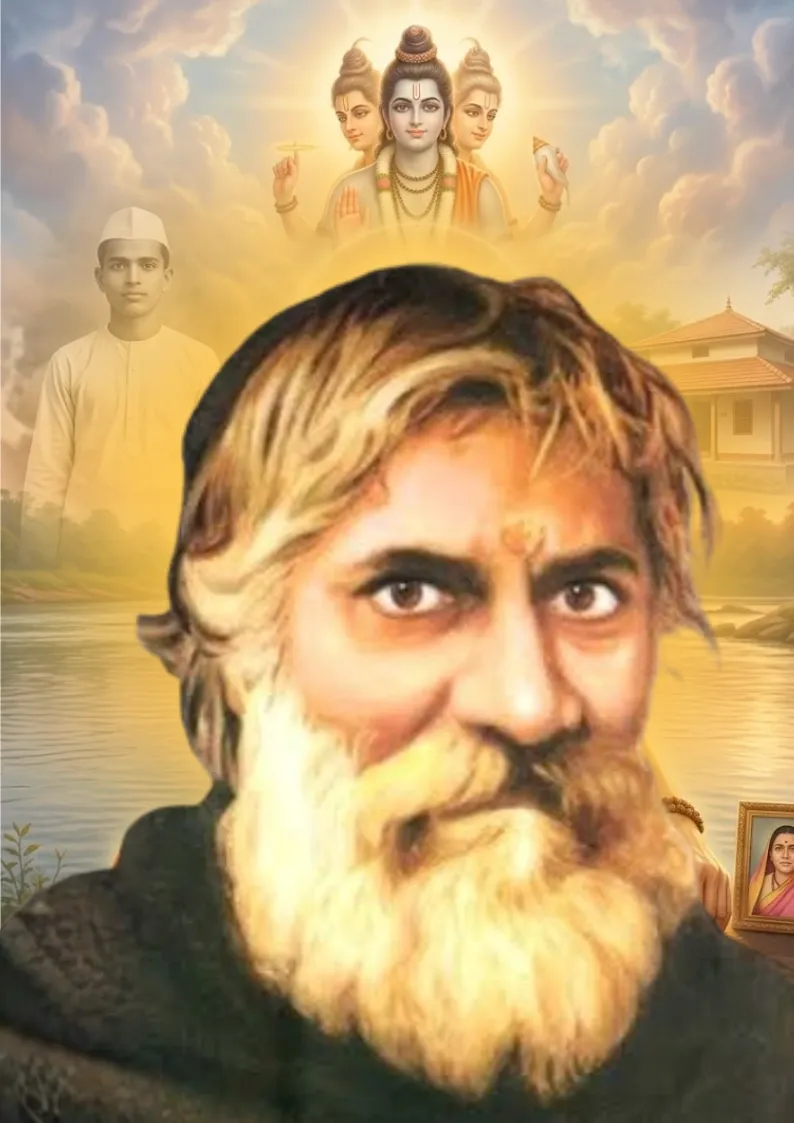
Shri Rang Avadhoot Maharaj, born Pandurang Vitthalapant Valame on 21 November 1898 in Godhra, Gujarat, was a mystic saint-poet belonging to the Datta Sampradaya (Gurucharita tradition of Lord Dattatreya) . His journey from a freedom fighter to a spiritual ascetic is a testament to the transformative power of divine calling.
Born into a Marathi family, young Pandurang lost his father at the tender age of four and was raised by his mother, Rukmini . Despite these early challenges, he excelled academically, matriculating in 1917 and pursuing higher education at Gujarat College, Ahmedabad, and later at Baroda College .
The call of the nation proved stronger than academic pursuits. Inspired by Mahatma Gandhi, Pandurang joined the Non-Cooperation Movement in 1920, postponing his studies to serve the cause of India's freedom. He became one of the first graduates of Gujarat Vidyapith in 1921 and briefly worked as a Sanskrit teacher . However, his spiritual inclination, present since childhood, gradually intensified. In 1922, he took a vow of celibacy, and by December 1925, he had renounced worldly life entirely, moving to the banks of the sacred Narmada River at Nareshwar .
Guru's Grace: The Bond with Vasudevanand Saraswati (Tembe Swami)
At the age of seven, Pandurang had his first meeting with his spiritual master, Vasudevanand Saraswati (popularly known as Tembe Swami), a meeting that would shape his entire spiritual trajectory . This bond of Guru-disciple became the cornerstone of his life and teachings.
Rang Avadhoot's total surrender to his Guru is beautifully encapsulated in his famous slogan: "Guru Kare te kharu" —"Whatever the Guru does is right." This wasn't blind faith but the highest expression of spiritual wisdom, recognizing that the Guru's guidance, even when incomprehensible to the limited mind, always serves our ultimate good . This principle became a guiding light for countless followers navigating life’s complexities
In that same spirit, we invite you to be part of the Holi Mela in Dallas, celebrating together in colors, devotion, and joyful unity. 🌈✨
Nareshwar and Unwavering Devotion to Lord Dattatreya
The Spiritual Abode on the Narmada
Nareshwar, located on the banks of the holy Narmada River, became the epicenter of Rang Avadhoot Maharaj's spiritual mission. Here, he established his hermitage, Dattakutir, in 1931, which continues to serve as a pilgrimage site for thousands of devotees .
His austerities at Nareshwar were legendary. He recited his Guru's Shri Dattapurana 108 times and completed the sacred Narmada Parikrama—the 3,300 km circumambulation of the river—on foot twice, first in 108 days in 1927 and again in 1930 . Such was his spiritual stature that his followers revere him as an incarnation of Lord Dattatreya, the divine trinity of Brahma, Vishnu, and Shiva . His role in spreading the Datta-panth (path of Dattatreya) throughout Gujarat remains unparalleled .
Datta-Bavani and the Power of the Guru's Word
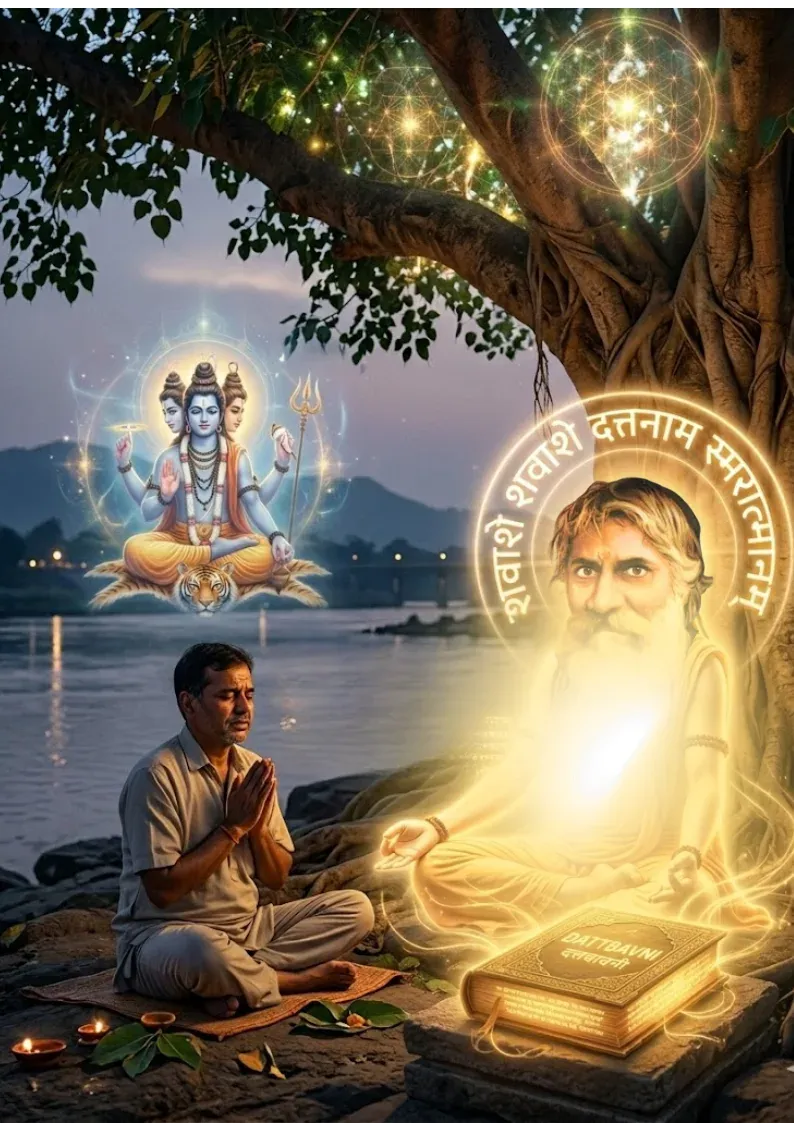
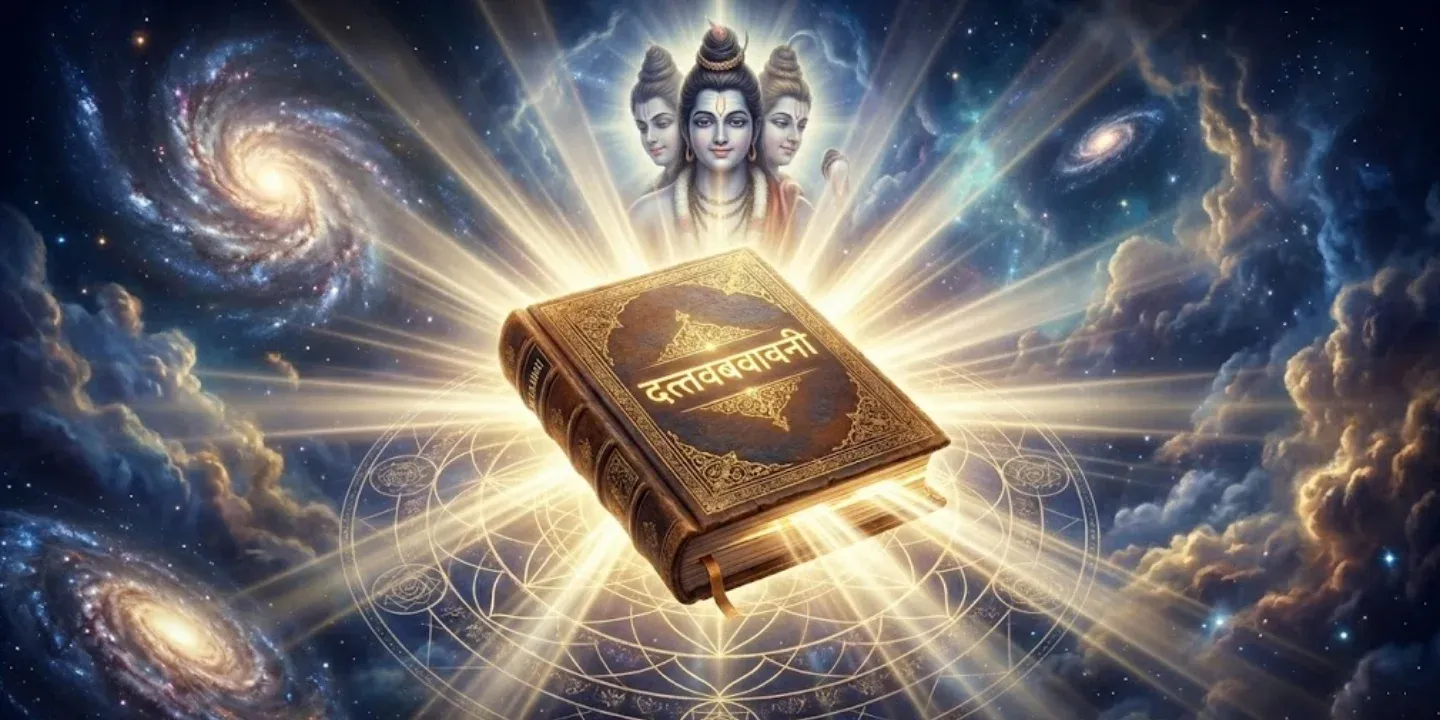
One of the most beautiful stories from Rang Avadhoot's life involves the spontaneous composition of the Datta-Bavani. When a distressed follower requested a mantra or stotra to relieve his wife's suffering, Rang Avadhoot, moved by compassion, composed this 52-verse hymn dedicated to Lord Dattatreya . What began as an immediate response to a devotee's need became one of the most cherished devotional compositions in Gujarat, helping millions find peace and relief from mental and physical distress .
His core teaching, encapsulated in the mantra "Shwashe shwashe Dattanam Smaratmanam" —"Oh Mind! Remember Lord Dattatreya with every breath"—offers a profoundly practical spiritual practice . By synchronizing breath with divine remembrance, one naturally keeps away negative thoughts and cultivates a peaceful, focused mind.
The Literary Legacy: Decoding 'Gurulilamrut', 'Rang Lilamrut', and Other Works
Shri Rang Avadhoot Maharaj was not only a realized saint but also a prolific writer, fluent in Gujarati, Hindi, Marathi, English, and Sanskrit. He authored over 45 works, mostly focused on spirituality and devotion .
Shri Gurulilamrut: An Ocean of Guru's Divine Pastimes
His magnum opus, Shri Gurulilamrut (1934–36), stands as a monumental work of devotional literature. Containing more than 19,005 couplets (dohras) divided into three volumes and 148 chapters, it chronicles the glory and divine pastimes of the Guru parampara . This text serves as a spiritual anchor for followers of the Datta tradition, offering endless inspiration through the lives of realized masters.
The Essence of 'Rang Lilamrut' and 'Datta Bavani' for the Modern Seeker
Beyond the Gurulilamrut, his literary output was vast and varied. Ranghridayam (1932) contains hymns (stotras) on knowledge and devotion, while Avadhooti Anand (1931) collects his devotional songs (bhajans) . His Sangeetgeeta, a verse translation of the Bhagavad Gita in Gujarati, made the profound teachings of the Gita accessible to the common person .
These texts, particularly the beloved Datta Bavani, serve as practical guides for modern spiritual seekers. They remind us that devotion is not an abstract concept but a living reality—accessible through chanting, reflection, and sincere practice. As one of his aphorisms declares, "Satyameva Param Tapah" —"Truth is the supreme penance" .
Divine Play: The One-to-One Interactions of Rang Avadhoot Maharaj
The Lesson of Innocence: The Quarter Coin Incident
Rang Avadhoot Maharaj was known for his strict vow never to accept money or gifts . Yet, a beautiful incident demonstrates that love transcends all rules. A poor, illiterate follower, unaware of this vow, approached him with an innocent heart and offered a single quarter coin. Seeing the pure devotion behind the offering, the saint accepted it, teaching his disciples the profound lesson of "Paraspar Devo Bhava" —"Treat each other as God" . The purity of the devotee's heart, not the value of the offering, was what mattered.
The Self-Respecting Saint: A Lesson in Dignity
Another incident reveals his emphasis on self-respect and dignity. When his mother once accepted vegetables offered as charity by neighbors, Rang Avadhoot gently but firmly refused to accept them. He taught her—and through her, all followers—the importance of self-reliance and dignity, even in the face of material hardship. True spirituality, he demonstrated, does not make one dependent on others but strengthens one's character and self-respect.
Living with "Turiya" Consciousness
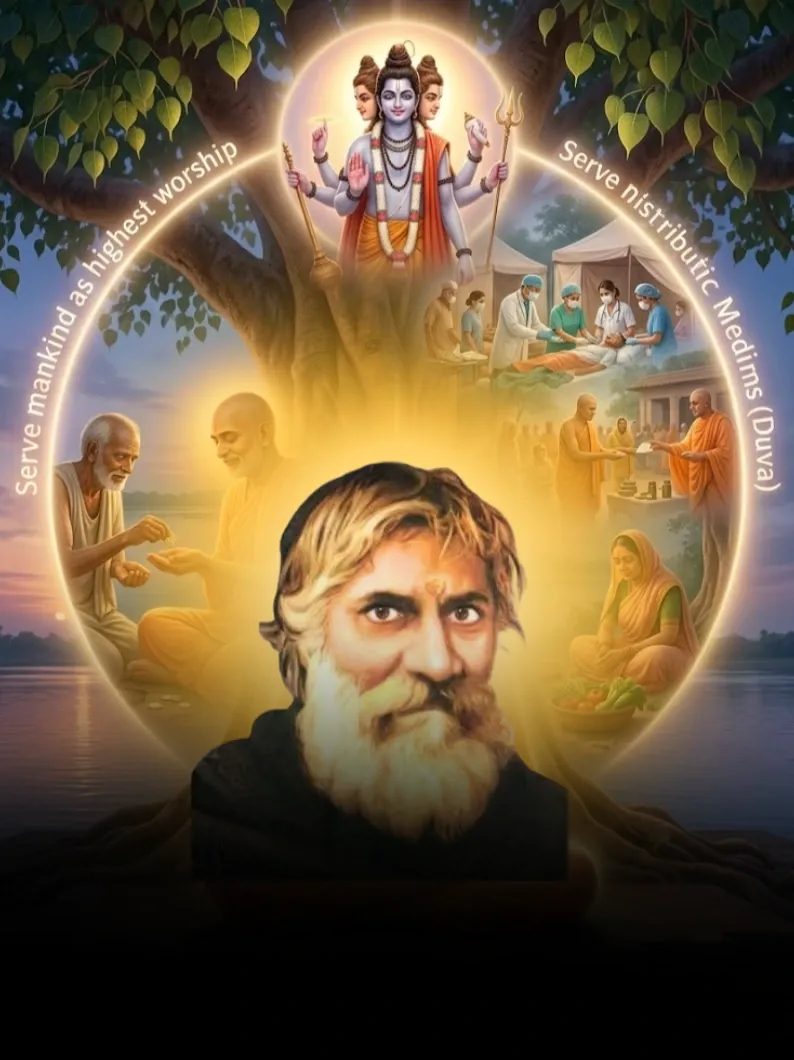
The title "Avadhoot" refers to one who is absorbed in the Supreme, living beyond worldly attachments and conventions. Rang Avadhoot Maharaj exemplified this state of Turiya consciousness—the transcendent fourth state beyond waking, dreaming, and deep sleep. He served humanity tirelessly—organizing surgical camps, providing Ayurvedic medicines (Dava), and offering spiritual blessings (Duva)—all while remaining anchored in supreme bliss . His life demonstrated that serving mankind is the highest form of worship.
Integrating Wisdom: Analyzing the Teachings of Swami Mukundananda
The Radha Krishna Temple of Dallas, founded by Swami Mukundananda, serves as a bridge between ancient Vedic wisdom and modern life . Swamiji, a senior disciple of Jagadguru Kripaluji Maharaj, brings a unique perspective—combining his IIT and IIM background with deep spiritual realization . Let us explore how his teachings illuminate the timeless wisdom of Shri Rang Avadhoot Maharaj.
Mastering the Mind: From "Swas ke Shwas" to "Mind Management"
Analysis: Rang Avadhoot Maharaj's simple yet profound instruction—"Shwashe shwashe Dattanam Smaratmanam" (remember God with every breath)—offers a practical technique for mental purity. By anchoring the mind in divine remembrance through the natural rhythm of breath, one automatically wards off negative or evil thoughts .
This beautifully aligns with Swami Mukundananda's core teaching on "Mind Management." In his bestselling book, The Science of Mind Management, Swamiji explains that the mind is the cause of both bondage and liberation . He charts the four different aspects of the human mind and lays down a clear path toward mastering it. Just as Rang Avadhoot controlled the mind by linking it with breath and divine name, Swamiji provides systematic techniques to control the vrittis (thought waves) and elevate the quality of our thoughts . The goal is the same: to transform the mind from a restless enemy into a peaceful friend.
The Science of Surrender: "Guru Kare te Kharu" and the Power of the Intellect
Analysis: At first glance, Rang Avadhoot's complete surrender to his Guru—"Guru Kare te kharu" —might appear to be blind faith. However, Swami Mukundananda's teachings reveal the profound wisdom behind such surrender.
Swamiji emphasizes the role of the intellect (buddhi) in discriminating between right and wrong, temporary and eternal . Surrendering to a bonafide Guru is actually the highest act of a discerning intellect. It is the intelligent recognition that the Guru, being established in truth, can guide us from darkness to light more effectively than our own limited mind. This is not blind faith but the intelligent application of our discriminatory power. As Swamiji explains, a trained intellect must control the whimsical mind, and accepting the guidance of a self-realized master is the most intelligent decision a seeker can make .
Elevating Desires: From "Datta Bavani" to the Mode of Goodness
Analysis: The Datta Bavani was composed specifically to relieve a devotee's distress—a powerful example of how devotional practices can alleviate mental and emotional suffering . This directly connects to Swami Mukundananda's detailed explanation of the three modes of material nature (gunas): Sattva (goodness), Rajas (passion), and Tamas (ignorance) .
Chanting, reading scriptures, and participating in devotional festivals like Ranga Panchami naturally elevate our consciousness from Tamas (ignorance, lethargy) and Rajas (restlessness, desire) to Sattva (purity, harmony). Sattva is the springboard for all spiritual progress—it calms the mind, sharpens the intellect, and makes us receptive to divine grace. Swamiji's teachings provide the theoretical framework for understanding why the Datta Bavani and similar practices have such profound transformative effects .
Seeing God in Others: "Paraspar Devo Bhava" and the Science of Attachment
Analysis: When Rang Avadhoot accepted the quarter coin from the innocent devotee, he saw not a poor man but God manifesting in that form ("Paraspar Devo Bhava") . This beautiful teaching finds practical application in Swami Mukundananda's guidance on purifying our "inner world."
Swamiji teaches that all our external relationships are reflections of our internal state. When our mind is filled with selfish attachments, we see others as objects for our gratification. But when the mind is purified through devotion and spiritual practice, we begin to see the divine in everyone . This is the essence of building a harmonious community (Satsang)—the very foundation of what the Radha Krishna Temple in Dallas embodies . Seeing God in others transforms all relationships into opportunities for love, service, and spiritual growth.
What a Modern Common Man Can Learn from Rang Avadhoot Maharaj
Stress Management Through Breath and Name
The modern professional juggles deadlines, meetings, and personal responsibilities—often at the cost of mental peace. Rang Avadhoot Maharaj's simple prescription of synchronizing breath with divine remembrance offers a scientifically sound method for stress reduction. Just a few minutes of mindful breathing combined with chanting can shift the nervous system from "fight or flight" to "rest and digest," bringing immediate calm and clarity .
The Art of Simple Living
In an age of consumerism, where happiness is mistakenly equated with accumulation, Rang Avadhoot's life of radical simplicity offers a powerful alternative. Possessing only essential items—a few clothes, his dand (staff), and paduka (wooden sandals)—he demonstrated that true contentment comes not from having more but from needing less . This minimalist approach creates space for what truly matters: inner peace, meaningful relationships, and spiritual growth.
Selfless Service (Seva) as a Path to Happiness
Rang Avadhoot Maharaj didn't just meditate in isolation—he actively served. From organizing surgical camps to providing relief for flood victims, his compassion took tangible form . His teaching, "Serve mankind as best as you can," offers an antidote to the modern epidemic of isolation and depression. When we step outside ourselves to serve others, we break the prison of ego and experience a joy that personal pursuits can never provide. Service (Seva) is not just charity—it is a spiritual practice that purifies the heart and expands our identity beyond the limited self.
Conclusion: Join the Celebration at Radha Krishna Temple This Ranga Panchami
As we prepare for Ranga Panchami 2026, we carry with us the colorful blessings of two great spiritual traditions. Shri Rang Avadhoot Maharaj, through his life of sacrifice, devotion, and service, showed us how to live every moment in divine consciousness. His teachings on breath, surrender, and seeing God in all beings offer timeless guidance for the modern seeker.
The Radha Krishna Temple of Dallas, under the visionary guidance of Swami Mukundananda, carries this legacy forward—making ancient wisdom accessible, relevant, and transformative for today's world. Just as Rang Avadhoot spread the colors of devotion in Gujarat, the Temple spreads these colors worldwide through its teachings, community programs, and festivals.
We warmly invite the entire Dallas community to join us for Ranga Panchami 2026. Come, play with colors, but more importantly, immerse yourself in the colorful philosophy of the saints. Experience the joy of Satsang, the peace of devotion, and the warmth of a community united in love for the divine.
May the blessings of Shri Rang Avadhoot Maharaj and the guiding wisdom of Swami Mukundananda fill your life with the vibrant colors of joy, peace, and devotion. As Swamiji often reminds us, true happiness lies not in external acquisitions but in awakening our inner connection with the Divine. We look forward to celebrating with you!
"Swashe shwashe Dattanam Smaratmanam" — Remember the Lord with every breath.
FAQs: Frequently Asked Questions
1. How does Rang Avadhoot's "Shwashe shwashe Dattanam" compare to modern mindfulness practices?
Both use breath awareness, but Rang Avadhoot's teaching adds divine remembrance—transforming mere attention into devotion. While secular mindfulness calms the mind, his method purifies consciousness by linking each breath with the eternal. Swami Mukundananda explains this as training the mind through the intellect, creating lasting inner transformation beyond temporary stress relief.
2. What makes the Datta-Bavani spiritually potent beyond its poetic beauty?
The Datta-Bavani wasn't composed intellectually—it was manifested spontaneously from a state of Turiya consciousness to relieve specific suffering. This makes it a shakta-pata (direct energy transmission) hymn. Each verse carries the saint's compassionate intention, creating a vibrational healing tool rather than mere literature.
3. Why did Rang Avadhoot accept the quarter coin despite his vow?
This reveals the hierarchy of spiritual laws: compassion transcends rules. The vow was for his discipline; accepting served the devotee's faith. Swami Mukundananda teaches that bhakti (devotion) operates beyond mechanical righteousness—pure intention sanctifies action, not vice versa.
4. How does "Turiya consciousness" manifest in daily life?
Turiya isn't just meditation—it's witnessing awareness during activity. Rang Avadhoot organized surgical camps while anchored in bliss, demonstrating that enlightenment enhances service rather than escaping it. This integrates karma yoga (selfless action) with jnana yoga (knowledge), a synthesis Swami Mukundananda emphasizes for modern seekers.
5. Can Guru surrender ("Guru Kare te Kharu") coexist with rational intellect?
Absolutely. Surrender begins where intellect ends—after exhaustive discrimination. Swami Mukundananda clarifies: the trained intellect chooses the Guru, then trusts that guidance. This isn't blind faith but trans-rational wisdom, like trusting a pilot after verifying credentials.
Simple Self-Implement CTA: Experience Ranga Panchami 2026 in Dallas
This March, step into the divine colors of devotion at the Radha Krishna Temple.
Three Simple Ways to Participate:
- Mark Your Calendar – Save the date for Ranga Panchami 2026. Visit the temple website for event timing and registration details.
- Begin the Practice – Start today with just 5 minutes of "Shwashe shwashe Dattanam"—breathe and remember the Divine with each breath. Experience the peace Rang Avadhoot taught.
- Bring Your Colors – Join us with family and friends. Play with gulal, chant with the community, and receive blessings.
Transform this festival into a spiritual milestone.
👉 Visit Radha Krishna Temple Dallas website for event details and registration.
"Serve mankind as best as you can." – Shri Rang Avadhoot Maharaj