Embracing the Divine Birth of Maryada Purushottam Shri Ram
As the vibrant spring season unfolds, the air becomes infused with spiritual energy, heralding the arrival of Chaitra Navratri and its grand culmination—Rama Navami. In 2026, this sacred festival falls on Thursday, March 26, marking the divine appearance of Lord Ram, the seventh avatar of Vishnu and the very embodiment of righteousness, virtue, and compassion .
For devotees seeking to align their hearts with the Supreme, Rama Navami is not merely a date on the calendar; it is a profound opportunity to immerse ourselves in the sweet pastimes of Bhagavan Shri Ram. As we prepare for this auspicious day, let us turn to the timeless wisdom of Swami Mukundananda, a revered spiritual leader and founder of JKYog, whose teachings illuminate the path of devotion and help us understand the deeper significance of this divine celebration.
The Auspicious Timings for Rama Navami 2026
Understanding the sacred timings for worship is essential for maximizing the spiritual benefits of this festival. According to the Vedic Panchang, the Navami Tithi (ninth day) of the Shukla Paksha in the Chaitra month holds the key to Lord Ram's appearance in this world.
Celebrate Rama Navami 2026 at Radha Krishna Temple, Dallas
Join the Radha Krishna Temple of Dallas for a sacred Rama Navami celebration on Thursday, March 26, 2026. Immerse yourself in divine vibrations through puja, Ramayana path, bhajans, kirtans, and prasadam in the temple's spiritually charged atmosphere.
As devotees share: “The kirtans, the beautifully decorated mandir, and the sense of community made me feel Lord Ram’s presence like never before.”
Registration is required. Reserve your place at radhakrishnatemple.net/ram-navami .
Whether attending in person or celebrating at home, may this day mark the installation of Shri Ram in the temple of your heart.
Jai Shri Ram!
Key Dates and Muhurat
For Rama Navami 2026, the celestial alignments create a powerful window for worship:
- Rama Navami Date: Thursday, March 26, 2026
- Navami Tithi Begins: March 26, 2026, at 11:48 AM
- Navami Tithi Ends: March 27, 2026, at 10:06 AM
Since Hindu festivals follow the Udaya Tithi (sunrise rule), the observance falls on March 26, when the Navami Tithi is present at sunrise .
The Sacred Janm Muhurat (Madhyahna Muhurat)
The most auspicious period for worship is the Madhyahna Muhurat, which corresponds to the exact time of Lord Ram's birth:
Madhyahna Muhurat: 11:13 AM to 1:41 PM IST
Duration: Approximately 2 hours and 28 minutes
This midday window is considered the most powerful time for performing puja, as it mirrors the celestial moment when the Sun reached its zenith at Lord Ram's divine birth. As Swami Mukundananda explains in his discourses, the Sun's peak position during Lord Ram's birth symbolizes the dispelling of darkness and the arrival of divine light into the world .
Additional Auspicious Timings
For devotees seeking to extend their spiritual practice throughout the day:
| Muhurat | Timing (IST) |
|---|---|
| Brahma Muhurat | 4:44 AM - 5:30 AM |
| Vijaya Muhurat | 2:20 PM - 3:19 PM |
| Godhuli Muhurat | 6:35 PM - 5:58 PM |
| Amrit Kala | 1:05 PM - 2:38 PM |
| Ravi Yoga | Entire Day |
The Profound Significance of Rama Navami: The Meaning of "Ram" – A Divine Revelation
Swami Mukundananda beautifully explains the deep significance contained within the name "Ram." The name comprises two sacred syllables: "Rā" and "ma" . "Rā" refers to the entire universe, while "ma" signifies its master or lord. Thus, "Ram" is none other than the Supreme Lord who is the master of all creation .
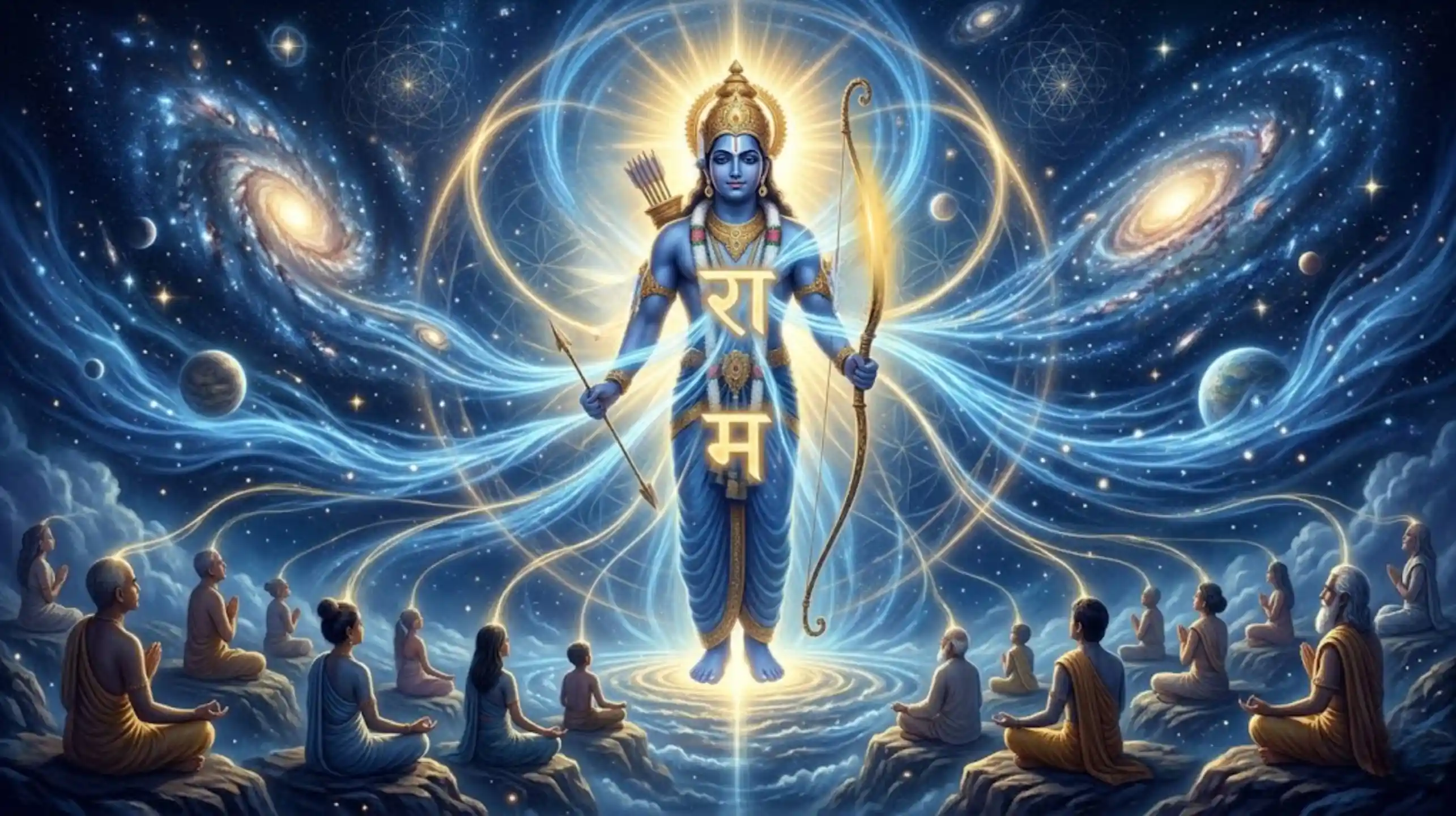
Maharishi Valmiki, the author of the Ramayana, describes Lord Ram as an ocean of bliss (ananda sagara). As souls are eternal fragments of the Supreme, we are all invariably drawn toward Him, just as rivers naturally flow to merge with the ocean and as objects are drawn by the force of gravity toward the earth. The true purpose and dharma of all living beings is to orient their consciousness toward God through loving devotion .
Why Does the Supreme Lord Descend?
Our Vedic scriptures describe God as ajanmā (one who does not take birth), sarvavyāpak (omnipresent), and agochara (beyond the reach of our senses). Yet, the same Supreme Brahman assumes human form as Ram or Krishna, engaging in human-like pastimes solely for the sake of His devotees .
Swami Mukundananda emphasizes a profound point: When God descends in human form, He becomes enveloped in the loving influence of His devotees, temporarily forgetting His own divinity. This divine play-this leela-allows devotees to develop a personal, loving relationship with the Supreme. As Swamiji notes, if God did not descend in this world, on what basis would souls engage in His devotion? How would we know what His form is like or what His names are?
The Purpose of Ram Avatar
According to the sages and the Puranas, whenever righteousness decreases and unrighteousness increases, the Lord assumes an earthly form to protect His devotees and re-establish dharma. The principal aim of the Ram Avatar was to annihilate the demonic king Ravana and his allies. However, Lord Ram's life served an even greater purpose: He set countless examples of righteous living—as an ideal son, a devoted husband, a loving brother, a mighty king, and a follower of dharma under all circumstances .
As Swami Mukundananda shares from the Ramcharitmanas, Tulsidas Ji beautifully captures the Lord's magnanimity:
राम एक तपस्या तिया तारि, नाम कोटि खला कुमति सुधारि
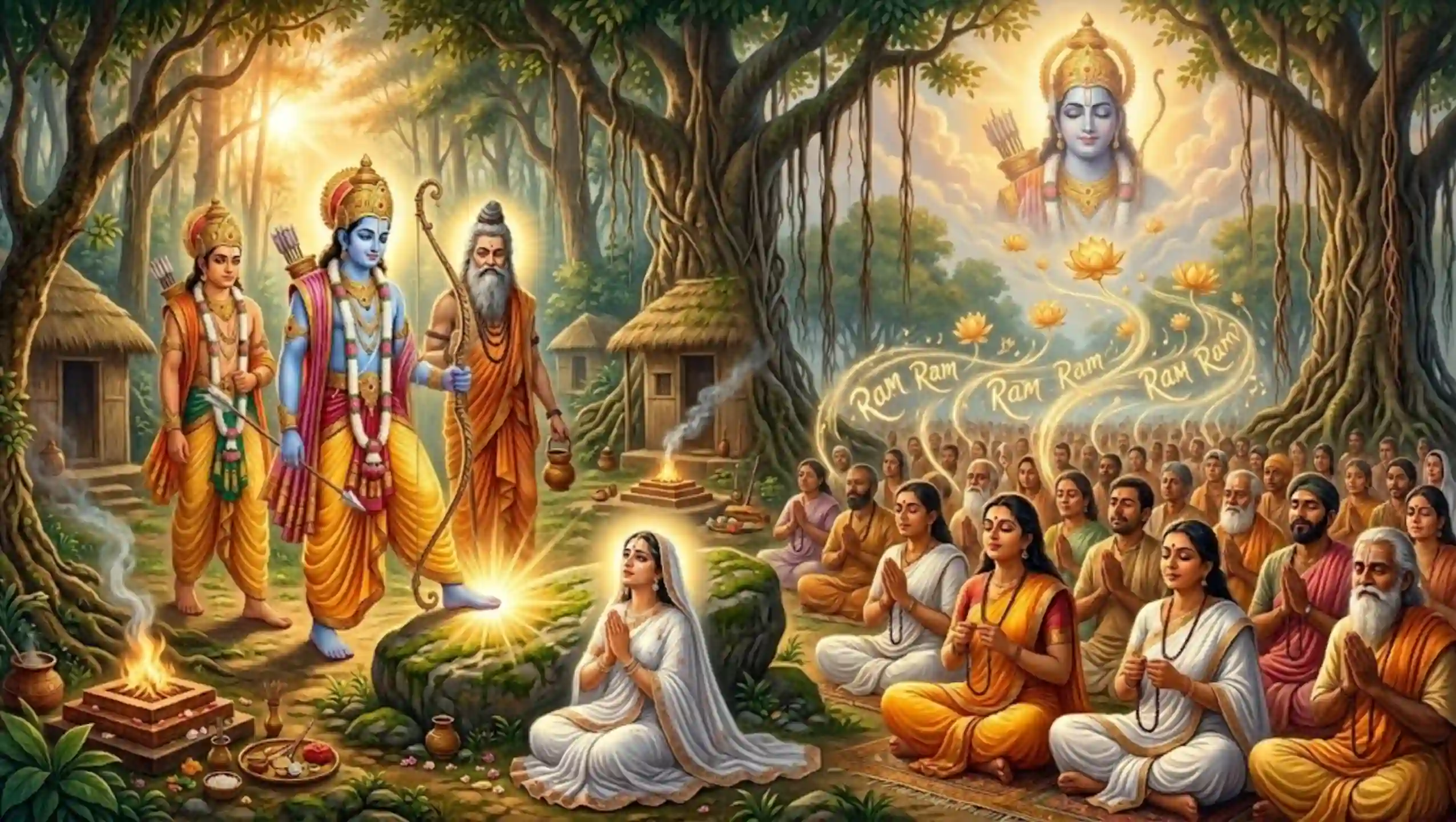
"In His Avatar period that spanned eleven thousand years, Lord Ram liberated only one Ahilya from a cursed stone body. But He left His Divine Name 'Ram' behind, and billions of fallen souls have saved themselves by taking His Name."
This verse reveals the boundless compassion of the Lord—He may have physically appeared for a limited time, but He eternally resides in His holy name, available to all who chant with devotion.
The Untold Story of Lord Ram's Divine Birth
The Sacred Yagya and Divine Kheer
Swami Mukundananda shares the beautiful narrative of Lord Ram's appearance. King Dasharatha of Ayodhya, though virtuous and noble, had grown old without an heir. Approaching Sage Vashishtha, he performed a powerful Yagya (fire sacrifice) to please the Sun God and beget children .
Upon successful completion of the Yagya, the Fire God appeared and handed King Dasharatha a pot of divine kheer. With great reverence, the king distributed this consecrated kheer evenly to his three queens: Kaushalya, Kaikeyi, and Sumitra. The conception of the princes followed shortly after—Lord Vishnu Himself entered the womb of Queen Kaushalya, while Lakshmana, Bharata, and Shatrughna also took birth as expansions of the divine .
The Auspicious Moment of Birth
As Swami Mukundananda relates, months passed, and the time for the divine birth approached. The entire city of Ayodhya rejoiced, and the Sarayu River flowed with unprecedented joy. When the Sun reached its peak in the noon sky, in that most auspicious moment, Queen Kaushalya gave birth to Lord Ram. Simultaneously, Kaikeyi gave birth to Bharata, and Sumitra gave birth to Lakshmana and Shatrughna .
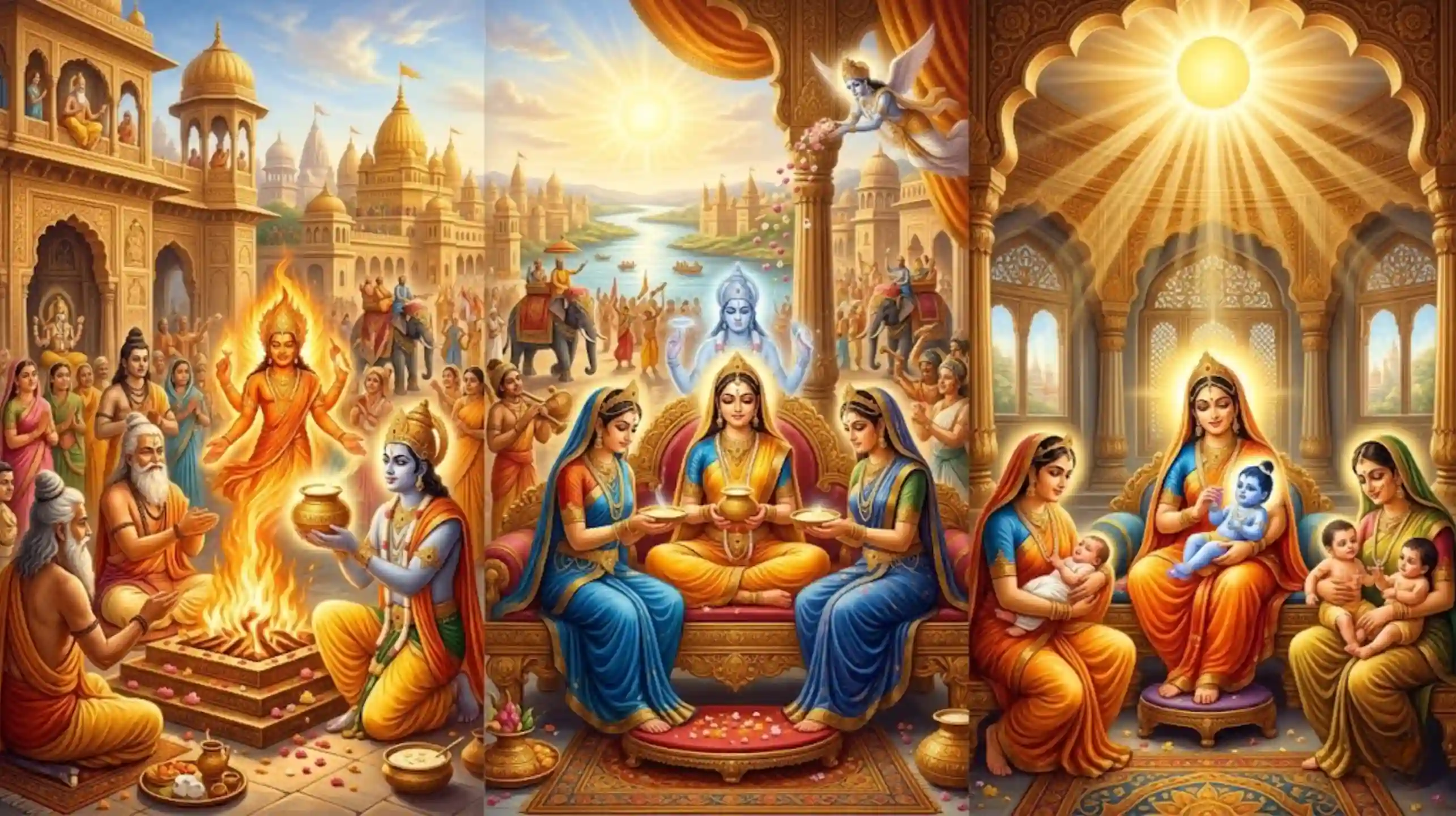
This midday birth is precisely why the Madhyahna Muhurat holds such significance in Rama Navami celebrations. The Sun at its zenith symbolizes the Lord's supreme position—the dispeller of darkness and the source of all spiritual light.
Rituals and Celebrations Guided by Devotion
The Power of Naam Sankirtan
In Kaliyug, the age of darkness and moral decline, the most accessible path to attaining the Divine is through chanting God's name. Swami Mukundananda often quotes the following verse to emphasize this point:
नहिं कलि करम न भगति बिबेकू । राम नाम अवलंबन एकू ।।
कालनेमि कलि कपट निधानू । नाम सुमति समरथ हनुमानू ।।
"Neither action, devotion, nor knowledge is effective in Kaliyuga; only the name of Ram is a refuge. Kaliyuga is like the demon Kalanemi, who is the storehouse of all tricks; meanwhile, the name of Ram is like Hanuman."
As Hanumanji defeated Kalanemi by taking Shri Ram's name, we too can overcome the wiles of Kaliyuga by chanting Ram's name with devotion.
Essential Puja Rituals
Based on traditional practices and Swami Mukundananda's teachings, here are the essential rituals for observing Rama Navami:
Morning Preparations
- Rise during Brahma Muhurat (4:44 AM - 5:30 AM) and take a purifying bath
- Clean and decorate the home altar with fresh flowers and rangoli
- Set up the Ram Darbar with idols or images of Lord Ram, Sita, Lakshmana, and Hanuman
The Main Puja (During Madhyahna Muhurat: 11:13 AM - 1:41 PM)
- Perform Abhishekam: Bathe the idol of Lord Ram with Panchamrit (a mixture of milk, curd, ghee, honey, and gangajal)
- Offer Bhog: Prepare and offer sattvic foods like fruits, sweets, and kheer
- Chant Sacred Mantras: Recite "Om Ramaya Namah" and verses from the Ramayana
- Ramayana Path: Read or listen to the Sundara Kand or the entire Ramayanam
- Ram Chalisa: Recite the forty verses praising Lord Ram's glories
Afternoon and Evening Celebrations
- Observe Fasting: Many devotees maintain a strict sattvic fast until after the puja
- Distribute Prasad: Share the blessed offerings with family, neighbors, and the needy
- Join Community Celebrations: Participate in kirtans, bhajans, and Ramlila enactments
Sattvic Foods for Fasting
Traditionally, Rama Navami fasting involves consuming pure, sattvic foods that promote peace and spiritual well-being:
- Fruits and Dry Fruits: Bananas, apples, mangoes, dates, almonds, and raisins
- Sabudana Khichdi: A light dish made with tapioca pearls, potatoes, and peanuts
- Singhara or Kuttu ki Poori: Flatbread made with water chestnut or buckwheat flour
- Dairy Products: Fresh curd, milk, and paneer
- Sweet Prasadam: Seviyan kheer, panjiri, or coconut ladoo
The Eternal Message of Lord Ram
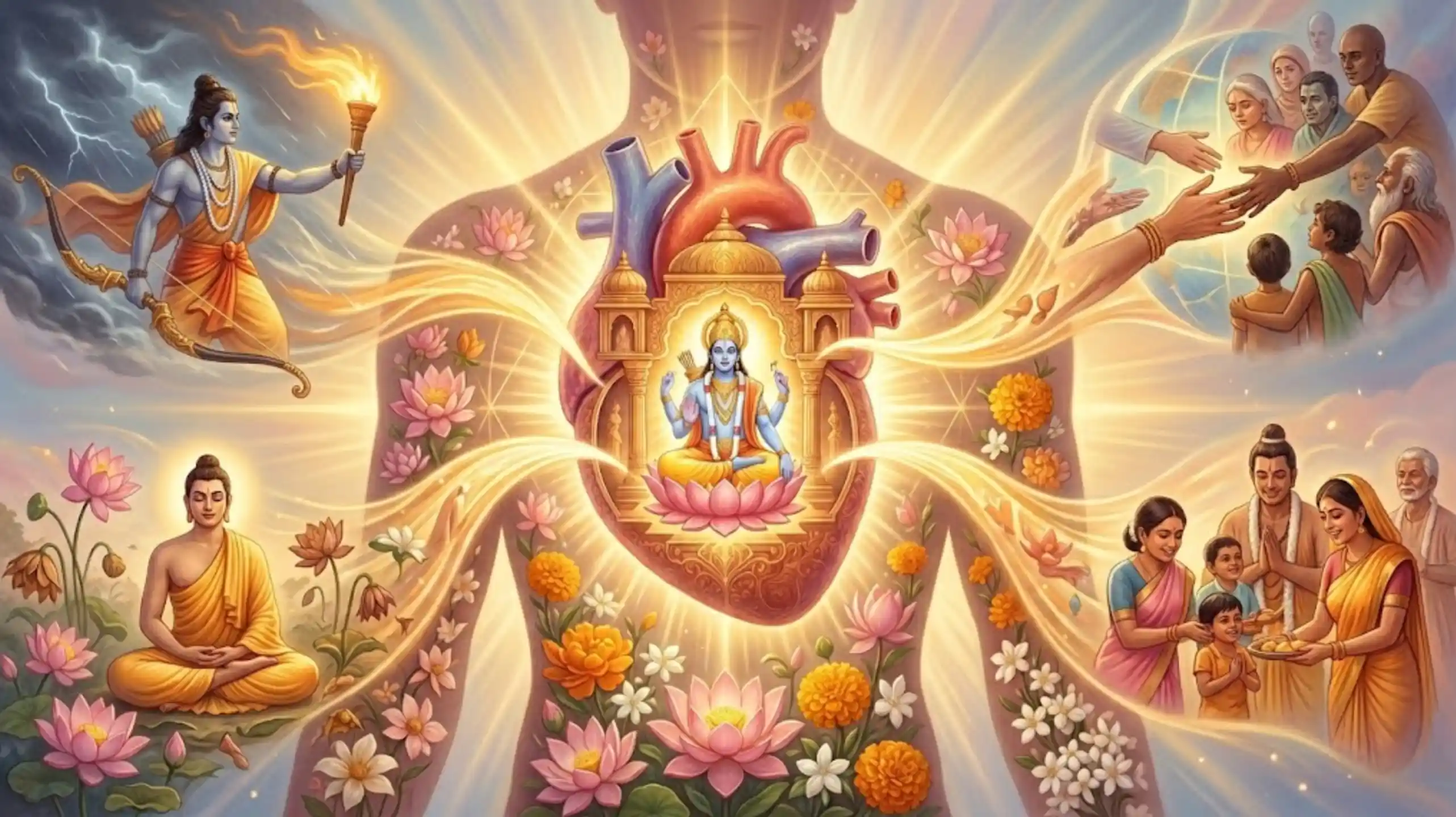
Installing Shri Ram in the Temple of Our Hearts
The ultimate purpose of Rama Navami celebration is not merely external ritual but internal transformation. As Swami Mukundananda beautifully states:
"May today be the day we install Shree Ram in the temple of our hearts to blossom with sublime virtues, character, and courage."
Lord Ram's life teaches us to:
- Uphold dharma even in the most challenging circumstances
- Treat all beings with compassion and respect
- Fulfill our duties toward family and society with dedication
- Maintain equanimity in both joy and sorrow
The Compassionate Grace of Mother Sita
Swami Mukundananda reminds us of the vital role of Mother Sita in our spiritual journey:
"Mother's position is 100 times important and that is the position of Sita in comparison to Ram. When we want Kripa (grace), she is far more compassionate than Ram. We should pray to Sita to bless us with Prem (divine love) so that we can serve her and the divine father."
As we celebrate the birth of Lord Ram, let us also invoke the blessings of Mother Sita, whose compassion bridges our human limitations with divine grace.
Conclusion: Making Our Lives Successful
As Swami Mukundananda emphasizes, the real celebration of Ram Navami entails immersing ourselves in contemplation of the Supreme Lord and His sweet pastimes. Such joyful devotion is the sovereign recipe for purifying our hearts and filling us with love for the Divine. It leads us from the darkness of ignorance to the light of wisdom and renders our human life a success .
This Rama Navami 2026, let us:
- Chant the holy name of Ram with devotion
- Contemplate His divine pastimes as narrated in the Ramayan
- Perform puja with sincerity during the auspicious Madhyahna Muhurat
- Serve others through charitable acts and community participation
- Install Shri Ram in our hearts by cultivating His sublime virtues
Frequently Asked Questions
Can I celebrate Rama Navami if I don't know all the rituals?
Absolutely. Swami Mukundananda teaches that God values the sincerity of your heart far more than the perfection of your ritual. Even chanting "Ram Ram" with pure love is more powerful than elaborate ceremonies performed without devotion. Begin with what you can—light a diya, offer a flower, and sit in contemplation for a few minutes. The Lord accepts the humble offering of a loving heart.
I cannot fast the entire day. Is my observance still valid?
Fasting is a tool to purify the mind and senses, not a rigid requirement. Swamiji explains that the essence of fasting is to reduce your identification with the body and increase your focus on God. If a full fast is difficult, you may:
- Consume fruits and milk (phalahari)
- Eat a single sattvic meal
- Simply abstain from tamasic foods like onion, garlic, and meat
What matters most is the intention behind your observance.
How can I involve my family in Rama Navami celebrations?
Swami Mukundananda emphasizes that children absorb spirituality through joyful engagement. Tell them stories from the Ramayana, sing bhajans together, let them help decorate the altar, or watch an animated Ramayana. When children associate devotion with joy and family connection, the seed of faith is naturally planted in their hearts.
What if I miss the Madhyahna Muhurat due to work or other commitments?
The auspicious timings are powerful but not restrictive. Swamiji reminds us that the Lord resides beyond time and space. If you cannot perform puja during Madhyahna, choose any time when you can sit peacefully with devotion. What you offer with love, He receives with equal grace. Evening hours after work are equally suitable for heartfelt worship.
Your Call to Action: Self-Implementation Practices
Swami Mukundananda Ji teaches that true spirituality is not mere intellectual understanding—it is practical application. This Rama Navami, go beyond reading and commit to these three transformative practices:
1. Chant with Sankalpa
Take a sankalpa (solemn vow) to chant the Mahamantra or "Ram Ram" for 15 minutes daily for the next 40 days. Set a fixed time—preferably during Brahma Muhurat—and let nothing disturb this sacred appointment with the Divine.
2. Practice Nishkam Karma
Inspired by Lord Ram's life of selfless duty, identify one act of service you will perform without any expectation. It could be helping a family member without complaint, donating to a cause silently, or offering your work as seva. Do it solely for God's pleasure.
3. Install Shri Ram in Your Heart
Each night before sleep, spend 5 minutes reflecting: "What would Shri Ram do in my situation today?" Let this contemplation reshape your thoughts, words, and actions. As Swamiji says, when we internalize the divine, the divine begins to live through us.
Begin today. One practice, consistently followed, will transform your life far more than a thousand rituals performed mechanically.
Jai Shri Ram.