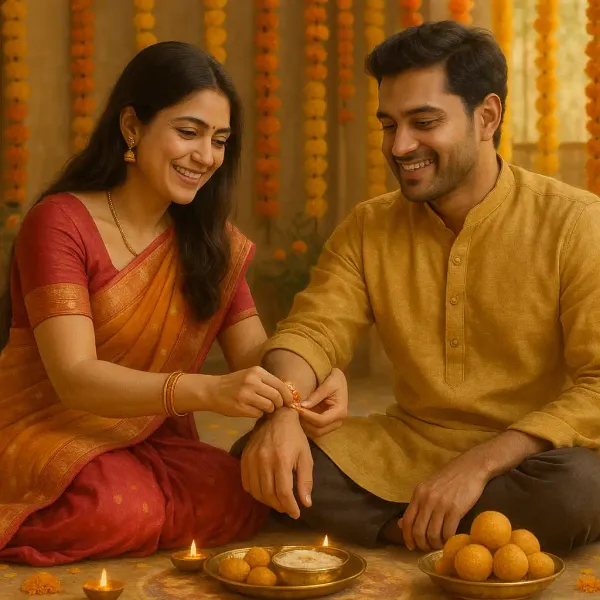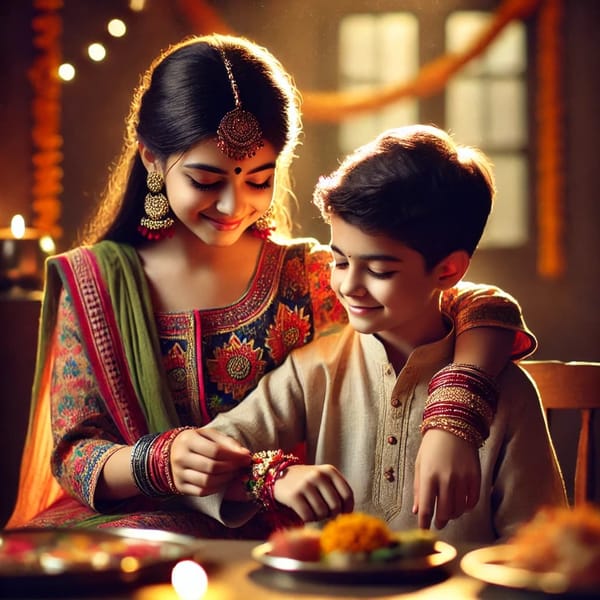
Rakhi, also known as Raksha Bandhan, a cherished Indian festival celebrating the sacred bond between brothers and sisters, is more than just a cultural ritual. In 2025, Raksha Bandhan falls on August 9, offering an opportunity to explore its deeper spiritual significance. When viewed through the lens of the Bhagavad Gita, this ancient festival transforms from a familial celebration into a profound reflection on duty (dharma), protection, and selflessness (nishkama karm)—principles that form the bedrock of both individual integrity and societal harmony.
Raksha Bandhan 2025 is more than the symbolic tying of a rakhi. It is a living embodiment of timeless wisdom from the Bhagavad Gita—a dialogue between Lord Krishna and Arjun on the battlefield of Kurukshetra. By examining the shared themes between this epic scripture and this sacred festival, we uncover a powerful spiritual message that is relevant to all relationships.
Rakhi: A Celebration Rooted in Protection
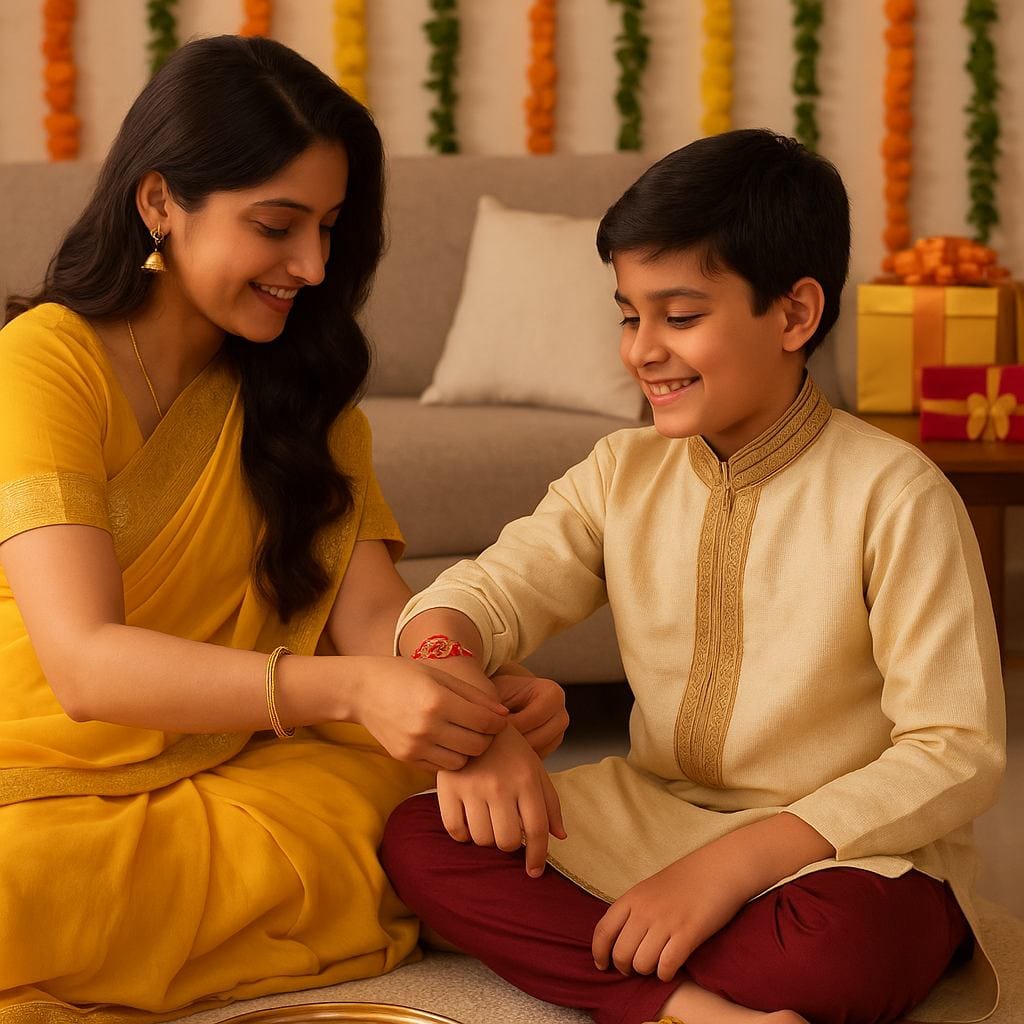
At its core, Raksha Bandhan means "a bond of protection." Traditionally, sisters tie a rakhi, a sacred thread, around their brothers’ wrists, invoking blessings and prayers for their well-being. In turn, brothers vow to protect their sisters from harm. But in a broader sense, the celebration reminds us of the universal need for safety, compassion, and mutual responsibility in all human bonds.
Throughout history, Raksha Bandhan has symbolized protection between siblings, friends, kings, and allies. One famous tale recalls Draupadi tying a strip of her sari around Krishna’s bleeding finger—an act of spontaneous affection and duty. In return, Krishna promised to protect her in her hour of greatest need, fulfilling that vow during her disrobing in the Kaurava court.
This spirit of reciprocal protection, born from affection and sustained by commitment, echoes strongly in the teachings of the Bhagavad Gita.
Duty (Dharma): Raksha Bandhan as a Reflection of Life’s Responsibilities
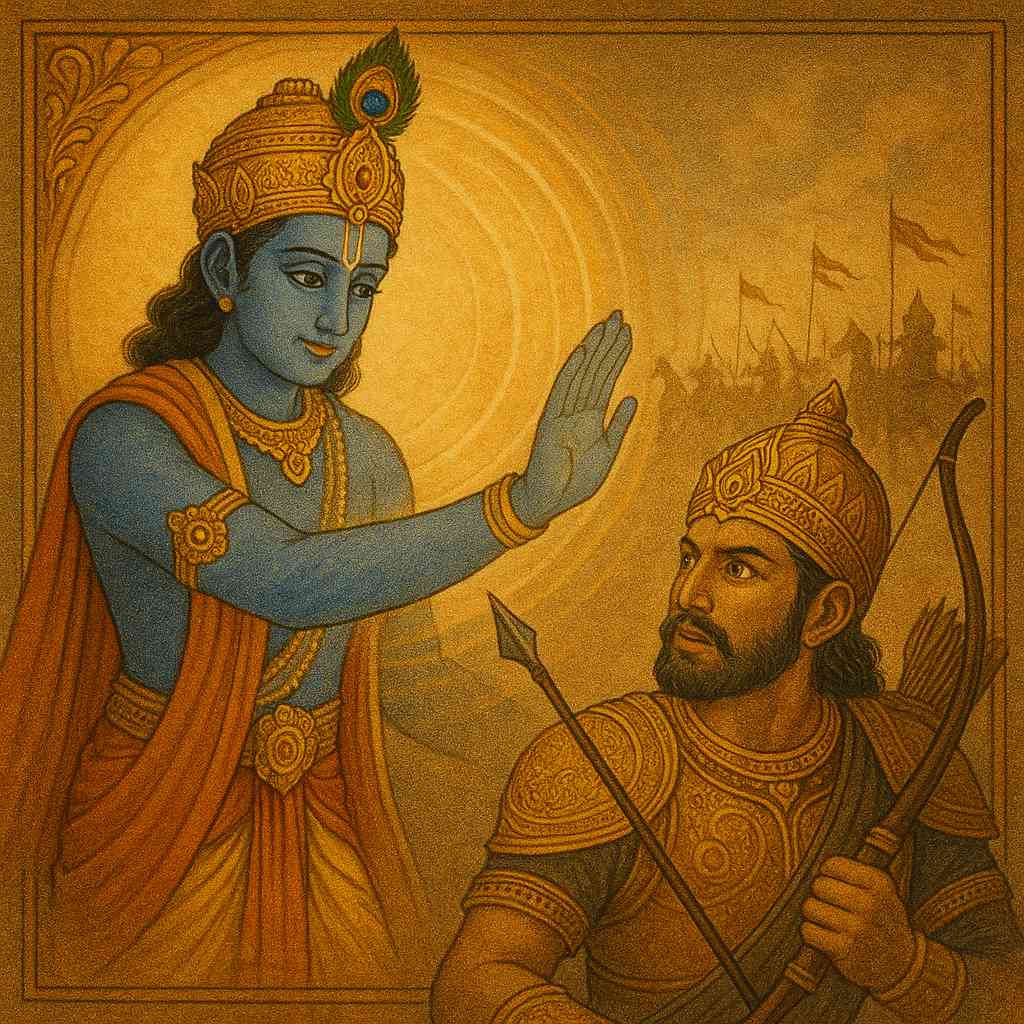
One of the most profound lessons in the Bhagavad Gita is that of dharma, or righteous duty. Arjun, paralyzed with doubt on the battlefield, is taught by Shree Krishna to rise above personal fears and attachments in order to fulfill his role as a warrior and protector of justice.
In the same way, Raksha Bandhan serves as a reminder of the duties we owe to one another, as siblings, family members, and part of a larger human family. The brother’s promise to protect his sister is not merely ceremonial; it reflects a moral obligation to stand up against injustice, offer emotional and physical support, and embody compassion in action.
Similarly, the sister, through the act of tying the rakhi and offering blessings, expresses her own role in preserving family harmony, nurturing relationships, and upholding the values of love and loyalty.
In this sense, Raksha Bandhan becomes a ritual of dharma, where both parties accept their duties from love and inner conviction. As Shree Krishna says in the Gita (Chapter 3, Verse 19):
“Therefore, giving up attachment, perform actions as a matter of duty because by working without being attached to the fruits, one attains the Supreme.”
This detachment means acting from a sense of purpose for the well-being of others.
Protection Beyond the Physical
In today's world, protection takes many forms. In addition to defending from physical harm, it also serves as a pillar of emotional, psychological, and spiritual support.
In the Bhagavad Gita, Krishna does not physically fight for Arjun—He guides him. He protects him with wisdom, clarity, and perspective. Shree Krishna says:
“I am seated in the hearts of all living beings.” (Gita 15.15)
This highlights the idea that the greatest protection is spiritual guidance—helping someone navigate confusion, overcome fear, and align with their higher self.
In the same way, siblings today—especially in the modern, fast-paced, often isolated world—must protect each other’s mental and emotional well-being. Listening without judgment, offering counsel, and reminding each other of their strengths—these acts are as sacred as any rakhi tied or promise made.
Thus, Raksha Bandhan invites us to become Krishnas to each other, offering courage, truth, and presence in moments of inner battle.
Selflessness (Nishkam Karma): Love Without Expectation
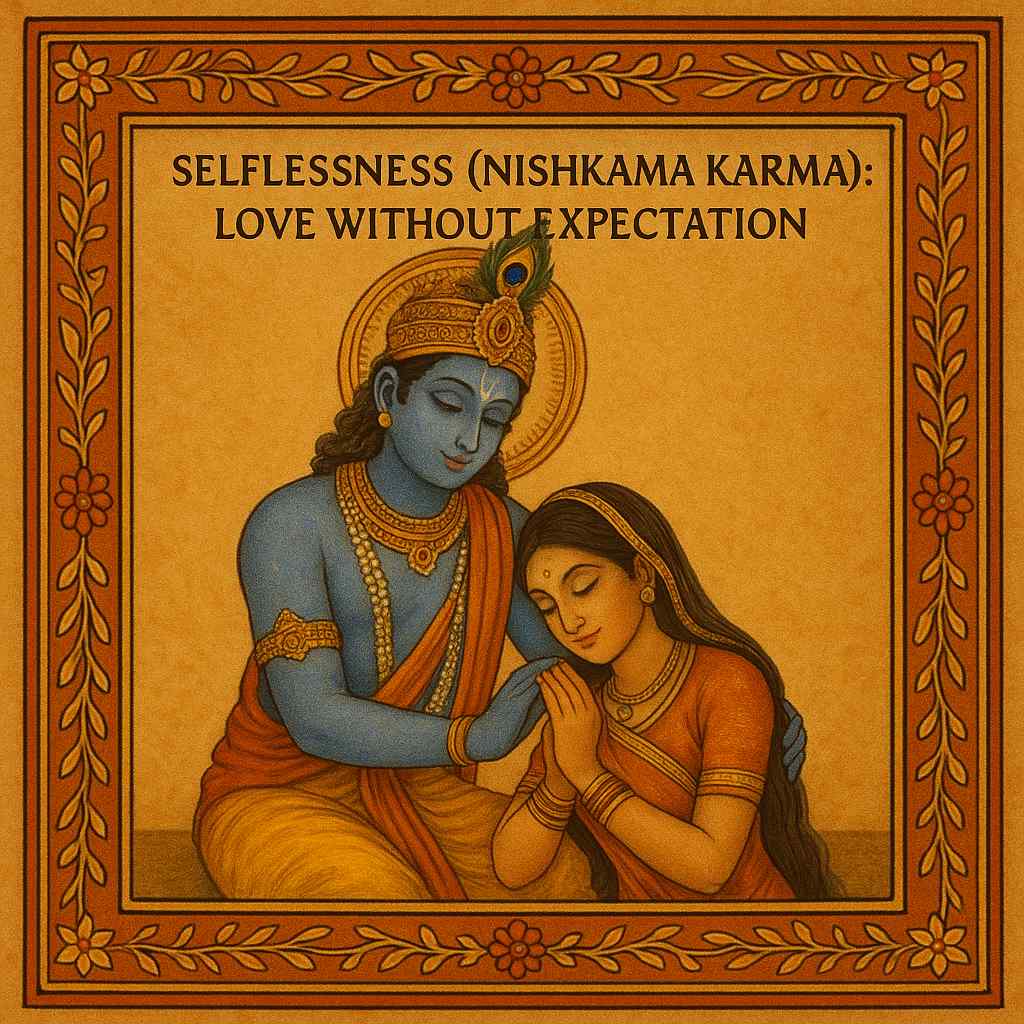
Another fundamental Gita teaching that resonates with Raksha Bandhan is nishkam karma—selfless action without attachment to outcomes. Krishna advises Arjun:
“You have a right to perform your prescribed duties, but you are not entitled to the fruits of your actions.” (Gita 2.47)
This echoes the spirit of Raksha Bandhan, where the acts of tying a rakhi or offering protection are ideally done from pure love.
When love is conditioned—“I’ll protect you if you do this for me” or “I’ll support you because you supported me”—it becomes transactional. But true raksha (protection) arises from a heart that gives freely, just as Krishna gives guidance to Arjun without desiring worship or recognition.
In this light, Raksha Bandhan serves as a poignant reminder that the most profound relationships are those rooted in selfless service. Brothers and sisters may argue or drift apart at times, but they share a bond that transcends personal gain and self-interest. Every small act—helping one another through grief, encouraging growth, and sharing laughter—is a form of karm yog, the path of action in love.
Expanding the Circle: Raksha Bandhan as Universal Love
The Bhagavad Gita speaks not only to individual duty but to a cosmic vision of unity. Shree Krishna reveals to Arjun His universal form, showing that all beings are interconnected, all relationships part of the divine whole.
“He who sees Me in all beings and sees all beings in Me, never becomes separated from Me, nor do I become separated from him.” (Gita 6.30)
Raksha Bandhan, therefore, is not limited to biological siblings. It can be celebrated between friends, spiritual companions, mentors, and even between communities. In modern India, many women tie rakhis to soldiers, police officers, and doctors—those who protect society—honoring the principle of selfless guardianship.
In 2025, as global crises—from climate change to conflicts—test our resilience, Raksha Bandhan offers a gentle, timely reminder: we are all each other’s protectors. Our dharma is to care not just for kin, but for humanity.
Living the Gita on Raksha Bandhan: Practical Ways to Celebrate in 2025
To truly embody the Gita's wisdom, this Raksha Bandhan, consider incorporating these mindful practices:
1. Reflect on Your Dharma
Before tying the rakhi or receiving one, take a few minutes to reflect on your responsibilities as a human being. Ask:
- How can I serve and protect those I love?
- What fears must I overcome to fulfill my role?
2. Practice Nishkam Karma
Offer something to your sibling simply from love. It could be a gift, a phone call, a prayer, or a letter of appreciation. Do it without expecting a response.
3. Offer Emotional Protection
In an age of anxiety, help your loved ones feel safe physically and emotionally. Be a nonjudgmental listener. Show empathy. As Shree Krishna did for Arjun, offer strength when they doubt themselves.
4. Expand the Celebration
Tie a rakhi to someone outside your family—a friend, a neighbor, a mentor—or even donate to an organization that protects the vulnerable. Widen your circle of care.
5. Read the Bhagavad Gita Together
Choose a few verses from the Gita to read and reflect on with your sibling or family. Discuss how they apply to your lives and relationships today.
The Eternal Thread: Raksha Bandhan as a Spiritual Practice
Raksha Bandhan is a symbol of sacred responsibility and care. The thread tied around a wrist is not just an ornament—it is a promise, a prayer, and a path.
In the Bhagavad Gita, Shree Krishna tells Arjun that upholding one’s dharma with courage and compassion leads to peace in the world and to inner liberation. Raksha Bandhan symbolizes how we act from love and duty, rather than ego or fear, and we honor the divine within each other.
The Gita teaches that life is a battlefield and also a classroom. Relationships are both challenges and blessings, meant to grow our understanding of love, responsibility, and selflessness. Raksha Bandhan is a living lesson in karm yog.
Conclusion: From Ceremony to Consciousness
Raksha Bandhan 2025 invites us to go beyond the ritual and awaken the deeper values it represents. In the Bhagavad Gita, Shree Krishna shows that true protection lies in wisdom, true duty lies in selfless action, and true love lies in seeing the divine in one another.
As we tie the sacred thread this year, let it also be a thread that binds us to our higher self. Let every Raksha Bandhan remind us of our duty to protect all beings. Let us walk the path of selfless action, just as Shree Krishna taught.
Because ultimately, Raksha Bandhan is about receiving protection and about becoming protectors.
Call to Action
Celebrate Satyanarayan Katha & Raksha Bandhan at Radha Krishna Temple!
Join us for a spiritually uplifting and joy-filled evening as we celebrate the sacred Satyanarayan Katha along with the cherished festival of Raksha Bandhan, honoring the divine bond of love and protection.
🗓 Date: Saturday, August 8, 2025
🕔 Time: 5:00 PM – 7:00 PM CST
📍 Location: Radha Krishna Temple of Dallas
🌺 Please bring fruits, flowers, and prasad for the pooja.
✨ The celebration will include:
- Soulful Satyanarayan Katha
- Rakhi tying ceremony
- Cultural significance of Raksha Bandhan
- A beautiful expression of spiritual bonding
📌 Reserve your spot now: Register Here
Let’s come together to celebrate love, family, and devotion in a divine atmosphere. Radhe Radhe!
FAQs: Raksha Bandhan 2025 and the Bhagavad Gita
Q: When is Raksha Bandhan in 2025?
A: Raksha Bandhan falls on Saturday, August 9, 2025.
Q: What is the significance of the rakhi?
A: The rakhi is a sacred thread symbolizing the bond of love and protection between a sister and brother, or between any two individuals pledging mutual support.
Q: What does the Bhagavad Gita teach about relationships?
A: The Gita teaches that relationships are opportunities to practice dharma (duty), selfless love, and spiritual growth. By serving others without attachment, we evolve spiritually.
Q: Can Raksha Bandhan be celebrated beyond siblings?
A: Yes. The spirit of Raksha Bandhan is universal. Anyone can tie a rakhi as a symbol of protection and care—friends, mentors, colleagues, or even social protectors like healthcare workers and soldiers.
Q: How can we make Raksha Bandhan more meaningful in 2025?
A: Celebrate with intention: reflect on your responsibilities, practice selfless service, offer emotional support, and use the occasion to reconnect spiritually with the values taught in the Gita.