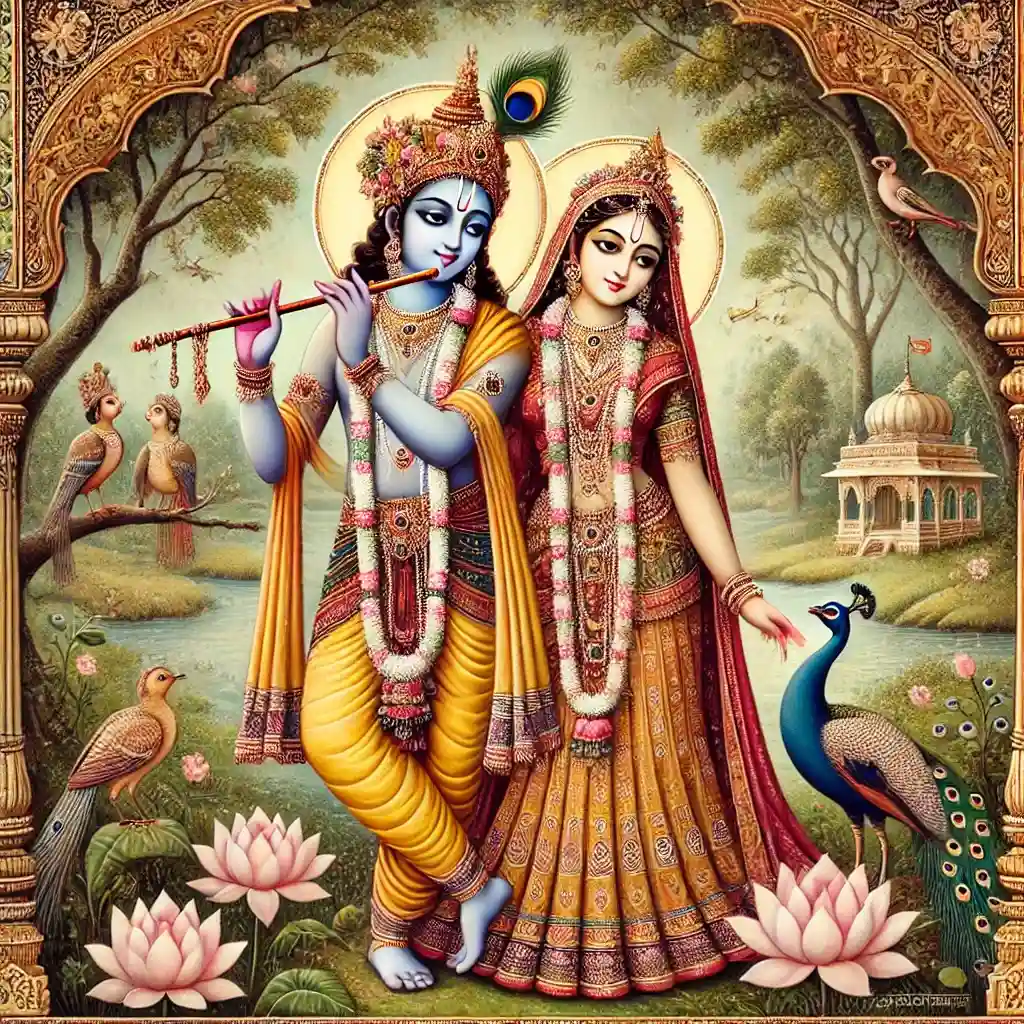
Radha's love for Krishna surpasses what we normally understand about love, showing the purest form of selfless devotion. The community plunged into deep sorrow at the time Shree Krishna left Vrindavan. No one could light their kitchen fires. Krishna made a promise to his mother about coming back in 4 days, but this separation between him and Radha ended up lasting 100 years.
Many people ask what happened to Radha after Krishna's departure. The love story of Radha and Krishna teaches us something deep about spiritual connection. Radha felt such overwhelming pain that she couldn't face Krishna during their final goodbye. Their physical bodies stayed apart, but their souls remained forever connected. The bond between Radha and Krishna symbolizes Shaktimaan and Shakti—the energetic and the energy. Their story helps you learn the true meaning of devotion, where someone thinks only about their beloved's happiness.
The significance of Radhashtami and who is Radha
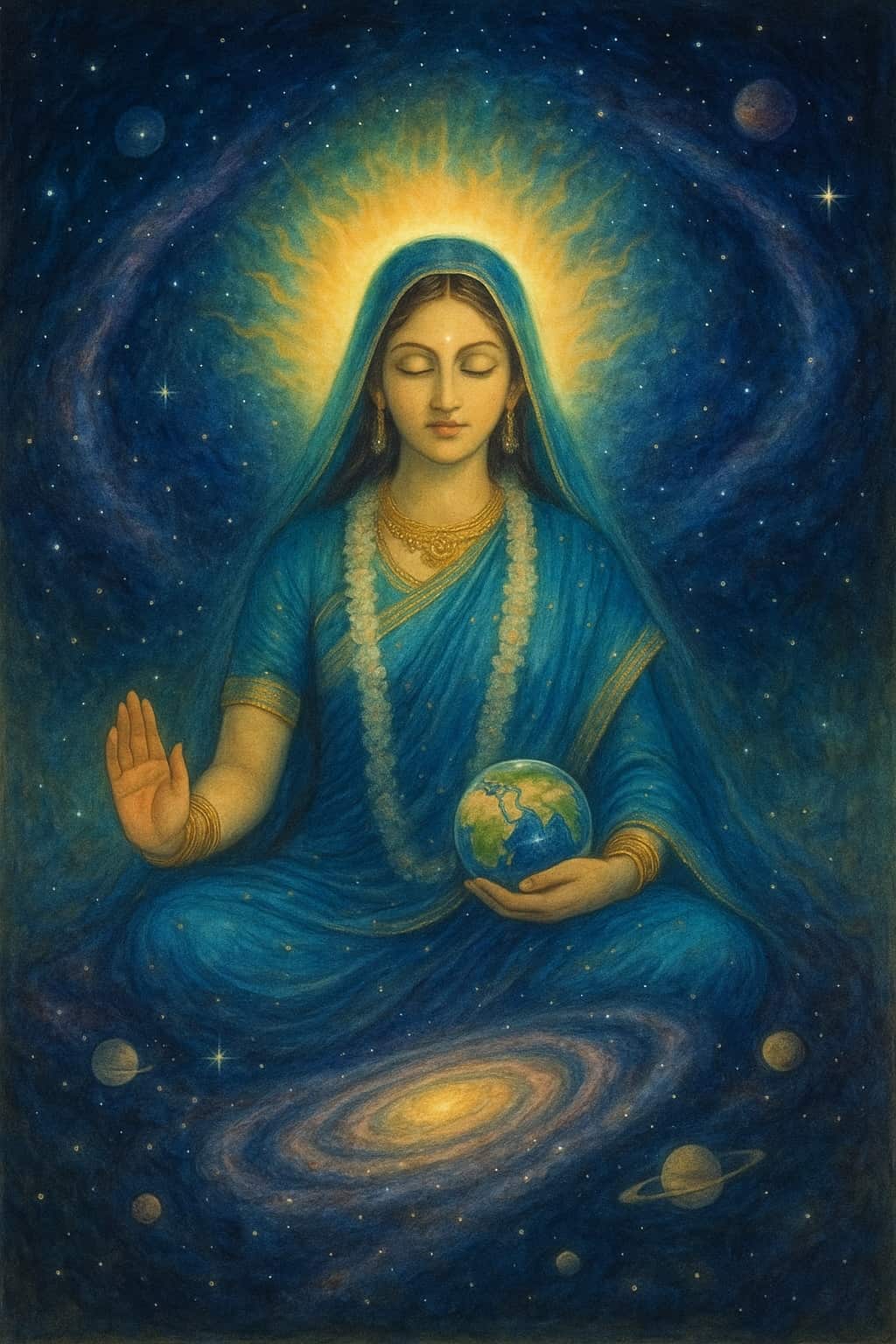
Srimati Radharani exemplifies the highest form of devotion in Hindu tradition. Devotees revere her not just as Krishna's consort but as pure spiritual love personified. Her relationship with Krishna exceeds ordinary understanding and reveals deep spiritual truths about devotion and divine connection.
Radha as the embodiment of divine love
Vaishnavism celebrates Srimati Radharani as Krishna's eternal consort and worships her steadfast dedication and unconditional love. She demonstrates the supreme expression of divine love that goes beyond ordinary emotion. Sacred texts describe Radha as Krishna's hladini shakti (bliss-bestowing energy)—the fundamental force that brings divine love into creation.
The Skanda Purana captures their inseparable bond with the words "Radha is Krishna and Krishna is Krishna," showing their spiritual oneness. Sacred texts use vivid analogies like "milk and its whiteness" or "fire and its heat" to show how inseparable they are.
Krishna remains incomplete without Radha. Sacred texts explain that even though people call him Poonam Purushottam Brahma (the fully perfect Supreme Being), Krishna needs Radha's presence to be whole. Theologians call Radha's devotion Madanakhya Mahabhav—the ultimate state of selfless love that shows the soul's deep yearning to unite with the divine.
Radha's importance goes beyond her connection with Krishna. Devotees see her as Goddess Lakshmi's incarnation and the embodiment of Mula Prakriti (primordial energy). They revere her as Jagat Janani (Mother of the Universe), who represents creation's feminine force.
Why Radhashtami is celebrated
Radhashtami, also known as Radha Jayanti, marks Goddess Radha's divine appearance in this world. This sacred day lets devotees reflect on Radha's pure devotion and seek her blessings. Spiritual leaders say that celebrating Radha Ashtami is a great way to get deeper devotion and submission to the Lord.
This festival holds deep meaning in Hindu tradition and shows Radha's essential role in the cultural-religious system that shapes social life. The Braj region celebrates this festival with great joy, especially in Barsana—Radha's birthplace.
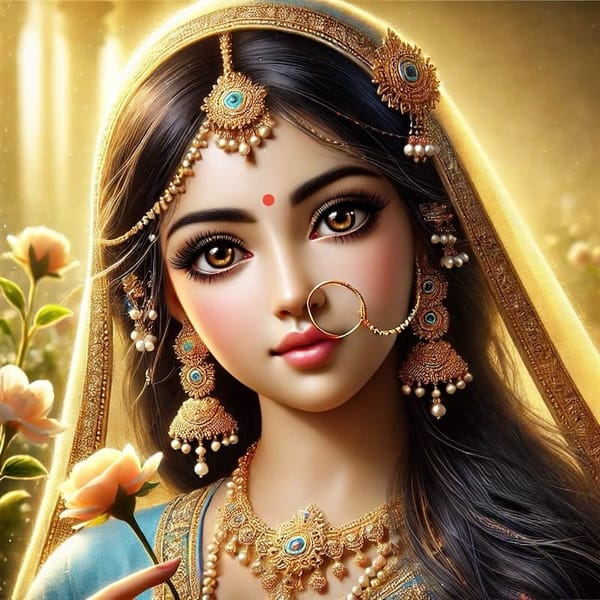
Radha appeared more than 5,000 years ago in Barsana village near Mathura. Hindu mythology tells us she didn't have a conventional birth but appeared in a golden lotus in the Radha Kund pond. King Vrishbhanu and Queen Kirti (or Kirtida) raised her with love.
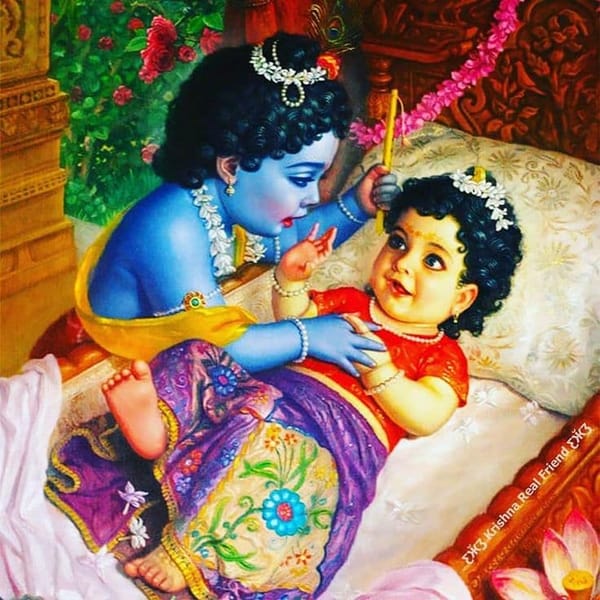
Early accounts tell us that young Radha kept her eyes closed until she first saw Krishna. This symbolically showed that life had no meaning for her without Krishna. Their profound connection from birth highlights their divine relationship.
Which day is for Goddess Radha
The eighth day (Ashtami) of the bright moon phase (Shukla Paksha) in the Bhadrapada month marks Radhashtami. This usually falls in August or September on the Gregorian calendar. Devotees will celebrate Radha Ashtami on Sunday, August 31, 2025.
This auspicious day comes exactly fifteen days after Krishna Janmashtami. The timing carries deep symbolic meaning and shows the sacred bond between Radha and Krishna. Krishna's birthday starts a two-week devotional period that ends with Radhashtami—a spiritual experience honoring his eternal consort.
Devotees fast until noon on this sacred day and then perform special prayers and rituals for Radha. Celebrations include abhishek (ritual bathing) of Radha's idol with panchamrita—a sacred mixture of milk, ghee, honey, sugar, and yogurt. They then dress her idol in new clothes and sing devotional songs about Radha and Krishna's divine pastimes.
Temples across India, especially those following Vaishnava traditions like Gaudiya Vaishnavism, Nimbarka Sampradaya, and Pushtimarg, see devotees gather to honor the goddess who represents bhakti's (devotion) highest form.
The moment of separation: Krishna leaves Vrindavan
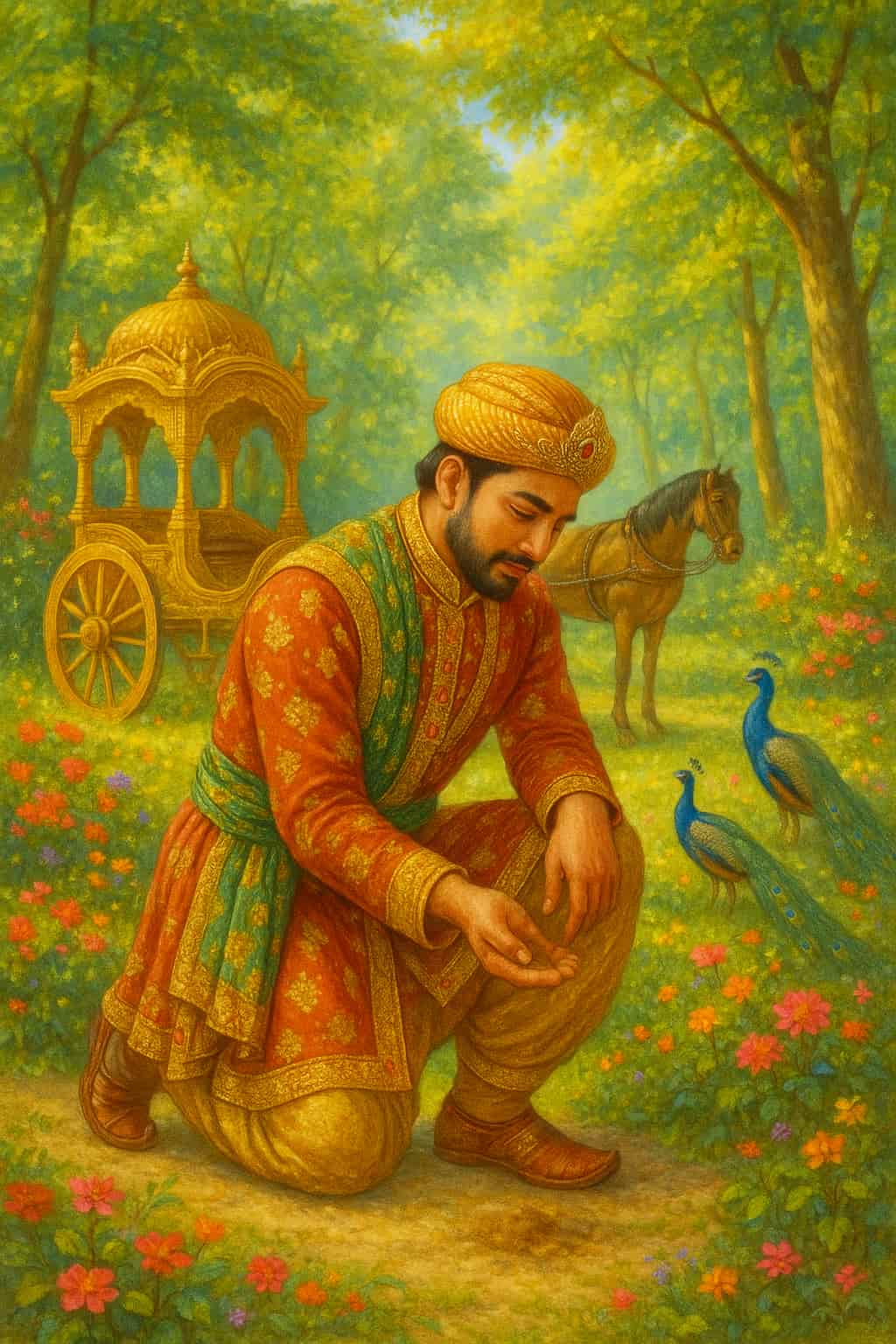
The sacred bond between Radha and Krishna faced its greatest test as destiny called Krishna away from Vrindavan. This moment changed their divine love story forever and created a separation that would appeal to devotees through the ages.
Akrura's arrival and divine mission
King Kamsa's tyrannical orders sent Akrura to Vrindavan with mixed feelings in his heart. His official task was to bring Krishna and Balarama to Mathura for the Dhanuryaga festival. Akrura, a devoted follower of Vishnu, secretly felt joy at the chance to meet Krishna. Kamsa plotted to have the divine brothers killed in Mathura. He then planned to take the cowherd's possessions and rule with Akrura by his side.
Akrura reached Gokula at sunset and fell to the ground in devotion. He rolled in the dust as tears of ecstasy filled his eyes. Krishna and Balarama welcomed him warmly as an uncle and guest, even though he came as Kamsa's messenger. Krishna showed his all-knowing nature - he held no ill will toward Akrura despite knowing why he had come.
Yashoda's motherly intuition and sorrow
News of Krishna's departure to Mathura filled Yashoda with grief. Her mother's instinct told her this goodbye might last forever. In stark comparison to this, Krishna promised to return "the day after tomorrow." Her face no longer glowed with a mother's joy but reflected deep sadness.
After Krishna left, Yashoda's pain became physical. She stopped cooking, and cobwebs covered her kitchen in Nanda's home. She wandered through Vrindavan looking for her beloved son until exhaustion made her faint. Her endless tears created two rivers - one white from flowing milk, one black from her kajal. These streams showed a mother's boundless love.
The silence that fell over Braj
A deep quiet settled over Vrindavan as the time to part drew near. Krishna spent his last moments with Radharani in perfect stillness. True lovers often say more in silence than with words. Radha could have stopped Krishna from leaving with just one gesture. Yet she held back, showing how selfless divine love can be.
Sorrow spread through the whole community. Some gopis fainted when they heard Krishna would leave. Others' faces darkened with grief. Many left their daily tasks as if life had lost its meaning. Vrindavan lost its shine as Krishna prepared to leave with Akrura. Their shared pain spread through every part of Braj.
In spite of that, Radharani and Krishna stayed spiritually connected - two bodies sharing one soul. Krishna lived on in Radha's heart, just as she stayed in his. Their story shows how true divine love can exceed physical presence.
Radha’s silent farewell: love beyond words
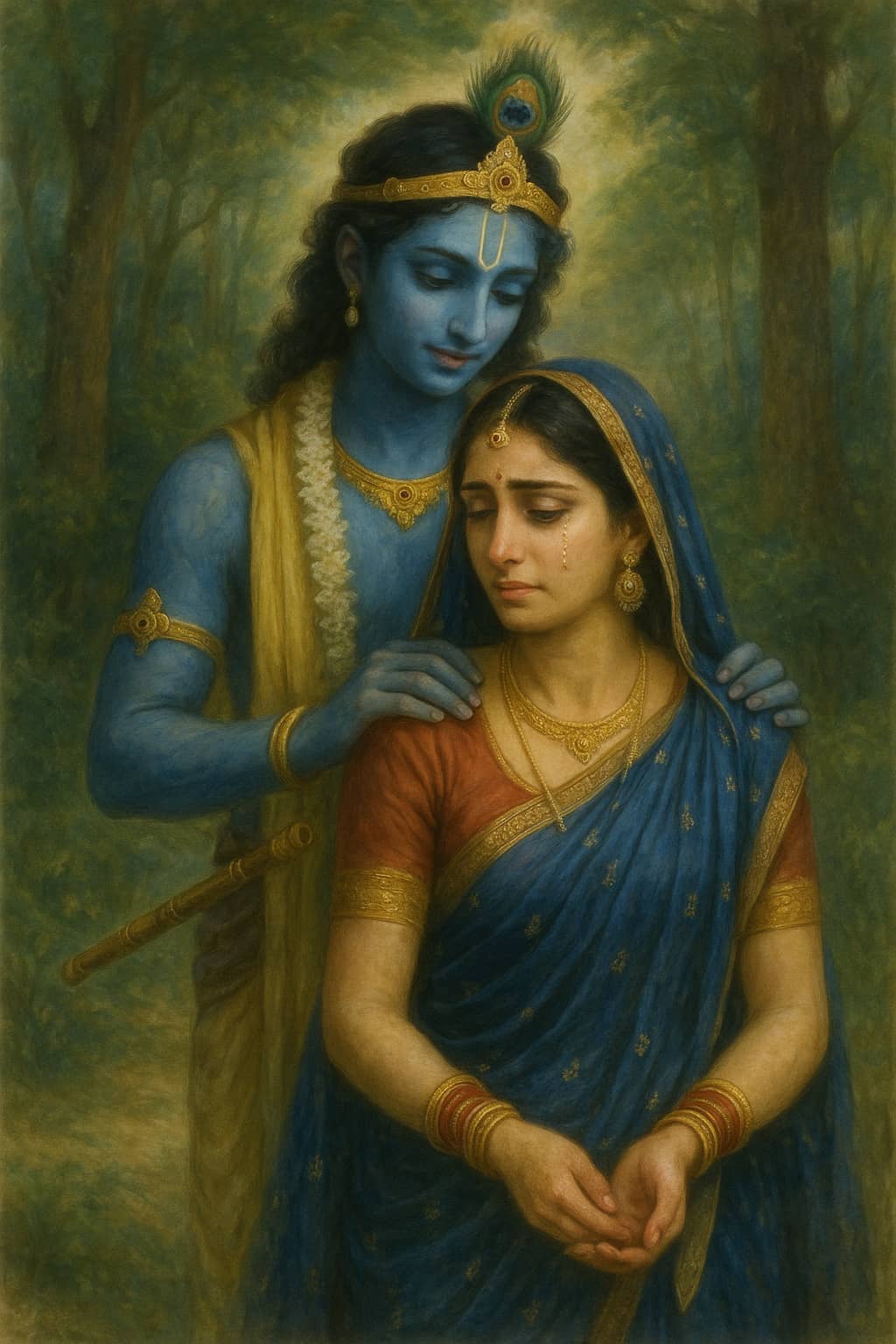
The silence between the divine lovers spoke volumes in Krishna's final moments before leaving. Radha's farewell was remarkable not for what was said, but what remained unspoken - evidence of love's deepest expression that words could not capture.
Why did Radha not stop Krishna
Radha's devotion exceeded ordinary love. She could have stopped Krishna from leaving with just a gesture, but she chose not to. This remarkable restraint came from her understanding that Krishna's trip to Mathura served a greater cosmic purpose - to defeat the evil forces that threatened dharma. She put Krishna's desire before her own and showed the selfless nature of true bhakti.
Radha knew that Krishna needed to take on his role as the protector to fulfill his divine purpose. Her silence came from profound spiritual strength - knowing how to put universal welfare before personal connection. Through this quiet acceptance, Radha became the embodiment of the highest spiritual principle: unconditional love without expectations or attachment.
Radha's love is pure surrender
The Radha and Krishna divine love story reaches its peak in this moment of surrender. Radha's devotion shows "Madanakhya Mahabhav" - the highest state of love where the soul completely gives itself to the divine without expecting anything. Her love stayed strong, whatever the physical distance, showing the philosophical idea that separation (viyog) often strengthens spiritual bonds.
Radha's silence during Krishna's departure showed love in its purest form. She showed that true devotion exceeds physical togetherness by accepting their separation without protest. These principles are the lifeblood of Bhakti tradition - understanding that divine love grows even when apart. This paradoxical truth reveals the deepest teaching of Radha's love: complete surrender to divine will is the highest spiritual achievement.
The power of divine separation in Bhakti
The paradox of separation in the bhakti tradition finds its deepest expression through the Radha-Krishna narrative. Their physical parting and divine separation (viraha) transformed their eternal bond instead of ending it.
Why Krishna never returned to Braj
Krishna stayed away from Vrindavan, not from lack of love but to fulfill his cosmic purpose. Jarasandha attacked Mathura eighteen times after Krishna defeated Kamsa. These constant threats to his people kept him from returning to Vrindavan.
Krishna knew that coming back to Vrindavan would get in the way of his greater mission. Vrindavan was rasa (divine pleasure), while Mathura and Dwaraka were karma-bhumi (the land of duty). Vaishnava texts explain that Krishna realized "if he returned, the people of Vrindavan would never let him leave again". His kingdom's needs, his parents Devaki and Vasudeva's suffering in prison, and the cosmic order needed his presence elsewhere.
How separation deepens devotion
Separation from the divine helps spiritual growth. The Sanskrit concept of viraha means more than emotional grief—it represents a sacred emptiness that draws the soul toward union. This spiritual yearning burns away ego, awakens sincerity, and prepares the heart for divine reunion.
Divine absence purifies and strengthens devotion, creating a deeper spiritual bond than constant presence could achieve. This sacred paradox reveals the depth of Radha's love—a devotion that exceeds physical togetherness and shows how true divine connection grows strongest through separation.
Radha and Krishna: one soul in two forms
The relationship between Radha and Krishna goes beyond simple companionship. They represent a metaphysical truth as one entity that shows itself in two forms.
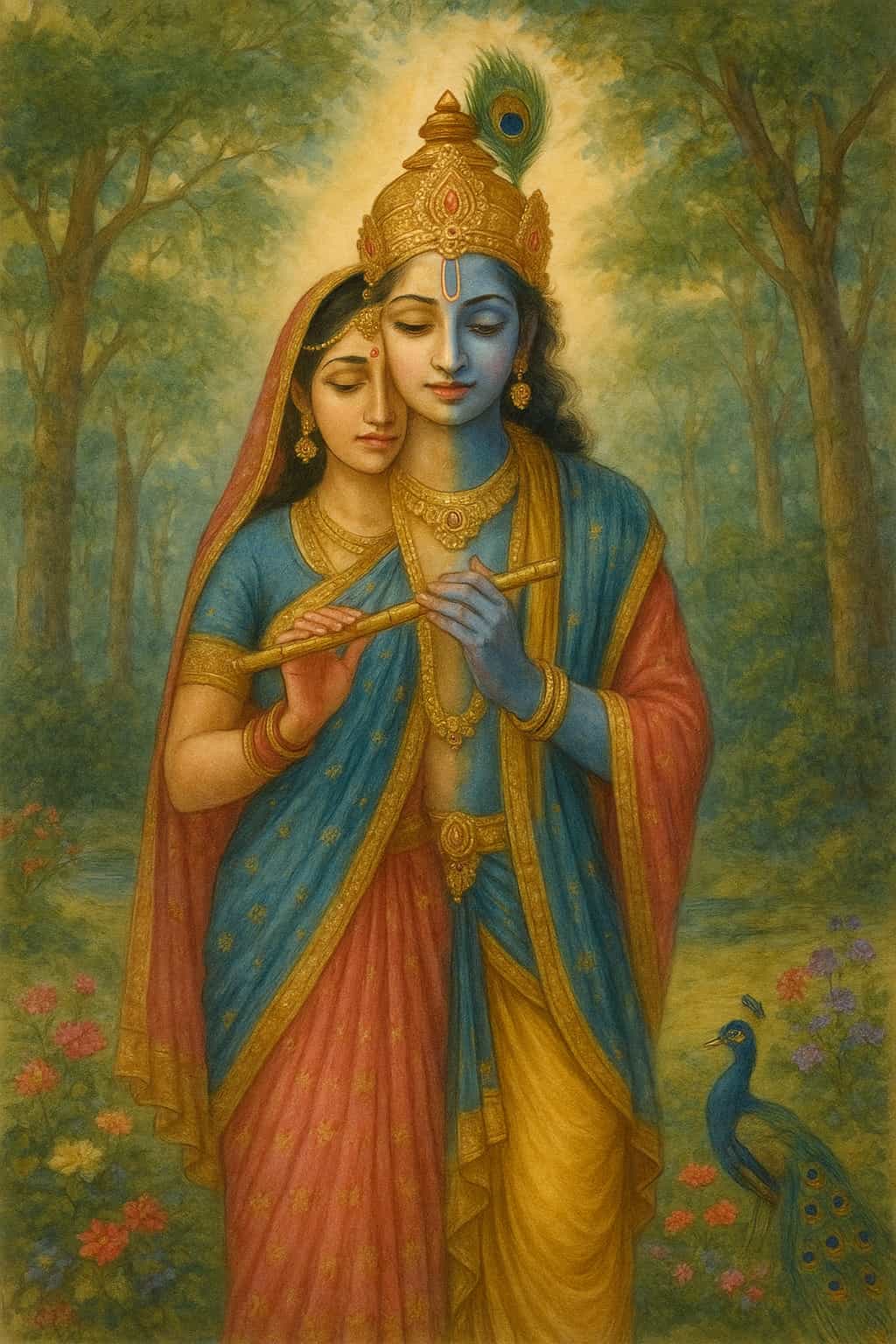
Radha and Krishna are eternally united
Hindu philosophy sees Radha and Krishna as an inseparable divine reality. Their connection resembles milk's inherent whiteness - these divine beings share one soul expressed through two bodies. Sacred texts portray them with "one intellect, one mind, one soul, and even one face". Krishna himself states, "I have assumed the form of Radha," while Radharani declares, "I have assumed the form of Krishna". This divine unity creates their eternal bond and makes them two expressions of a single consciousness.
The divine paradox of union in separation
Radha-Krishna's eternal unity reveals a deep spiritual paradox - their apparent duality exists to intensify divine bliss. Their roles as Shakti and Shaktiman (the energy and the energetic) allow divine play that strengthens spiritual connection. This paradoxical relationship symbolizes the soul's experience of divine union. The separation becomes a path to deeper communion. Their love surpasses physical proximity and represents the eternal yearning between the individual soul (jivatma) and the Supreme Divine (paramatma).
Radha's love is the highest form of Bhakti
Radharani represents the supreme expression of devotional love. Her "Madanakhya Mahabhav" stands as the ultimate state of spiritual ecstasy. Radha's pure, selfless love makes her Krishna's most beloved among countless devotees. Her divine love serves as a measure for the highest spiritual attainment - complete surrender to divine will without expectation.
Conclusion
Radha and Krishna's divine love story surpasses ordinary understanding and provides deep spiritual wisdom to devotees worldwide. Their eternal bond symbolizes the deepest possible devotion between the soul and the Supreme. Radha's steadfast dedication despite physical separation shows us how true devotion grows stronger even through distance and time.
Radha remained silent when Krishna left. This wasn't weakness - it demonstrated her selfless love. She put his sacred mission ahead of her own happiness and showed complete surrender to divine will. We celebrate Radhashtami to honor both Radha's birth and her extraordinary capacity to love without conditions.
Their relationship reveals something remarkable about spiritual connection. They stayed spiritually inseparable for a hundred years despite physical distance. They were two expressions of one consciousness. This sacred truth shows how genuine spiritual bonds exist beyond physical closeness. Their separation made their devotion stronger and turned apparent absence into a deeper spiritual connection.
Radha's devotion reveals the essence of true bhakti - love that cares only for the beloved's happiness. Her "Madanakhya Mahabhav" represents the purest form of spiritual longing where the soul surrenders completely. She stands as devotion's highest example and inspires seekers to develop selfless love in their spiritual practice.
Radha and Krishna's eternal unity, like milk and its whiteness or fire and its heat, shows how apparent separation intensifies divine bliss. Their sacred bond helps us understand a profound truth - the soul's experience toward divine union often moves through separation. This process purifies love into its most powerful form.
Key Takeaways
Understanding Radha's divine love for Krishna reveals profound spiritual truths about devotion, separation, and the highest forms of bhakti that can transform our spiritual practice.
• Radha embodies selfless devotion - Her silent acceptance of Krishna's departure demonstrates love that prioritizes divine purpose over personal happiness, representing the highest spiritual surrender.
• Divine separation deepens connection - Physical distance between Radha and Krishna intensified their spiritual bond, teaching that true devotion transcends physical proximity and flourishes through sacred longing.
• They are one soul in two forms - Like milk and whiteness, Radha and Krishna represent inseparable divine consciousness, symbolizing the eternal unity between individual souls and the Supreme Divine.
• Radhashtami celebrates pure bhakti - Observed on August 31, 2025, this festival honors Radha's "Madanakhya Mahabhav" - the ultimate state of unconditional love that serves as the benchmark for spiritual attainment.
Call to Action
As Radhashtami dawns, open your heart to Radharani’s mercy. Chant her holy name, read her leelas, and bow your head in devotion. Through her compassion alone, the path to Krishna becomes illuminated. Celebrate her appearance with love and surrender today.

Radhashtami Mahotsav 2025
Radha Krishna Temple of Dallas
Celebrate the divine appearance of Srimati Radharani with Charan Darshan, Abhishek, Jhoolan Seva, Birthday Celebration, and Cake Cutting with Swamiji. Offer flowers, chocolates, or gifts for Baby Radha.
✨ Mahaprasad will be served after the celebration.
💝 Seva Opportunities
Select from special seva offerings below and contribute with devotion.
🌸 Celebrate Radhashtami at the Radha Krishna Temple in Dallas with love and devotion! 🌸
FAQs
Q1. When is Radhashtami celebrated in 2025? Radhashtami, also known as Radha Jayanti, will be celebrated on Sunday, August 31, 2025. It falls on the eighth day of the bright phase of the moon in the Hindu month of Bhadrapada.
Q2. Why is Radha considered so important in Hindu tradition? Radha is revered as the embodiment of divine love and the highest form of devotion. She represents the supreme manifestation of spiritual love beyond ordinary emotion and is considered Krishna's eternal consort and inseparable divine energy.
Q3. What is the significance of Radha's silence when Krishna left Vrindavan? Radha's silence during Krishna's departure was not a lack of love, but its purest expression. It demonstrated her selfless devotion, prioritizing Krishna's divine mission over her personal desires and exemplifying complete surrender to the divine will.
Q4. How did the separation between Radha and Krishna affect their devotion? The separation, known as 'viraha' in the bhakti tradition, actually deepened their spiritual connection. It transformed apparent absence into a sacred path for more profound devotion, purifying and intensifying their love beyond physical togetherness.
Q5. What does the Radha-Krishna relationship symbolize in Hindu philosophy? The Radha-Krishna relationship symbolizes the eternal unity between the individual soul and the Supreme Divine. They are considered one consciousness in two forms, representing the divine paradox where apparent duality exists to intensify spiritual bliss and connection.
References
 JKYog Team