
Introduction: The Invisible Battle Within
Imagine this: You’ve had a productive day. You met your goals at work, spent quality time with loved ones, and even squeezed in a short workout. But right before bedtime, you remember a comment someone made — just one slightly critical remark. Instantly, your mood shifts.
The day that felt so fulfilling a moment ago now feels incomplete.
This is not just a coincidence. It’s a mental pattern called negativity bias — and according to Swami Mukundananda, addressing this one habit can radically transform our emotional well-being, relationships, and spiritual growth.
In this blog, we’ll explore:
- What is negativity bias and where does it come from?
- How modern life amplifies this tendency
- The Tetris Effect: Why repetitive thoughts shape reality
- The science of neuroplasticity
- Practical tools to rewire the mind
- Spiritual guidance for lasting peace
Let’s dive in.
1: Understanding Negativity Bias
Why Do We Focus on the One Thing That’s Wrong?
Swami Mukundananda uses a striking metaphor: our mind is like the tongue that keeps probing a stuck mango fiber between the teeth. Even when everything else is fine, it fixates on the discomfort.
This tendency is hardwired. In the wild, survival depended on vigilance. A fish that missed a meal could try again later. But one that missed a predator? Gone. So, evolution gave preference to creatures that noticed and remembered threats.
Today, our dangers are emotional — a rude message, a missed deadline, a disapproving glance. But our mind still reacts with the same urgency.

2: The Modern Amplification — A World That Feeds Our Bias
Media, Social Media, and the Crisis of Attention
Why does news coverage focus more on wars and disasters than peace and progress? Because negative headlines get more clicks.
A 2021 study in Nature Human Behavior found that people are more likely to engage with negative content. Social media algorithms, designed to boost engagement, amplify this effect.
We get bombarded with negativity — through news, notifications, and even everyday conversations — reinforcing our tendency to dwell on the bad, even when much in life is good.

3: The Tetris Effect — How Repetition Shapes Our Mind
From Video Game Addiction to Life Perception
Swami Mukundananda shares a fascinating case: a man was arrested for being so addicted to the video game Tetris that he ignored flight safety instructions.
This led to the psychological term Tetris Effect — where repeated exposure to a pattern causes the brain to apply it everywhere. After playing for days, participants reported seeing Tetris shapes in real life — buildings, products, even clouds.
Now imagine if your repeated pattern is negative self-talk or worry. You begin seeing problems and threats everywhere — even when they’re not real.

4: The Science of Neuroplasticity
You Are What You Repeatedly Think
Neuroplasticity means the brain can change its structure based on experience. The more you think a thought, the easier it becomes to think it again.
“Neurons that fire together, wire together.”
If your dominant thoughts are negative, your brain strengthens those pathways. But the reverse is also true — you can retrain your brain for positivity, resilience, and joy.

5: Positive Reframing — The Antidote to Negativity Bias
What Is Positive Reframing?
Positive reframing is the conscious act of shifting your perspective to find growth, gratitude, or opportunity — even in challenging situations.
Examples:
- Instead of “I messed up that meeting,” say, “That meeting helped me identify areas to improve.”
- Instead of “My partner was rude,” say, “They must be under stress. I’ll give them space.”
- Instead of “Nothing is working out,” ask, “What is going well right now?”
Over time, reframing helps reset your brain’s default from problem-focused to possibility-focused.
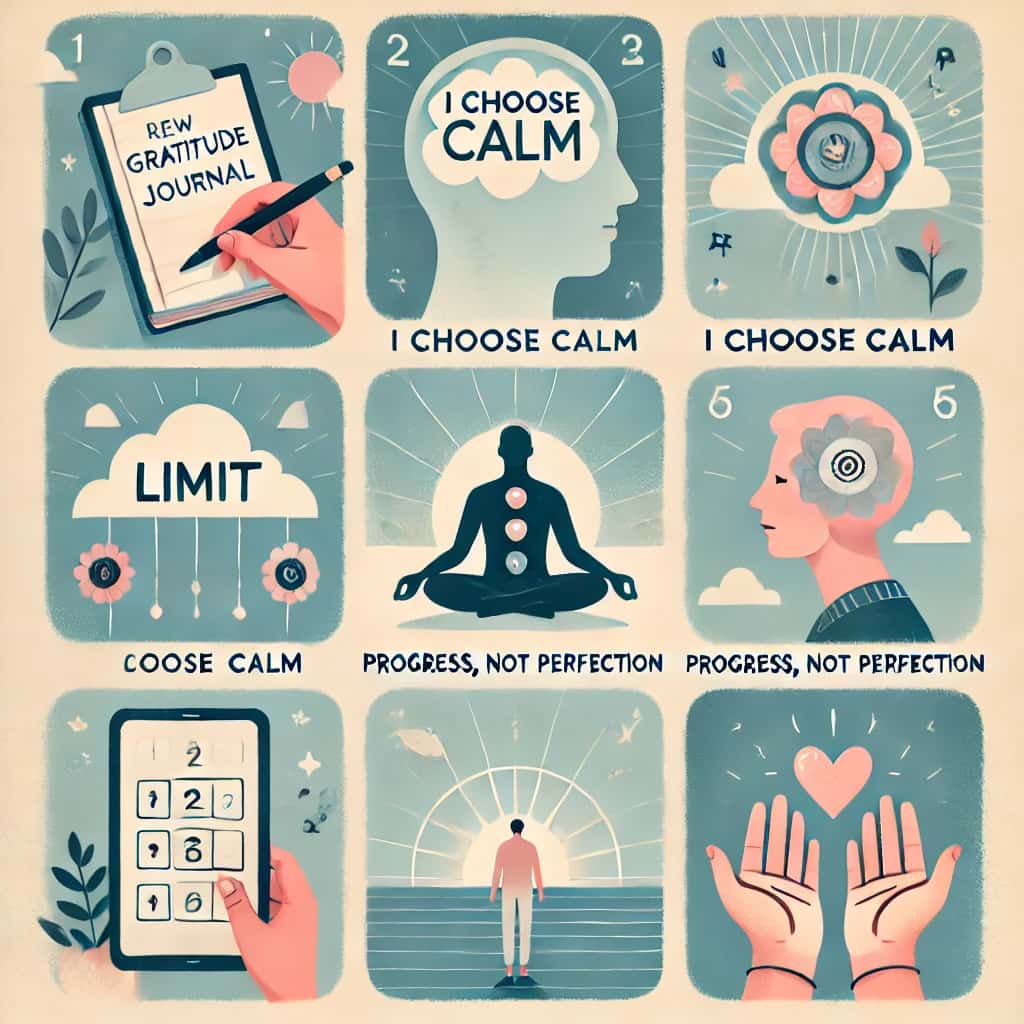
6: Tools to Rewire Your Brain
Here are practical steps to shift from negativity to empowerment:
1. Gratitude Journaling
Write down 3 things you’re thankful for every day. Train your mind to scan for the good.
2. Thought Awareness Check-ins
Pause 2–3 times daily. Ask yourself:
“What am I focusing on right now? Is it helpful?”
If it’s negative, ask:
“Can I reframe this in a better light?”
3. Mindful Breathing
Take 5–10 slow, deep breaths. This calms your nervous system and helps shift perspective.
4. Limit Toxic Media Consumption
Follow positive content creators. Set screen time boundaries. Protect your mental space.
5. Daily Affirmations
Use uplifting statements like:
“I choose calm over chaos.”
“I focus on progress, not perfection.”
6. Acts of Service
Helping others boosts your mood and gives meaning to your day. Even small acts shift focus from worry to contribution.
7: Spiritual Insight from Swami Mukundananda
According to Swami Mukundananda, true happiness does not come from external situations, but from inner mastery. The mind is your best friend or worst enemy — depending on whether it's trained.
He teaches:
- Don’t let the mind control you.
- Recognize its tendencies without judgment.
- Use scriptural wisdom, devotion, and meditation to purify it.
As the Bhagavad Gita says:
“Elevate yourself by yourself. Do not degrade yourself. The self alone is the friend of the self, and the self alone is the enemy of the self.” — BG 6.5
The solution is not to escape negativity, but to rise above it through spiritual knowledge and inner discipline.
Conclusion: Retrain Your Mind, Reclaim Your Joy
You don’t need to be stuck in a cycle of overthinking, insecurity, and fear.
By understanding how negativity bias and the Tetris Effect shape your thoughts, and using tools like gratitude, mindfulness, and positive reframing, you can begin rewiring your brain for joy, resilience, and peace.
The transformation won’t happen overnight. But with patience and practice, you’ll start to notice a powerful shift. You’ll stop obsessing over what went wrong and begin celebrating what’s going right.
As Swami Mukundananda reminds us:
“The mind is like a chisel. Use it to sculpt your inner world. Train it — and it will train you to live in happiness.”
So, start today. Reframe that one negative thought. Smile at a small win. Journal one thing that made you feel alive.
Your happiness isn’t lost. It’s waiting to be seen.
Call to Action
For more such soul-enriching wisdom, guided meditations, and deep insights into the eternal truths of life, we invite you to subscribe to Swami Mukundananda’s official YouTube channel. His discourses illuminate the timeless teachings of the scriptures and offer practical guidance for spiritual seekers. Whether you are beginning your journey or walking steadily on the path, you’ll find invaluable inspiration to stay connected with your divine purpose.


FAQ:
1: What is the core message of Swami Mukundananda’s talk on negative thoughts?
Answer:
Swami Mukundananda emphasizes that negative thinking is not a permanent trait but a habit wired into the brain over time. The key to overcoming it is to consciously rewire the mind using tools like repetition, self-awareness, and positive reframing.
2: How does repetition help in overcoming negative thoughts?
Answer:
Repetition forms new neural pathways in the brain. When we consistently focus on positive thoughts or affirmations, our brain adapts by strengthening those connections, gradually replacing the old patterns of negativity.
3: What is neuroplasticity, and how does it relate to mindset change?
Answer:
Neuroplasticity is the brain’s ability to reorganize itself by forming new neural connections. This science-backed concept explains how we can change our habitual thought patterns — including negative ones — through intentional practices like gratitude journaling and self-reflection.
4: Can one completely eliminate negative thoughts?
Answer:
Completely eliminating negative thoughts may not be possible, but we can significantly reduce their influence. The goal is to shift our default mental pattern from negativity to positivity by becoming aware of our thoughts and actively reframing them.
5: What are some practical tools to rewire the brain for positivity?
Answer:
Practical tools include:
- Gratitude journaling (noting 3 things you're thankful for daily)
- Thought awareness check-ins (asking if your focus is helpful or can be reframed)
- Mindful repetition of uplifting ideas and affirmations
- Daily mental hygiene just like physical hygiene — nurturing the mind with positive input