
Your Spiritual Compass for Inner Transformation
Welcome, beloved seeker. 🌸 If you have landed here, it is perhaps not by chance, but by the divine call of your soul seeking deeper meaning. In a world filled with noise, the spiritual path offers a sanctuary of peace. Today, we delve into the profound depths of Papamochani Ekadashi —a sacred occasion that isn't just about fasting, but about liberating the soul from the shackles of past mistakes.
As illuminated by the revered Swami Mukundananda, who presents the timeless wisdom of Sanatan Vedic philosophy with crystal clarity, we will explore how this holy day is a golden opportunity to press the reset button on our spiritual journey. Whether you are a seasoned practitioner or a curious newcomer, the energy of Ekadashi is available to everyone. Let us embark on this journey to understand why this day is considered a celestial gift for all kinds of people interested in genuine spirituality. ✨
📅 Papamochani Ekadashi 2026: Date and Auspicious Timings
Before we dive into the philosophy, let us anchor ourselves in the practical details. In the year 2026, Papamochani Ekadashi falls in the month of Chaitra (March-April) during the Krishna Paksha (the dark fortnight of the moon). Mark your calendars, for this is the day the celestial gates of forgiveness swing wide open.
Ekadashi Vrat Schedule (March 2026)
|
Event |
Date and Time |
Significance |
|
Ekadashi Tithi Begins |
14 March 2026, 08:10 AM |
The auspicious time for the fast commences. |
|
Ekadashi Tithi Ends |
15 March 2026, 09:16 AM |
Marks the duration of the Ekadashi period. |
|
Vrat (Fasting) Date |
15 March 2026 |
Based on the Udaya Tithi, this is the main day of fasting. |
|
Parana (Breaking Fast) |
16 March 2026, 06:30 AM – 08:54 AM |
The specific window to conclude the fast on Dwadashi. |
- Ekadashi Tithi Begins: The auspicious time for the fast commences on 14 March 2026 at 08:10 AM.
- Ekadashi Tithi Ends: The Tithi period concludes on 15 March 2026 at 09:16 AM.
- Main Fasting Date: Based on the Udaya Tithi (sunrise timing), the primary day to observe the Vrat is 15 March 2026.
- Parana (Breaking the Fast): The specific window to conclude your fast is on Dwadashi, 16 March 2026, between 06:30 AM and 08:54 AM.
💡 A Note on Parana: The Parana time is crucial. Breaking the fast outside of this specific window is considered less meritorious. It is traditionally done after sunrise on the next day, after offering prayers to Lord Vishnu.
🕉️ The Spiritual Essence: Why Ekadashi is a Seeker's Best Friend
In Sanatan Vedic philosophy, as explained by Swami Mukundananda, the human body is not just a lump of flesh; it is a chariot meant to take us toward the divine. However, the senses are the unruly horses, and the mind is the reckless driver. So, how do we regain control?
Ekadashi is the answer.
The word "Ekadashi" means "the eleventh." It refers to the eleventh day of the lunar fortnight. According to Vedic scriptures, this day is especially dear to Lord Krishna (Vishnu). But why is it so important for a spiritual seeker?
1. Minimizing the Demands of the Body 🧘♀️
Swami Mukundananda often teaches that spiritual progress is inversely proportional to our material attachments. The body constantly demands food, comfort, and sensory pleasure. By observing a fast (or even a light, sattvic diet), we consciously tell the body, "You are not the boss; I am the soul striving for higher realization." This act of voluntary denial strengthens our willpower and turns our attention inward.
2. Saving Time and Energy for the Divine 💖
When we stop spending hours cooking elaborate grain-based meals and digesting heavy foods, we free up immense physical and mental energy. This energy is then channeled into bhajan, kirtan, reading scriptures like the Bhagavad Gita, and meditating. Ekadashi is specifically designed to be a day where we "fast" from the material world and "feast" on spiritual association.
3. Cleansing the Subtle Body 🍃
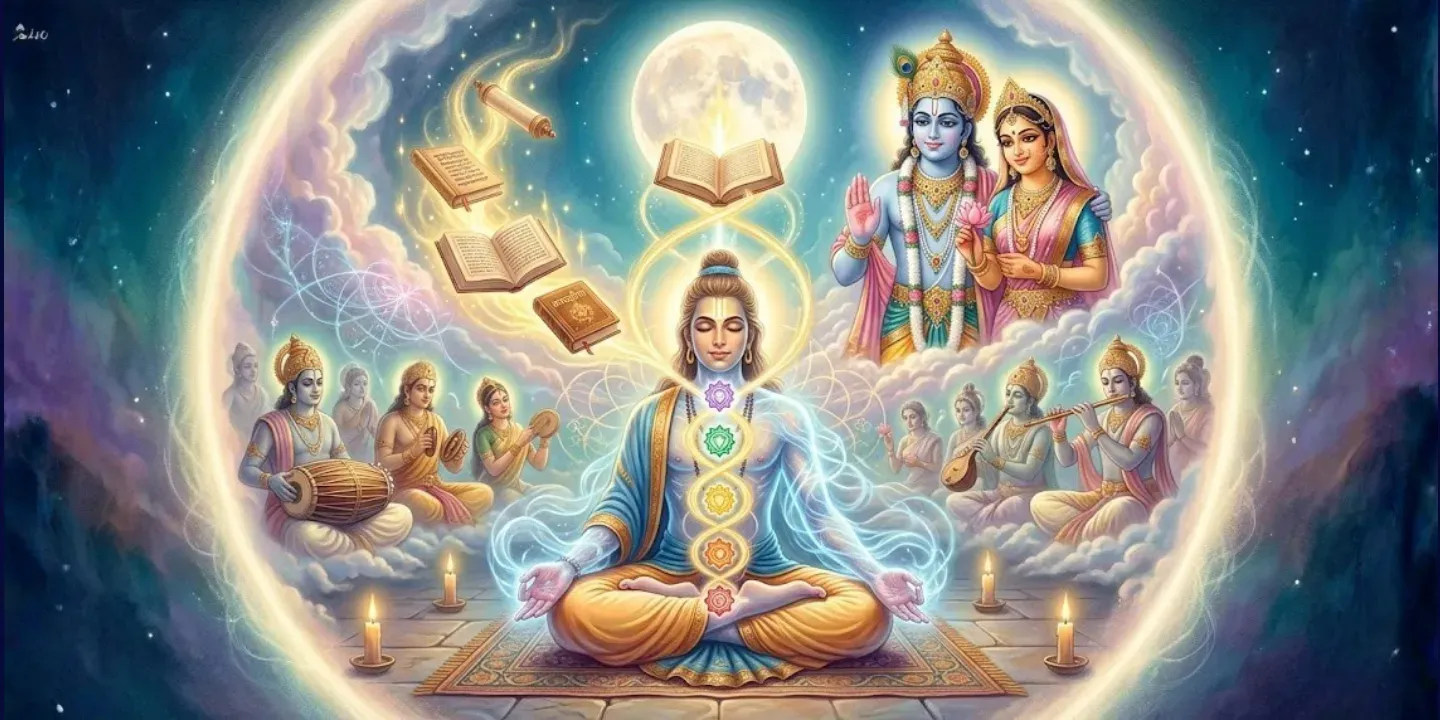
Just as we bathe the physical body daily, Ekadashi serves as a deep cleanse for the mind and intellect. By abstaining from grains and beans (which are said to carry certain karmic residues), we lighten the subtle body, making it more receptive to divine thoughts.
📖 The Origin of Papamochani Ekadashi: A Tale of Redemption
To understand the power of this specific Ekadashi, we must turn to the ancient texts. The story of Papamochani Ekadashi is found in the Bhavishya Purana, narrated by Lord Krishna himself to King Yudhishthira .
The Fall of the Sage Medhavi 🏹
Long ago, in a beautiful forest filled with blossoming flowers, there lived a powerful and handsome young sage named Medhavi. He was the son of the great sage Chyavana. In that same forest, the celestial king of the Gandharvas (heavenly musicians), Chitraratha, arrived one day with a group of enchanting celestial damsels to enjoy the spring season.
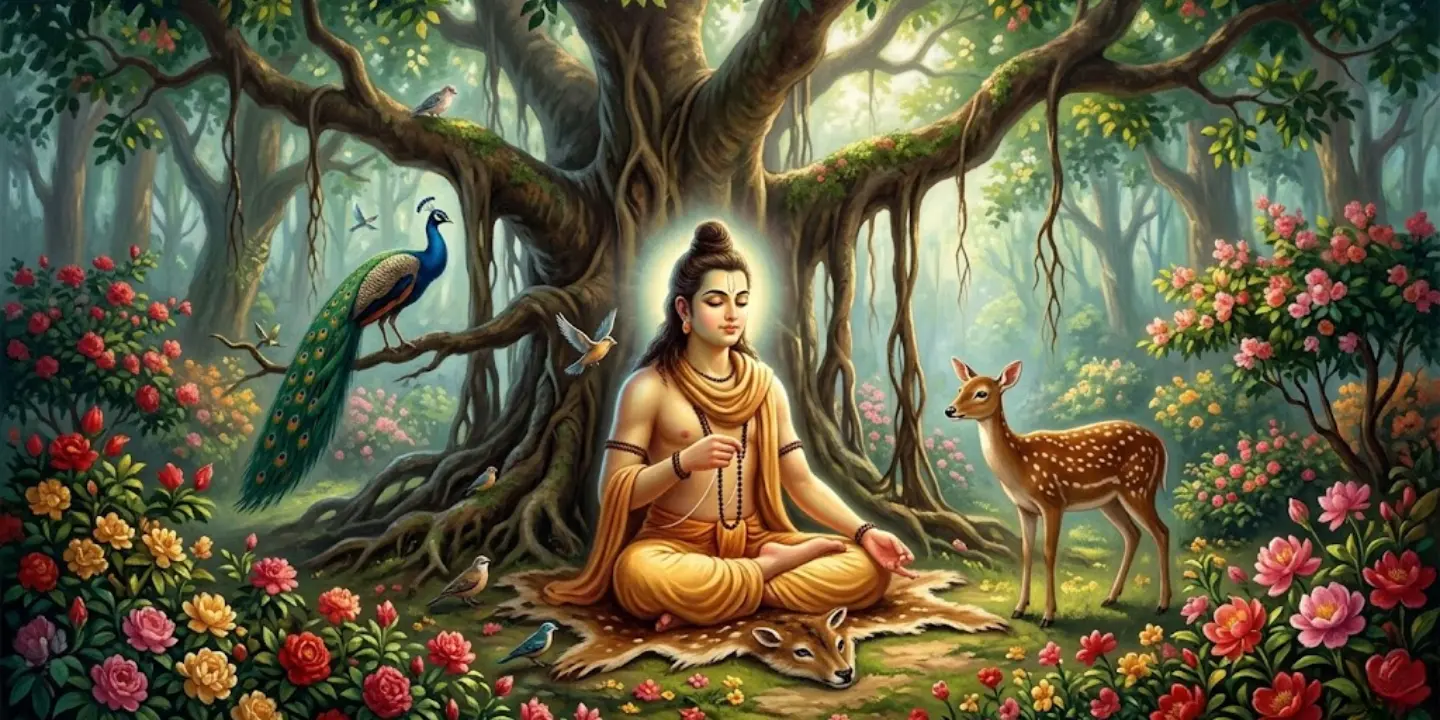
Among these dancers was the beautiful Manjughosha. As she roamed the forest, she came across the young Medhavi immersed in deep meditation. Struck by his divine radiance and profound austerity, she felt a deep admiration arise within her heart. However, respecting his spiritual elevation, she kept her distance, not wanting to disturb his sacred practice.
Witnessing this, Kamadeva (Cupid) decided to test the sage. He wished to demonstrate that even the mightiest spiritual aspirants must remain ever vigilant against distraction on the path. Through divine arrangement, Manjughosha was moved to approach the sage, her melodious voice rising in song, the gentle sound of her anklets creating a celestial melody that softly broke the forest silence.
Medhavi slowly opened his eyes. In that moment, the intense focus of his meditation encountered the beauty of divine artistry manifest through music and form. He felt drawn to this expression of celestial beauty. What began as a moment of appreciation extended, and he temporarily set aside his rigorous practices, spending time in her enchanting company, unaware that what felt like fleeting moments were carrying him far from his spiritual anchor.
This sacred story reminds us how even the most advanced souls must remain vigilant, for divine energy itself can become a distraction when we lose awareness of our ultimate goal..
The Awakening and the Curse ⚡
Time, however, is a cruel trickster when one is in illusion. When Manjughosha finally asked for permission to leave, Medhavi was shocked to realize that they had actually spent fifty-seven years, nine months, and three days together. His entire life's penance had been washed away in what felt like a fleeting dream.
Enraged and heartbroken, his eyes blazing with fire, he cursed Manjughosha: "You have destroyed my spiritual wealth! You shall become a miserable witch (Pishacha)!"
Manjughosha trembled in fear and begged for forgiveness. The sage's anger cooled, replaced by his own despair. He rushed to his father, Chyavana Rishi, and confessed his sin.
The Path to Freedom: Papamochani Ekadashi 🙏
Chyavana Rishi, seeing his son's genuine remorse, revealed the divine remedy. He said, "There is an Ekadashi that occurs in the dark fortnight of the month of Chaitra. It is called Papamochani Ekadashi. If you observe this fast with full devotion, all your sins—no matter how great—will be destroyed."
Both Medhavi and Manjughosha faithfully observed the fast of Papamochani Ekadashi. By the grace of Lord Vishnu, the sage regained all his lost spiritual merit, and the celestial dancer was freed from the curse, returning to her heavenly abode.
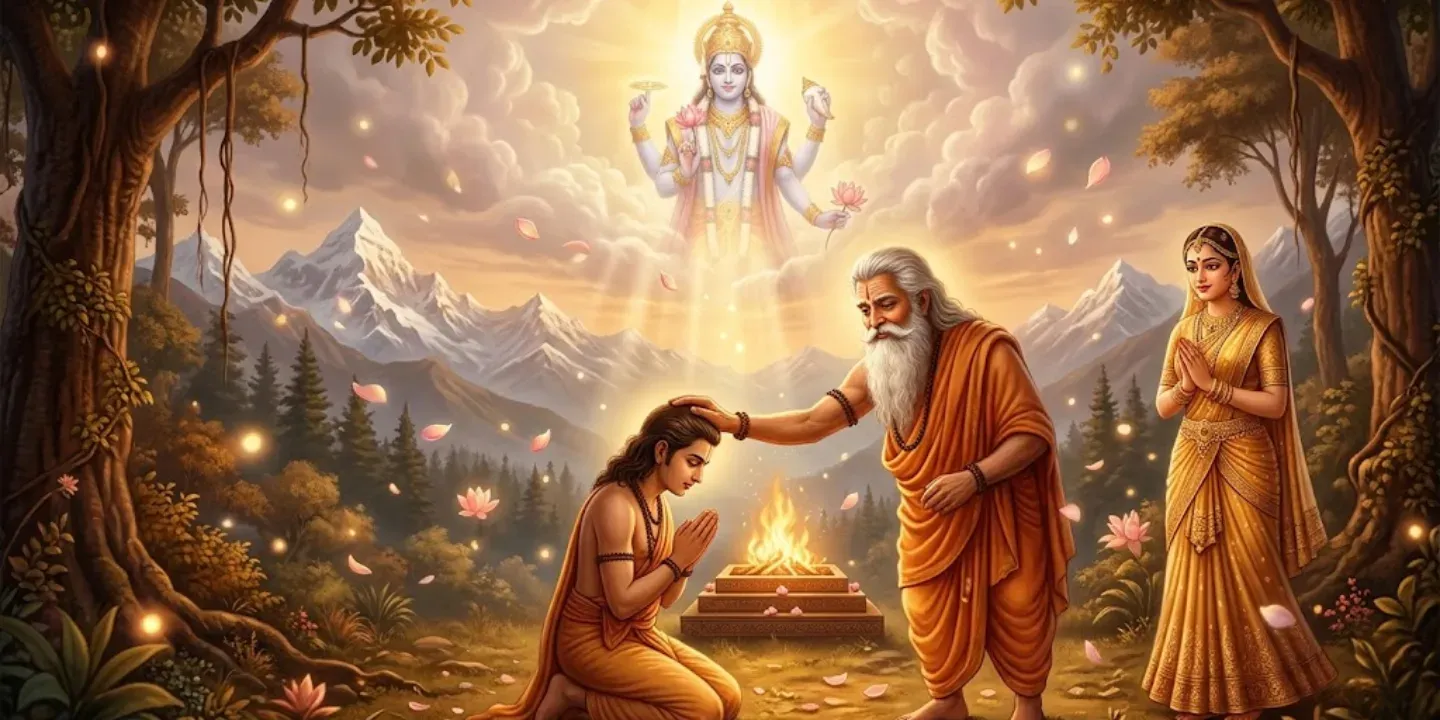
This story holds a profound message: No fall is permanent, and no sin is beyond redemption. The name "Papamochani" itself means "the liberator from sins." It is the day that cuts through the karmic jungle, offering freedom to all who approach it with sincerity .
🔬 The Science of the Sacred: Why Fasting Works
Swami Mukundananda beautifully bridges the gap between faith and reason. He encourages seekers to understand the "why" behind the rituals. Modern science is now catching up with what our Rishis knew thousands of years ago. Here is the scientific evidence that promotes fasting on Ekadashi:
1. The Magic of Autophagy: Cellular Cleanup 🧹
In 2016, Japanese scientist Dr. Yoshinori Ohsumi won the Nobel Prize for his research on Autophagy.
- What is it? The word literally means "self-eating." It is the body's natural process of cleaning out damaged cells, toxins, and unused proteins to regenerate newer, healthier cells.
- How is it triggered? Autophagy is significantly activated during periods of fasting or calorie restriction.
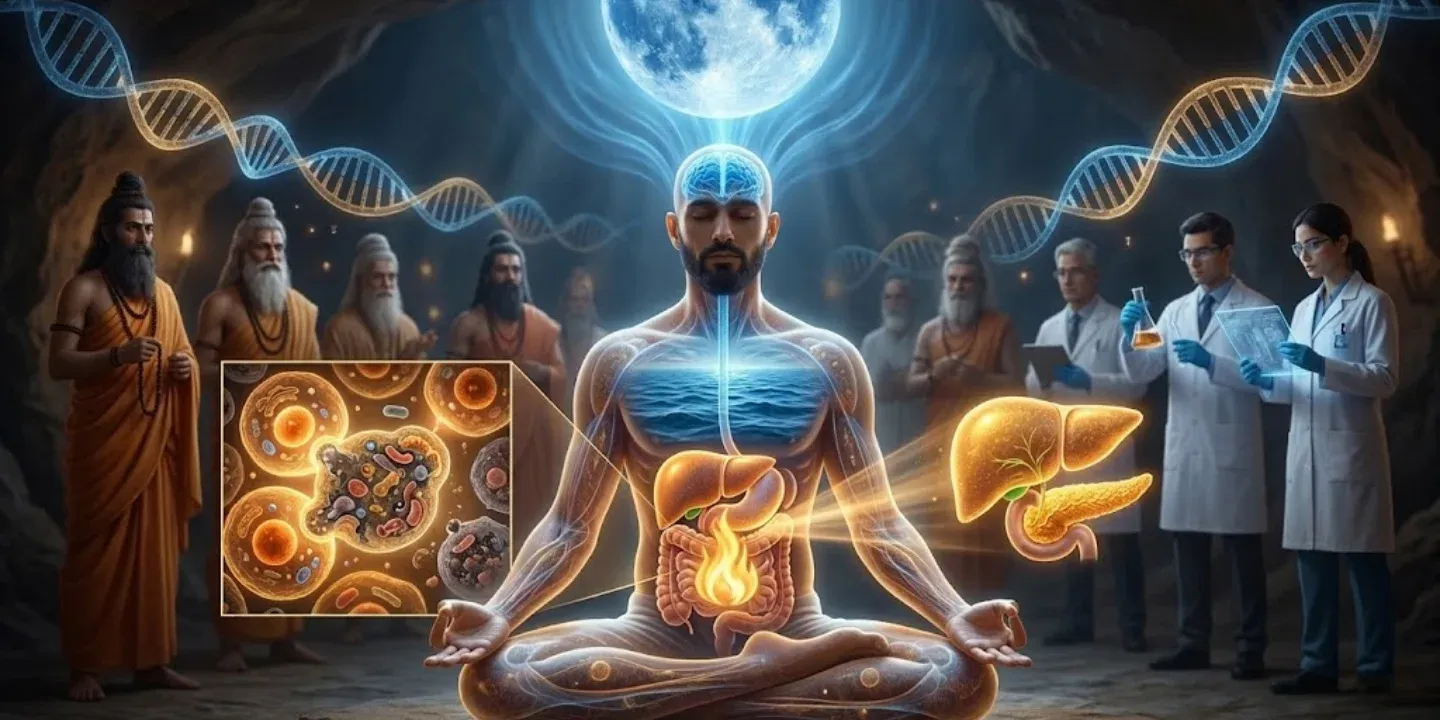
- The Ekadashi Connection: By fasting for approximately 24 hours (from sunrise to the next sunrise), we give our digestive system a complete rest. Without the constant influx of food, the body diverts its energy to housekeeping. It starts consuming and recycling the damaged cells and proteins that could otherwise lead to inflammation, cancer, and neurological disorders like Alzheimer's and Parkinson's .
2. Giving the Digestive Fire a Break 🔥
Our digestive system works tirelessly. The Vedic concept of Agni (digestive fire) suggests it needs to be stoked, not overloaded. Regular fasting (twice a month on Ekadashi) resets the digestive tract, improves metabolism, and gives organs like the pancreas and liver a much-needed holiday. This reduces the risk of diabetes and cardiovascular diseases .
3. The Lunar Pull on the Mind 🌕
This is where the spiritual meets the astro-physical. Ancient texts explain that the moon has a profound effect on the mind (the manas). Just as the moon pulls the tides of the ocean, it pulls on the fluids within our body, influencing our emotions and mental stability.
On the 11th day of each lunar phase, the gravitational pull creates a specific pressure in the atmosphere that affects the pranic energy in the body, particularly the fluid in the spinal cord and brain. By fasting, we minimize the digestive load, allowing the mind to remain calm, focused, and elevated rather than being bogged down by lethargy (tamas) or restlessness (rajas). This makes meditation significantly deeper .
💚 Practical Guide to Observing Papamochani Ekadashi
Observing Ekadashi is not about starving the body, but about feeding the soul. Here is how you can observe this day in alignment with Vedic traditions:
The Dos and Don'ts ❌✅
- What to Avoid: The primary rule is to abstain from grains and beans. This includes rice, wheat, lentils, corn, and all cereals. Even certain spices derived from grains are avoided.
- What to Eat (If breaking the fast is difficult): If a complete Nirjala (without water) fast is too strenuous, one can take Falahar (fruit diet). This includes:
- Fruits, nuts, and milk.
- Root vegetables like potatoes, sweet potatoes, arbi, and pumpkin.
- Buckwheat flour (kuttu) or water chestnut flour (singhara) are allowed.
- Sendha Namak (rock salt) is used instead of regular table salt .
Daily Routine for Spiritual Elevation 🌄
- Morning Resolution: Wake up during Brahma Muhurta (about an hour before sunrise). Take a holy bath and wear clean clothes. Resolve to dedicate this day fully to Lord Krishna.
- Sankalpa (The Vow): Sit before your altar and take a vow to observe the fast for the pleasure of the Lord.
- Worship and Chanting: Perform a simple but heartfelt puja to Lord Vishnu or Krishna. Offer fresh flowers, Tulsi leaves (which are mandatory for Vishnu puja), and a ghee lamp.
- Chant the Vishnu Sahasranama or simply the Hare Krishna Mahamantra
- It is recommended to increase your chanting rounds on this day.
- Reading Scriptures: Spend time reading the Bhagavad Gita, Srimad Bhagavatam, or listening to discourses by Swami Mukundananda. Dive deep into the pastime of Papamochani Ekadashi.
- Evening Aarti: Attend or perform the evening aarti. Stay awake late, engaging in kirtan or satsang. Staying awake overnight (jagaran) is considered highly meritorious, but only if it is spent in devotion, not in idle talk .
- Breaking the Fast (Parana): On the next day (Dwadashi), break your fast during the prescribed Parana time by taking a small meal of sanctified food.
🌼 The Eternal Blessing
As Swami Mukundananda often reminds us, the goal of life is not just to accumulate merit, but to develop pure love for God. Papamochani Ekadashi is a powerful ally on this path. It washes away the dust of past karmas, purifies the mind, and strengthens our connection with the Divine.
This March 15th, do not just observe a fast. Observe a festival of the soul. Let go of the burden of guilt and fear. Step into the light of forgiveness and begin anew.
May this Papamochani Ekadashi burn away your sins and shower you with the boundless grace of Lord Krishna. Jai Shri Krishna! 🙏✨
Frequently Asked Questions About Papamochani Ekadashi 🙏
Q1: Can I drink water while fasting on Papamochani Ekadashi? 💧
Yes, absolutely. While some advanced devotees observe Nirjala (without water) fast, it is not mandatory for everyone. Drinking water, herbal teas, and milk is permitted and encouraged to stay hydrated. Listen to your body and fast according to your capacity.
Q2: What if I cannot fast due to health reasons? 🏥
Sanatan Dharma is compassionate. If you have medical conditions, pregnancy, or are elderly, you can observe a simplified fast. Eat fruits, nuts, and light sattvic meals (avoiding grains and beans). The essence lies in increasing devotion, not torturing the body. You can also sponsor food for a worthy cause.
Q3: Can I eat rice on Ekadashi? 🍚
No. Abstaining from grains and beans, especially rice and wheat, is the primary rule of Ekadashi fasting. These are strictly avoided to give the digestive system complete rest and minimize tamasic energy.
Q4: What should I chant on this day? 🔱
The most powerful chant is the Hare Krishna Mahamantra. You can also chant the Vishnu Sahasranama or simply "Om Namo Bhagavate Vasudevaya." The goal is to keep the mind absorbed in the divine names.
Q5: What is the significance of staying awake at night? 🌙
Staying awake (jagaran) engaged in prayer, kirtan, and scripture reading symbolizes spiritual vigilance. It helps conquer sleep (tamas) and keeps the consciousness elevated toward the divine throughout the night.
Simple Call to Actions 🌸
🙏 Begin Your Spiritual Journey
Start your Papamochani Ekadashi with a heartfelt prayer. Light a lamp, offer Tulsi leaves to Lord Vishnu, and set a intention for inner purification.
📿 Commit to Chanting
Dedicate 15 minutes today to chant the Hare Krishna Mahamantra. Feel the vibration cleanse your mind and connect you with the divine energy of forgiveness.
📖 Read the Sacred Story
Immerse yourself in the powerful tale of Sage Medhavi and Apsara Manjughosha. Let their redemption inspire you to release your own past burdens.
🥗 Observe a Thoughtful Fast
Choose a fasting style that suits your health: water only, fruits and milk, or light sattvic meals. Remember, the goal is spiritual elevation, not physical strain.
💬 Share the Blessings
Forward this blog to a friend seeking spiritual peace. You never know who needs the message of Papamochani Ekadashi today.
🕉️ Join the Satsang
Set aside 30 minutes to watch Swami Mukundananda's discourse on Ekadashi. Let wisdom from a true master illuminate your path.
✨ Make a Resolution
Before the fast ends, write down one habit you wish to release and one spiritual practice you wish to adopt. Let this Ekadashi mark a new beginning.
Jai Shri Krishna! May Papamochani Ekadashi liberate you from all past mistakes and guide you toward eternal peace. 🌿💖