A Sacred Opportunity for Deep Devotion, Purification, and Divine Surrender
Introduction: When Time Itself Becomes Sacred
In the vast and intricately woven calendar of Sanatan Dharma, certain days arise that are not merely markers of time but gateways into deeper spiritual possibility. Among these, Ekadashi holds a place of profound reverence, observed twice every lunar month as a day of fasting, reflection, and devotion. Yet within this already sacred rhythm, there exists an Ekadashi so rare and spiritually potent that it is regarded as exceptionally transformative. This is Padmini Ekadashi, a holy observance that appears only during Adhik Maas, the extra lunar month that itself is considered deeply auspicious.
Padmini Ekadashi is not simply another fasting day to be completed with ritual precision. It is an invitation to step out of the ordinary flow of life and enter into a space of heightened spiritual awareness. It calls the seeker to redirect attention away from the endless movement of the external world and toward the quiet, luminous presence of the Divine within. When approached with sincerity, it becomes a day where devotion deepens, the mind softens, and the heart begins to experience a subtler joy that cannot be found in material pursuits.
According to the teachings of Swami Mukundananda, spiritual practices such as fasting are not ends in themselves. They are tools to refine consciousness and cultivate a deeper relationship with God. True transformation does not come from external austerity alone, but from the inner shift that accompanies it. Padmini Ekadashi therefore becomes not just a ritual observance, but a powerful opportunity to awaken devotion, strengthen surrender, and move closer to divine grace.
When is Padmini Ekadashi in 2026?
Padmini Ekadashi occurs during the Krishna Paksha (waning phase of the moon) in the sacred period of Adhik Maas, which itself appears approximately once every three years to harmonize the lunar and solar calendars.
In 2026, Padmini Ekadashi falls during Adhik Maas. Whilst in Dallas, this will be on Wednesday 26th May, exact date varies by region and should be confirmed with a local panchang.
Because Adhik Maas is considered especially dear to the Divine, all spiritual practices performed during this time carry amplified significance. Within this already elevated period, Padmini Ekadashi stands out as a day of exceptional spiritual merit, making it a rare and precious opportunity for seekers.
The Rare Significance of Padmini Ekadashi

Padmini Ekadashi is described in sacred texts as one of the most powerful Ekadashis, capable of granting immense spiritual benefits when observed with devotion. Its rarity alone makes it special, but its deeper significance lies in its association with Purushottam Maas, the sacred month dedicated to the Supreme Lord.
This Ekadashi is said to purify even deeply rooted karmic impressions, helping the soul move closer to liberation. However, to understand its true value, one must move beyond literal interpretations and appreciate its inner purpose. It is not merely about the removal of sin or the accumulation of merit. It is about creating a shift in consciousness, where the seeker begins to prioritize spiritual growth over worldly distraction.
Swami Mukundananda often explains that the human mind is naturally restless and outwardly focused. It seeks constant stimulation, moving from one desire to another without finding lasting satisfaction. Sacred observances like Padmini Ekadashi interrupt this cycle. They create a pause, allowing the mind to turn inward and reconnect with its deeper nature.
The Inner Meaning of Fasting
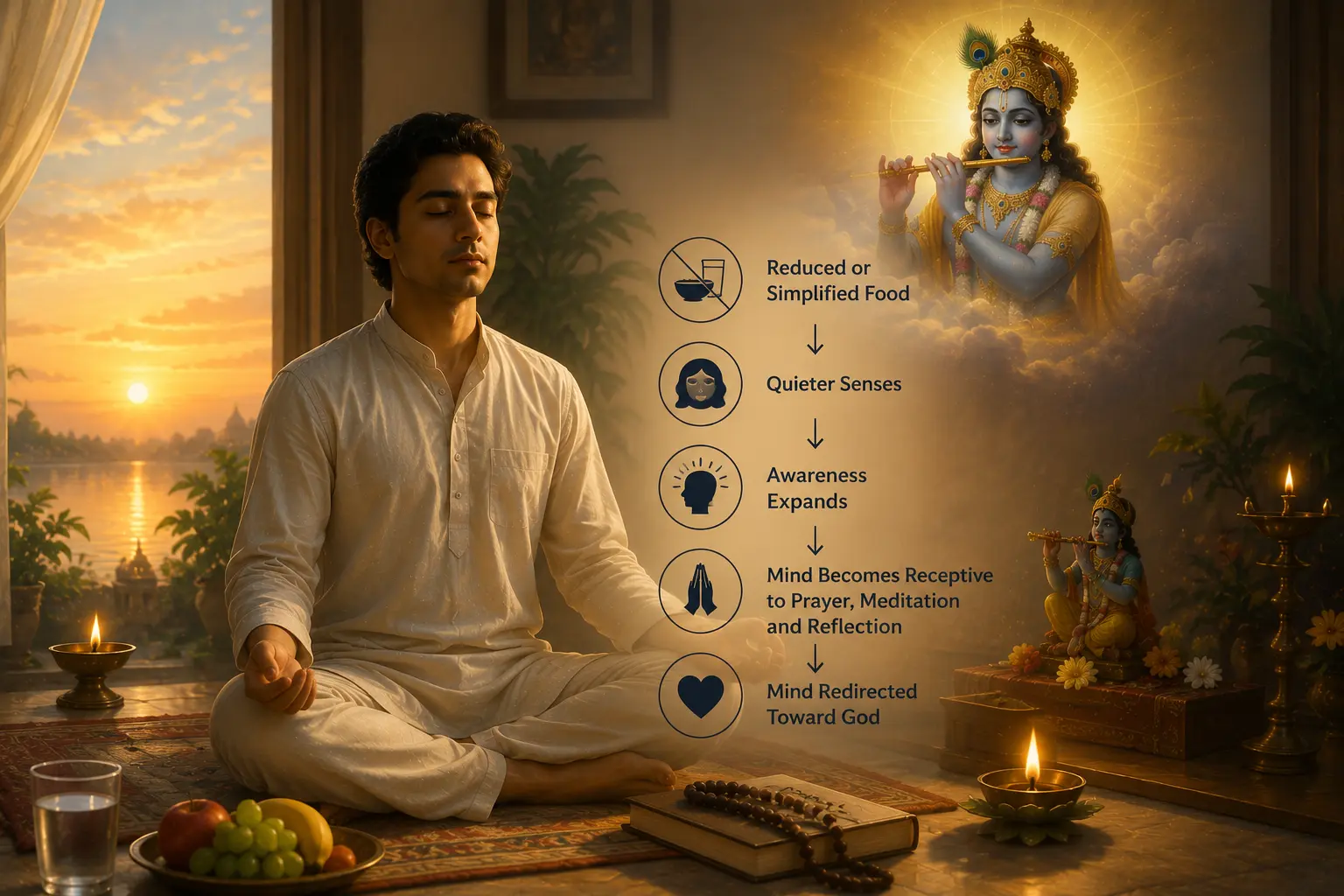
Fasting on Ekadashi is one of its most well-known aspects, yet it is often misunderstood as a purely physical practice. In reality, fasting is a subtle and profound discipline that affects not only the body but also the mind and consciousness.
When the intake of food is reduced or simplified, the senses become quieter. The constant engagement with taste and consumption diminishes, creating space for awareness to expand. This shift allows the mind to become more receptive to prayer, meditation, and reflection.
According to Swami Mukundananda, the purpose of fasting is not to punish the body but to redirect the mind toward God.
It is a means of reducing distraction so that devotion can deepen. When fasting is practiced with the right intention, it becomes a joyful offering rather than a burden.
Different levels of fasting may be observed depending on one’s capacity, ranging from complete abstinence to fruit-based diets or simple sattvic meals. What matters most is sincerity and mindfulness. The external form of the fast is secondary to the internal state it supports.
Selfless Love for God: The Heart of Ekadashi
At the core of Padmini Ekadashi lies the principle of selfless love for God, which is central to the teachings of Swami Mukundananda. True devotion is not transactional. It is not performed with the expectation of specific outcomes or rewards. It is an expression of love that flows naturally from the heart.
When a seeker approaches Ekadashi with this understanding, the entire experience transforms.
Fasting is no longer about earning merit, but about offering oneself. Prayer is no longer about asking, but about connecting. Every action becomes an expression of love.
This selfless love softens the heart and removes the barriers created by ego and expectation. It allows the soul to experience a deeper sense of closeness with the Divine, one that is not dependent on external circumstances.
Surrender to God: The Highest Spiritual Practice

Alongside selfless love, surrender forms the foundation of true spiritual progress. Swami Mukundananda teaches that while effort is essential, the ultimate outcome of spiritual practice depends on divine grace. Surrender is the act of placing one’s trust in that grace.
During Padmini Ekadashi, surrender can be practiced by consciously offering one’s thoughts, actions, and emotions to God.
It involves letting go of the need to control outcomes and instead embracing the understanding that everything unfolds according to divine wisdom.
This does not mean abandoning responsibility. Rather, it means performing one’s duties with sincerity while remaining inwardly detached from the results. In this state, the mind becomes peaceful, and the heart becomes receptive.
Surrender also dissolves the subtle pride that can arise even in spiritual practice. The seeker recognizes that even the desire to seek God is itself a gift. This humility deepens devotion and opens the door to grace.
The Benefits of Observing Padmini Ekadashi
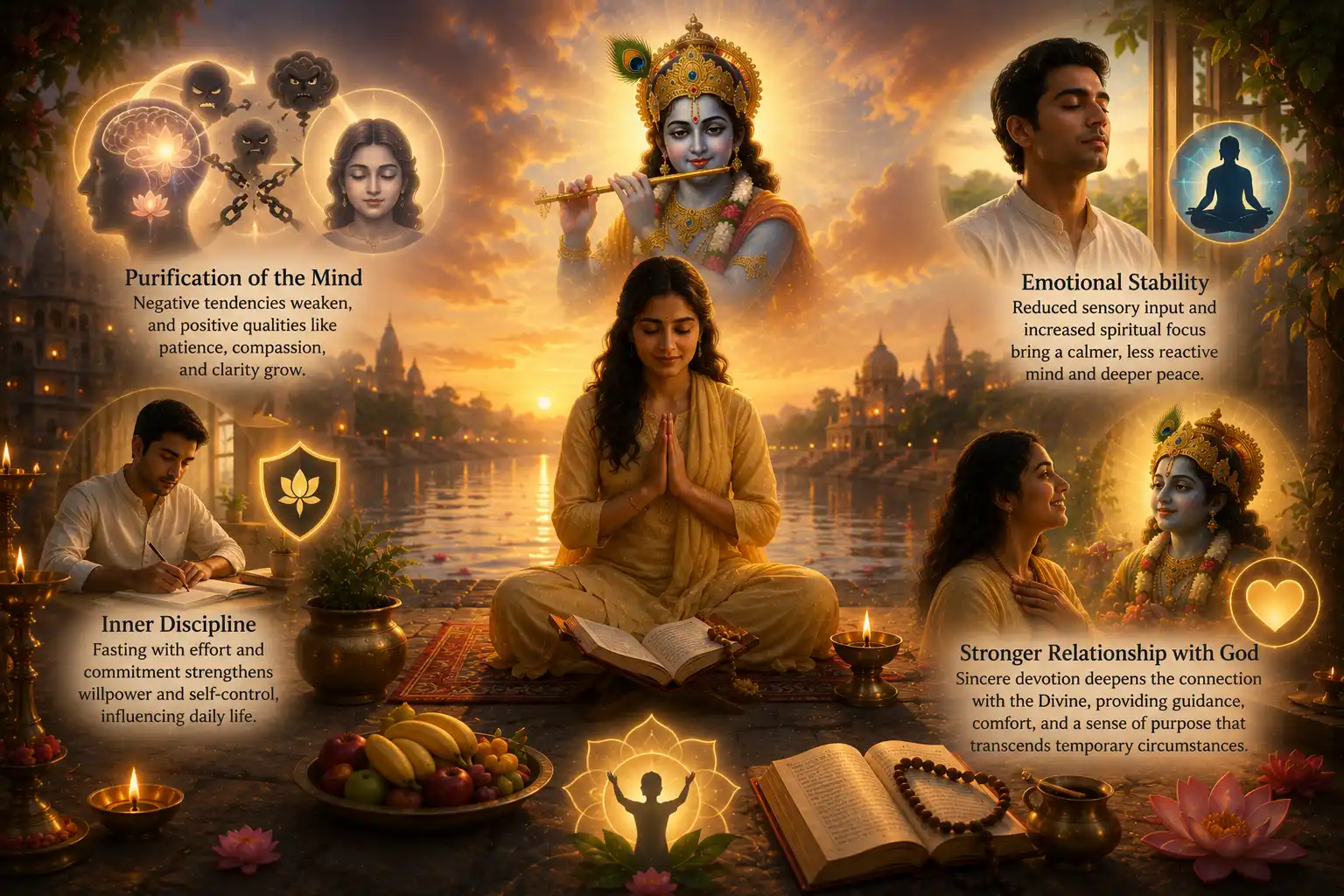
The benefits of Padmini Ekadashi are often described in terms of spiritual merit and purification, but their deeper impact is experienced internally.
One of the most significant benefits is the purification of the mind. Through fasting, prayer, and reflection, negative tendencies begin to weaken, and positive qualities such as patience, compassion, and clarity begin to grow.
Another important benefit is the development of inner discipline. Observing the vrat requires effort and commitment, which strengthens willpower and self-control. These qualities extend beyond the day itself and influence daily life.
Padmini Ekadashi also fosters a sense of emotional stability. By reducing sensory input and increasing spiritual focus, the mind becomes calmer and less reactive. This creates a deeper sense of peace.
Perhaps the greatest benefit is the strengthening of one’s relationship with God. When devotion is practiced with sincerity, the connection with the Divine becomes more tangible. This connection provides guidance, comfort, and a sense of purpose that transcends temporary circumstances.
A Devotional Way to Observe Padmini Ekadashi
Observing Padmini Ekadashi can be approached in a simple yet meaningful way. Begin the day with a sense of reverence, creating a calm environment for prayer and reflection. Light a lamp, offer flowers, and sit quietly in remembrance of God.
Throughout the day, engage in activities that uplift the mind. This may include chanting, reading scriptures, listening to spiritual discourses, or practicing Roopdhyan meditation. Avoid distractions that pull the mind outward.
Fasting can be observed according to one’s capacity, always with mindfulness and gratitude. The focus should remain on maintaining a devotional state rather than adhering to rigid rules.
In the evening, spend time in quiet reflection. Offer gratitude for the opportunity to observe the vrat and pray for continued guidance on the spiritual path.
Integrating the Spirit of Ekadashi into Daily Life
The true value of Padmini Ekadashi lies not only in the observance itself but in how it influences daily life. The qualities cultivated on this day can be carried forward through regular practice.
Maintaining a simple daily routine that includes prayer, meditation, and gratitude can help sustain the benefits of the vrat. Engaging in satsang and surrounding oneself with positive influences further strengthens spiritual growth.
Over time, these practices create a stable foundation for inner transformation. The mind becomes more focused, the heart more open, and life itself more meaningful.
Final Reflection: A Rare Opportunity for Divine Connection
Padmini Ekadashi is a rare and sacred opportunity, a moment in time when the doors to deeper spiritual experience open more widely. It invites the seeker to step beyond routine and enter into a space of devotion, reflection, and surrender.
When approached with sincerity, it becomes more than a ritual. It becomes a journey inward, a movement toward the Divine, and a reminder that true fulfillment lies not in accumulation, but in connection.
As Swami Mukundananda teaches, the ultimate goal of life is to develop love for God. Every practice, every discipline, and every moment of awareness is a step toward that goal.
Padmini Ekadashi offers one such step. And when taken with faith, it has the power to transform not only a day, but the direction of one’s life.
Call to Action
This Padmini Ekadashi, move beyond ritual and step into devotion. Begin with a simple offering of your time, your attention, and your heart. Let this sacred day become the beginning of a deeper connection with God.

FAQs
1. What makes Padmini Ekadashi different from other Ekadashis, and why is it considered so rare?
Padmini Ekadashi is unique because it occurs only during Adhik Maas, the extra lunar month that appears approximately once every three years to harmonize the lunar and solar calendars. This alone makes it far less frequent than regular Ekadashis, which occur twice every month. However, its rarity is not merely astronomical; it is deeply spiritual. Adhik Maas is also known as Purushottam Maas, a period considered especially dear to the Supreme Lord, and therefore all devotional practices performed during this time carry heightened significance.
Within this already sacred month, Padmini Ekadashi stands out as a day of exceptional potency. Scriptures describe it as a time when spiritual effort yields multiplied results, but its deeper importance lies in the opportunity it provides to shift one’s inner orientation. According to the teachings of Swami Mukundananda, such rare alignments are invitations from the Divine to intensify devotion and accelerate spiritual growth. When a seeker approaches this Ekadashi with sincerity, it becomes not just a date, but a doorway into deeper awareness and connection with God.
2. Is fasting on Padmini Ekadashi compulsory, and what if I am unable to fast strictly?
Fasting is traditionally an important aspect of Ekadashi observance, including Padmini Ekadashi, but it should never be approached as a rigid obligation that creates physical distress or mental strain. The true purpose of fasting is to support spiritual focus by reducing sensory engagement and allowing the mind to turn inward. It is a tool for refinement, not punishment.
Swami Mukundananda emphasizes that spiritual practices must be performed with understanding and balance. If a strict fast such as nirjala (without water) is not feasible due to health, age, or personal circumstances, one may observe a modified fast that includes fruits, milk, or simple sattvic food. What matters most is the intention behind the practice and the awareness maintained throughout the day. A gentle fast practiced with devotion and mindfulness is far more beneficial than a harsh fast performed with discomfort or distraction. Ultimately, the goal is not physical endurance, but inner elevation.
3. Can Padmini Ekadashi be observed by anyone, or is it only for certain groups?
While Ekadashi has traditionally been observed by devotees across various stages of life, Padmini Ekadashi is not restricted to any particular group. It can be observed by anyone who feels a sincere inclination toward spiritual growth and devotion. The essence of this observance lies not in external identity, but in inner intention.
For some, it may be a day of disciplined fasting and structured worship. For others, it may be a day of increased prayer, reflection, and remembrance of God. Even those who are new to spiritual practice can participate in a way that feels natural and meaningful. The teachings of Swami Mukundananda remind us that spirituality is not about perfection, but about direction. Every sincere step taken toward God, no matter how small, carries value.
In this sense, Padmini Ekadashi becomes inclusive and accessible. It is an opportunity for anyone, regardless of background, to pause, reflect, and deepen their connection with the Divine.
4. What are the deeper spiritual benefits of observing Padmini Ekadashi beyond material gains?
While traditional descriptions of Ekadashi often highlight the removal of sins or the accumulation of merit, the deeper benefits of Padmini Ekadashi are primarily internal and transformative. One of the most significant benefits is the purification of consciousness. Through fasting, prayer, and reflection, the mind gradually becomes less influenced by negative patterns such as restlessness, attachment, and distraction.
Another important benefit is the strengthening of devotional awareness. When the senses are quieted and attention is directed toward God, the heart becomes more receptive to subtle spiritual experiences. This creates a sense of inner peace and contentment that is not dependent on external conditions.
Additionally, Padmini Ekadashi helps cultivate self-discipline and emotional stability. The effort required to observe the vrat builds willpower and resilience, qualities that are essential for both spiritual and practical life.
Ultimately, the greatest benefit is the deepening of one’s relationship with God. As devotion grows, the seeker begins to experience a sense of connection that transcends temporary concerns. This connection becomes a source of strength, guidance, and fulfillment.
5. How does surrender to God during Padmini Ekadashi help reduce the influence of karma and life challenges?
Surrender to God is one of the most profound teachings emphasized by Swami Mukundananda, and it plays a central role in the deeper practice of Padmini Ekadashi. While karma governs the experiences we encounter in life, surrender transforms how we relate to those experiences.
Surrender does not eliminate karma, but it reduces its psychological burden. When a seeker places trust in the Divine, there is a shift from anxiety to acceptance, from resistance to faith. Instead of constantly trying to control outcomes or fear future events, the mind begins to rest in the understanding that everything unfolds under divine guidance.
This shift has a powerful effect. Challenges may still arise, but they are no longer experienced with the same intensity of fear or distress. The seeker develops a sense of inner stability, knowing that every situation carries a purpose and that divine grace is always present.
On Padmini Ekadashi, practicing surrender can be as simple as offering one’s thoughts, actions, and emotions to God. It involves acknowledging that while effort is necessary, the ultimate outcome is not in our control. This humility opens the heart and allows grace to flow more freely.
Over time, this attitude reduces the hold of both karmic anxiety and external uncertainty. Life begins to feel less like a series of unpredictable events and more like a guided journey. In this state, the seeker moves forward not with fear, but with trust; and that trust becomes the foundation of true peace.