
Introduction
Bhagavad Gita 6.26
यतो यतो निश्चरति मनश्चञ्चलमस्थिरम् |
ततस्ततो नियम्यैतदात्मन्येव वशं नयेत् || 26||
yato yato niśhcharati manaśh chañchalam asthiram
tatas tato niyamyaitad ātmanyeva vaśhaṁ nayet
Translation
BG 6.26: Whenever and wherever the restless and unsteady mind wanders, one should bring it back and continually focus it on God.
The human mind naturally seeks comfort, pleasure, and distraction in the midst of life's endless demands, it is easy to become absorbed in worldly pursuits and lose sight of our spiritual purpose. Recognizing this tendency, the Vedic scriptures prescribe sacred observances that help purify the mind, strengthen self-discipline, and deepen our remembrance of God.
Among these observances, Nirjala Ekadashi occupies a unique and revered place. Celebrated on the eleventh day of the waxing moon in the month of Jyeshtha, it is regarded as the most austere and spiritually rewarding of all Ekadashis. The word Nirjala means "without water," and traditionally devotees observe a complete fast from both food and water while dedicating the day to prayer, chanting, scriptural study, and devotion to Lord Vishnu.
Nirjala Ekadashi 2026: Date and Timings
|
Observance |
India (New Delhi) |
USA (Dallas Area*) |
|
Nirjala Ekadashi |
Thursday, June 25, 2026 |
Thursday, June 25, 2026 |
|
Ekadashi Tithi Begins |
June 24, 2026 |
June 24, 2026 |
|
Ekadashi Tithi Ends |
June 25, 2026 |
June 25, 2026 |
|
Parana (Fast Breaking) |
June 26, 2026 |
June 26, 2026 |
*Timings vary by location. Devotees should verify local Parana timings through Drik Panchang or Radha Krishna Temple Dallas announcements.
In 2026, Nirjala Ekadashi falls on Thursday, June 25. Revered in the scriptures as the "King of Ekadashis," this sacred day is associated with the inspiring story of Bhima, the mighty Pandava, whose sincere desire to obtain the benefits of all Ekadashi fasts led Sage Vyasa to prescribe this special observance. Beyond its external austerity, Nirjala Ekadashi teaches a timeless lesson: spiritual progress is achieved not merely through ritual, but through sincere devotion, self-control, and wholehearted surrender to God.
As devotees around the world prepare to observe this sacred fast, let us explore the meaning, significance, scriptural history, and spiritual benefits of Nirjala Ekadashi, while reflecting on how its teachings can enrich our spiritual journey today.
What is Nirjala Ekadashi?
The word Ekadashi literally means "the eleventh day." According to the Hindu lunar calendar, each lunar month is divided into two fortnights: the Shukla Paksha (waxing moon) and the Krishna Paksha (waning moon). The eleventh day of each fortnight is known as Ekadashi. As there are two Ekadashis every month, devotees typically observe twenty-four Ekadashis in a year, although an additional lunar month (Adhik Maas) occasionally increases the number to twenty-six.
For centuries, Ekadashi has been regarded as one of the most sacred days for spiritual practice. Scriptures describe it as an ideal opportunity to reduce worldly distractions and increase remembrance of God through prayer, chanting, scriptural study, and devotion. While fasting is an important aspect of Ekadashi observance, its deeper purpose is to help devotees gain mastery over the senses and redirect the mind towards the Divine.
The observance of Ekadashi can vary according to one's health, age, and spiritual practice. Some devotees abstain from grains and beans, others consume fruits and milk, while a few undertake more rigorous fasts. Regardless of the method chosen, the true essence of Ekadashi lies in cultivating devotion, self-discipline, and a closer relationship with God.
Among all the Ekadashi observed throughout the year, Nirjala Ekadashi holds a special place. The word Nirjala is derived from two Sanskrit words: nir, meaning "without," and jala, meaning "water." Thus, Nirjala Ekadashi refers to a fast observed without food or water. Traditionally, devotees spend the day absorbed in prayer, chanting, worship, and spiritual reflection while observing this austere vow.
Among the twenty-four Ekadashi observed each year, Nirjala Ekadashi is uniquely revered as the “King of Ekadashis.” Observed only once annually, this sacred fast is described in the Padma Purana as bestowing the spiritual merits of all Ekadashi fasts when performed with sincerity. Its special significance is beautifully illustrated through the cherished story of Bhima, the mighty Pandava, and Sage Vyasa.
Why is Nirjala Ekadashi Called the King of Ekadashis?

The extraordinary significance of Nirjala Ekadashi is rooted in a popular account found in the Padma Purana. The story centers on Bhima, one of the five Pandava brothers from the Mahabharata.
Among the Pandavas, Bhima was renowned for his immense physical strength and heroic deeds. However, he was equally famous for another characteristic, his hearty appetite. While his brothers Yudhishthira, Arjuna, Nakula, Sahadeva, and even his mother Kunti faithfully observed every Ekadashi fast, Bhima found it extremely difficult to do so. Blessed with tremendous digestive power, he often remarked that the fire of hunger within him burned constantly and was difficult to control.
Desiring the spiritual benefits obtained by observing Ekadashi but unable to fast twice every month, Bhima approached the revered Sage Vyasa with a humble request. He explained his predicament and asked if there was a way to receive the blessings of all the Ekadashi fasts without having to observe each one individually.
Moved by Bhima's sincerity, Sage Vyasa prescribed a special observance. He instructed Bhima to observe the Jyeshtha Shukla Ekadashi with complete dedication, abstaining not only from food but even from water. Vyasa explained that sincere observance of this one fast would bestow the spiritual merits associated with all the Ekadashis observed throughout the year.
Bhima accepted the challenge and faithfully observed the fast. Because of this connection with Bhima, Nirjala Ekadashi is sometimes also known as Bhimseni Ekadashi or Pandava Ekadashi.
The story conveys a profound spiritual lesson. God does not judge devotees merely by the number of rituals they perform but by the sincerity and devotion behind their efforts. Bhima's strength did not lie merely in lifting mountains or defeating powerful warriors; it also lay in his willingness to undertake a difficult spiritual discipline out of faith and obedience to his guru's instruction.
For this reason, Nirjala Ekadashi came to be revered as the "King of Ekadashis." While devotees observe many Ekadashis throughout the year, this single observance is traditionally regarded as encompassing the spiritual benefits of all of them when performed with genuine devotion. Its greatness lies not only in the austerity of fasting without water but also in the spirit of surrender, determination, and God-remembrance that it inspires.
What Makes Nirjala Ekadashi Spiritually Powerful?
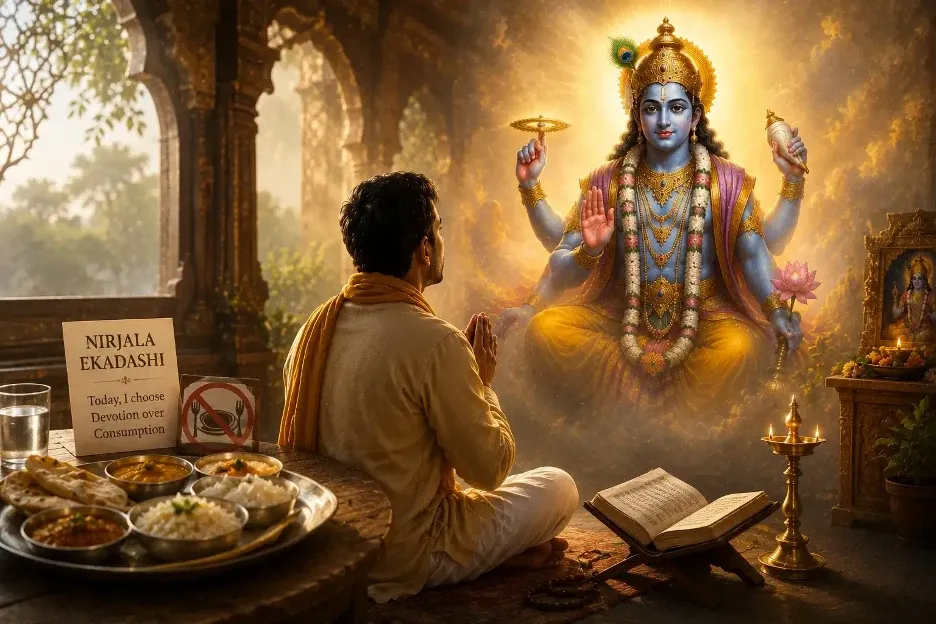
At first glance, Nirjala Ekadashi may appear to be a day of physical austerity. However, Swami Mukundananda explains that the true purpose of Ekadashi extends far beyond abstaining from food and water. The observance is designed to help devotees strengthen their spiritual awareness and draw closer to God.
Self-Control: Training the Mind to Follow Higher Goals
One of the greatest challenges in spiritual life is not conquering the world but conquering oneself. The mind constantly seeks comfort, pleasure, and immediate gratification. Ekadashi provides an opportunity to practice self-restraint and strengthen the will.
Swami Mukundananda explains that every time we consciously deny an unnecessary desire, we develop inner strength. Just as a muscle becomes stronger through exercise, the mind becomes stronger through disciplined practice. By voluntarily accepting temporary discomfort on Nirjala Ekadashi, devotees learn that they need not be controlled by their impulses. Instead, they can direct their minds toward a higher purpose.
In this way, Nirjala Ekadashi becomes an annual reminder that true freedom lies not in fulfilling every desire but in mastering them.
Sense Mastery: Becoming the Master, Not the Servant
Swami Mukundananda often teaches that the senses naturally pull the mind outward toward worldly objects. The tongue seeks taste, the ears seek entertainment, and the eyes seek distraction. Left unchecked, these demands can dominate our lives and weaken our spiritual focus.
Ekadashi reverses this tendency. For one day, the devotee consciously declares that the senses are not in charge. By regulating food intake and reducing external distractions, the mind becomes more receptive to prayer, chanting, and contemplation.
Dependence on God: Nourishing the Soul
The deeper purpose of fasting is not deprivation but redirection. Instead of seeking nourishment solely from food and drink, devotees are encouraged to seek nourishment from remembrance of God. When devotees spend the day chanting God's names, reading sacred scriptures, attending satsang, and engaging in prayer, they gradually shift their dependence from external comforts to divine grace. Nirjala Ekadashi reminds us that while the body requires food, the soul longs for something far greater—the loving connection with God.
Purification of the Mind
Another important teaching emphasized by Swami Mukundananda is the relationship between food and consciousness. The Vedic scriptures explain that the quality of our food influences the quality of our thoughts. When the body's demands are reduced and spiritual practices are increased, the mind naturally becomes calmer and more focused.
However, Swamiji cautions that merely remaining hungry is not the goal of Ekadashi. A person may fast all day yet spend the entire time absorbed in worldly thoughts. Such fasting provides little spiritual benefit. The true observance of Ekadashi includes remembrance of God, prayer, scriptural study, and devotional practices that elevate the mind.
When observed in this spirit, Nirjala Ekadashi becomes a powerful means of inner purification. It helps reduce mental restlessness, strengthens devotion, and reminds us of our eternal identity as souls connected to God.
Nirjala Ekadashi from Swami Mukundananda’s Lens
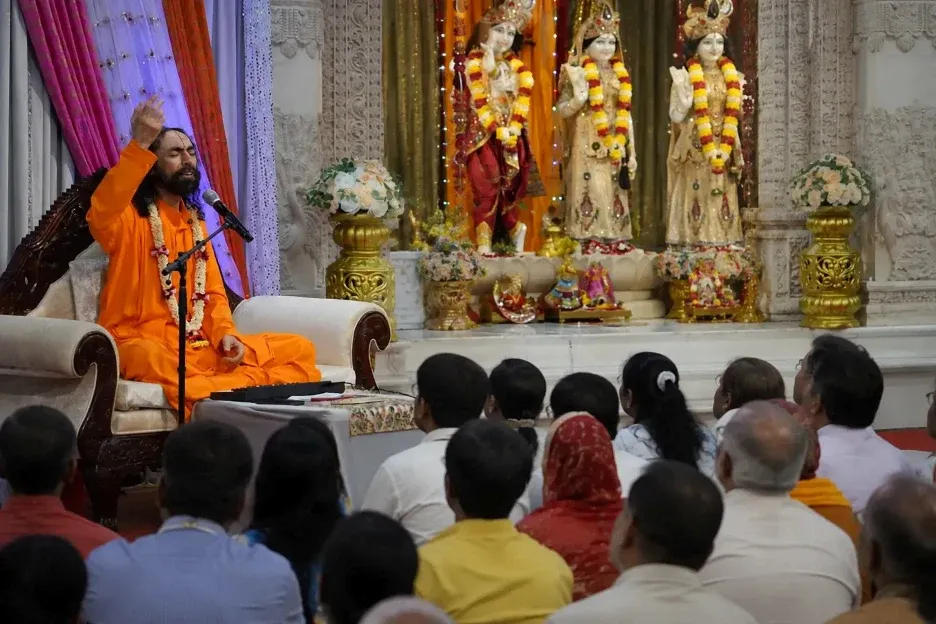
While the story of Bhima explains why Nirjala Ekadashi is called the "King of Ekadashis," Swami Mukundananda helps us understand its deeper spiritual significance. He explains that the greatness of this sacred observance is not measured by the hardship of fasting but by the transformation it brings within.
At the heart of Ekadashi lies the concept of Upvas. Swamiji explains that the word is derived from two Sanskrit words: upa, meaning "near," and vas, meaning "to reside."
Thus, the true meaning of Upvas is not merely fasting but "to reside near God."
Every living being seeks happiness, love, and fulfillment. Yet despite pursuing countless worldly goals, the heart often remains restless and dissatisfied. The Vedic scriptures explain that this longing exists because the soul is an eternal part of God. Just as a child naturally seeks the love and protection of its parents, the soul naturally seeks its Divine source. Nirjala Ekadashi provides a sacred opportunity to turn away from worldly distractions and lovingly reconnect with God through prayer, chanting, satsang, and remembrance of the Lord.
One of the primary purposes of Nirjala Ekadashi is therefore the development of self-control. The mind constantly seeks comfort, while the senses pull us toward worldly pleasures and distractions. Left unchecked, these desires can keep us absorbed in temporary enjoyments and away from our spiritual goals. By voluntarily accepting discipline for a day, devotees strengthen their ability to govern their desires rather than be governed by them. Bhima's willingness to undertake a difficult fast despite his powerful appetite reminds us that true strength lies not merely in physical power but in mastery over oneself.
Swamiji often teaches that the senses can become demanding masters if left unchecked. The tongue seeks taste, the ears seek entertainment, and the mind continually chases distractions. Ekadashi offers an opportunity to reverse this tendency and reclaim our spiritual independence. Through fasting and devotion, we learn to become masters of our senses rather than their servants. Such mastery is not an end in itself; it helps free the mind from distractions so that it can remain absorbed in God.
Swami Mukundananda beautifully explains:
"The goal is that on the day of the fast, you think less about food and instead engage the mind in devotion."
In practical terms, Ekadashi creates more time for spiritual practice. Instead of spending the day planning meals, cooking, eating, and thinking about food, devotees can redirect that time and energy toward japa, kirtan, reading sacred scriptures, serving others, and reflecting on God's divine qualities.
Swamiji also cautions devotees against becoming overly preoccupied with special Ekadashi foods while forgetting the purpose of the fast. Some people spend the entire day gathering ingredients, preparing elaborate recipes, and thinking constantly about what they will eat next. Although grains may have been avoided, the mind remains absorbed in food rather than in God. The purpose of Ekadashi is not merely to change the menu but to change the focus of the mind.
"Focusing solely on abstaining from certain foods defeats the very purpose of fasting."
On Ekadashi, the mind should fast from negativity, the tongue should fast from harmful speech, and the senses should fast from unnecessary indulgence. When external distractions are reduced, the mind becomes calmer, devotion deepens, and the heart becomes more receptive to God's grace.
Every day we carefully nourish the body with food, comfort, and attention. Yet the soul, whose true nourishment is God's remembrance, is often neglected. Nirjala Ekadashi gives us an opportunity to reverse this habit and consciously nourish the soul through prayer, devotion, and loving remembrance of the Lord.
Ultimately, the glory of Nirjala Ekadashi does not lie in enduring hunger or thirst. Its true purpose is the purification of the mind and the awakening of devotion. As Swami Mukundananda beautifully reminds us:
"The success of Ekadashi is not measured by an empty stomach, but by a mind absorbed in God."
When observed in this spirit, Nirjala Ekadashi becomes far more than a fast. It becomes an expression of love. Every chant, every prayer, every moment of self-restraint becomes an offering to God. As the mind gradually turns away from worldly distractions and toward the Divine, devotion deepens and the heart experiences a glimpse of the joy it has been seeking all along.
This is the true power of Nirjala Ekadashi. It is not merely a day of fasting but a sacred opportunity to draw closer to God, deepen one's devotion, and experience the inner peace that comes from loving remembrance of the Lord.
Modern Relevance of Nirjala Ekadashi

The wisdom of Nirjala Ekadashi is perhaps more relevant today than ever before. Modern life is characterized by constant stimulation, with endless notifications, social media, entertainment, consumerism, and the relentless pursuit of comfort and convenience. While technology has made life easier, it has also made it more difficult for the mind to remain calm, focused, and spiritually centered. Nirjala Ekadashi offers a powerful antidote to this restless lifestyle. By voluntarily stepping back from bodily demands and worldly distractions, devotees create space for reflection, self-discipline, and divine remembrance.
Swami Mukundananda teaches that true happiness does not come from endlessly gratifying the senses but from elevating the consciousness. Nirjala Ekadashi reminds us that we are more than our physical needs and desires. For one sacred day, we consciously shift our attention from consumption to contemplation, from external pursuits to inner growth, and from worldly preoccupations to God. In doing so, we rediscover a timeless truth: lasting peace is found not in having more, but in drawing closer to the Divine.
Observing Nirjala Ekadashi According to One's Capacity
While Nirjala Ekadashi is traditionally observed as a complete fast from both food and water, the scriptures and saints have always emphasized that spiritual practices should be undertaken with wisdom and sincerity. Elderly devotees, pregnant women, nursing mothers, individuals with medical conditions, and those taking medication should observe the fast according to their health and capacity. God values devotion and sincerity far more than physical hardship.
Swami Mukundananda also cautions devotees against becoming overly preoccupied with the external details of fasting while forgetting its spiritual purpose. He explains that some people spend the entire day planning special Ekadashi meals, gathering ingredients, preparing elaborate dishes, and thinking constantly about food. In such cases, although grains may have been avoided, the mind remains absorbed in eating rather than in God.
The purpose of Ekadashi is not merely to change the menu but to change the focus of the mind. By simplifying our meals and reducing our attention to food, we create more time and mental space for prayer, chanting, scriptural study, satsang, and devotion.
Swamiji therefore encourages devotees to approach Ekadashi with the right spirit. Whether one observes a complete Nirjala fast, takes fruits and milk, or follows a simple Ekadashi diet according to one's health, the goal should remain the same, to draw closer to God. The less the mind is occupied with food and bodily demands, the easier it becomes to engage in divine remembrance.
Ultimately, the success of Nirjala Ekadashi is not determined by the severity of the fast but by the extent to which it helps purify the mind and deepen one's devotion. A simple observance performed with humility, faith, and sincere remembrance of God is far more valuable than an austere fast accompanied by pride, anxiety, or constant thoughts of food.
Nirjala Ekadashi at Radha Krishna Temple Dallas
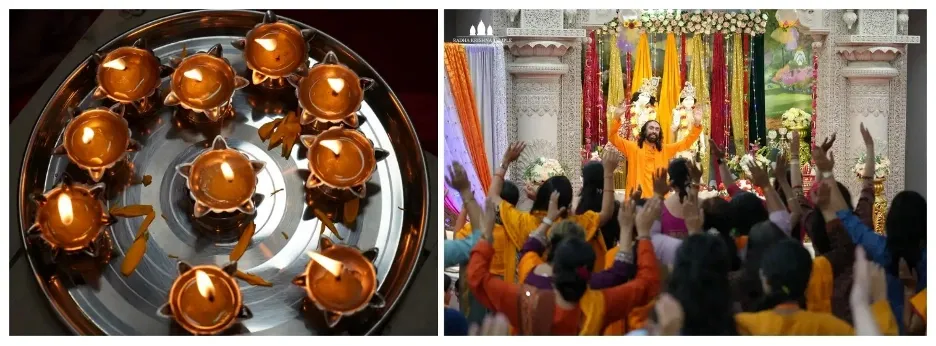
Sacred observances such as Nirjala Ekadashi become even more meaningful when practiced in the company of fellow devotees. At Radha Krishna Temple Dallas, Ekadashi provides an opportunity for the community to come together in prayer, devotion, and remembrance of God.
Devotees may choose to spend the day participating in temple worship, chanting the holy names, listening to spiritual discourses, reading sacred scriptures, and engaging in seva. Such collective spiritual practices help strengthen devotion and create an atmosphere that supports inner reflection and God-consciousness.
Swami Mukundananda often reminds us that spiritual growth is accelerated through satsang. The company of like-minded devotees inspires us to remain focused on our spiritual goals and transforms individual practice into a shared journey toward God.
Whether observing a complete Nirjala fast or participating according to one's capacity, devotees can use this sacred day to deepen their connection with the Lord and seek His grace. Nirjala Ekadashi serves as a beautiful reminder that spiritual progress is not achieved through austerity alone, but through sincere devotion, humility, and loving remembrance of God.
We invite devotees and their families to join the Radha Krishna Temple Dallas community in observing this sacred Ekadashi and experiencing the joy of collective devotion.
Conclusion
In a world that constantly encourages indulgence, Nirjala Ekadashi invites us to practice restraint. In a life filled with distractions, it reminds us to return our attention to God. More than a day of fasting, it is a sacred opportunity to pause, reflect, and strengthen our spiritual connection with the Divine.
The story of Bhima teaches us that God looks not at our limitations but at the sincerity of our efforts. Despite his inability to observe every Ekadashi, Bhima's faith, humility, and determination earned him the blessings of this extraordinary observance. His example reminds us that spiritual progress begins when we take one sincere step toward God.
Swami Mukundananda beautifully explains that the true meaning of Upvas is to reside near God. The purpose of Nirjala Ekadashi is therefore not merely to abstain from food and water but to nourish the soul through prayer, chanting, scriptural study, satsang, and loving remembrance of the Lord. When the mind is withdrawn from worldly distractions and lovingly offered to God, fasting becomes a powerful means of inner purification.
Whether one observes a complete Nirjala fast or participates according to one's capacity, the essence of the day remains the same, to deepen devotion, cultivate self-control, and draw closer to God. The real success of Nirjala Ekadashi is not measured by the austerity we perform but by the transformation we experience within.
As Nirjala Ekadashi approaches, let us dedicate this sacred day to heartfelt devotion and sincere spiritual effort. May Lord Vishnu blesses us with purity of mind, strength of character, unwavering faith, and an ever-deepening love for Him. May this King of Ekadashis inspire us to carry its lessons beyond a single day, transforming our thoughts, actions, and hearts throughout the year.
Key Takeaways:
1. Nirjala Ekadashi is revered as the "King of Ekadashis" and is observed once a year on Jyeshtha Shukla Ekadashi.
2. The observance is associated with Bhima and Sage Vyasa, who prescribed this special fast to bestow the spiritual benefits of all Ekadashis observed throughout the year.
3. The true meaning of Upvas is "to reside near God." The purpose of fasting is not merely to abstain from food but to deepen one's connection with the Divine.
4. Nirjala Ekadashi helps develop self-control and sense mastery, enabling devotees to redirect their minds from worldly distractions toward spiritual growth.
5. True fasting extends beyond food. The mind should also fast from negativity, gossip, anger, criticism, and unnecessary indulgence.
6. The soul's deepest nourishment comes from remembrance of God. Ekadashi provides an opportunity to strengthen devotion through prayer, chanting, scriptural study, satsang, and seva.
7. The success of Nirjala Ekadashi is measured not by the austerity of the fast but by the extent to which it purifies the mind and increases love for God.
Frequently Asked Questions (FAQs)
1. What is Nirjala Ekadashi?
Nirjala Ekadashi is a sacred Hindu fast observed on the Shukla Paksha Ekadashi of the month of Jyeshtha. The word Nirjala means "without water," and traditionally devotees abstain from both food and water while dedicating the day to prayer and devotion.
2. Why is Nirjala Ekadashi called the King of Ekadashis?
According to the Padma Purana, sincere observance of Nirjala Ekadashi is said to bestow the spiritual benefits associated with all the Ekadashis observed throughout the year. For this reason, it is revered as the "King of Ekadashi."
3. What is the connection between Bhima and Nirjala Ekadashi?
Bhima, one of the Pandava brothers, found it difficult to observe every Ekadashi fast because of his immense appetite. Sage Vyasa advised him to observe one Nirjala Ekadashi with complete sincerity, which would grant the benefits of all Ekadashi observances.
4. Must everyone observe a complete fast without water?
No. Elderly devotees, pregnant women, nursing mothers, individuals with health conditions, and those taking medication should observe the fast according to their capacity and medical needs. Devotion and sincerity are more important than physical hardship.
5. What does Swami Mukundananda mean when he says "Upvas means residing near God"?
Swamiji explains that Upvas comes from upa (near) and vas (to reside). Thus, the true purpose of fasting is to bring the mind closer to God through prayer, chanting, scriptural study, and remembrance.
6. Can I eat special Ekadashi foods during the fast?
While certain foods may be permitted depending on one's level of observance, Swamiji cautions against becoming overly absorbed in planning and preparing elaborate Ekadashi meals. The goal is to think more about God and less about food.
7. How can I observe Nirjala Ekadashi meaningfully in modern life?
Along with fasting according to your capacity, dedicate extra time to chanting, reading the Bhagavad Gita, attending satsang, serving others, and reducing distractions such as excessive entertainment and social media. The goal is to deepen devotion and remembrance of God.