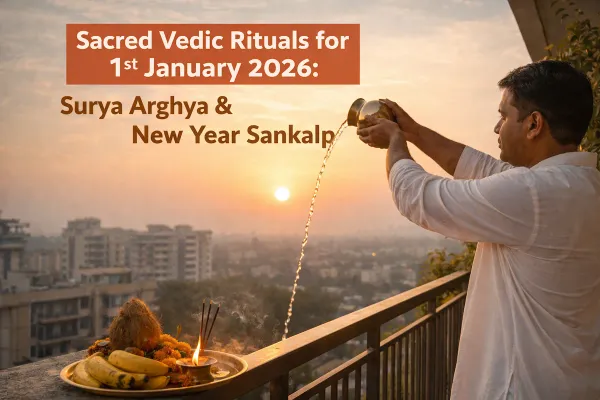
A new year often arrives with a quiet promise. Calendars change, routines reset, and many of us feel an unspoken invitation to begin again. Yet, despite good intentions, resolutions frequently remain limited to the external—health, finances, productivity—while the deeper unrest within the heart quietly persists. Hindu wisdom invites us to approach the new year differently: not merely as a chance to improve circumstances, but as an opportunity to refine consciousness itself. A new heart does not mean becoming someone else; it means uncovering the peace that already resides within.
Inner peace, according to Hindu teachings, is not something to be acquired from the outside world. It is the natural state of the soul (ātman) when the mind becomes steady and aligned with truth (dharma). This new year, spiritual resolutions can become gentle vows—not driven by pressure, but guided by awareness—to live with clarity, devotion, and balance.
Understanding Inner Peace in Hindu Thought
In the Bhagavad Gītā, Lord Krishna describes inner peace as the result of harmony between desire, action, and surrender. Peace is not the absence of activity, but freedom from agitation. The Gītā teaches that when desires are endless and unexamined, the mind becomes restless. When desires are purified and directed toward higher truth, the same mind becomes serene.
Inner peace (śānti) arises when we stop seeking fulfillment solely through external achievements and begin recognizing the Self as complete. The Upaniṣads repeatedly affirm this truth: “That which is whole remains whole.” The soul lacks nothing; it is the mind, shaped by habits and impressions (saṁskāras), that forgets this wholeness.
A spiritual resolution, then, is not about forcing change, but about remembering who we are beneath the noise of daily life.
Resolution 1: Cultivating Awareness Over Control
Modern life encourages constant control—over time, outcomes, and even emotions. Hindu philosophy offers a different approach: awareness over control. The practice of sākṣī bhāva, or witness consciousness, teaches us to observe thoughts and emotions without immediately identifying with them.
When the new year begins, resolve to pause before reacting. Instead of suppressing emotions or acting impulsively, observe the inner landscape with compassion. Just as clouds pass through the sky without altering its vastness, thoughts can pass through the mind without defining the self.
The Yoga Sūtras of Patañjali define yoga as “citta vṛtti nirodhaḥ”—the calming of mental fluctuations. This calm does not come from domination, but from steady awareness. As awareness deepens, inner peace naturally follows.
Resolution 2: Simplifying Desires
Desire itself is not condemned in Hinduism; rather, unexamined desire is seen as the root of suffering. The Gītā explains that attachment to outcomes binds the mind, while selfless action liberates it. When desires multiply without reflection, peace becomes conditional and fragile.
A meaningful spiritual resolution for the new year is to simplify desires. Ask honestly: Which desires nourish the soul, and which only feed restlessness? Simplification does not mean renunciation of life, but refinement of intention.
By choosing fewer, more meaningful pursuits, the heart finds space to breathe. Contentment (santoṣa), one of the foundational principles of yoga, emerges not from having more, but from wanting less.
Resolution 3: Practicing Daily Inner Stillness

Hindu traditions emphasize daily practices (sādhanā) as anchors for the mind. Just as the body needs regular nourishment, the mind requires consistent moments of stillness. Meditation, mantra repetition, or quiet prayer are not escapes from life; they are returns to center.
Even a few minutes of intentional silence each day can gradually transform the inner atmosphere. The mind, accustomed to constant stimulation, initially resists stillness. Over time, however, stillness becomes familiar, even comforting.
The Upaniṣads describe the heart as a sacred space where the Divine resides. Entering that space daily, even briefly, reminds us that peace is not distant—it is intimate and ever-present.
Resolution 4: Acting Without Attachment
One of the most powerful teachings of the Bhagavad Gītā is karma yoga—the path of selfless action. Krishna teaches that we have control over action, but not over results. When actions are offered without attachment to outcome, work becomes worship, and effort becomes light.
A new year resolution rooted in karma yoga transforms how we engage with responsibilities. Instead of measuring worth by success or failure, we begin valuing sincerity and effort. Anxiety about outcomes loosens its grip, allowing peace to flow even amidst activity.
This shift does not make us passive; it makes us free. When action is aligned with duty and surrendered in spirit, the heart remains unburdened.
Resolution 5: Choosing Compassion Over Judgment

Inner peace cannot coexist with constant judgment—of oneself or others. Hindu teachings consistently emphasize compassion (dayā) as a natural expression of wisdom. When we recognize the same divine essence in all beings, harsh judgment softens into understanding.
Begin the year with a resolution to notice judgment as it arises. Judgment often masks fear or unmet expectations. Replacing judgment with curiosity and empathy creates inner spaciousness.
The Mahābhārata reminds us that every individual carries unseen struggles. When compassion becomes the default response, the heart relaxes, and peace finds room to settle.
Resolution 6: Embracing Impermanence
A significant source of inner unrest comes from resisting change. Hindu philosophy views impermanence not as a flaw in existence, but as its defining rhythm. Everything that arises will pass; clinging to what must change creates suffering.
The concept of anitya—impermanence—invites us to appreciate life deeply without demanding permanence from it. Relationships, roles, and circumstances evolve, yet the witnessing Self remains untouched.
A spiritual resolution to accept impermanence does not diminish joy; it deepens it. When we stop grasping, gratitude naturally arises, and peace follows acceptance.
Resolution 7: Living in Alignment with Dharma
Dharma is often misunderstood as rigid duty, but in its essence, it means living in alignment with truth and inner integrity. When actions reflect inner values, the mind remains unconflicted.
A new year offers the chance to reflect honestly: Are daily choices aligned with deeper values? Where do compromises create inner tension? Even small realignments—speaking truth gently, honoring commitments, acting ethically—restore harmony.
The peace that comes from dharmic living is steady and resilient, because it does not depend on external approval.
Resolution 8: Developing Devotion as Trust
Bhakti, or devotion, is not limited to ritual; it is an attitude of trust. In bhakti traditions, surrender (śaraṇāgati) is seen as the highest form of strength. Trusting a higher intelligence does not negate personal effort; it releases the burden of carrying everything alone.
For the new year, resolve to cultivate trust—trust in the process of life, trust in divine timing, trust that growth often unfolds invisibly. Devotion softens control and replaces fear with faith.
When trust deepens, the heart learns to rest, even amidst uncertainty.
Resolution 9: Honoring the Body as a Sacred Vessel
Inner peace is intimately connected to how we treat the body. Hindu teachings view the body as a temple—a vehicle for spiritual growth. Neglecting or abusing it creates subtle unrest.
A spiritual resolution may include mindful eating, respectful rest, and conscious movement. Yoga and āyurvedic principles remind us that balance in the body supports clarity in the mind.
Caring for the body becomes an act of reverence, not vanity, reinforcing inner harmony.
Resolution 10: Practicing Gratitude as Awareness

Gratitude in Hindu philosophy is less about listing blessings and more about recognizing grace in every moment. Life itself is seen as a gift sustained by forces beyond individual control.
Beginning and ending the day with a simple acknowledgment of gratitude—without comparison or expectation—gradually shifts attention from lack to abundance. The heart, when oriented toward gratitude, naturally becomes peaceful.
Gratitude does not deny pain; it balances it with perspective.
The New Year as a Sacred Threshold
In Hindu cosmology, time is cyclical, not linear. Each new beginning carries the potential to awaken ancient wisdom within the present moment. A new year is not a demand to reinvent oneself, but an invitation to remember.
Spiritual resolutions are not measured by perfection, but by sincerity. Some days will feel aligned; others may feel scattered. Peace grows not through force, but through patience.
A new heart is not created overnight. It is revealed gradually, as layers of fear, attachment, and distraction soften. With each conscious choice, inner peace becomes less of an aspiration and more of a lived reality.
Closing Reflection

As the year unfolds, life will continue to present challenges, changes, and uncertainties. Hindu teachings do not promise a life without disturbance; they offer a way to remain undisturbed within life. Inner peace is not the reward at the end of effort—it is the ground from which meaningful effort arises.
May this new year be less about striving to become more, and more about remembering what is already whole. When the heart aligns with truth, peace ceases to be something we chase—it becomes something we live.
Call to Action
As you begin this new year with spiritual intention, consider deepening your journey in a sacred environment that nurtures inner peace and devotion. The Radha Krishna Temple of Dallas offers a space for reflection, prayer, satsang, and community—where timeless Hindu wisdom is lived and experienced together. We warmly invite you to visit the temple, participate in its spiritual programs, and begin your year in the uplifting presence of Radha Krishna.
References
- Bhagavad Gītā – Teachings on karma yoga, devotion, equanimity, and inner peace
- Upaniṣads – Insights on the nature of the Self, impermanence, and inner stillness
- Yoga Sūtras of Patañjali – Foundations of mental discipline, awareness, and inner calm
- Mahābhārata – Reflections on dharma, compassion, and righteous living
FAQs
- What are spiritual resolutions, and how are they different from regular resolutions?
Spiritual resolutions focus on inner transformation—cultivating awareness, peace, and alignment with values—rather than only external achievements or habits.
- How does Hindu philosophy define inner peace?
Inner peace is the natural state of the soul when the mind is steady, desires are refined, and actions are aligned with dharma and surrender.
- Do I need to meditate for long hours to experience inner peace?
No. Even a few minutes of daily stillness, prayer, or mindful awareness can gradually create profound inner change when practiced consistently.
- Can I follow spiritual resolutions while managing a busy life?
Yes. Hindu teachings emphasize balance—transforming everyday actions into conscious, meaningful living rather than withdrawing from responsibilities.
- What role does devotion play in inner peace?
Devotion nurtures trust and surrender, helping release anxiety and control. It allows the heart to rest in faith while continuing sincere effort.
- Is inner peace possible during difficult or uncertain times?
Hindu wisdom teaches that peace does not depend on circumstances but on perspective. With awareness and surrender, calm can coexist with challenge.