Introduction: The Flame of Divine Love
Let us journey back to 16th-century Rajasthan — to a small princely state called Meerta — and immerse ourselves in the divine life of one of India’s most beloved saints: Mirabai. A princess, poet, and mystic, Mirabai was God-intoxicated from birth. She lived in a time when women were expected to remain invisible to society, yet she sang and danced in open devotion to her beloved Giridhar Gopal (Shri Krishna).
Unmoved by societal conventions, unafraid of criticism, and utterly immersed in divine love, Mirabai’s life remains one of the most inspiring sagas in the Bhakti tradition.
A Divine Birth on Sharad Poornima
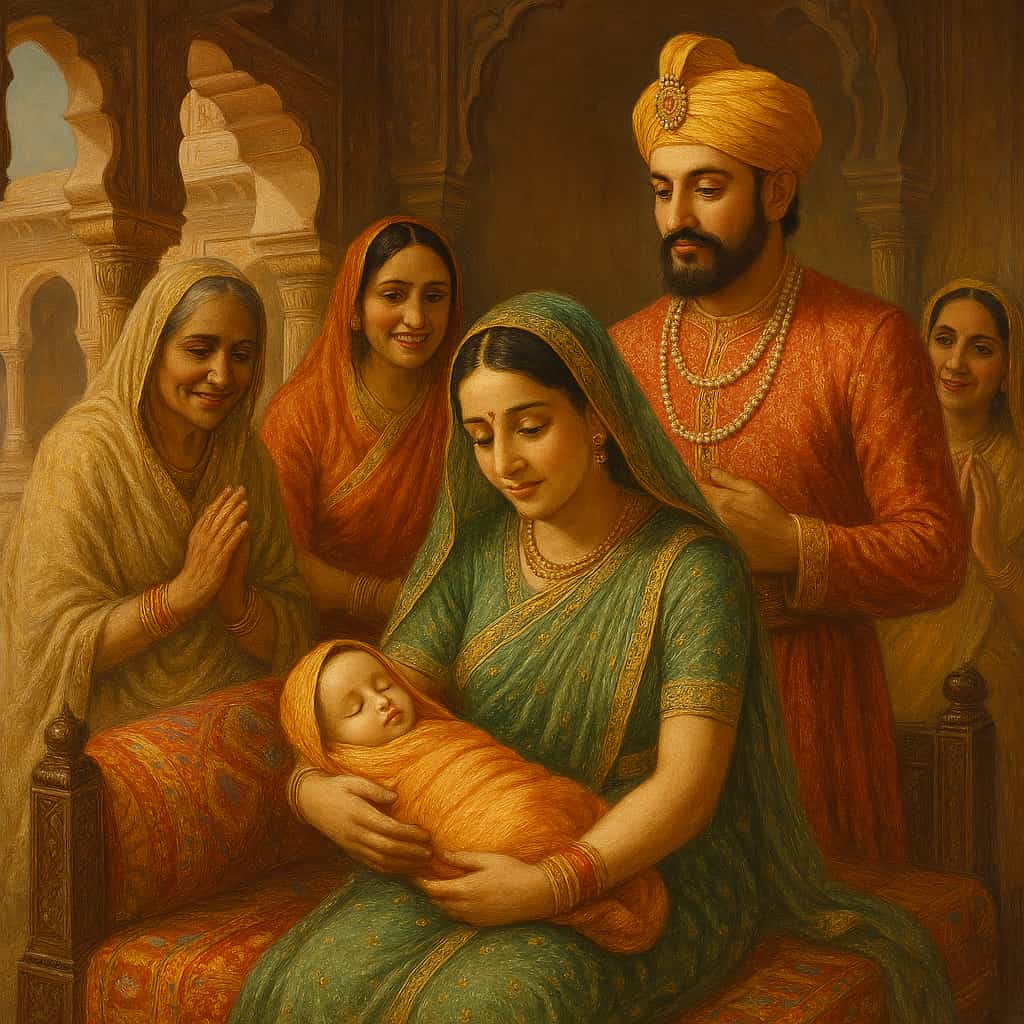
Historians place Mirabai’s birth in 1557 on the auspicious Sharad Poornima, also known as Raas Poornima — the very night Lord Krishna performed the Raas Leela.
While Shri Maharaj Ji (Jagadguru Kripaluji Maharaj) appeared at midnight, Mira was born at midday, when the sun was at its brightest. Hence, her name Mira is linked to “Mihir,” a name for the sun. Her father was Rao Ratan Singh, the second son of Meerta’s ruler, Rao Duda Singh.
From childhood, Mira showed no interest in toys or material pleasures. Her soul was seeking the eternal — the divine.
A Spiritual Home Atmosphere
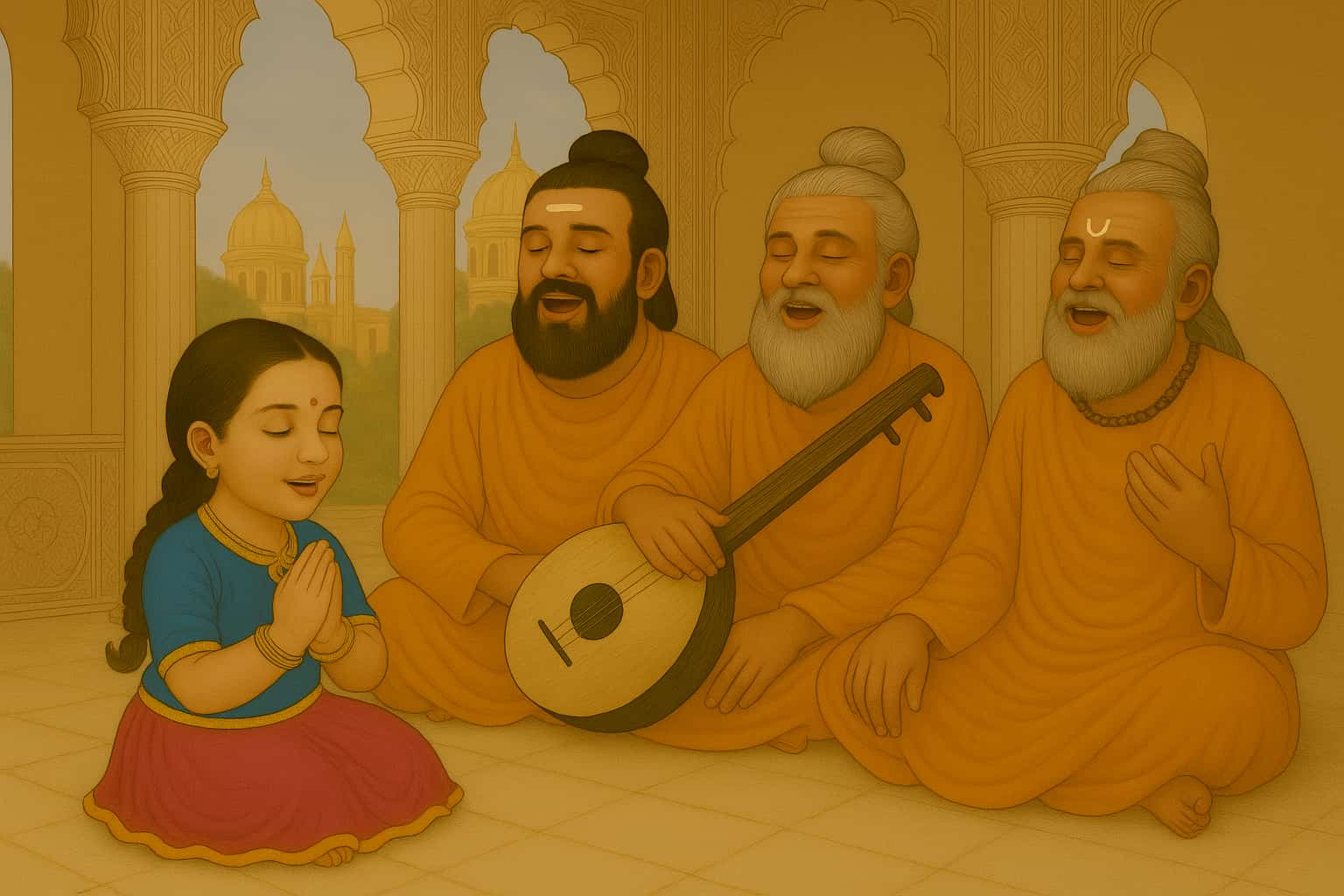
Mirabai’s grandfather, Rao Duda Singh, was a devout saint-seeker who regularly invited holy men to the palace. Their satsangs filled the air with divine vibrations, and young Mira was deeply drawn to them.
By the time she was four years old, she was already asking deep, spiritual questions — pondering the omnipresence of God and the purpose of pilgrimage. During a visit to Dakor, the site of Ranachorji Maharaj's temple in Gujarat, she asked her grandfather, “If God is everywhere, why did we travel so far for darshan?”
The Yogic Encounter and the First Vision
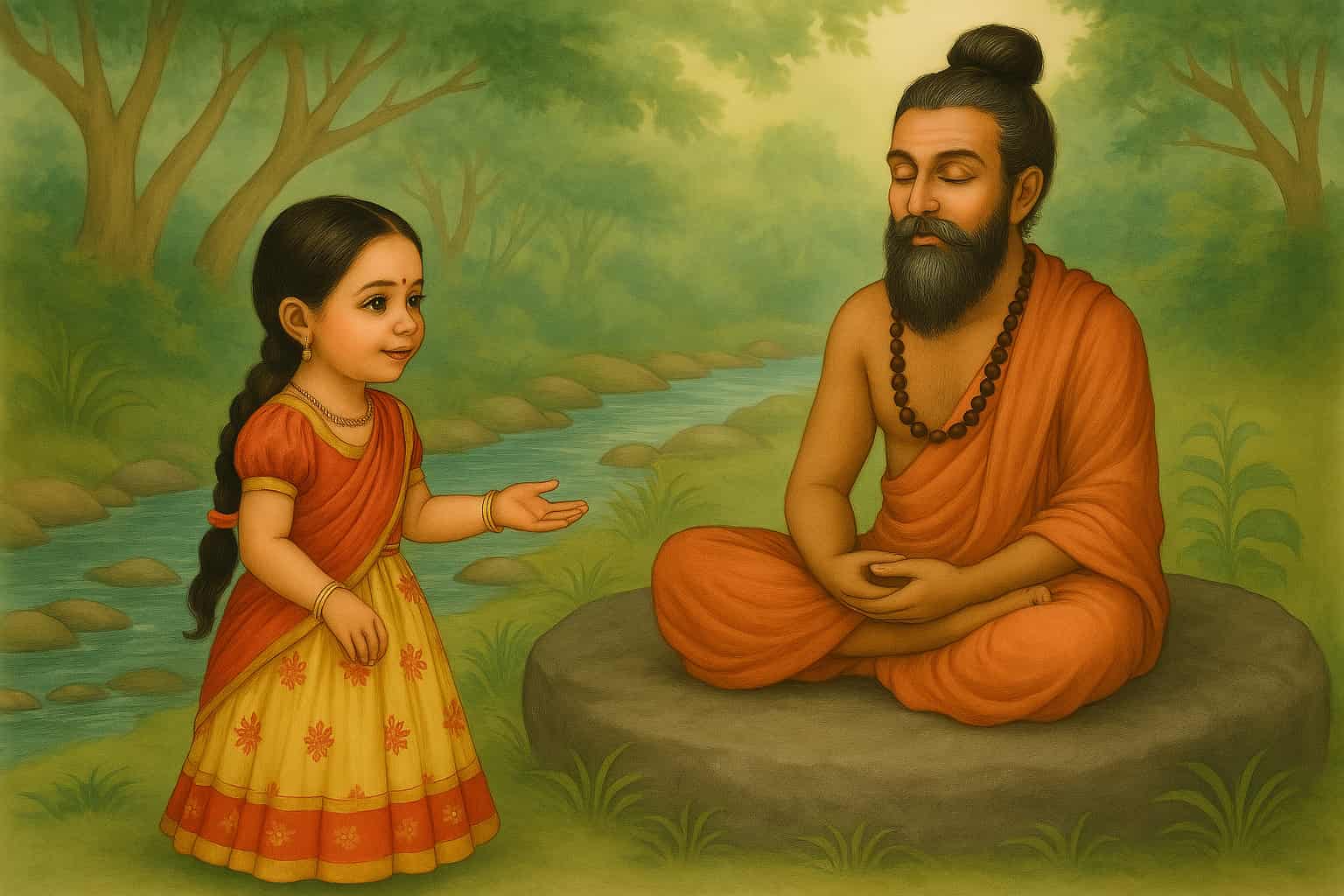
On their return, Mira encountered a meditating yogi beside a stream. Intrigued by her divine radiance, the yogi asked who she was. Her reply stunned him:
“I am the Suputri (blessed daughter) of Rao Ratan Singh, son of Sant-sevi Rao Duda Singh.”
The yogi recognized her as a spiritually advanced soul and offered to teach her yoga sadhana. On just the fourth day, he told her grandfather, “My teaching is complete. She is not a student. She is my teacher.”
Bhajan, Kirtan, and the Birth of Devotion
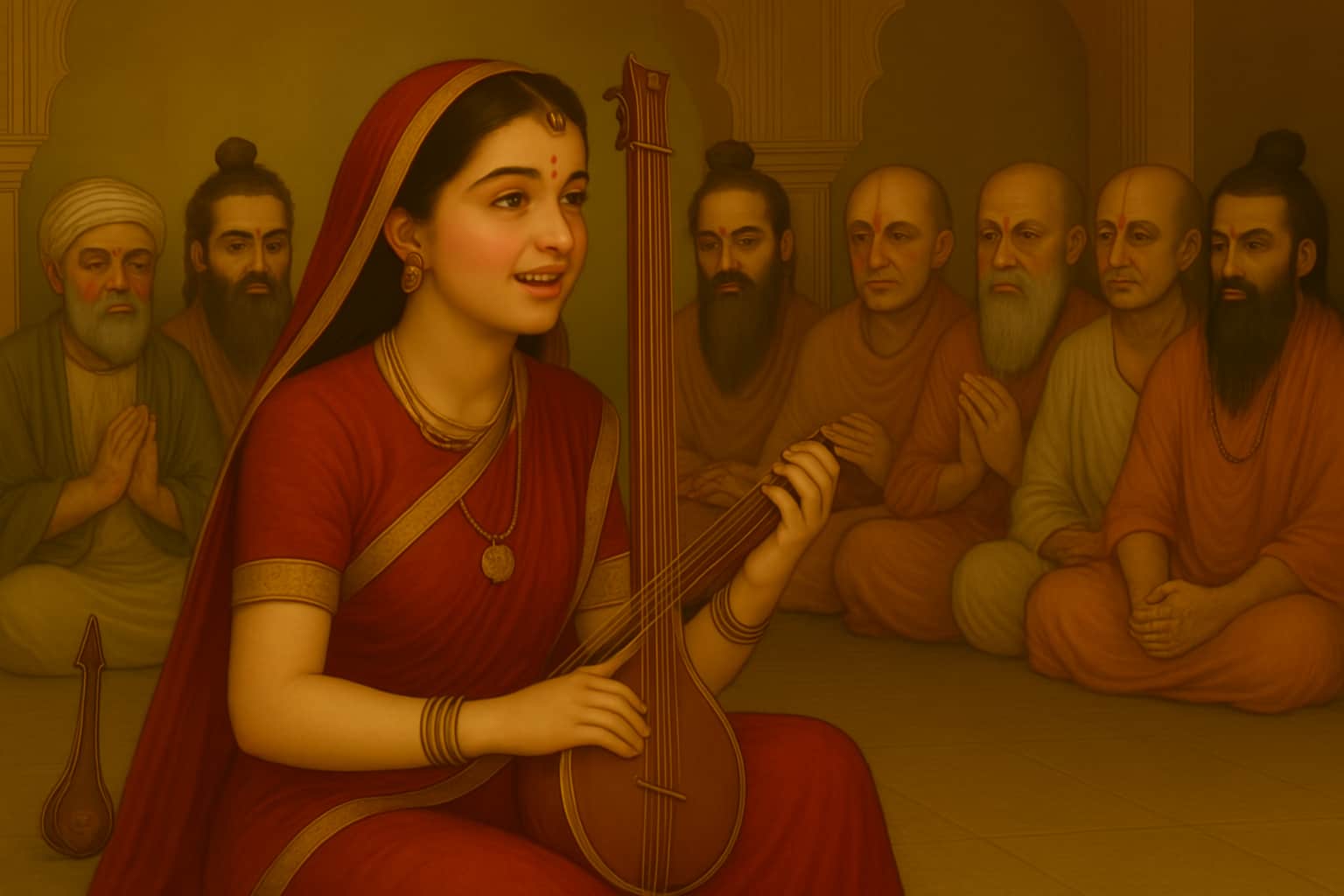
Soon another saint arrived, engaging in bhajan and kirtan with his tanpura. Mira was mesmerized and began learning to sing. Her musical talents bloomed, astonishing even her royal family. But her growing detachment worried her mother, who hoped Mira would embrace worldly life.
Yet, destiny had other plans. A saint from Vrindavan introduced her to Shri Krishna, telling her stories of the divine land. From that moment, Mira's heart irrevocably belonged to Giridhar Gopal.
The Moment of Connection with Giridhar Gopal
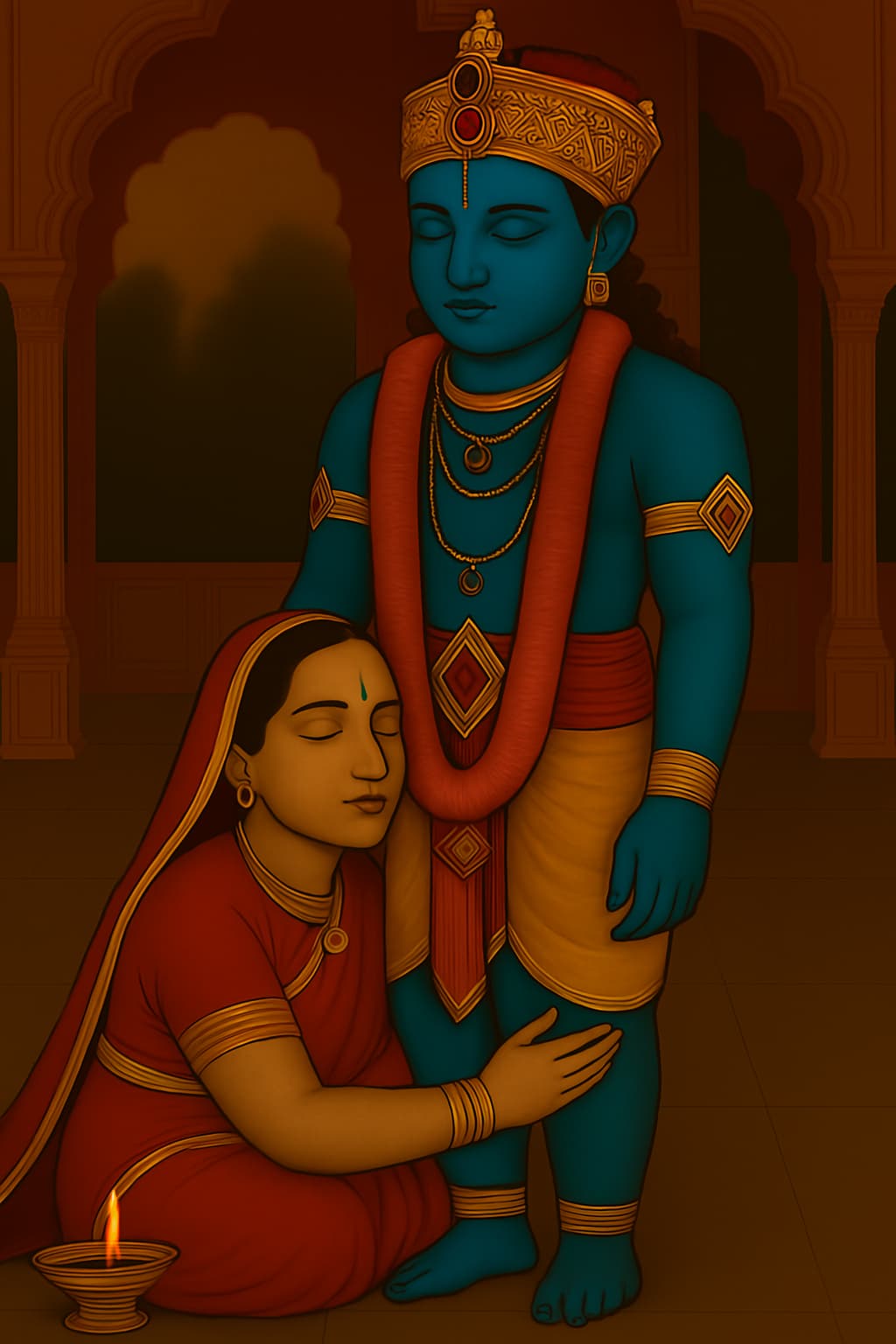
Soon, another saint came carrying with him a beautiful deity of Shri Krishna. When Mira saw the deity, she fainted from overwhelming emotion.
She began assisting in the deity’s worship, yearning to serve. But the saint was to leave soon, and her heart ached at the thought of separation.
One night, the saint received a divine dream: “Give Giridhar Gopal to Mira.” The next day, he asked, “Would you like to keep and serve Him?” Mira's dream had come true.
From then on, her life revolved around serving Giridhar Gopal — gazing at his face, reading his expressions, feeding and caring for him like her beloved.
The Inner Transformation: Beyond Rituals
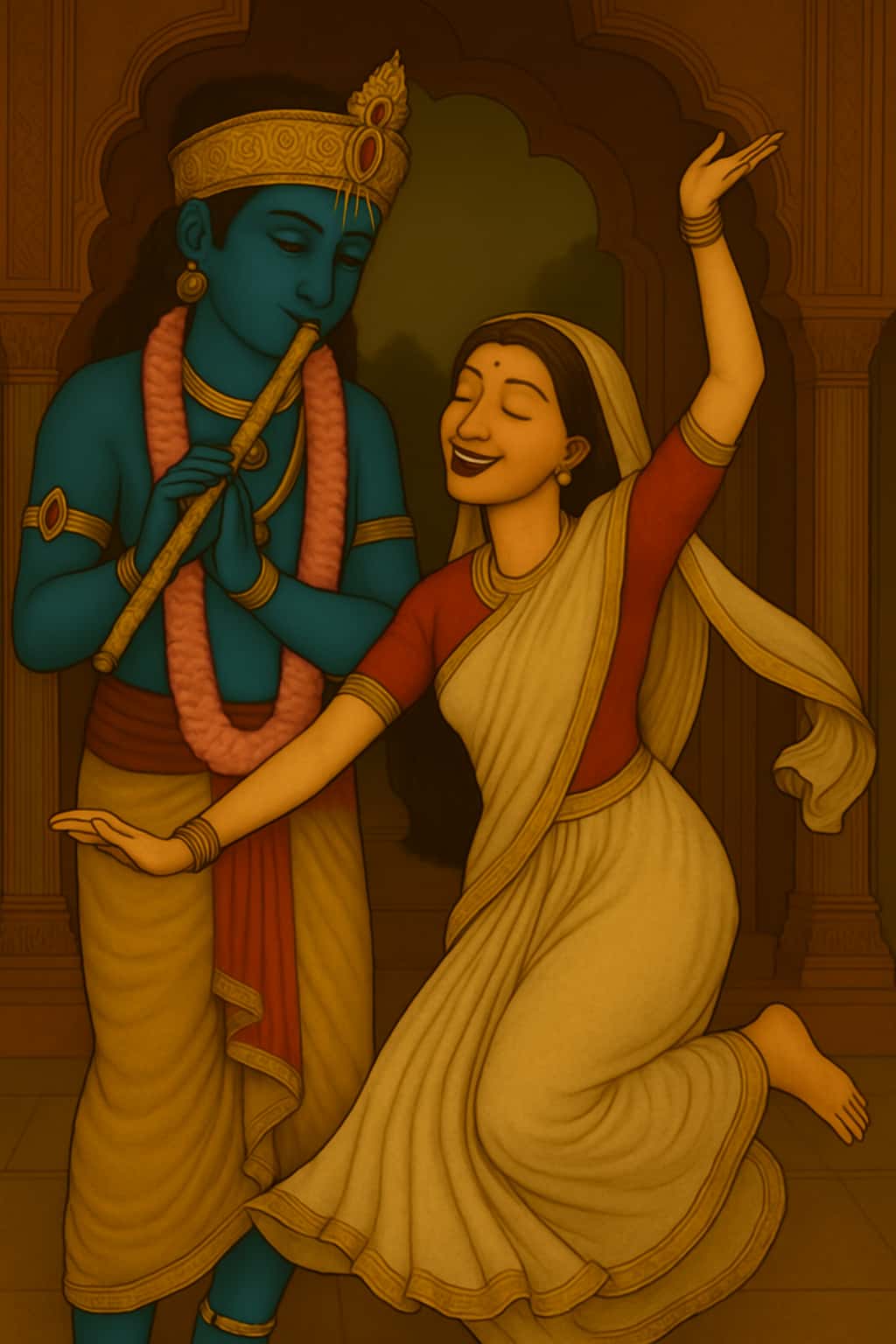
Mira’s devotion transcended rituals. She did not bother with mantras or rites. Her bhakti was spontaneous and natural — a divine romance with her Lord. She would feel uneasy if His smile faded, constantly striving to please her Giridhar Gopal.
By now, Mira had entered adolescence. Her protector, grandfather Rao Duda Singh, was growing frail. Marriage proposals started arriving, but she refused them all. Her grandfather shielded her, saying, “Let her be.”
Meeting Her Guru: Sant Ravidas
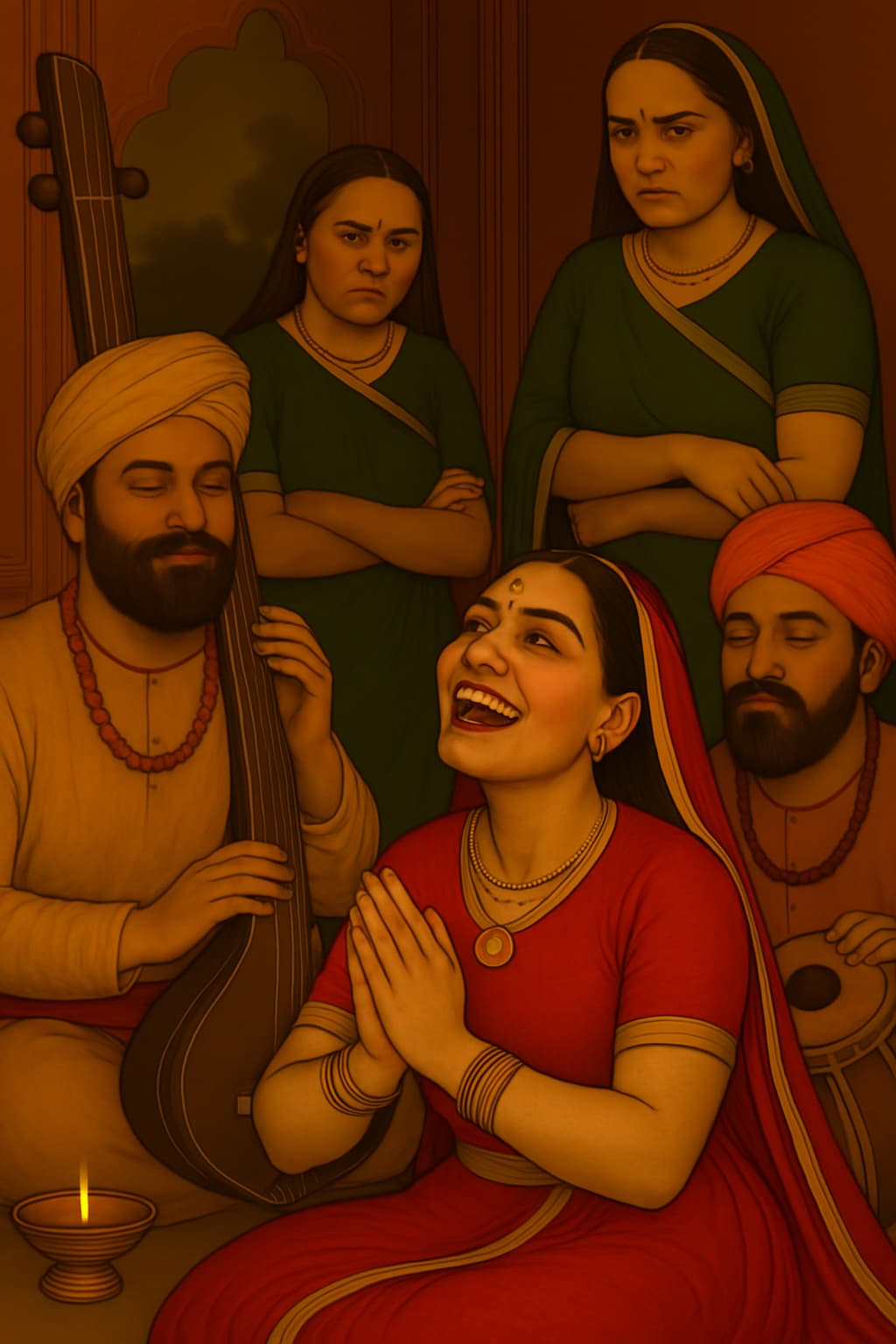
Longing for a Guru, Mira prayed for guidance. Her prayers were answered when Sant Ravidas arrived. Upon hearing her bhajan, he declared:
“Your path is bhajan. This tanpura is your companion.”
His footprints are still present at Mira's temple in Chittor, affirming the spiritual bond.
Shortly after, Rao Duda Singh passed away — listening to Mira sing a final bhajan. With his departure, Mira lost her protector, and marriage became inevitable.
The Divine Marriage: A Vow to Giridhar Gopal
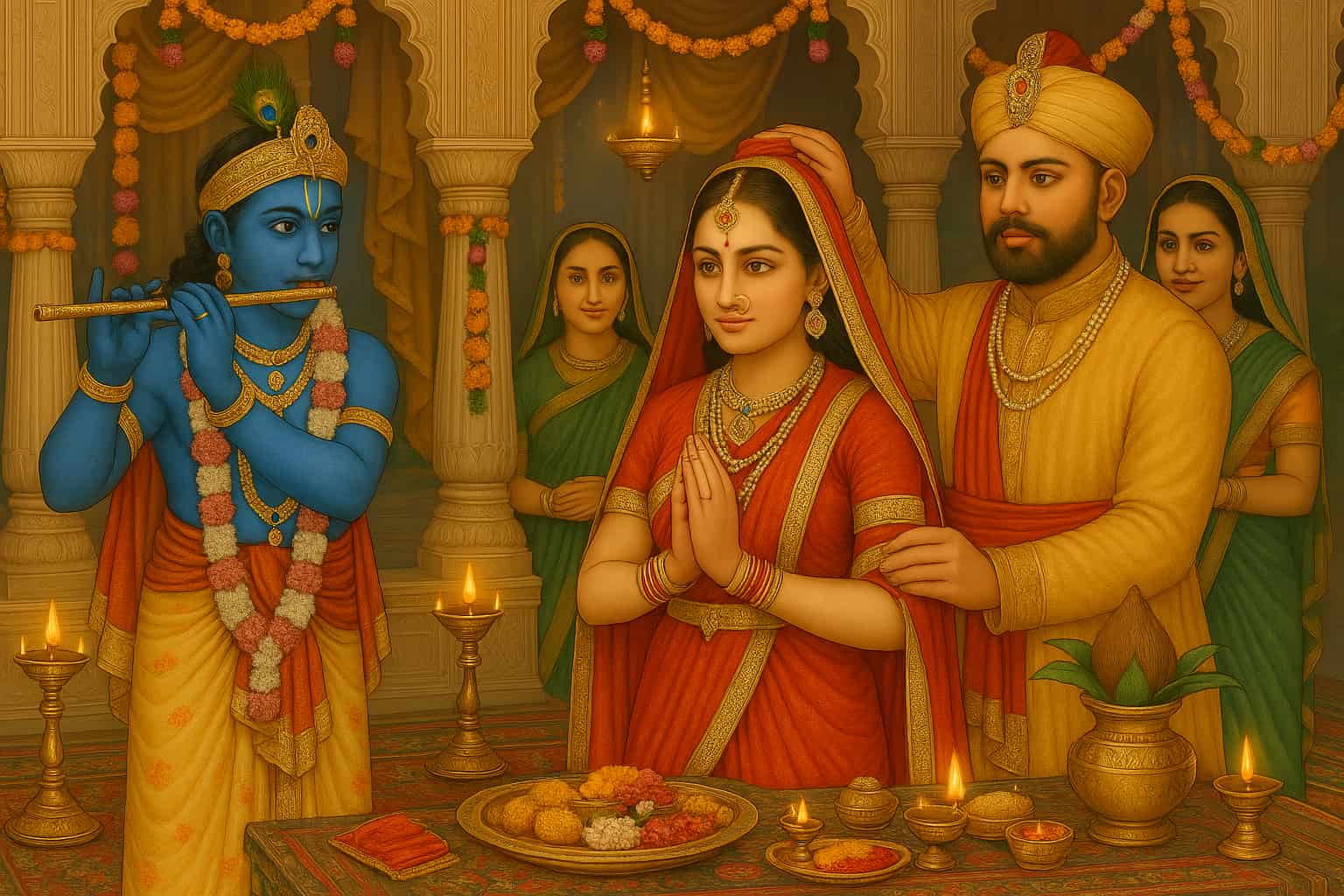
Mira’s mother forced her to marry Rana Bhojraj, son of the mighty Rana Sangha of Chittor. When Mira objected, saying she was already married, her mother was confused.
Mira replied,
“When I was a child, I asked you who my groom would be, and you said Giridhar Gopal. That day I accepted Him as my husband.”
Despite her resistance, the wedding took place. But Mira carried her deity Giridhar Gopal with her, taking the seven vows with Him beside her.
Bhojraj, spiritual and understanding, allowed Mira the freedom to continue her devotion.
Clashes at Chittorgarh: The Fire of Devotion
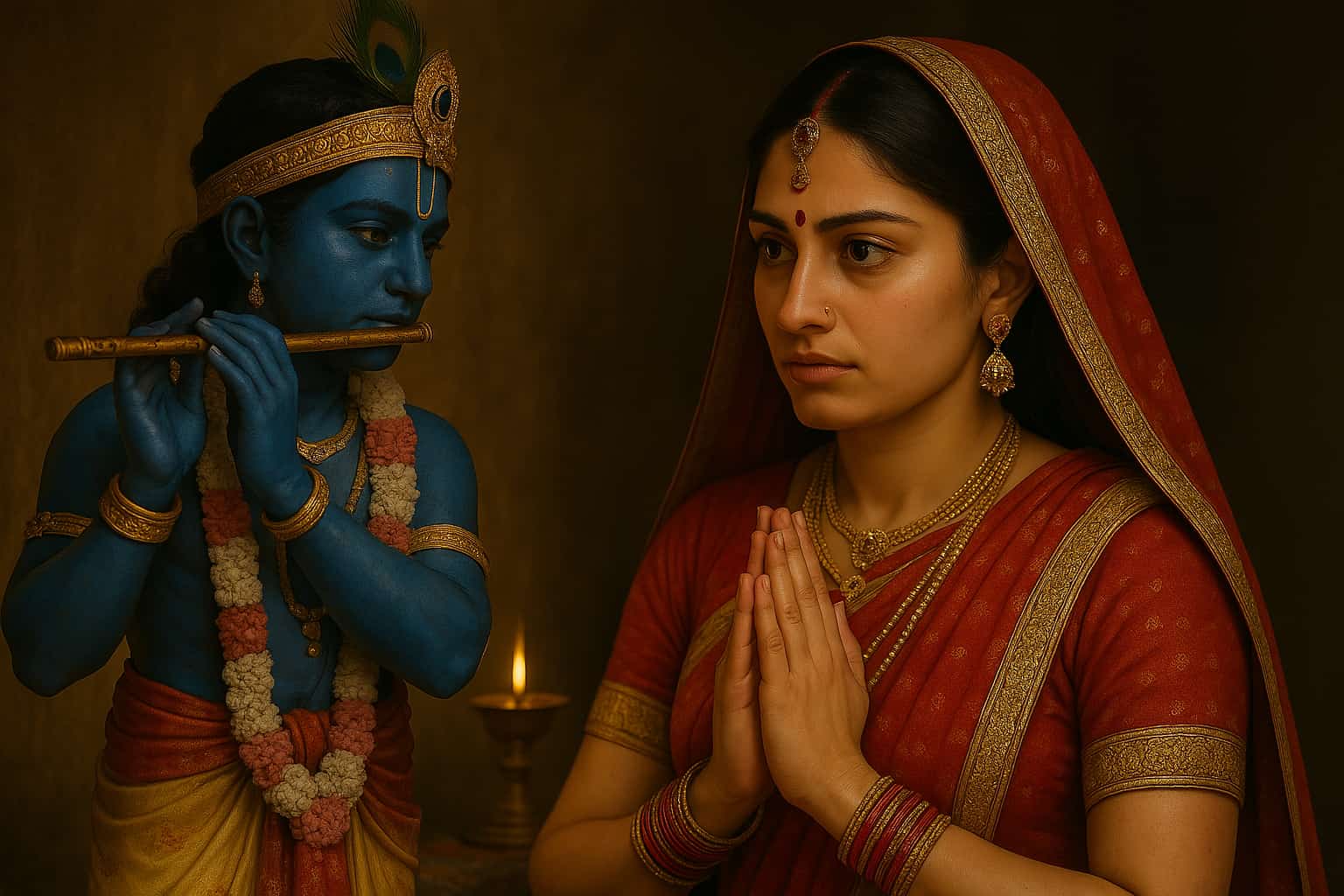
In Chittorgarh, Mira refused to bow to their family deity, Bhan Mata, saying,
“I will only bow to Shri Krishna.”
This defiance ignited resentment from her in-laws. During Gangaur Vrat, she refused to dress up or pray for her husband's health, saying:
“My husband is eternally healthy. He is Giridhar Gopal.”
Her rebellion alienated her from the royal household, turning even the maids and relatives against her. Jealousy and misunderstanding brewed.
Accusations and Revelation
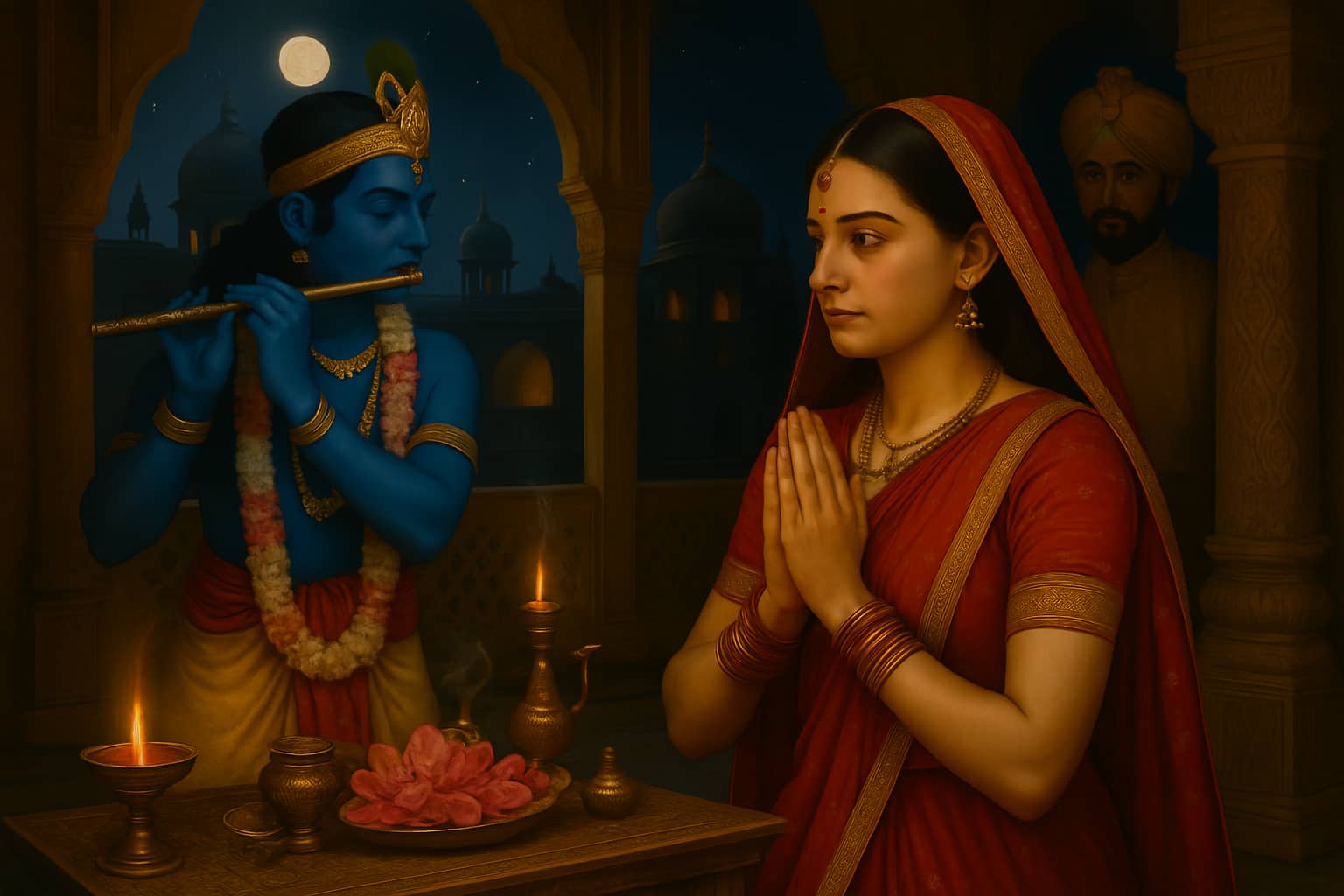
One night, Bhojraj was misled by Mira’s sister-in-law into thinking Mira was speaking to another man. Furious, he stormed into her prayer room, sword in hand. But Mira calmly said,
“Who are you here to kill?”
“The man you were speaking to,” Bhojraj replied.
“Then behold,” said Mira, revealing Giridhar Gopal.
The sight melted Bhojraj’s anger. From that moment, even her doubters began to see her true spiritual stature.
Legacy of Bhakti: Songs of the Soul
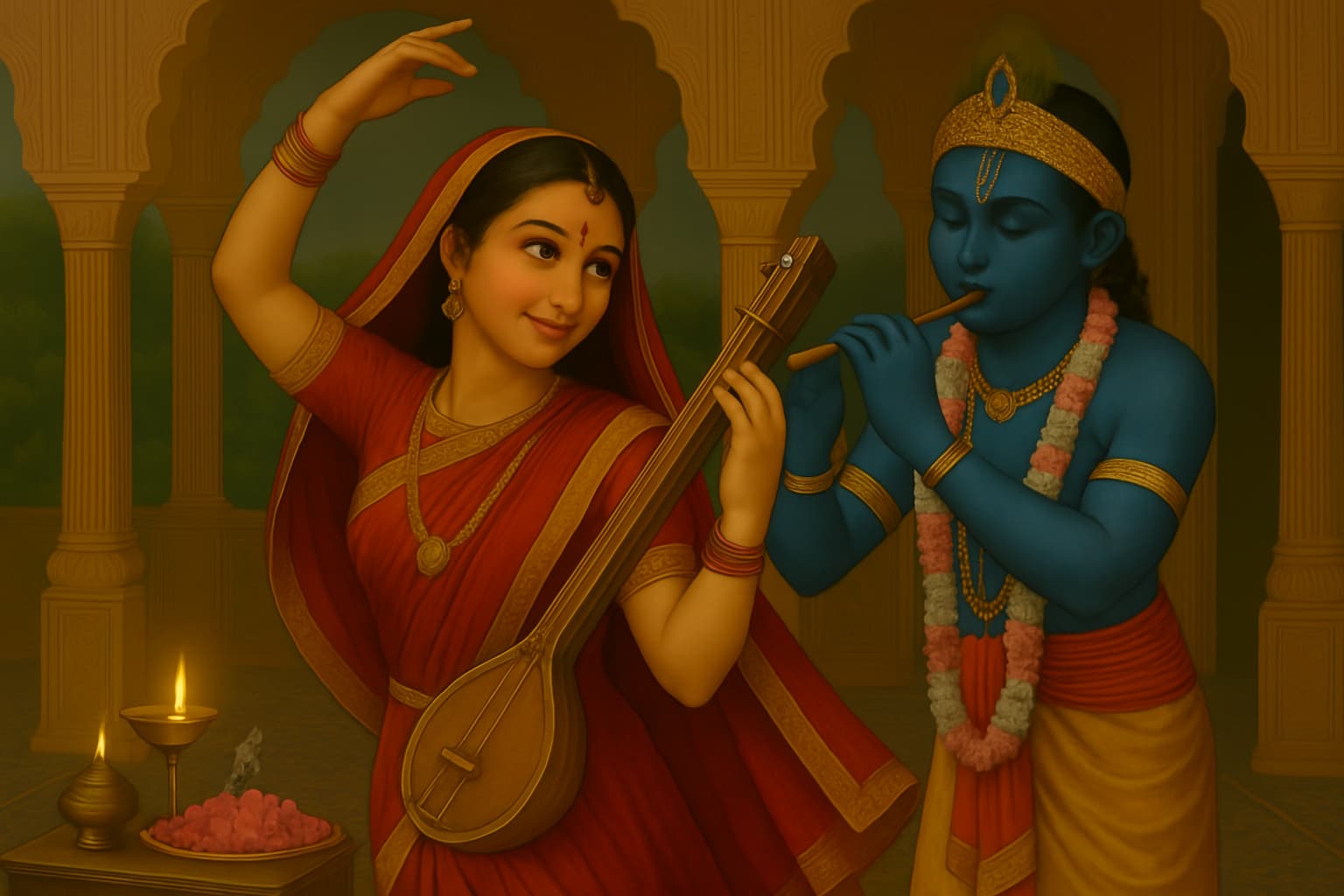
Mira’s devotion has left behind a treasure of over 1,000 bhajans, composed in Rajasthani and Braj Bhasha. They are passionate, lyrical, and deeply intimate expressions of her union with Shri Krishna.
Great singers like Lata Mangeshkar and M.S. Subbulakshmi have rendered her songs. Her words continue to echo in temples and homes, offering solace and inspiration to seekers across the globe.
Conclusion: The Message of Mirabai
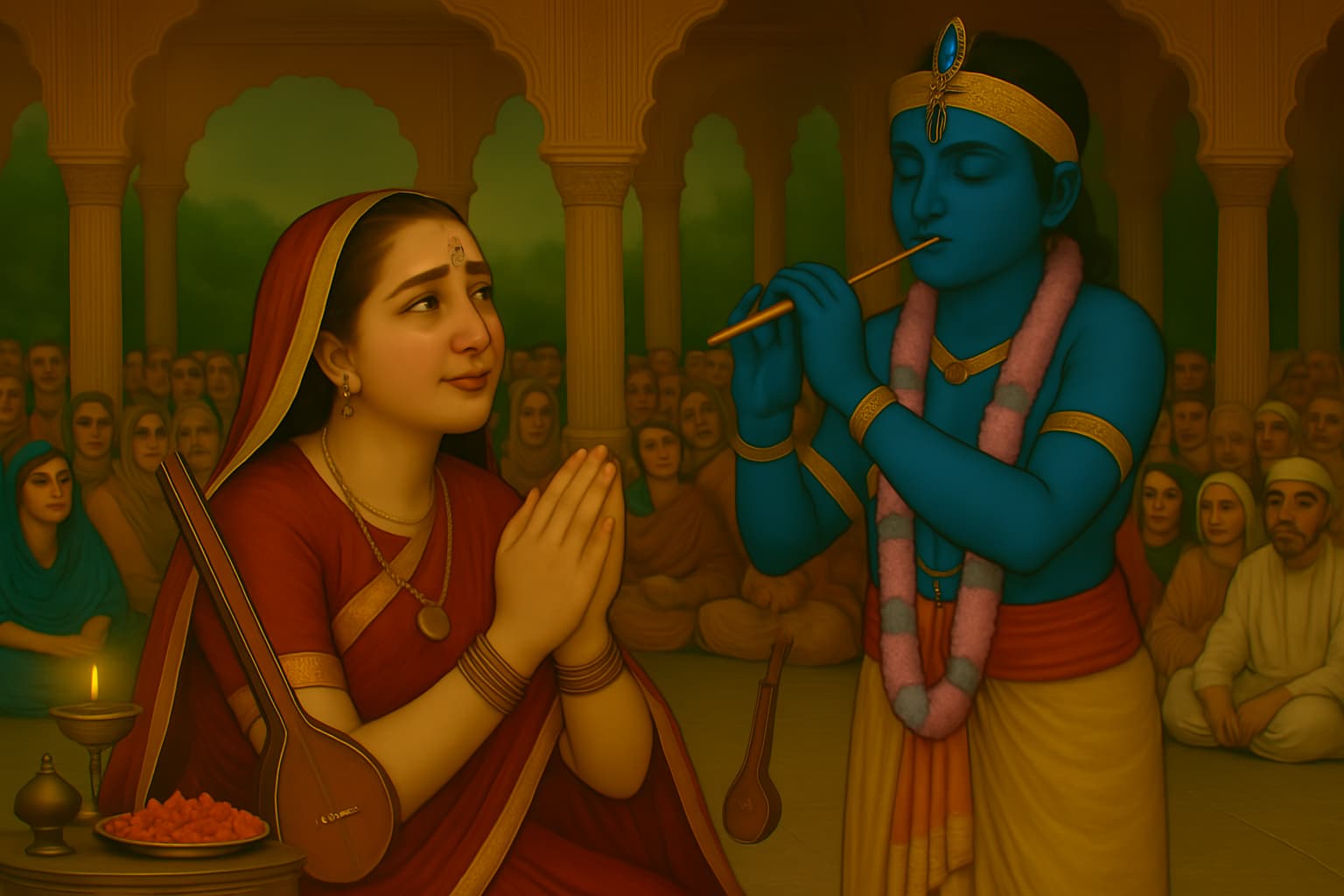
Mirabai’s life was a divine drama — a testimony to the power of love, devotion, and courage. She chose God over the world, and in doing so, became a guiding light for generations.
She taught us:
- That true devotion requires fearlessness.
- That love for God transcends rituals, social norms, and expectations.
- That even in pain, rejection, and hardship, the soul can sing and dance in divine ecstasy.
Mirabai’s bhakti was not just poetry — it was a revolution.
Key Teachings from Mirabai’s Life
- Follow Your Soul’s Calling: Even if the world stands against you.
- God is Your Eternal Beloved: Let Him be your sole refuge and joy.
- Transcend Rituals: Bhakti is not about form, but feeling.
- Endurance in Devotion: Spiritual paths are often misunderstood — walk them anyway.
- Live with Unshakable Faith: Let nothing shake your love for God.
A Bhajan of Mirabai to Reflect Upon
"Mere to Giridhar Gopal, doosro na koi,
Jaake sir mor mukut, mero pati soi."
"To me, Giridhar Gopal is everything — there is none other.
He who wears the peacock crown is my eternal husband."
FAQ
1. Who was Mirabai and why is she significant?
Answer:
Mirabai was a 16th-century mystic poet and saint from Rajasthan, known for her deep devotion to Shri Krishna, whom she called Giridhar Gopal. She is revered for her fearless bhakti, poetic bhajans, and her ability to transcend societal norms in pursuit of divine love.
2. What was unique about Mirabai’s devotion?
Answer:
Mirabai’s devotion was spontaneous, passionate, and personal. She rejected ritualistic worship and embraced a direct, heartfelt connection with Krishna, serving Him as her eternal husband and divine companion.
3. At what age did Mirabai’s spiritual inclinations become evident?
Answer:
From early childhood, around four years old, Mirabai showed a natural inclination toward spirituality. She preferred saints and scriptures over toys and asked deep philosophical questions, revealing her past-life samskaras.
4. Who was Mirabai’s spiritual Guru?
Answer:
Mirabai’s Guru is widely believed to be Sant Ravidas, a revered Bhakti saint. He guided her on the path of devotional singing and gave her a tanpura, which she kept throughout her life.
5. Did Mirabai face opposition for her spiritual lifestyle?
Answer:
Yes. After marriage, she faced significant opposition from her in-laws and the royal household for refusing to conform to traditional roles and customs. She insisted on worshipping only Shri Krishna, which led to conflicts and accusations.
6. How did Mirabai receive the deity of Giridhar Gopal?
Answer:
A saint visiting her home was so moved by her devotion that, after a divine dream, he gifted her the deity of Giridhar Gopal. From that day, Mira served the deity with complete dedication as her personal Lord.
7. What is the legacy of Mirabai’s teachings today?
Answer:
Mirabai’s bhajans and life story continue to inspire millions. Her songs are sung across India by classical and devotional singers alike, and her life serves as a beacon for spiritual seekers pursuing pure, fearless, and unconditional love for God.
References
Swami Mukundananda. “Mirabai’s Life and Teachings”
- 🕉️ Scriptural & Historical Context
- Bhakti Saints of India, V.K. Subramanian, Abhinav Publications – Provides historical context on Bhakti movement and saints like Mirabai.
- Medieval Indian Literature, Ayyappa Paniker, Sahitya Akademi – Offers translations and biographies of saints including Mirabai.
- Encyclopedia of Indian Literature, Mohan Lal, Sahitya Akademi – Contains verified birth years, literary contributions, and theological significance of saint-poets like Mirabai.
📜 Mirabai’s Bhajans and Poetry
- “Poems of Mirabai”, translated by A.J. Alston & John Stratton Hawley – A scholarly and devotional translation of her original Braj & Rajasthani bhajans.
- “In the Dark of the Heart: Songs of Meera”, translated by Shama Futehally – Offers lyrical English translations of Mirabai’s devotional poetry.
🛕 Cultural Legacy
- The Life of Mirabai – National Museum of India archives, Delhi (online records of devotional poetry and miniature paintings).
- Chittorgarh Fort Archives – Temple of Mira and installation of footprints of Sant Ravidas in Charbhujnath Mandir.
Call to Action
For more such soul-enriching wisdom, guided meditations, and deep insights into the eternal truths of life, we invite you to subscribe to Swami Mukundananda’s official YouTube channel.