
Marriage is not just a legal arrangement or a romantic ideal—it's a spiritual partnership, rooted deeply in Vedic tradition and echoed throughout the Bhagavad Gita. In an age where individualism is emphasized and relationships often suffer from emotional burnout, ancient Hindu wisdom remains more relevant than ever.
With guidance from Swami Mukundananda and the Bhagavad Gita, this blog explores how marriage can be a means for personal growth, emotional resilience, and ultimately, spiritual elevation.
1. The Spiritual Purpose of Marriage
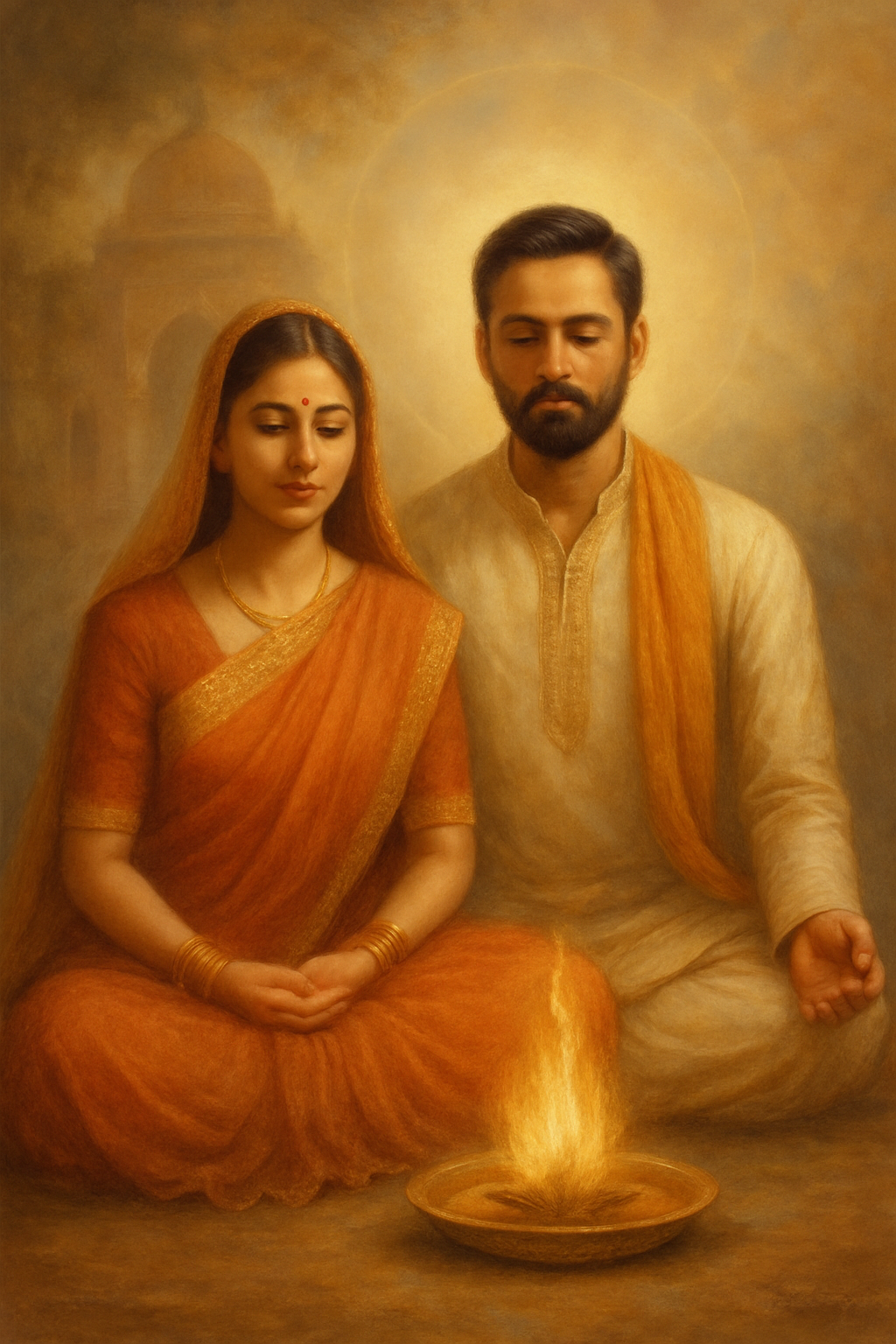
In the Vedic view, marriage is not merely about finding companionship or emotional security. It is about two souls coming together with a shared purpose: to help each other progress toward self-realization and ultimately, God-realization.
Swami Mukundananda explains:
“The purpose of marriage is to establish a contract between husband and wife—a contract to help each other on the journey of life… to assist the other in the journey of ascension to the Supreme Consciousness.”
This shifts the focus from romantic fantasy to spiritual partnership. Rather than expecting a spouse to “complete” us or cater to every emotional need, we begin to see them as a co-traveler on the road to spiritual growth.
This relationship, however, is not easy. Swamiji points out that:
- No marriage works without immense sacrifice, tolerance, forgiveness, and understanding.
- Much like a business partnership, both parties must invest regularly—not just emotionally, but in terms of energy, time, and growth.
- Marriages are not perfect by default. They are successful when both partners are committed to the process of improvement.
This understanding alone can save many relationships that falter due to unrealistic expectations.
2. Myth of "Made in Heaven": Choosing Wisely on Earth
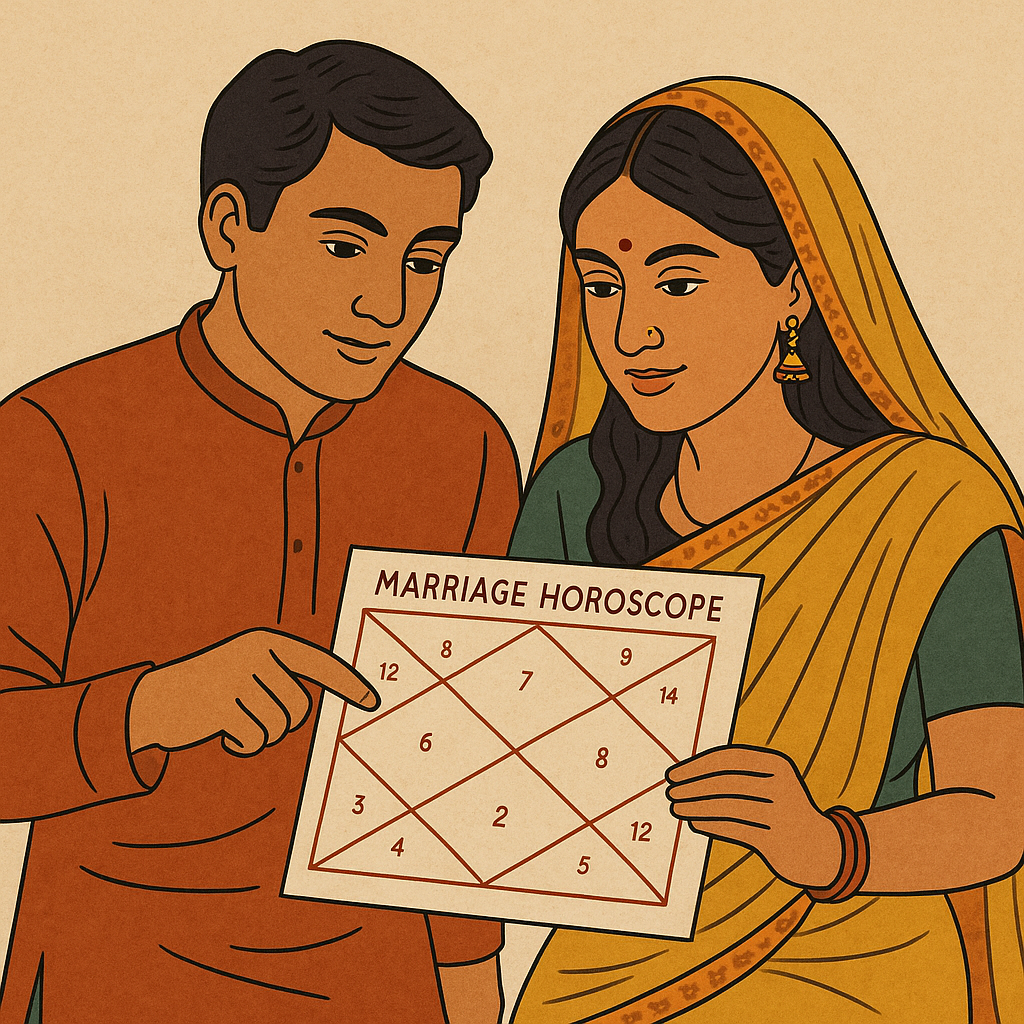
There’s an old Indian saying: “Marriages are made in heaven and executed on earth.” Swamiji, with his analytical IT background, deconstructs this idea with clarity and reason.
He explains that while celestial forces (devatas) may assist sincere, spiritually-evolved souls in finding the right life partner, there’s no divine guarantee that a match will work just because a priest said so or a horoscope matched perfectly.
“If the horoscopes were foolproof, why are so many astrologically-matched couples unhappy or divorced today?”
Swamiji shares that:
- Horoscopes served a purpose in ancient times when couples wouldn’t meet before marriage. But today, when individuals assess compatibility firsthand, personal judgment holds more value.
- A spiritually aligned and emotionally intelligent partner is more important than one who merely ticks astrological boxes.
- Relationships thrive when they are built on shared values, not fate.
He reminds us that, like choosing a career or life path, choosing a partner must be a thoughtful, introspective decision—not a roll of the dice.
3. The Bhagavad Gita’s Insight on Ego and Emotional Detachment

Bhagavad Gita 3.27
prakṛteḥ kriyamāṇāni guṇaiḥ karmāṇi sarvaśaḥ
ahaṅkāra-vimūḍhātmā kartāham iti manyate
“All activities are carried out by the modes of material nature. But one who is deluded by false identification with the body thinks, ‘I am the doer.’”
🔗 Read on holy-bhagavad-gita.org
In relationships, particularly marriage, the ego often becomes the biggest obstacle. The feeling of “I am right,” or “They must change” can become deeply destructive. The Gita reminds us that we are not the true doers—much of our behavior and reactions are conditioned by the modes of material nature (gunas).
Swamiji introduces the powerful concept of Sakshi Bhav—the witness mindset:
“You are not your thoughts. You are not your emotions. Just watch them.”
In practice, this means:
- When anger arises, observe it, rather than react.
- When disappointment surfaces, sit with it, rather than lash out.
- When differences emerge, step back, rather than escalate.
This mindset doesn’t suppress emotion—it creates space between emotion and reaction, which is vital in sustaining love and harmony in marriage.
4. Emotional Bank Accounts and the 5:1 Rule
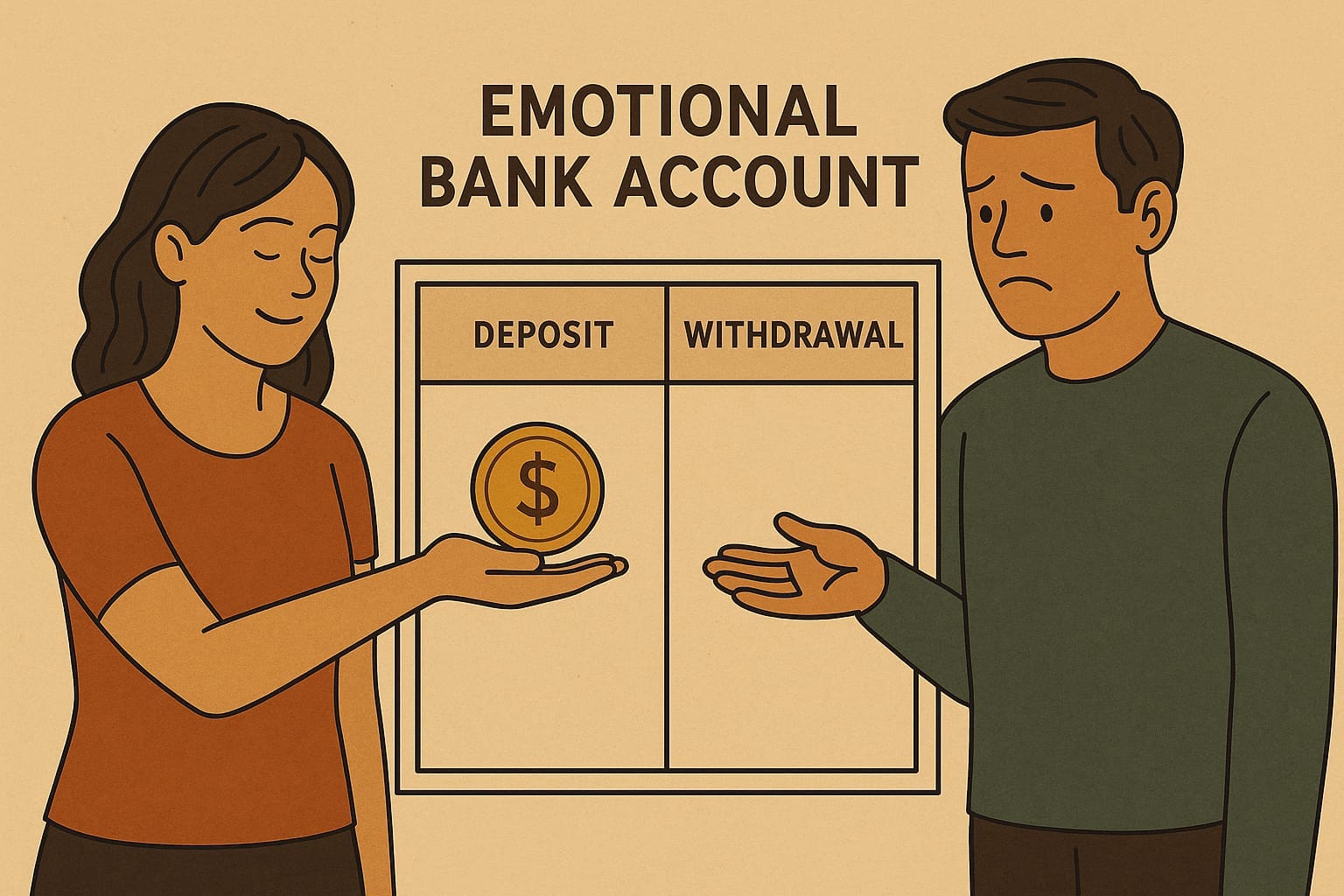
Swamiji beautifully compares relationships to emotional bank accounts.
“When you smile, praise, understand, or support your partner, you make deposits. When you criticize, ignore, or hurt, you make withdrawals. If you withdraw too much, the account goes into overdraft—and love turns into resentment.”
He shares a memorable incident:
The Airport Clerk
A man berated a check-in clerk with harsh words. Yet the clerk remained calm. Afterward, he confessed:
“He’s flying to Chennai. I’m sending his luggage to Andaman and Nicobar.”
This humorous anecdote illustrates that even polite relationships can break down if there are no emotional deposits.
The 5:1 Ratio
Swamiji shares research by John Gottman, who discovered that five positive interactions are needed to balance out one negative one. This becomes a simple but powerful rule:
- Before you criticize, have you praised enough?
- When was the last time you said thank you?
- Are you emotionally depositing as much as you’re withdrawing?
Practicing this ensures emotional stability and affection, even during conflicts.
5. Real-Life Lessons: Time, Perspective, and Humor

Story: The Child Who Bought His Father’s Time
A child asked his father, “How much do you earn per hour?”
The father replied, “₹500.”
The boy asked for ₹300, and when finally given the money, he combined it with ₹200 he had saved and said:
“Papa, can I buy one hour of your time?”
This story pierces the heart—especially for busy professionals. In relationships, what matters is not the amount of time spent, but the quality of presence. A spouse or child may not need hours, but they deeply crave emotional availability.
Story: The Divorce Over a Cat
A couple nearly divorced over a trivial issue: the husband’s computer wires were chewed by a cat. He blamed his wife for not watching the cat. She felt unacknowledged and overburdened. The fight escalated over time.
Swamiji pointed out:
“You are more attached to your opinions than to your spouse. Value your partner more than being right.”
Story: The Five Mangoes
A teacher asked a student, “What is 2 + 2?”
The child replied, “5.”
After much frustration, it turned out the child already had one mango in his bag. His answer made sense—from his perspective.
The lesson? Always consider your partner’s context and viewpoint before assuming they’re wrong. Compassion in relationships often begins with seeking to understand.
6. Qualities to Look for in a Life Partner
Swamiji offers a profound framework for choosing the right life partner—not based on looks or wealth, but based on character and values.
1. A Lover of God
Such a person is:
- Spiritually grounded
- Morally restrained
- Supportive of your own spiritual growth
“If you love God and wish to attend satsang, a God-loving partner will not be an obstacle but a support.”
2. Kindness and Respectfulness
Disagreements are natural. But if your partner:
- Listens with empathy
- Respects differing opinions
- Values emotional safety
...then harmony is preserved, even in conflict.
3. Sense of Humor
“Tough times will come. A little humor changes perspective and makes life easier.”
Humor dissolves tension, fosters connection, and makes living together more joyful.
4. Positive Attitude
Negativity drains. A positive partner uplifts both emotionally and spiritually.
“A pessimistic partner finds faults. An optimistic one sees opportunities and beauty—even in hardship.”
5. Good Communication
This includes:
- Listening without judgment
- Expressing oneself gently
- Resolving conflict without escalation
Effective communication is one of the strongest predictors of lasting relationships.
7. Is Marriage for Everyone?
Swamiji acknowledges that marriage is a personal choice, not a spiritual requirement.
He references great personalities who remained unmarried:
- Dr. Abdul Kalam
- Atal Bihari Vajpayee
- Lata Mangeshkar
- Isaac Newton
- Dr. Homi Bhabha
These were individuals who channeled their energies toward a greater mission.
“If your life’s purpose is better served through focused solitude, and you wish to dedicate your time to work, service, or spiritual growth, marriage is optional.”
Whether you choose to marry or not, what matters is living in alignment with your dharma—your truth.
Final Thoughts and Action Steps
The Bhagavad Gita teaches us not just how to live—but how to love. Marriage, through its trials and triumphs, becomes a spiritual training ground for ego-transcendence, emotional mastery, and selfless service.
Bhagavad Gita 6.5
uddhared ātmanātmānaṁ nātmānam avasādayet
ātmaiva hy ātmano bandhur ātmaiva ripur ātmanaḥ
“Elevate yourself through the power of your mind, and do not degrade yourself. The mind can be the friend and also the enemy of the self.”
🔗 Read Verse on holy-bhagavad-gita.org
Call to Action
If these lessons resonated with you, take the next steps in your spiritual and emotional growth journey:
📖 Read the Bhagavad Gita daily to ground your mind, guide your actions, and uplift your relationships:
🔗 Read Now on holy-bhagavad-gita.org
📺 Subscribe to Swami Mukundananda’s YouTube Channel for practical teachings on love, marriage, personal transformation, and spiritual wisdom:
🔗 Swami Mukundananda YouTube