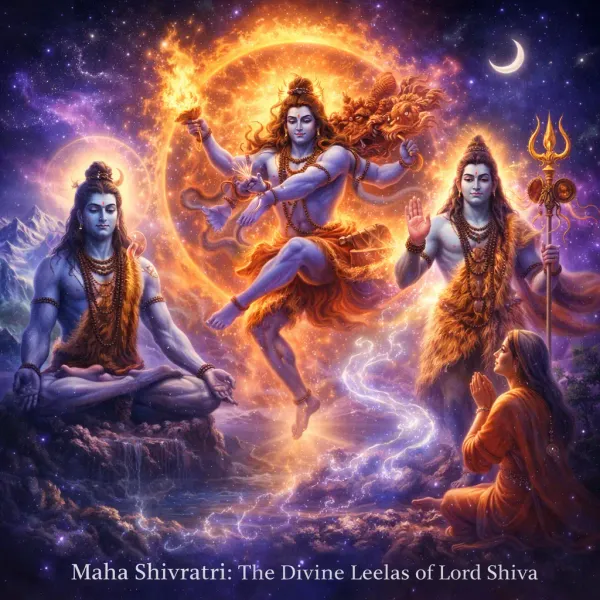
When Is Maha Shivratri 2026? The Great Night of Shiva and the Doorway Within
On Sunday, February 15, 2026, devotees around the world will observe Maha Shivratri—the Great Night of Lord Shiva, one of the most spiritually powerful observances in the Hindu calendar. The sacred current of this night is traditionally said to peak during Nishita Kaal (the midnight hours), and it continues into the early morning of February 16, a time cherished for meditation, purification, surrender, and inner awakening.
Yet Maha Shivratri is not powerful only because it falls on a certain night.
It is powerful because it reveals something timeless.
While many festivals celebrate external victories or seasonal transitions, the true spiritual significance of Maha Shivratri unfolds in the silence of the seeker’s heart. It invites the seeker to turn inward, to notice the hidden weight carried within: the pressure to control, the exhaustion of ego, the restless identity that keeps the mind bracing as if life is always about to fall apart and gently release them.
Maha Shivratri is often associated with night-long vigilance. But those who understand its deeper rhythm know this: spiritual transformation does not begin at midnight; it begins the moment sincerity enters the heart.
Swami Mukundanandaji often teaches that sacred festivals are not merely cultural events. They are divine opportunities designed to cleanse the mind, elevate the heart, and realign the seeker with higher consciousness. And Maha Shivratri is especially profound because it quietly dismantles the illusion we carry every day: that we are alone, that our strength is limited, that everything depends entirely on us. It help us realign our identity with a higher, universal consciousness.
Sometimes, the deepest meaning of Maha Shivratri does not arrive as a lecture or a grand mystical vision.
Sometimes it arrives like this—
as a single sincere seeker walks into a temple… and finds himself walking into his own inner transformation.
Maha Shivratri 2026 at Radha Krishna Temple of Dallas: Where Devotion Meets Awakening
On the sacred morning of Maha Shivratri 2026, the Radha Krishna Temple of Dallas awakens long before the city fully stirs. The early sky above Allen, Texas holds a quiet serenity, as though the world itself has paused making space for the Divine.
Inside the temple, devotion breathes through every corner. The chanting of “Om Namah Shivaya” rises and falls like steady waves of sacred sound, grounding, cleansing, softening the noise of the mind without force.
Devotees move gently through the hall with folded hands.
Some carry flowers for the Samuhik Shiv Pooja.
Some hold copper pots filled with milk, waiting patiently to participate in the Maha Rudrabhishek of Gopeshwar Mahadev.
Some carry children who ask innocent questions about Lord Shiva.
And some carry something far heavier.
They carry silent questions.
Among them stands a young professional. His phone vibrates in his pocket, small pulses of the world outside: deadlines, expectations, tomorrow morning’s pressure.
For years, his family had come to temple on Maha Shivratri. In past years, he followed the tradition sometimes out of devotion, sometimes out of habit, and sometimes from an unspoken fear that neglecting a sacred night might invite misfortune.
But 2026 feels different.
He cannot explain the impulse, yet a quiet, insistent force compelled him to be here.
Swami Mukundanandaji often says that Divine Grace begins working in a seeker’s life long before the seeker consciously recognizes it. Spiritual awakening rarely starts with certainty. It begins with a subtle inner pull—quiet, insistent, and strangely tender.
As “Om Namah Shivaya” continues to ripple through the temple, he steps forward slowly, unaware that this visit will become more than ritual.
It will become the beginning of an inner pilgrimage.
The Towering Presence: When the Mind Meets Stillness
As he steps deeper into the temple hall, his restlessness meets a sudden wall of peace.
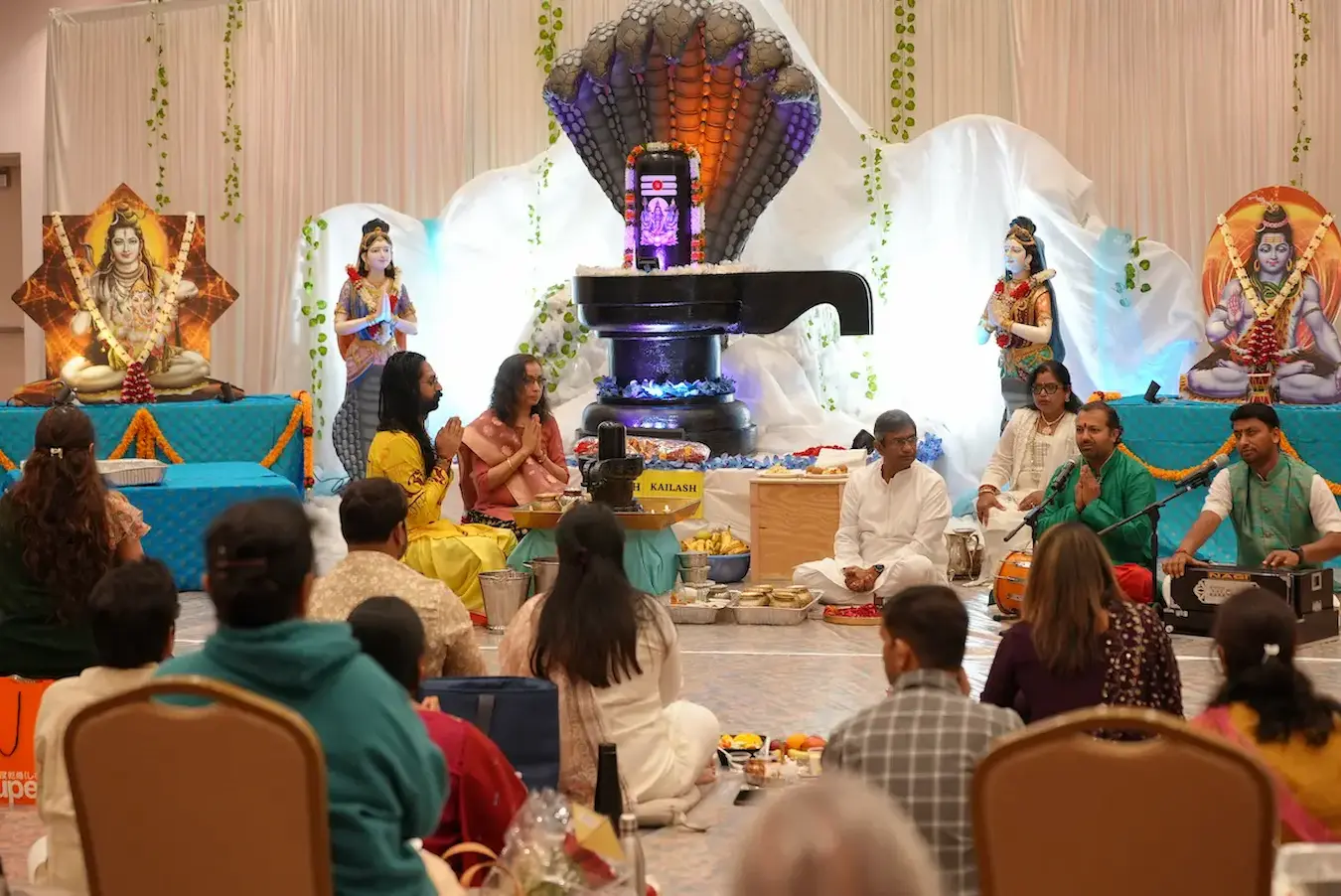
Rising majestically from the sanctum is a 20-foot Shivling, serene yet commanding, radiating an indescribable stillness. Draped in fresh garlands and sacred bilva leaves, the vast form feels immovable—yet strangely alive—as though it has been silently witnessing the prayers of every hearts who stands before it.
Standing before the Shivling, the young professional feels unexpectedly small. Not in insignificance, but in a refreshing, sudden humility.
As if something eternal is reminding him: You have been measuring life with a ruler too small.
The towering presence does not speak, yet it feels as though it gently invites him to pause… to look inward… to remember a part of himself long buried beneath ambition, responsibility, and restless thought.
For a moment, his worries shrink in the presence of something timeless.
Maha Rudrabhishek of Gopeshwar Mahadev: The Ritual That Starts Speaking Back
At 9:30 AM, the Maha Rudrabhishek of Gopeshwar Mahadev begins, the sacred form of Lord Shiva.
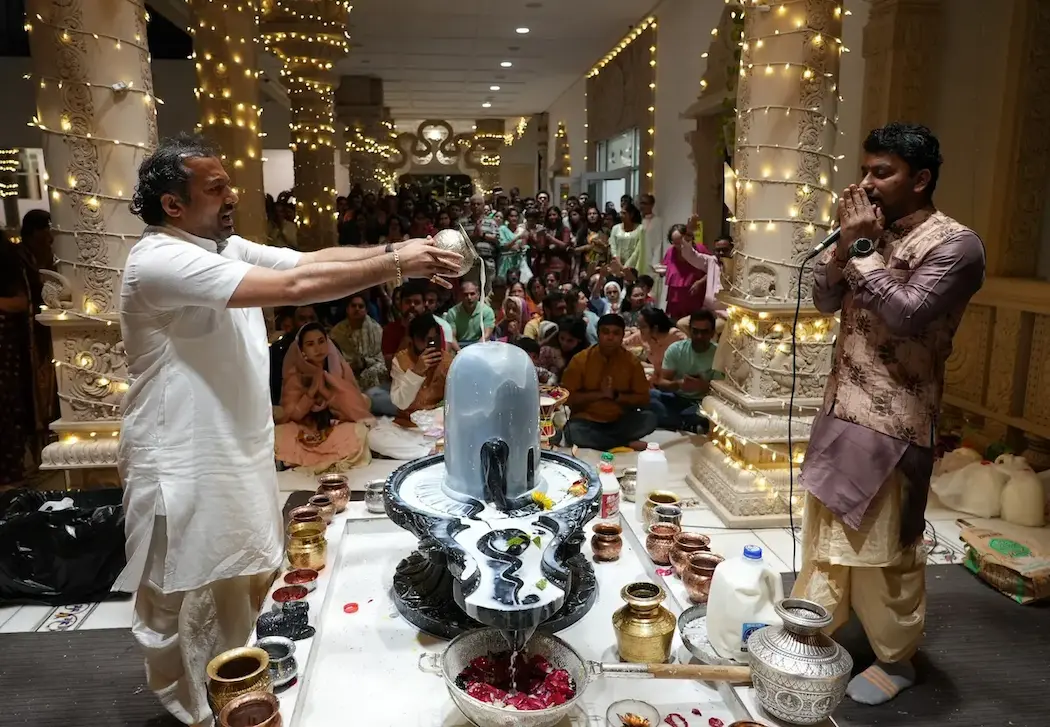
Priests chant ancient Vedic hymns. Devotees step forward, offering milk and sacred substances with prayerful intent. The atmosphere carries a devotional intensity—steady, reverent, and deep.
He watches quietly as streams of milk flow over Gopeshwar Mahadev.
The offering does not resist.
It does not struggle.
It simply flows.
And suddenly a thought forms inside him—simple, honest, almost childlike:
“Why does my life feel so heavy… when everything in nature flows so effortlessly?”
Swami Mukundanandaji often explains that rituals are not meant to impress God. They are meant to change the devotee, to purify the mind and awaken devotion. The Abhishek is not merely pouring milk. It is the symbolic washing away of inner burdens, the surrender of ego, the return of the heart toward divine alignment.
As he watches the Abhishek continue, something uncomfortable stirs.
For years, he has built his identity around control—being dependable, responsible, prepared, and successful. Letting go has never been part of his vocabulary.
A quiet fear rises in him:
“If I stop controlling everything… will everything fall apart?”
His mind—especially his ego—rushes to defend itself.
What about my career?
My reputation?
My responsibilities?
If I surrender… am I becoming careless?
For a moment, he almost dismisses the thought entirely. His phone vibrates again. A message flashes—another reminder of what awaits him.
The familiar world pulls at his attention.
And yet, as he looks again at the flowing Abhishek, something inside softens.
He realizes his exhaustion has never been caused by work alone.
It has been caused by the pressure of believing he must control every outcome.
Swami Mukundanandaji explains that stress does not arise from circumstances themselves. It often arises from two hidden identities that govern the mind: doership and enjoyership.
The doer believes, “I alone must control life.” The enjoyer believes, “My happiness depends on specific results.”
Together, they create a silent ocean of anxiety – the Bhav Sagar—where the mind is constantly tossed between fear of failure and attachment to success.
Standing there, watching the uninterrupted flow of Abhishek, he begins to see these identities for what they are.
Not truth.
Illusion.
He can control his effort.
He was never meant to carry the results.
The Deeper Meaning of Gopeshwar Mahadev: When Humility Becomes the Key
As he continues to watch the ritual, a memory surfaces—something he had heard long ago about Gopeshwar Mahadev.
It is said that Lord Shiva once longed to witness the divine Ras Leela of Lord Krishna in Vrindavan—the dance of unconditional divine love. Yet to enter that sacred intimacy, Lord Shiva could not remain as the cosmic ascetic, the lord of power, the destroyer of illusion.
To enter the heart of divine love, he had to set aside his status.
His strength.
Even his “I.”
He took the form of a Gopi—humble, surrendered—and became known as Gopeshwar Mahadev, the guardian at the gate of devotion.
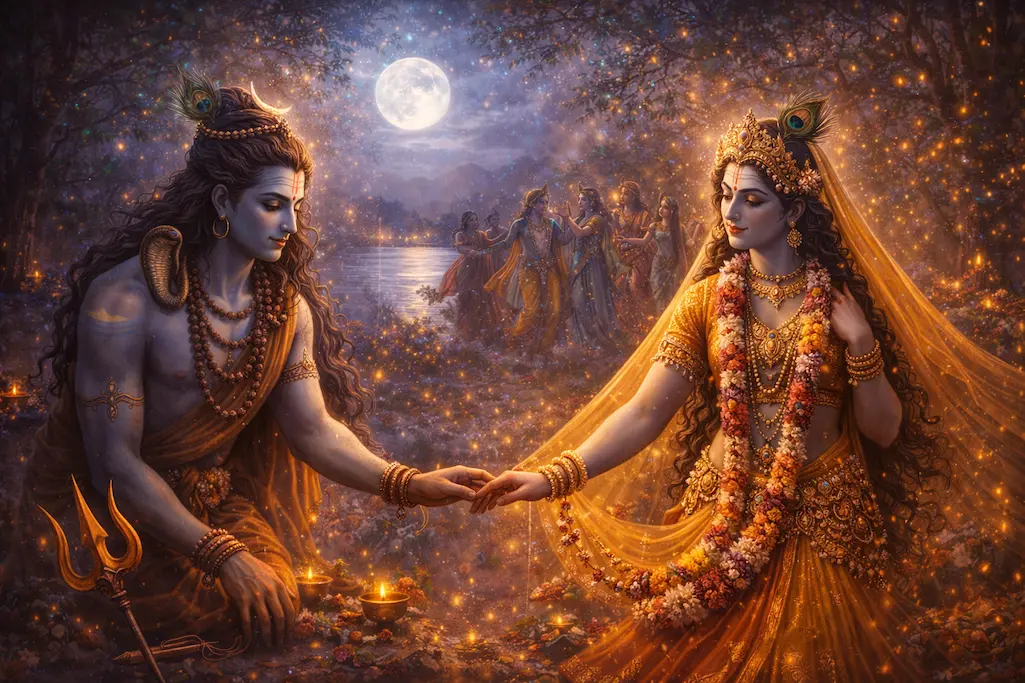
The symbolism touches the young professional unexpectedly.
If even Lord Shiva embraced humility to enter divine love…
then surrender is not weakness.
It is the doorway.
Swami Mukundanandaji teaches that bhakti matures when the seeker stops negotiating with God and begins trusting Him. Devotion deepens when the heart shifts from “What will I receive?” to “What would You have me become?”
The chants continue.
The offerings continue.
And something within him begins to shift—quietly, but unmistakably.
Samuhik Shiv Pooja: The Power of Collective Devotion
Soon after, devotees gather for Samuhik Shiv Pooja.
Here the devotion feels different—less individual, more collective. Hundreds of voices chant together:
“Om Namah Shivaya.”
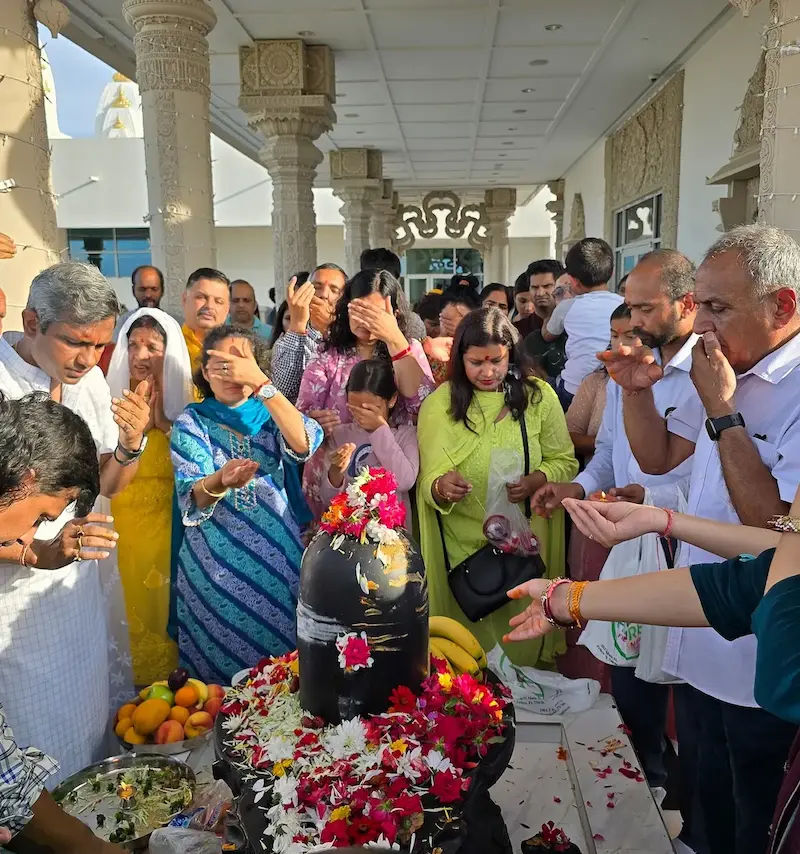
Each voice blends into something greater than itself, into a single wave of devotion.
Swami Mukundanandaji often emphasizes the transforming power of collective devotion. When hearts unite in remembrance of God, the mind naturally becomes purified. Not by force. Not by suppression. By absorption.
For the first time in months, the young professional feels his thoughts slowing down.
The noise inside him softens.
Not because someone fixed his problems.
Because, for a moment, he is not standing alone inside his mind.
The Twelve Jyotirlingas in One Place: A Pilgrimage Condensed into a Single Sacred Journey
Later that afternoon, he walks through a devotional journey created for the first time at the Radha Krishna Temple of Dallas—honoring all twelve Jyotirling manifestations of Lord Shiva.
In Hindu tradition, the Jyotirlingas are not ordinary shrines. Jyoti means light. Linga symbolizes the formless Divine. Together, Jyotirlinga means the pillar of divine light—a revelation that Shiva’s consciousness has no beginning and no end.
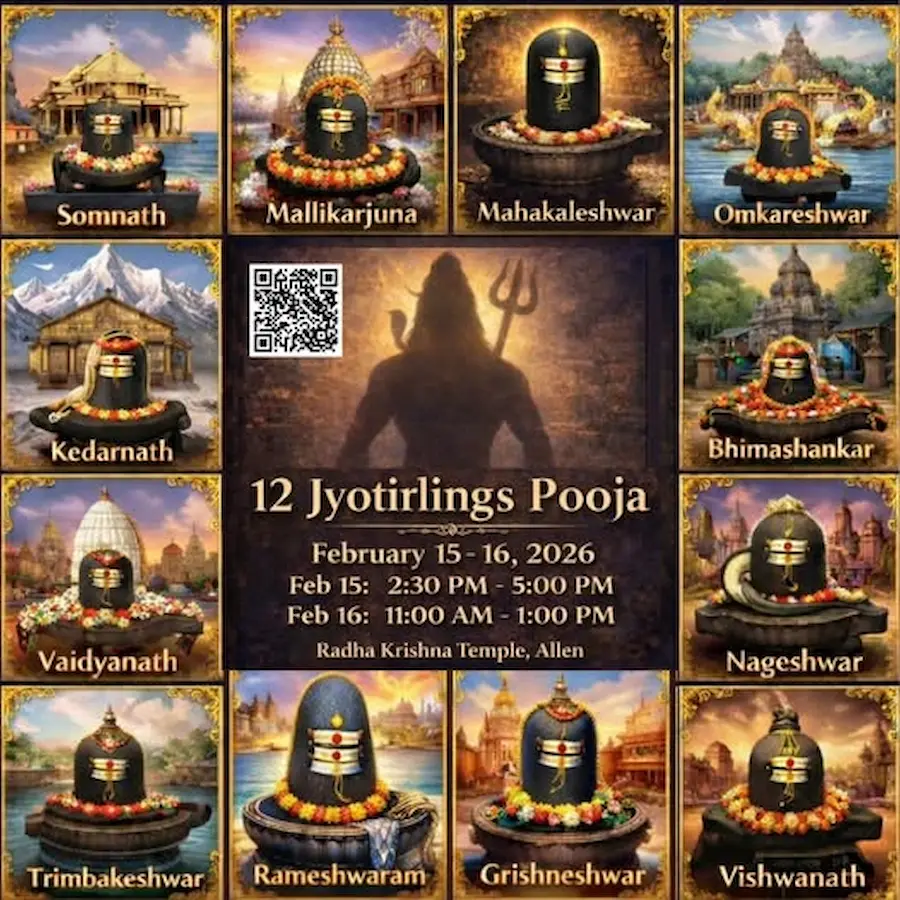
Traditionally, devotees undertake pilgrimages across India to receive darshan at these twelve sacred sites—journeys spanning thousands of miles: from Somnath to Rameshwaram, from the Himalayan heights of Kedarnath to Bhimashankar ancient forests and coastal sanctuaries. Such pilgrimages require time, endurance, sacrifice, and longing.
But here—within one sacred space—the temple has brought the symbolic essence of all twelve together.
For devotees who may never be able to travel across India, this becomes a rare spiritual blessing: a complete pilgrimage offered at the doorstep of their devotion.
He watches families walk slowly from one Jyotirling to another. Some whisper personal prayers. Some close their eyes, absorbing the atmosphere. Children hold their parents’ hands, sensing sacredness even before understanding it.
Each Jyotirling feels like a different doorway—strength, protection, stillness, purification—reminding the heart that Shiva’s presence reaches across geography, time, and circumstance.
They are reminders that divine consciousness appears in different forms to guide seekers according to their spiritual needs.
And then a deeper realization forms inside him:
Perhaps the real pilgrimage was never meant to be external alone.
Perhaps the journey was always meant to move from distraction toward stillness…
from control toward surrender…
from ego toward devotion.
Swami Mukundanandaji often says that visiting holy places becomes meaningful only when it awakens inner change. Sacred darshan is meant to remind the seeker of the sacred presence that already waits within the heart.
The young professional does not call it transformation yet.
He only knows this:
He feels quieter.
And sometimes awakening begins exactly like that—not as revelation, but as gentle stillness.
The Drive Home: When Maha Shivratri Stops Being a Festival and Becomes Personal
By evening, the temple observances conclude. He drives home quietly. The sky darkens into the sacred night of Maha Shivratri.
The day replays in his mind: the towering Shivling’s stillness, the flowing Abhishek over Gopeshwar Mahadev, the pilgrimage through the Jyotirlingas, the collective chanting that softened his thoughts.
He remembers Swami Mukundanandaji explaining Lord Shiva’s role: Shiva is called the destroyer—not of life, but of illusion, ego, and suffering. Lord Shiva destroys what binds the soul to anxiety and fear, so spiritual clarity can arise.
Until today, the teaching was intellectual.
Today it feels personal.
He begins wondering what illusions he has unknowingly built his life upon.
Neelkanth: The Teaching of Poison and the Stress We Swallow Every Day
Another story surfaces—ancient, familiar, yet suddenly intimate: the story of Samudra Manthan, the cosmic churning of the ocean.
Before the nectar emerged, a deadly poison called Halahala rose first—so toxic it threatened all creation. Lord Shiva consumed it to protect the universe. Yet he did not swallow it fully, nor did he spread it outward.
Instead, He held it at his throat, transforming it through awareness. The poison turned His throat blue, earning Him the name Neelkanth, the blue-throated one.
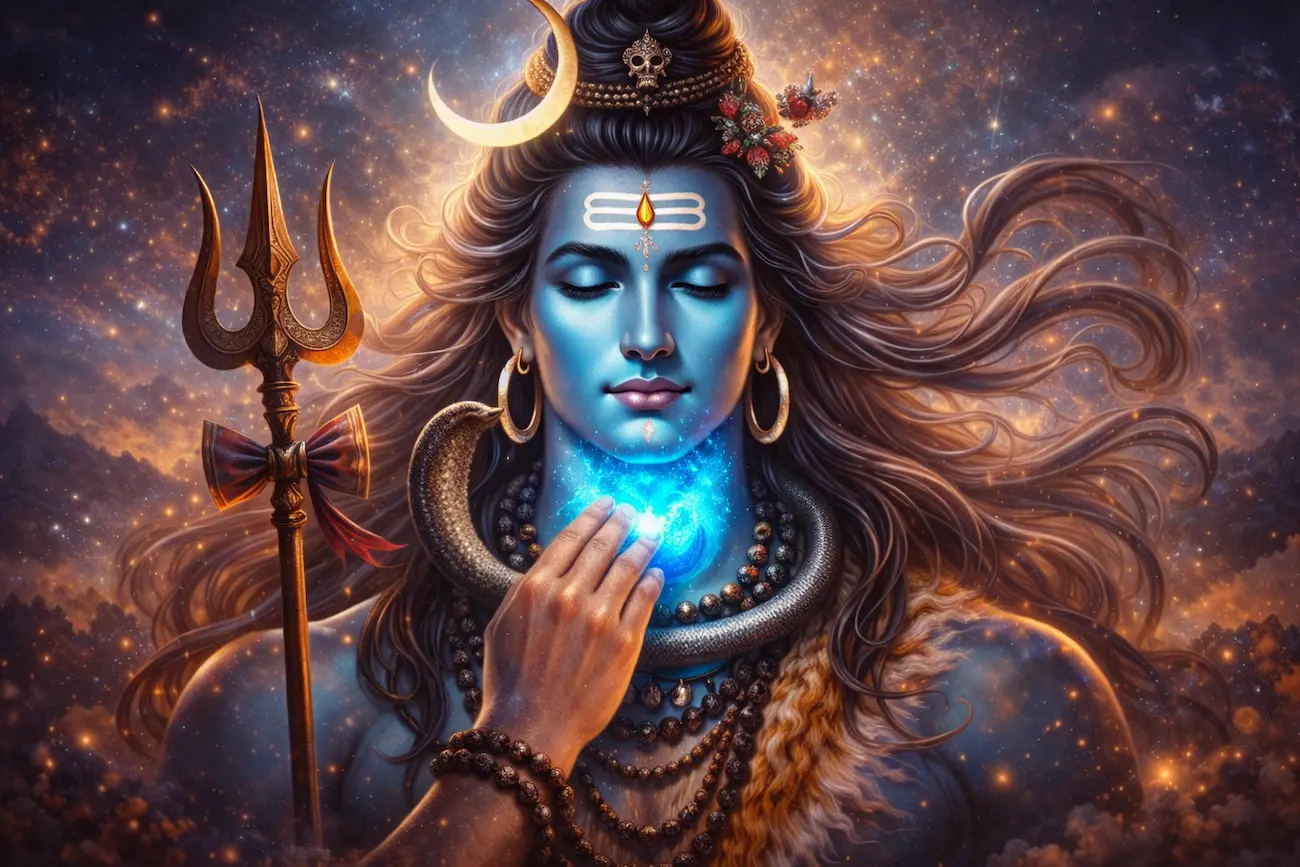
The young professional has heard this story since childhood.
But tonight, he understands it differently.
He recognizes how often he has swallowed emotional poison in his own life—stress, resentment, fear of failure, quiet anxiety, the constant pressure to meet expectations he never consciously chose.
And a question rises:
What if the way out is not suppressing emotions… and not reacting to them… but becoming aware of them?
The Inner Jagran: When Staying Awake Becomes Awakening
He enters his home, expecting routine to reclaim his mind.
But something unusual happens.
His thoughts do not rush back the way they normally do.
Instead, contemplation continues like an echo from the temple that refuses to fade.
He sits down, meaning to rest.
Minutes pass.
Then an hour.
Without consciously deciding to, he remains seated, reflecting on everything he witnessed throughout the day — the rituals, the teachings, the symbolism, and the quiet realization that surrender may not mean losing control… it may mean finally experiencing peace.
He remains awake—not out of discipline, but out of inner stirring.
Without planning it, he has stepped into his own Maha Shivratri vigil.
Swami Mukundanandaji teaches that true Jagran is not merely staying awake physically. It is awakening spiritually and remaining aware of the mind, emotions, and inner tendencies.
Tonight, for the first time in years, the young professional begins noticing his thoughts instead of blindly following them.
He observes anxiety rising when he thinks of uncertainty at work.
He notices fear tightening the chest when he imagines losing approval.
He recognizes the invisible pressure of trying to control life.
And then resistance appears—raw, honest:
If I stop controlling everything… will my life fall apart?
His mind argues quickly.
Responsibility requires control.
Success requires control.
Stability requires control.
But another quieter voice rises beneath those arguments:
Then why does control feel so exhausting?
He remembers the milk flowing during Abhishek, how it surrendered without resistance to the divine form.
For years, he has been living in resistance: resisting uncertainty, resisting vulnerability, resisting the possibility that life might still unfold beautifully without his constant effort to force outcomes.
The realization unsettles him.
But it also softens something deep within him.
He closes his eyes and watches emotions rise like waves.
Fear.
Old memories.
Unspoken resentments.
But tonight he does something different.
He does not analyze them.
He does not push them away.
He simply observes—holding the poison at the throat of awareness.
And for the first time, he realizes that awareness creates distance between him and the turbulence.
Without planning it, he folds his hands.
No elaborate ritual.
No performance.
Just a quiet internal offering.
He names the burdens he has carried silently—fear of disappointing others, fear of losing stability, fear of not being enough.
Each thought feels like placing another weight at Lord Shiva’s feet.
Swami Mukundanandaji teaches that surrender is not abandoning responsibility. It is releasing the illusion that we carry life without divine support.
As this understanding settles, a calm begins replacing the tightness he has carried for years.
The Dawn of February 16: When Nothing Outside Changes, but Everything Inside Does
As early morning light touches the horizon of February 16, something subtle has changed within him.
His responsibilities remain.
His career remains demanding.
His challenges remain real.
But his relationship with them is different.
He no longer feels he must carry life alone.
Swami Mukundanandaji often explains that spiritual transformation is rarely dramatic. It is measured through subtle shifts in perception, reaction, and steadiness. The world may not become easier overnight—but the mind becomes calmer, stronger, more anchored in faith.
Maha Shivratri did not change his external world overnight.
It changed his inner world completely.
He offers one final silent prayer of gratitude.
Not for success.
Not for solutions.
But for awareness.
How to Maximise Spiritual Benefit from Maha Shivratri 2026
If you want to maximise the spiritual benefit of Maha Shivratri 2026, the secret is not perfection.
It is sincerity.
Meaningful fasting disciplines the senses and clears inner space.
Rudrabhishek symbolizes surrender and purification.
Collective worship strengthens devotion.
And inner reflection is what allows the night to continue living within you—long after the temple visit ends.
As Swami Mukundanandaji teaches, sacred festivals are divine opportunities. But the real fruit appears when we carry that sacredness into daily life—into our reactions, our choices, our patience, our trust.
The Real Sign of Transformation
True change is subtle.
It appears as patience where anger once lived.
As courage where fear once ruled.
As trust where control once tightened the mind.
Transformation is not measured by mystical experiences.
It is measured by how calmly you respond when life becomes difficult.
The Awakening That Continues Beyond the Calendar
Maha Shivratri 2026 will pass on the calendar.
But its purpose is to awaken something timeless within you.
Every moment you choose surrender over control…
Every breath you choose faith over fear…
Every decision guided by awareness instead of ego…
becomes a continuation of Maha Shivratri within daily life.
Perhaps the real question Maha Shivratri leaves behind is not whether you stayed awake through the night…
But whether something inside you finally awakened.
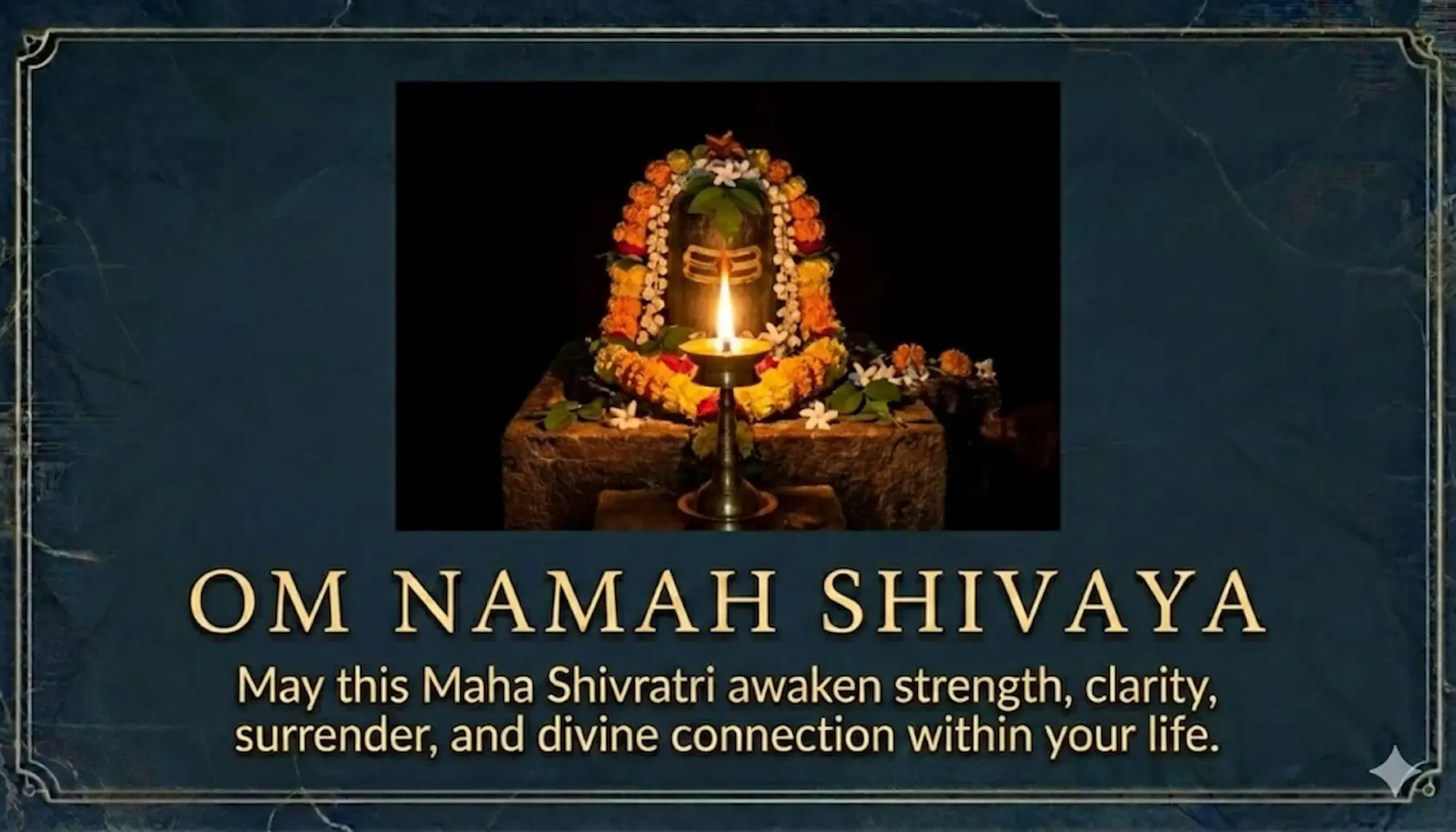
Key Takeaways:
- Surrender Over Control – True peace begins when we release the illusion that we control every outcome and learn to trust divine guidance.
- Awareness Over Reaction – Spiritual growth occurs when we observe our thoughts and emotions instead of being ruled by them.
- Humility Opens the Heart – As symbolized by Gopeshwar Mahadev, divine love is experienced when ego dissolves and devotion deepens.
- Purification Through Devotion – Rituals like Abhishek and mantra chanting help cleanse the mind and realign the soul with divine consciousness.
- Inner Awakening Is the Real Jagran – Maha Shivratri reminds seekers that true wakefulness is spiritual awareness, not merely staying awake physically.
- Transformation Continues Beyond the Festival – The real success of Maha Shivratri is reflected in daily life through patience, faith, emotional steadiness, and spiritual clarity.
Call to Action
Celebrating Maha Shivratri 2026 in Dallas: Radha Krishna Temple of Dallas
For devotees in the Dallas–Fort Worth area, Maha Shivratri 2026 at the Radha Krishna Temple of Dallas offers a sacred environment for devotion and inner purification through:
- Maha Rudrabhishek of Gopeshwar Mahadev (Feb 15–16; 9:30 AM, 1:00 PM, 6:15 PM, 8:00 PM)
- Samuhik Shiv Pooja (Feb 15; 10:00 AM–10:45 AM)
- 12 Jyotirlings Pooja (Feb 15; 2:30 PM–5:00 PM | Feb 16; 11:00 AM–1:00 PM)
Come not merely to witness rituals—come to receive what rituals are meant to awaken.
Because, as Swami Mukundanandaji reminds seekers, the purpose of temple is not simply to complete a program.
It is to transform the heart.
Frequently Asked Questions About Maha Shivratri 2026
When is Maha Shivratri in 2026?
Sunday, February 15, 2026 (observances extend into early Feb 16).
Why is Maha Shivratri spiritually important?
It symbolizes inner purification and the destruction of ignorance, ego, and fear.
Do I need elaborate rituals to observe it?
No. Sincere prayer, chanting, meditation, and reflection are equally powerful.
Why do devotees fast on Maha Shivratri?
To discipline the senses, reduce distractions, and deepen spiritual focus.
How do I know if Maha Shivratri transformed me?
You feel more inner steadiness—less fear, less reactivity, and deeper trust in divine support.