Introduction
Lohri 2026: A Festival of Warmth, Togetherness, and Gentle Renewal
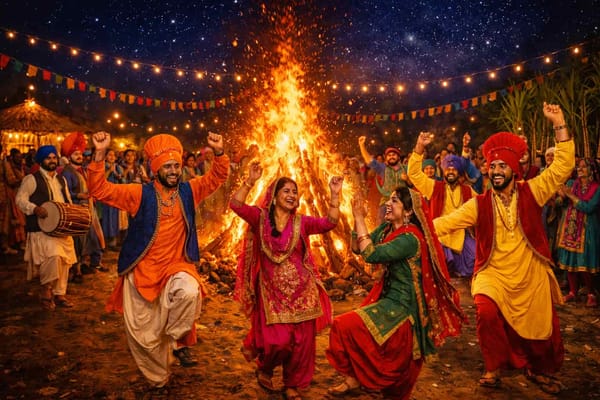
Winter has its own quiet beauty, but it also makes us seek warmth—outside and within. Lohri arrives at just such a moment, when cold evenings are softened by glowing fires and hearts naturally turn toward togetherness. Celebrated as a harvest festival, Lohri marks the joy of new crops and nature’s generosity, reminding us to pause and acknowledge what has been received with gratitude.
At the heart of Lohri are simple seasonal offerings—sesame seeds, jaggery, sugarcane, peanuts, and popcorn—each symbolizing nourishment, resilience, and sweetness. These foods are not merely shared; they are celebrated, reflecting the sweetness we wish to invite into our lives as the season turns.
Gathered around a humble bonfire, families, friends, and communities come together in a spirit of joy and warmth. Laughter, folk songs, and shared food fill the air, reminding us that happiness grows when it is shared. Beyond celebration, Lohri gently nudges us to reflect—to recognize the cycles of nature, the blessings of harvest, and the quiet hope that accompanies the gradual return of longer, brighter days.
Softly joyful and deeply human, Lohri is as much about inner warmth as it is about the fire that lights the winter night. Lohri is traditionally celebrated each year on 13 January, marking this seasonal moment with warmth, gratitude, and collective joy.
Preparations for Lohri
Family Moments, Community Bonds, and a Pan-Indian Seasonal Shift
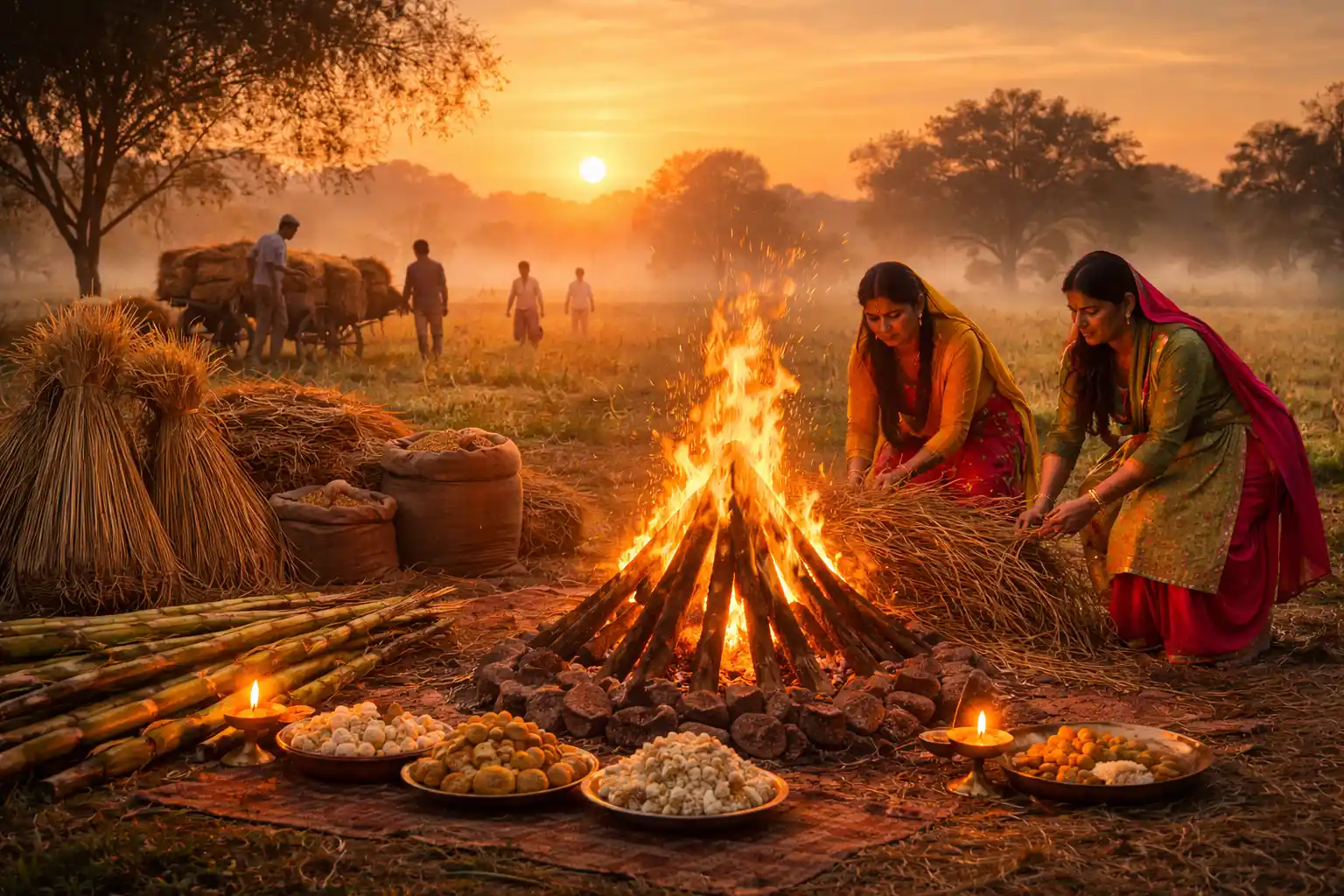
The days leading up to Lohri are filled with simple yet meaningful preparations. Homes begin to feel livelier while ingredients like sesame seeds, jaggery, peanuts, and popcorn are collected, not just for tradition, but for sharing. Families discuss plans, children look forward to the evening fire, and neighbors come together to decide how they will celebrate collectively.
Preparation for Lohri is less about perfection and more about participation. Cleaning spaces, arranging offerings, and planning gatherings become quiet acts of readiness—setting the stage for togetherness. These moments themselves are part of the celebration, strengthening bonds long before the fire is lit.
Across India, this time of year is recognized as a seasonal turning point, celebrated under different names and customs. Lohri stands as the vibrant northern expression of this shared transition—where gratitude for the past harvest meets hope for brighter, longer days ahead. In this way, Lohri connects families and communities not only locally, but also to a broader, pan-Indian rhythm of renewal and thankfulness.
Lohri as a Family & Social Festival
Where Warmth Is Shared and Bonds Are Renewed
Lohri has always been more than a date on the calendar—it is a moment when families naturally come closer. As the winter chill lingers outside, homes filled with conversation, laughter, and a quiet excitement that builds towards the evening fire. Elders share stories, children move eagerly around the preparations, and younger generations learn traditions simply by being part of them.
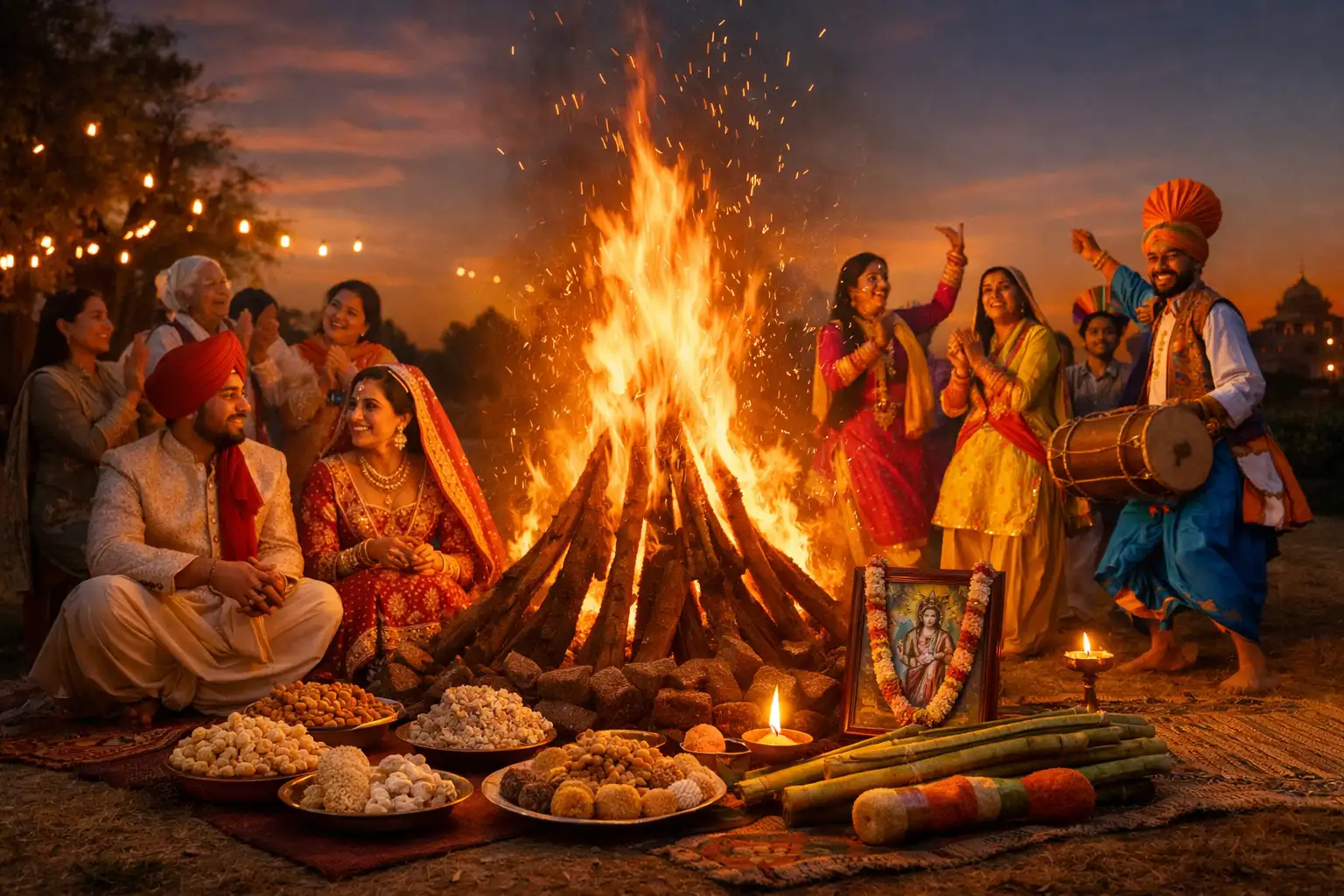
What makes Lohri especially meaningful is its collective spirit. It is not a festival meant to be celebrated alone. Neighborhoods come together, friends gather without formality, and the bonfire becomes a shared center where differences soften and connections strengthen. The act of standing together around the fire—offering seasonal foods, singing familiar songs, or simply enjoying the warmth—creates a sense of belonging that feels both comforting and timeless.
In today’s world, this social nature of Lohri has found new expressions. Family members who live apart exchange greetings, images, and messages, extending the warmth of the celebration beyond physical spaces. A simple Lohri wish sent on WhatsApp becomes a way of saying, “You are remembered, you are included.” In this way, Lohri continues to do what it has always done best—bring people together, reminding us that joy deepens when it is shared.
n many families, Lohri holds an even more intimate significance. It is traditionally celebrated with special warmth after a marriage or the birth of a child, marking the joyful welcome of a new member into the family and community. The bonfire becomes a symbol of blessing—offering warmth, protection, and shared happiness as life enters a new chapter. Such celebrations reflect Lohri’s deeper role as a festival of continuity, where joy is not only seasonal, but generational.
The atmosphere of Lohri gatherings is further enlivened by folk songs, rhythmic clapping, and simple dances that rise naturally around the fire. These moments do not demand performance or precision—they invite participation. Laughter blends with melody, movement with joy, and the collective energy transforms the gathering into a living expression of celebration. In these shared rhythms, Lohri feels less like an event and more like a feeling—vibrant, welcoming, and alive.
The Content and Meaning of Lohri
A Festival of Harvest, Gratitude, and Seasonal Renewal
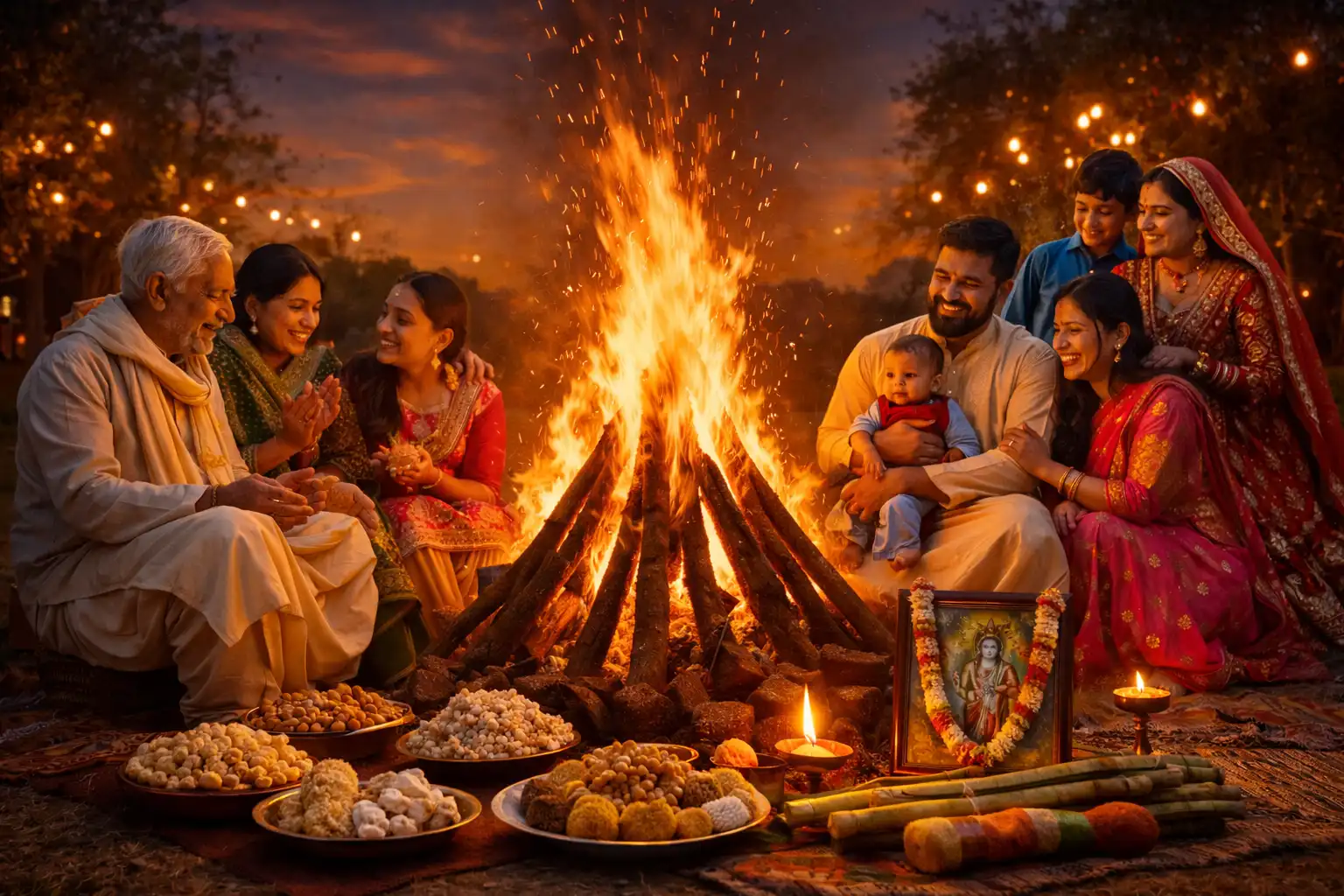
At its core, Lohri is a harvest festival, rooted in gratitude for nature’s abundance and the rhythms of the agricultural year. It celebrates the arrival of newly harvested crops and acknowledges the quiet partnership between human effort and natural grace. Long before it became a festive evening of songs and gatherings, Lohri marked a moment of thankfulness—an opportunity to pause and recognize what the earth has provided.
The foods associated with Lohri carry this meaning beautifully. Sesame seeds, jaggery, sugarcane, peanuts, and popcorn are all products of the winter harvest, and their natural sweetness symbolizes nourishment, resilience, and hope. Sharing these foods around the fire is not merely customary; it reflects a deeper wish—that life ahead may carry the same sweetness, warmth, and sustenance.
The bonfire stands at the heart of Lohri’s symbolism. More than a source of heat, it represents light during winter, togetherness in the midst of cold, and renewal at a turning point in the season. As offerings are placed into the fire, there is a quiet acknowledgment of letting go—of hardship, heaviness, and what no longer serves—making space for growth and clarity.
Lohri also aligns with a broader seasonal transition recognized across India, when longer days slowly begin to return. Known by different names in different regions, this shared moment reflects a collective awareness of change, renewal, and hope. In this sense, Lohri is both deeply regional and universally humana celebration of harvest, gratitude, and the promise that light gently follows even the coldest nights.
Lohri 2026: WhatsApp Status & Wishes
Warm, Modern, Family-Centered Expressions
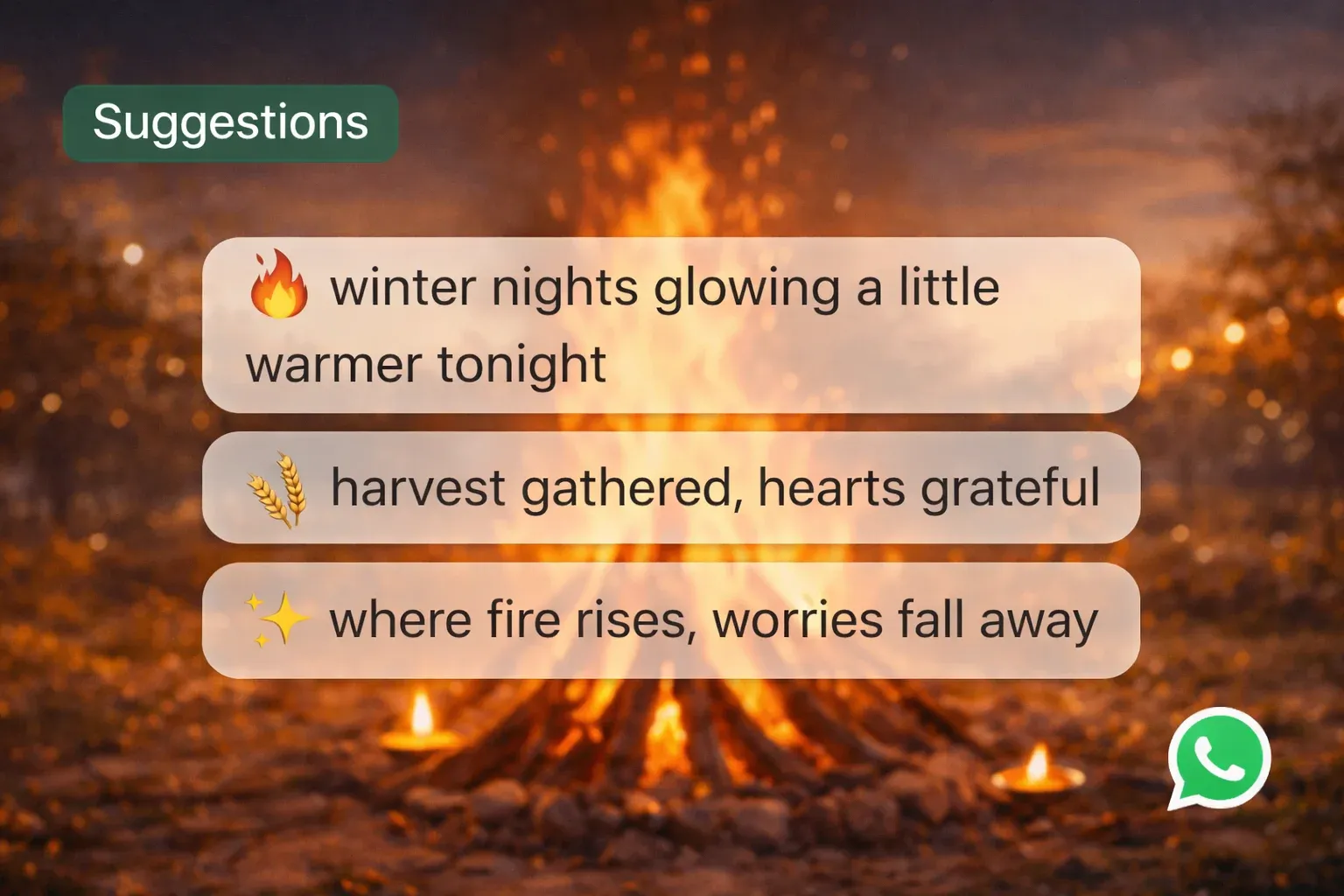
Lohri today is shared not only around a bonfire but also through messages, images, and short greetings that carry warmth across distances. A simple WhatsApp status or wish becomes a way to stay connected—with family, friends, and community—especially when everyone cannot be physically together. The following Lohri wishes reflect a modern spirit rooted in family warmth, gentle joy, and light devotion, making them easy to share and heartfelt to receive.
🌟 Short & Modern Lohri WhatsApp Status
- Wishing you warmth, sweetness, and togetherness this Lohri.
- May the Lohri fire light your home and heart.
- Cold nights, warm smiles — Happy Lohri.
- A little fire, a lot of warmth — Lohri vibes.
- Celebrating harvest, hope, and togetherness.
- Let this Lohri bring light, laughter, and calm joy.
👨👩👧👦 Family-Centered Lohri Wishes
- Wishing our home the warmth of the Lohri fire and the sweetness of togetherness.
- May this Lohri bring joy to our family and peace to our hearts.
- Celebrating Lohri with gratitude for family, food, and shared moments.
- May our home glow with love, laughter, and gentle warmth this Lohri.
- Lohri is special because we celebrate it together — Happy Lohri to my family.
🤝 Community & Social Lohri Wishes (Modern Tone)
- Lohri reminds us that joy grows when shared — wishing everyone warmth and happiness.
- May this Lohri strengthen bonds and bring neighbors, friends, and families closer.
- Sending Lohri wishes filled with warmth, gratitude, and good cheer.
- Celebrating Lohri together, near or far, with shared joy and kindness.
- May the spirit of Lohri fill every home in our community with light.
🌼 Light Devotional & Reflective Lohri Wishes
- May the warmth of Lohri awaken gratitude and gentle joy within.
- Let this Lohri be a reminder to cherish what we have and share it freely.
- As the fire glows outside, may peace and contentment grow within.
- Lohri invites us to celebrate not just the harvest, but the blessings of togetherness.
- May this Lohri bring inner warmth, clarity, and quiet happiness.
One Turning of Time, Many Expressions of Gratitude
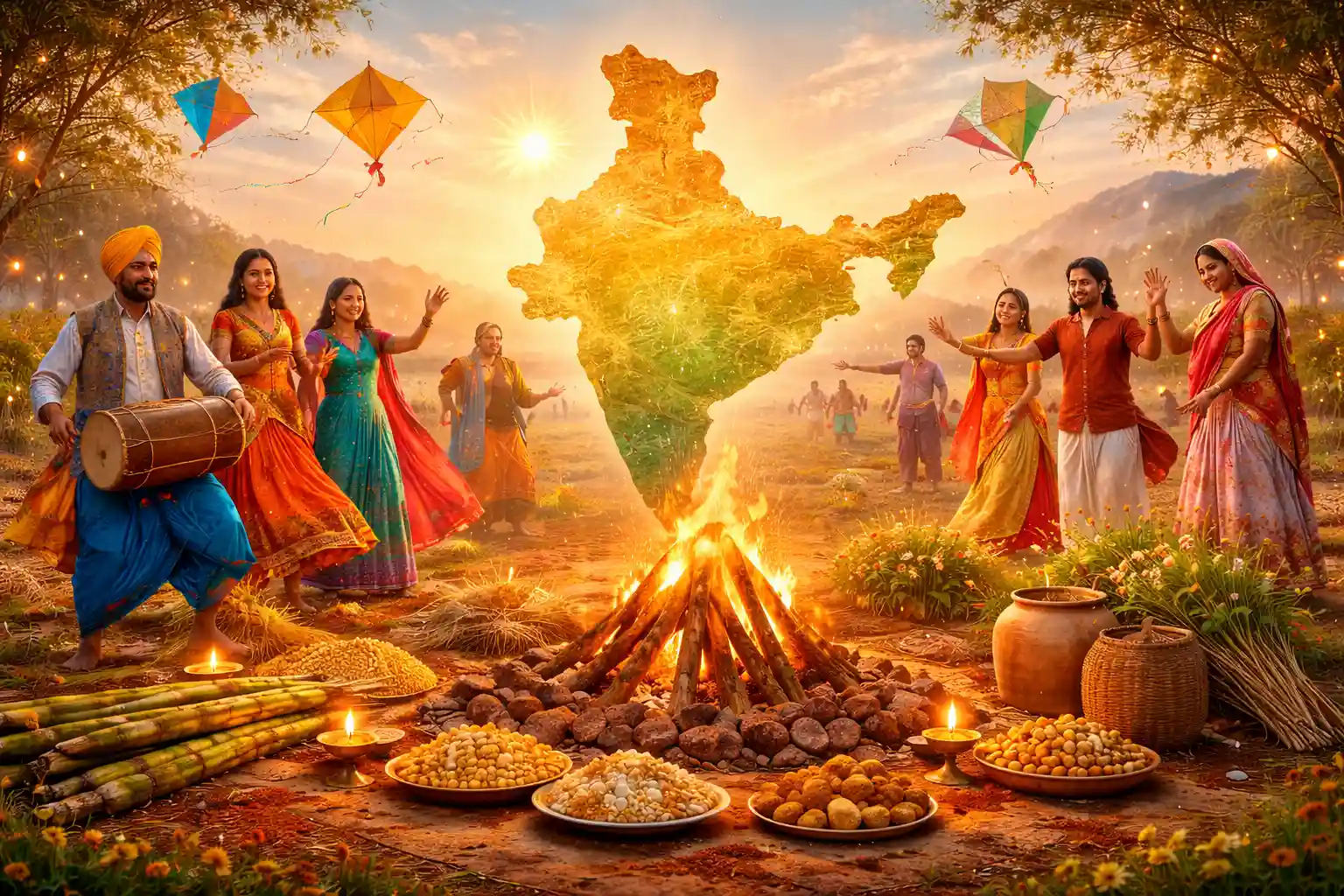
While Lohri carries a distinct cultural flavor rooted in the north of India, its deeper meaning connects to a pan-Indian awareness of seasonal change. Across the country, this period marks a subtle yet powerful transition—when the grip of winter begins to loosen and longer, brighter days slowly return. Different regions honor this moment in their own ways, through varied customs, foods, and names, yet the underlying spirit remains shared.
At its heart, this seasonal turning invites gratitude—for harvests gathered, for nourishment received, and for the quiet hope that accompanies renewal. Lohri stands as the vibrant expression of this awareness, where fire becomes a symbol of warmth and continuity, and shared food becomes an offering of sweetness and goodwill. Though traditions may differ across regions, the essence is the same: a collective pause to acknowledge nature’s rhythms and life’s abundance.
Seen this way, Lohri is both beautifully local and gently universal. It reminds us that while celebrations take many forms, the human response to change—gratitude, joy, and togetherness—remains deeply shared.
Across India, this seasonal turning is celebrated in diverse yet harmonious ways—Makar Sankranti in many regions, Pongal in the south, Uttarayan in the west, and Magh Bihu in the east. Though customs and expressions vary, each festival reflects the same underlying gratitude for harvest, light, and renewal. Lohri stands as the northern voice in this shared celebration, adding its own warmth and cultural rhythm to a pan-Indian moment of transition.
Lohri as a Moment of Conscious Celebration
A Gentle Reflection Inspired by Swami Mukundananda
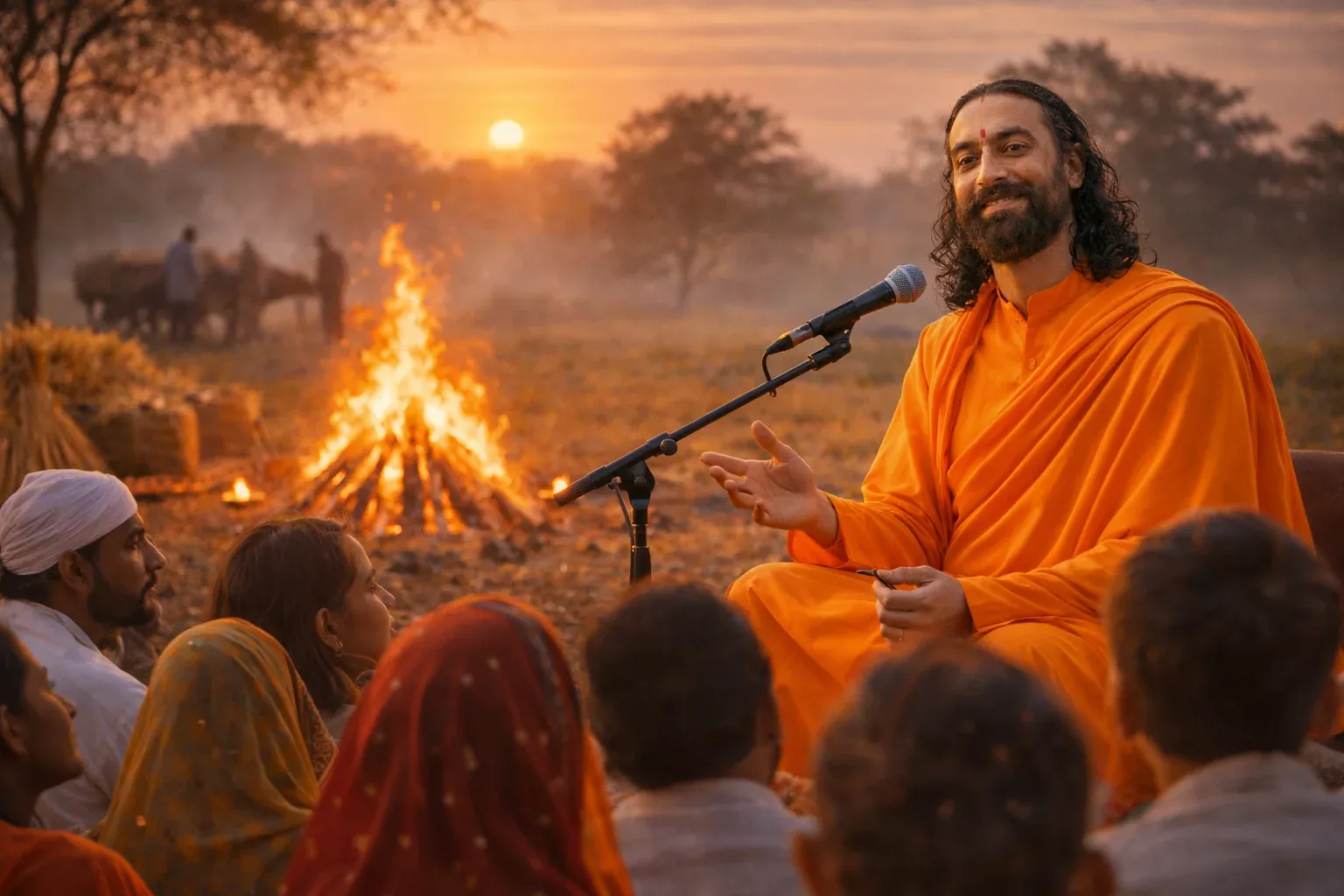
Festivals gain their deepest meaning when joy is accompanied by awareness. In this spirit, Lohri can be seen not only as a celebration of harvest and warmth, but also as an opportunity to offer gratitude to God—for the abundance of nature and for the strength of community that carries us through every season. Inspired by the teachings of Swami Mukundananda, celebration becomes most fulfilling when it remains sattvic—pure, uplifting, and inwardly nourishing.
A sattvic celebration does not reduce joy; it refines it. Devotional singing, remembrance of the Divine, sharing prasad, and extending kindness to all transform a festive gathering into a sacred moment. Such simplicity keeps the heart light and the mind calm, allowing celebration to uplift rather than distract.
The Lohri bonfire itself carries a quiet spiritual symbolism. As offerings are placed into the fire, it can remind us to let go of inner negativity—resentment, restlessness, and heaviness—and to kindle devotion, gratitude, and goodwill instead. In this way, the outer fire reflects an inner intention: to burn what limits us and nourish what elevates us.
Much like spring festivals across spiritual traditions, which celebrate God’s opulence as it manifests through blooming nature and renewed life, Lohri too points toward divine abundance expressed through the harvest and the changing seasons. When celebrated with awareness, Lohri becomes a reminder that nature’s generosity and spiritual grace move together—inviting us to rejoice, remember, and grow inwardly, even as we celebrate outwardly.
Conclusion
Carrying the Warmth of Lohri Forward
Lohri arrives like a gentle pause in the rhythm of winter—a moment to gather, to give thanks, and to celebrate what has been received. Rooted in the joy of harvest and the warmth of community, it reminds us that abundance is sweetest when shared and that togetherness itself is a blessing.
Whether celebrated around a glowing bonfire, within the closeness of family, or through heartfelt messages shared across distances, Lohri carries a simple yet timeless message. It invites us to honor nature’s cycles, cherish human connections, and allow gratitude to guide our celebrations.
When joy is infused with awareness, celebration becomes meaningful. As the fire of Lohri lights the night, it gently encourages us to release heaviness, nurture kindness, and kindle inner warmth that lasts beyond the festival itself. In carrying this spirit forward, Lohri becomes not just a day of celebration, but a reminder to live with sweetness, balance, and shared joy—season after season.
Key Takeaways
- Lohri is a celebration of harvest and gratitude, reminding us to pause and thank nature—and the Divine—for abundance and nourishment.
- Family and community lie at the heart of Lohri, as warmth multiplies when joy, food, and traditions are shared together.
- Seasonal foods like sesame, jaggery, and sugarcane symbolize sweetness and resilience, reflecting hopes for harmony and well-being in life.
- Lohri connects to a pan-Indian rhythm of renewal, resonating with festivals like Makar Sankranti, Pongal, Uttarayan, and Magh Bihu.
- Modern expressions such as WhatsApp wishes keep traditions alive, allowing togetherness to travel across distance and time.
- When celebrated consciously and sattvically, Lohri becomes more than a festival—it becomes a moment of inner renewal, kindness, and spiritual warmth.
Call To Action
As you celebrate Lohri this season, may these reflections guide your joy:
- Offer gratitude to God for the harvest and the warmth of community, remembering that abundance is sweetest when shared with others.
- Let the Lohri bonfire symbolize the burning of inner negatives—resentment, restlessness, and heaviness—and the kindling of devotion and hope, just as spring festivals across tradition celebrate God’s opulence revealed through nature.
- Keep your celebrations sattvic and uplifting—through devotional kirtans, remembrance of the Divine, sharing prasad, and extending kindness to all—so that joy nourishes both heart and spirit.
Ending with a prayer: Wish Lohri bring not only festive warmth, but also inner renewal, harmony, and gratitude that lasts beyond the season.