Language as the Foundation of Culture
Language is the basis of all cultures. Before traditions are practiced, before values are taught, and before history is recorded, culture is first spoken. Language carries the collective memory of a people, their beliefs, emotions, customs, and ways of seeing the world. It is through language that culture breathes, survives, and flows from one generation to the next. When a language thrives, a culture remains alive; when it weakens, cultural connections begin to fade quietly.
Language as Identity
Language gives an individual an exclusive identity. It shapes how one thinks, expresses feelings, and connects with others. The tone of a mother tongue, its expressions and untranslatable nuances, create a deep sense of belonging that goes beyond nationality or place. Even when people live far from their homeland, language anchors them to who they are and where they come from. It becomes a living marker of identity, something carried within, not worn on the surface.
Language in Daily Life and Shared Spaces
In everyday life, language creates invisible bonds. It allows people to share thoughts, emotions, humor, and even private conversations within public spaces, offering comfort and familiarity in unfamiliar surroundings. A shared language instantly creates connection, trust, and warmth, especially within community settings. For families and communities living away from their cultural origins, language becomes a quiet but powerful thread that holds people together.
Language does not only express culture; it quietly protects it.
Preserving Heritage Through Language
Heritage is not preserved only through monuments, rituals, or celebrations; it is preserved through language. Language carries stories, expressions, wisdom, and ways of life that cannot be fully captured in translation. When a language is spoken, it keeps alive the lived experiences of a culture, its humor, emotions, values, and worldview. In this sense, language is a living archive of heritage, passed on not through textbooks alone, but through everyday use.
For communities living away from their homeland, preserving heritage requires conscious effort. Over time, dominant languages naturally take precedence, and native languages risk becoming limited to occasional use or symbolic presence. When this happens, cultural understanding begins to thin, and traditions lose depth. Preserving language therefore becomes an essential act of cultural continuity, ensuring that heritage remains active, meaningful, and connected to daily life rather than confined to memory or nostalgia.
To understand why language matters, we must see how deeply it is woven into tradition.
Language, Culture, and Tradition
Language, culture, and tradition are deeply intertwined. Traditions are not merely actions performed; they are explained, understood, and internalized through language. Rituals, prayers, festivals, and customs carry meaning only when their stories and significance are communicated. Language gives context to tradition, allowing individuals to connect not just with the practice, but with the values and philosophy behind it.
Within cultural settings, language becomes the medium through which traditions remain relevant rather than routine. It enables meaningful participation, thoughtful understanding, and emotional connection. When cultural practices are supported by language learning, they move beyond repetition and become lived experiences. In this way, language ensures that culture and tradition are not only preserved, but continuously understood, respected, and carried forward.
Cultural Transmission to the Next Generation
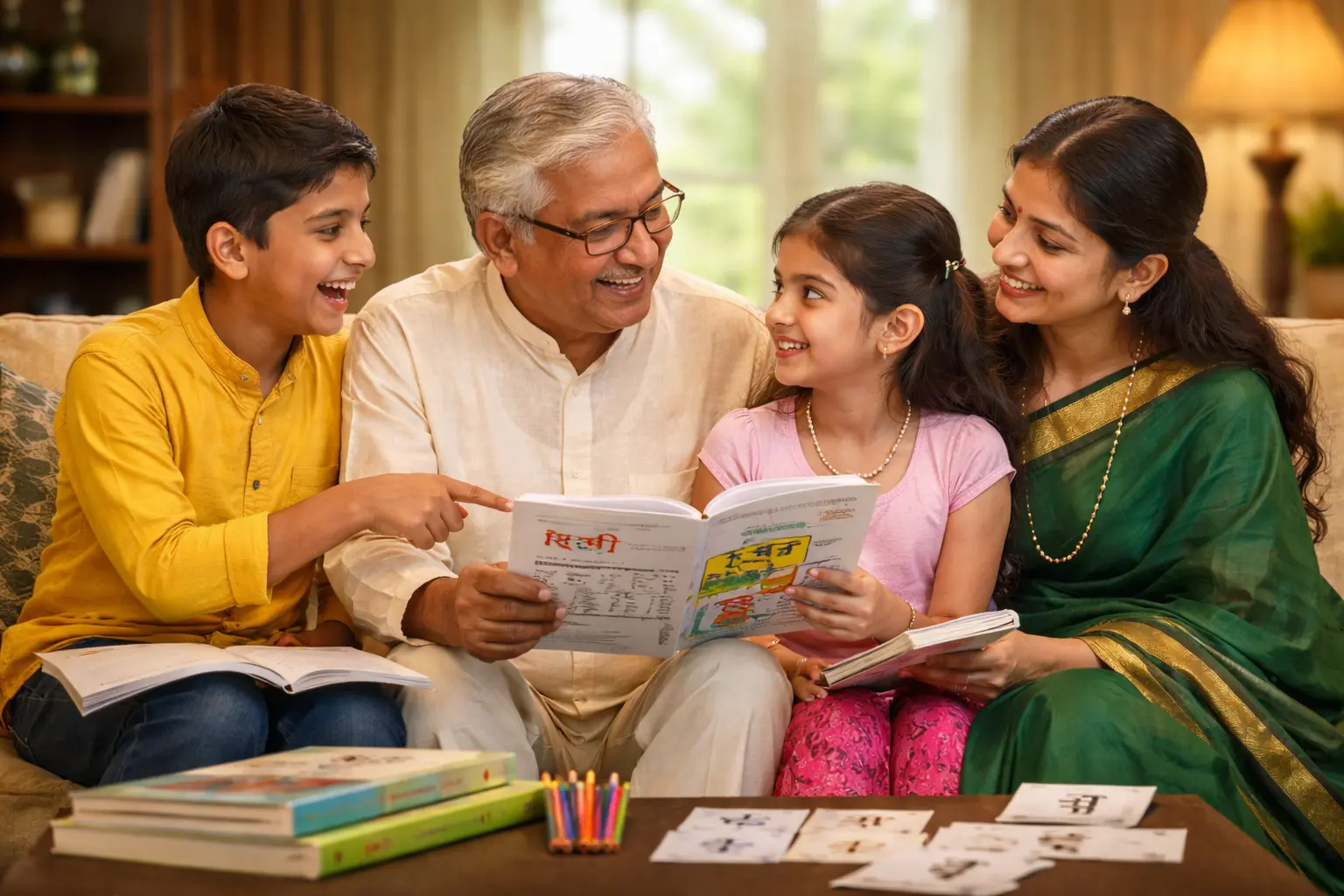
Cultural transmission happens most naturally through language, but when language is missing, a quiet barrier begins to form between generations. This barrier is not always obvious, yet it slowly affects both communication and the natural flow of emotion. Grandparents and grandchildren sit together, full of affection, yet unsure how to speak freely. Conversations become shorter, pauses longer, and warmth struggles to find words.
Often, both sides look for a translator. A nani or dadi hesitates mid-thought, wondering how to explain a memory, a value, or a simple childhood story. A grandchild listens politely, yet looks blankly, unable to grasp the emotion behind the words. What should have been an effortless exchange turns awkward, dependent, and incomplete. Over time, this discomfort limits not only conversation, but also emotional closeness.
Grandparents carry stories that are never written down, how parents were as children, how traditions were lived, how values were quietly practiced at home. When language is absent, these stories remain locked within them. Language learning restores this emotional bridge, allowing affection, stories, humor, and shared memories to flow naturally again. It enables relationships to move beyond translation and return to connection.
Community Spaces as Cultural Anchors
In diaspora communities, cultural continuity often depends on shared spaces that nurture learning, belonging, and connection. Community spaces play a vital role in keeping language alive by providing an environment where it is heard, spoken, and valued naturally. Unlike isolated learning, language in a community setting is reinforced through shared experiences, cultural references, and collective participation.
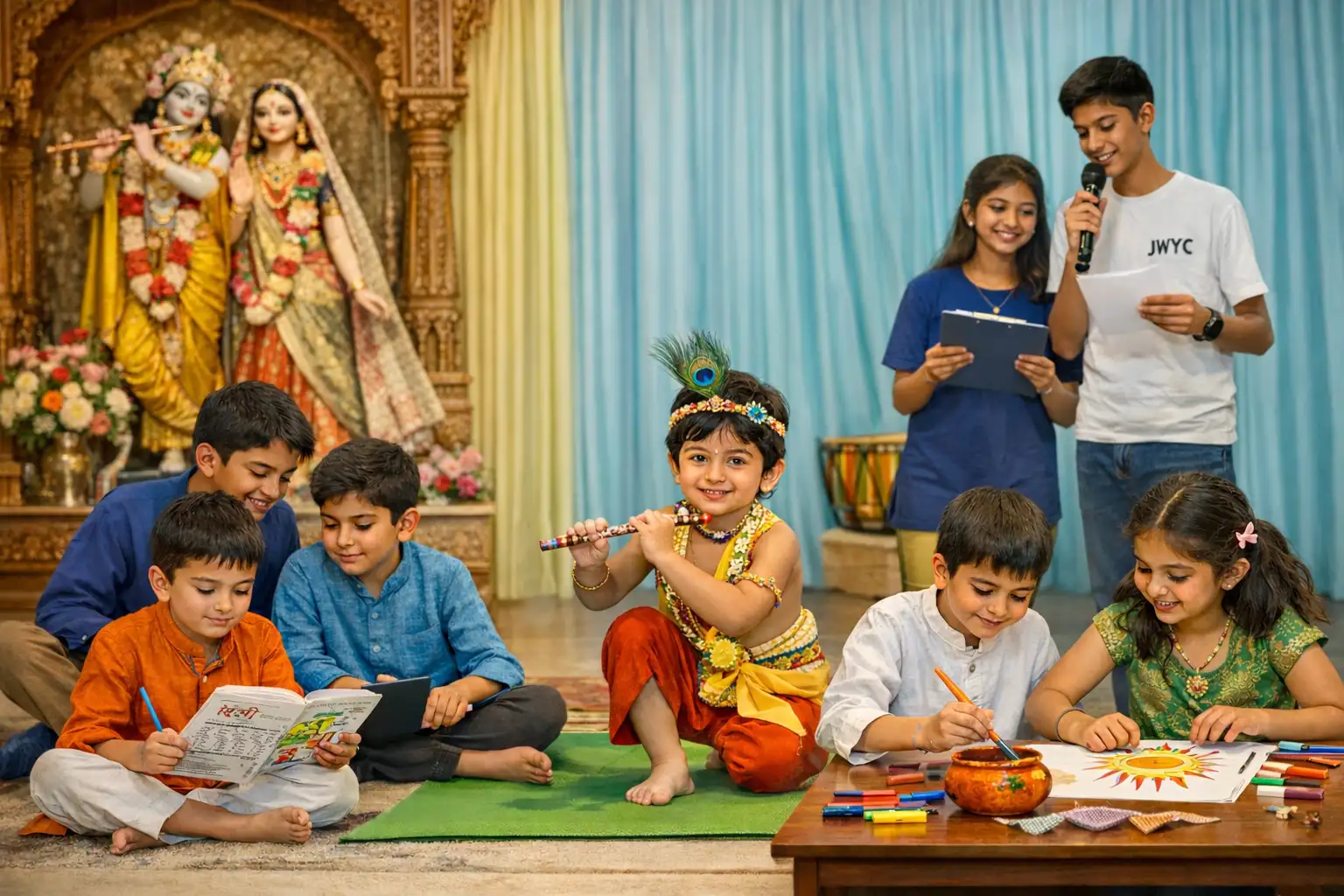
At Radha Krishna Temple, language learning becomes part of a broader cultural ecosystem. The temple functions not only as a place of worship, but also as a center for cultural engagement, where traditions, values, and language coexist. In such spaces, language is not treated as an academic subject alone, but as a living medium through which culture is experienced and identity is strengthened.
By learning languages within a community rooted in tradition, children and adults alike experience language as something meaningful and relevant. It becomes associated with festivals, stories, prayers, and shared moments rather than confined to classrooms. In this way, community spaces serve as cultural anchors, ensuring that language remains connected to its roots while continuing to thrive in a modern, global setting.
These reflections find practical expressions in community spaces that consciously nurture language and culture together.
The Broader Vision of the Radha Krishna Temple
The role of the Radha Krishna Temple extends far beyond conducting religious rituals and spiritual observances. While worship remains central, the temple also serves a larger purpose within the Indian diaspora, bringing people together, nurturing shared identity, and preserving cultural continuity. It functions as a unifying space where faith, culture, and community intersect.
In a multicultural and fast-paced society, diaspora communities often risk fragmentation. The temple addresses this by creating common cultural ground through language, tradition, and shared values. By promoting language learning, the temple helps younger generations reconnect with their roots and experience their culture directly. Language becomes the medium through which cultural belonging is strengthened.
Through this broader vision, the temple plays a vital role in keeping the Indian community connected, not only to spiritual practice, but also to cultural heritage and collective identity. By uniting people through language, the Radha Krishna Temple reinforces bonds across generations and backgrounds, helping the diaspora remain culturally rooted while thriving in a global environment.
Language Classes at Radha Krishna Temple
The language classes offered at Radha Krishna Temple are designed with a larger purpose in mind, preserving heritage, nurturing identity, and strengthening cultural bonds within the community. These classes focus on Indian and community languages, providing learners with an opportunity to connect with their linguistic roots in an environment that naturally supports cultural learning.
Learning within a temple setting allows language to be experienced alongside tradition, values, and shared cultural practices. Children and adults are exposed to language not only as structured instruction, but also as a living medium connected to stories, festivals, prayers, and community interaction. This integrated approach helps learners develop confidence, familiarity, and emotional connection with the language.
By offering language education within a trusted community space, the temple helps bridge generational gaps and supports families in passing on their cultural heritage meaningfully. The classes serve as a platform where language learning becomes a collective effort—one that nurtures roots, builds cultural identity, and ensures continuity for future generations.
The following programs support language learning and cultural connection within the community.
Language & Cultural Learning Programs at Radha Krishna Temple, Dallas
| Program / Class | Age Group | Focus Area | Schedule / Duration |
|---|---|---|---|
| Hindi Language Classes | 6+ | Reading, speaking, writing, vocabulary | Sunday, 2:00–3:00 PM (Aug 2025 – May 2026) |
| Telugu Language Classes | 6+ | Spoken Telugu & basics | Friday, 6:30–7:30 PM |
| Gujarati Language Classes | 6+ | Speaking, reading & writing | Friday, 6:30–7:30 PM (Semester-based) |
| Marathi Language Classes | 6+ | Beginner speaking, reading & writing | Sunday, 2:00–3:00 PM (Jan–May 2026) |
| Little Krishna | 2–5 | Yoga, dance, stories, crafts | Monthly, 4:30–6:00 PM |
| Bal-Mukund Classes | 5–15 | Stories, shlokas, values | Saturday 10:00 AM, Sunday 11:00 AM |
| Bhagavad Gita Classes | 8+ | Sanskrit verses & meanings | Saturday, 1:30 PM |
| Youth Club | Youth | Leadership & communication | Various sessions |
| Summer Camp 2026 | Children & Youth | Culture, creativity & values | Summer 2026 (details forthcoming) |
Conclusion
Language is more than a means of communication; it is the thread that weaves culture, memory, and identity together. For communities living far from their homeland, language becomes the quiet force that keeps traditions alive, emotions connected, and generations united. When language is nurtured, heritage remains living and relevant, not distant or symbolic.
Institutions like Radha Krishna Temple play a vital role in this journey. By creating spaces where language, culture, and community come together, the temple helps the Indian diaspora remain rooted while embracing life in a global society. Language learning in such an environment goes beyond instruction—it restores connection, strengthens identity, and allows culture to be lived naturally.
As families and communities look toward the future, preserving language becomes an act of continuity and care. It ensures that stories are shared, emotions flow freely, and cultural belonging is passed on with warmth and understanding. In nurturing language, we nurture our roots, and in doing so, we keep our cultural legacy alive for generations to come.
“A language is not just words; it is a way of seeing, feeling, and understanding the world.”
Key Takeaways
- Language is the foundation of culture
- Language shapes identity and belonging
- Preserving language preserves living heritage
- Language strengthens generational bonds
- Community spaces sustain cultural continuity
- Radha Krishna Temple serves as a cultural anchor for the diaspora
Call to Action
Nurturing Language, Culture, and Community
Language is the thread that connects generations, preserves heritage, and shapes cultural identity. At Radha Krishna Temple, language learning is part of a broader vision—to keep the Indian diaspora connected through culture, tradition, and shared values.
The temple offers community-based language and cultural programs that help children and families remain rooted while growing in a global environment.
Early Childhood (Ages 2–5)
Little Krishna – Monthly Cultural Program
• Animal yoga, music & dance, storytelling, simple crafts
🗓 Once a month (usually 3rd Sunday; dates may vary)
4:30 PM – 6:00 PM
Language Classes (Ages 6+)
|
Language |
Schedule |
Notes |
|
Hindi |
Sunday • 2:00 – 3:00 PM |
Aug 2025 – May 2026 |
|
Telugu |
Friday • 6:30 – 7:30 PM |
Beginner-friendly |
|
Gujarati |
Friday • 6:30 – 7:30 PM |
Semester-based (Aug–Dec / Jan–May) |
|
Marathi |
Sunday • 2:00 – 3:00 PM |
Jan – May 2026 |
Cultural & Educational Programs
Bal-Mukund Classes (Ages 5–15)
• Stories, shlokas, crafts & character building
🗓 Saturday – 10:00 AM
🗓 Sunday – 11:00 AM
Bhagavad Gita Classes (Ages 8+)
• Understanding Sanskrit verses & meanings
🗓 Saturday – 1:30 PM
Youth Club & Communication Skills
• Leadership, confidence & public speaking
🗓 Various weekly session
Summer Camp 2026
Summer Camp (Children & Youth)
• Cultural learning, values, creativity & group activities
🗓 Summer 2026
Detailed schedule to be announced closer to summer
Why Learn at Radha Krishna Temple?
• Culture-rooted learning in a community setting
• Age-appropriate programs from early childhood onward
• Strengthening family & generational connections
• Helping children grow with confidence in their cultural identity
Learning language in a cultural community allows heritage to be lived, not merely remembered.
Frequently Asked Questions (FAQs)
1. Why are language classes important for children growing up in the diaspora?
Language helps children stay connected to their cultural roots, family traditions, and identity. It allows them to communicate meaningfully with elders, understand cultural practices, and develops a strong sense of belonging while growing up in a multicultural environment.
2. Are these language classes only for religious purposes?
No. While the classes are offered in a temple setting, their purpose goes beyond religious learning. They focus on language, culture, heritage, and identity, making them relevant for families seeking cultural connection and continuity.
3. At what age can children start attending language classes?
Most language classes at Radha Krishna Temple are designed for children aged 6 years and above, with additional cultural programs available for younger children through Bal-Mukund and other youth initiatives.
4. Do children need prior knowledge of the language to join?
No prior knowledge is required. The classes are structured to accommodate beginners and gradually build comfort in speaking, reading, and understanding the language in a supportive, community-based environment.
5. How do community-based language classes differ from private or online classes?
Community-based learning offers cultural immersion. Children hear the language in stories, festivals, prayers, and shared activities, making learning more natural and meaningful compared to isolated or purely academic instruction.
6. How do these classes help strengthen family and generational bonds?
A shared language allows emotions, stories, humor, and memories to flow freely between generations. It reduces reliance on translation and helps restore natural communication between children, parents, and grandparents.
7. Are there programs for younger children (ages 2–5) at the temple?
Yes. Radha Krishna Temple offers a once-a-month early childhood program called Little Krishna, designed especially for children aged 2–5 years. These sessions introduce culture and values through age-appropriate activities such as animal yoga, music and dance, storytelling, and simple crafts, creating a joyful first connection with Indian culture.
References & Citations
- Radha Krishna Temple, Dallas – Programs & Classes
https://www.radhakrishnatemple.net