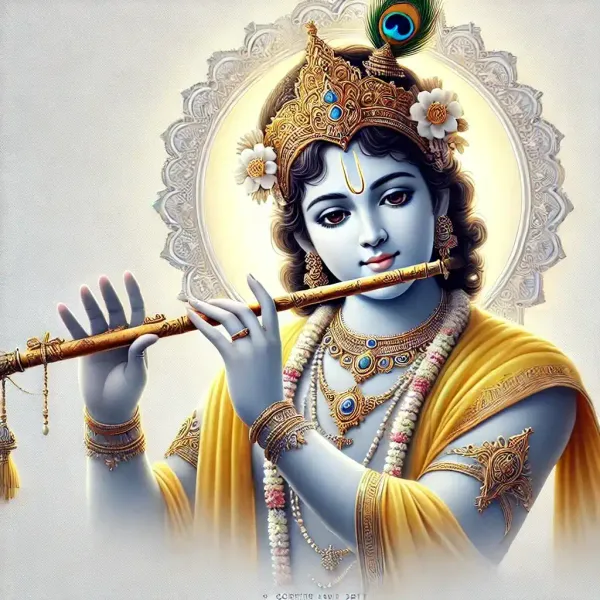
In the path of Bhakti Yog, few stories shine brighter than the playful and loving pastimes of Shree Krishna as a child. These divine episodes are more than mere stories, they are deep spiritual teachings wrapped in joy, laughter, and love.
Let’s explore the five Bhavas (moods or devotional sentiments) that connect us to God, and relive one of the sweetest Bal Leelas (childhood pastimes) of Shree Krishna, as beautifully narrated in the Bhagavatam and echoed by spiritual masters like Swami Mukundananda.
The Five Bhavas: Our Relationship With the Divine
The scriptures describe five primary Bhavas through which devotees relate to the Supreme:
- Shant Bhav – He is my King.
A quiet, peaceful reverence—a distant yet respectful relationship with the Lord. - Dasya Bhav – He is my Master; I am His servant.
Like Hanuman’s unwavering service to Ram, this bhav is rooted in discipline and loyalty. - Sakhya Bhav – He is my Friend.
The Gopas of Braj, including Sudama, loved Shree Krishna with friendly affection and camaraderie. - Vatsalya Bhav – He is my Child.
Yashoda and Nanda Baba adored Shree Krishna with parental love, seeing the Lord as their innocent boy. - Madhurya Bhav – He is my Beloved.
Radha and the Gopis epitomize this deepest, most intimate form of divine love.
The highest quality of God, says Naradji, is Bhakta Vatsal: He who loves His devotees. But as Jagadguru Shri Kripaluji Maharaj points out, there is an even higher quality of the Supreme Divine Personality. God even Bhakta Vashya: He becomes enslaved by their love. That is why the all-powerful Lord chose to become a tiny child, toddling around in Gokul, bringing joy and mischief into every heart.
The Butter Thief and the Test of Love
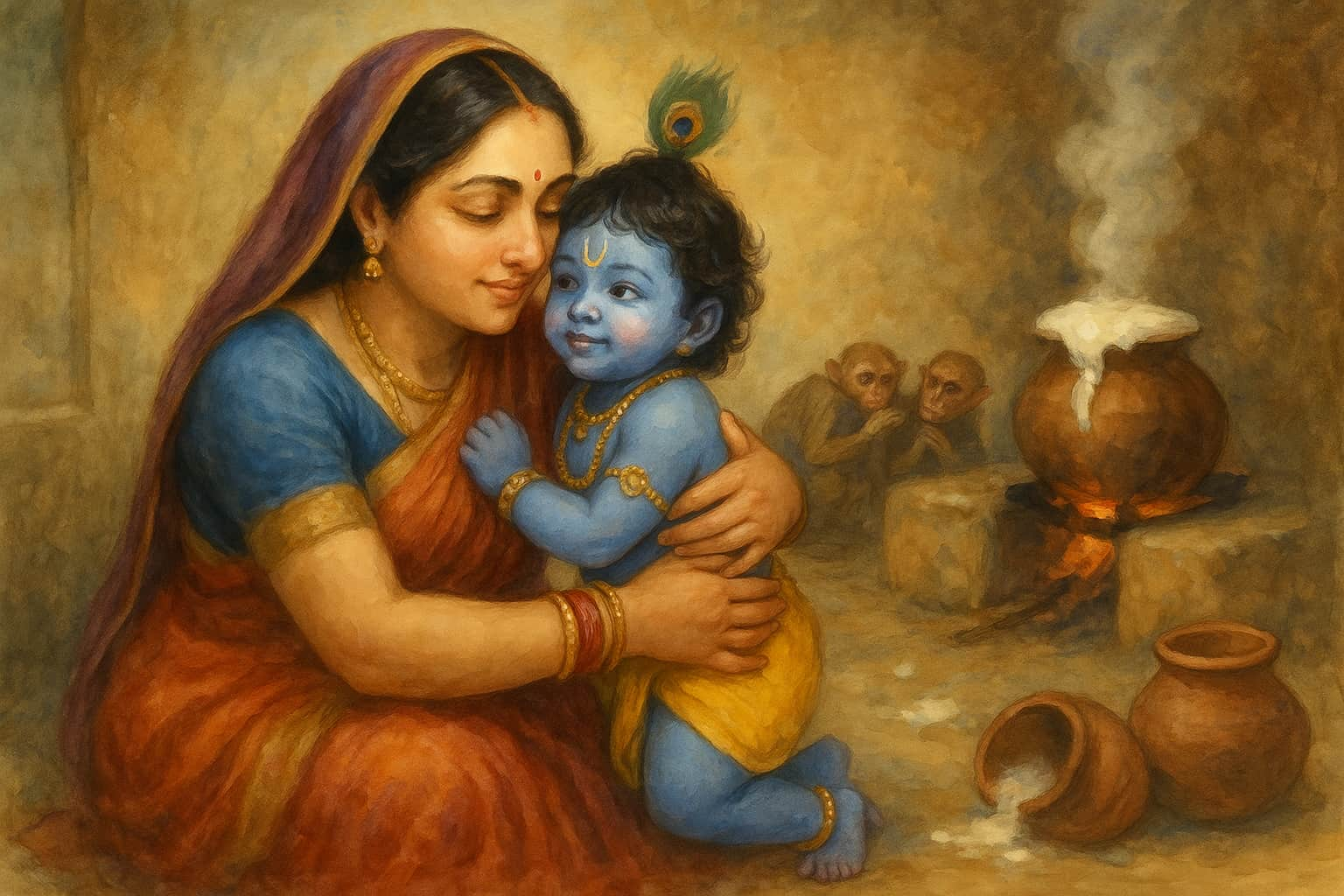
One morning, Shree Krishna, a little over two years old, awoke to the smell of butter churning. It was the morning of Diwali Mother Yashoda was in the kitchen, lovingly preparing food and thinking, “Today I will feed my Lala. He will enjoy it so much.”
Shree Krishna, eager and playful, climbed into her lap as she churned yogurt and nursed Him. This scene glowed with maternal affection: a divine mother feeding the Lord of the universe.
Unbeknown to Mother Yashoda, even the highest devotees are tested. In the next room, some milk which she had set to boil began to spill over. She rushed to save it, momentarily placing Shree Krishna down.
In that instant, Shree Krishna felt slighted and thought “So, the milk is more important than me?"
With divine mischief, He grabbed the churning rod and began creating chaos—breaking pots and splashing yogurt. Then, in a loving rebellion, He took the butter and fed it to the monkeys.
Caught in the Act
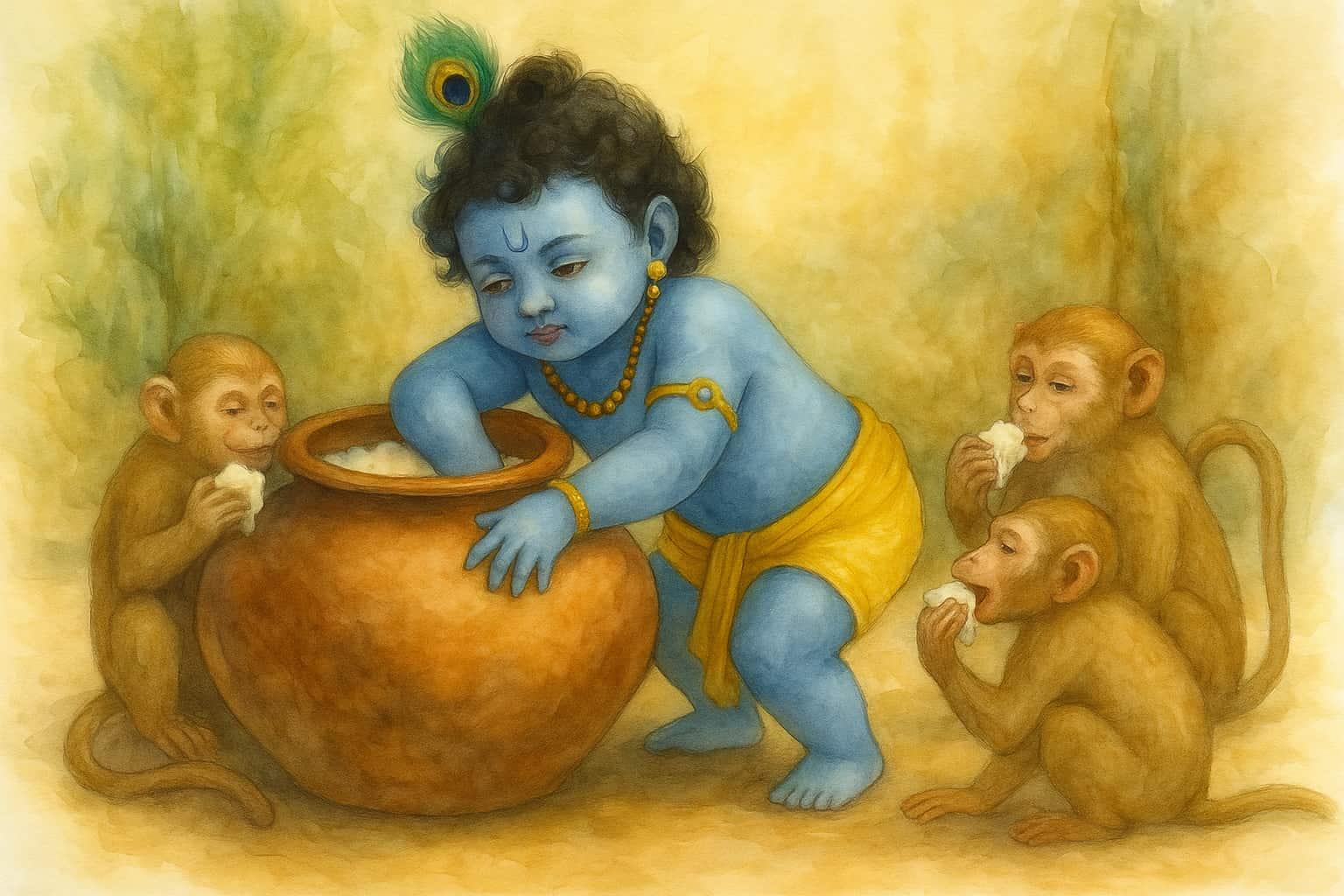
Returning from the stove, Yashoda was stunned to see the mess. The kitchen looked like a battlefield. Realizing her darling Shree Krishna was the cause, she grabbed a stick and ran after Him.This very moment is remembered by Kunti Mata in her prayers: “He, whom fear itself fears, Kalātmā, is trembling before His mother’s stick.”
The Rope That Wouldn’t Fit
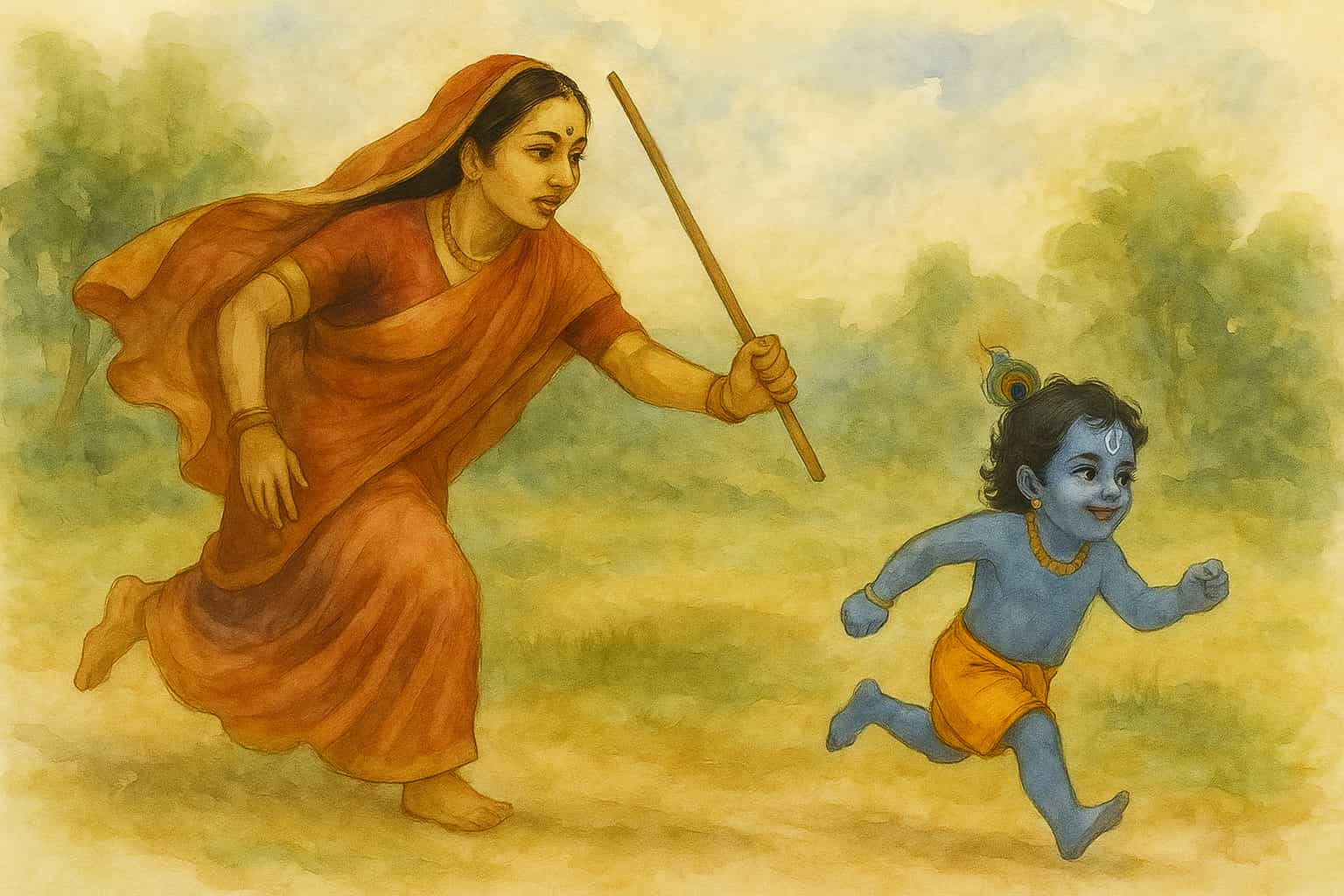
Shree Krishna dropped the butter and ran. Yashoda, though larger, could barely catch up with the tiny toddler, who swerved this way and that. But seeing her breathless, Shree Krishna thought, “I have not come to trouble my mother—I have come to give her joy.” And so, He slowed down and let Himself be caught.
Yashoda, still upset, decided to tie Him to a mortar as punishment. She called the Gopis to bring rope and tried to tie Shree Krishna. But no matter how much they added, the rope remained two fingers short. This puzzled everyone. During his narration, Sukhadev Goswami tells King Parikshit, “How can the Lord, in whom the whole universe resides, be tied? He is without beginning or end, within and beyond everything.”
After much struggle by Mother Yashoda and the gopis, Radha Rani heard about this and smiled. She handed a soft silken thread and said, “Try this.” With it, Shree Krishna finally allowed Himself to be tied. And from that day, He was lovingly called Damodar: He who was bound by a rope around the belly.
The Redemption of Kuber’s Sons
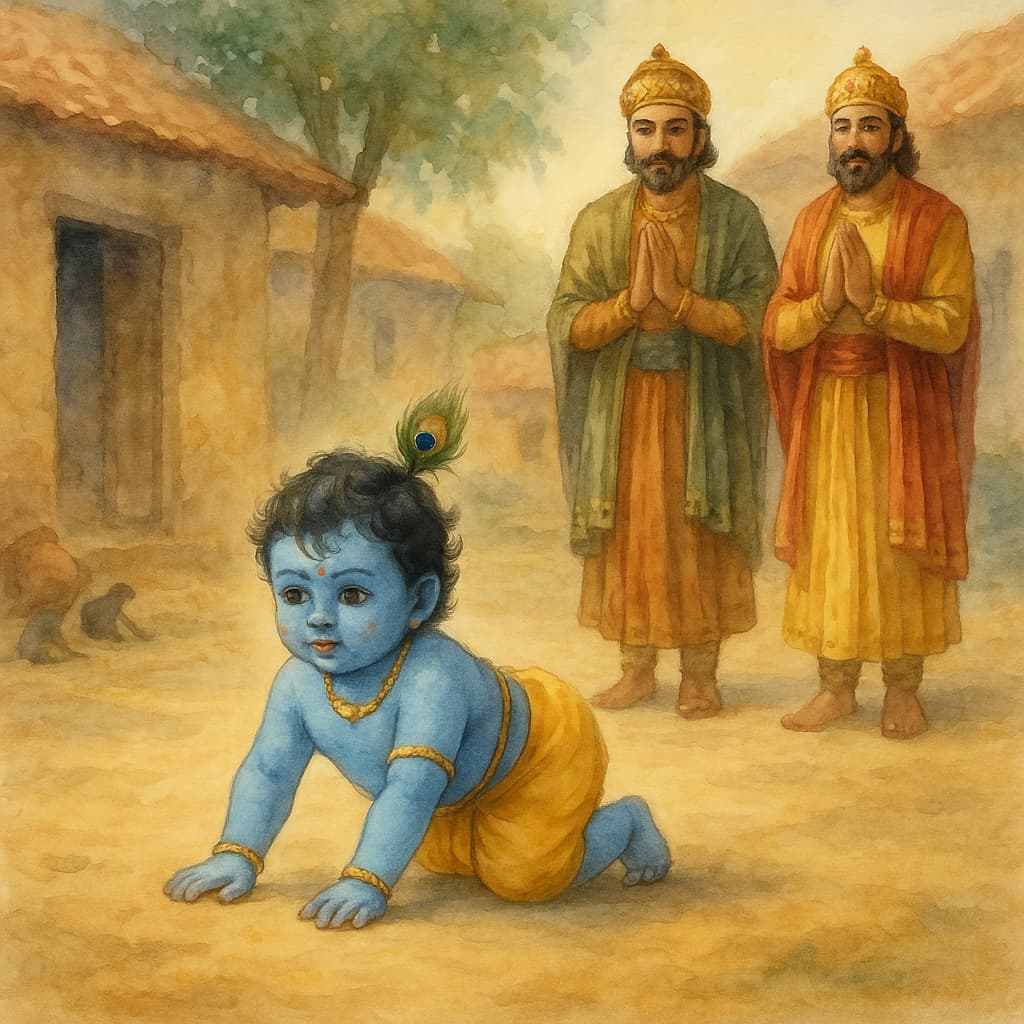
Mother Yashoda left Shree Krishna in the courtyard and attended to her kitchen duties. Still tied to the mortar, Shree Krishna crawled towards two large trees. These tress were actually the cursed sons of Kuber, the god of wealth. Once arrogant and intoxicated by luxury, they had mocked sages and were cursed by Narad Muni to become trees.
But Narad’s curse was a blessing in disguise. He had arranged for them to be liberated by the Lord Himself. Shree Krishna dragged the heavy mortar between the trees. With a crash, the trees fell. From them emerged the two souls, Nalakuvara and Manigriva, who offered their gratitude and departed, freed at last.
The Move to Vrindavan
The noise startled the villagers. They rushed to the spot. Seeing yet another supernatural event, Nanda Baba gathered the Brajwasis. “One after another, strange things are happening in Gokul,” he said. “Let us move to Vrindavan, where it may be safer.”
And so, Shree Krishna’s childhood pastimes would continue in the forests of Vrindavan—filled with more Leelas, more love, and more divine delight.
Shree Krishna’s boundless mercy
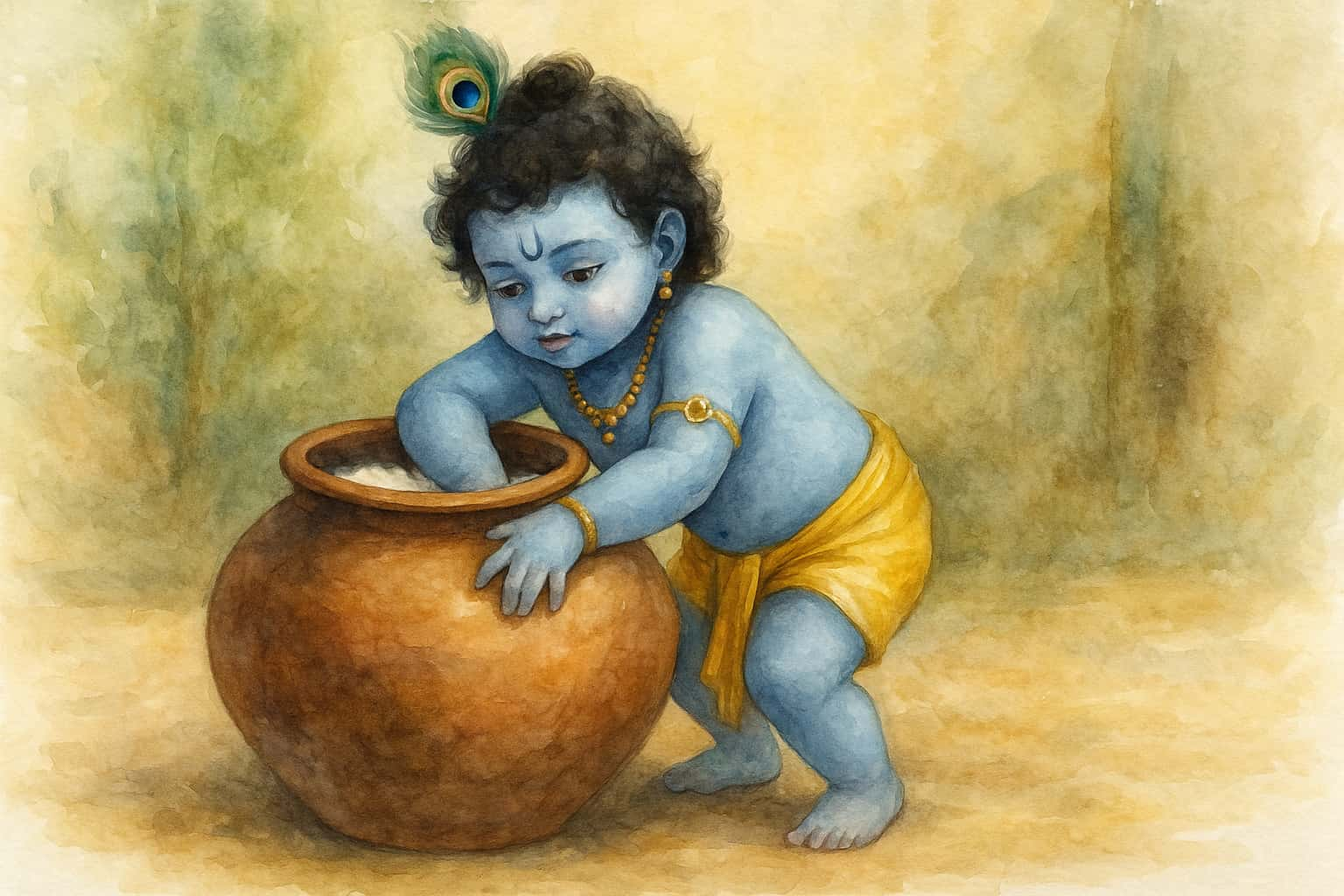
Through these stories, we glimpse a profound truth: God becomes what His devotees desire: a friend, a child, a beloved. In Braj, He chose to be bound, not by rope, but by love.
These pastimes are not merely tales of the past. They are mirrors reflecting the boundless mercy of God and the limitless power of Bhakti. When we approach Him not with fear, but with love, we too can experience a personal relationship with the Divine—one in which God becomes ours, and we become His.
The Bhagavad Gita's teachings on divine love
Shree Krishna shows us the beauty of divine love not only through his leelas, but through his words in the Bhagavad Gita. Let us relish some verses with Swami Mukundananda’s commentary.
BG 4.10: Being free from attachment, fear, and anger, becoming fully absorbed in Me, and taking refuge in Me, many persons in the past became purified by knowledge of Me, and thus attained My divine love.
Shree Krishna confirms that legions of human beings in all ages became God-realized by this means. They achieved this goal by purifying their minds through devotion. Shree Aurobindo put it very nicely: “You must keep the temple of the heart clean, if you wish to install therein the living presence.” The Bible states: “Blessed are the pure in heart, for they shall see God.” (Matthew 5.8) [v11]
Now, how does the mind get purified? By giving up attachment, fear, and anger, and absorbing the mind in God. Actually, attachment is the cause of both fear and anger. Fear arises out of apprehension that the object of our attachment will be snatched away from us. And anger arises when there is an obstruction in attaining the object of our attachment. Attachment is thus the root cause of the mind getting dirty.
This world of Maya consists of the three modes of material nature—sattva, rajas, and tamas (goodness, passion, and ignorance). All objects and personalities in the world come within the realm of these three modes. When we attach our mind to a material object or person, our mind too becomes affected by the three modes. Instead, when we absorb the same mind in God, who is beyond the three modes of material nature, such devotion purifies the mind. Thus, the sovereign recipe to cleanse the mind from the defects of lust, anger, greed, envy, and illusion, is to detach it from the world and attach it to the Supreme Lord.
Hence, the Ramayan states: prema bhagati jala binu raghurāī, abhiantara mala kabahuñ na jāī. “Without devotion to God, the dirt of the mind will not be washed away.”
Even the ardent propagator of jñāna yog, Shankaracharya, stated: śhuddhayati hi nāntarātmā kṛiṣhṇapadāmbhoja bhaktimṛite (Prabodh Sudhākar)[v13]. “Without engaging in devotion to the lotus feet of Lord Krishna, the mind will not be cleansed.”
BG 7.18: All those who are devoted to Me are indeed noble. But those in knowledge, who are of steadfast mind, whose intellect is merged in Me, and who have made Me alone as their supreme goal, I consider as My very self.
Shree Krishna clarifies in this verse that whatever may be the reason for their devotion, all His devotees are privileged; even the other three kinds are blessed souls. But the devotees seated in knowledge worship God selflessly, without expecting any material gains in return. Hence, the unconditional love of such selfless devotees even binds God.
Worldly love; is driven by the desire for self-gratification. There is a give and take attitude, and there is an expectation of receiving something in return from the beloved. However, Parā bhakti or divine love is totally different. It is filled with the desire for the happiness of the Divine Beloved and sacrifice in His service. Divine love fosters a giving attitude without expecting anything in return.
Chaitanya Mahaprabhu said:
kāmera tātparya nija-sambhoga kevala
kṛiṣhṇa-sukha-tātparya-mātra prema ta’ prabala
ataeva kāma-preme bahuta antara
kāma andha-tamaḥ, prema nirmala bhāskara
(Chaitanya Charitāmṛit, Ādi Leela, 4.166 & 171)[v16]
“Lust (worldly love) exists for self-happiness; divine love is harbored for Shree Krishna’s happiness. There is a tremendous difference between them—lust is like darkness and ignorance, while divine love is pure and illuminating.”
Jagadguru Shree Kripaluji Maharaj has very beautifully stated:
brahma lok paryanta sukh, aru muktihuñ sukh tyāg,
tabai dharahu paga prema patha, nahiṅ lagi jaiheñ dāg.
(Bhakti Śhatak verse 45)[v17]
“Give up the desires for worldly pleasures and that of liberation if you wish to walk the path of devotion. Else the pure waters of divine love will get tainted with selfishness.”
Sage Narad defined pure devotion in this manner:
The materially motivated devotees cannot engage in such devotion, but the devotee who is in knowledge rises to this level of selflessness. When someone learns to love God in this manner, he becomes a slave of that Devotee. The highest quality of God is bhakta vatsaltā (his love for his devotees).
The Puraṇas state:
gītvā cha mama nāmāni vicharenmama sannidhau
iti bravīmi te satyaṁ krītohaṁ tasya chārjuna
(Ādi Purāṇ 1.2.231)[v19]
Shree Krishna says: “I become the slave of those devotees of mine, who chant my names and keep me close to them in their thoughts; this is a fact, O Arjun.”
In this verse Shree Krishna goes to the extent of saying that bound by the devotion and love of His selfless devotees, He looks upon them as Himself.
BG 12.17: Those who neither rejoice in mundane pleasures nor despair in worldly sorrows, who neither lament for any loss nor hanker for any gain, who renounce both good and evil deeds, such persons who are full of devotion are very dear to Me.
They neither rejoice in mundane pleasures nor despair in worldly sorrows. If we are in the dark and someone offers help by showing a lamp, we naturally rejoice. Then, if someone blows out the flame, we feel annoyed. But if we are standing under the noonday sun, we feel indifferent whether someone shows us a lamp or another blows it out. Similarly, the devotees of the Lord, being gratified with the divine love bliss of the God, rise above pleasure and despair.
Neither lament for any loss nor hanker for any gain. Such devotees neither hanker after pleasant worldly situations nor grieve in unpleasant ones. The Nārad Bhakti Darśhan states:
yatprāpya na kiñchidvāñchhati, na śhochati, na dveṣhṭi, na ramate, notsāhi bhavati (Sūtra 5)
“On attaining divine love for God, the devotees neither yearn for pleasant things nor grieve on losing them. They are not hateful of those who harm them. They have no liking for worldly enjoyments. They are not anxious for the enhancement of their worldly position.” Devotees relish the bliss of God, so the bliss of all material objects seems insignificant in comparison.
Renounce both good and evil actions. Devotees obviously renounce evil actions (vikarm), for they are against their nature and displeasing to God. The good actions Shree Krishna refers to are prescribed ritualistic duties (karm) mentioned in the scriptures. All actions performed by the devotees become akarm (inaction) because they are not performed with any selfish motive and are dedicated to God. The concept of akarm has been explained in great detail in verses 4.17 to 4.20.
Full of devotion. Bhaktimān means “filled with devotion.” The nature of divine love is such that it keeps increasing for eternity. Bhakti poets have said: prem meñ pūrṇimā nahīñ “Unlike the moon which waxes to a limit and then wanes, divine love keeps growing without limit.” So, the heart of the devotee contains an ocean of love for God. Shree Krishna says that such devotees are very dear to Him.
Call to Action
Read the Bhagavad Gita with Swami Mukundananda’s commentary at https://www.holy-bhagavad-gita.org/index/.
Relish the leelas of Shree Krishna, as narrated by Swamiji, to further enhance your devotional sentiments. Subscribe at https://www.youtube.com/@swamimukundananda.
Celebrate Shri Krishna Janmashtami 2025 at Radha Krishna Temple of Dallas
Celebrate the divine appearance of Lord Krishna at the
Radha Krishna Temple of Dallas (Allen). Join us for an unforgettable evening of Abhishek, Jhulan, Bhajans, Krishna Leelas, and the soul-stirring Midnight Janmotsav.
📅 August 16–17, 2025
📍 Radha Krishna Temple of Dallas (Allen)
• Bhajans • Jhulan • Leelas • Aarti • Prasad
🌼 Join the Janmashtami Celebration
🪔 Bring flowers, fruits, and prasad 🙏 Become a Yajman 🎁 Sponsor a Seva
🎉 Grand Festival of the Lord’s Divine Appearance 🎉
📿 Join the jubilant celebration of Lord Krishna’s birth – a night of devotion, joy, and divine love!
🗓 Date: Saturday, August 16 – Sunday, August 17, 2025
📍 Location: Radha Krishna Temple of Dallas (Allen)
🌐 radhakrishnatemple.net/janmashtami
✨ Highlights of Janmashtami Mahotsav:
🪔 Abhishek (Ceremonial Bath) of Baby Krishna
🎶 Soulful Bhajans & Kirtans by devotees and youth
🎭 Krishna Leela Dramas & vibrant Cultural Performances
🎉 Jhulan (Swinging of Baby Krishna) – a cherished tradition
🥁 Midnight Janmotsav (Birth Celebration) with Maha Aarti
🍛 Mahaprasad for all attendees
🎨 Kids Carnival & Activities – fun-filled devotion for the whole family
🕯️ Devotee Offerings & Seva Opportunities
🌸 Experience a night steeped in bhakti, where every moment celebrates the divine charm, love, and leelas of Shree Krishna! 🌸
📌 Get Involved
🛕 Become a Yajman
🙏 Sponsor Abhishek, Prasad, or Cultural Programs
🎁 Bring fruits, flowers, and prasad for Lord Krishna
🎟️ Reserve your spot & seva now:
👉 Register Here
📷 Capture the Divine Moments!
Don't miss this chance to immerse yourself in divine celebrations and create unforgettable memories with your family in the divine atmosphere of the Radha Krishna Temple!
FAQs:
1. What is the significance of the butter thief story in Shree Krishna's life?
It highlights how God, though all-powerful, lovingly submits to His devotees' affection, symbolizing the depth of divine love and Bhakti.
2. Why couldn’t Mother Yashoda tie Shree Krishna with the rope?
Despite adding more rope, it was always two fingers short, symbolizing effort and grace, until Shree Krishna allowed Himself to be bound by love.
3. What are the five Bhavas in Bhakti Yog?
Shant (peaceful reverence), Dasya (servant), Sakhya (friendship), Vatsalya (parental), and Madhurya (beloved), each a unique way to relate to God.
4. Who were Nalakuvara and Manigriva in the Damodar Leela?
They were sons of Kuber cursed into trees and later redeemed by Shree Krishna's grace, symbolizing liberation through divine contact.
5. What does “Damodar” mean and why is Shree Krishna called this?
“Damodar” means “one who is tied with a rope around the belly,” a loving name given to Shree Krishna when He was bound by Yashoda’s devotion.