
Among the most cherished stories in Hinduism is the appearance of Lord Krishna, an avatar of Lord Vishnu, whose life and pastimes are glorified in the Srimad Bhagavatam. But what were the events that led to this divine descent? Why did the Supreme Lord feel compelled to incarnate in human form?
Let us explore the events preceding Krishna’s avatar, as revealed in the enlightening narration of Swami Mukundananda, based on the Tenth Canto (Dasham Skandh) of the Srimad Bhagavatam.
The Heart of the Bhagavatam: The Tenth Canto
The Srimad Bhagavatam is a vast scripture, but its emotional and spiritual climax lies in the Tenth Canto, also known as the “heart” (Hriday) of the Bhagavatam. It contains 90 chapters devoted to Krishna’s divine pastimes (Leelas). When King Parikshit, cursed to die in seven days, heard the summarized versions of previous stories like the Ram Katha, he longed for something deeper.
Thus, the great sage Sukhadev Goswami began narrating the Krishna Leela in exquisite detail, starting from the events that led to the Lord’s avatar.
The Birth of a Tyrant: Kans
In the kingdom of Mathura, there lived a king named Ugrasen of the Vrishni dynasty. One day, his wife unknowingly came under the shadow of a demon named Dhrumil while walking in the forest. The shadow resulted in a demonic conception. When the child was born, Ugrasen immediately recognized him as not his own.
This child was Kans, destined to bring terror to the world. Unable to accept the child, Ugrasen set him adrift in a river. The baby floated downstream and was discovered by Shursen, son of King Devmeer. He adopted the child, unaware of his demonic origin.
The Revelation by Narad Muni
As Kans grew older, the celestial sage Narad Muni visited him and revealed the truth—he was not Shursen’s biological child, but the demon-born son of Ugrasen. Enraged and determined to seize power, Kans attacked Mathura, overthrew Ugrasen, and captured the throne.
He also imprisoned Devak, Ugrasen’s brother, for opposing his tyranny. Eventually, he jailed Ugrasen as well. Thus began Kans’ reign of terror.
Devaki and Vasudev’s Wedding and the Prophecy
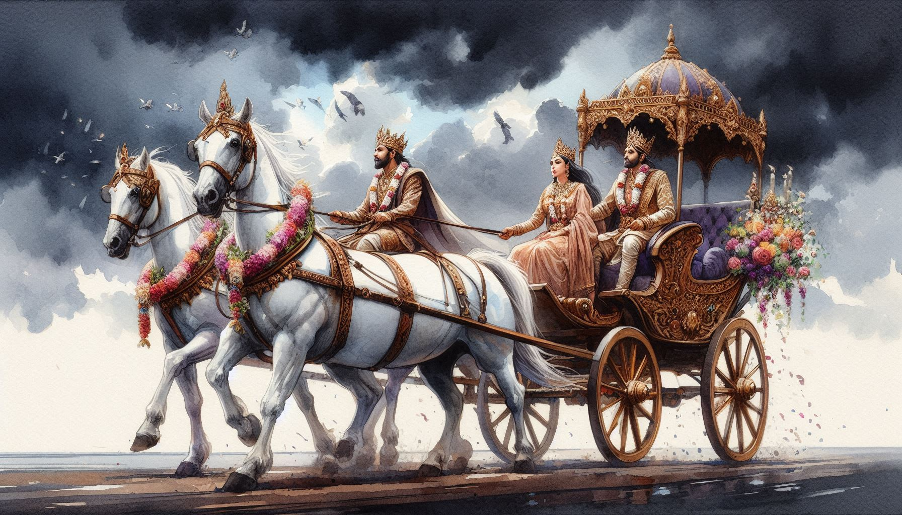
Kans had a cousin named Devaki, daughter of Devak, whom he deeply loved. When her marriage was arranged with Vasudev, son of Shursen, Kans personally offered to escort the couple to their home after the wedding.
However, during the journey, a divine Akashvani (celestial voice) declared: “O Kans! The eighth child born of Devaki will be the cause of your death!” This prophecy shook the mighty warrior. In a rage of fear, he unsheathed his sword to kill Devaki on the spot. But Vasudev, wise and diplomatic, intervened with Niti (policy), suggesting: “Why kill your sister? It is her child, not she, who poses danger. I promise to hand over each child to you.”
Reluctantly, Kans agreed, moved partly by Vasudev’s truthful nature and partly by his own affection for Devaki.
The Tyranny Begins
Back in Mathura, Kans tightened his grip over the kingdom. He banned all Yajnas (Vedic sacrifices), declared that offerings should be made to him :"Om Kansaya Namah", instead of to Vishnu, and persecuted Brahmins and devotees.
This reign of irreligion terrified the Devas (celestial beings). They rushed to Kshirsagar, Lord Vishnu’s celestial abode, and prayed for intervention. Lord Shiva advised them to perform Kirtan, the fastest way to attract the Lord's presence. As the Devas sang in devotion, Bhagavan Vishnu reassured them “I am aware. At the right moment, I will descend. You too may incarnate to assist in my divine pastimes.”
Kans Breaks His Promise
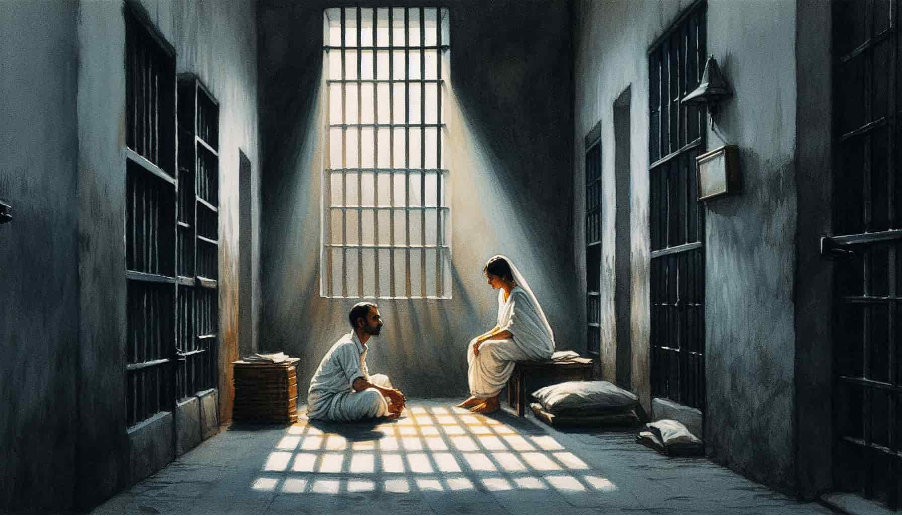
As promised, when Devaki bore her first child, Vasudev presented the baby to Kans. Surprisingly, Kans showed mercy, saying “What harm can this infant do to me? Take him back.” But Narad Muni returned once more, cleverly warning Kans “How do you know which is the eighth child? Depending on where you start counting, any child could be the eighth.”
Kans, struck by paranoia, reversed his decision and killed the first child. Thereafter, he imprisoned Devaki and Vasudev, and each time Devaki gave birth, Kans would appear and brutally kill the newborn, one after another.
The Seventh Child—Ananta Shesha
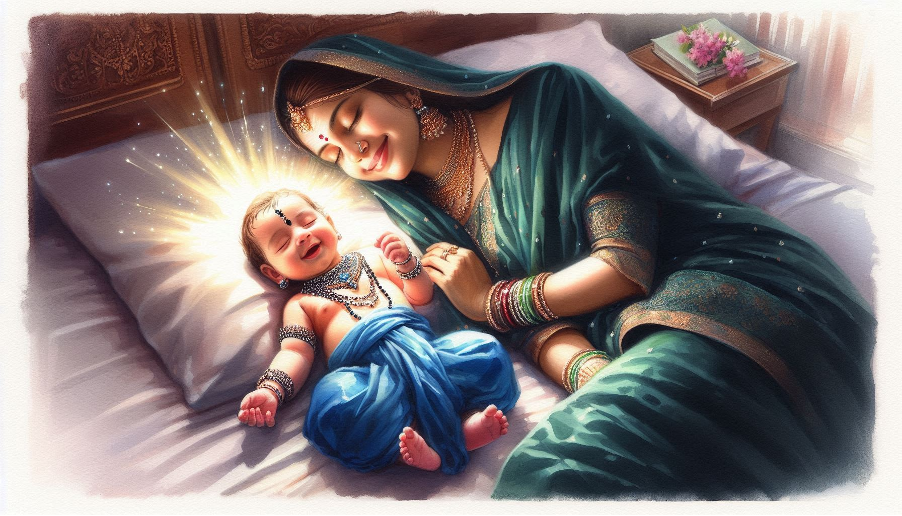
When Devaki was pregnant with her seventh child, Lord Vishnu intervened. He instructed Yogamaya “This child is Anant Shesha, my divine expansion. Transfer him to the womb of Rohini, Vasudev’s other wife, who resides safely in Braj.”
Yogamaya obeyed, and the child was mystically transferred to Rohini’s womb. This divine child would later be known as Balram, Krishna’s elder brother. Kans, unaware of the miracle, was confused when he heard that Devaki’s seventh pregnancy had mysteriously ended. He couldn’t grasp how the child had simply vanished.
The Stage is Set: Krishna’s Arrival Approaches
With Devaki’s seventh pregnancy mysteriously terminated and the eighth now underway, the prophecy was nearing its fulfilment. Kans, still unaware of the Lord’s plan, continued his tyranny. The Devas waited anxiously. Devaki and Vasudev remained imprisoned. And the world yearned for deliverance from the grip of adharma (unrighteousness).
The divine plan was unfolding. Soon, the Lord of the Universe would appear, not as a fearsome warrior, but as a charming baby in a prison cell, destined to grow into the most beloved figure in Indian spiritual lore: Lord Krishna.
The Bhagavad Gita on the reason for Krishna’s descension to Earth
BG 4.7& 4.8:
"Whenever there is a decline in righteousness and an increase in unrighteousness, O Arjun, at that time I manifest Myself on earth.
To protect the righteous, to annihilate the wicked, and to reestablish the principles of dharma, I appear on this earth, age after age."
Read the Verse here
Swamiji’s commentary delves further into these verses and provides more spiritual insight. Dharma is verily the prescribed actions that are conducive to our spiritual growth and progress; the reverse of this is adharma (unrighteousness). When unrighteousness prevails, the creator and administrator of the world intervenes by descending and reestablishing dharma. Such a descent of God is called an Avatār.
The word “Avatar” has been adopted from Sanskrit into English and is commonly used for people’s images on the media screen. In this text, it is used in its original Sanskrit connotation to refer to the divine descent of God. Twenty-four such descensions have been listed in the Śhrīmad Bhāgavatam. However, the Vedic scriptures state that there are innumerable descensions of God, and these Avatars are classified in four categories.
This classification does not imply that any one Avatār is bigger than the other. We should not differentiate one Avatar as bigger and another as smaller. However, in each descent, God manifests his powers based on the objectives he wishes to accomplish during that particular descent. The remaining powers reside latently within the Avatar.
Having stated in verse 4.7 that God descends into the world, he states in verse 4.8 the three reasons for doing so: To annihilate the wicked, to protect the pious, and to establish dharma.
However, if we closely study these three points, none of the three reasons seems very convincing:
1) To protect the righteous. God is seated in the hearts of his devotees, and always protects them from within. There is no need to take an Avatar for this purpose.
2) To annihilate the wicked. God is all-powerful and can kill the wicked merely by wishing it. Why should he have to take an Avatar to accomplish this?
3) To establish dharma. Dharma is eternally described in the Vedas. God can reestablish it through a Saint; he does not need to descend himself, in his personal form, to accomplish this.
How, then, do we make sense of the reasons that have been stated in this verse? Swamiji explains further and helps us to grasp the importance of what Shree Krishna is stating.
The biggest dharma that the soul can engage in is devotion to God. That is what God strengthens by taking an Avatār. When God descends in the world, he reveals his divine forms, names, virtues, pastimes, abodes, and associates. This provides the souls with an easy basis for devotion. Since the mind needs a form to focus upon and to connect with, the formless aspect of God is very difficult to worship. On the other hand, devotion to the personal form of God is easy for people to comprehend, simple to perform, and sweet to engage in.
Thus, since the descent of Lord Krishna 5,000 years ago, billions of souls have made his divine leelas (pastimes) as the basis of their devotion and purified their minds with ease and joy. Similarly, the Ramayan has provided the souls with a popular basis for devotion for innumerable centuries.
Swamiji now explains the deeper meaning behind the three reasons:
1) To establish dharma: God descends to establish the dharma of devotion by providing souls with his names, forms, pastimes, virtues, abodes, and associates, with the help of which they may engage in bhakti and purify their minds.
2) To kill the wicked: Along with God, to help facilitate his divine pastimes, some liberated Saints descend and pretend to be miscreants. For example, Ravan and Kumbhakarna were Jaya and Vijaya who descended from the divine abode of God. They pretended to be demons and opposed and fought with Ram. They could not have been killed by anyone else, since they were divine personalities. So, God slayed such demons as a part of his leelas. And having killed them, he sent them to his divine abode, since that was where they came from in the first place.
3) To protect the righteous: Many souls had become sufficiently elevated in their sādhanā (spiritual practice) to qualify to meet God face-to-face. When Shree Krishna descended in the world, these eligible souls got their first opportunity to participate in God’s divine pastimes. For example, some gopīs (cowherd women of Vrindavan, where Shree Krishna manifested his pastimes) were liberated souls who had descended from the divine abode to assist in Shree Krishna’s leelas. Other gopīs were materially bound souls who got their first chance to meet and serve God, and participate in his leelas. So when Shree Krishna descended in the world, such qualified souls got the opportunity to perfect their devotion by directly participating in the pastimes of God.
Conclusion: The Divine Strategy Behind the Avatar
The avatar of Shri Krishna was not a random act but a carefully orchestrated descent, timed perfectly to restore Dharma and annihilate evil. Each character: Kans, Devaki, Vasudev, Narad, Yogamaya, played a role in setting the stage for the Lord’s arrival.
Swami Mukundananda’ s narration and commentary beautifully brings this prelude to Krishna’s birth alive, reminding us that God descends whenever Dharma is in decline and Adharma rises. His divine Leela is both a cosmic drama and personal message: God always protects his devotees and, more importantly, their devotion.
Call to Action
Read the Bhagavad Gita with Swami Mukundananda’s commentary at Bhagavad Gita
Relish the leelas of Shree Krishna, as narrated by Swamiji, to further enhance your devotional sentiments. Subscribe to Swami Mukundananda Youtube
Celebrate Shri Krishna Janmashtami 2025 at Radha Krishna Temple of Dallas
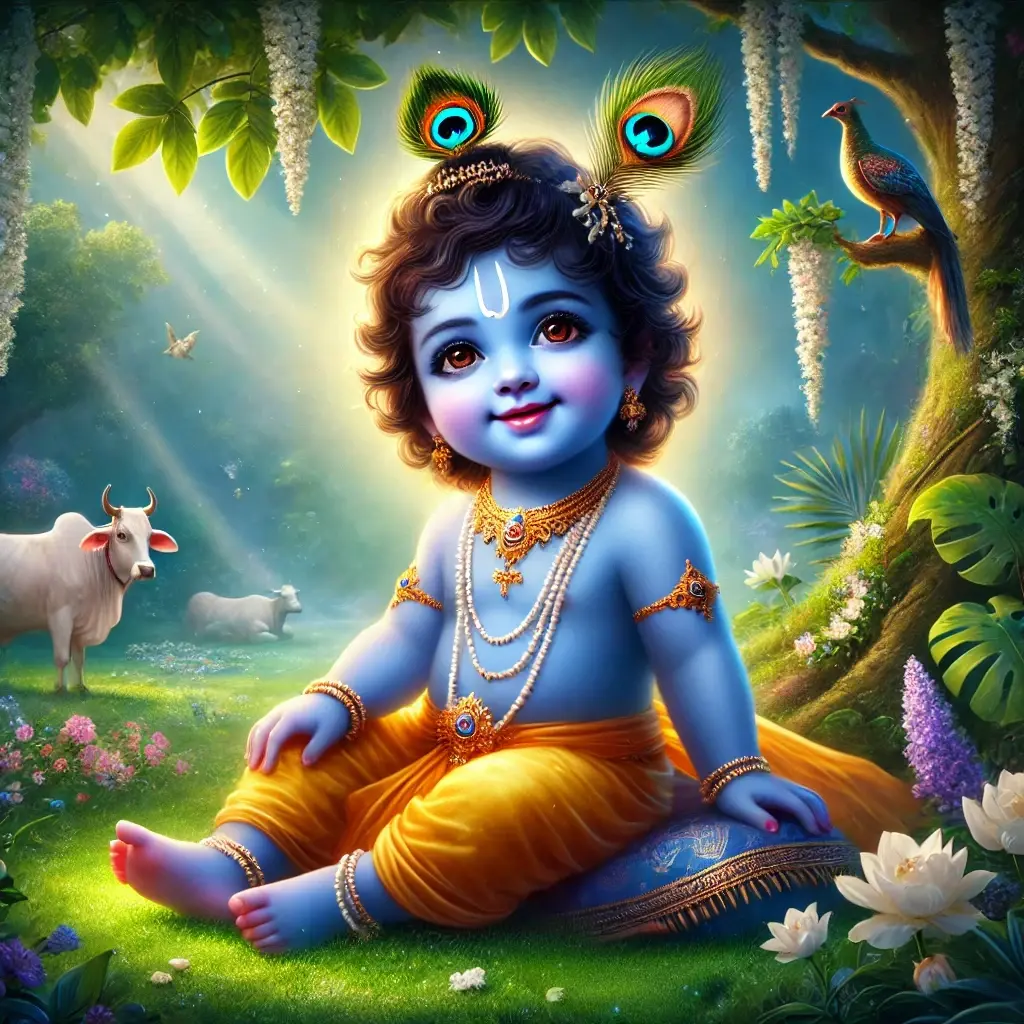
Celebrate the divine appearance of Lord Krishna at the
Radha Krishna Temple of Dallas (Allen).
Join us for an unforgettable evening of Abhishek, Jhulan, Bhajans, Krishna Leelas, and the soul-stirring Midnight Janmotsav.
📅 August 16–17, 2025
📍 Radha Krishna Temple of Dallas (Allen)
• Bhajans • Jhulan • Leelas • Aarti • Prasad
🪔 Bring flowers, fruits, and prasad 🙏 Become a Yajman 🎁 Sponsor a Seva
🎉 Grand Festival of the Lord’s Divine Appearance 🎉
📿 Join the jubilant celebration of Lord Krishna’s birth – a night of devotion, joy, and divine love!
🗓 Date: Saturday, August 16 – Sunday, August 17, 2025
📍 Location: Radha Krishna Temple of Dallas (Allen)
🌐 radhakrishnatemple.net/janmashtami
✨ Highlights of Janmashtami Mahotsav:
🪔 Abhishek (Ceremonial Bath) of Baby Krishna
🎶 Soulful Bhajans & Kirtans by devotees and youth
🎭 Krishna Leela Dramas & vibrant Cultural Performances
🎉 Jhulan (Swinging of Baby Krishna) – a cherished tradition
🥁 Midnight Janmotsav (Birth Celebration) with Maha Aarti
🍛 Mahaprasad for all attendees
🎨 Kids Carnival & Activities – fun-filled devotion for the whole family
🕯️ Devotee Offerings & Seva Opportunities
🌸 Experience a night steeped in bhakti, where every moment celebrates the divine charm, love, and leelas of Shree Krishna! 🌸
📌 Get Involved
🛕 Become a Yajman
🙏 Sponsor Abhishek, Prasad, or Cultural Programs
🎁 Bring fruits, flowers, and prasad for Lord Krishna
🎟️ Reserve your spot & seva now:
👉 Register Here
📷 Capture the Divine Moments!
Don't miss this chance to immerse yourself in divine celebrations and create unforgettable memories with your family in the divine atmosphere of the Radha Krishna Temple!
🕊️ Radhe Radhe! Let’s celebrate Janmashtami together – with love, devotion, and joy!
📲 For updates, follow JKYog, Swami Mukundananda & the Radha Krishna Temple YouTube Channel
FAQs:
1. Why did Lord Krishna take an avatar on Earth?
To protect Dharma, annihilate evil, and give souls a personal way to connect through devotion, making Bhakti easier by revealing His divine pastimes.
2. Who was Kans and what role did he play in Krishna’s descent?
Kans, a tyrant king born of demonic origin, created conditions of fear and Adharma that triggered Krishna’s divine descent to restore righteousness.
3. What is the significance of the eighth child prophecy?
The celestial voice warned Kans that Devaki’s eighth child would be his destroyer, setting the stage for Krishna’s secret birth and divine Leela.
4. What role did Yogamaya play in Krishna's birth story?
Yogamaya transferred the seventh child, Balram, to Rohini’s womb and orchestrated events to prepare for Krishna’s divine appearance.
5. What is the deeper meaning behind God’s descent according to the Gita?
As Swami Mukundananda explains, God descends to foster Bhakti, grant divine association, and give souls a tangible path to purify and connect.