(Sixth Part of the 19-Part Blog Series on the Ishavasya Upanishad)
Introduction: The Mystery of Motion and Stillness in the Divine
The Ishavasya Upanishad is like a tiny spiritual galaxy, with just eighteen mantras, yet each one contains an entire universe of meaning. After contemplating the lightning-like paradoxes of Mantra 4, the rishis now present another dazzling insight in Mantra 5
Here, we encounter a vision of God who:
- moves and yet does not move,
- is far yet near,
- is within everything and yet beyond everything.

Drawing on Swami Mukundananda’s illuminating commentary, we’ll explore how Mantra 5 reveals the nature of the non-physical Self and the Divine presence that pervades all, while still transcending the entire cosmos. When understood properly, this mantra gently dismantles our sense of separation from God and reveals why He sometimes feels “out of reach” and at other times overwhelmingly close.
In this installment, we meditate on Mantra 5, where the rishis resolve the apparent “distance” between us and God, not by drawing Him nearer but by showing that He was never absent to begin with.
Mantra 5 of the Ishavasya Upanishad
Sanskrit
तदेजति तन्नैजति तद्दूरे तद्वन्तिके ।
तदन्तरस्य सर्वस्य तदु सर्वस्यास्य बाह्यतः ॥५॥
Transliteration
tad ejati tan naijati
tad dūre tadv antike
tad antar asya sarvasya
tad u sarvasyāsya bāhyataḥ
Translation (sense meaning)
That Supreme Lord walks, while remaining still. He is very far and also extremely close. Though He resides within everything in this world, yet He is also present outside this creation.
At first glance, this sounds like a riddle:
- How can God move and not move at the same time?
- How can He be far and near simultaneously?
- How can He be inside everything and also outside everything?
Swami Mukundananda explains that these “contradictions” are really two sides of the same Divine reality.
They dissolve the childish notion of a God who is located in one particular corner of the universe, and reveal a Lord who is:
- Transcendent (beyond space, time, and matter), and
- Immanent (present in every atom, every heart, every moment).
Before diving deeper, let’s unpack a few key Sanskrit terms. This makes the mantra easier to memorize and live by.
1. Key Words of Mantra 5 – Quick Reference
| Sanskrit Term | Literal Meaning | Simple Spiritual Insight |
| tad | “That” Supreme Reality | Refers to God / the non-material Self glorified throughout the Upanishad. |
| ejati | moves, vibrates, acts | The Lord is dynamically involved in running the universe. |
| na ejati | does not move | His divine nature never shifts or deteriorates; He stays perfect and complete. |
| dūre | far away | To worldly, distracted minds, God feels distant and theoretical. |
| antike | very near | To a humble devotee, the Lord feels closer than one’s own breath. |
| antar asya sarvasya | inside everything | God dwells as the inner witness and life-giver in all beings. |
| sarvasyāsya bāhyataḥ | outside everything | The whole universe exists in Him; He also surrounds and transcends it. |
Mantra 4 emphasized the speed and unmoving steadiness of God, Mantra 5 deepens the same truth by focusing on distance and location: far–near, inside–outside. Together, they paint a picture of a Lord who fills all of reality and yet is greater than all of it.
2. Moving and Still at the Same Time
Mantra 5 opens with a paradox: “He walks and He does not walk.”
Swami Mukundananda unpacks this by pointing out that the world is in constant flux, while the Lord remains the unshakable foundation that allows all this movement.
The book gives the example of a river: each time you step in, new water is flowing; nothing is exactly the same. Our bodies, emotions, and circumstances are also continuously changing. Yet the Supreme, who supports this entire dance of change, remains perfectly steady.

| Perspective | How the World Behaves | What the Mantra Says About God |
| Time & change | Bodies age, memories fade, relationships evolve, things decay. | He is the timeless base. Change happens in His presence; He Himself does not wither. |
| Activity | All actions demand effort and create tiredness or stress. | He activates all without strain. “Movement” is in His power, not in His essence. |
| Support | Each object depends on something else (food, air, sunlight). | All depend on Him, but He depends on no one. This stable base is called His “unmoving” nature. |
As Swamiji often points out in various teachings, God is not playing hide-and-seek with us. It is the mind that turns away from Him and then laments, “Where is God?” Mantra 5 invites us to reverse the direction of our search by turning our attention from the outside world to the world within.
3. God and the Souls: Justice and Grace
The commentary on Mantra 5 then looks at the Lord from three angles: cosmic, individual soul, and devotee.
God and the World (Karma & Impartiality)
The Lord is described as perfectly impartial, like rain that falls equally everywhere. It is our inner “soil” that decides what grows, whether it is a lotus in a pond, grass in a field, or mud in a ditch. Similarly, God gives everyone the same opportunity through the Law of Karma, but different hearts respond differently.
God and the Individual (Paramatma)
As Paramatma, the Lord resides in the hearts of all living beings, silently witnessing their thoughts, desires, and actions, and keeping track of karma. The book cites the Gita verse describing Him as the one consciousness that enlivens countless bodies.
God and the Devotee (Special Love)

Although He is equal to all, He becomes especially close to those who love Him. Swami Mukundananda quotes verses that show how God takes pride in the love of His devotees and responds instantly when a surrendered soul calls out to Him.
| Viewpoint | What Mantra 5 Implies | Key Takeaway |
| World (Creation) | The changing world moves in His “cosmic body” (viśvarūpa), yet He remains steady. | He is the firm ground beneath all change; trust His control even when life looks chaotic. |
| Individual soul | As Paramatma, He accompanies each soul through different bodies and lives. | You are never truly alone. God has walked with you through every birth and situation. |
| Devotee | For the loving bhakta, the Lord “moves” towards them, becoming intimately present in their heart and life. | Devotion makes the “far God” feel near; love is the bridge that closes the distance. |
4. Equal to All, Yet Especially Close to the Lover of God
The text beautifully balances God’s equality and His special reciprocation.
- On one side, He is unmoved and impartial: He gives everyone the same law of karma and the same chance to turn toward Him.
- On the other side, He is soft-hearted towards devotees: sincere love attracts His special grace.
Swami Mukundananda quotes verses from the Gita and the Narad Bhakti Sutras to show how the Lord becomes “captured” by devotional love, even letting Himself be bound by His devotees’ affection
| Aspect of God | How It Works | Effect on Us |
| Impartial Justice | Like rain falling everywhere, His law of karma operates equally for all. | We cannot blame God for our situation; our past actions have shaped it. |
| Compassionate Grace | When someone turns to Him in sincere devotion, He personally intervenes and draws them close. | No matter our past, we can begin a new relationship with Him today through bhakti. |
| Response to Pride | Those proud of wealth, knowledge, or sadhana feel Him growing more “distant.” | Ego thickens the wall; humility makes the heart transparent to His presence. |
| Response to Humility | A surrendered heart attracts His immediate attention, and He “runs” toward such a devotee. | Even one step towards Him in faith is met with many steps of grace from His side. |
5. Inside the World and Outside the World
Towards the end of the chapter, Swami Mukundananda highlights the lines:
“He resides within everything” – tadantarasya sarvasya
“He is also the entire world and beyond it” – tad u sarvasyāsya bāhyataḥMantra5
To illustrate this, the book narrates the famous story of Narad, Lord Shiva, Ganesh, and Kartikeya:
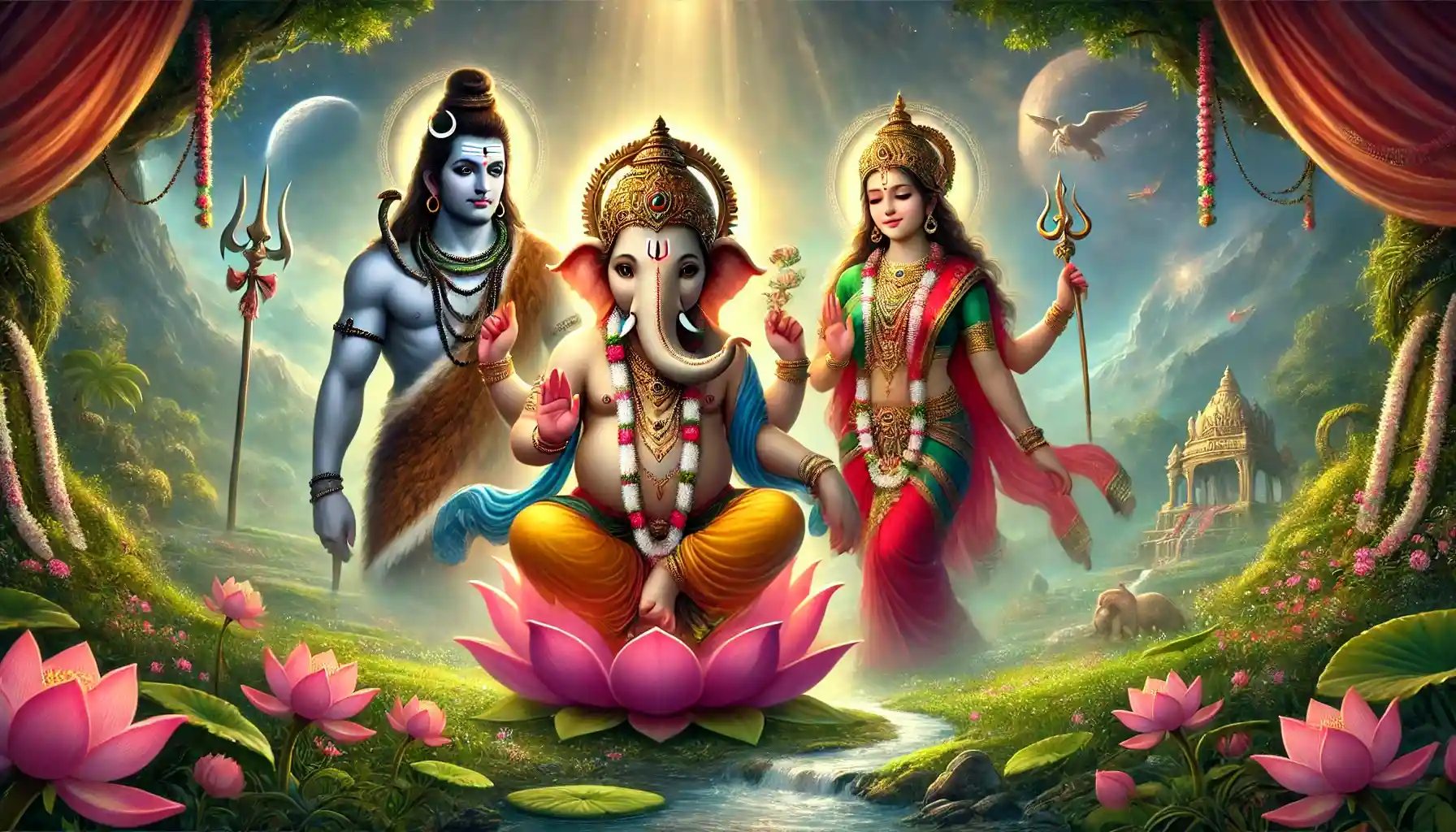
- A special fruit had to be given to the son who would “go around the world” first.
- Kartikeya set off on his peacock to circle the earth.
- Ganesh simply circumambulated his parents, Shiva and Parvati, saying, “You are the entire universe; by going around You, I have gone around the world.”
The lesson: all of creation exists in God. Circumambulating Him is like circumambulating everything.
The chapter then briefly discusses Yogmaya, God’s internal power, through which He can perform what seems impossible, such as being simultaneously in many forms and places.
How God Pervades Everything
| Dimension | How Mantra 5 Describes It | What It Means for Us |
| Within beings | He sits in every heart as witness, guide, and giver of life. | We can talk to Him internally at any moment, no ritual or location is required. |
| As the entire world | The cosmos is like His “body”; everything moves by His power. | We begin to see the world as sacred, not separate from God. |
| Beyond the world | He also exists beyond space, time, and matter in His own divine abode. | Our ultimate home is not this changing world but His eternal realm. |
| Yogmaya – divine power | By His internal shakti He can do what seems impossible and contradictory to us. | We don’t need to “fit” God into our logic; instead we trust His higher wisdom and plan. |
Applications of Mantra 5 in Daily Life:
To make this mantra practical, Swami Mukundananda encourages us to perceive God’s presence everywhere and base our life on that vision.
Here are some easy ways to do that:
| Practice | How to Do It | Inner Effect |
| Mantra Contemplation | Chant Mantra 5 daily and reflect: “He moves, yet does not move … He is far, yet near … inside and outside all.” | Slowly replaces fear and loneliness with trust that you are always in His presence. |
| Remembering God in Change | When life changes - new job, illness, success, loss - whisper: “The world moves, but my Lord remains steady.” | Gives emotional stability and prevents panic during transitions. |
| Seeing God in People | Before interacting with anyone, mentally greet the Lord seated in their heart. | Reduces anger, increases respect and compassion, even in difficult relationships. |
| Offering Daily Actions | Offer your work, meals, and rest to the Lord who is both within you and pervading your surroundings. | Turns ordinary routines into worship, purifying karma and ego. |
| Heart-to-Heart Talk | At the end of the day, sit quietly and speak to God in your own words about your joys and struggles. | Deepens the feeling that the “far” God is actually your closest friend and companion. |
Deepen Your Learning and Spiritual Practice
Now that we’ve explored the divine wisdom of the Shanti Path Mantra, it’s time to take the next step on your spiritual journey. To deepen your understanding of the Ishavasya Upanishad, we highly recommend Swami Mukundananda’s commentary, which beautifully unpacks each mantra, including the Shanti Path, providing a clear and practical guide for modern seekers.
Order the Book: Swami Mukundananda’s Commentary
Unlock the deeper wisdom of the Ishavasya Upanishad with this insightful commentary by Swami Mukundananda. Perfect for modern seekers who wish to explore the divine teachings in greater depth.
Final Reflection
Mantra 5 of the Ishavasya Upanishad gently corrects our idea of a distant God who occasionally visits the world. It reveals a Lord who:
- Supports all movement yet remains perfectly steady,
- Seems far only to the proud but is very near to the humble,
- Lives inside every being while also encompassing the entire universe,
- Is just to all, yet lovingly partial to those who love Him.
As we repeatedly remember: “He walks and yet does not walk. He is far and yet near. He is inside and outside all,” our consciousness begins to shift. We start to live inside His presence knowingly, and ordinary life becomes a journey walked hand-in-hand with the One who was never away from us, even for a moment.
Key Philosophical Insights from Mantra 5 of the Ishavasya Upanishad
- The Paradox of Divine Motion and Stillness
Mantra 5 introduces the paradox that God "walks while remaining still," reflecting the idea that the Supreme supports all movement in the universe yet remains unchanged. While the world is in constant flux, the Divine is the steady foundation beneath it, never truly moving or changing. - God as Both Far and Near
The mantra states that God is "very far and also extremely close." This paradox dissolves the notion of a distant God by revealing that, though He transcends all creation, He is also within it, present in every atom and heart. God is never far from us, but rather, we need to turn inward to realize His presence. - Impartial Yet Specially Close to the Devotee
God is both impartial, like rain that falls equally everywhere, and intimately close to those who love Him. While He offers everyone the same opportunities through the Law of Karma, those who seek Him with devotion experience a special, loving grace. This highlights the balance between divine justice and the personal care God extends to His devotees. - God’s Presence Inside and Outside the Universe
God is simultaneously within all things and beyond all things. He resides inside every being while encompassing the entire cosmos. The famous story of Ganesh, who circumambulated his parents and declared he had circled the world, illustrates that all creation is contained within God, making Him both immanent and transcendent. - Living in the Awareness of God's Omnipresence
Mantra 5 invites us to shift our awareness from seeing God as distant to recognizing that we are always within His presence. When we understand that God is both inside and outside all, our daily life becomes a conscious journey with the Divine, who has always been close, even when we felt separate.
FAQs
1. What is the core message of Mantra 5?
Mantra 5 reminds us that God is not far away in some distant heaven; He is seated in our very heart, fully aware of our thoughts, fears, hopes, and intentions. At the same time, it teaches that the entire world exists in God, just as waves exist in the ocean, never separate and never truly independent.
2. How does Mantra 5 change the way I see myself?
We usually think, “I am this body and mind, living my little life, and God is somewhere else.” Mantra 5 shifts that perspective: you begin to see yourself as a soul who is always in the loving presence of God within. This inner awareness naturally brings more responsibility for your thoughts and actions, and more comfort, knowing you are never alone.
3. What does it mean that ‘the world exists in God like waves in the ocean’?
It means that just as a wave has no existence apart from the ocean, the world has no existence apart from God. Every object, person, and situation is resting in God’s energy and consciousness. We may feel separate, but in reality, we are always connected and contained within the Divine.
4. If God is in my heart, why don’t I feel His presence?
Mantra 5 teaches the truth of God’s presence, but our ability to feel it depends on the purity and focus of our mind. When the mind is restless, distracted, or outwardly obsessed, the inner presence of God is covered, like the sun hidden by clouds. Through sadhana (spiritual practice), remembrance, prayer, and devotion, those clouds slowly clear, and we begin to experience what was always there.
5. Does Mantra 5 mean I am never alone?
Yes. Mantra 5 reminds us that God is always present in our heart and that we exist in Him, so we are never truly alone.