No(Forteenth, Part of the 19-Part Blog Series on the Ishavasya Upanishad)
Introduction

The Ishavasya Upanishad now moves deeper, from balance in living to clarity in devotion.
After teaching us in earlier mantras how to harmonize material and spiritual life, Mantra 13 addresses a subtle but crucial question:
Does it matter what or how we worship?
The Upanishad’s answer is precise and uncompromising:
Worship directed toward the Eternal and worship directed toward the temporary lead to vastly different inner results.
Mantra 13 explains that not all devotion purifies, and not all faith liberates. The object of our worship shapes the mind, the heart, and ultimately our destiny.
1. The Sacred Verse: Mantra 13 of the Ishavasya Upanishad
Sanskrit
अन्यदेवाहुः सम्भवादन्यदाहुरसम्भवात् ।
इति शुश्रुम धीराणां ये नस्तद्विचचक्षिरे ॥१३॥
Transliteration
anyadevāhuḥ sambhavādanyadāhur asambhavāt |
iti śhuśhruma dhīrāṇāṁ ye nastad vichachakṣire
Translation
One result is obtained by worshipping the Supreme, Who is the Origin of all. A very different outcome accrues by worshipping created beings. This we have understood by listening to the true gurus.
At first glance, the verse appears simple.
But its implications are profound.
The Upanishad is not merely discussing ritual worship but is addressing where the mind places its deepest attachment.
2. Key Terms of Mantra 13: Quick Reference
| Sanskrit Term | Literal Meaning | Simple Spiritual Insight |
| sambhava | the created | Anything born, temporary, or worldly |
| asambhava | the uncreated | The eternal Supreme Reality |
| anyat | different | The outcomes are not the same |
| dhīrāṇām | the wise | Realized teachers and gurus |
| śuśruma | we have heard | Knowledge received through guidance |
This mantra clearly distinguishes between devotion to the Eternal and attachment to the impermanent.
3. The Central Teaching: Not All Worship Leads to Freedom
Swami Mukundananda explains that the world itself is not the cause of bondage. Since the world is created and pervaded by God, it cannot be inherently impure. The real problem lies in how the mind relates to the world.
When the mind seeks lasting happiness, security, or identity from temporary things, attachment forms. Because the world is constantly changing, such dependence leads to fear, restlessness, and disappointment. In this way, worship or deep attachment directed toward the impermanent strengthens bondage rather than freedom.

However, when the world is engaged with the understanding that it is meant for learning, service, and growth and not as the ultimate source of fulfilment, it then no longer binds the soul. The same life that entangles an attached mind can refine a God-centered one.
The world was created as a field for growth, not for enslavement.
Table 1: Two Directions of Worship
|
Focus of Devotion |
Where the Mind Goes |
Result |
| Supreme Reality (God) | Toward purity and transcendence | Liberation |
| Created objects & beings | Toward desire and fear | Bondage |
Devotion shapes consciousness.
What we love, we become bound to.
4. Sambhava and Asambhava Explained Simply
The Upanishad uses two powerful terms to explain this distinction.
In Mantra 13, the Upanishad distinguishes between sambhava, the created and temporary, and asambhava, the uncreated and eternal. Sambhava includes everything that comes into existence and eventually changes or disappears, such as the body, possessions, status, and worldly relationships. Asambhava refers to the Supreme Reality, which is beyond creation, change, and destruction.
When attachment is placed in sambhava, the mind becomes unstable because it depends on what cannot last. When devotion is directed toward asambhava, the mind becomes purified and steady, anchored in what is eternal. The teaching is simple: what we rely on shapes our inner state: the temporary creates restlessness, while the Eternal brings peace.
Table 2: Sambhava vs Asambhava
|
Concept |
Meaning |
Modern Example |
| Sambhava | Created, temporary | Wealth, status, people, pleasures |
| Asambhava | Uncreated, eternal | God, Absolute Truth |
| Attachment to Sambhava | Mind remains restless | Anxiety, dissatisfaction |
| Attachment to Asambhava | Mind becomes purified | Peace, clarity |
When devotion is directed toward what changes, the mind also becomes unstable.
5. Why Worldly Attachment Does Not Purify the Mind

The commentary uses a powerful analogy:
The world is meant for upayoga (proper use), not upabhoga (selfish enjoyment)
Upayoga means proper and conscious use. It refers to engaging with the world as a tool for growth, responsibility, and service. When the world is used with awareness and moderation, it supports spiritual progress and inner maturity.
Upabhoga means self-centered enjoyment. It refers to using the world primarily for personal pleasure, emotional dependence, or ego gratification. This approach strengthens attachment and restlessness, leading to dissatisfaction rather than fulfillment.
In essence, upayoga uses the world wisely, while upabhoga seeks happiness from it. This difference determines whether the mind becomes purified or bound.
Table 3: Proper Use vs Misuse of the World
|
Approach |
Description |
Outcome |
| Upayoga | Using the world for growth and service | Inner expansion |
| Upabhoga | Exploiting the world for pleasure | Inner contraction |
| Correct Vision | World as training ground | Wisdom |
| Incorrect Vision | World as source of happiness | Frustration |
The world does not bind us.
Our attitude toward it does.
6. The Mind: The True Battlefield
Mantra 13 teaches that bondage and liberation do not occur in the external world but within the mind. The same situation can either enslave or uplift a person depending on their inner state. When the mind is driven by desire, fear, and attachment, it becomes the source of suffering. When the mind is purified through right understanding and devotion to the Eternal, it becomes the instrument of freedom.
Thus, the real spiritual struggle is not against the world, but against confusion, attachment, and misplaced dependence within the mind itself.
Bondage and liberation both occur in the mind.
Table 4: The Role of the Mind
|
Condition of Mind |
Result |
| Impure (desire-driven) | Bondage |
| Purified (God-centered) | Freedom |
| Attached outwardly | Restlessness |
| Anchored inwardly | Stability |
No external reform can substitute inner purification.
7. Sambhūti Upāsanā: Devotion That Purifies
Sambhūti Upāsanā refers to devotion directed toward the Supreme Source of all creation: the uncreated, eternal Reality. It is the practice of anchoring the mind in God rather than in temporary, created forms of the world.
Unlike devotion that is mixed with worldly attachment, Sambhūti Upāsanā gradually purifies the mind, reduces dependence on impermanent things, and lifts consciousness beyond fear and desire. Through this form of worship, the seeker learns to engage with life outwardly while remaining inwardly rooted in the Eternal.
In essence, Sambhūti Upāsanā is devotion that liberates rather than binds.
The mantra subtly points toward exclusive devotion to the Supreme, which alone lifts the mind beyond the three guṇas (sattva, rajas
Table 5: Effects of Different Attachments
|
Attachment |
Influence on Mind |
Long-Term Effect |
| Worldly obsession | Increases guṇas | Repeated suffering |
| Mixed devotion | Partial purification | Delay |
| Exclusive devotion | Transcendence | God-realization |
Devotion purifies not by effort alone, but by direction.
Living Mantra 13: Applying It in Daily Life
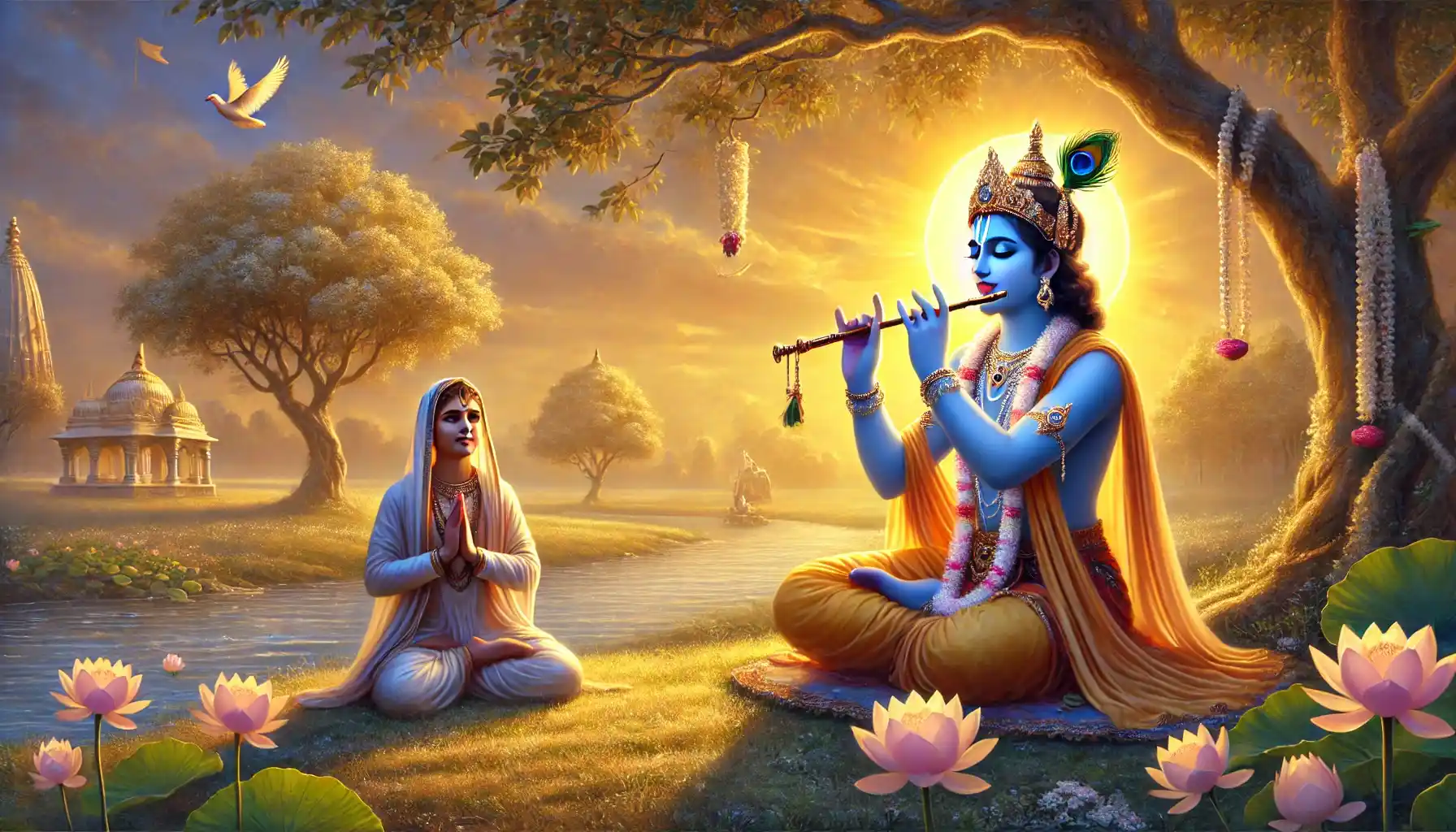
Mantra 13 is not meant to remain a philosophical idea; it is meant to guide how we live, think, and relate to the world each day. Its wisdom becomes visible through small, consistent shifts in awareness rather than dramatic outer changes.
1. Observe What the Mind Leans On
Throughout the day, notice where your mind naturally seeks comfort, security, or relief during stress or uncertainty. This reveals what you truly depend on. Gently redirect the mind toward God through remembrance, prayer, or reflection, without forcing or suppressing thoughts.
2. Engage with the World Without Emotional Dependence
Responsibilities, relationships, and material comforts are part of life, but they need not become sources of inner bondage. Perform duties sincerely while remembering that lasting fulfillment cannot come from temporary things. This reduces anxiety and attachment while increasing inner freedom.
3. Transform Attachment into Offering
Instead of trying to abandon worldly involvement, mentally offer actions, results, and relationships to God. When effort is offered rather than owned, the ego loosens its grip, and everyday actions become spiritually purifying.
4. Simplify Inner Expectations
Much suffering arises from expecting the world to provide permanent happiness. Mantra 13 teaches us to simplify expectations from people and situations while deepening trust in the Eternal. This brings emotional maturity and inner stability.
5. End the Day with Gentle Self-Reflection
At the close of the day, reflect calmly: Where did attachment dominate? Where did awareness guide action? This honest review, without guilt or pride, gradually trains the mind to move away from dependence on the temporary and toward lasting peace.
Living Mantra 13 in this way transforms ordinary life into a steady practice of inner purification, where devotion becomes natural and freedom grows quietly from within.
A Simple Summary of Mantra 13
|
Aspect |
Teaching |
| Core Message | Worship determines inner destiny |
| Error | Expecting lasting peace from temporary things |
| Solution | Exclusive devotion to the Eternal |
| Result | Purified mind and liberation |
Deepen Your Learning and Spiritual Practice
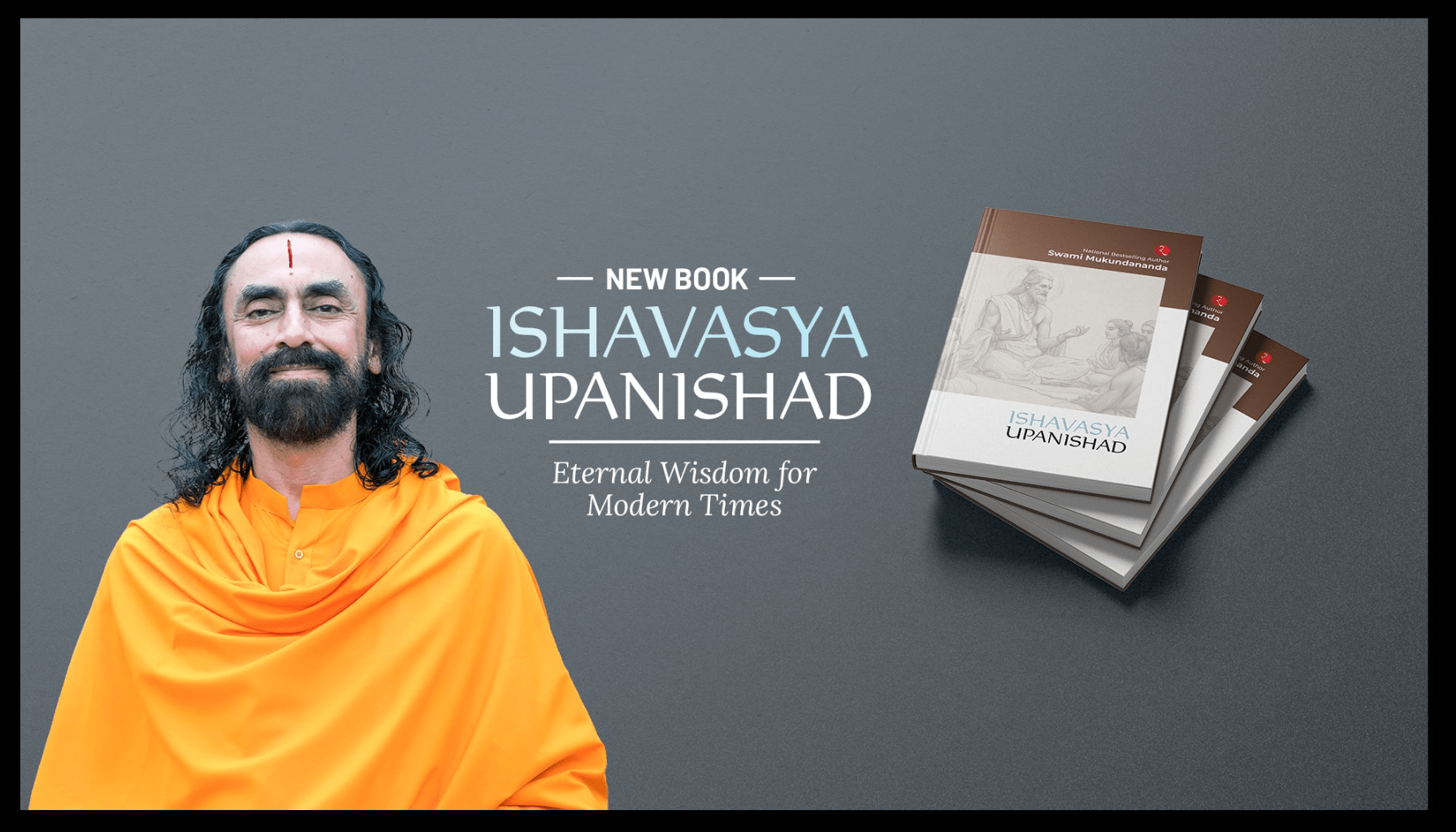
To deepen your understanding of the Ishavasya Upanishad, we highly recommend Swami Mukundananda’s commentary, which beautifully unpacks each mantra, including the Shanti Path, providing a clear and practical guide for modern seekers.
Order the Book: Swami Mukundananda’s Commentary
Unlock the deeper wisdom of the Ishavasya Upanishad with this insightful commentary by Swami Mukundananda. Perfect for modern seekers who wish to explore the divine teachings in greater depth.
Final Reflection
Ishavasya Upanishad Mantra 13 offers a clear and transformative insight into the nature of devotion. It reminds us that worship is not limited to rituals or beliefs, but is revealed by where the mind seeks comfort, security, and fulfillment. Whatever the heart consistently depends upon becomes the true object of worship, shaping the direction of consciousness and the quality of inner life.
The mantra emphasizes that devotion to the Eternal and attachment to the temporary do not produce the same result. While the world can support growth and learning, it cannot provide lasting peace. When fulfillment is sought from what is impermanent, restlessness and fear naturally arise. This is not a rejection of the world, but a reminder of its rightful place in spiritual life.
Mantra 13 also clarifies that liberation does not require abandoning responsibilities or withdrawing from life. Bondage is created by misplaced dependence, not by engagement itself. The same world that entangles an attached mind can refine a God-centered one. Freedom arises when love and trust shift inward, toward the unchanging source of peace.
Ultimately, this mantra invites honest self-reflection. By observing where our deepest attachments lie, we gain clarity about our spiritual direction. When devotion is placed in the Supreme, the mind gradually becomes purified, fear loosens its hold, and life itself becomes a quiet movement toward freedom and inner fulfillment.
Key Philosophical Insights from Ishavasya Upanishad Mantra 13
1. Worship Is Defined by Inner Attachment, Not Outer Form
Mantra 13 clarifies that worship is not limited to rituals or prayers. Whatever consistently occupies the mind, commands emotional dependence, and shapes one’s sense of security becomes the true object of worship. The Upanishad shifts the focus from external religious acts to inner orientation of consciousness. Liberation depends not on how one worships, but on where the heart is anchored.
2. The Eternal and the Temporary Produce Fundamentally Different Results
The mantra states unequivocally that devotion to the uncreated (asambhava) and attachment to the created (sambhava) do not yield similar outcomes. This is not a moral judgment but a metaphysical law. What is temporary cannot give permanent fulfillment. Expecting lasting peace from impermanent objects inevitably leads to dissatisfaction, regardless of how refined or noble those objects appear.
3. The World Is Not the Cause of Bondage, Misplaced Love Is
Mantra 13 dismantles the idea that the external world itself is responsible for suffering. The Upanishad teaches that bondage arises not from engaging with the world, but from seeking emotional completion through it. The same world that entangles an attached mind can elevate a detached, God-centered mind. Thus, bondage is psychological and spiritual, not situational.
4. Proper Use (Upayoga) and Enjoyment (Upabhoga) Are Spiritually Opposite
A subtle but powerful insight of this mantra is the distinction between using the world for growth and exploiting it for pleasure. When the world is used as a means for learning, service, and inner refinement, it supports spiritual evolution. When it is pursued as the source of happiness, it strengthens desire and restlessness. The difference lies not in action, but in intention and attitude.
5. The Mind Is the Sole Instrument of Bondage and Liberation
Mantra 13 reinforces a core Upanishadic truth: liberation does not occur by changing external circumstances but by transforming the mind. The mind that clings outwardly becomes impure and unstable. The mind that rests in the Eternal becomes purified and free. Heaven and hell, bondage and freedom, are experienced within consciousness itself, not as physical locations.
6. Devotion Purifies Only When It Is Undivided
The Upanishad subtly emphasizes the necessity of single-pointed devotion. Mixed devotion—where love is divided between God and worldly attachments—produces partial purification but does not lead to complete freedom. Mantra 13 teaches that inner clarity arises from exclusivity, not compromise. Spiritual growth accelerates when devotion becomes wholehearted rather than conditional.
7. Knowledge Must Be Received Through the Wise, Not Invented
By stating “thus we have heard from the wise,” Mantra 13 affirms the importance of guidance from realized teachers. The intellect, clouded by desire, ego, and fear, cannot independently grasp Absolute Truth. Authentic spiritual knowledge is transmitted through lineage, humility, and listening—not speculation. This safeguards seekers from self-deception.
8. God-Centered Devotion Transcends the Modes of Nature
The mantra implies that devotion to the Supreme gradually lifts the mind beyond the influence of sattva, rajas, and tamas. While worldly attachment strengthens these modes, devotion to the Eternal dissolves them. This is why spiritual devotion is not merely emotional—it is transformational, altering the very structure of consciousness.
9. Liberation Is an Inner Shift, Not a Change of Lifestyle
Mantra 13 does not demand withdrawal from society, rejection of relationships, or abandonment of responsibility. It demands a shift in identity and attachment. Liberation occurs when one stops seeking fulfillment from what cannot provide it and turns inward toward the Eternal source. The outer life may remain similar, but the inner axis changes completely.
10. Mantra 13 Is a Diagnostic Tool for Spiritual Honesty
Perhaps the most practical insight of Mantra 13 is its ability to expose self-deception. It invites seekers to honestly ask:
What do I truly depend on for peace?
The answer reveals whether one is progressing toward freedom or reinforcing bondage. In this sense, Mantra 13 functions not just as philosophy, but as a mirror for self-examination.
FAQs
1. What is the core teaching of Mantra 13?
Mantra 13 teaches that devotion to the Eternal leads to purification and freedom, while attachment to temporary, created things leads to bondage. The direction of devotion determines the state of the mind.
2. Does Mantra 13 reject worldly life?
No. The mantra does not reject the world. It teaches that the world becomes binding only when it is treated as the source of lasting happiness rather than as a means for growth and learning.
3. What does “not all worship leads to freedom” mean?
It means that worship or deep attachment to impermanent objects cannot bring lasting peace. Only devotion to the unchanging Supreme Reality purifies the mind and leads toward liberation.
4. What is Sambhūti Upāsanā?
Sambhūti Upāsanā is devotion focused on the Supreme Source of creation. It frees the mind from dependence on temporary things and leads to inner purity and stability.
5. How can mantra 13 be applied in daily life?
By fulfilling responsibilities sincerely while keeping the mind anchored in God, reducing emotional dependence on impermanent things, and practicing daily self-reflection.