
(Tenth Part of the 19-Part Blog Series on the Ishavasya Upanishad)
Introduction
Mantra 9 of the Ishavasya Upanishad contains profound teachings that overturn our common assumptions about reality, knowledge, and spiritual progress.
It declares:
Ignorance leads to darkness, which is understandable.
- However, so-called knowledge can lead to even deeper darkness.
This paradox is at the heart of Vedānta:
- True knowledge liberates.
- False knowledge binds.
Mantra 9 invites a radical re-examination of what we call “education,” “success,” and “wisdom.” It critiques the human tendency to cling to extremes, whether running toward the world (wealth, pleasure, recognition) or running away from it (scriptures, rituals, misguided renunciation). Both think they see clearly, but the Upanishad declares that both are blind.
This mantra warns about two kinds of incomplete knowledge:
- Material knowledge without spirituality
- Spiritual knowledge without practicality
Mantra 9: Verse in Sanskrit and Translation
Sanskrit
अन्ं तमः प्वविन््ति येऽववद््णमपु ्णसते ।
ततो भयू इव ते तमो य उ ववद््णय्णं रत्णः ॥ ९॥
Transliteration
andham tamaḥ praviśhanti ye ’vidyāmupāsate tato bhūya iva te tamo ya u vidyāyām ratāḥ
Translation
They attain darkness, who worship and embrace material science alone. But those who concern themselves with spiritual science alone are plunged into even greater darkness.
1. Core Insights from Mantra 9
The mantra critiques not knowledge itself, but its imbalance. Human beings tend to go “all in,” whether it’s career, wealth, meditation, scriptures, productivity, or renunciation. The rishis recognized this tendency millennia ago and declared:
- A half-truth is more dangerous than a lie.
- Material knowledge (avidyā) and spiritual knowledge (vidyā) are both incomplete by themselves. When embraced exclusively, they distort one’s worldview.
- Materialists become blind to the soul.
- Misguided spiritualists become blind to reality.
What “Avidyā Upāsana” Really Means
- Pursuing material goals
- Performing rituals mechanically
- Engaging in action without a higher purpose
The Upanishad declares that such worship of ignorance leads to andham tamaḥ- blind, suffocating darkness. This is not a punishment, but the natural consequence of misdirected life energy.

The Paradox of Knowledge and Darkness
- Ignorance blinds us to the purpose of life, our true nature, and our relationship with God. It creates fear, greed, anxiety, material obsession, and spiritual laziness.
- False knowledge (especially with pride) builds a wall between the soul and the Divine. A person who is puffed up with intellectual learning may never seek God.
Mantra 9 illustrates that false knowledge is far more blinding than simple ignorance.
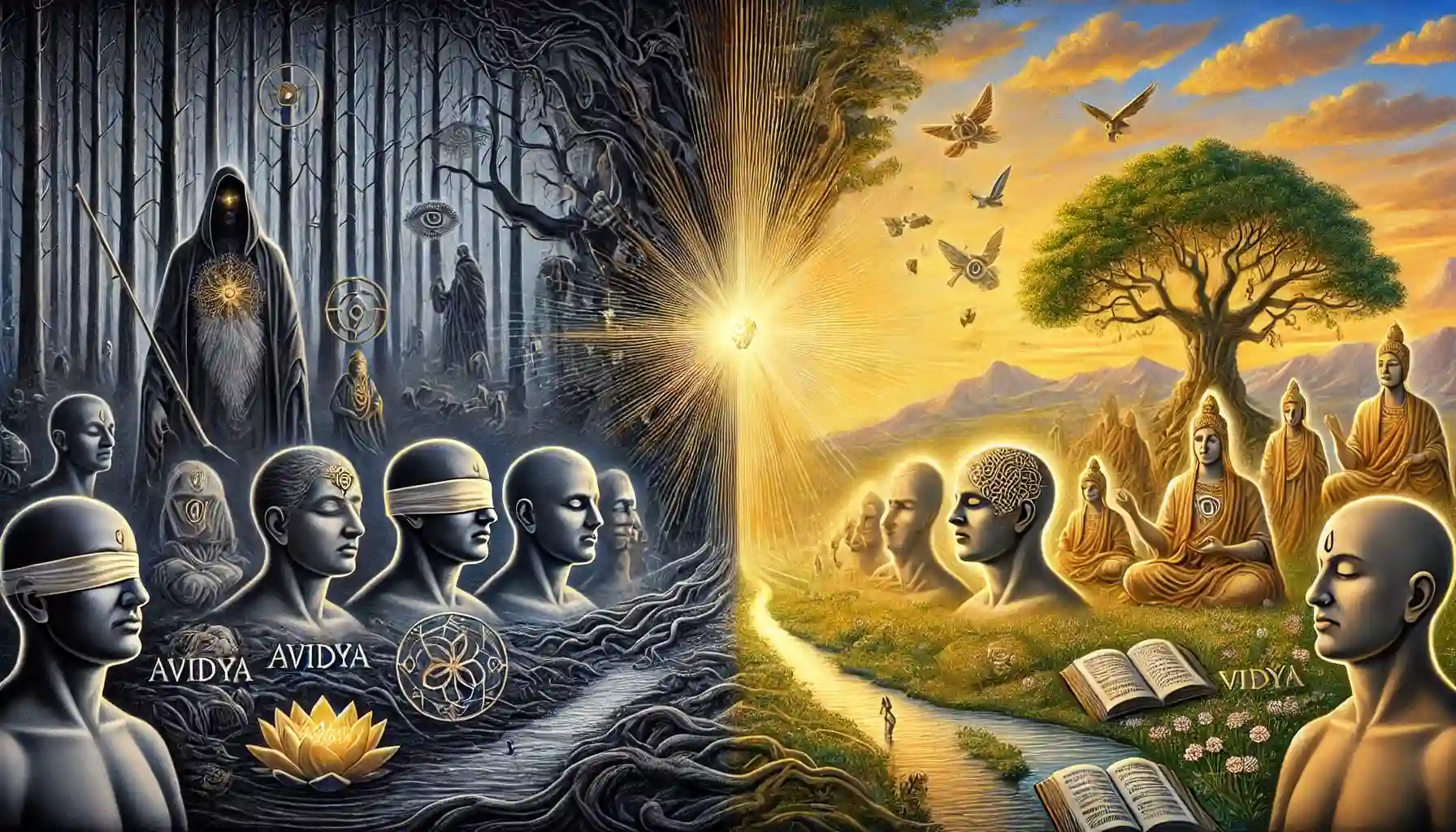
Two Kinds of Knowledge: Avidyā and Vidyā
|
Term |
Meaning |
Effect on the Soul |
|
Avidyā |
Material sciences, worldly skills, ritualism without devotion |
Creates attachment, ambition, ego, false security |
|
Vidyā |
Knowledge of the Self, God-realization, Upanishadic insight |
Liberates, purifies, humbles, leads to devotion |
|
Pseudo-Vidyā |
Intellectual spiritualism without surrender |
Creates spiritual pride |
Why Knowledge Alone Causes Deeper Darkness
A person who knows nothing may eventually admit, “I don’t know.” But someone who thinks they know everything, filled with intellectual pride, creates a barrier between themselves and spiritual truth. This "knowledge arrogance" can lead to spiritual destruction
Misguided Spirituality: The Deeper Darkness
Spiritual ego is harder to detect because it hides behind holy appearances. Misguided spiritual practices like:
- Hoarding scriptural knowledge without practice
- Performing rituals mechanically
- Escaping responsibility under "detachment"
...can lead to greater darkness than materialism because these individuals believe they are enlightened. The mantra warns against this spiritual extremism, which misleads others and justifies irresponsibility.
2. Why Ignorance Leads to Darkness
Ignorance blinds us to:
- The purpose of life
- Our true nature
- Our relationship with God
- The law of karma
- The consequences of desire
Ignorance creates:
- Fear
- Greed
- Anxiety
- Material obsession
- Spiritual laziness
Narrative Examples:

- The Scholar and the Boatman
A renowned scholar boarded a boat and ridiculed a simple boatman for lacking education. “Have you studied grammar?” he asked.
“No, sir.”
“Then one-quarter of your life is wasted.”
“Have you studied philosophy?”
“No.”
“Another quarter wasted.”
Suddenly, a storm struck. The boatman asked the scholar, “Sir, do you know how to swim?”
“No!”
“Then your entire life is about to be wasted.”
Moral: Worldly knowledge inflates ego, but in the real storms of life (suffering, death, moral crisis), only spiritual knowledge saves us. This is the deeper darkness the Upanishad warns about. - The Villager with the Blunt Axe
A villager tried to cut a tree at night using a blunt axe. Because he couldn’t see clearly, he kept striking the same spot for hours, but nothing happened. When dawn came, he saw:- He was cutting the wrong tree.
- His blade was dull.
- He had been walking in circles.
Moral: This story illustrates the condition of one living in ignorance, represented by much effort, little progress, and no clarity. But Mantra 9 tells us that there is a state even worse than this: when knowledge itself becomes distorted and leads to deeper darkness.
Application of the Verse in Daily Life
Mantra 9 prepares the way for Mantra 10, which emphasizes the integration of material and spiritual knowledge:
- Material knowledge helps us function, build society, and support our livelihood.
- Spiritual knowledge gives us meaning, cultivates peace, and awakens devotion.
Mantra 10 teaches that material knowledge (avidyā) and spiritual knowledge (vidyā) must be integrated.
- Avidyā helps us function in the world.
- Vidyā helps us transcend it.
Material vs. Spiritual Knowledge: A Balanced Approach
| Material (Avidyā) | Spiritual (Vidyā) | If Material Lacks Spiritual | If Spiritual Lacks Material |
|---|---|---|---|
| Skills | Purpose | Greed, restless ambition | Irresponsibility |
| Reason | Wisdom | Cold logic | Magical thinking |
| Structure | Devotion | Emptiness | Chaos |
| Progress | Ethics | Exploitation | Detachment imbalance |
| Comfort | Contentment | Hedonism | Poverty & impracticality |
| Survival | Liberation | Fear of death | Escape from life |
- Start with intention: Set the intention to balance material and spiritual goals.
- Engage with purpose: Carry out all actions with mindfulness and spiritual intent.
- Regularly check in: Periodically pause to assess whether your actions align with your higher purpose.
- Reflect on your progress: End the day by acknowledging the integration of both material and spiritual knowledge.
This table provides a practical guide to apply the wisdom of Mantra 9 each day:
| Practice | Action | Purpose | Reflection/Reminder |
|---|---|---|---|
| Morning Framework | Ask three questions: | To set the tone for the day. | “What is my duty today?” (Material) “What is my spiritual anchor today?” (Spiritual) “Where can I serve selflessly?” (Integration) |
| Mindful Goal Setting | Set both material and spiritual goals for the day. | To ensure balance between worldly responsibilities and spiritual growth. | Balance practical tasks with spiritual intention. |
| Engage in Action with Purpose | Approach every task, whether work or personal, with higher intent. | To engage in material work with a spiritual purpose. | Ask yourself: “How does this action contribute to my growth and to the world?” |
| Mindful Reflection | At regular intervals (e.g., mid-day), pause and reflect on your thoughts and actions. | To ensure that material pursuits are grounded in spiritual principles. | Reflect: “Am I focusing solely on external results or connecting with my deeper purpose?” |
| Cultivate Humility | Practice listening and learning from others without arrogance. | To stay grounded and humble, acknowledging that wisdom comes from everywhere. | Reflect on how humility can guide you in your relationships and work. |
| Integrate Spiritual Practices | Dedicate time for meditation, prayer, or spiritual reading. | To reconnect with your spiritual anchor during the day. | Ask: “How can my spiritual practice inform my daily choices and actions?” |
| Engage in Selfless Service | Do something for others without expecting anything in return. | To cultivate detachment from ego and connect with the world selflessly. | Reflect on the joy and fulfillment found in selfless acts. |
| Evening Reflection & Journaling | Reflect on the balance between material and spiritual pursuits throughout the day. | To assess how well you’ve integrated material and spiritual knowledge. | Journaling prompts: “Where did I experience balance today?” “Where did I act out of imbalance?” |
| Nighttime Gratitude Practice | End the day with gratitude, acknowledging both material and spiritual blessings. | To reinforce the connection between worldly success and spiritual well-being. | Reflect on how both aspects of life contribute to your growth and peace. |
Deepen Your Learning and Spiritual Practice
Now that we’ve explored the divine wisdom of the Shanti Path Mantra, it’s time to take the next step on your spiritual journey. To deepen your understanding of the Ishavasya Upanishad, we highly recommend Swami Mukundananda’s commentary, which beautifully unpacks each mantra, including the Shanti Path, providing a clear and practical guide for modern seekers.
Order the Book: Swami Mukundananda’s Commentary
Unlock the deeper wisdom of the Ishavasya Upanishad with this insightful commentary by Swami Mukundananda. Perfect for modern seekers who wish to explore the divine teachings in greater depth.
Final Reflection
Mantra 9 of the Ishavasya Upanishad offers profound wisdom that challenges our conventional understanding of knowledge, materialism, and spirituality. The insights from this mantra remain as relevant today as they were thousands of years ago.
True knowledge does not isolate or separate—it integrates. It’s the unification of the worldly and the divine, the practical and the spiritual, that leads to the highest wisdom and the deepest freedom.
Mantra 9 serves as a powerful reminder that wisdom is not about rejecting one world for another, but about living fully and consciously in both.
Key Philosophical Insights
1. The Danger of Imbalance in Knowledge
The central teaching of this mantra is the danger of incomplete knowledge. It warns against two extremes:
- Material knowledge without spirituality: While material knowledge (science, technology, and worldly skills) is necessary for practical life, it can lead to arrogance, ego inflation, and a disconnected view of life when pursued without spiritual grounding.
- Spiritual knowledge without practicality: Spiritual knowledge, when detached from the realities of daily life, can lead to impracticality, escapism, and spiritual pride. This false spirituality becomes a barrier to true transformation and service to the world.
Key Insight: Both types of knowledge are necessary, but each without the other leads to deeper blindness.
2. Knowledge Can Be More Dangerous Than Ignorance
At first glance, it seems intuitive that knowledge leads to light and liberation, while ignorance leads to darkness. However, the Upaniṣad teaches a startling paradox:
- Ignorance leads to confusion and suffering, but a person immersed in ignorance may still seek truth and be humble enough to change.
- False knowledge (even intellectual or spiritual arrogance) can close the door to true understanding. A person who believes they know everything is less likely to seek divine truth or wisdom.
Key Insight: Knowledge, when divorced from humility and spiritual grounding, can blind us to deeper truths and prevent us from growing.
3. The Role of Humility in True Knowledge
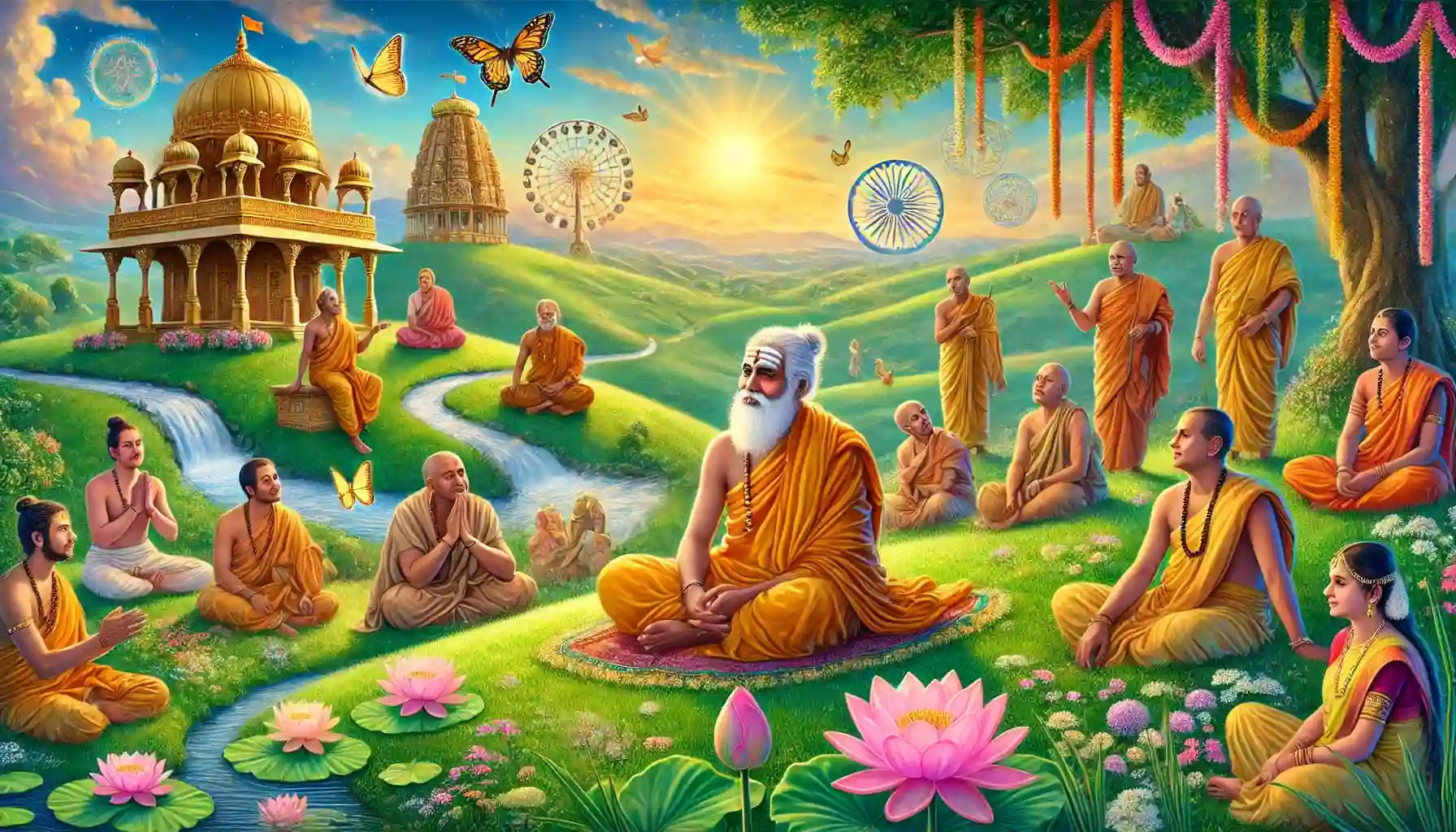
Humility is a critical element for integrating material and spiritual knowledge. A person who is humble acknowledges the limitations of their understanding and remains open to learning, whether from life experiences, spiritual practices, or higher wisdom. True knowledge leads to humility, purification, and a deeper relationship with the divine, while false knowledge nurtures ego, pride, and separation from God.
Key Insight: True wisdom does not inflate the ego; it softens it. The more one knows, the more one realizes the vastness of what is yet to be learned.
4. The Illusion of Extremes
Mantra 9 critiques the human tendency to cling to extremes. Some chase worldly success, pleasure, and recognition, while others retreat into renunciation, scriptures, or rituals. Both paths are rooted in illusion—the illusion of control over life or the illusion of detachment from life. The Upaniṣad boldly declares that both are blind.
Key Insight: The middle path—where material goals and spiritual wisdom are integrated—is the true path of wisdom. Life is meant to be lived with purpose and balance, where worldly action is grounded in spiritual awareness.
5. The Importance of Integration
One of the most important philosophical insights of Mantra 9 is the need for integration between material and spiritual knowledge. Material knowledge helps us function in the world and fulfill our responsibilities. Spiritual knowledge provides the meaning, purpose, and ethical guidance necessary to elevate our actions and transcend the limitations of the material world.
Key Insight: Vidyā (spiritual knowledge) and Avidyā (material knowledge) are not opposites but complementary forces. Integrating both is essential for a holistic, balanced life. Without material knowledge, we lack the tools to live effectively in the world; without spiritual knowledge, we lack direction, meaning, and depth.
6. A Call for Self-Examination and Growth
The Upaniṣad invites us into a radical self-examination of what we call education, success, and wisdom. It challenges us to move beyond superficial understandings of these concepts and consider their deeper, spiritual dimensions.
Key Insight: True knowledge involves self-awareness, selfless service, and an ongoing commitment to growth. It requires questioning our assumptions, recognizing the limits of our knowledge, and seeking deeper understanding through both material and spiritual means.
FAQs
1. Does Mantra 9 say that knowledge is harmful?
No. The mantra does not condemn knowledge itself.
It warns against imbalanced or incomplete knowledge: either material knowledge without spirituality, or spiritual knowledge without grounding in reality. True knowledge (Vidyā) is liberating; distorted knowledge becomes a source of deeper darkness.
2. What does “deeper darkness” (Bhūyaḥ Tamaḥ) mean?
It refers to the danger of spiritual arrogance, where a person believes they already know everything and therefore stops learning, reflecting, or seeking guidance. This ego-driven “false knowledge” blinds more than ordinary ignorance because it blocks humility and growth.
3. Why does the Upaniṣad criticize both materialists and unbalanced spiritualists?
Both represent extremes:
- Materialists cling only to the outer world
- Misguided spiritualists cling only to the inner world
The Upanishad teaches that human flourishing requires integration—material skills with spiritual wisdom. Both one-sided paths lead to blindness.
4. How can an ordinary person apply Mantra 9 in daily life?
By practicing balance, such as:
- Using material knowledge (work, logic, skills) responsibly
- Staying spiritually anchored through values, reflection, and devotion
- Avoiding extremes like overwork or escapist spirituality
The mantra calls for wholeness, not withdrawal from life.
5. Is Mantra 9 relevant today, especially in a scientific and digital age?
Absolutely.
Today many people either:
- Treat science as the only truth (material extremism), or
- Use spirituality as an escape from responsibility (spiritual extremism)
Mantra 9 warns that both forms of imbalance produce darkness. The modern seeker needs both: scientific clarity and inner wisdom