(Fourth Part of the 19-Part Blog Series on the Ishavasya Upanishad)
Introduction
The Upanishads often speak in the language of symbols, metaphors, and deep psychological truths. In the third mantra of the Ishavasya Upanishad, the sages warn us about the consequences of spiritual ignorance. This verse describes the fate of those who misuse the human body and squander soul-energy in sensuality, immoral actions, or addictions.
While the language appears severe, mentioning dark realms and tamasic states, the message is not meant to frighten but to awaken. It teaches that human life is precious, and its misuse leads to inner darkness, confusion, and emotional suffering.
This mantra also clarifies that “hell” is not merely a physical realm; it can be a state of mind, a psychological condition, or a future birth bound by heavy ignorance. The Upanishad encourages us to turn away from tamas (ignorance) and grow toward light (knowledge).
By studying this mantra, we gain a sharper understanding of:
- Why sensual indulgence never satisfies
- How addictions enslave the mind
- How ignorance leads to suffering
- Why misusing human life is equivalent to harming the soul
- How to prevent psychological and spiritual downfall
Ultimately, the mantra urges us to embrace responsibility, awareness, and spiritual discipline so that we may rise, not fall.

Verse in Sanskrit and Translation
Sanskrit
असुर्या नाम ते लोका अन्धेन तमसाऽऽवृताः ।
ताँस्ते प्रेत्याभिगच्छन्ति ये के चात्महनो जनाः ॥ ३॥
Transliteration
asuryā nāma te lokā andhena tamasā ’ ’vṛitāḥ
tāṁste pretyābhigachchhanti ye ke chātmahano janāḥ
Translation
There are realms without sunshine that are awash with the demonic mindset. They remain covered with the darkness of ignorance that gives sorrow. Humans who expend their soul energy in merely relishing sensual pleasure are sent there after death.
| Term | Meaning | Significance |
|---|---|---|
| Asūryā | Sunless, dark worlds | Symbolizes ignorance and suffering |
| Tamasāvṛitāḥ | Covered by darkness | Represents mental and spiritual blindness |
| Ātma-hanaḥ | Destroyers of soul-potential | People who misuse human life |
| Pretya | After death | Indicates consequences hereafter |
Explanation of the Verse
1. The “Sunless Worlds” as States of Ignorance
The mantra uses the phrase asūryā lokāḥ: worlds without light.
“Light” symbolizes:
- Truth
- Knowledge
- Awareness
- Moral clarity
Therefore sunless worlds also mean:
- states of confusion
- deep ignorance
- emotional darkness
- suffering caused by one’s own actions
This teaching warns that wrongful living invites psychological pain even in this life.
2. Sensuality and the Treadmill Illusion
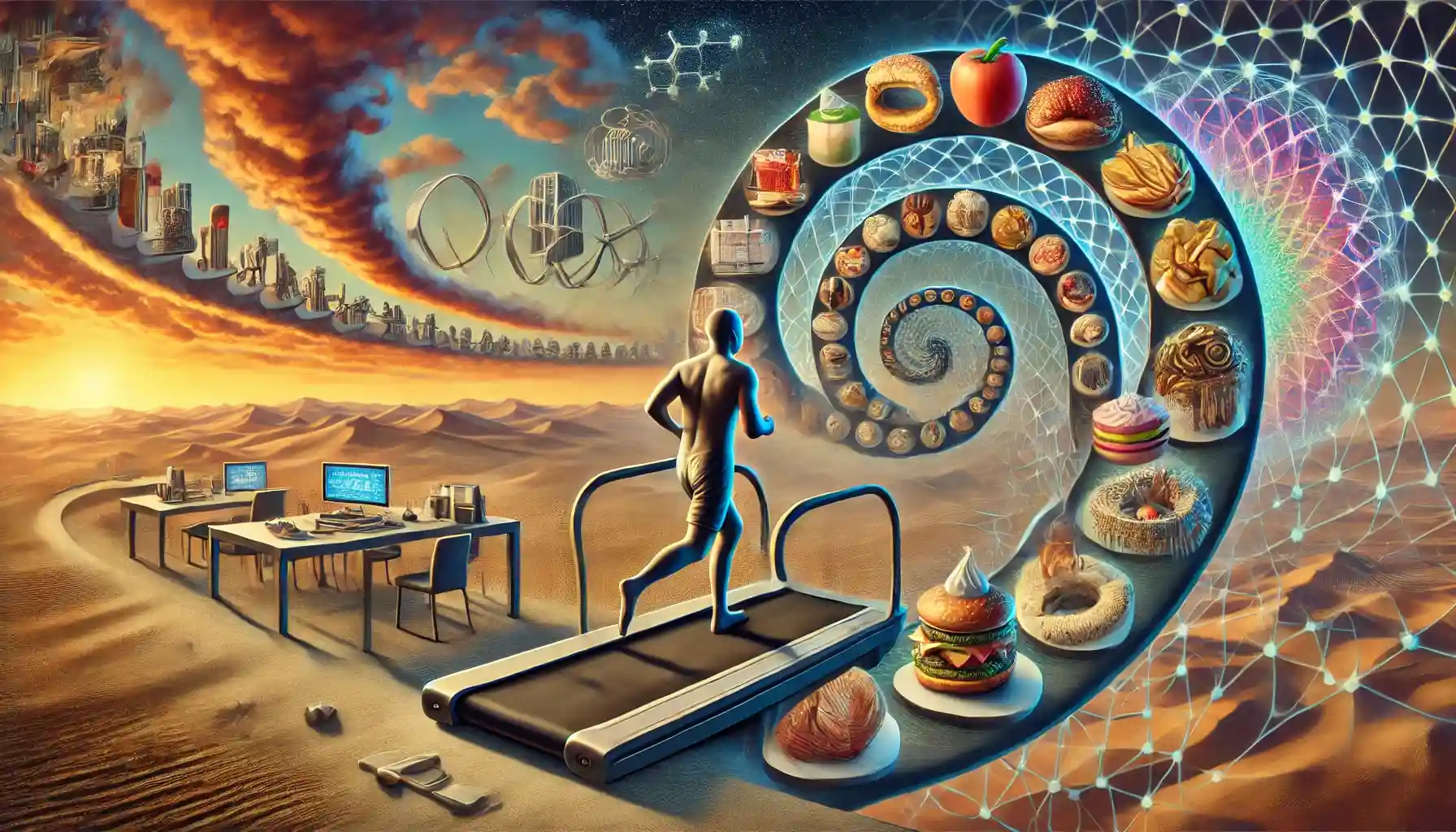
The commentary explains that a person trapped in mere sensual pursuit enters a cycle that never ends:
- Desire → temporary pleasure → dissatisfaction → stronger desire → distress
Like running on a treadmill, one moves vigorously but gets nowhere. Even if one possessed all the pleasures of the world, the mind dominated by lust can never be satisfied.
This is a timeless truth, which modern psychology echoes through studies on dopamine loops and addiction.
| Topic | Details |
|---|---|
| Sunless Worlds | States of ignorance, suffering caused by wrongful living. |
| Sensuality | The cycle of desire, pleasure, and dissatisfaction. |
| Desire | Leads to temporary pleasure, but never true satisfaction. |
| Anger | Reaction to blocked desires, destroys peace. |
| Greed | Insatiable wanting breeds restlessness. |
3. Addiction: Losing Control of One’s Freedom
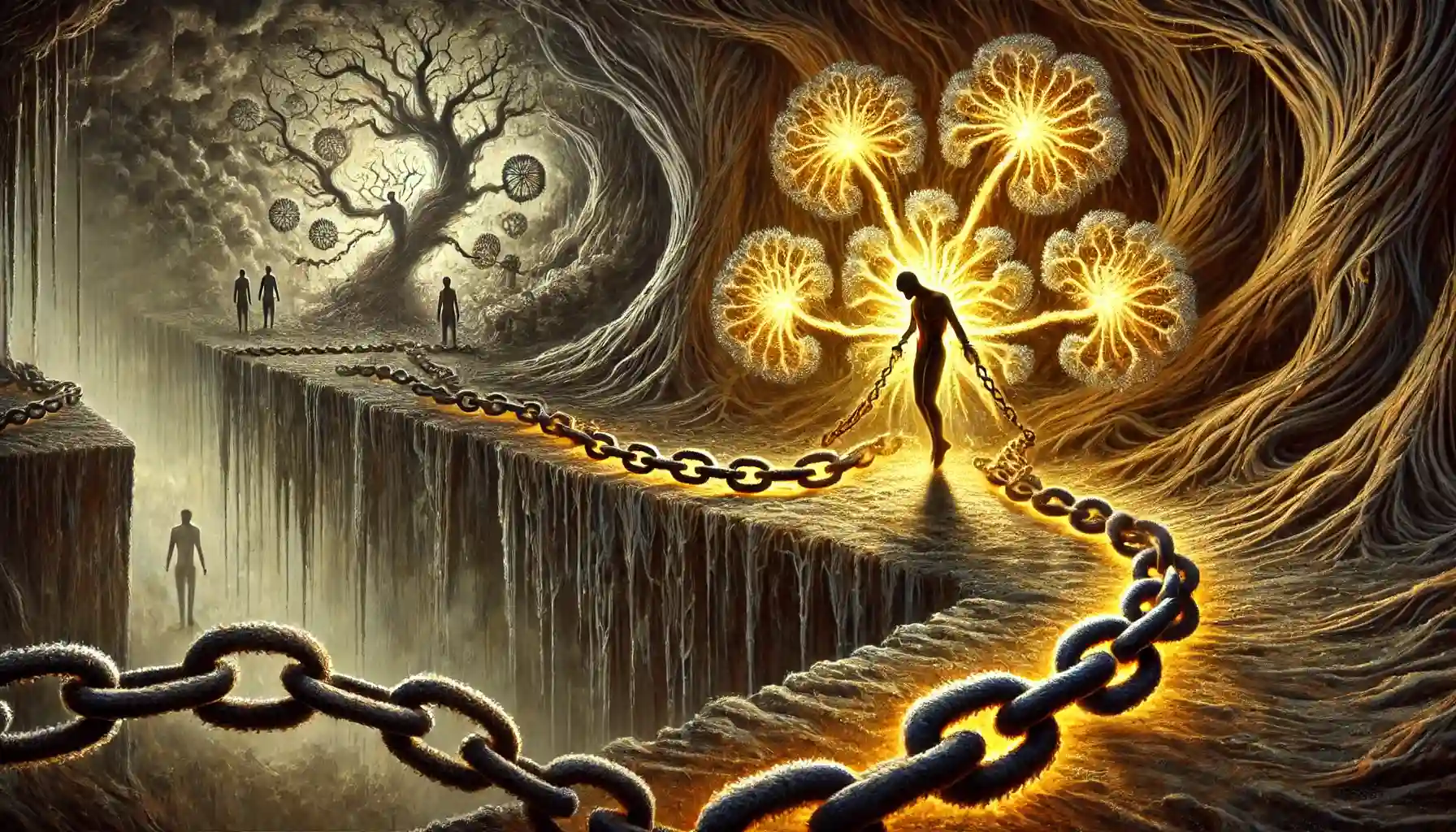
The mantra describes how desires transform into cravings, which then become addictions. Ancient tradition understood addiction long before modern science. The Latin roots of the word “addiction” mean “to be enslaved by”, perfectly aligning with the Upanishadic view.
Addiction enslaves because:
- it narrows awareness
- it overrides moral judgment
- it sacrifices long-term well-being for momentary relief
- it traps the soul in ignorance
Such enslavement is the very essence of tamas.
4. What “Soul Destruction” Truly Means
The phrase ātma-hanaḥ does NOT refer to suicide. Instead, it means “one who kills the potential of the soul.”
One destroys the soul-potential by:
- wasting life in pleasure
- ignoring spiritual duties
- refusing to grow morally
- choosing harmful actions
- rejecting knowledge and truth
The Ramcharitmanas declares that one who wastes human life without pursuing liberation is a killer of the soul.
| Cause | Description | Effect |
|---|---|---|
| Desire | Uncontrolled craving | Leads to dissatisfaction |
| Anger | Reaction to blocked desire | Destroys peace |
| Greed | Insatiable wanting | Breeds restlessness |
| Addiction | Loss of self-control | Enslaves the mind |
5. Hellish Realms: Psychological and Cosmic Interpretations
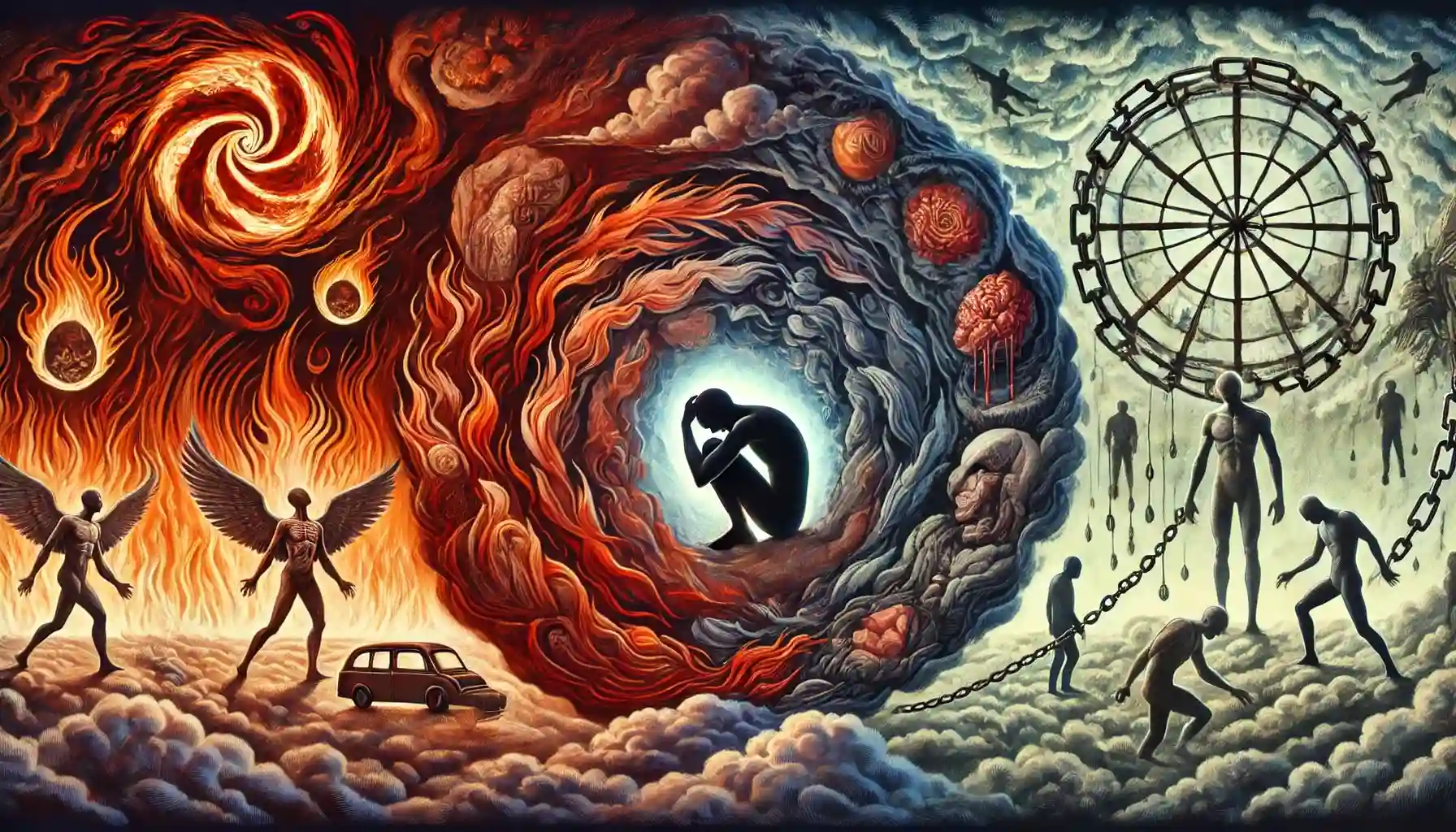
The verses discuss hellish realms described in texts like Garuda Purana and Agni Purana. These societies detail symbolic punishments for various sins, representing the karmic consequences of harmful actions.
However, the modern spiritual interpretation is more psychological:
- Anger, greed, lust → immediate inner hell
- Fear, guilt, shame → darkness of mind
- Addiction → imprisonment within one’s own impulses
Thus “hell” can be:
- a mental condition
- a karmic consequence in future birth
- a lower realm in cosmic geography
- a metaphor for life without wisdom
All interpretations agree: harmful living leads to harmful results.
| Interpretation | Explanation |
|---|---|
| Psychological Hell | States of fear, guilt, anxiety |
| Karmic Hell | Future births shaped by harmful actions |
| Cosmic Realms | Lower spheres described in Puranas |
| Ignorance | Lack of awareness and moral clarity |
6. Shree Krishna’s Three Gates to Hell
The Bhagavad Gita (16.21) identifies three primary forces that drag the soul downward:
- Kāma – uncontrolled desire
- Krodha – anger
- Lobha – greed
These three remain the root cause of self-destruction. Avoiding them is the essence of spiritual wisdom.
7. The True Meaning of “Asura”
The mantra also has a deeper philosophical insight.
"Asura" does NOT merely mean demon.
It means:
“One who delights in worldly thrills rather than spiritual truth.”
Thus even powerful beings, celestial gods, or successful humans can be asura if they misuse life in pursuit of pleasure.
In short:
- Asura → one who chases lower pleasures
- Deva → one who seeks wisdom, virtue, and God
Practical Applications
The Upanishad is not meant to frighten, but aims to guide. Here is how to apply its teachings in daily life:
1. Recognize the Limits of Sensual Enjoyment
Pleasure is temporary; inner peace is lasting.
Understanding this prevents overdependence on sensory stimulation.
2. Avoid Addictive Patterns
Whether it is food, entertainment, substances, or technology:
- Set boundaries
- Monitor impulses
- Stay disciplined
- Seek healthier alternatives
Addiction begins subtly, and awareness stops it early.
3. Build Inner Light Through Knowledge
Replace ignorance with:
- scriptural study
- meditation
- reflection
- self-awareness
- learning from wise teachers
Knowledge melts tamas like sunlight dissolving fog.
4. Practice Self-Regulation
Control over:
- desire
- anger
- greed
is the foundation of spiritual growth.
Self-control is not suppression; it is mindful mastery.
5. Use Human Life Purposefully
This mantra reinforces a simple truth: Human life must not be wasted.
Dedicate your actions to:
- service
- devotion
- moral living
- learning
- compassion
These uplift the soul and prevent spiritual downfall
Final Reflection
The third mantra of the Ishavasya Upanishad is not a threat, it is a mirror.
It shows us what we become when we forget who we truly are. In its symbolic language of light and darkness, the Upanishad reveals a psychological law: when we live without awareness, we generate our own suffering; when we live with awareness, we generate our own liberation.
The “sunless worlds” are not distant cosmic dungeons but inner terrains that we enter whenever we abandon our higher intelligence for lower impulses. Every moment of anger, addiction, greed, or indulgence dims the inner light a little more. And yet, the mantra is full of hope, because it tells us that light is not something we have to earn, it is something we have to uncover.
The human body is the rarest vessel, and the mind is a sacred fire. When directed toward truth, they illuminate the path of evolution. When misused, they trap us in the darkness of our own choices.
Ultimately, this mantra invites us to become guardians of our own consciousness.
To shift from reaction to reflection.
From compulsion to clarity.
From tamas to light.
It reminds us that every choice is a step toward liberation or bondage, and that freedom begins the moment we take responsibility for our inner world.
Key Philosophical Insights
1. Ignorance Is Not Darkness: It Is Unawareness of the Light Within
The Upanishad points to a simple but profound truth: we suffer not because darkness is powerful, but because we forget that we are made of light—knowledge, clarity, and awareness.
2. Pleasure Without Purpose Leads to Emptiness
Sensuality is not condemned; enslavement to it is.
Pleasure becomes poison when it replaces meaning.
3. Addiction Is the Modern Form of Tamas
The mantra anticipated the psychology of addiction long before science:
habit → craving → compulsion → identity loss.
Addiction is the collapse of inner sovereignty.
4. “Soul-Killing” Means Wasting the Chance to Evolve
Ātma-hanaḥ refers to the tragedy of using a divine birth for trivial pursuits.
The soul cannot be harmed—but its opportunity can.
5. Hell Is a Psychological Condition Before It Becomes a Cosmic One
Anger, shame, fear, greed, and craving are hells.
We visit them when we forget our true nature.
6. Asura and Deva Are States of Consciousness, Not Beings
One becomes asuric not by birth but by preference for lower pleasures.
One becomes devic by choosing truth, discipline, and higher joy.
7. Human Life Is a Workshop for Transformation
The Upanishad urges us to use this rare birth not for drifting, but for awakening—to cultivate integrity, self-control, compassion, and wisdom.
8. Light Is Not Found, It Is Practiced
Knowledge, meditation, discipline, and reflection are not rituals but methods of remembering who we already are
FAQs
1. Does this mantra say hell is a literal place?
It includes cosmic descriptions, but also symbolizes psychological darkness and karmic consequences.
2. What does “atma-hanaḥ” actually mean?
It refers to misusing human life, not physical suicide.
3. Can people escape tamasic states?
Yes. Through knowledge, discipline, devotion, and moral living.
4. Why is desire considered dangerous?
Because uncontrolled desire leads to addiction, frustration, and moral downfall.
5. Is fear-based spirituality encouraged?
No. The verse warns out of compassion, thereby encouraging transformation, not fear.