In spiritual discussions, one question often arises, especially in interfaith dialogues: “Why do Hindus worship idols?”
This question is sometimes accompanied by misunderstanding, skepticism, or even criticism. Some people label Hindus as “idol worshippers,” assuming that they worship mere stone or material objects. However, this perception arises from a superficial understanding of a profound spiritual practice.
To truly appreciate the concept of deity worship, we must look deeper, not just at the external form, but at the inner philosophy behind it. When understood correctly, deity worship is not primitive or irrational; rather, it is a powerful and sophisticated tool for spiritual elevation.
Let us explore this topic in depth.
Idol Worship or Deity Worship? A Crucial Distinction
First, we must clarify an important distinction.
If someone believes that a stone statue itself is God in totality, then that would indeed be a limited understanding. However, that is not what Hindu philosophy teaches.
Ask any sincere Hindu devotee:
“Do you believe that this stone alone is God?”
Almost everyone will respond:
“No. God is all-pervading, omnipotent, and omniscient. He exists everywhere: in the universe and within our hearts.”
Then what is the role of the deity?
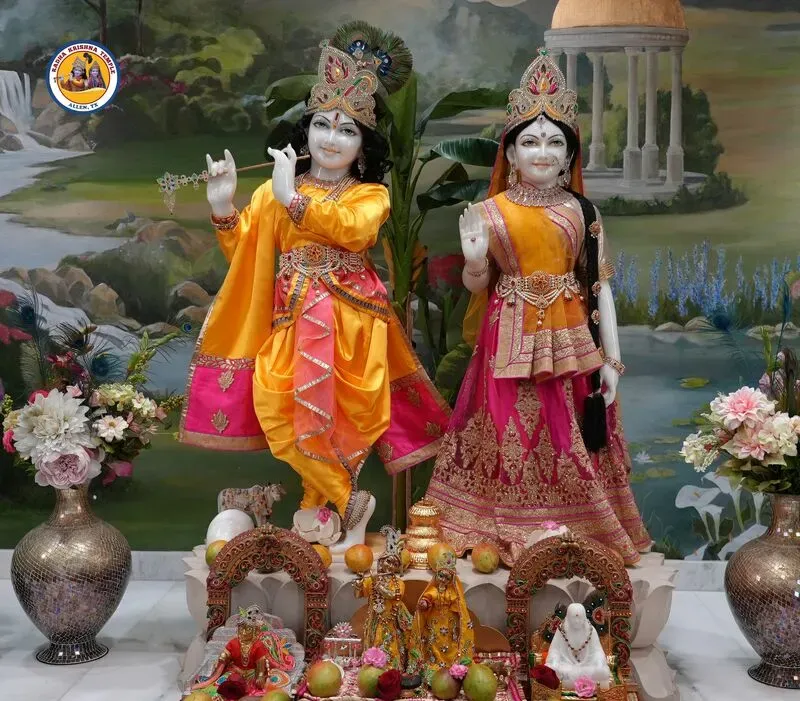
The deity is a representation, a manifestation, or a medium: a way to focus the mind and express love toward the Divine.
This is why the correct term is not “idol worship,” but deity worship.
The Sanskrit tradition calls it murti puja: the worship of a divine form that symbolizes the infinite.
The Nature of God: Formless Yet Accessible
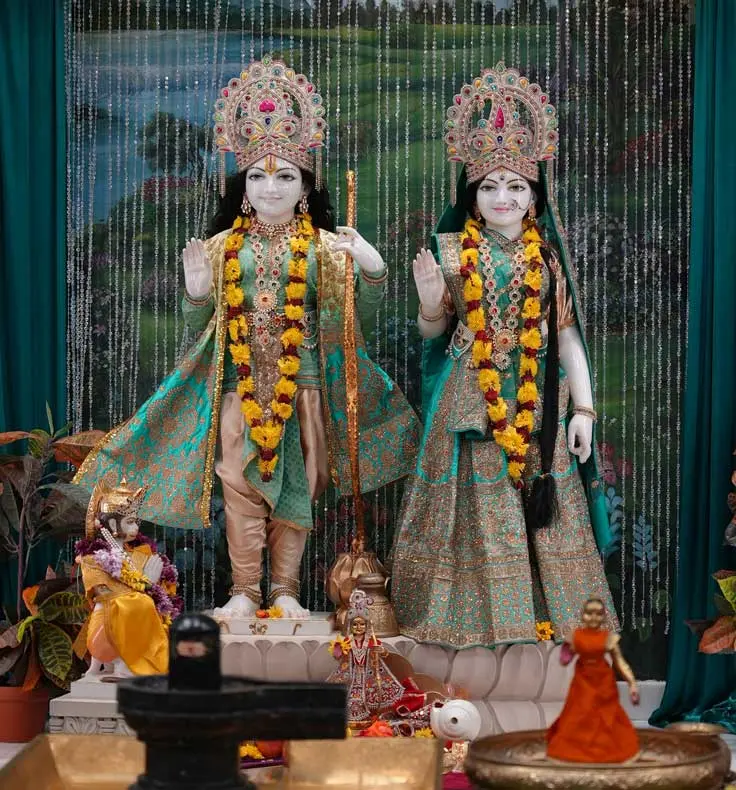
According to the Vedic scriptures, God is both:
- Nirakar (formless)
- Sakar (with form)
God is infinite, beyond material limitations, and pervades all existence. Yet, out of compassion for the human mind, which finds it difficult to relate to the abstract, God allows Himself to be worshipped in a tangible form.
Swami Mukundananda often explains that the human mind needs a support system. Just as a child learns better with visual aids, the spiritual seeker benefits from having a concrete focus.
Without such a focus, the mind tends to wander.
Thus, the deity becomes a bridge between the finite and the infinite.
The Role of Symbols in Spiritual Life
Interestingly, the use of symbols is not unique to Hinduism. It is a universal aspect of human spirituality.
Consider the following:
- In Islam, devotees face the Kaaba while offering prayers.
- In Christianity, the cross is revered as a sacred symbol.
- Devotees may also pray before images of Jesus Christ or Mother Mary.
- In Buddhism, statues of Buddha are widely used for meditation and reverence.
If God is everywhere, why face a particular direction? Why use a specific symbol?
The answer is simple:
Symbols help concentrate the mind and evoke devotion.
They serve as focal points that awaken spiritual emotions.
In the same way, a Hindu deity is not seen as “just stone,” but as a divine symbol infused with spiritual significance.
The Power of Association: Why Images Matter
Let us consider a simple example from everyday life.
Suppose you have a photograph of a loved one: your parent, spouse, or child. The photo is just paper and ink. Yet, if someone disrespects it, you feel hurt.
Why?
Because your emotions are connected to that image.
Similarly, when a devotee looks at a deity, they do not see stone, they see God. The form becomes a vessel for love, reverence, and devotion.
A powerful story illustrates this point.
A Story: The King of Alwar and the Picture
There was once a king in India who strongly opposed deity worship. He believed it was unnecessary and irrational. However, in his palace, he kept a portrait of his revered teacher.
One day, a saint visited him. During their conversation, the king criticized idol worship.
The saint quietly walked up to the portrait, took it down, threw it on the ground, and began stepping on it.
The king was furious.
“How dare you insult my Guru!”
The saint calmly replied,
“Why are you upset? It is just paper.”
The king responded,
“That is not just paper, it represents my Guru!”
The saint smiled and said,
“Exactly. In the same way, a deity represents God.”
This simple incident reveals a profound truth:
It is not the material that matters, but the sentiment behind it.
Historical Insight: Swami Vivekananda’s Response
When Swami Vivekananda visited the United States, he was questioned about idol worship. People found it difficult to understand how intelligent individuals could worship images.
Swami Vivekananda gave a brilliant response.
He spoke of his Guru, Sri Ramakrishna Paramahansa, who was one of the most spiritually enlightened beings of his time. Despite his deep realization of God, Ramakrishna worshipped the deity of Mother Kali with intense devotion.
Swami Vivekananda pointed out:
“If worshipping a deity can elevate a person to such spiritual heights, then what is wrong with it?”
This statement highlights an essential truth:
The value of a practice lies in its results.
If deity worship leads to love, purity, and God-realization, it cannot be dismissed as ignorance.
Eight Forms of Deity Worship
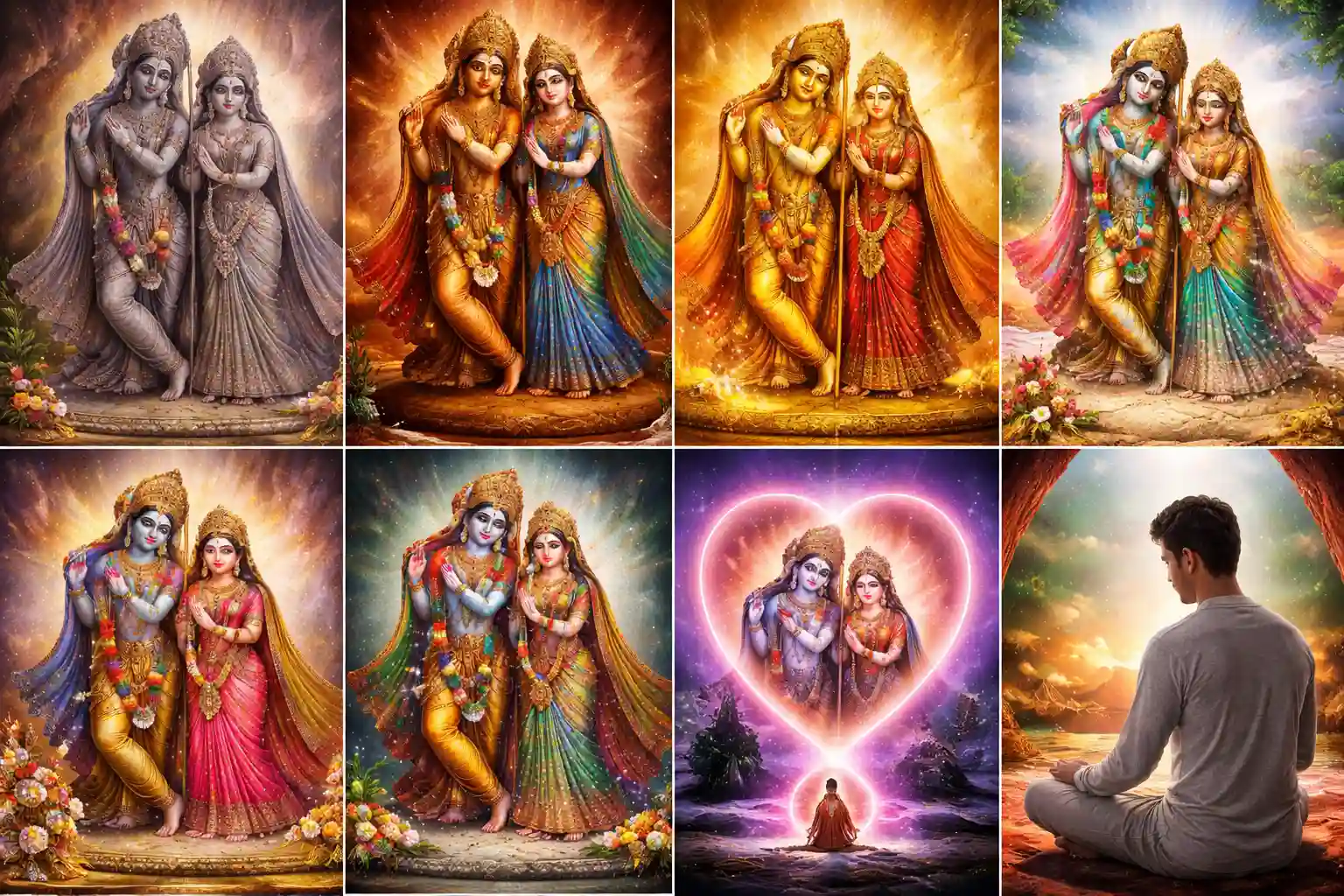
The Srimad Bhagavatam describes eight types of deities:
- Made of stone
- Made of wood
- Made of metal
- Made of paint
- Made of sand
- Made of jewels
- Made mentally
- Made through meditation
Among these, the highest is mental worship: visualizing God within the mind and meditating on Him.
However, this requires a high level of concentration and spiritual maturity.
For most people, it is difficult to meditate on the formless or even maintain a clear inner image.
Hence, external forms are provided as stepping stones.
The Psychology of Deity Worship
To understand deity worship, we must also consider human psychology.
The mind operates through:
- Images
- Emotions
- Associations
When we see a divine form:
- It triggers devotion
- It reminds us of God
- It helps us focus
Without such support, the mind becomes scattered.
Swami Mukundananda emphasizes that Bhakti (devotion) requires engagement of the mind. Deity worship is a practical method to anchor the mind in divine remembrance.
A Gradual Path to the Divine
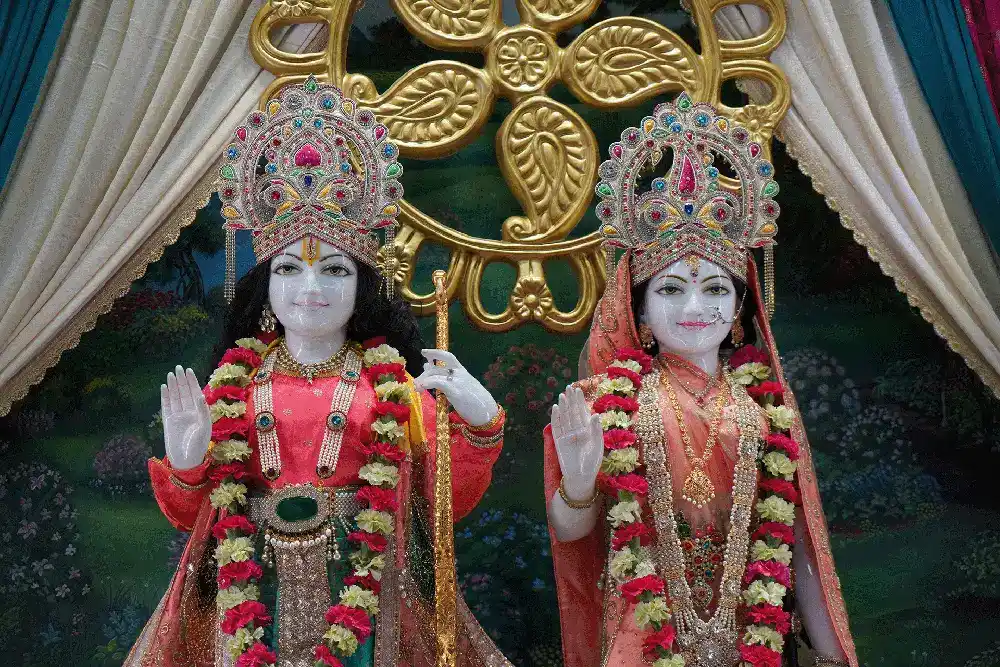
Spiritual growth is a journey.
Not everyone begins at the same level.
Some can meditate on the formless Absolute. Others need a form to relate to.
The Vedic tradition accommodates all levels of seekers.
It does not impose one rigid method. Instead, it offers flexibility:
- Worship God with form
- Worship God without form
- Meditate internally
- Serve externally
The goal is the same: To connect with God.
Is Deity Worship Necessary?
An important point to understand is that deity worship is not compulsory.
The scriptures clearly state that one can:
- Meditate on God internally
- Chant His name
- Reflect on His qualities
However, for most people, deity worship is a helpful and accessible starting point.
It simplifies the abstract and makes devotion tangible.
The Real Purpose of Deity Worship
Ultimately, deity worship is not about the object; it is about the relationship.
It helps cultivate:
- Love for God
- Surrender
- Humility
- Focus
The external form gradually leads the devotee to internal realization.
Over time, the devotee begins to feel:
“God is not just in the temple. He is within me.”
This is the true success of deity worship.
Misunderstanding vs. Experience
Criticism of deity worship often comes from those who observe it externally but do not experience its inner essence.
Spiritual practices cannot always be understood intellectually—they must be experienced.
Just as one cannot understand the taste of honey without tasting it, one cannot understand devotion without practicing it.
The Universality of Devotion
At its core, deity worship reflects a universal human tendency: the need to express love.
Love seeks expression through:
- Words
- Actions
- Symbols
Deity worship provides a channel for this expression.
It transforms abstract belief into living devotion.
The Essence is Devotion
Deity worship is not the final destination but a means.
It starts with external worship but culminates in internal communion.
It may appear simple, but it carries profound depth.
As Swami Mukundananda teaches, the goal is to attach the mind to God. Whether through a form or without it, the essence lies in devotion.
So, rather than dismissing deity worship as primitive, we should recognize it as a scientific and compassionate spiritual practice, one that helps millions connect with the Divine.
In the end, what truly matters is not how we worship, but how deeply we love.
Deepening the Understanding: From Ritual to Relationship
While the philosophical clarity of deity worship is important, its real beauty unfolds in practice. When a devotee stands before a deity, offers flowers, lights a lamp, or folds their hands in prayer, something subtle yet profound begins to happen within.
The mind, which is otherwise scattered across countless worldly thoughts, gradually becomes centered. The heart, often burdened by desires and anxieties, begins to soften. In that sacred moment, the devotee is not merely performing a ritual, they are entering into a relationship with the Divine.
Swami Mukundananda often emphasizes that Bhakti is not about external show; it is about internal connection. The external act of worship is simply a means to awaken inner devotion. When performed with understanding, even the simplest act, such as offering a flower or bowing down, becomes spiritually transformative.
Why the Mind Needs a Form
One of the greatest challenges in spirituality is controlling the mind. The Bhagavad Gita states that the mind is restless, turbulent, and difficult to restrain. Trying to meditate on the formless Absolute can therefore be extremely difficult for most people.
Bhagavad Gita: Chapter 12, Verse 5
क्लेशोऽधिकतरस्तेषामव्यक्तासक्तचेतसाम् ||
अव्यक्ता हि गतिर्दु:खं देहवद्भिरवाप्यते || 5||
kleśho ’dhikataras teṣhām avyaktāsakta-chetasām
avyaktā hi gatir duḥkhaṁ dehavadbhir avāpyate
BG 12.5: For those whose minds are attached to the unmanifest, the path of realization is full of tribulations. Worship of the unmanifest is exceedingly difficult for embodied beings.
Imagine trying to focus on something that has no shape, no color, no attributes. The mind slips away almost instantly.
This is where deity worship becomes invaluable.
The form of the deity provides:
- A visual anchor for concentration
- A personal connection to the Divine
- A consistent reminder of spiritual ideals
Over time, this repeated engagement purifies the mind. The form that initially served as a support gradually leads the seeker toward formless realization.
From External Worship to Internal Realization
A common misunderstanding is that deity worship is the end goal. In reality, it is only the beginning of a deeper journey.
Initially, the devotee relates to God externally:
- Visiting temples
- Performing rituals
- Offering prayers
But gradually, something shifts.
The devotee begins to feel:
- “God is watching me.”
- “God is guiding me.”
- “God is within me.”
At this stage, worship becomes internalized. The heart itself becomes a temple, and the mind becomes the altar.
The deity is no longer confined to a physical form but becomes a living presence within consciousness.
This is the true purpose of murti puja: not to limit God to a form, but to train the mind to perceive God everywhere.
The Danger of Mechanical Worship
However, it is important to acknowledge that any spiritual practice can lose its essence if performed mechanically.
If deity worship becomes:
- A routine without understanding
- A ritual without feeling
- A habit without devotion
then its transformative power diminishes.
Swami Mukundananda cautions that devotion must be conscious and heartfelt. The external act must be accompanied by internal awareness.
For example:
- While offering a flower, one should feel, “I am offering my heart to God.”
- While lighting a lamp, one should think, “May the light of wisdom remove my ignorance.”
When the inner attitude aligns with the outer action, worship becomes deeply meaningful.
Deity Worship in the Modern World
In today’s fast-paced world, many people question the relevance of traditional practices. With increasing emphasis on logic and science, deity worship is sometimes dismissed as outdated.
However, when understood properly, it is remarkably relevant and practical.
Modern psychology confirms that:
- Visualization enhances focus
- Rituals create mental stability
- Symbols evoke emotional depth
Deity worship incorporates all these elements.
It provides:
- A daily pause from chaos
- A moment of reflection
- A space for emotional connection
In a world filled with distractions, it becomes a powerful tool for mental clarity and spiritual grounding.
Inclusivity of the Vedic Path
Another remarkable aspect of the Vedic tradition is its inclusivity.
It does not insist that everyone must follow the same path. Instead, it acknowledges diversity in human nature.
Some people are:
- Emotionally inclined → Bhakti (devotion)
- Intellectually inclined → Jnana (knowledge)
- Action-oriented → Karma (service)
- Meditative → Dhyana (contemplation)
Deity worship primarily supports the path of Bhakti, but it also complements other paths.
For instance:
- A jnana yogi may meditate on the formless Absolute
- A bhakti yogi may worship a deity with love
Both paths are valid. Both lead toward the same ultimate truth.
Transforming Daily Life into Worship
One of the highest teachings of the Bhagavad Gita is that life itself can become a form of worship.
Deity worship trains the mind to remember God. Once this remembrance becomes steady, every action can be offered as a sacred act.
- Eating becomes an offering
- Work becomes service
- Speech becomes prayer
- Thoughts become meditation
This is known as Karma Yoga infused with Bhakti.
At this stage, the distinction between “spiritual” and “worldly” dissolves. Life itself becomes a continuous act of devotion.
The Role of Faith and Experience
Ultimately, the value of deity worship cannot be fully grasped through argument alone.
It must be experienced.
A person who practices sincerely begins to notice:
- Greater peace of mind
- Reduced anxiety
- Increased compassion
- A deeper sense of purpose
These inner changes are the real proof of its effectiveness.
As Swami Mukundananda often teaches, spirituality is a science of inner transformation. The results validate the practice.
Love: The Essence of All Worship
At its core, all spiritual practices aim at one goal: to awaken love for God.
Whether one:
- Worships a deity
- Meditates on the formless
- Serves others selflessly
the ultimate purpose is the same: to develop a loving relationship with the Divine.
Deity worship simply provides a natural and accessible way to express that love.
It allows the devotee to:
- See God
- Speak to God
- Serve God
- Feel God’s presence
In doing so, it transforms spirituality from an abstract concept into a living experience.
Final Reflection: Beyond Labels
The term “idol worship” often arises from misunderstanding. When seen from the outside, the practice may appear simplistic. But when understood from within, it reveals profound depth.
Deity worship is not about stone: it is about consciousness.
It is not about ritual: it is about relationship.
It is not about limitation: it is about connection with the infinite.
Rather than judging the practice, one can benefit more by understanding its purpose and experiencing its effects.
As Swami Mukundananda beautifully teaches, the goal is to attach the mind to God with love. Whether through a form or beyond form, what truly matters is the sincerity of the heart.
In the end, the question is not whether one worships a deity or not.
The real question is: Is the mind connected to God?
1. What is the meaning of idol worship in Hinduism?
Idol worship, or murti puja, in Hinduism refers to worshipping a deity as a symbolic representation of God. Devotees do not consider the idol as God itself, but as a medium to focus their mind and express devotion to the all-pervading Divine.
2. Do Hindus believe that God exists only in idols?
No, Hindus believe that God is omnipresent and exists everywhere, including within the heart. The idol is used as a tool to help concentrate the mind and develop a personal connection with God.
3. Why is deity worship important in spiritual practice?
Deity worship helps engage the senses and focus the mind, making it easier to develop devotion. It provides a tangible form through which devotees can express love, prayer, and surrender to God.
4. Is idol worship necessary to connect with God?
No, idol worship is not compulsory. One can connect with God through meditation, chanting, or selfless service. However, deity worship is a helpful and accessible method for many people, especially beginners.
5. How does deity worship lead to spiritual growth?
Deity worship gradually purifies the mind and deepens devotion. Over time, it helps the devotee move from external rituals to internal realization, experiencing God’s presence within and in all aspects of life.
Call to Action
Deepen your spiritual journey today. Explore the timeless wisdom of the Bhagavad Gita and transform your daily life into an offering of devotion.
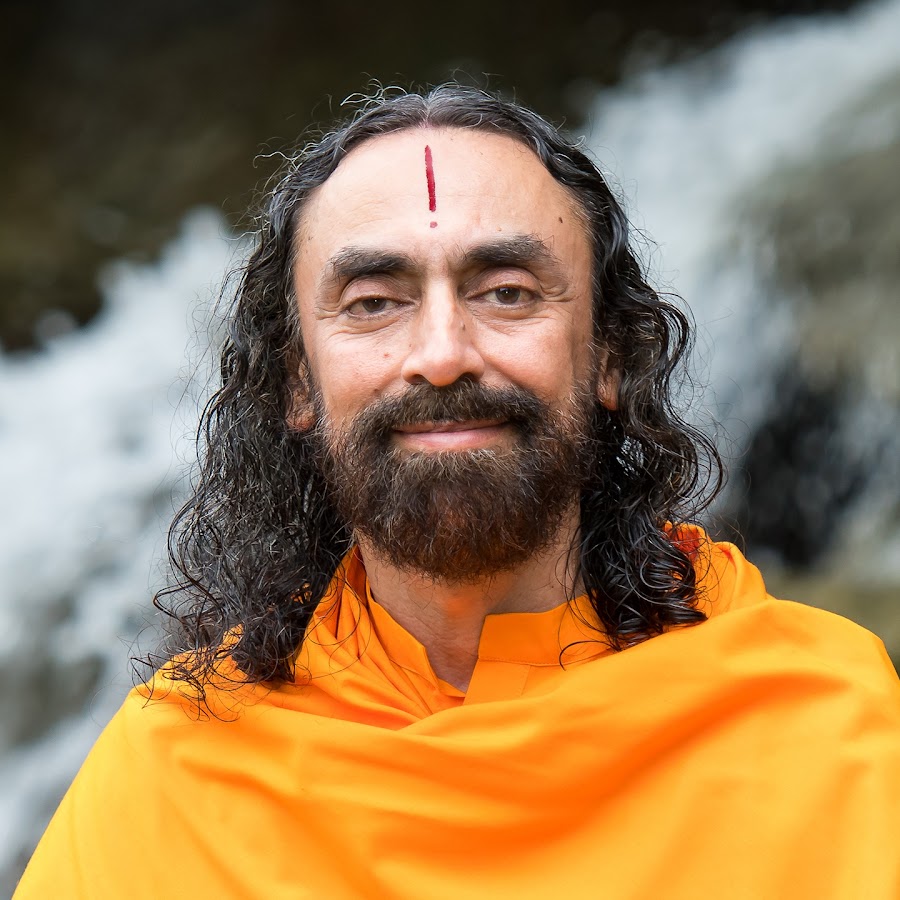
📺 Subscribe to his YouTube channel for spiritual discourses, guided meditations, and practical insights into the Bhagavad Gita.

🌐 Visit the Holy Bhagavad Gita website to access additional teachings for spiritual growth.
Let the wisdom of the Gita guide your journey toward inner peace, devotion, and divine grace.