
Stress is often treated as an unavoidable byproduct of modern life—something to manage, endure, or suppress. Yet much of the stress we experience is not inevitable. It is unnecessary, self-generated, or sustained by habits, expectations, and thought patterns that no longer serve us.
The greatest source of stress is attachment to outcomes, which increases cortisol levels and risk of heart attack, stroke, digestive issues, skin rashes, and infections. When we bring awareness to how we move through the world—physically, mentally, emotionally, and spiritually—we can remove layers of stress that quietly drain our energy. This is not about doing more things. We are certainly busy enough (I know I am). It is about doing things differently and integrating the lessons the movement offers into our daily lives.
Let's explore the most common sources of unnecessary stress, how they show up in daily life, and practical ways to release them through conscious movement, mindset shifts, and intentional action.
Understanding Unnecessary Stress
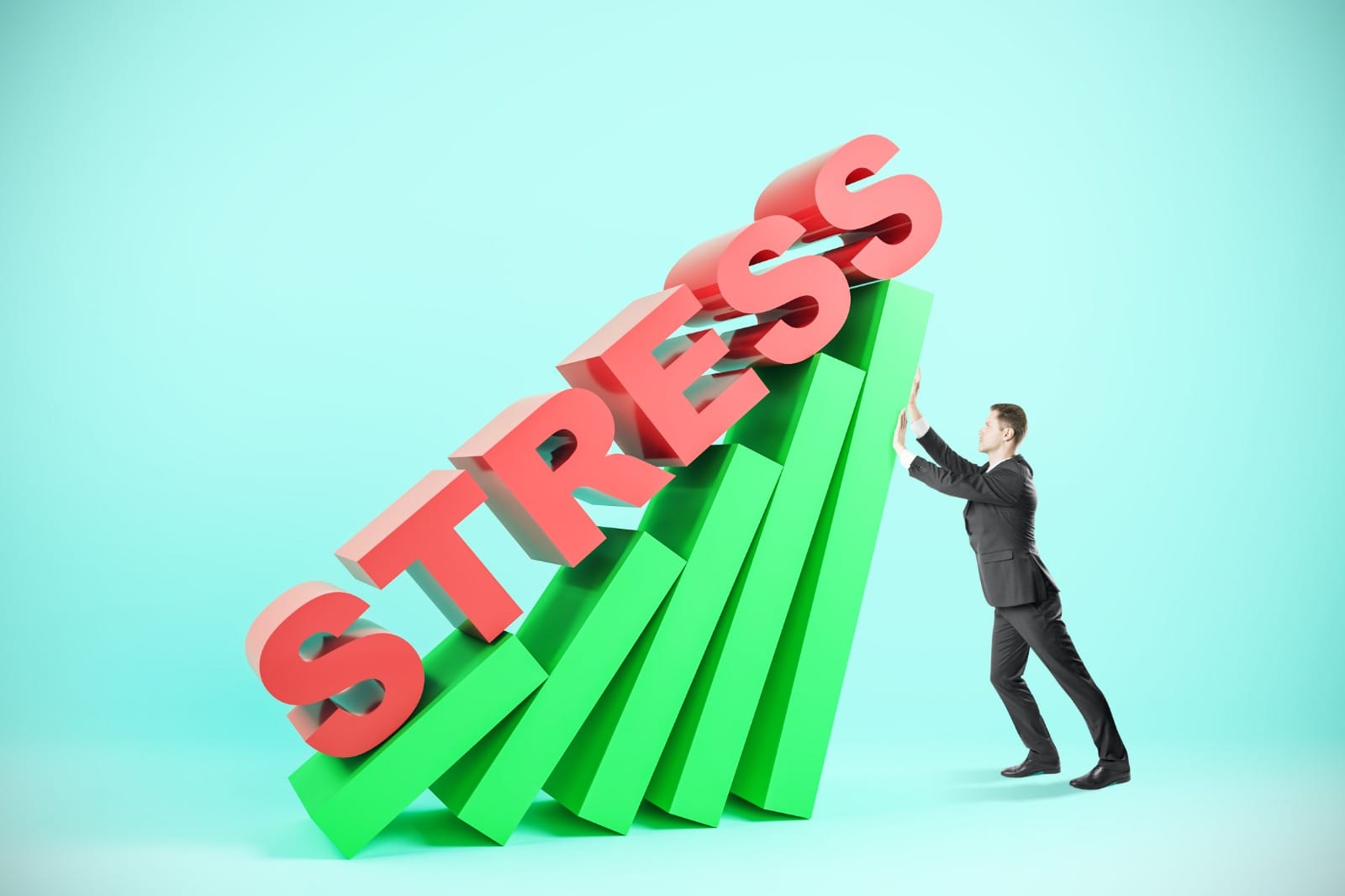
Not all stress is harmful. Short-term stress can sharpen focus, motivate action, and help us respond to challenges. Unnecessary stress, however, is chronic and repetitive, often rooted in habitual thought patterns and actions rather than reality.
Unnecessary stress commonly arises from:
- Unrealistic expectations
- Negative self-talk
- Imagined dangers (turning molehills into mountains)
- Overcommitment and fear of missing out (FOMO)
- Poor boundaries
- Perfectionism
- People-pleasing and emotional obligation
- Fear of failure
These stressors accumulate quietly over time and manifest as fatigue, irritability, muscle tension, disrupted sleep, digestive issues, and emotional burnout.
The good news is that these stressors are largely within our control. How can we address them? Read more to find out!
Unrealistic Expectations: The Silent Pressure

Unrealistic expectations are one of the most pervasive—and socially reinforced—forms of stress. We expect ourselves to be productive, patient, fit, emotionally regulated, socially available, and successful at all times.
These expectations often come from:
- Cultural norms around productivity
- Social media comparisons
- Internalized beliefs about worth and achievement
- Familial dynamics
When expectations consistently exceed capacity, stress becomes chronic.
A Practical Mindset Shift
Replace rigid expectations with adaptive standards:
- “What is reasonable today?”
- “What does ‘enough’ look like right now?”
- “What can I do well without depletion?”
- "What are my priorities?"
- "What can I let go?"
Additionally, integrating movement practices that emphasize pacing—such as walking, gentle strength training, or mobility work—teaches the nervous system that progress does not require force.
Negative Self-Talk: Stress That Lives Inside the Mind

Negative self-talk is one of the few stressors that follows us everywhere. It narrates our actions, judges our choices, and magnifies perceived failures.
Common examples include:
- “I should be further along.”
- “I’m not disciplined enough.”
- “I always mess this up.”
- "I am not strong enough."
This internal dialogue triggers the same stress response as an external threat.
Reframing Through Awareness
Movement integrated with awareness interrupts negative self-talk. When attention shifts to breath, posture, or rhythm, the mind has less space to spiral.
A simple practice:
- Move slowly for five minutes.
- Name sensations neutrally (tight, warm, light, heavy).
- When negative thoughts arise, acknowledge them without engagement.
- Repeat a mantra as you inhale and exhale.
This helps us build the skill of detachment instead of suppression.
Imagined Dangers: Making Mountains Out of Molehills

The nervous system cannot distinguish between real and imagined threats. When we catastrophize—anticipating worst-case outcomes—the body responds as if danger is imminent.
Imagined dangers often sound like:
- “If I say no, everything will fall apart.”
- “If I slow down, I’ll lose momentum.”
- “If I rest, I’m being lazy.”
- "If I don't do it myself, it won't get done correctly, if at all."
These thoughts keep the body in a constant state of vigilance (fight-or-flight). How can we relax while putting these burdens on ourselves?
Grounding Through Movement
Grounded movement—feet on the floor, slow transitions, controlled breathing—signals safety. Over time, the body learns that not every sensation, situation, or thought requires action.
Taking on Too Much: FOMO (Fear of Missing Out) and Overcommitment

Modern life rewards busyness. Saying yes is often equated with opportunity, ambition, and value. Yet chronic overcommitment fractures attention and erodes recovery.
FOMO-driven stress shows up as:
- Constant rushing
- Difficulty being present
- Resentment toward obligations
- Feeling “behind” even when busy
- Multi-tasking to "save time"
- Frequent mistakes
Social Media platforms foster a theme for comparison against others. This behavior is causing an increase in depression, especially amongst teens and young adults. The perception that others have something we don’t makes us falsely believe we need it to be happy. Also, the constant scrolling is addictive and time-consuming. This behavior is rooted in material consciousness.
Redefining Engagement Through Movement
Instead of asking, “Can I fit this in?” ask:
- “What will this cost me?”
- “What am I willing to let go of to say yes?”
- "How does this serve my higher purpose?"
Movement practices that emphasize quality over quantity reinforce this mindset. Short, High-Intensity Interval Training (HIIT) movement sessions and Making Strength Training Part of Your Weekly Routine done with intention and fewer repetitions will deliver more benefit than excessive volume. A quick, device-free walk can also provide a focus reset when a hectic schedule runs away with us.
Swami Mukundananda teaches us to shift our mindsets toward a spiritual consciousness, recognizing that we need inner wealth to be stress-free, but only contentment is required in the external world. In his video lecture on the Soul's True Purpose, Swami Mukundananda explains 3 Reasons Why Material Happiness Can Never Fulfill You.
Swami Mukundananda explains that happiness is derived from realizing and manifesting our true purpose.
Boundaries: The Foundation of Stress Reduction
Stress frequently arises from what we tolerate, not from what we do.
Lack of boundaries may include:
- Being constantly available
- Absorbing others’ emotions
- Taking responsibility for outcomes you cannot control
- Inability to ask for help
Boundaries are not barriers; they are containers for energy. The less-is-more mantra is a beneficial approach to our overall well-being.
Movement as a Boundary Practice
Your physical body already understands boundaries. Joint limits, muscle fatigue, and breath capacity all signal when enough is enough. Honoring these signals in movement builds confidence to honor boundaries elsewhere.
To support mental boundaries, create a "to-don't" list. Having a visual reminder of what we won't do can empower us to resist the FOMO response to every opportunity we encounter. Some examples are:
"I won't sacrifice adequate sleep to take on more work." "I won't skip all lunch breaks and burn myself out." "I won't waste time doom-scrolling on social media." "I won't allow distractions to derail my exercise routine."
Learn more about setting boundaries in Swami Mukundananda's lecture on 3 Tips to Manage Your time & Energy.
Learn how to set boundaries from Swami Mukundananda.
Perfectionism: When “Better” Becomes the Enemy of “Done”

Perfectionism disguises itself as high standards, but its impact is often paralysis, dissatisfaction, and chronic tension.
Perfectionism increases stress by:
- Delaying action (procrastination, i.e., I can't because conditions aren't "perfect")
- Amplifying mistakes (self-criticism)
- Preventing rest (exhaustion)
- Creating unrealistic expectations and fear (self-sabotage)
- Raising cortisol levels
Imperfect Movement as Medicine
Allowing movement to be imperfect—uneven, slow, exploratory—rewires the belief that worth is tied to our efforts instead of our performance. Progress comes from iteration, not constant analysis. If we can give ourselves grace and embrace our current abilities, we create space to grow without shame, compare less, and move forward with confidence instead of doubt.
People-Pleasing and Emotional Obligation

People-pleasing often stems from fear of conflict or rejection. Over time, it creates emotional blackmail: the belief that your well-being depends on others’ approval.
Signs include:
- Difficulty saying no
- Chronic guilt
- Exhaustion after social interactions
Detachment as a Skill
Detachment does not mean disengagement. It means releasing responsibility for others’ reactions.
Integrating detachment into movement by practicing solo —without mirrors, metrics, or comparison—helps reinforce internal validation.
Reevaluate Habits and Routines

Stress reduction requires structural change once we recognize the symptoms.
We can ask ourselves:
- Which habits increase pressure without meaningful benefit?
- Which routines are outdated?
- Where am I operating on autopilot?
- How is stress impacting my spiritual goals?
A Simple Stress Audit Exercise
- Write down five things currently causing stress.
- For each, write one realistic solution or alternative.
- Assign a near-term date to implement that change.
- Commit to revisiting the list in two weeks.
Taking action to change our own approaches will reinforce follow-through by improving clarity, mood, and self-trust.
The Power of Detachment

Detachment is the ability to participate without over-identifying. It is a cornerstone of sustainable well-being.
Detachment allows us to:
- Take feedback without collapsing
- Rest without guilt
- Adjust without self-criticism
- Discern what is truly valuable
Movement done with awareness teaches detachment at the somatic level. We learn to observe effort, release tension, and recover without judgment.
Example:
You attempt Tree Pose in yoga. You wobble or drop your foot. Instead of getting frustrated or forcing stability, you notice:
- the micro-adjustments in your foot
- the tightening in your jaw
- the impulse to “perform” the pose
You soften. You breathe. You allow the wobble.
You’re practicing detachment from:
- looking good
- being perfect
- controlling every movement
Your body learns: I can stay present without gripping for control.
To determine if we are truly detached, we can ask ourselves:
- When something doesn’t go my way, do I spiral—or can I stay steady?
- If this were taken away, would I still know who I am?
- Do I react impulsively, or can I pause before responding?
- Am I able to sit with uncertainty?
- Do I pursue goals with commitment but without desperation?
- If I don’t achieve this, will I still be okay?
- Does my peace depend on external validation?
- Can I let go of being “right”?
Call to Action: Move With Intention This Week

This week, choose one source of unnecessary stress and pair it with one intentional movement practice.
Examples:
- If overthinking is high, take a 10-minute slow walk, focusing on the breath.
- If boundaries are weak and overwork is present, stop movement the moment fatigue appears.
- If perfectionism dominates, move without tracking, timing, or correcting.
Small, consistent shifts compound. Stress reduction is about alignment with our values and higher purpose.
Activities
Some specific activities that can help reduce stress are:
- Meditation - Explore guided meditations from Swami Mukundananda.
- Yoga - Practice yoga online or in-person at Prem Yoga Wellness Center.
- Forest Bathing - Explore this ancient Japanese practice by immersing yourself in nature.
- Journaling - Daily reflection of our goals, struggles, and learnings builds a foundation towards progress and better stress management.
- Sleep - Inadequate sleep keeps your body in fight-or-flight mode, elevates cortisol production, and triggers the emotional center of your brain (amygdala) to react rather than the rational center (prefrontal cortex). Strive for 7 to 9 hours per day, and establish a daily sleep routine 1 to 2 hours before bedtime. Some suggestions are:
- Practice Yoga Nidra or light asanas.
- Practice cooling pranayamas such as Bhramari, Nadi Shodhana, or diaphragmatic breathing.
- Read a calming book.
- Take a warm bath.
- Dim the lights or turn them off.
- Discontinue screen use, including phones, televisions, and computers.
- Reduce noise levels.
- Set the temperature to a cooler temperature.
- Clear clutter from your sleep space.
- Eat a light snack or drink warm milk.
Final Thought
Removing unnecessary stress is not about avoiding challenges or eliminating them. It is about choosing where your energy goes. When we move with awareness, let go of unrealistic expectations, and detach from internal pressure, improvement becomes sustainable. Then we can move to restore ourselves from within.
Frequently Asked Questions
Is all stress bad?
No. Acute stress can be beneficial. The goal is to reduce chronic, unnecessary stress that offers no adaptive value.
Do I need a formal exercise program?
No. Conscious, consistent movement matters more than structure or intensity.
How long does it take to notice changes?
Many people notice shifts in mood and clarity within days. Nervous system patterns change with repetition over weeks.
What if I feel resistant to slowing down?
Resistance often signals a habit of overdrive. Begin with very short periods—two to five minutes.
Can this approach support physical health goals?
Yes. Reducing unnecessary stress improves recovery, hormonal balance, and long-term adherence.