
In today’s fast-paced world, most people feel that they do not have enough time. The demands of work, family, responsibilities, and constant distractions leave little room for inner growth. Yet, despite all external achievements, there often remains a subtle emptiness within: a longing for peace, clarity, and deeper meaning.
What if the solution was not complicated? What if just one hour a day could gradually transform your life?
This idea may seem simple, even too simple. But the wisdom of the scriptures and the teachings of great saints reveal that consistent daily spiritual practice, sadhana, has the power to reshape our thoughts, purify our emotions, and elevate our consciousness.
Let us explore how dedicating just one hour each day can become a life-changing discipline.
The Power of Daily Commitment


The scriptures traditionally recommend dedicating one-tenth of our time to God. Just as we are encouraged to offer a portion of our earnings in charity to purify wealth, we are also encouraged to offer time to purify the mind.
Out of 24 hours, this amounts to approximately two hours daily.
However, recognizing the demands of modern life, great teachers such as Swami Mukundananda have compassionately simplified this requirement. Even one hour a day, if practiced sincerely and consistently, can bring remarkable transformation.
But there is a crucial condition: It must not remain a mere intention.
Hearing about spiritual practice is not enough. Inspiration alone does not create change. What is required is a firm resolve: a commitment that, no matter what happens, this one hour will be honored every day.
This consistency is what turns effort into transformation.
Choosing the Right Time

One of the first practical questions is: When should we practice?
The early morning hours, known as Brahma Muhurta, approximately 1.5 to 2 hours before sunrise, are considered ideal. During this time:
- The environment is calm and quiet
- The mind is naturally more peaceful
- External distractions are minimal
Having just awakened from sleep, the mind is fresh and more receptive to spiritual focus.
However, life is not always predictable. Many people have responsibilities in the morning, such as family duties, work schedules, or other commitments. In such cases, flexibility is key.
You can:
- Practice in the evening
- Divide your time into two sessions
- Adapt the schedule to your lifestyle
What matters most is not the exact timing, but consistency and sincerity.
Preparing the Body and Mind
Another common concern is posture. Many people assume that spiritual practice requires complex yogic postures.
In reality, the requirement is simple:
Sit comfortably, but remain alert.
You may sit:
- Cross-legged on the floor
- In a simple meditative posture
- On a chair if needed
The purpose is not physical perfection, but mental focus. The body should support the mind, not distract it.
Step One: Cultivating Self-Awareness

Every meaningful transformation begins with awareness.
In your daily sadhana, begin by reflecting on your current state:
- What are your strengths?
- What are your weaknesses?
- Where are you heading in life?
This is not a moment for self-criticism, but for honest observation.
You may even maintain a journal or spiritual notebook. Writing down your reflections can help clarify your thoughts and track your progress over time.
Self-awareness acts as the foundation of growth. Without it, change remains superficial.
Step Two: Developing Dispassion (Vairagya)
The next step is to cultivate dispassion, or vairagya.
This does not mean renouncing the world externally, but understanding its temporary nature.
Remind yourself:
- “I am not this body; I am the soul.”
- “Worldly pleasures are temporary.”
- “True fulfillment lies in connecting with God.”
We often chase desires repeatedly, believing they will bring lasting happiness. Yet, even after fulfilling them, the inner longing remains.
By reflecting on this truth again and again, the mind gradually detaches from fleeting pleasures and turns toward higher fulfillment.
Step Three: Building a Relationship with God

Spirituality is not just philosophy, it is relationship.
Remind yourself:
- God is your eternal well-wisher
- He has been waiting for you with open arms
- He is your closest companion
This shift, from seeing God as distant to experiencing Him as personal, transforms devotion into something deeply meaningful.
The heart begins to soften. Prayer becomes natural. Connection becomes real.
Step Four: Reflecting on Wisdom
Even one powerful spiritual insight, deeply contemplated, can transform life.
Take a single idea, perhaps from the Bhagavad Gita or the teachings of saints, and reflect on it:
- What does it mean?
- How does it apply to your life?
- How can you live it daily?
This process of deep reflection helps convert knowledge into wisdom.
Step Five: Meditation (Roop Dhyan)
Meditation is the process of absorbing the mind in God.
You may visualize the divine form, such as Radha Krishna, and contemplate their qualities, pastimes, and presence.
You can also mentally serve God:
- Offer flowers
- Imagine being in divine company
- Participate in divine pastimes
This engages the mind creatively and devotionally, making meditation both joyful and effective.
Step Six: Contemplating Divine Qualities
The mind is naturally attracted to qualities.
When we see kindness, beauty, or sincerity in someone, we feel drawn to them. Similarly, God possesses infinite divine qualities.
Reflect on:
- His compassion
- His sweetness
- His love
- His wisdom
The more you contemplate these, the more the mind becomes attached to the Divine.
Step Seven: Cultivating Longing
One of the most powerful aspects of sadhana is developing a deep longing for God.
Ask yourself:
- “When will I experience Him?”
- “When will I feel His presence?”
This yearning, described by saints as param vyakulata, is the essence of devotion.
It purifies the heart and intensifies spiritual progress.
The Simplicity of Kirtan
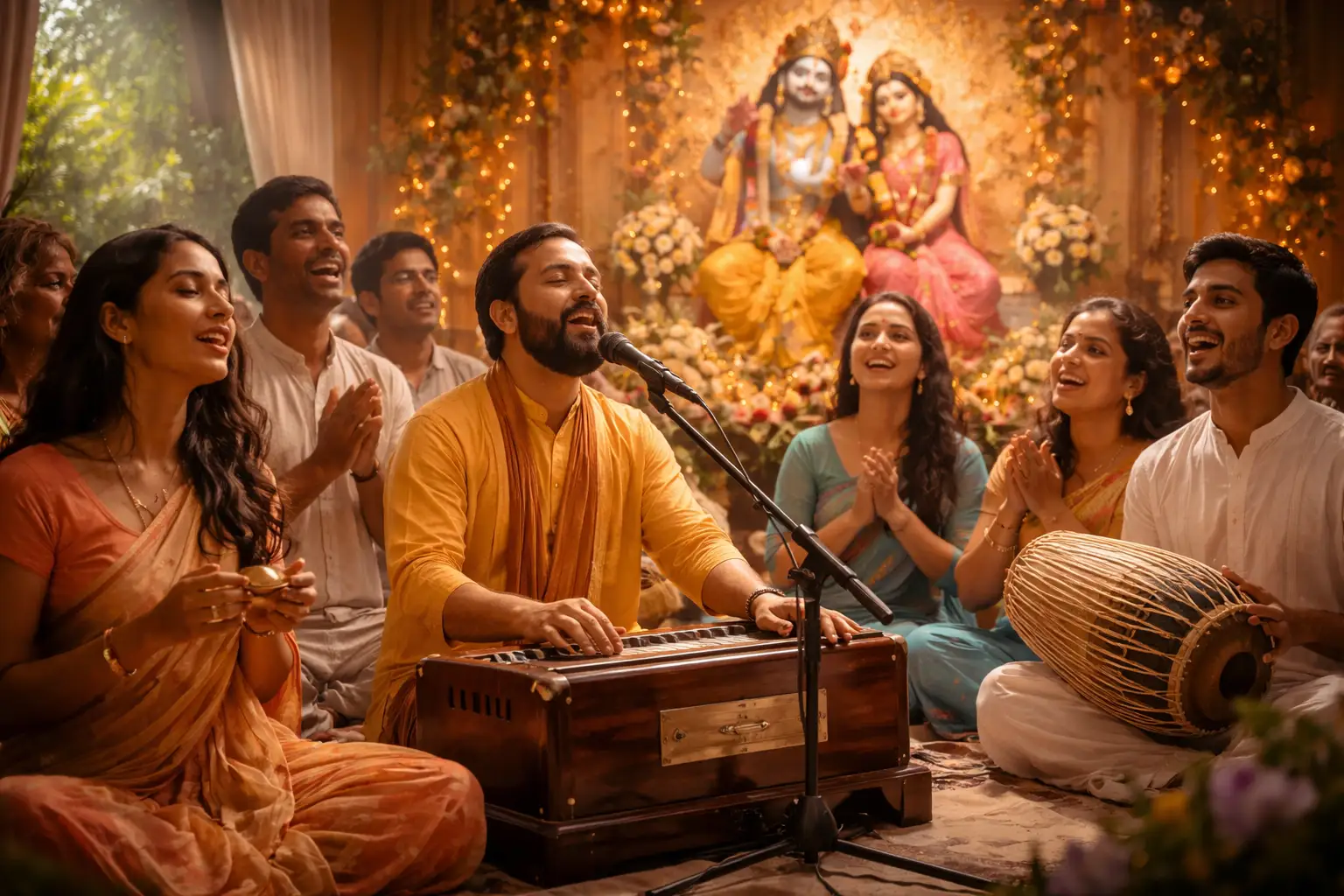
For beginners, all these practices may seem overwhelming.
The scriptures provide a beautiful solution: kirtan (devotional singing).
Through kirtan:
- The ears hear divine names
- The tongue chants
- The mind reflects
This combination of chanting, hearing, and remembering is called tridha bhakti.
It is especially recommended for this age.
Kirtan makes spiritual practice:
- Accessible
- Joyful
- Engaging
The Transformation Within
As you continue this daily practice, subtle changes begin to occur:
- The mind becomes calmer
- Negative thoughts reduce
- Clarity increases
- Inner peace grows
Over time, a deeper transformation unfolds.
A longing for God intensifies. The world begins to feel less fulfilling without divine connection.
This state, described by saints, is one of profound devotion, where even a moment feels like an eternity without God.
The Ultimate Outcome
As this longing deepens, it purifies the heart completely.
Eventually:
- Ignorance dissolves
- Past karmas are destroyed
- Divine love awakens
The seeker experiences God, not as an idea, but as a living reality.
Even while living in the world, such a person becomes liberated while still living and is called a jeevan mukta.
And ultimately, they enter the eternal divine pastimes.
Conclusion
One hour a day may seem small, but when practiced consistently with sincerity, it becomes a powerful force for transformation.
It is not about perfection. It is about persistence.
It is not about complexity. It is about connection.
In a world filled with distractions, this one hour becomes your anchor, a sacred space where you reconnect with your true self and with God.
And over time, that one hour begins to influence the remaining twenty-three.
Life changes; not suddenly, but deeply.
Summary
Dedicating one hour daily to spiritual practice can transform the mind, purify emotions, and deepen one’s connection with God. Through self-awareness, meditation, devotion, and reflection, this simple discipline gradually leads to inner peace, clarity, and ultimately divine realization.
FAQs
1. Is one hour of sadhana really enough?
Yes, if practiced consistently and sincerely, one hour daily can bring significant transformation over time.
2. What is the best time for spiritual practice?
Early morning (Brahma Muhurta) is ideal, but any consistent time that suits your routine is effective.
3. Do I need to follow all practices mentioned?
No, you can start with a few and gradually include others based on comfort and interest.
4. Can beginners practice this easily?
Yes, especially by starting with simple practices like kirtan and gradually deepening the routine.
5. What is the ultimate goal of this practice?
The goal is to develop selfless, exclusive and continuous love for God.
Call to Action: Begin Your Transformation Today
Reading about spiritual growth is inspiring, but real transformation begins with daily practice.
If you are ready to take that step, the best way to begin is with a structured, guided approach that helps you stay consistent and motivated.
The Start Your Daily Sadhana Journey platform offers exactly that—a complete system designed to help you dedicate just one hour a day to meaningful spiritual progress.
With Daily Sadhana, you can:
- Learn profound spiritual wisdom through guided video lessons
- Practice meditation and reflection step-by-step
- Stay consistent with structured daily sessions
- Grow at your own pace, anytime and anywhere
Each lesson is thoughtfully designed to combine knowledge, meditation, and practical application—making it easier to turn intention into transformation.
If you have ever felt:
- A desire for inner peace
- A longing for deeper meaning
- Or a pull toward spiritual growth
then this is your opportunity.
Just one hour a day can begin to reshape your mind, your habits, and ultimately your life.
Start today and take the first step toward becoming the person you are meant to be.