
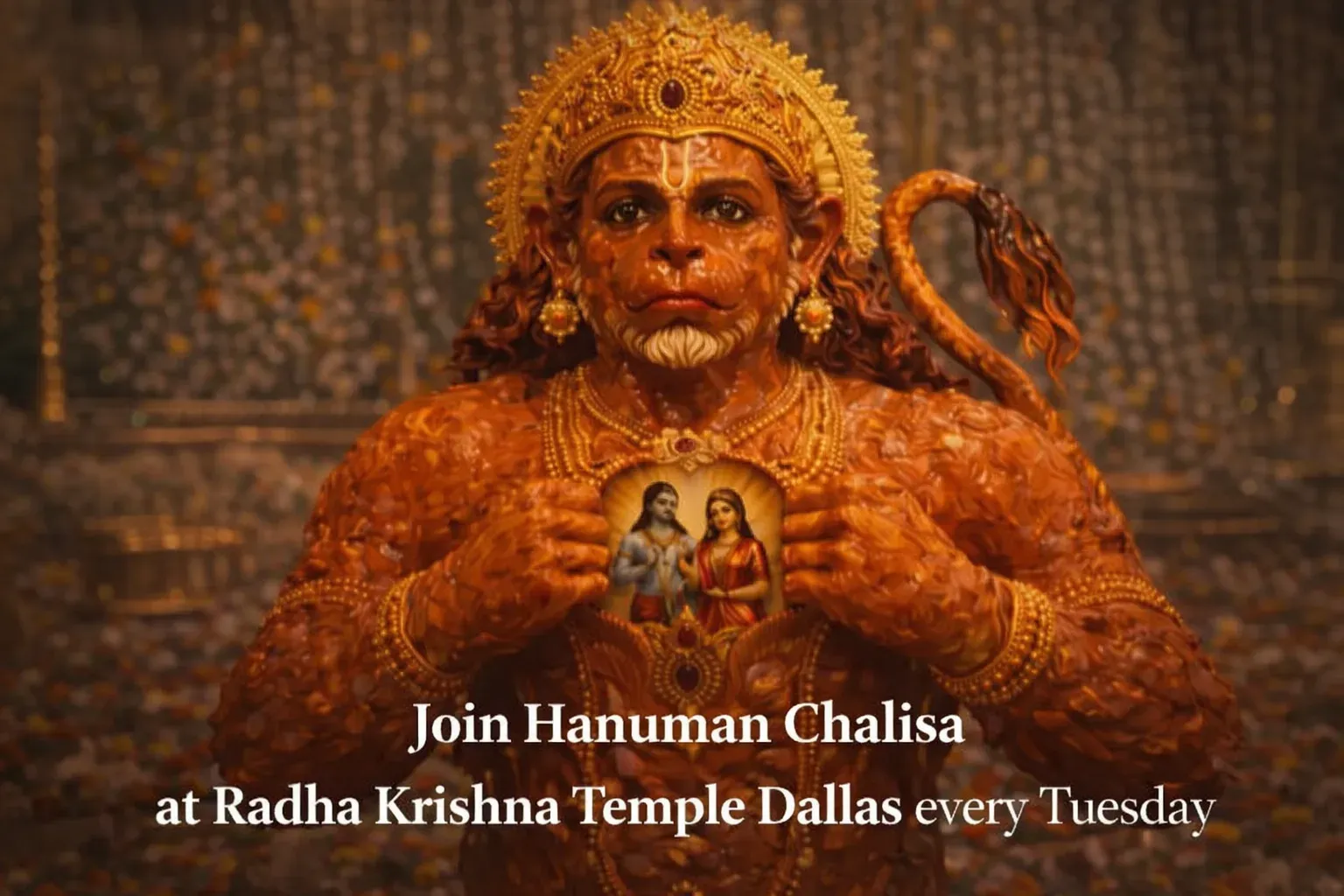
A young professional once approached a spiritual teacher feeling overwhelmed by life. His career felt uncertain, relationships were strained, and anxiety followed him everywhere. He had begun reciting the Hanuman Chalisa, but he admitted that he rushed through it without understanding the meaning. He asked, “Does this prayer really change anything?”
The teacher smiled and asked him to focus only on the last ten verses for forty days. “These verses are not just praise. They are a roadmap for inner transformation. Reflect on one verse each day and apply it.”
The young man followed the advice. When he read that Hanuman grants inner strength, he began facing his fears. When he read about remembering Ram, he practiced mindful remembrance during work. When he read that troubles dissolve through devotion, he replaced worry with prayer. Slowly his anxiety reduced. His confidence increased. His relationships softened. Most importantly, he felt supported from within.
After forty days, he returned and said, “My problems did not disappear overnight, but I am no longer the same person facing them. I feel calmer, stronger, and guided.”
This is the transformative power of verses 31 to 40 of the Hanuman Chalisa. These concluding verses move from devotion to transformation, from prayer to realization, and from fear to surrender. Swami Mukundananda Ji often teaches that true spirituality is not escape from life but empowerment within life. These verses embody that teaching. They show how devotion becomes strength, remembrance becomes peace, and surrender becomes freedom.
As we explore each verse, reflect not only intellectually but personally. Allow the words to shape your thoughts, emotions, and actions. The Hanuman Chalisa then becomes not just a hymn, but a living guide for daily life.
The Hanuman Chalisa is a timeless devotional hymn composed by Goswami Tulsidas. Each verse carries layers of devotion, philosophy, and practical guidance for daily living. Verses 31 to 40 move toward the culmination of the Chalisa, emphasizing surrender, protection, grace, and the transformative power of devotion to Lord Hanuman. These verses also highlight the relationship between devotion, humility, and inner strength.
Swami Mukundananda Ji often explains that devotion is not merely emotional expression but a practical science of transforming consciousness. When we reflect deeply on these verses and apply them in our lives, they become powerful tools for inner growth, resilience, and spiritual awakening.
Below is a detailed exploration of verses 31 to 40 with meaning, expanded spiritual significance, and practical reflection for daily life.
Chaupai # 31
अष्ट सिद्धि नौ निधि के दाता, अस वर दीन जानकी माता॥३१॥
Ashta siddhi nau nidhi ke data, as var deen janaki mata.
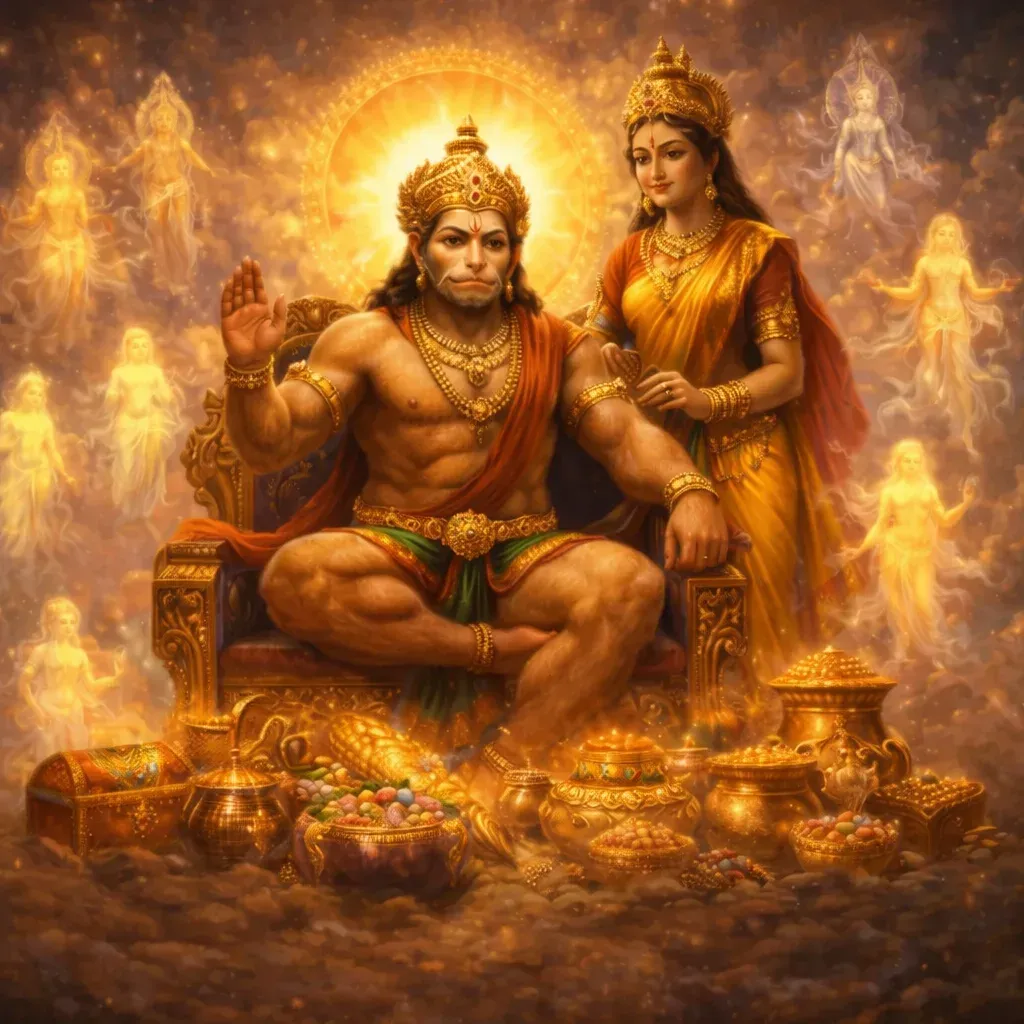
Meaning: You have been blessed by Mother Janaki to become the bestower of boons to the deserving ones, wherein you can grant the siddhis (i.e., eight different powers) and the nidhis (i.e., nine different kinds of treasures).
Spiritual Significance
This verse speaks about Hanuman as the giver of both spiritual and material prosperity. The eight siddhis represent mystical perfections such as becoming small, becoming large, and mastery over nature. The nine nidhi symbolize forms of wealth. On a deeper level, these siddhis and treasures represent inner mastery. They signify control over mind, senses, ego, and worldly desires.
Swami Mukundananda Ji explains that true wealth is not external accumulation but internal empowerment. When devotion to God deepens, the mind gains clarity, emotions become purified, and the intellect becomes steady. These are the real siddhis. The devotee gradually becomes fearless, detached, and compassionate. Such transformation is far greater than supernatural abilities.
Hanuman did not seek powers for himself. He used everything in service of Lord Ram. This teaches that spiritual powers are safe only in the hands of the humble. When ego is absent, power becomes service. When ego is present, power becomes bondage.
Reflection
Do I seek spiritual growth for inner transformation or for recognition? Am I using my abilities to serve others? This verse invites us to evaluate our intentions. When devotion becomes pure, life naturally aligns with higher purpose.
Application in Daily Life
Practice using your skills for service. Offer your talents, knowledge, and time for helping others. Develop inner discipline through meditation and prayer. When humility guides action, blessings multiply naturally.
Chaupai # 32
राम रसायन तुम्हरे पासा, सदा रहो रघुपति के दासा॥३२॥
Ram rasayan tumhare paasa sada raho Raghupati ke daasa.
Meaning: You have the essence of Ram bhakti, may you always remain the humble and devoted servant of Raghupati.
Spiritual Significance
Ram rasayan means the nectar of devotion to Lord Ram. Hanuman lives in constant remembrance of God. This remembrance transforms his consciousness. His identity is rooted in service, not ego.
Swami Mukundananda Ji emphasizes that the mind becomes like what it repeatedly remembers. When we constantly think about God, our thoughts become pure, our actions become selfless, and our emotions become elevated. Hanuman represents the ideal devotee who never forgets the Divine even while performing intense action.
Being a servant of God does not mean weakness. It means surrender of ego. Hanuman demonstrated extraordinary strength, courage, and intelligence. Yet he always identified himself as a servant. This humility protected him from pride.
Reflection
What is my mental focus throughout the day? Do I remember God only during prayer or throughout my actions? This verse encourages continuous remembrance.
Application in Daily Life
Chant the name of Ram or any chosen form of God while working. Offer your daily tasks as service. Develop the habit of silent remembrance. Gradually this transforms ordinary life into spiritual practice.
Chaupai # 33
तुम्हरे भजन राम को पावै, जनम जनम के दुख बिसरावै॥३३॥
Tumhare bhajan ram ko paave, janam janam ke dukh bisraave.
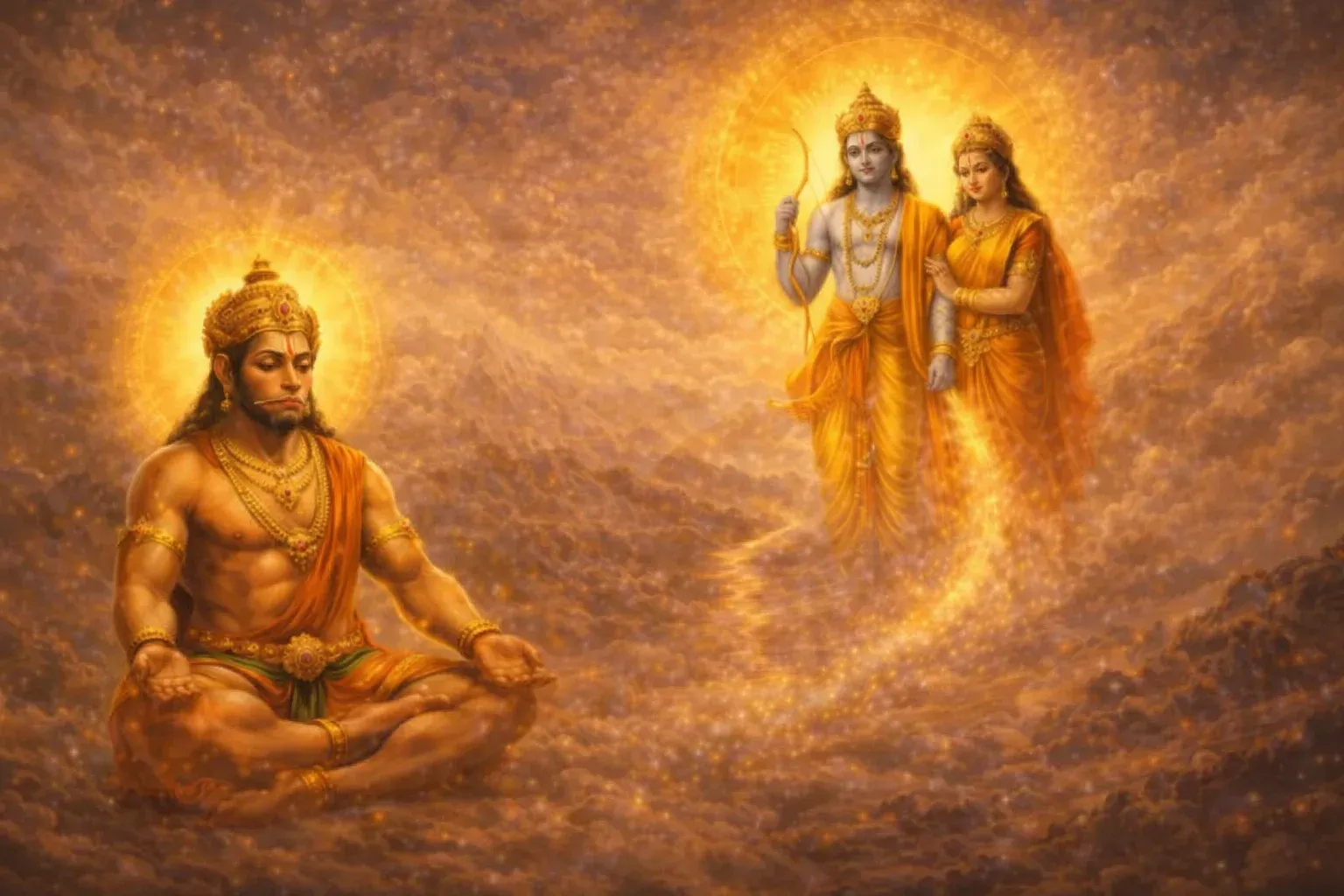
Meaning: When one sings your praise and chants your name, he gets to meet Lord Ram and finds relief from the sorrows of endless lifetimes.
Spiritual Significance
Hanuman is the bridge between the devotee and Lord Ram. Worship of Hanuman leads to devotion to Ram because Hanuman embodies pure love for God. When we meditate on Hanuman’s qualities, we naturally develop devotion, courage, and surrender.
Swami Mukundananda Ji explains that suffering arises from ignorance of our true nature. Devotion purifies the mind and removes ignorance. As awareness deepens, inner peace replaces anxiety. This is the removal of sorrow mentioned in this verse.
Hanuman bhakti cultivates faith and strength. When faith increases, fear decreases. When surrender increases, worry decreases. When love for God increases, attachment to temporary things decreases. This inner shift dissolves accumulated suffering.
Reflection
Am I trying to solve life only externally, or am I cultivating inner devotion? This verse reminds us that spiritual growth removes the root cause of sorrow.
Application in Daily Life
Read Hanuman Chalisa regularly. Reflect on Hanuman’s courage and humility. When facing difficulties, pray for strength and clarity. Over time, emotional resilience develops.
Chaupai # 34
अंतकाल रघुवरपुर जाई, जहाँ जन्म हरिभक्त कहाई॥३४॥
Antkaal Raghuvar pur jaayi, jahan janam Hari-bhakt kahayi.
Meaning: By your grace, one will go to the immortal abode of Lord Ram after death and remain devoted to Him.
Spiritual Significance
This verse emphasizes the importance of consciousness at the time of death. Our final thought reflects our lifelong habits. If we cultivate devotion, remembrance of God naturally arises at the end.
Swami Mukundananda Ji teaches that spiritual practice prepares us for this ultimate moment. Life is a training ground for consciousness. The mind moves toward what it repeatedly contemplates. A life of devotion leads to divine remembrance.
Going to the abode of Ram symbolizes liberation. Even if rebirth occurs, the soul continues on the spiritual path. Devotion never goes to waste. Every sincere effort becomes part of spiritual progress.
Reflection
What habits am I cultivating today? Are they leading me toward peace or restlessness? This verse encourages long term spiritual focus.
Application in Daily Life
Develop daily spiritual routines. Meditation, chanting, and study gradually shape consciousness. These practices create inner stability that carries through life.
Chaupai # 35
और देवता चित्त ना धरई, हनुमत सेई सर्व सुख करई॥३५॥
Aur devta chitta na dharai, Hanumat sei sarva sukh karai.
Meaning: There is no need to serve any other deity or god. Service to Lord Hanuman provides all forms of happiness and bliss.
Spiritual Significance
This verse highlights one pointed devotion. It does not deny other forms of God. Instead it teaches concentration. When devotion is scattered, the mind remains distracted. When devotion is focused, it becomes powerful.
Swami Mukundananda Ji explains that the mind achieves depth through focus. Just as sunlight becomes powerful when concentrated, devotion becomes transformative when directed steadily. Hanuman worship naturally leads to devotion to Ram and ultimately to God.
One pointed devotion simplifies spiritual practice. It removes confusion and strengthens emotional connection. The heart becomes steady and faith deepens.
Reflection
Is my spiritual practice consistent or scattered? Do I change paths frequently? This verse encourages stability.
Application in Daily Life
Choose a form of devotion and remain steady. Develop consistency in prayer. Build emotional connection with the Divine. Depth arises from regular practice.
Chaupai # 36
संकट कटै मिटै सब पीरा, जो सुमिरै हनुमत बलबीरा॥३६॥
Sankat kate, mite sab peera, jo sumire Hanumat balbeera.
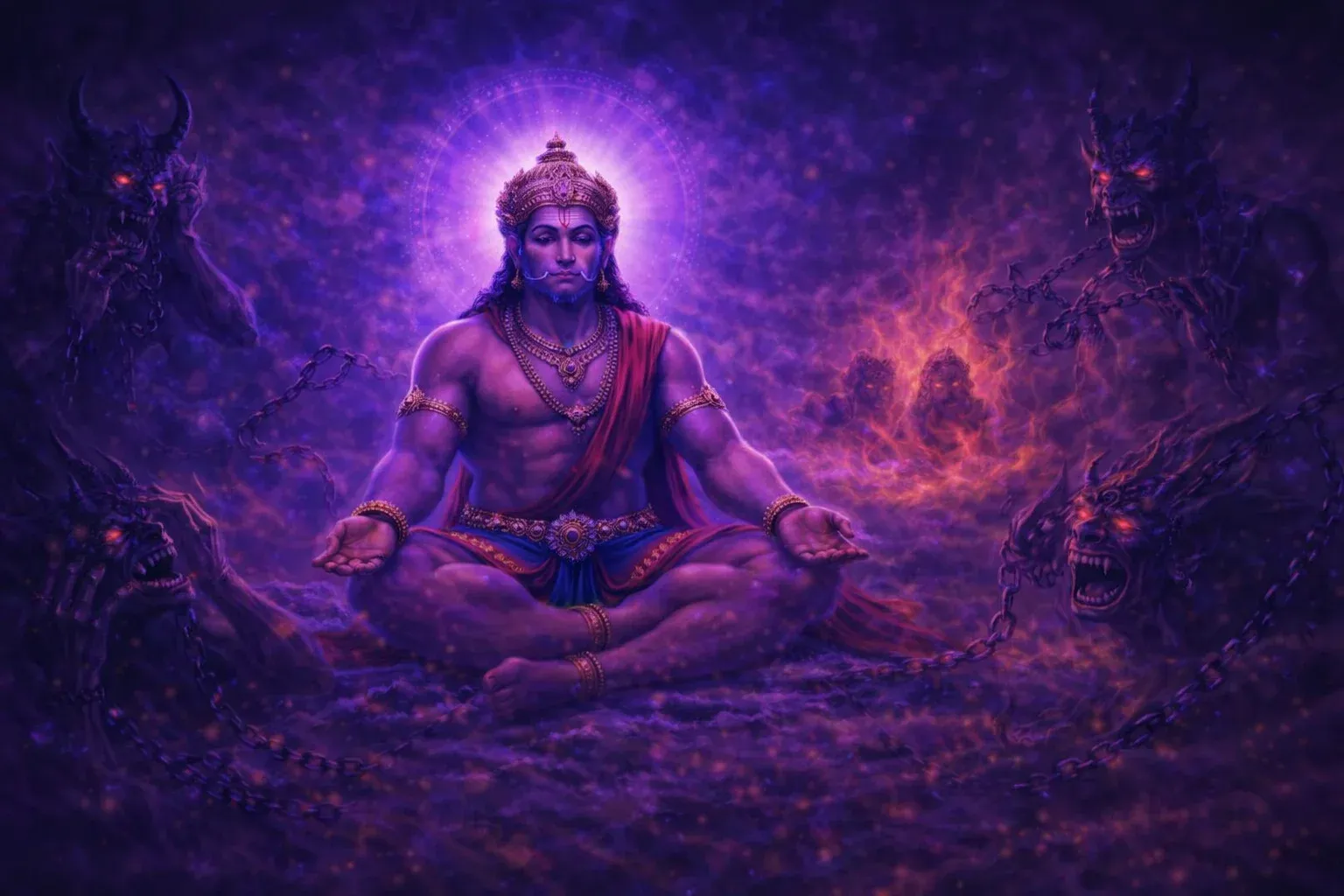
Meaning: All troubles cease and the pain ends for the one who remembers the powerful Lord Hanuman
Spiritual Significance
Hanuman represents courage, wisdom, and divine protection. Remembering him activates these qualities within us. Fear reduces, clarity increases, and strength emerges.
Swami Mukundananda Ji often explains that remembrance shifts mental state. When we remember strength, we feel strong. When we remember courage, we feel courageous. Hanuman symbolizes fearless devotion. His remembrance transforms anxiety into confidence.
This verse also highlights divine grace. Devotion invites subtle protection. The devotee feels guided, supported, and strengthened.
Reflection
How do I respond to challenges? With fear or faith? This verse invites us to replace worry with remembrance.
Application in Daily Life
When facing stress, chant Hanuman Chalisa. Visualize Hanuman’s strength. Breathe deeply and surrender worries. Gradually resilience dev
Chaupai # 37
जै जै जै हनुमान गुसाईँ, कृपा करहु गुरु देव की नाई॥३७॥
Jai jai jai Hanuman gosain, kripa karahu Gurudev ki naai.
Meaning: O Lord Hanuman! Praises and glory to you O mighty Lord, please bestow your grace as our supreme Guru.
Spiritual Significance
Hanuman is invoked as both deity and guru. A guru guides the seeker toward truth. Hanuman guides devotees toward devotion, humility, and service.
Swami Mukundananda Ji emphasizes the importance of grace. Effort is necessary but grace completes the journey. When we pray sincerely, we open ourselves to divine guidance.
Hanuman as guru symbolizes inner wisdom. When we surrender ego, intuition strengthens. Decisions become clearer and life aligns with dharma.
Reflection
Am I open to guidance? Do I seek divine help with humility? This verse teaches surrender.
Application in Daily Life
Begin the day with prayer for guidance. Ask for clarity before important decisions. Cultivate humility and receptivity.
Chaupai # 38
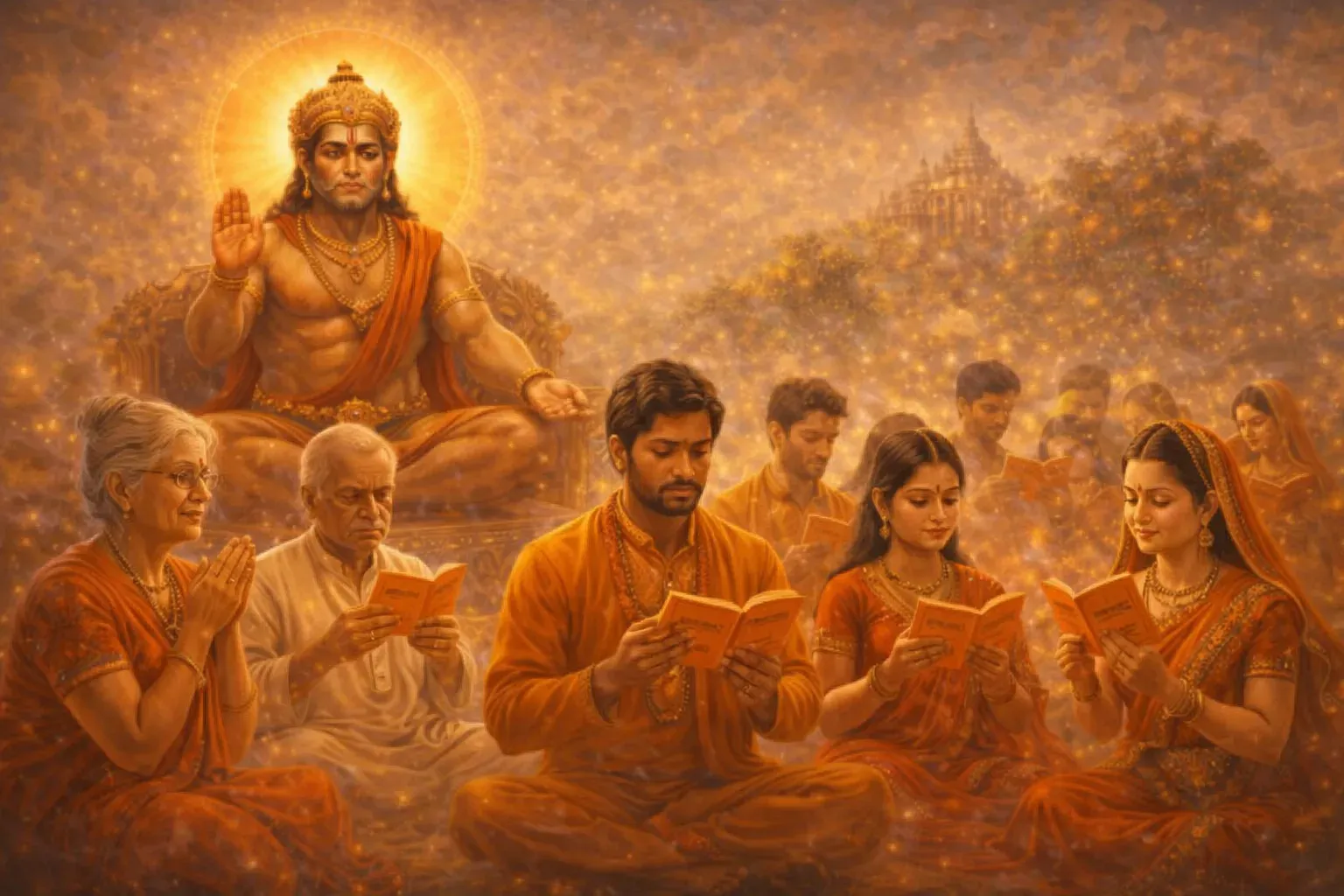
जो सत बार पाठ कर कोई, छूटहि बंदि महा सुख होई॥३८॥
Jo sat baar paath kar koi, chutahi bandhi maha sukh hoyi.
Meaning: One who recites this chalisa a hundred times, is released from all bondages and will attain great bliss.
Spiritual Significance
Repetition strengthens mental impressions. Regular recitation purifies the mind and deepens devotion. Bondage refers to negative habits, fears, and attachments.
Swami Mukundananda Ji explains that repetition rewires the mind. Positive thoughts gradually replace negative patterns. Chanting creates emotional upliftment and mental clarity.
Freedom from bondage is inner freedom. The devotee becomes less reactive and more peaceful. Happiness arises naturally.
Reflection
What patterns bind me? Fear, anger, or insecurity? This verse encourages disciplined repetition.
Application in Daily Life
Commit to regular chanting. Even one recitation daily creates transformation. Over time, the mind becomes calmer and more joyful.
Chaupai # 39
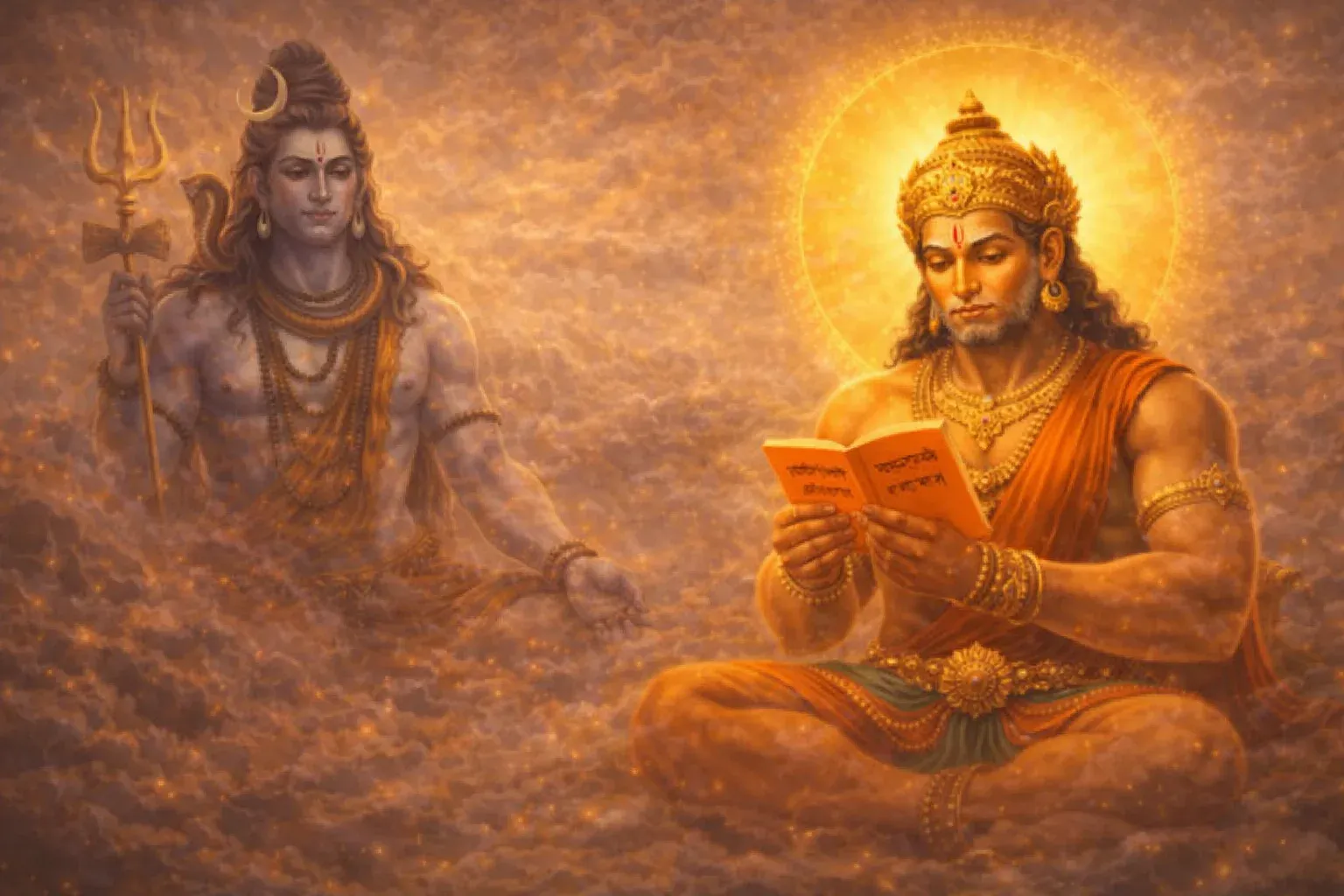
जो यह पढ़े हनुमान चालीसा, होय सिद्ध साखी गौरीसा॥३९॥
Jo yeh padhe Hanuman Chalisa, hoye siddhi saakhi gaurisa.
Meaning: One who reads and recites this Hanuman Chalisa, will be able to accomplish all his work. Lord shiva, himself, is the witness to this prophesy.
Spiritual Significance
This verse highlights the authority of Lord Shiva, who is considered the witness. Hanuman himself is an incarnation of Shiva. This establishes the sacredness of the Chalisa.
Swami Mukundananda Ji teaches that devotion combined with faith produces transformation. When we recite with sincerity, the heart opens and consciousness elevates.
Spiritual perfection does not mean miracles. It means inner balance, devotion, and wisdom. These qualities emerge through consistent practice.
Reflection
Do I recite mechanically or with devotion? This verse encourages mindful chanting.
Application in Daily Life
Recite slowly with meaning. Reflect on each line. Allow the mind to absorb the message.
Chaupai #40
तुलसीदास सदा हरि चेरा, कीजै नाथ हृदय मह डेरा॥४०॥
Tulsidas sada Hari chera, keeje nath hriday mah dera.
Meaning: Says Shree Tulsidas, “O Lord Hanuman, may I always remain a servant, a devotee to Lord Shree Ram, and may you always reside in my heart.
Spiritual Significance
The Chalisa concludes with humility. Tulsidas identifies as a servant and asks Hanuman to dwell in his heart. This symbolizes constant divine presence.
Swami Mukundananda Ji explains that the ultimate goal of devotion is to make God the center of consciousness. When divine remembrance fills the heart, life becomes peaceful and purposeful.
Inviting Hanuman into the heart means cultivating his qualities. Courage, humility, devotion, and service become natural. The heart transforms into a sacred space.
Reflection
What fills my heart daily? Anxiety or devotion? This verse invites inner transformation.
Application in Daily Life
End each day with prayer. Invite divine presence into the heart. Practice gratitude and surrender. Gradually the heart becomes peaceful.
Final Doha
Pavan tanay sankat haran, mangal murti roop Ram Lakhan Sita sahit, hriday basahu sur bhoop
Meaning
O son of the wind, remover of difficulties, embodiment of auspiciousness, please reside in my heart along with Lord Ram, Lakshman, and Mother Sita.
Spiritual Significance
The concluding doha of the Hanuman Chalisa is a heartfelt prayer. The devotee invokes Hanuman as Pavan Tanay, the son of the wind, symbolizing life force, movement, and inner vitality. Hanuman is described as sankat haran, the remover of obstacles. This refers not only to external challenges but also to inner struggles such as fear, doubt, anger, and attachment.
Swami Mukundananda Ji explains that true auspiciousness arises when divine consciousness fills the heart. The phrase mangal murti roop highlights Hanuman as the embodiment of positivity, courage, and devotion. When we invite these qualities within, our thinking changes, our reactions soften, and our life direction becomes clearer.
The prayer then expands to include Lord Ram, Lakshman, and Mother Sita. This is deeply symbolic. Ram represents righteousness and divine love. Sita represents compassion and purity. Lakshman represents discipline and dedication. Hanuman represents service and devotion. Inviting all of them into the heart means cultivating a complete spiritual personality.
Reflection
What qualities live in my heart today. Are they fear, stress, and restlessness, or devotion, courage, and peace. This doha invites conscious inner cultivation. It reminds us that we become what we repeatedly invite into our awareness.
Application in Daily Life
End your daily prayer by reciting this doha slowly. Visualize Hanuman in your heart. Imagine Ram guiding your actions, Sita softening your emotions, and Lakshman strengthening your discipline. Carry this inner presence throughout the day. This simple practice gradually transforms mindset and behavior.
Conclusion
Verses 31 to 40 of the Hanuman Chalisa summarize the path of devotion. They emphasize humility, remembrance, protection, grace, and transformation. Swami Mukundananda Ji’s teachings remind us that devotion is practical spirituality. It reshapes thinking, strengthens resilience, and deepens inner peace.
These final verses gradually move the seeker inward. They begin with divine blessings, move toward remembrance, emphasize protection, encourage repetition, and end with complete surrender. This progression mirrors the spiritual journey. First we seek help, then we develop faith, then we experience transformation, and finally we rest in devotion.
When we internalize these teachings, Hanuman becomes more than a heroic figure. He becomes a living inspiration. His courage guides us during fear. His humility protects us from pride. His devotion teaches us surrender. His service inspires selflessness. These qualities gradually reshape our personality.
The real fruit of the Hanuman Chalisa is inner transformation. Anxiety begins to reduce. Faith begins to increase. The mind becomes steady. The heart becomes softer. Life becomes purposeful. These subtle shifts are the signs of spiritual progress.
Guided Conclusion Meditation: Inviting Hanuman Into the Heart
Sit comfortably in a quiet place. Keep your spine relaxed but upright. Gently close your eyes. Take a slow deep breath. Inhale peace and exhale tension. Allow your breathing to become calm and natural.
Now bring your attention to your heart center. Imagine a soft golden light glowing within. This light represents devotion, courage, and divine protection.
Silently repeat in your mind: “Hanuman, please reside in my heart.”
Visualize Lord Hanuman standing with compassion and strength. See his calm expression. Feel his protective presence. Imagine him placing his hand in blessing over you.
Now reflect on the qualities of Hanuman.
Feel courage entering your mind. Feel humility entering your heart. Feel devotion awakening within. Feel strength replacing fear.
Silently repeat the intention: May my thoughts be guided by wisdom. May my actions be guided by service. May my heart be filled with devotion. May my life reflect courage and compassion.
Take another deep breath. Allow gratitude to arise. Offer your worries into the hands of Hanuman. Imagine them dissolving in divine light.
Rest in silence for a few moments. Experience calmness. Experience support. Experience inner strength.
When you are ready, gently open your eyes. Carry this feeling of protection and devotion into your daily life.
By reflecting on these final verses regularly and ending with this meditation, the teachings of the Hanuman Chalisa begin to live within us. Devotion becomes natural, courage becomes steady, and the heart becomes a sacred space where Hanuman forever resides.
✨ Call to Action: Invite Hanuman Into Your Daily Life ✨
🌺 If this reflection on the Hanuman Chalisa touched your heart, take a moment today to turn inspiration into practice. Read one section slowly, reflect on its meaning, and allow the wisdom to guide your thoughts and actions.
🕯️ Begin with a simple step. Recite the final doha with devotion. Close your eyes and invite Hanuman, Ram, Sita, and Lakshman to reside in your heart. Let courage replace fear. Let faith replace worry. Let devotion replace restlessness.
📿 Make this a daily ritual • Read with meaning • Reflect in silence • Apply one teaching each day • End with gratitude
🤍 Share this article with family and friends who may benefit from strength and spiritual clarity. Devotion grows beautifully when practiced together.
🔖 Bookmark this page and return to it during your prayer or meditation. Allow these teachings to become part of your inner journey.
🙏 May Lord Hanuman bless you with strength in challenges, peace in the mind, devotion in the heart, and guidance on the spiritual path.
FAQs
1. What do the final verses of the Hanuman Chalisa teach?
They emphasize devotion, surrender, divine protection, and inner transformation through remembrance of Hanuman and Lord Ram.
2. Can reciting the Hanuman Chalisa remove difficulties?
Yes. Regular recitation strengthens faith, reduces fear, and helps develop clarity and resilience, which naturally helps overcome challenges.
3. Why is Hanuman called the remover of obstacles?
Hanuman represents courage, wisdom, and devotion. Remembering him helps remove inner obstacles such as doubt, fear, and negativity.
4. How often should one recite the Hanuman Chalisa?
Daily recitation is recommended. Even one sincere recitation with reflection can gradually bring mental peace and spiritual strength.
5. What is the significance of the final Doha?
It is a prayer inviting Hanuman along with Ram, Sita, and Lakshman to reside in the heart, symbolizing complete spiritual transformation.
