
Introduction: The Silent Sculptor of Destiny
Our lives are shaped not by the grand resolutions we make once a year, but by the small, consistent choices we make every day. Habits—those invisible patterns of behavior—quietly determine the direction of our destiny. In the words of Swami Mukundananda:
“We first make our habits, and then our habits make us.”
In today’s fast-paced world, everyone seeks success—be it physical health, professional excellence, or spiritual elevation. Yet, most people stumble not because they lack knowledge, but because they fail to sustain the right habits. The science of habit formation offers profound insights into how we can transform fleeting intentions into lasting spiritual practices.
While neuroscience reveals how habits are wired in the brain, the Bhagavad Gita reveals how divine habits can elevate our consciousness and lead us toward God-realization. Let us explore how these two perspectives merge beautifully in the journey of inner growth.
The Psychology and Neuroscience Behind Habit Formation

Modern science has made remarkable progress in understanding habits. Researchers define a habit as a behavior that becomes automatic through repetition. Neuroscientific studies reveal that habits are encoded in a brain region called the basal ganglia, which stores routine actions and responses.
According to a landmark study by Phillippa Lally at University College London in 2009, it takes an average of 66 days to form a new habit—depending on complexity and consistency. The more regularly you repeat a behavior in the same context, the more your brain associates that cue with the desired response.
Charles Duhigg, in his book The Power of Habit (2012), described the “habit loop” consisting of three stages:
- Cue – The trigger that initiates the behavior
- Routine – The action itself
- Reward – The sense of satisfaction reinforcing the loop
Over time, this neurological loop becomes automatic, allowing behaviors to unfold without conscious effort.
However, science also warns against “goal juggling.” Trying to change too many habits simultaneously overwhelms our prefrontal cortex, the brain’s decision-making center. Studies show that willpower is a limited resource—it gets depleted when spread too thin.
As it is said: “Too much change = no change.” The key lies in focusing on one major goal at a time, conserving willpower, and channeling it toward sustained transformation.
The Spiritual Science of Habit Formation

Centuries before modern psychology discovered neural pathways, the sages of India understood the law of repetition. The Bhagavad Gita teaches that actions performed repeatedly shape our nature (svabhava), which in turn governs our destiny.
In Bhagavad Gita 6.26, Lord Krishna instructs:
yato yato niścarati manaś cañcalam asthiramtatas tato niyamyaitad ātmany eva vaśaṁ nayet
“From wherever the mind wanders, due to its flickering and unsteady nature, one should bring it back under the control of the self.”
This verse beautifully parallels the modern understanding of habit retraining. The restless mind, accustomed to old patterns, must be gently guided back—again and again—until discipline replaces distraction.
Another verse, Bhagavad Gita 6.35, further strengthens this idea:
asaṁśayaṁ mahā-bāho mano durnigrahaṁ calamabhyāsena tu kaunteya vairāgyeṇa ca gṛhyate
“The mind is restless and difficult to control, but it can be conquered through practice and detachment.”
Here, abhyāsa (repeated practice) is none other than the spiritual equivalent of habit formation. What neuroscience calls “neuroplasticity,” the Gita calls “abhyāsa.”
Through consistent repetition of divine thoughts and actions, we rewire our mental circuitry from worldliness toward godliness.
One Goal at a Time: The Power of Focused Willpower

Swami Mukundananda has said, “Do not dilute your willpower. Focus it like a laser on one noble pursuit.”
This principle echoes the Pareto Rule in productivity science: focusing on the few vital actions that yield maximum results. Spiritual seekers new to the path often try to balance too many goals—reading scriptures, meditating, serving, chanting—all at once. While all are noble, the science of habit formation teaches that mastery comes from focus.
Just as sunlight must be concentrated through a magnifying glass to ignite a flame, your willpower must be concentrated on one habit until it becomes second nature.
Start with one major spiritual goal to focus on at first:
- Meditate daily for 10 minutes
- Chant one round of Kirtan every evening
- Attend weekly Sunday Satsang without fail
Once one habit is established, it becomes the foundation upon which others can be built effortlessly.
The Small Victory Theory: Baby Steps to Big Change
Behavioral psychologists refer to this as the “Small Victory Theory”—the idea that success builds upon itself. Every small success creates a dopamine reward in the brain, motivating you to continue the pattern.
This is called “Baby Steps”—breaking the ultimate goal into small, achievable parts.
For example:
- Now: Spend 5 minutes daily in Roop Dhyān (divine visualization).
- Next: Gradually increase to 10 minutes.
- Later: Add Kirtan and Meditation to your morning routine.
- Eventually: Make these spiritual practices your natural lifestyle.
As Swami Mukundananda says: “Tiny disciplines, when done consistently, become mighty habits.” Consistency is more powerful than intensity. The river carves rock not by force, but by persistence.
Applying the Science of Habit Formation to Spiritual Growth
Now let’s explore how ancient spiritual disciplines align with modern behavioral science.
1. Roop Dhyān: Divine Visualization
Visualization activates the same neural pathways as real experience. Neuroscientists call this mental rehearsal—a proven technique to strengthen focus and motivation. In Roop Dhyān, devotees visualize the divine form of the Lord, engaging the mind lovingly. This practice trains the brain to dwell on divinity instead of material distractions.
2. Meditation
Meditation is both an ancient and scientifically validated practice. Studies from Harvard Medical School in 2005 show that meditation thickens the prefrontal cortex, enhancing self-control and emotional regulation—essential for habit mastery.
3. Kirtan: Chanting Divine Names
Repetition of divine names creates positive emotional states and strengthens devotion. Scientific research on chanting from 2001 indicates that rhythmic repetition synchronizes breath and heart rate, inducing calm and focus. Spiritually, it purifies the heart and aligns the soul with divine vibrations.
4. Sunday Satsang: Spiritual Fellowship
Community reinforcement is vital in habit science. According to social psychology, surrounding yourself with like-minded people increases accountability and persistence. The Gita calls this Satsanga—the company of the wise.
“Association with saints strengthens divine habits; association with the worldly strengthens material ones.” – Swami Mukundananda
Thus, the collective vibration of Sunday Satsang reinforces our spiritual habits, keeping us inspired and on track.
Transforming Habits into Divine Qualities

Ultimately, habits are not just about actions—they shape character. Every thought, every deed, leaves an impression (samskara) in the subconscious.
These impressions accumulate to define our personality. As the proverb goes:
“Watch your thoughts, for they become your habits; watch your habits, for they become your character; watch your character, for it becomes your destiny.”
Through repeated spiritual practice, negative tendencies such as anger, laziness, or attachment are gradually replaced by divine virtues—patience, humility, and devotion.
This is the true transformation the science of habit formation points toward: not merely behavioral efficiency, but inner purification.
Quotes & Insights from Swami Mukundananda on Habit Formation:
- “Habits are the invisible architecture of your life—build them with divine materials.”
- “Do not underestimate small efforts. A drop, when repeated, fills the ocean.”
- “Spiritual growth is not about intensity; it’s about consistency.”
- “One step taken daily in the right direction will eventually lead you to God.”
Call to Action
To deepen your understanding of the Science of Habit Formation and to receive practical guidance for spiritual living, we warmly invite you to subscribe to Swami Mukundananda’s YouTube Channel.🎥 https://www.youtube.com/@swamimukundananda

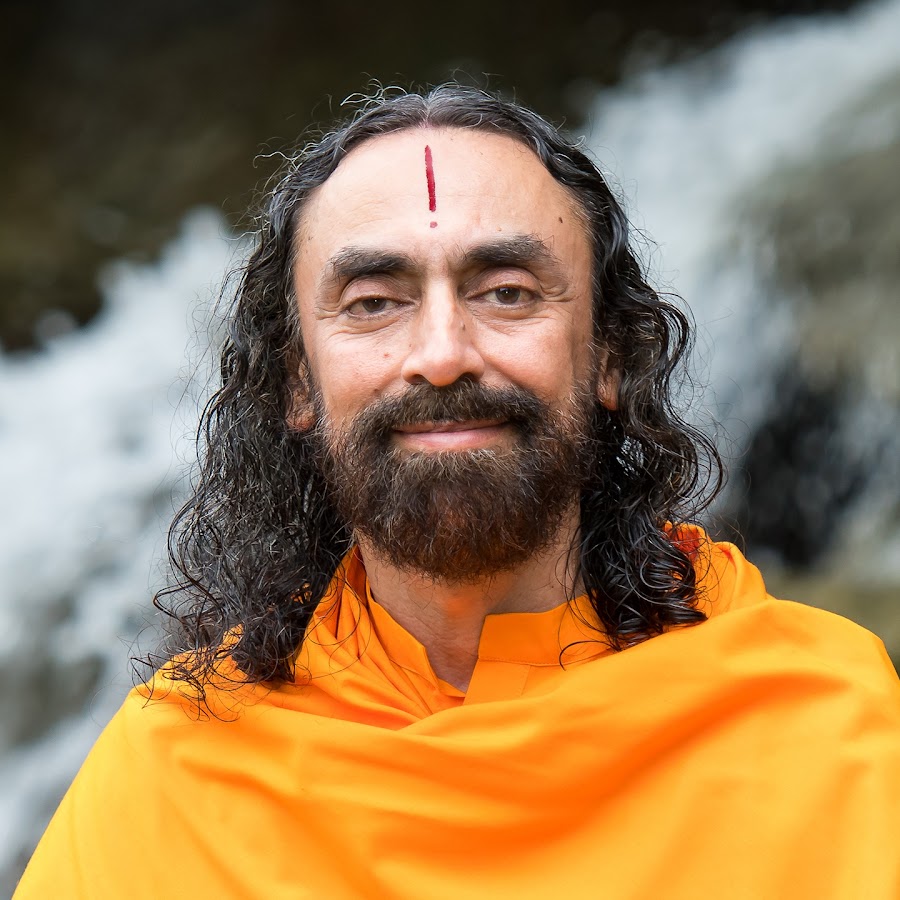
Immerse yourself in daily wisdom, guided meditations, and life-transforming discourses.
FAQs: The Science of Habit Formation in Spiritual Life
1. How long does it take to form a spiritual habit?
On average, scientists tell us it takes about 66 days to form a firm and stable habit. However, spiritual habits deepen over a lifetime of practice, especially when performed with love and devotion.
2. Why do I fail to maintain my spiritual routines?
Common reasons include “goal overload,” lack of cues, or insufficient motivation. Focus on one habit at a time and anchor it to a fixed time or trigger—such as meditating right after sunrise.
3. Can neuroscience really help in spiritual progress?
Yes. The brain’s neuroplasticity allows us to reshape thought patterns. Regular sādhanā rewires neural pathways for focus, peace, and devotion.
4. How do I strengthen my willpower?
Willpower is like a muscle—it grows with use but fatigues with overuse. Conserve it by minimizing distractions, setting clear priorities, and practicing abhyāsa (discipline).
5. What is the role of Satsang in building habits?
Satsang reinforces divine habits through association and accountability. Just as bad company weakens good habits, saintly association strengthens them.
Summary of Key Points
- Habits shape your destiny—both Western science and spiritual science confirm this.
- Focus on one major goal to preserve willpower.
- Baby steps build momentum; consistency beats intensity.
- Apply the habit loop consciously to spiritual practices.
- Incorporate Roop Dhyān Meditation, Kirtan, and Sunday Satsang into daily life, one goal at a time.
- Repetition leads to neuroplasticity—and abhyāsa (repeated practice) leads to divine realization.