
Introduction: The Great Love Recession and the Spiritual Remedy
Modern Love is Transactional, Not Transformational
Swami Mukundananda's commentary on the Narad Bhakti Sutras diagnoses the spiritual malady of our age with surgical precision: we have reduced love to commerce. In modern relationships, love flows when demands are met and freezes when expectations are disappointed. We love conditionally, measuring affection by what we receive rather than what we offer. This transactional model leaves us perpetually empty because we seek fulfillment from finite sources. The Gita teaches that lasting happiness is never found in the external world but in the internal reorientation of the heart . When we treat love as a negotiation, we guarantee our own disappointment.

The Real Definition of Love: Tat-Sukha-Sukhitvam
Swamiji illuminates Sutra 54 of the Narad Bhakti Sutras with breathtaking clarity: true love is finding your happiness solely in the happiness of the beloved. This single phrase dismantles every self-serving definition of love humanity has ever crafted. Love is not "you make me happy." Love is "your happiness is my happiness, regardless of whether I receive anything in return." This is not poetry; it is the highest spiritual technology for transforming the human heart. The Gopis of Vrindavan did not merely practice this truth; they embodied it so completely that even the Vedas struggle to describe their stature .
Valentine's Day Needs a Redemption Arc
Gopi Prem Diwas is not a rejection of Valentine's Day but its redemption. Jagadguru Shri Kripalu Ji Maharaj, the spiritual preceptor of Swami Mukundananda, sanctified this commercial holiday by anchoring it to the highest ideal of love ever conceived . We do not discard the impulse to celebrate love; we elevate it from the transactional to the transcendental. This February 14th, we are invited not to consume love but to contemplate it, not to demand affection but to examine its purity. The question is not whether you love, but how you love.
Who Are the Gopis? Not Female Bodies, but Perfect Souls
Beyond Gender: The Eternal Spiritual Identity
Swami Mukundananda emphasizes a revolutionary truth that the modern world desperately needs: the Gopis are not primarily female figures but perfected souls. Their feminine form in the Vrindavan pastimes is a divine arrangement, not a biological limitation. The soul possesses no gender; it is eternal servant of the Divine. When we reduce the Gopis to "village women" or "cowherd maidens," we miss the staggering truth that they are the internal spiritual potency of Krishna Himself, manifest in human-like form to teach the world what love truly means .
The Expansion of Divine Potency
Shrimati Radharani is not merely a devotee; She is the personification of Mahabhava, the highest ecstasy of love for God. Swamiji explains through the Narad Bhakti Sutras that the Gopis are expansions of this divine potency, appearing in the world of matter to demonstrate the pinnacle of devotion . They are not struggling souls climbing toward God; they are divine love descending to earth to lift humanity upward. This is why their leelas are not mythology but theology enacted in time and space for our spiritual education.
Why Saints Pray for Gopi Dust
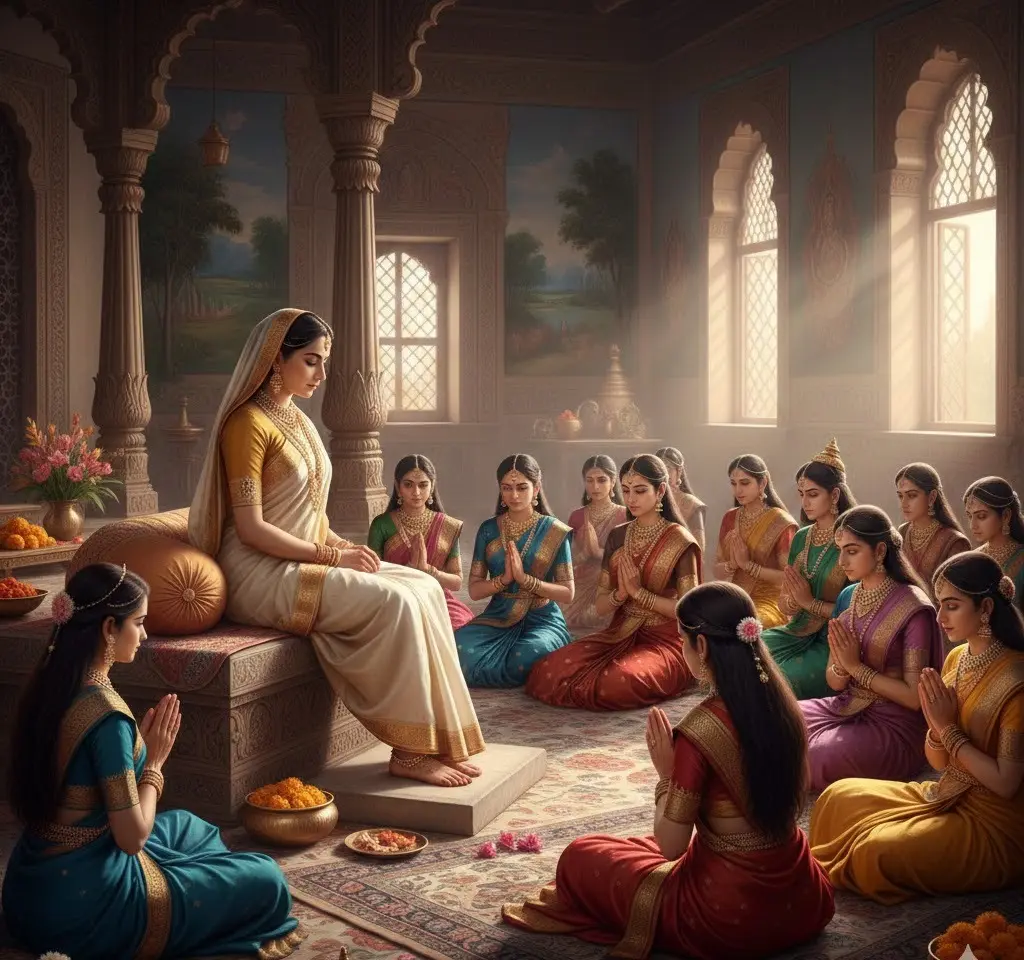
The queens of Dwaraka, upon hearing of the Gopis' love, wept and prayed to take birth as blades of grass in Vrindavan. Not to see Krishna, but to receive the dust of the Gopis' feet. Swami Mukundananda reveals that even Brahma and Shiva, the architects of cosmic creation and destruction, consider themselves unworthy of this honor . The Gopis' perfection lies not in supernatural powers or scriptural scholarship, but in the complete annihilation of self-interest. They do not love God because He is God; they love Him because He is theirs. This love has no motive beyond itself.
The Three Levels of Divine Love: Where Do You Stand?
Sādhāraṇī Rati: The Love That Fluctuates
Swamiji's commentary on the Narad Bhakti Sutras presents a mirror for honest self-reflection. Kubja, the perfumer who anointed Krishna with sandalwood paste, represents the first stage of love. Her devotion soared when Krishna blessed her and diminished in His absence. This is where most spiritual practitioners reside: faithful when prayers are answered, doubting when trials arrive. This love is not false, but it is immature. It still seeks its own happiness. The question is not whether you love, but whether your love survives the silence of the Beloved .
Samanjasā Rati: The Love That Negotiates
The queens of Dwaraka, including the exalted Rukmini and Satyabhama, embody the intermediate stage. Their love is genuine, deep, and praiseworthy. Yet it retains a subtle sense of ownership: "Krishna is my husband; I have a right over Him." Swamiji explains that this love seeks mutual happiness: the joy of the beloved and the joy of the self intertwined. It is beautiful, but it is not yet perfect. Most sincere devotees dwell here, loving God genuinely while still hoping for reciprocation, for eternal residence in His abode, for the embrace of His grace.

Samarthā Rati: The Love That Asks Nothing
The Gopis alone embody samarthā rati, the highest category of divine love according to Narada Muni. This love is utterly independent of reciprocation. It does not increase when Krishna is present nor decrease when He is absent. It does not negotiate, demand, or even hope. It simply pours itself out eternally, asking nothing, expecting nothing, requiring nothing. Swami Mukundananda teaches that this is the love we must pray for, not manufacture. We cannot climb to this height through effort alone; we can only prepare our hearts and beg for grace .
The Divine Benchmark: Stories That Define Gopi Prem
The Separation That Proved Their Love
When Krishna left Vrindavan for Mathura, twelve kilometers separated Him from the Gopis. Twelve kilometers of dusty path. A two-hour walk. Their agony was so intense that they felt their lives being pulled from their bodies. Yet not one Gopi went to Mathura. Why? Swami Mukundananda reveals the staggering logic of their restraint: "If Krishna had wished to meet us, He would have come. The fact that He has not come means His happiness lies elsewhere. How can we impose ourselves on Him for our happiness?" .
This is not the reasoning of lovelorn women; it is the reasoning of souls who have attained perfection. They sacrificed infinite happiness, the bliss of His darshan, simply to avoid infringing upon His will. Most people sacrifice money, time, or comfort. The Gopis sacrificed joy itself. This is tat-sukha-sukhitvam lived without remainder.
Radha Rani's Final Instruction to Uddhav
Uddhav arrived in Vrindavan carrying his scholarship like armor. He would console these simple village women with his philosophical brilliance. Instead, he was disarmed completely. When he asked what message he should carry back to Krishna, the Gopis offered three contradictory answers: "Tell Him we are fine" to avoid causing Him pain. "Tell Him we are suffering" so He would not think their love had cooled. "Say nothing" so He would not worry.
Then Radha Rani spoke, and Her words shattered every paradigm Uddhav had ever held: "Say whatever you feel is best. But remember only one thing: the smile on Krishna's face must never fade. Let that smile remain untouched." .
Swami Mukundananda emphasizes that Radha Rani never once mentioned Her own sleepless nights, Her own tears, Her own years of separation. Not one word. Her only concern was the curvature of Krishna's lips. This is why the Narad Bhakti Sutras declare the Gopis supreme. Not because they loved much, but because they loved without reference to themselves.
The Foot Dust Leela: The Ultimate Test
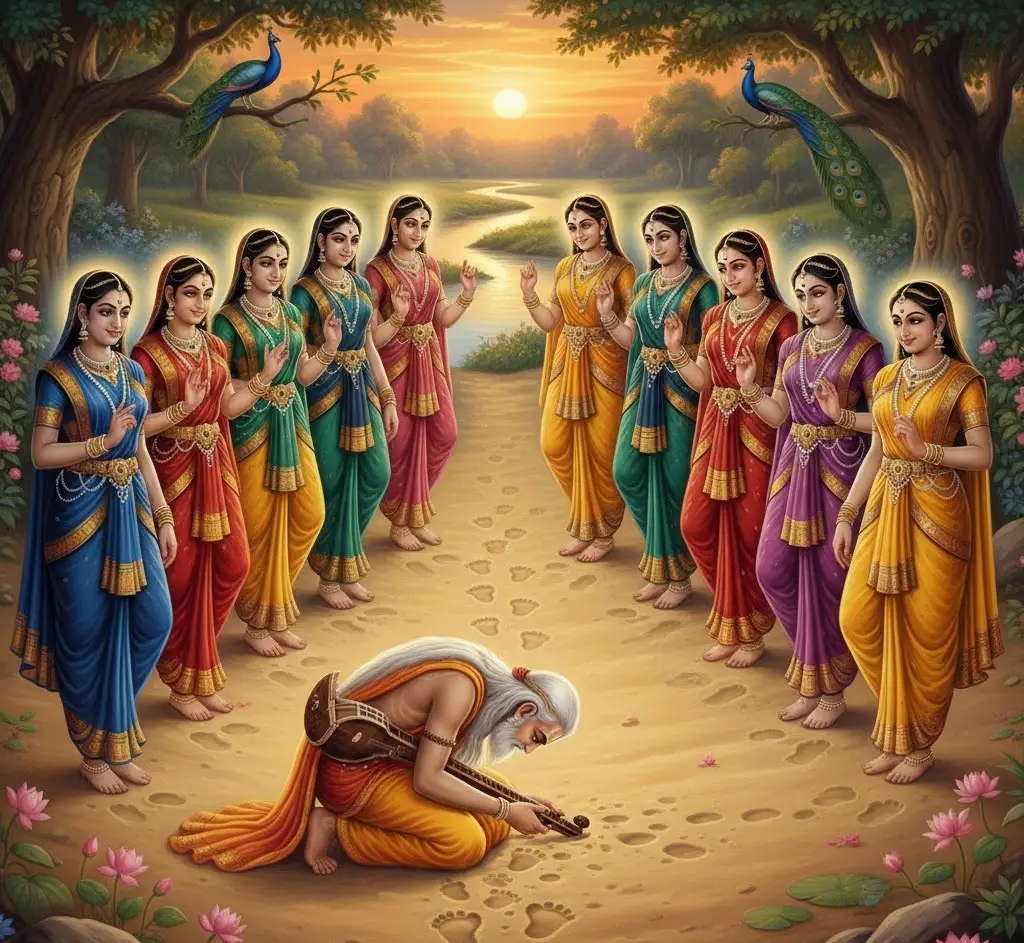
One day in Dwaraka, Krishna developed a severe headache that threatened His divine pastimes. The sage Narad revealed the remedy: the dust of devotees' feet applied to His forehead. The queens were horrified. Offering foot dust to the Lord is an offense; doing so would guarantee hellish punishment. They hesitated, calculating consequences.
In Vrindavan, the Gopis received this request. Their response was immediate and unanimous: "If our beloved Krishna finds relief, we are ready to suffer eternal damnation. Take our foot dust. Take our lives. Take everything. Let His pain cease." .
Swamiji asks: which love is greater? The love that calculates eternal consequences, or the love that consigns itself to hell without a moment's hesitation? The Gopis did not ask whether Krishna deserved their sacrifice. They only asked whether He needed it. This is the benchmark of divine affection.
The Mind: The Battlefield of Love
Why We Cannot Love Selflessly
Swami Mukundananda's Life Transformation Programs consistently diagnose the root obstacle to divine love: the untrained mind. The Bhagavad Gita teaches that contemplation leads to attachment, attachment to desire, desire to anger, and anger to delusion. This cascade destroys not only peace but the capacity for genuine love. A mind constantly calculating its own interests cannot perceive the needs of another, whether human or divine .
The modern epidemic of failed relationships is not primarily a crisis of compatibility but of consciousness. We attempt to love others while utterly consumed by ourselves. This is spiritually impossible. Until we learn to quiet the relentless voice of ego that asks "What about me?", we remain incapable of the love the Gopis perfected.

Mind Mastery Leads to Life Mastery
Swamiji's practical teaching offers hope: the mind can be trained. Through meditation, reflection, and disciplined practice, the habitual self-referentiality of consciousness can be softened. The Roopdhyan meditation taught in his programs is not escape from thought but reorientation of thought. When we repeatedly place the mind on the Divine, we gradually wean it from its addiction to self. This is not suppression; it is nutrition. The mind fed on divine contemplation gradually loses its appetite for petty self-concern .
From Reaction to Response
The Gopis did not suppress their love; they purified it. Swami Mukundananda teaches that the path from transactional to transcendental love passes through the transformation of our reactive patterns. When we are slighted, do we retaliate or reflect? When our love is unreturned, do we withdraw or continue offering? Each small choice reconditions the heart. The Gopis' monumental sacrifice on the banks of the Yamuna was not an isolated act of heroism; it was the culmination of countless small choices to prioritize Krishna's happiness over their own .
Gopi Prem Diwas: A Gift from Jagadguru Shri Kripalu Ji Maharaj
Redeeming a Commercial Holiday
Jagadguru Shri Kripalu Ji Maharaj, the spiritual master of Swami Mukundananda, performed an act of profound spiritual engineering when he established Gopi Prem Diwas. He did not ask devotees to abandon Valentine's Day; he asked them to redeem it. The holiday that had become an annual celebration of romantic consumption was sanctified and elevated to a day of spiritual introspection. The question shifted from "Who loves you?" to "How do you love?" .
The Master's Vision
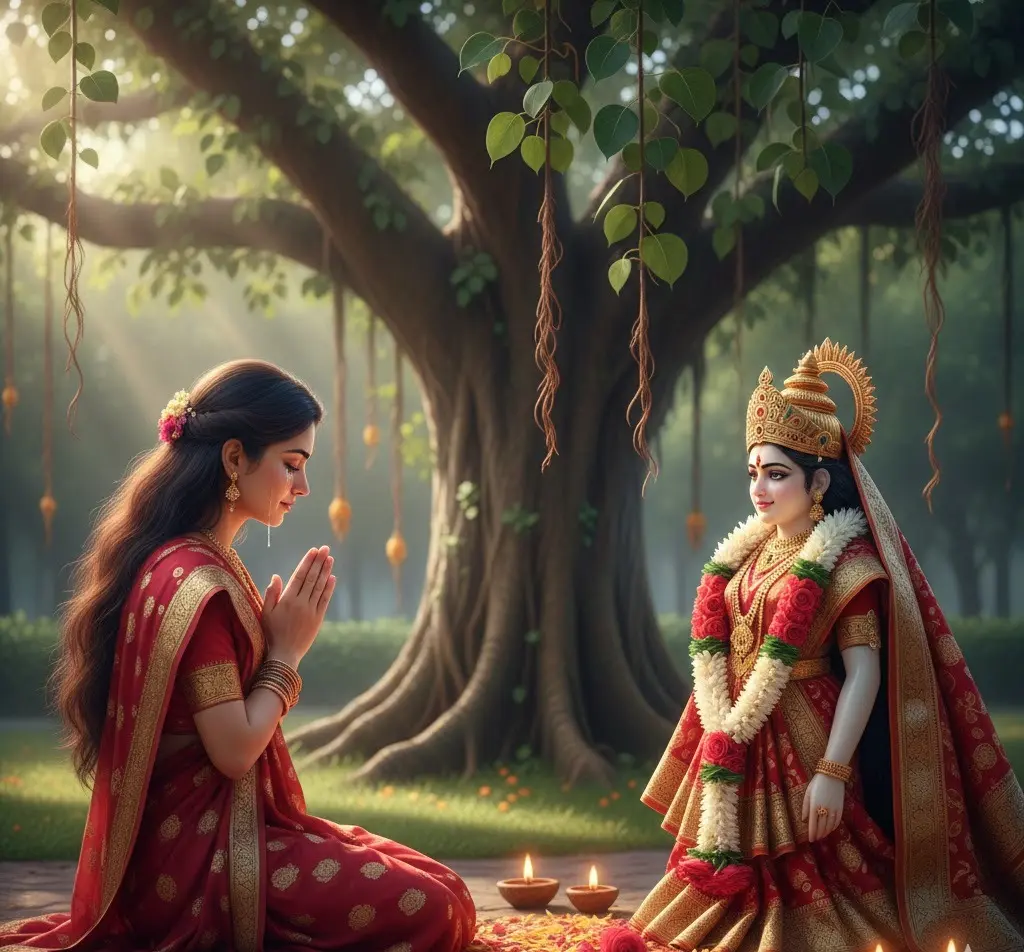
Shri Maharajji's poetry on Gopi Prem Day echoes through Swami Mukundananda's discourses: "O Radhe Ju, on this Gopi Prem Day today, I beseech you for the selfless love as that of the Braj Gopis." This is not a demand but a prayer. We cannot manufacture such love; we can only beg for a drop of it to fall into our barren hearts. Gopi Prem Diwas is that begging day, when millions of seekers collectively raise their palms toward the divine, hoping for the grace that transforms human affection into something eternal .
The 2026 Invitation
This February 14th, we are called not to restaurants but to reflection. Not to gifts but to gratitude. Swami Mukundananda's 2026 Global Tour continues this mission, carrying the message of selfless love across India and the world . The invitation is simple: examine your love. Not whether it exists, but what it seeks. Does your love ask or offer? Does it demand or dedicate? Does it expand your heart or merely fill your needs?
Practical Sadhana: Cultivating Gopi Prem in Daily Life
Shravan, Manan, Nididhyasan: The Three Pillars
Swami Mukundananda provides a practical framework for those who sincerely desire to progress on this path. First, Shravan: we must expose ourselves repeatedly to the stories of the Gopis, not as mythology but as living instruction. Second, Manan: we must reflect deeply on what made their love unique, moving beyond admiration to analysis. Third, Nididhyasan: we must internalize these truths through sustained meditation until they become the lens through which we perceive all of reality .
The Threefold Faith
Divine love cannot grow in soil poisoned by doubt. Swamiji teaches that we require faith in three realities: faith that Radha Krishna are the supreme objects of love, not distant deities but our eternal beloveds; faith that the Guru is a competent guide who has walked this path and can lead us through its difficulties; and faith that the path of Bhakti itself is sufficient, requiring no supplement from philosophy, austerity, or worldly achievement .
The Nine Stages of Progress
Swami Mukundananda maps the journey systematically: from Shraddha (faith) to Satsang (association with devotees) to Bhajan Kriya (devotional practices) to Anartha Nivritti (purification of unwanted habits) to Nishtha (steadfastness) to Ruchi (taste for devotion) to Asakti (attachment to God) to Bhav (divine emotion) to Prem (divine love). This is not random wandering but a structured ascent. Each stage prepares the heart for the next. We cannot leap to Gopi Prem; we can only walk the path that leads there, one step at a time .
The Uddhav Gopi Samvad: When Knowledge Bows to Love
The Scholar's Pride
Uddhav was Krishna's equal in wisdom, his cousin, his confidant. He arrived in Vrindavan carrying the weight of the Vedas and the confidence of a man who has mastered reality through intellect. He would explain to these weeping women that Krishna is the impersonal Brahman, that separation is illusory, that their pain was born of ignorance. He carried philosophy like a physician carries medicine, ready to cure their spiritual disease .
The Gopis' Silence
But when Uddhav beheld the Gopis, his prescriptions died on his lips. These women did not need to be told that Krishna is everywhere; they felt His absence in every atom. They did not need to be told the soul is eternal; they were willing to surrender theirs for His smile. Their silence was more eloquent than all his scriptures. Their tears carried more wisdom than all his commentaries. Uddhav, the great Jnani, became Uddhav the humble Bhakta .
The Transformation
Swami Mukundananda emphasizes that Uddhav's transformation was not the defeat of knowledge but its fulfillment. The Vedas themselves declare that knowing Krishna is the culmination of all wisdom. When Uddhav finally understood that the Gopis' love was not inferior to his philosophy but infinitely superior, he did not abandon knowledge; he completed it. True wisdom always bows before pure love, not because love is irrational but because it is supra-rational. The Gopis did not contradict the Vedas; they fulfilled them in a way the words alone never could .
Conclusion: Choosing the Eternal Over the Ephemeral The Summary of Love
- Gopi Prem teaches a radical truth: love is not about seeking our own happiness, but offering ourselves for His joy.
- In losing the self-centered pursuit of fulfillment, we discover a deeper, eternal love.
- This Gopi Prem Diwas invites us to transform our relationships and spiritual life by prioritizing the Beloved above ourselves.
- When we stop bargaining with God and simply surrender, love becomes pure and boundless.
- May we yearn, weep, and awaken to that divine love where asking for nothing means receiving everything.
Frequently Asked Questions
1. Is Gopi Prem Diwas only for couples?
No. It is about the state of the heart, not marital status. The Gopis’ love for Krishna was pure and unconditional. Anyone—married or single—can cultivate selfless love by shifting from receiving to offering.
2. Does this replace Valentine’s Day?
Not at all. It transforms it. Celebrate your loved ones, but change the consciousness from “What will I get?” to “How can I serve?” Spirituality purifies relationships; it doesn’t reject them.
3. Is Gopi Prem realistic for ordinary people?
Yes. Perfection may be distant, but aspiration is powerful. Each time you choose selflessness over ego, you move closer. Progress, not perfection, defines the path of bhakti.
4. How do I explain it to others?
Describe it as the celebration of unconditional love. Every culture values selfless affection. Gopi Prem Diwas honors the possibility of loving without expectation.
5. What if I keep failing?
Failure is part of growth. Spiritual life is gradual refinement. Every sincere effort matters more than flawless performance.
5 Self CTAs: Your Gopi Prem Diwas Practice
1. Mirror Exercise:
Spend fifteen minutes journaling about three key relationships. Ask honestly: “Do I seek to receive or to offer?” Awareness begins transformation.
2. Silent Sacrifice:
Perform one anonymous act of service this week. Expect no recognition. Let giving itself be the reward.
3. Complaint Fast:
Go twenty-four hours without complaining. Observe your impulses without acting on them. Train contentment.
4. Relationship Audit:
Have one honest conversation rooted in understanding, not accusation. Listening is an act of love.
5. Divine Appointment:
Set aside fifteen undistracted minutes daily to remember Radha Krishna. Ask for nothing. Simply offer your presence.
Gopi Prem Diwas is not about grand gestures, but inner reorientation. Choose offering over expectation, service over validation, remembrance over distraction—and let selfless love quietly begin.