A Journey Through Gita Wisdom and Real-Life Stories
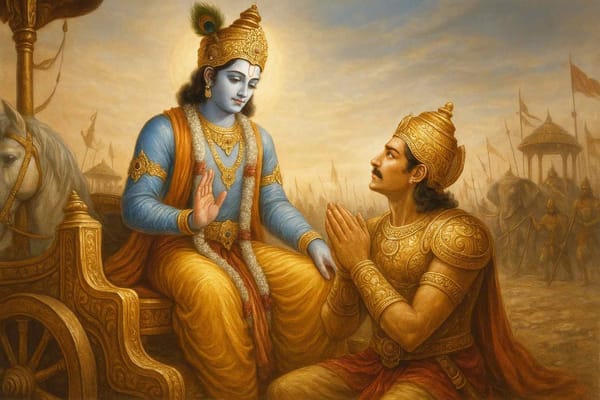
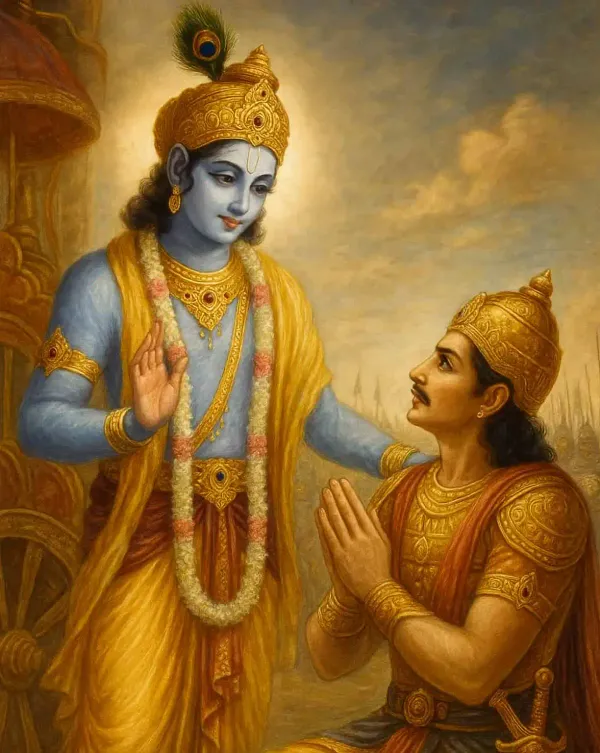
In the heart of the Bhagavad Gita, a sacred dialogue unfolds between a warrior and God. Arjun, paralyzed by doubt, stands on the battlefield unable to act. It is then that Shree Krishna reveals a universal truth: the meaning of life is not found in fleeting pleasures or avoidance of pain — it is found in clarity of purpose and alignment with divine will.
That very truth, shared over 5,000 years ago, continues to illuminate lives today. Finding purpose is not merely a motivational goal — it is a sacred discovery that brings resilience in suffering, clarity in chaos, and joy in service. Each soul, born into the human form after countless lifetimes of evolution, holds within it the potential to fulfill a divine destiny.
As the Bhagavad Gita 7.3 reminds us:
manuṣhyāṇāṁ sahasreṣhu kaśhchid yatati siddhaye
yatatām api siddhānāṁ kaśhchin māṁ vetti tattvataḥ
“Amongst thousands of persons, hardly one strives for perfection; and amongst those who have achieved perfection, hardly one knows Me in truth.”
The Soul’s Journey: From Wandering to Awakening

The soul’s journey stretches across countless births. From plants to animals, even celestial realms, it has finally arrived in the human form — a stage where self-inquiry becomes possible. Here, we ask not just how to live, but why.
This body is a rare gift, a vehicle for liberation. But most miss this chance, absorbed in survival and sensory pleasure. Yet beneath the chaos of modern life, there exists an inner whisper — a call to grow, to awaken, to move closer to truth.
This journey isn't about achieving perfection instantly. As long as we are moving forward — evolving from where we were — we are answering that call.
Suffering with Meaning: When Pain Becomes Purpose

A retired engineer once grieved the loss of his beloved wife. They had lived a beautiful life together for over 50 years, raising three children and facing life’s trials with unwavering support. After her passing, he plunged into darkness, unable to imagine life without her.
In conversation, he was asked a simple question: “Did your wife love you dearly?”
He replied, “More than words can express.”
He was then asked, “If you had passed before her, could she have handled this grief?”
His eyes widened. “She would’ve been shattered.”
It was then revealed to him — by surviving her, he had spared her this very sorrow. His pain, once meaningless, now carried sacred weight. A smile returned to his face for the first time in months.
Pain, when threaded with purpose, transforms into power.
As Bhagavad Gita 2.14 teaches:
mātrā-sparśhās tu kaunteya śhītoṣhṇa-sukha-duḥkha-dāḥ
āgamāpāyino ’nityās tāns-titikṣhasva bhārata
“O son of Kunti, the contact between the senses and the sense objects gives rise to fleeting perceptions of happiness and distress. These are non-permanent, and come and go like the winter and summer seasons. O descendent of Bharat, one must learn to tolerate them without being disturbed.”
Suffering becomes a message — not punishment, but guidance.
Purpose Greater Than the Self: Living (or Dying) for a Cause

There comes a point in life where one must ask: What am I willing to live — or even die — for?
This question was answered with silent heroism during the 1971 Indo-Pak war. Captain Mahendra Nath Mulla, commanding officer of the Indian naval ship INS Khukri, ordered the evacuation of his crew after the ship was hit by a torpedo. Once everyone was safe, he chose to go down with the ship, seated calmly in his chair, a lit cigar in hand.
His sacrifice was not dramatic. It was deliberate — born from deep-rooted duty and unshakable purpose. He aligned action with inner conviction.
This echoes Shree Krishna’s counsel in Bhagavad Gita 3.30:
mayi sarvāṇi karmāṇi sannyasyādhyātma-chetasā
nirāśhīr nirmamo bhūtvā yudhyasva vigata-jvaraḥ
“Performing all works as an offering unto Me, constantly meditate on Me as the Supreme. Become free from desire and selfishness, and with your mental grief departed, fight!”
Purpose gives courage, even in the face of death.
Maya: The Illusion That Awakens

Much of human suffering arises from Maya — the illusion that material gains will bring permanent happiness. But Maya is not the enemy. It is God’s servant. Its role is to create dissatisfaction in worldly pursuits so that the soul begins to seek divine shelter.
This inner resistance — the restlessness despite success, the anxiety despite comfort — is divine grace. It’s a cosmic alarm clock. When ignored, it manifests as pain, disappointment, or crisis. Not as punishment, but as redirection.
The Gita reveals this in Chapter 7, Verse 14:
daivī hyeṣhā guṇa-mayī mama māyā duratyayā
mām eva ye prapadyante māyām etāṁ taranti te
“My divine energy Maya, consisting of the three modes of nature, is very difficult to overcome. But those who surrender unto Me cross over it easily.”
Trying to conquer Maya with sheer willpower is like wrestling the ocean. Only through surrender to the Divine can we truly transcend it.
The Ritual Without the Heart: Why Bhakti Is Essential

In a quiet temple courtyard, a woman approached the steps. She scooped water in her hands, sprinkled it to her left, then her right. She passed it under her armpit, touched her ears, circled herself, and finally walked inside.
When asked why she did it, she replied, “I saw my mother-in-law do this, so I do it.”
Later, her mother-in-law confirmed: “I saw her do it too — no idea why!”
Generations had passed down a ritual, stripped of meaning. It became habit without heart. A symbolic shell without substance.
As Shree Krishna explains to Uddhav in the Uddhav Gita, rituals, fasting, pilgrimages — all are helpful, but insufficient unless rooted in devotion.
Bhakti is the “1” that gives value to the zeros. Without it, all else is mechanical.
As Bhagavad Gita 9.27 teaches:
yat karoṣhi yad aśhnāsi yaj juhoṣhi dadāsi yat
yat tapasyasi kaunteya tat kuruṣhva mad-arpaṇam
“Whatever you do, whatever you eat, whatever you offer as oblation to the sacred fire, whatever you bestow as a gift, and whatever austerities you perform, O son of Kunti, do them as an offering to Me.”
Choosing Higher Happiness: The Sweetness of Shreya

The Kathopanishad speaks of two paths: Preya — the pleasing, and Shreya — the beneficial. The former tempts the senses; the latter nourishes the soul. Choosing Shreya requires maturity, courage, and inner clarity.
This echoes in modern psychology too. Short-term pleasures (hedonia) often leave us empty. True well-being (eudaimonia) comes from living in accordance with higher purpose, even when it’s uncomfortable.
Shree Krishna instructed Arjun to rise above personal emotions and act for the greater good, such acts remind us of the quiet power of dharma.
How to Know You’ve Found Purpose

The sign is subtle but unmistakable.
When you wake up with gratitude, when your heart beats with quiet enthusiasm for the day ahead, and when your actions align with values higher than yourself — you’ve touched your purpose.
If, instead, the first thing you do is scroll through social media or dread the day, the search continues.
Purpose isn’t always tied to a career or cause. It could be expressed in parenting, service, art, devotion, healing, or simply living your life as an offering.
As Krishna says in Bhagavad Gita 18.46:
yataḥ pravṛittir bhūtānāṁ yena sarvam idaṁ tatam
sva-karmaṇā tam abhyarchya siddhiṁ vindati mānavaḥ
“By performing one’s natural occupation, one worships the Creator from whom all living entities have come into being, and by whom the whole universe is pervaded. By such performance of work, a person easily attains perfection.”
Conclusion: Walk the Path Arjun Chose
In a moment of crisis, Arjun stood paralyzed. He had knowledge, skill, and duty — but no clarity. Only when he surrendered to Shree Krishna did his confusion vanish.
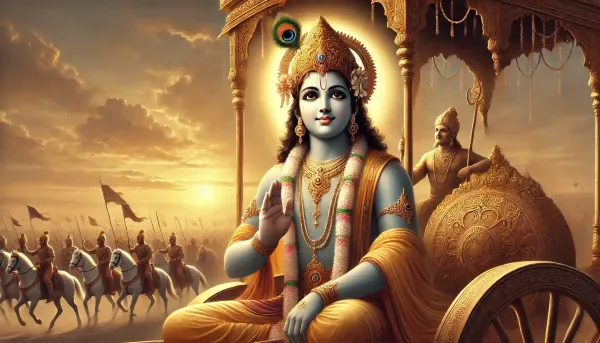
Each of us has our own Kurukshetra. The mind resists. Maya distracts. Suffering confuses. But purpose — when rooted in devotion, clarity, and courage — cuts through the noise like Shree Krishna’s chariot across the field.
Don’t wait for a grand revelation. Start with stillness. Serve someone. Grow silently. Love deeply. Align every act, thought, and offering with the Divine.
In doing so, you will not only find your purpose —
you will become it.
Call to Action
The timeless wisdom of the Bhagavad Gita is not meant to be read once and forgotten — it is a living guide, meant to be lived, felt, and shared. If this journey through Gita wisdom and real-life stories stirred something within you — a yearning to grow, serve, and awaken — don’t let it fade.
🔔 Subscribe to Swami Mukundananda’s YouTube Channel
Dive deeper into the Gita's profound teachings with Swami Mukundananda, a world-renowned spiritual teacher and global authority on mind management and yogic wisdom. His engaging talks blend timeless knowledge with real-life relevance — guiding you from confusion to clarity, from suffering to strength.
👉 Subscribe Now
📱 Download the Radha Krishna Bhakti App
Experience the divine every day through the Radha Krishna Bhakti App — your portable temple and Gita companion. Chant, meditate, read, and reflect anytime, anywhere. Transform your moments into spiritual milestones.
👉 Download the App