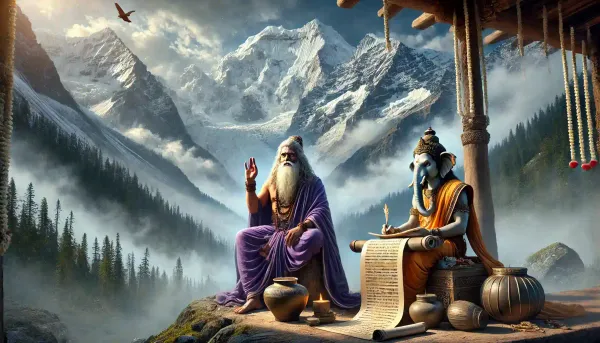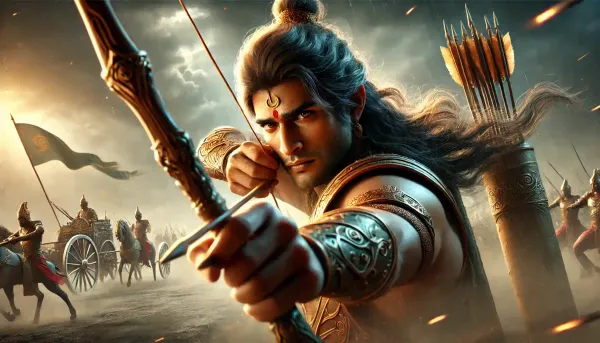
The Mahabharat, one of India’s greatest epics, is a treasure trove of moral, philosophical, and spiritual wisdom. At the heart of this epic lies the battle between dharma (righteousness) and adharma (unrighteousness), embodied through the conflict between the Pandavas and the Kauravas. Among the Kauravas, Duryodhan stands as a central figure whose life and decisions are deeply influenced by unchecked ego (ahankara). His downfall provides a profound lesson in the perils of ego and pride, themes that are powerfully echoed in the Bhagavad Gita, a divine dialogue between Lord Krishna and Arjun that takes place on the battlefield of Kurukshetra.
This blog explores the story of Duryodhan and the consequences of ego, drawing insights from both the Mahabharat and the Bhagavad Gita, with key verses referenced from holy-bhagavad-gita.org.
The Rise of Duryodhan’s Ego
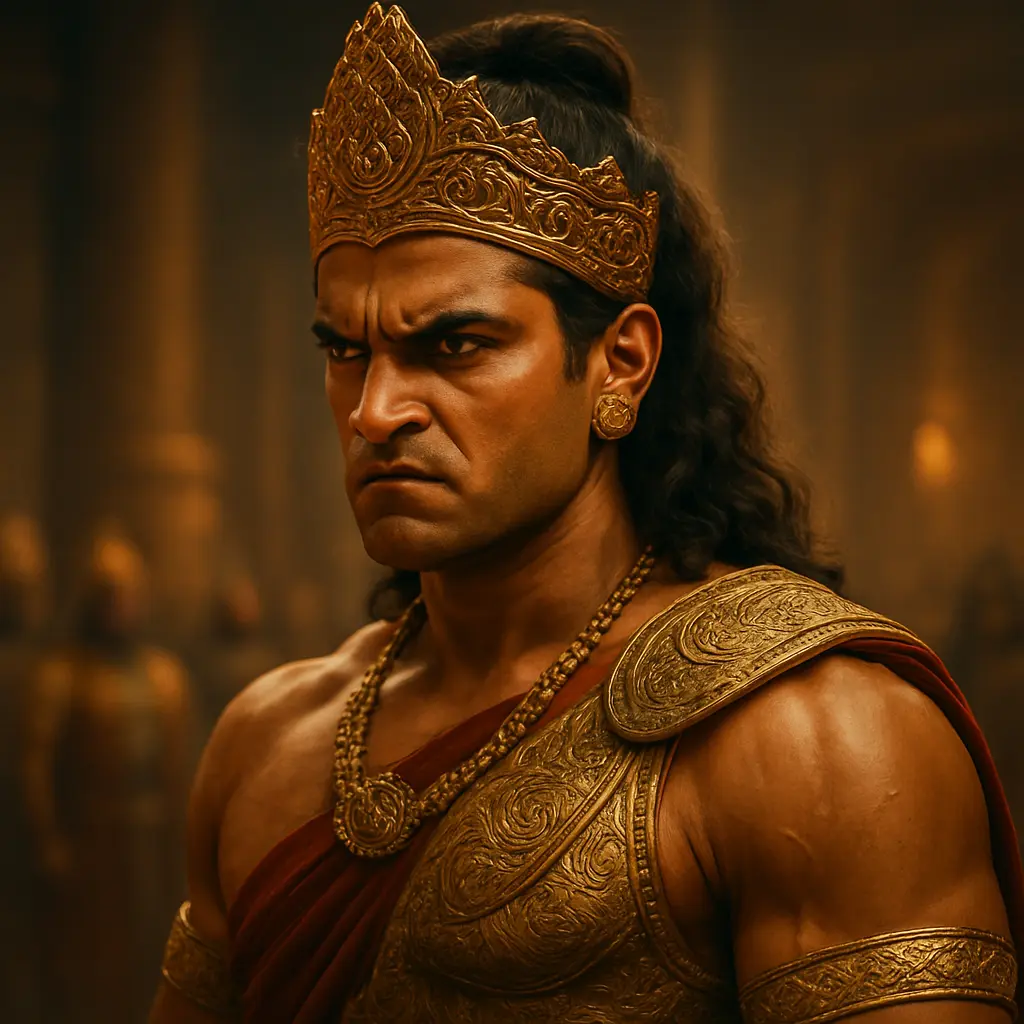
Duryodhan, the eldest son of Dhritarashtra, was born into privilege and power. From a young age, he displayed jealousy toward the Pandavas, especially Yudhishthira, who was righteous, popular, and the rightful heir to the throne. While his initial resentment may have stemmed from a natural rivalry, it eventually morphed into an overpowering ego that refused to accept anyone else’s success or legitimacy.
Unlike the Pandavas who earned their position through humility and virtue, Duryodhan’s worldview was shaped by entitlement and insecurity. He constantly sought validation and control, leading to increasingly destructive actions, including the infamous dice game and the attempted disrobing of Draupadi.
Ego and Its Consequences According to the Bhagavad Gita
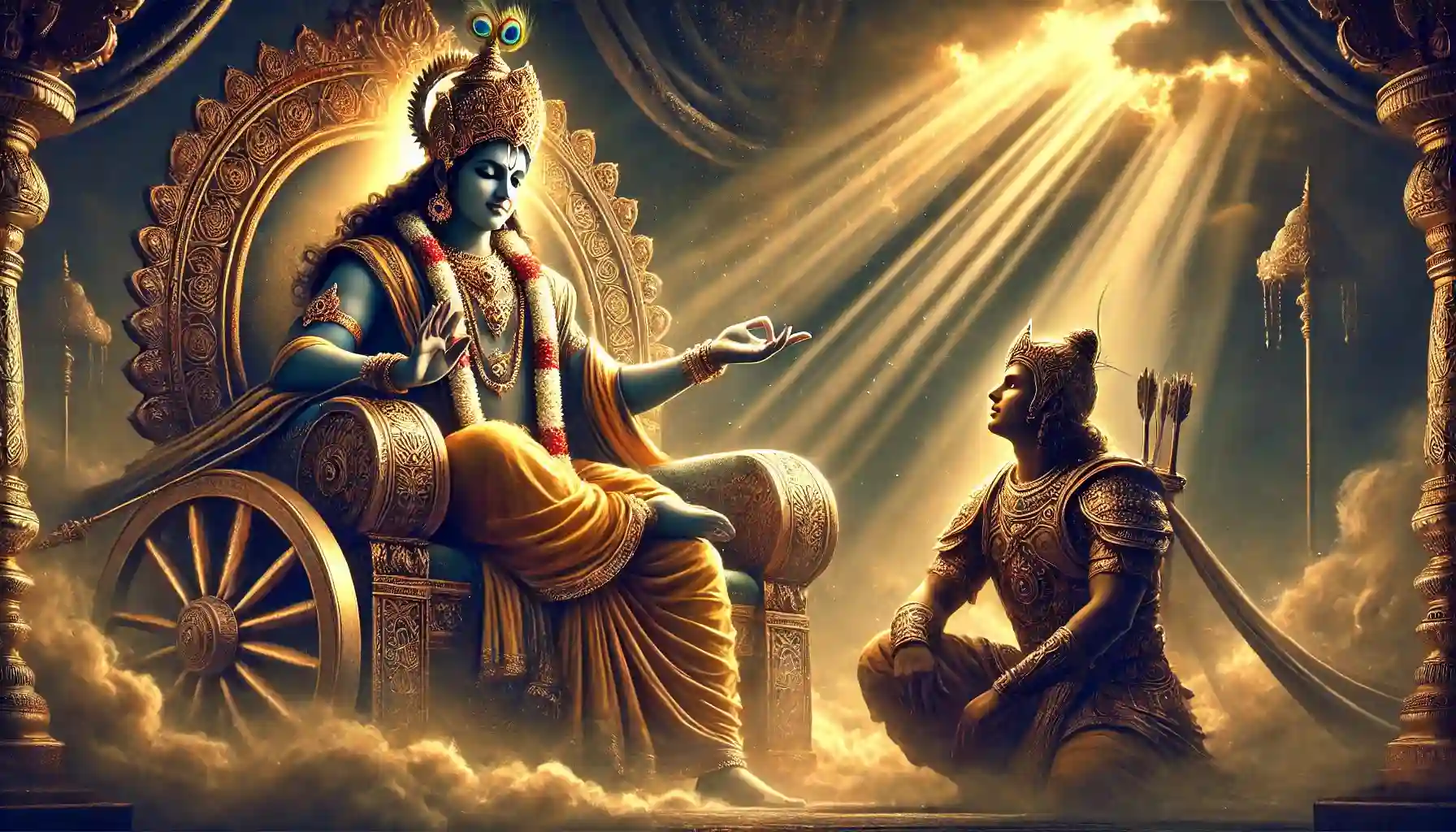
In the Bhagavad Gita, Lord Krishna repeatedly warns about the dangers of ego. One of the most direct references comes in Chapter 16, where Krishna describes the qualities of the demoniac (asuric) nature:
“Dambho darpo'bhimaanashcha krodhah paarushyameva cha; Ajnanam chaabhijaatasya paartha sampadam aasureem.”
(Bhagavad Gita 16.4)
“Hypocrisy, arrogance, pride, anger, harshness, and ignorance—these qualities belong to those of demoniac nature, O Arjun.”
This verse directly reflects Duryodhan’s character. He was full of arrogance (darpah) and pride (abhimaanah), and his anger (krodhah) became the driving force of his decisions. His refusal to give even “as much land as could be pierced by a needle” to the Pandavas was not a matter of principle—it was ego refusing to bend.
Duryodhan’s Perspective: “I Know What Is Right but I Cannot Do It”
One of the most chilling and revealing statements attributed to Duryodhan in the Mahabharat is:
"Janaami dharmam na cha me pravritti,
Janaami adharmam na cha me nivritti."
"I know what is dharma (righteousness), but I do not have the inclination to follow it.
I know what is adharma (unrighteousness), but I cannot refrain from it."
This insight into his mind reveals how ego clouds judgment. Duryodhan was not ignorant. He knew the right path, yet chose the wrong one because his ego would not allow him to yield. His identity had become so entangled with his hatred for the Pandavas and desire for dominance that backing down, even for dharma’s sake, felt like defeat.
The Role of Krishna and Duryodhan’s Rejection
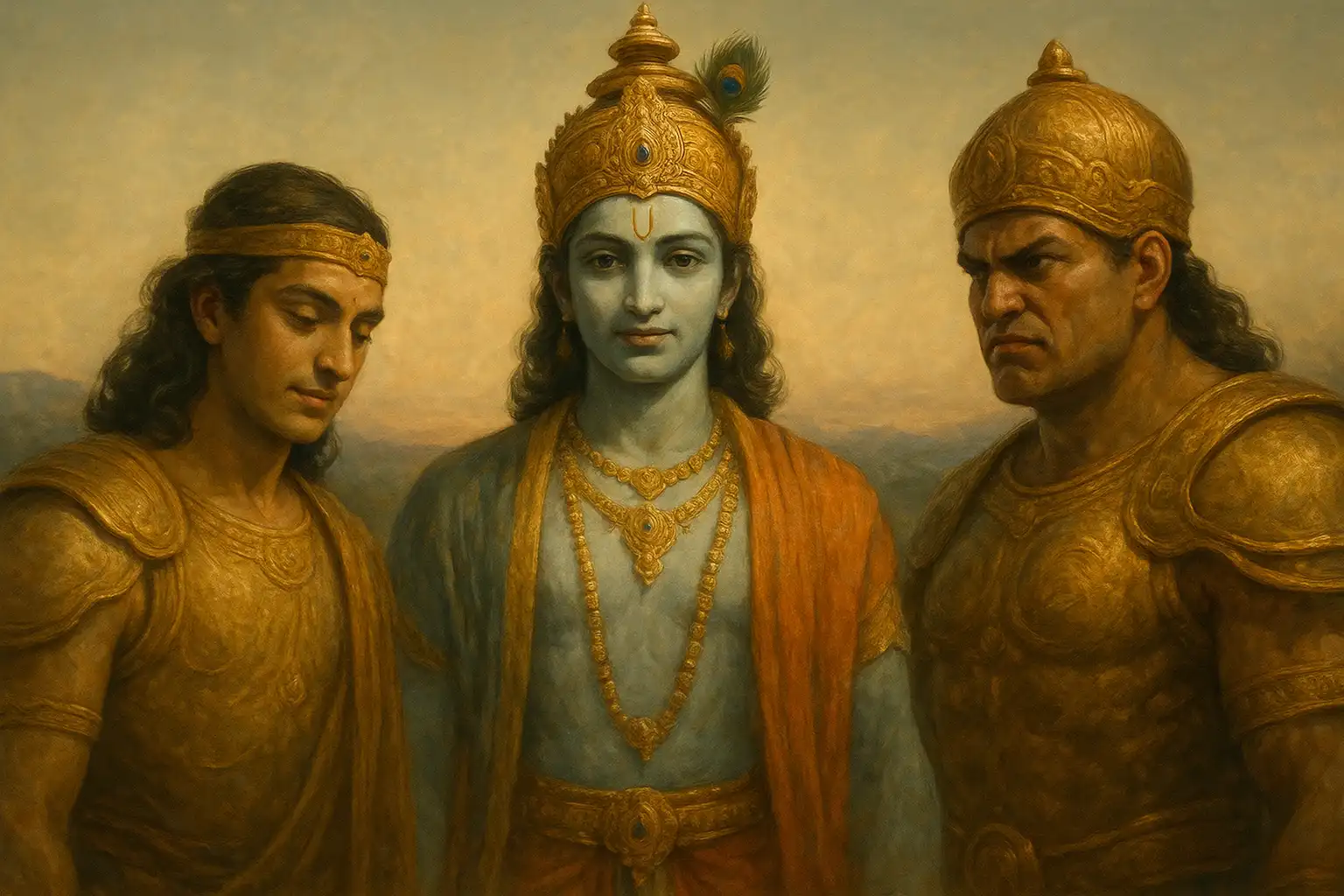
Before the war began, Lord Krishna offered both Arjun and Duryodhan a choice: one would get Krishna himself (unarmed), and the other would get Krishna’s massive army (the Narayani Sena). Duryodhana, driven by logic and ego, immediately chose the army. Arjun humbly chose Krishna alone, believing that divine wisdom was greater than material strength.
This episode is symbolic. Duryodhan sought external power, not inner guidance. He failed to understand that true victory stems from divine alignment, not brute force. This again highlights how ego blinds one to deeper truths, leading to short-term strategies and long-term ruin.
As Krishna says:
“Bhogaisvarya-prasaktanam tayapahrita-chetasam;
Vyavasayatmika buddhih samadhau na vidhiyate.”
(Bhagavad Gita 2.44)
“In the minds of those who are too attached to material enjoyment and opulence, and who are bewildered by such things, the resolute determination for devotional service does not take place.”
Duryodhan’s mind was captivated by material power and the illusion of control, making it impossible for him to cultivate a resolute, spiritual intellect.
Duryodhan’s Actions vs. a Person of Divine Nature
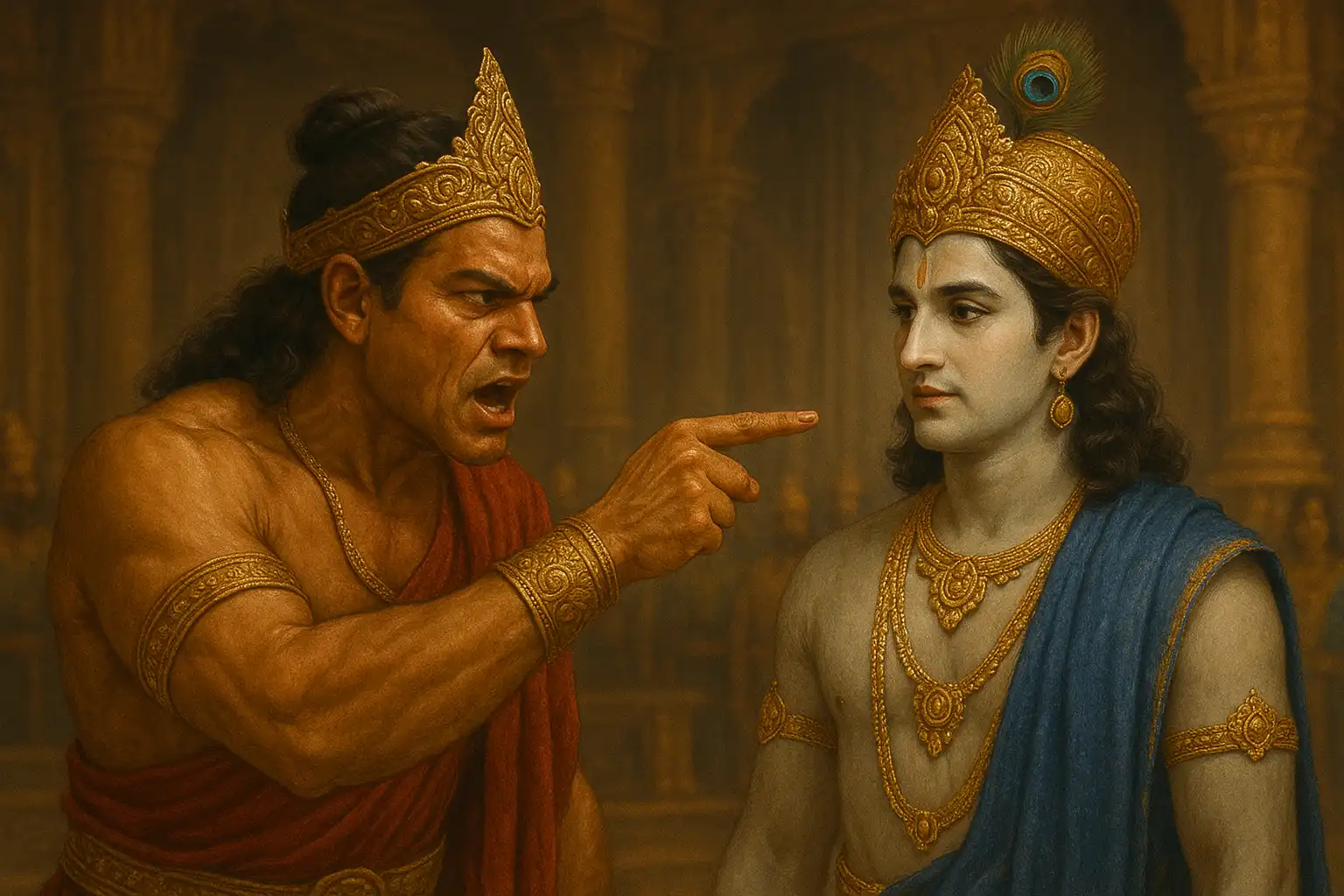
In contrast to the asuric nature, Krishna outlines the qualities of divine beings in Chapter 16.1–3 of the Gita:
“Abhayam sattva-sanshuddhir jnana-yoga-vyavasthitih
Danam damascha yajnascha svadhyayas tapa arjavam…”
(Bhagavad Gita 16.1)
These verses describe qualities like fearlessness, purity of heart, self-control, charity, humility, and truthfulness—none of which Duryodhan possessed.
The lesson is clear: those who cultivate divine qualities rise, while those who feed their ego and asuric tendencies fall, no matter how powerful they seem temporarily.
Ego Leads to Self-Destruction
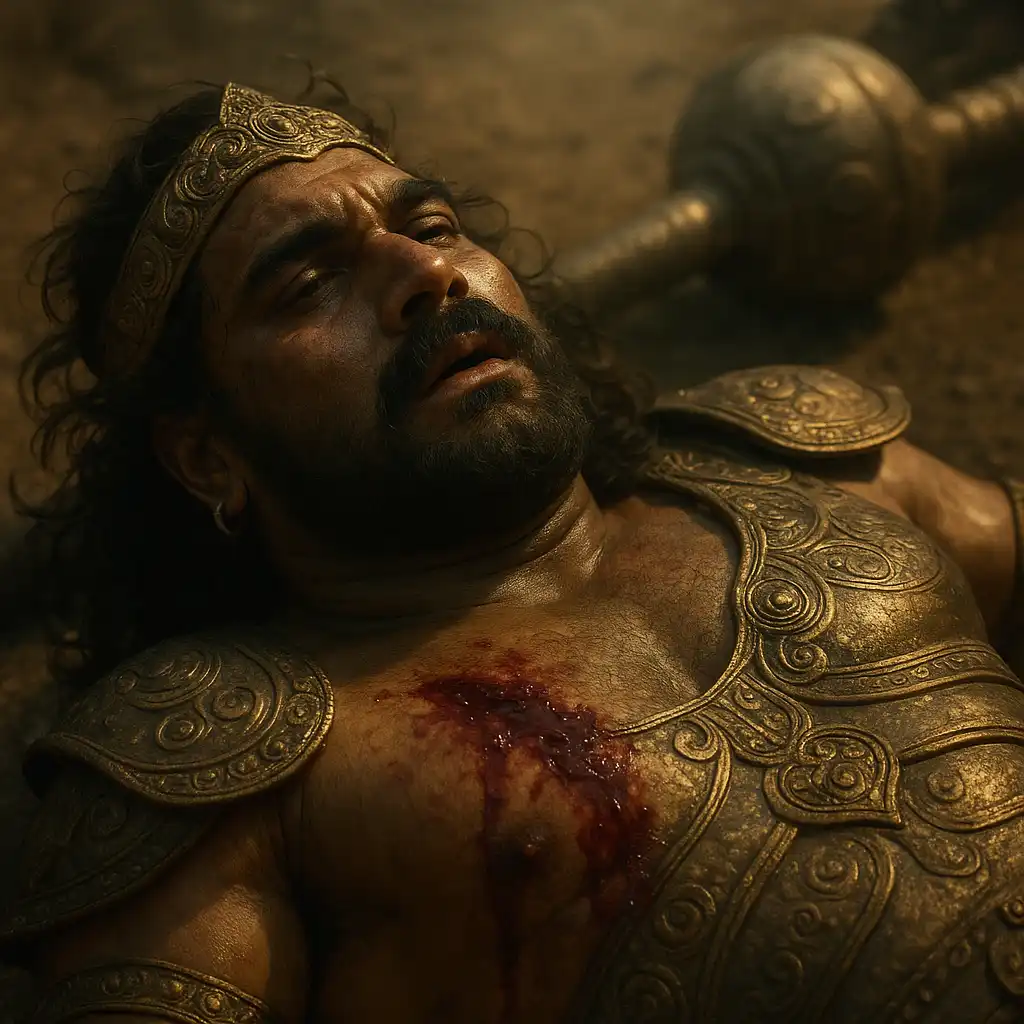
Duryodhan’s ego reached its peak during the war. Despite seeing mighty warriors fall—Bhishma, Drona, Karna—he refused to surrender. He chose to fight to the end, even though he could have negotiated peace or accepted the loss of the kingdom with dignity.
In the end, he meets his fate in a duel with Bhima, where his ego drives him to a senseless death. Even then, as he lies dying, he boasts about his so-called accomplishments—trying to assert victory despite defeat. This final act of self-delusion is the epitome of what the Gita warns against.
Krishna explains the deluded mindset of such individuals:
“Ahamkaraṁ balaṁ darpaṁ kāmaṁ krodhaṁ cha saṁśritāḥ
Mām ātma-para-deheṣu pradviṣanto’bhyasūyakāḥ”
(Bhagavad Gita 16.18)
“Resorting to egotism, power, arrogance, desire, and anger, these malicious people hate Me (the Supreme Soul) in their own and others’ bodies.”
Duryodhan, in his hate for Krishna and the Pandavas, had truly turned away from divinity, sealing his own fate.
Ego Blocks Surrender and Grace
A critical teaching of the Gita is the idea of surrender (śaraṇāgati) to the Divine. In Chapter 18, Krishna urges Arjun:
“Sarva-dharmān parityajya mām ekaṁ śaraṇaṁ vraja
Ahaṁ tvām sarva-pāpebhyo mokṣayiṣyāmi mā śucah.”
(Bhagavad Gita 18.66)
“Abandon all varieties of dharma and just surrender unto Me. I shall deliver you from all sinful reactions; do not fear.”
Surrender is impossible for one who is trapped in ego. Duryodhan, till his last breath, refused to surrender to Krishna or dharma. His ahankara kept him bound to delusion and ensured his spiritual and physical destruction.
Lessons for Modern Life: Duryodhan Lives Within Us
Duryodhan is not just a historical figure. His traits—envy, pride, entitlement, stubbornness—exist within all of us. Whenever we choose ego over truth, when we justify wrongs to protect our self-image, or when we refuse to accept the good in others out of insecurity, we channel the inner Duryodhan.
The Bhagavad Gita is not a book of abstract philosophy—it is a mirror to our inner world. By examining Duryodhan’s life, we are reminded that:
- Ego blinds us from truth.
- Pride prevents surrender.
- Unchecked desire and anger lead to downfall.
- Spiritual wisdom requires humility.
Duryodhan vs. Arjun: A Tale of Two Minds
While Duryodhan clung to ego, Arjun, at the start of the war, dropped his bow in despair. But rather than allow pride to dictate his actions, Arjun turned to Krishna for guidance. His moment of surrender became the seed for the Bhagavad Gita.
This contrast teaches us that inner transformation begins when we let go of ego and open ourselves to divine wisdom. As Krishna tells Arjun:
“Tad viddhi pranipatena paripraśnena sevayā
Upadekṣyanti te jñānaṁ jñāninas tattva-darśinaḥ”
(Bhagavad Gita 4.34)
“Learn the truth by approaching a spiritual master. Inquire from them submissively and render service unto them.”
Duryodhan never did this. His refusal to submit—even intellectually—to wisdom or a higher truth became the cause of his destruction.
Final Thoughts: Choosing Humility Over Ego
Duryodhan’s life is a cautionary tale etched in the heart of Indian wisdom. His journey illustrates what happens when ego reigns supreme, when inner demons are left unchecked, and when power is divorced from virtue.
In a world that often celebrates self-assertion and dominance, the Bhagavad Gita reminds us that true power lies in humility, true victory lies in surrender, and true knowledge dawns only when ego dissolves.
May we learn from Duryodhan’s fall and cultivate the divine qualities described by Lord Krishna. By doing so, we walk the path of dharma, guided not by the illusions of the self, but by the eternal light of truth.
Call to Action: Transform Ego into Devotion
The tragic fall of Duryodhan is a timeless reminder of how unchecked ego leads to destruction—not just of the self, but of entire relationships and societies. Let us not repeat the same mistakes. Through the wisdom of the Bhagavad Gita, we are gifted with the tools to rise above ego and align with our divine nature.
🕉️ Start your inner journey today. Reflect. Surrender. Transform.
Make a conscious choice to overcome ego and walk the path of humility, wisdom, and devotion.
🙏 5 Practical Steps to Overcome Ego (As Taught by Bhagavad Gita & Swami Mukundananda ji)
1. Practice Humility Through Devotion (Bhakti)
“One who is humble and free from pride, who is not deluded and understands the eternal—such a person attains peace.”
— Bhagavad Gita 15.5
How: Daily prayers, chanting, and gratitude to God help dissolve the false sense of “I am the doer.”
2. Surrender the Fruits of Your Actions (Nishkam Karma Yoga)
“You have a right to perform your prescribed duties, but you are not entitled to the fruits of your actions.”
— Bhagavad Gita 2.47
How: Do your duties with sincerity and offer the results to God, letting go of attachment and pride.
3. Contemplate the Temporary Nature of the Body and Ego
“The wise do not lament for the living or the dead.”
— Bhagavad Gita 2.11
How: Realize that the body and worldly status are temporary. What’s eternal is the soul—your true self beyond the ego.
4. Associate with the Wise and Devotional Company (Satsang)
Swami Mukundananda says: “Just like iron gets magnetized in the presence of a magnet, our mind gets spiritualized in the presence of saints.”
How: Spend time with those on the spiritual path, listen to discourses, join satsangs, and read scriptures.
5. Daily Introspection and Mind Management
Swami Mukundananda emphasizes: “The first step to conquer the mind is to observe it.”
How: At the end of each day, reflect:
- Did I act out of ego or humility?
- Was I trying to prove myself right or do what’s right?
- How can I improve tomorrow?
🙏 Begin your transformation today.
- Join a Gita study group.
- Meditate daily.
- Follow Swamiji’s Life Transformation Challenge.
- Let every step you take be in humility and love for the Divine.
Frequently Asked Questions (FAQs) related to Duryodhana and the Consequences of Ego
1. Why was Duryodhana's ego so destructive, even though he was skilled and brave?
Answer: Duryodhana's ego blinded him to dharma (righteousness). Despite his abilities, he constantly craved validation and superiority over the Pandavas. His insecurity and pride made him reject wise counsel from elders like Vidura and Krishna. According to Bhagavad Gita 16.4, ego, arrogance, and anger are demoniac traits that lead to downfall.
2. What is the root cause of ego, according to the Bhagavad Gita?
Answer: Ego arises from identification with the body and mind rather than the soul. Bhagavad Gita 3.27 says:
"The bewildered spirit soul, under the influence of the three modes of material nature, thinks himself to be the doer of activities, which are in actuality carried out by nature."
Swami Mukundananda teaches that ego is the illusion of being the independent doer, separate from God.
3. Could Duryodhana have changed his fate by surrendering to Krishna?
Answer: Absolutely. Duryodhana had several chances to surrender or accept peace. When Lord Krishna came as a peace messenger, Duryodhana tried to arrest Him—an ultimate act of ego and defiance. Had he acted with humility, like Arjuna did in Bhagavad Gita 2.7, his destiny would have been drastically different.
4. How can I tell if my ego is affecting my decisions?
Answer: When you frequently feel the need to prove yourself, take offense easily, resist feedback, or act out of superiority or insecurity—these are signs of ego. Swami Mukundananda advises: “If your peace of mind depends on others’ opinions, ego is present.” Regular introspection and mind management help reveal ego-driven motives.
5. How can I practically reduce ego in daily life?
Answer:
- Practice humility by attributing success to God.
- Avoid comparisons and serve others selflessly.
- Meditate and reflect on your eternal soul nature.
- Learn to apologize and accept your faults.
- Engage in spiritual association (satsang) and study the Gita regularly.
Following Bhagavad Gita 18.66—"Abandon all varieties of dharma and surrender unto Me..."—is the ultimate antidote to ego.
Selected References from the Bhagavad Gita
- Bhagavad Gita 16.4 – Demoniac qualities
- Bhagavad Gita 16.18 – Egotistic hatred of the Divine
- Bhagavad Gita 2.44 – Attachment to pleasure blocks spiritual resolve
- Bhagavad Gita 18.66 – Supreme surrender
- Bhagavad Gita 4.34 – Approach the wise with humility
- Bhagavad Gita 16.1–3 – Divine qualities