5 Day Diwali Schedule
| Event | Date | Day | Start (Auspicious Time) | End (Auspicious Time) | Duration |
|---|---|---|---|---|---|
| Dhanteras (Dhantrayodashi) | October 18, 2025 | Saturday | 07:16 PM | 08:20 PM | 1 hr 04 min |
| Choti Diwali (Naraka Chaturdashi) | October 20, 2025 | Monday | 05:13 AM | 06:25 AM | 1 hr 12 min |
| Lakshmi Puja / Diwali | October 20, 2025 | Monday | 07:08 PM | 08:18 PM | 1 hr 10 min |
| Govardhan Puja / Annakut | October 22, 2025 | Wednesday | 06:26 AM | 08:42 AM | 2 hr 16 min |
| Bhai Dooj | October 23, 2025 | Thursday | 01:13 PM | 03:28 PM | 2 hr 15 min |
Note: Timings are provided in Indian Standard Time (IST) based on New Delhi location.
🪔 A Heart-Touching Story: The Lamps of Hope

As Diwali approached, the small village of Shantipur lay cloaked in gloom. The potters’ wheels had long fallen silent; no one came to buy their clay lamps anymore. Rows of unsold diyas sat gathering dust, while the villagers, burdened by poverty, feared a dark Diwali.
Miles away in the city, young Rohan prepared for the festival amid glittering LED lights and sleek decorations. But his heart felt strangely heavy. Remembering his grandmother’s stories of village artisans who once shaped each diya with devotion, he decided to visit Shantipur.
There, he saw the potters’ eyes filled with silent despair. Without a word, Rohan purchased every lamp they had — hundreds of them. He paid generously, not as charity, but as respect for their art and spirit. That evening, as thousands of clay diyas glowed across his home and along the village lanes, tears of gratitude shimmered in the villagers’ eyes.
In lighting their diyas, Rohan had kindled something far greater — hope, dignity, and the true spirit of giving.
That Diwali night, as those earthen lamps flickered across balconies, their humble glow seemed warmer than all electric brilliance — because it carried the light of empathy. In the process of giving work to the potters, Rohan realized that the true Lakshmi he had invited home was not wealth, but the joy of giving.

💫 Reflection: The True Spirit of Diwali
Rohan’s story reminds us: lighting diyas without compassion is incomplete. The real festival begins when the lamp of love is kindled in our hearts.
Diwali thus becomes not just an external celebration, but an inner awakening of bhakti and selfless service.
"To truly love, we must harbor a service attitude, where we target giving to the other, rather than taking from them." — Swami Mukundananda
🌸 Understanding the Significance of Lakshmi Puja
In the Vedic tradition, the name Lakshmi originates from the root lakṣa, meaning “goal” or “aim,” signifying that she embodies the highest purpose of human life—spiritual perfection and union with the Divine.
Seated gracefully upon a lotus flower, she represents purity amidst the world’s attachments, while the gold coins flowing from her hands symbolize divine abundance meant for the welfare of all, not material greed.
Her vehicle, the owl, reminds devotees to remain vigilant and wise, never blinded by worldly allurements, but ever aware of the true wealth that lies in inner illumination and selfless devotion.
In the Bhagavad Gita 10.41, Lord Krishna declares:
“Whatever you see as beautiful, glorious, or powerful, know it to spring from but a spark of My splendor.”
Thus, every form of wealth — material, emotional, or spiritual — is a manifestation of the Divine.
Swami Mukundananda beautifully explains:
“The grace of Goddess Lakshmi flows naturally toward those whose hearts are pure, minds are grateful, and actions are selfless.”
🌼 Historical and Scriptural Roots of Lakshmi Puja
🏹 1. Return of Lord Ram to Ayodhya - According to Ramayana, the people of Ayodhya welcomed Lord Ram, Sita, and Lakshman by lighting lamps — symbolizing the victory of dharma over adharma, and truth over illusion. Lakshmi Puja thus marks the illumination of righteousness in our lives.
🌊 2. The Churning of the Cosmic Ocean (Samudra Manthan) - From the ocean of existence arose Goddess Lakshmi, signifying that divine virtues emerge only through spiritual effort and churning of the mind.
👑 3. The Blessing of King Bali - When Lord Vishnu incarnated as Vamana, He blessed the humble King Bali with Lakshmi’s eternal presence — teaching that humility invites divine grace.
“True wealth is not measured in gold, but in the richness of virtues.”— Swami Mukundananda
The Bhagavad Gita 2.50 says:
“One who prudently practices the science of work without attachment can get rid of both good and bad reactions in this life itself. Therefore, strive for Yog, which is the art of working skillfully (in proper consciousness)."
🪷 Lakshmi Puja Across India: Diverse Traditions, One Divine Light
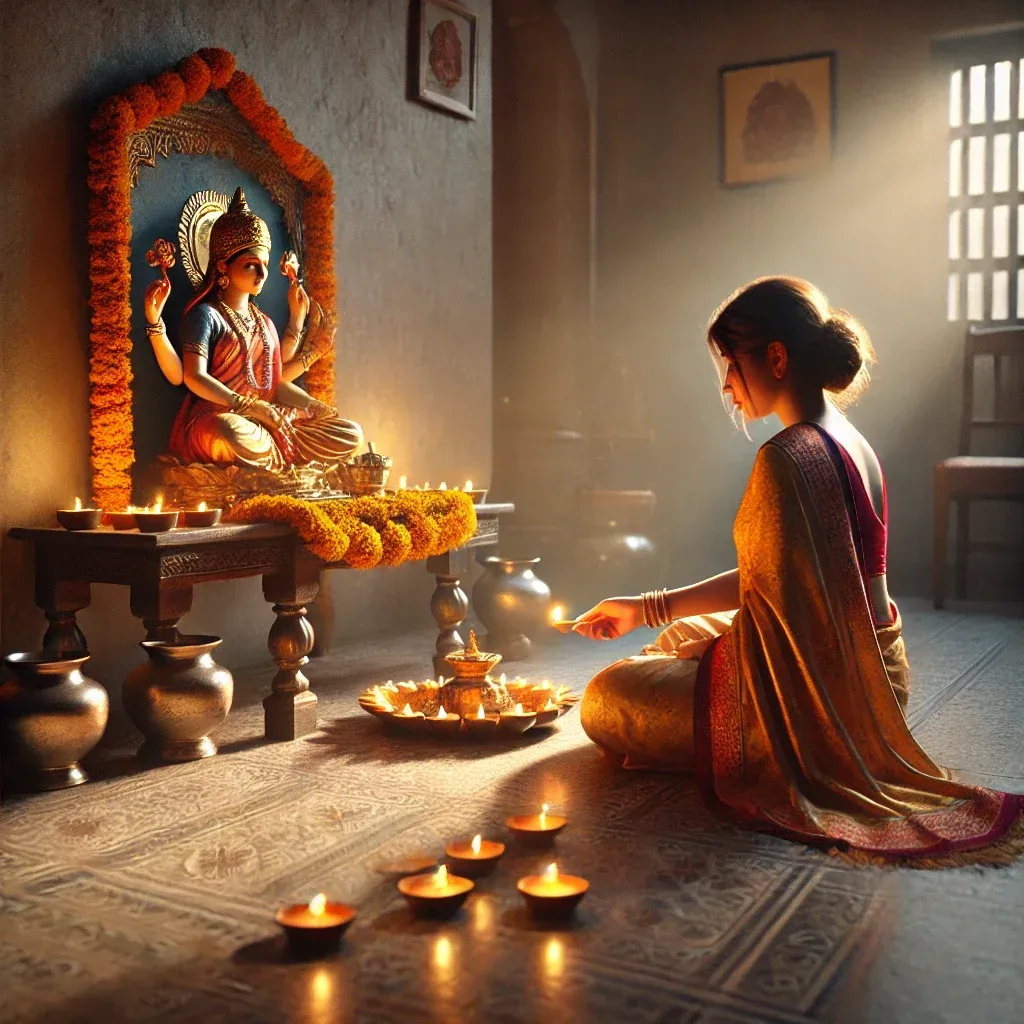
North India: In states like Uttar Pradesh, Delhi, Punjab, Rajasthan, and Madhya Pradesh, Lakshmi Puja is performed on Amavasya (the new moon) of the Diwali festival.
- Families clean and decorate their homes days in advance, believing that the Goddess visits only clean, pure places.
- Rangolis and rows of diyas (oil lamps) are placed to welcome her divine presence.
- The puja usually includes Lord Ganesha, who removes obstacles, and Kubera, the treasurer of the gods.
- Offerings (prasad) include sweets, dry fruits, coins, rice, turmeric, and Kumkum.
- Devotees chant the Lakshmi Ashtottara Shatanamavali (108 names of Lakshmi) and recite the Lakshmi Chalisa.
- After the puja, fireworks, family gatherings, and sharing of sweets symbolize the celebration of abundance and joy.
- Lakshmi enters the home where lamps of purity, gratitude, and humility burn bright.
Western India (Maharashtra and Gujarat): Lakshmi Puja holds deep cultural and commercial significance.
- The day is known as Chopda Pujan or Sharda Puja, where business owners worship their account books (bahi-khata) and open new ledgers for the upcoming year.
- This symbolizes invoking the Goddess’s blessings for prosperity, ethical dealings, and success in trade.
- Devotees chant Shree Sukta and Lakshmi Gayatri Mantra, and offer lotus flowers, coins, and sweets.
- Lamps are lit throughout homes and markets to welcome “Mahalakshmi” on her auspicious visit.
Eastern India: Lakshmi is revered as the Harvest and Fortune Goddess in West Bengal, Odisha, and Assam. Lakshmi Puja is often celebrated on Kojagari Purnima (the full moon night before Diwali) or during Diwali night itself. “Ko jagarti?” meaning “Who is awake?” It is believed that Goddess Lakshmi blesses those who stay awake in devotion that night.
- Homes are beautifully decorated with alpana (rice flour designs), earthen lamps, and lotus flowers.
- The Lakshmi Panchali (a traditional Bengali prayer) is recited, narrating stories of her blessings and warnings against greed and dishonesty.
- Offerings include milk, sweets, puffed rice, bananas, and coconut
- The celebration emphasizes purity, diligence, and honesty as pathways to divine grace.
- In Odisha, families place earthen lamps on grain-filled pots, symbolizing abundance and fertility.
In Assam, the festival coincides with Kaati Bihu, when lamps are lit around the tulsi plant and granaries to invite the goddess of prosperity.
South India: Balipadyami and Lakshmi-Kubera Worshiped
- The third day of Diwali is celebrated as Lakshmi Puja or Deepavali Amavasya.
- Devotees worship Goddess Lakshmi along with Lord Kubera, the god of wealth, to invite both prosperity and right conduct.
- Homes are cleaned, oil lamps are lit in every corner, and new clothes, gold, and sweets are offered.
- The Kubera Lakshmi Vratham is also performed by some, reciting mantras for harmony and abundance.
- Firecrackers, sweets like adhirasam and laddu, and gifts are shared with neighbors and relatives.
- Karnataka & Kerala: Balipadyami (the day after Diwali) honors King Bali and Goddess Lakshmi for her blessings of humility and service.
- In Kerala, Vasubaras or Vasubaraksha Lakshmi Puja celebrates the goddess’s role as a nourisher and guardian of cows, symbolizing agricultural prosperity.
🌄 Nepal and Himalayan Regions: People light up homes, cowsheds, and courtyards, expressing sarva-bhūta-prem — love for all beings.
- Homes are illuminated, mandalas are drawn at doorways, and flowers, oil lamps, and sweets are offered to invite the goddess.
🔥 The Spiritual Significance of the Lakshmi Havan 🔥
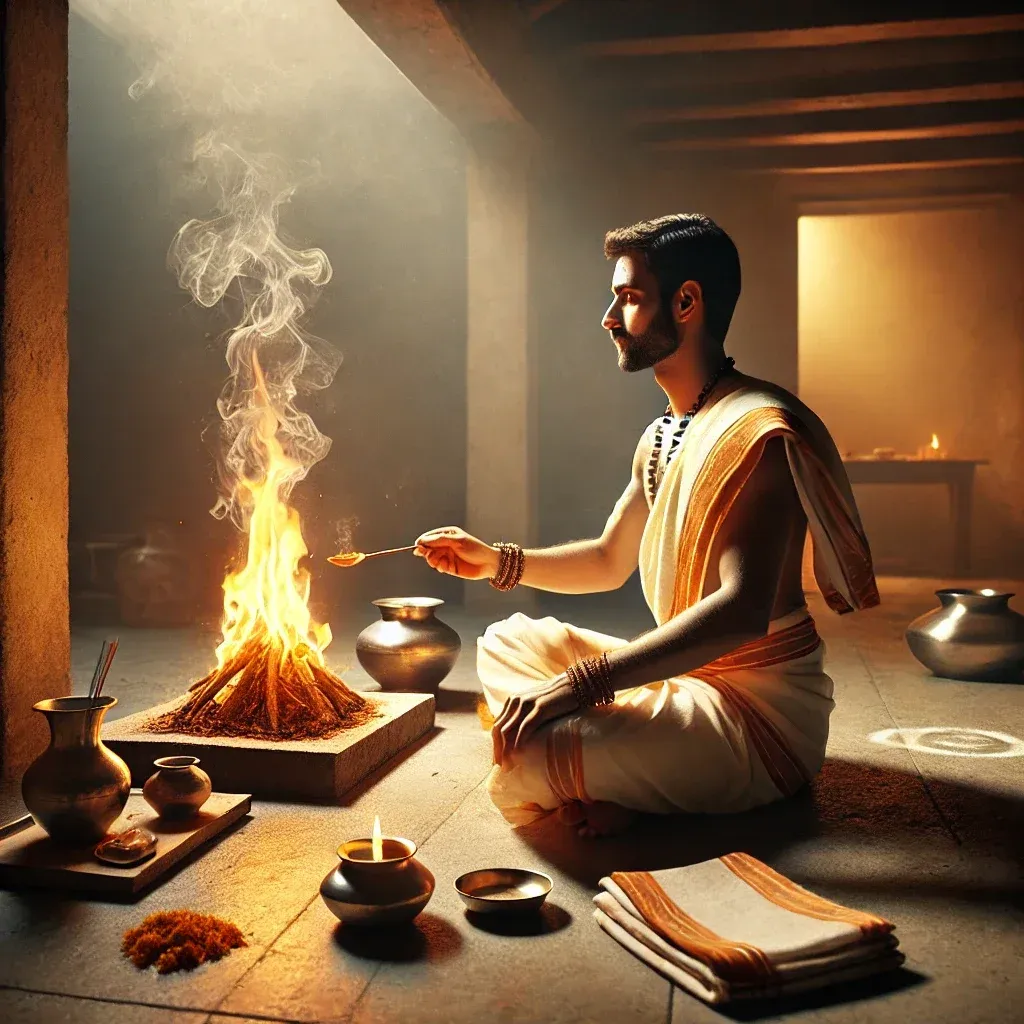
Purpose: To invoke the divine blessings of Mahalakshmi, Lord Ganesha, and Lord Kubera, seeking spiritual and material prosperity guided by righteousness (dharma). The havan symbolizes the burning of impurities and the illumination of divine virtues.
Essential Puja Items:
- A clean havan kund (fire pit or copper vessel)
- Pure ghee (clarified butter)
- Samagri (a mixture of fragrant woods, herbs, sesame, dry coconut, sugar)
- Rice, sandalwood, and flowers, Kusha grass, water, and a bell.
- New account books (bahi-khatas) or symbolic offerings for business prosperity.
- Small idols or pictures of Goddess Lakshmi, Lord Ganesha, and Kubera.
Step-by-Step Procedure
Step 1: Purification & Sankalp (Intention): Sprinkle water around the havan kund and say: Om Apavitraḥ Pavitra t mVā Sarvāvasthām Gato’pi Vā Yaḥ Smaret Puṇḍarīkākṣaṃ Sa Bahyābhyantaraḥ Śuciḥ. (Meaning: Whoever remembers the Lord becomes pure, both internally and externally.)
State your Sankalp (intention) — to perform the Lakshmi-Ganesh Havan for purity, prosperity, and divine guidance in all endeavors.
Step 2: Invocation (Āvāhana):
Invoke Lord Ganesha first: Om Ganapataye Namah Svāhā.
Then invoke Goddess Lakshmi: Om Shreem Mahalakshmyai Namah Svāhā.
Add a few drops of ghee into the fire with each mantra.
Visualizing divine light filling the space.
Step 3: Offerings (Ahutis)
Chant and offer the following mantra while gently placing the samagri and ghee into the sacred fire: Om Shreem Hreem Kleem Mahalakshmyai Namah Svāhā. (Repeat 11 or 21 times.) Each offering symbolizes the surrender of ego, greed, and negativity, replacing them with purity, humility, and faith.
Step 4: Chanting and Meditation
Recite verses from: Shree Sukta (Rigveda hymn glorifying Mahalakshmi) or Lakshmi Ashtottara Shatanamavali (108 names of the Goddess). Meditate on her form — seated on a lotus, radiating compassion and divine brilliance — showering peace and prosperity upon all beings.
Step 5: Prayer
Prayer to Lord Kubera Om Yaksha Rajaya Vidmahe Dhana Dhanyaya Dhīmahi Tanno Kuberaḥ Prachodayāt. Offer a small portion of coins or rice, symbolizing wealth used in good deeds and honest trade.
Step 6: Aarti & Blessing Conclude with:
Om Sarva Mangala Mangalye Shive Sarvārtha Sādhike Sharanye Tryambake Gauri Nārāyaṇi Namostute. Perform Aarti to Goddess Lakshmi and Lord Ganesha with family members, ringing bells, and singing with devotion. Distribute prasad, mark the books with “शुभ लाभ” (Shubh Labh), and begin the new year with gratitude and joy.
The havan is a sacred fire ceremony symbolizing the burning away of inner impurities and inviting divine energy.
🪶 Purpose
- Purify the atmosphere within and without
- Offer gratitude for divine blessings
- Begin the New Year with a dharmic resolve
🔆 Procedure
- Sankalp (Intention) mental purification
- Invocation — Om Shrīm Mahalakṣmyai Namah Svāhā
- Offerings (Āhutis) — surrender of ego
- Chanting & Meditation — Śrī Sūkta recitations
- Prayer to Kubera — pledge to use wealth in service
- Ārati & Conclusion — singing Om Sarva Maṅgala Māṅgalye…
The Bhagavad Gita 4.24 reveals:
“For those who are completely absorbed in God-consciousness, the oblation is Brahman, the ladle with which it is offered is Brahman, the act of offering is Brahman, and the sacrificial fire is also Brahman. Such persons, who view everything as God, easily attain Him."
Five Days of Diwali Celebrations
| Day | Festival | Key Theme | Spiritual Meaning | Suggested Activities |
|---|---|---|---|---|
| Day 1 | Dhanteras | Health & Wealth | Honoring Dhanvantari and Lakshmi | Charity & Lighting of First Lamp |
| Day 2 | Naraka Chaturdashi | Light over Darkness | Purging negativity and ego | Early morning oil bath, lighting lamps |
| Day 3 | Lakshmi Puja / Diwali Night | Prosperity & Purity | Welcoming Goddess Lakshmi & Lord Ganesha | Main Puja and family feast |
| Day 4 | Govardhan Puja / Annakut | Gratitude to Nature | Remembering Krishna’s Govardhan Leela | Food offerings (Annakut) |
| Day 5 | Bhai Dooj | Sibling Love | Blessings between brother & sister | Tilak ceremony and gifts |
🔔 Call to Action
✨ For daily wisdom, guided meditations, and festival discourses, subscribe to Swami Mukundananda’s YouTube Channel and illuminate your journey toward inner prosperity.
🌺 Explore More About Lakshmi Puja & Diwali 2025
Dive deeper into the spiritual and ritualistic aspects of Lakshmi Puja with our extended guides. Learn about detailed muhurat timings, step-by-step puja vidhi, and the divine symbolism behind the 5-day Diwali celebration.
🌸 Visit the JKYog Lakshmi Puja 2025 Guide →
✨ Check out other festival blogs
Check out the Chhath Puja 2025 & Navratri 2025 blog filled with devotion and wisdom. Discover fasting tips, divine stories, and spiritual insights in our complete celebration guide.
🌟 Chhath Puja 2025: All about the 4-day festival, fasting rituals, sunrise and sunset 🌼 Read the Navratri 2025 Celebration Guide → 💖 Navratri 2025 GuideAs you welcome Goddess Lakshmi into your home with prayers, lamps, and devotion, extend her grace beyond your doorstep.
This Diwali, join Swami Mukundananda and the JKYog mission in supporting the underprivileged through the Jagadguru Kripalu University (JKU) and Jagadguru Kripalu Hospital & Research Center — a transformative initiative bringing education, healthcare, and hope to rural India.
“True wealth is found not in what we have, but in what we give.”
🎓 Support the JKU Project – Here's How You Can Help:
💛 Make a Direct Donation
Light up a life with your generous contribution.
👉 Donate Now
👣 Start Your Own Fundraiser
Create your own fundraising page and rally your family, friends, or community.
👉 Start Fundraising Here
🤝 Join the Walk for Education & Healthcare
Be part of a global movement to raise awareness and funds.
🌼 Your Contribution Supports:
- Free & subsidized education for underprivileged children, youth, and adults
- Modern and alternative healthcare, including child health, dental, physiotherapy, and natural healing
- Vocational training and micro-enterprise development
- Promotion of spiritual, physical, and mental well-being based on Vedic and Yogic sciences
"सौ बातन की बात इक, धर मुरलीधर ध्यान।
बढ़वहु सेवा-वासना, यह सौ ज्ञानन ज्ञान॥"
"The essence of all teachings is to meditate on the divine form of Lord Shree Krishna while increasing the desire to serve Him."
— Jagadguru Shree Kripaluji Maharaj
Let your Lakshmi Puja this year be more than a ritual — let it be a real offering of compassion, purpose, and divine service.
🕯️ This Diwali, Don't Just Light Lamps — Light Lives
Together, we can bring the radiance of education, the healing of healthcare, and the blessings of service to thousands.
Frequently Asked Questions (FAQs)
🔹 What is the spiritual significance of Lakshmi Puja?
It signifies the purification of the heart and the cultivation of divine virtues such as generosity, gratitude, and humility.
🔹 Why do we light diyas during Lakshmi Puja?
Each diya represents knowledge dispelling the darkness of ignorance (Maya) and reminds us to keep our inner light ever burning.
🔹 Which mantras are recited during Lakshmi Puja?
Common chants include Śrī Sūkta, Lakshmi Ashtottara Shatanāmāvali, and the simple mantra
“Om Shrīm Mahalakṣmyai Namah Svāhā.”
🔹 How is Lakshmi Puja related to the Bhagavad Gita?
The Bhagavad Gita 2.50 teaches that spiritual wealth arises from selfless service and devotion, aligning perfectly with the essence of Lakshmi Puja.
🔹 How can one attract Goddess Lakshmi’s blessings?
- Keep home and heart pure
- Practice charity and contentment
- Recite mantras with devotion
- Engage in seva and gratitude
📜 Summary
The Significance of Lakshmi Puja lies not in material prosperity, but in awakening the inner light of devotion. When we offer gratitude, serve others, and purify our intentions, we welcome Goddess Lakshmi into our hearts permanently.
Let us light the lamp of bhakti, dispel the darkness of Maya, and celebrate Diwali as the festival of divine consciousness.
📚 References / Citations
- Bhagavad Gita — holy-bhagavad-gita.org
- Swami Mukundananda — Spiritual Secrets from Hindu Scriptures & JKYog.org resources
- Jagadguru Shree Kripaluji Maharaj — Prem Ras Siddhant
- JKYog.org – Festival Insights
- Radha Krishna Temple of Dallas (Allen) – Upcoming Events