दनुर् मासस्य महत्त्वं
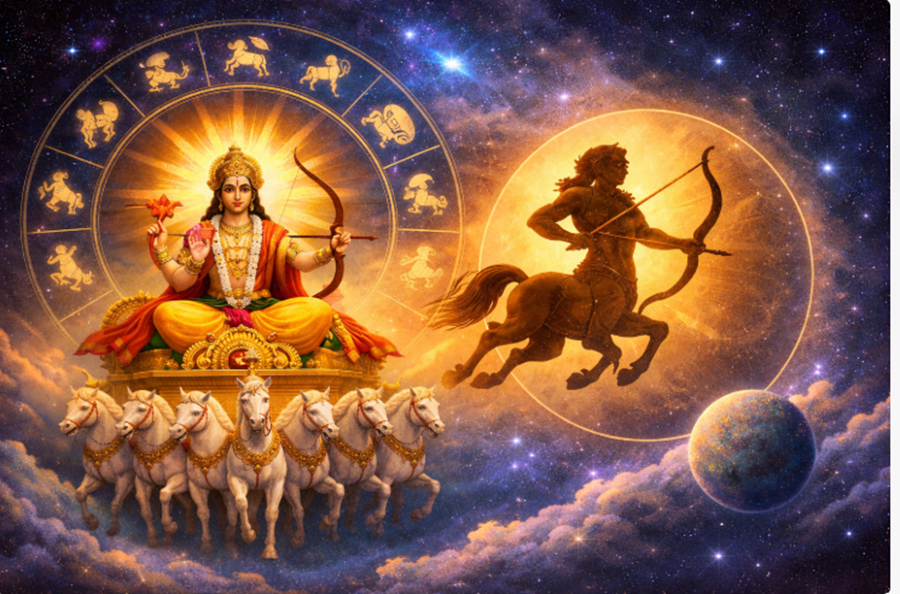
Dhanurmasam is not just a month in a calendar. It is a time when the heart feels lighter, the mind quieter, and grace seems closer than ever before. In the grand fabric of Hindu time cycles, certain moments are imbued with divine presence and mercy. This sacred month — called Dhanurmas when the Sun moves through Dhanu-Rāshi (Sagittarius) — is one such period when devotion becomes easier and Krishna’s compassion more tangible. It is called “Margashirsha Month” in Sanskrit, and Lord Krishna declares in the Bhagavad Gita,
“मासानां मार्गशीर्षोऽहम्” — Among the months, I am Margashirsha.
(See the verse at https://www.holy-bhagavad-gita.org/chapter/10/verse/35)
This declaration reveals a profound truth: Krishna personally identifies with this month, making it a uniquely joyful time for bhakti — devotion through remembrance, purity, surrender, and early-morning inner awakening. In this article you will discover the exact dates and timings for Dhanurmas 2025–26, the significance of this sacred span, the rituals to observe, and how this month invites every seeker into Krishna’s grace with simplicity and sincerity.
|
Event / Ritual |
Gregorian Date (2025–26) |
Timing / Notes |
|
Dhanu Sankranti (Start of Dhanurmas) |
16 December 2025 (Tuesday) |
Punya Kaal: 07:07 AM – 12:17 PM (New Delhi) — Drik
Panchang |
|
Dhanurmas Begins (Solar Transit) |
16 December 2025 |
Sun enters Dhanu-Rāshi — Radha Krishna Temple |
|
Vaikuntha Ekadashi |
30 December 2025 (Tuesday) |
Highly auspicious for Vishnu bhakti — Radha Krishna Temple |
|
Arudra Darshanam |
3 January 2026 (Saturday) |
Celebrated in many temples — Skanda News |
|
Bhogi / End of Dhanurmas |
14 January 2026 (Wednesday) |
Concludes at Makara Sankranti transition — Radha Krishna
Temple |
|
Makara Sankranti / Uttarāyana |
14 January 2026 |
The Sun enters Makara (Capricorn) — Radha Krishna Temple |
Note: Some temples or local traditions may observe slight variations (e.g., starting on 15 December and ending on 13 January), which are based on regional panchangams and sunrise calculations.
Radha Krishna Temple
🙏 Why Dhanurmas Is More Than a Calendar Month
In the rhythm of devotional life, Dhanurmas is unique because it gently shifts the daily cadence toward remembrance. In many temples — especially in South India, from Tamil Nadu to Andhra, Telangana, Karnataka, and Kerala — devotees rise before sunrise to worship Vishnu and Krishna with bhajans, mantra chanting, or recitation of sacred texts such as the Tiruppāvai, Vishnu Sahasranama, and Krishna Ashtakam.
Radha Krishna Temple
Swami Mukundananda Ji often teaches that bhakti need not be grand to be powerful. He reminds us that even a small act of remembrance performed with sincerity can open the heart and bring us closer to God. The month of Dhanurmas, he explains, is like an ocean of grace, ready to uplift every sincere devotee — not based on the size of their practice, but on the purity of their intention.
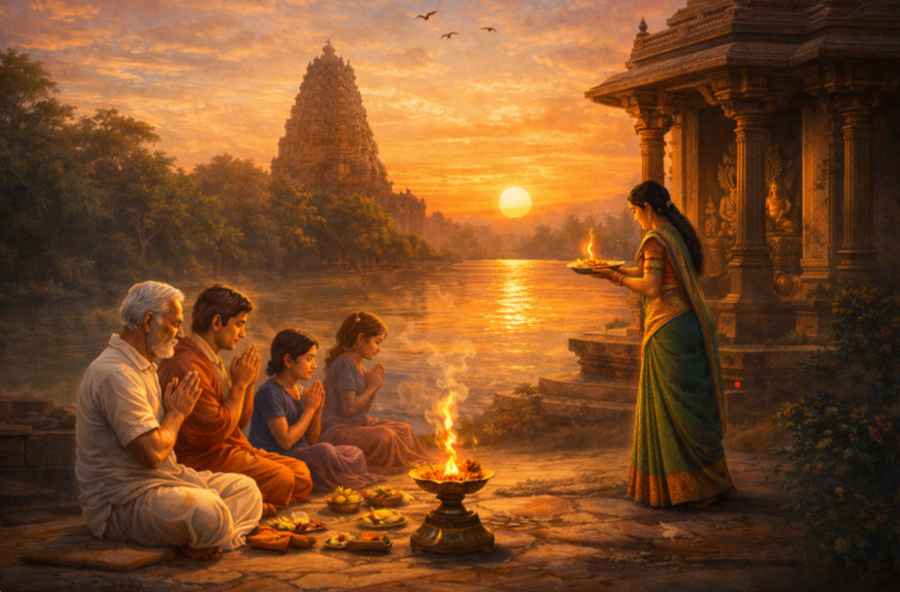
Imagine the early dawn when the world is still. You rise softly, light a lamp, sit with folded hands, and chant Krishna’s names. In those quiet moments, your heart feels less burdened, your thoughts feel clearer, and devotion begins to blossom from within. That is the essence of Dhanurmas — a gift of sattva (purity) and peace.
🕉️ The Spiritual Significance of Dhanurmas
There are many layers of meaning in this sacred month. At the surface, it is a period marked by ritual observance and temple festivities. But deeper down, it is a time of inner renewal and divine invitation.
The Story Behind the Name
Dhanurmas literally means the Month of the Bow (Dhanus = bow), symbolizing focus, alignment, and direction. Just as a bow must be drawn steadily to hit its mark, the month encourages us to draw our attention inward toward Krishna — not through force, but through gentle remembrance.
Wikipedia
Krishna’s Special Identification
When Krishna speaks in the Bhagavad Gita, He says “मासानां मार्गशीर्षोऽham” — Among the months, I am Margashirsha. (Chapter 10, Verse 35). By aligning Himself with this month, Krishna conveys that He is especially accessible during this period. Instead of requiring great feats of austerity, He simply invites every heart to turn toward Him. This reflects a key teaching in bhakti — that God’s grace is available when the heart opens, not when the body resists.
Dawn and Brahma Muhurta — Doorways to Devotion
Dawn is not just a time of day; it is a state of receptivity. Spiritual masters — including Swami Mukundananda Ji — emphasize the value of the Brahma Muhurta (approximately 96 minutes before sunrise). In this time, the mind is less agitated, the senses are calm, and the very atmosphere feels receptive to meditation and prayer. Practicing devotion in this hour magnifies sincerity, brings clarity to the mind, and strengthens inner discipline.
Focus on Bhakti Over Ritual
Dhanurmas teaches that bhakti — devotion of the heart — matters more than rigid rituals. Offering Krishna a sincere prayer during dawn, chanting His holy names, or even reflecting on His qualities can become transformative when done with purity and love. Swami Mukundananda Ji often says that bhakti is measured not by the length of time spent in practice, but by the depth of remembrance our hearts bring to God.
🪔 Rituals to Observe During Dhanurmas
Across India, Dhanurmas is observed with a blend of devotional practices that are rich in meaning yet adaptable to everyday life. Below is a table of key rituals and their nature:
|
Ritual |
How It Is Observed |
Purpose / Spirit |
|
Early Morning Worship (Brahma Muhurta) |
Rising before sunrise, chanting mantras or bhajans |
Calms the mind; aligns the heart with Krishna’s
remembrance |
|
Tiruppāvai Recitation |
Daily recitation or singing of the hymns by Āṇḍāḷ |
Deepens devotional feeling; evokes love for Krishna |
|
Vishnu Sahasranama / Krishna Mantra Chanting |
Repetition of holy names or verses |
Purifies the mind; anchors attention on God |
|
Simple Sattvic Meals |
Food prepared and offered to Krishna |
Reminds seeker that food can be sacred offering |
|
Temple Darshan & Community Bhajans |
Visiting local temples, singing with others |
Fosters a sense of spiritual fellowship |
|
Tulasi Worship |
Offering water and respect to Tulasi plant |
Honors Krishna’s beloved companion & supports devotion |
|
Observing Ekadashi |
Fasting or reduced diet on Vaikunta Ekadashi |
Enhances discipline and focus on God |
These rituals are not rules meant to burden the devotee, but invitations to experience Krishna’s presence in simple, heartfelt ways.
❤️ Dhanurmas Through the Heart’s Lens: A Story of Mercy
In one of his talks, Swami Mukundananda Ji once reminded us that God does not wait for perfection — God waits for sincerity. Dhanurmas feels like that. It feels like a silent whisper from Krishna saying, “Come as you are. Walk with me in these dawn hours.”
During this month, millions of devotees across the world wake up before sunrise. Some sit with folded hands; others with tears of longing. Some are silent; others chant the holy names joyfully. Each one experiences Krishna’s mercy in a personal way — not because the ritual is perfect, but because the heart’s intention is pure.
A simple act like lighting a lamp before dawn and chanting “Hare Krishna” becomes a declaration of trust — that Krishna is not distant, but present in every remembrance. Meditation becomes not an escape, but a coming home. And bhajan becomes not performance, but praise from the heart.
📜 Dhanurmas and the Bhagavad Gita Connection
Krishna’s declaration, “मासानां मार्गशीर्षोऽham” — “Among the months, I am Margashirsha” (Bhagavad Gita 10.35), is a reminder that God becomes closer to the devotee when the devotee turns toward Him. This verse is a jewel for bhakti aspirants, illuminating that grace increases when the human heart sincerely remembers God.
You can read this verse on the official Bhagavad Gita website here: https://www.holy-bhagavad-gita.org/chapter/10/verse/35
This spiritual truth is not abstract — it is experiential. When we slow down our external pace and uplift our internal rhythm through devotion, Krishna’s compassionate presence becomes palpable.
✨ Celebrating Community and Personal Practice
Dhanurmas is not only an individual spiritual journey; it is a shared cultural devotion across many traditions. In South India, especially in Tamil Nadu, families wake up before dawn to sing the Tiruppāvai, a devotional text composed by Āṇḍāḷ, reflecting the yearning of a devotee for Krishna’s grace. Temples resonate with bhajans and kirtans during the early hours.
Yet, devotion is not limited to temples or groups. A home practice can be just as powerful — lighting a lamp with a family ritual, chanting a mantra together, or sharing a verse and reflecting on it. Each expression becomes a personal prayer that Krishna receives with delight.
Swami Mukundananda Ji often draws our attention to the innocence of devotion. He reminds us that a child’s simple chanting of Krishna’s name with full attention can be more spiritually potent than elaborate rituals performed without focus. Dhanurmas amplifies this principle — that bhakti blooms best in simplicity and presence.
💬 Quotes to Reflect On
· “God does not wait for perfection — God waits for sincerity.” — Swami Mukundananda Ji (teaching theme)
· “Begin the day with God, and the day becomes guided by God.” — devotional reminder in the spirit of bhakti
· “Bhakti is measured not by length of practice, but by depth of remembrance.” — bhakti principle emphasized in teachings
🔍 FAQs — SEO Friendly & Helpful
Q: What are the exact dates of Dhanurmas in 2025–26?
A: Dhanurmas begins on 16 December 2025 with Dhanu Sankranti and concludes on 14 January 2026 on Bhogi / Makara Sankranti.
Radha Krishna Temple
Q: Why is Dhanurmas significant in devotion to Krishna?
A: Because Krishna Himself identifies with this sacred month — saying that He manifests most in Margashirsha — making it a powerful period for devotion, remembrance, and inner transformation.
Wikipedia
Q: What is the primary ritual of Dhanurmas?
A: The core practice is early-morning devotion (Brahma Muhurta) — waking before sunrise for prayer, mantra chanting, or bhajan. Other observances include recitation of devotional hymns like the Tiruppāvai and offering food with devotion.
Radha Krishna Temple
Q: Can I observe Dhanurmas at home?
A: Absolutely. A simple daily practice of remembrance, light, and chant at dawn with sincere heart is a complete form of devotion during this month.
Q: Are there special days within Dhanurmas?
A: Yes. Vaikuntha Ekadashi (30 December 2025) is especially potent for worshiping Vishnu; Arudra Darshanam (3 January 2026) holds devotional importance in some traditions.
Radha Krishna Temple
🕊️ Closing Reflection
Dhanurmas is not a ritual to complete; it is a grace to receive. It invites us to rearrange our hearts before we rearrange our schedules. To value dawn over dusk. To find Krishna not in frenzy but in stillness. And to understand that devotion is not about perfection, but presence of heart.
As the dawn breaks each day of Dhanurmas, let your first thought be Krishna — not as a distant ideal, but as a presence that welcomes you with infinite mercy whenever you remember Him.