
Illness often feels like a storm that shakes the very core of our being. It can drain energy, dampen motivation, and fill the mind with anxiety or despair. Yet, in such moments of physical fragility, our spiritual potential can blossom in profound ways. Bhakti, when sick — or devotion during illness — is not about doing more; it is about feeling more deeply. It invites us to turn pain into prayer, discomfort into discipline, and weakness into worship.
As Swami Mukundananda teaches, even when the body is weak, the soul’s connection to God remains strong. Bhakti, therefore, is not limited by health or circumstance. It can be practiced in the simplest ways — through visualization, prayer, chanting, and loving remembrance of God.
The Spiritual Opportunity Hidden in Illness
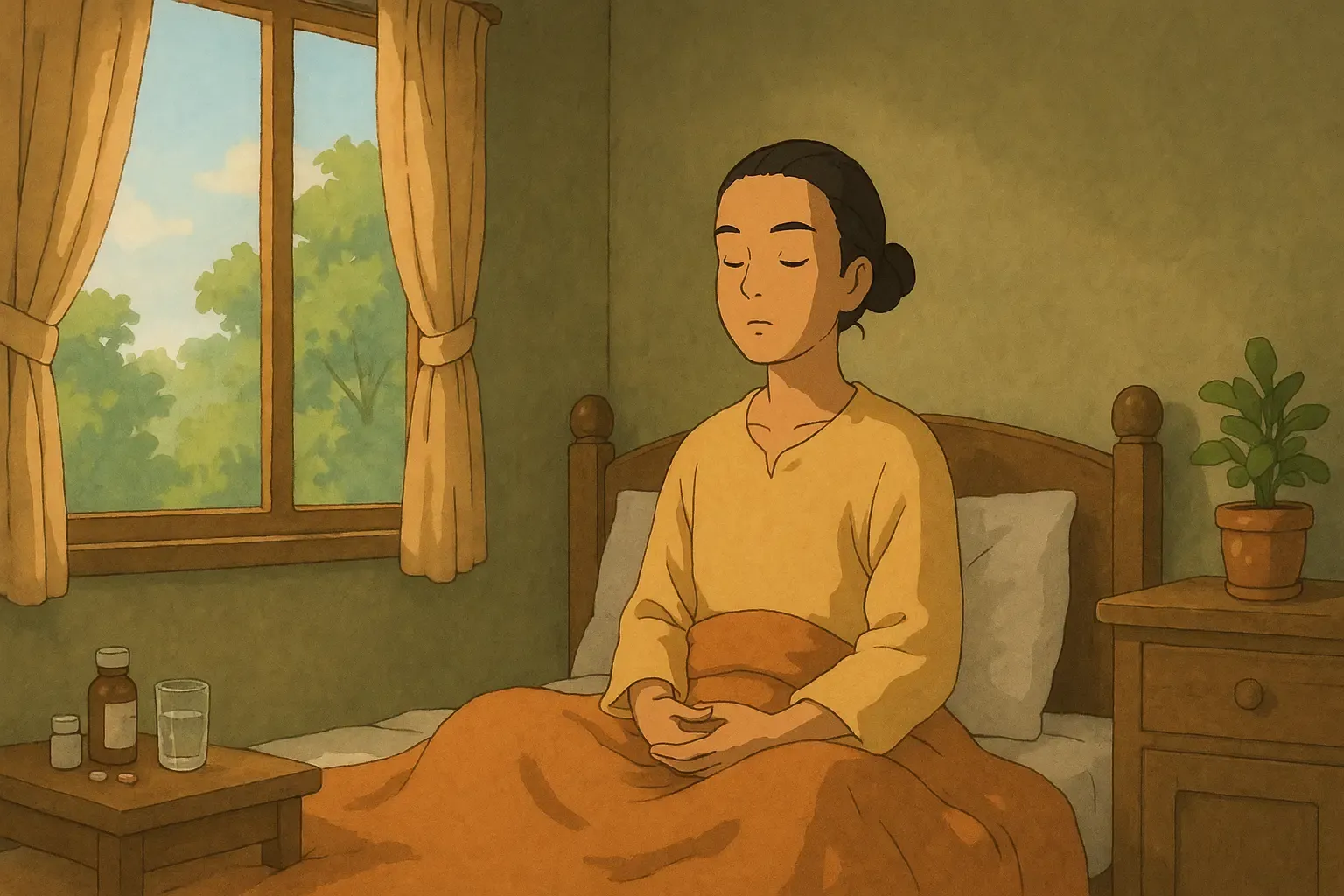
We tend to perceive illness as an obstacle — a pause in life’s flow. But from a spiritual lens, sickness can become a sacred opportunity for growth. Swami Mukundananda Ji often reminds us that even pain can purify, helping to burn the past karmas and cultivate humility, surrender, and gratitude.
According to the Bhagavad Gita:
“duḥkheṣu anudvigna-manāḥ sukheṣu vigata-spṛihaḥ”
“One whose mind remains undisturbed amidst misery, who does not crave for pleasure, and who is free from attachment, fear, and anger, is called a sage of steady wisdom.” — Bhagavad Gita 2.56
This verse guides us to maintain equanimity — an unshaken peace — in both pleasure and pain. Illness, then, becomes a teacher. It invites us to practice this inner balance, reminding us that we are spiritual beings having a temporary physical experience.
Understanding the Causes of Disease — A Spiritual View
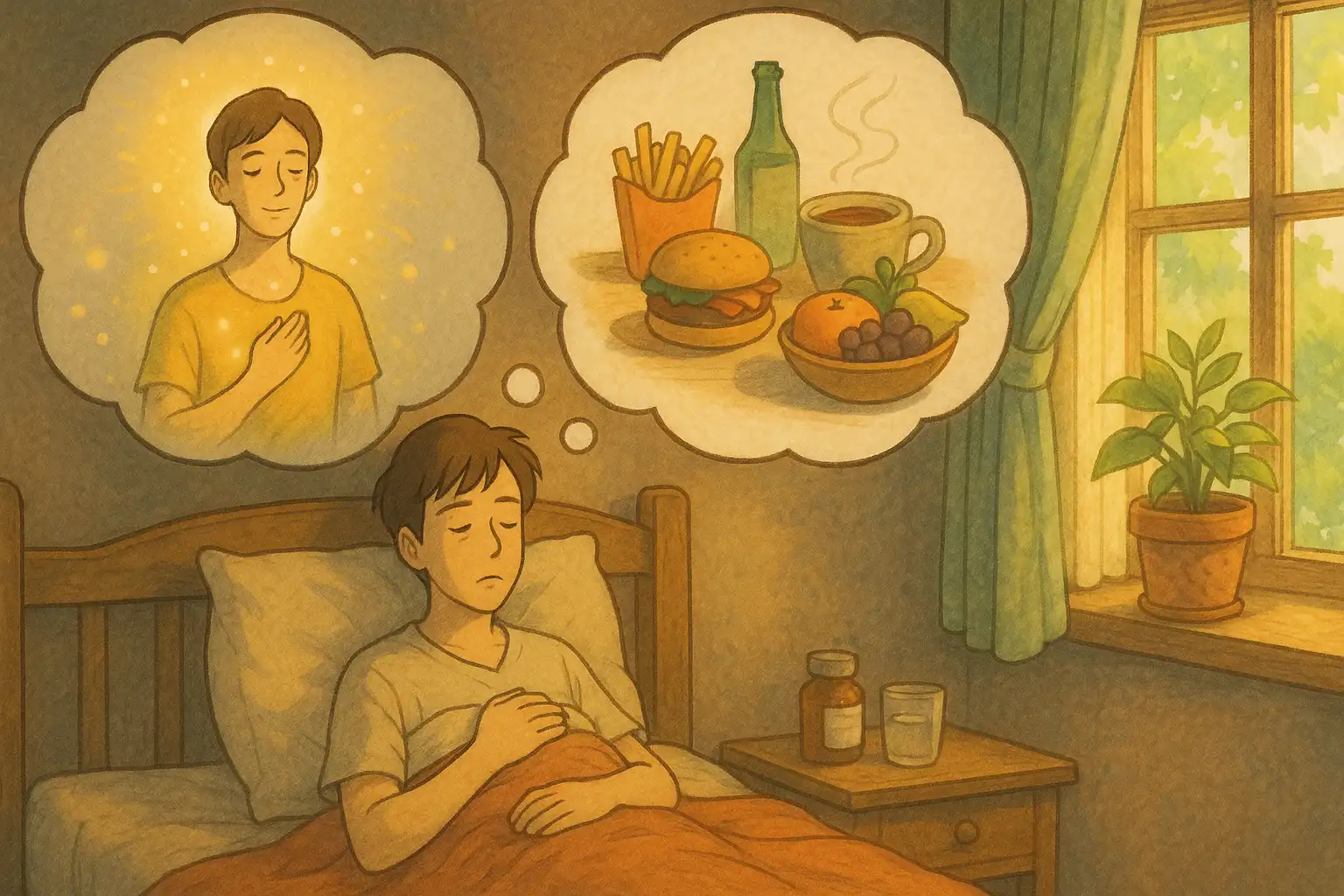
Swami Mukundananda explains that disease can arise from two main causes:
- Karmic Causes: Illness can be a result of past actions — a divine mechanism for balancing karma and purifying the soul. This process is not punishment but grace, enabling us to grow spiritually.
- Lifestyle Causes: Poor diet, stress, lack of rest, or negative thoughts can manifest as illness in the present. The mind and body are intimately linked; a disturbed mind often leads to a disturbed body.
Modern science echoes this connection. Research in psychoneuroimmunology — the study of how thoughts and emotions affect immunity — reveals that chronic stress and negative emotions can weaken our immune system, while positive emotions, faith, and meditation enhance healing.
Thus, both spirituality and science affirm: healing is not only physical, but mental and spiritual as well.
Bhakti When Sick — Practicing Devotion in Simpler Ways
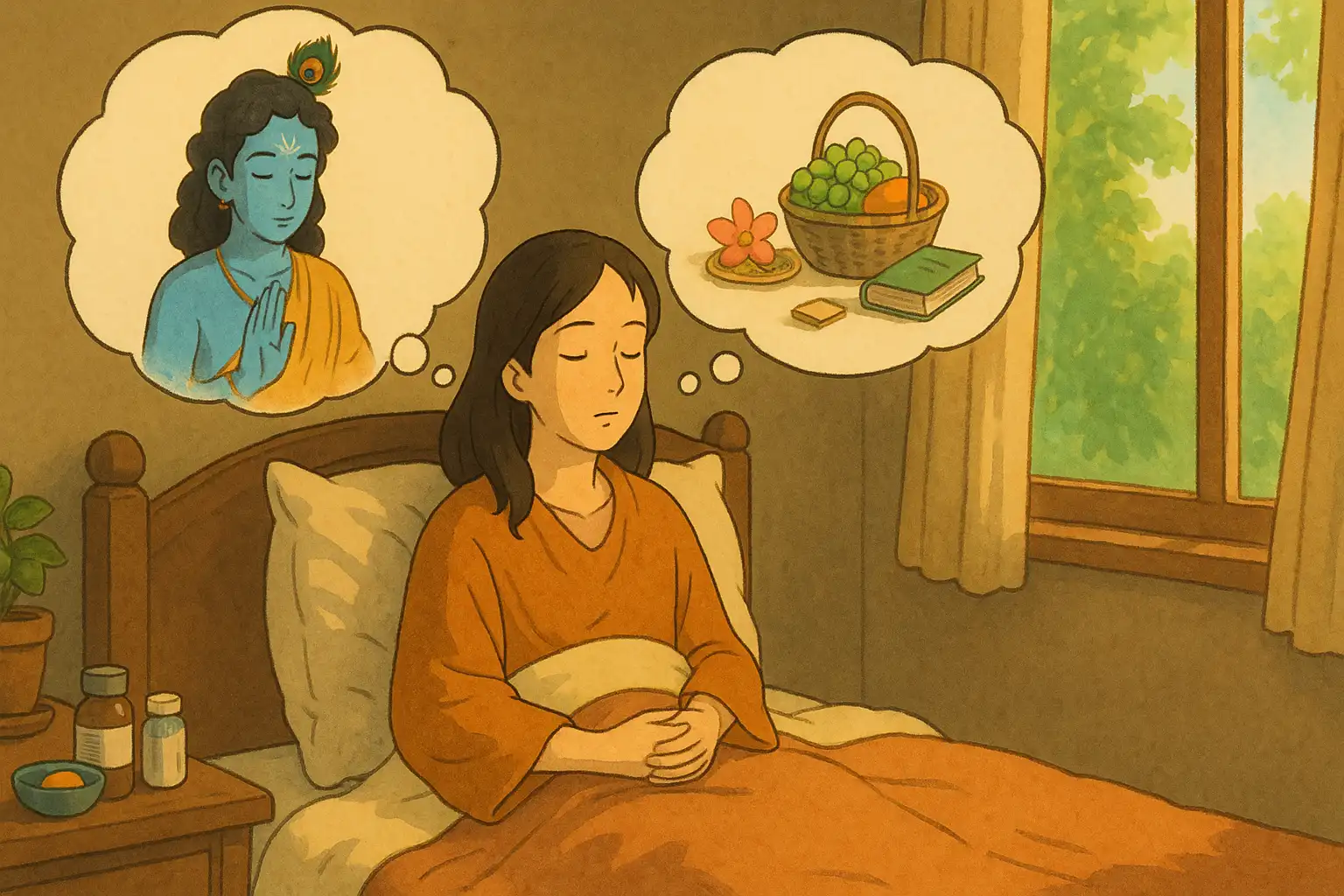
When health declines, elaborate rituals may be impossible. But Bhakti does not demand physical strength — only sincerity. Swami Mukundananda Ji advises that during illness, one can continue devotion in gentler, heartfelt forms.
1. Keep Your Mind on God
Even when confined to bed, your mind remains free. Use it to stay connected with the Divine.
- Visualize: Picture your chosen form of God — Krishna, Ram, or any form that inspires love. Visualization strengthens focus and brings inner peace. Swami Mukundananda Ji says, “Visualization creates a foundation for love and transforms abstract faith into personal connection.”
- Chant: Repeating the divine names or singing kirtan fills the environment with spiritual vibration. The sound of God’s name soothes the heart more deeply than any medicine.
- Meditate: Focus gently on your breathing while remembering God. Even short, sincere meditation brings relief to the mind and strengthens your will to recover.
2. Engage in Simple Acts of Devotion
Even small acts of love offered sincerely are powerful expressions of Bhakti.
- Offer Prayers and Worship: When elaborate rituals are difficult, offer mental worship. Close your eyes and imagine yourself offering flowers at God’s feet.
- Choose a Simple Act of Service (Seva): Even one small disciplined act — offering fruit, helping another in need, or simply maintaining cheerfulness — becomes sacred when done in remembrance of God.
- Read or Listen to Scriptures: Spend a few minutes daily reading verses from the Bhagavad Gita, Ramayan, or Swami Mukundananda Ji’s writings. The divine words uplift consciousness and heal the heart.
3. Cultivate Gratitude
Even in illness, there are blessings — loving family, medical care, the chance to rest, or moments of introspection. Gratitude transforms the energy around us. Recent research by esteemed Professors Robert Emmons and Michael McCullough shows that daily gratitude practices increase optimism, sleep quality, and immunity. Thus, spirituality and science agree: when the body is sick, gratitude becomes medicine for the mind.
A Divine Perspective — Seeing Illness as God’s Grace
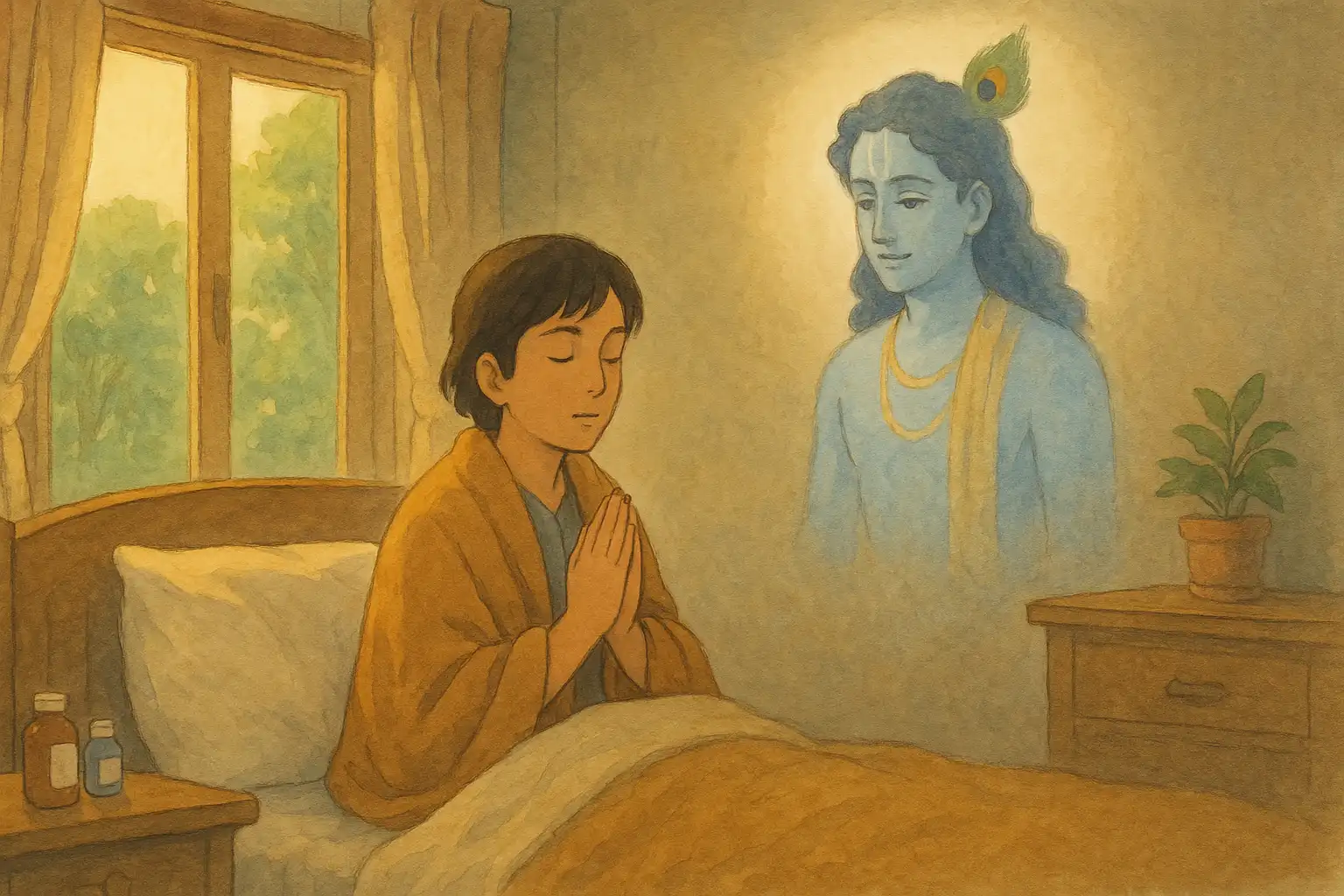
When we face physical suffering, it is easy to ask, “Why me?” But the true seeker reframes the question: “What lesson is God teaching me through this?”
Swami Mukundananda Ji explains that disease can serve as a reminder of our dependence on God. It humbles the ego and helps us detach from the illusion of control. In surrendering, we rediscover our true nature as divine souls.
“ananyāśh chintayanto māṁ ye janāḥ paryupāsate.
“There are those who always think of Me and engage in exclusive devotion to Me. To them, whose minds are always absorbed in Me, I provide what they lack and preserve what they already possess.” — Bhagavad Gita 9.22
This verse assures us that when we surrender in loving faith, God Himself takes responsibility for our well-being. Even if the body suffers, the soul finds refuge in His love.
Transforming the Mind During Illness
When sick, the mind tends to oscillate between fear and frustration. But spiritual transformation begins when we shift our inner dialogue.
1. Recognize Illness as an Opportunity
Instead of seeing it as punishment, recognize it as an invitation to the deeper faith.
“Pain is not the enemy of devotion — forgetfulness of God is.” — Swami Mukundananda
Every discomfort can purify the heart, softening pride and building patience. Pain is inevitable, but suffering is a choice. Our physical pains can bring us closer to God.
2. Practice Selfless Love
Bhakti means loving God not for what He gives, but for who He is. Illness teaches us to love purely — without conditions. When we turn our focus from asking for health to simply offering love, no matter what our condition, the devotion deepens.
3. Be Patient with Yourself
Do not compare your current practice to earlier days of vigor. The essence of Bhakti is not quantity but quality. Even a few minutes of heartfelt remembrance during sickness, pain, acute or chronic illness, can outweigh hours of distracted worship in a state of proper physical health.
The Science Behind Spiritual Healing
Spiritual practices such as meditation, prayer, and chanting have been widely studied for their health benefits. Modern research validates what saints have long taught — that inner peace fosters outer healing.
- Meditation: Reduces inflammation and pain perception.
- Prayer and Faith: Associated with faster recovery and emotional stability in patients.
- Chanting and Music Therapy: Lowers anxiety and heart rate, promoting relaxation.
Thus, when you engage in Bhakti — chanting, visualizing, meditating, or offering service — you are not only nourishing your soul but also strengthening your body’s natural capacity to heal by increasing your immune system strength.
Living Bhakti Through Acceptance
Acceptance is not resignation; it is trusting God’s wisdom more than your own. When you accept your condition as His will, your heart becomes peaceful. That peace itself accelerates healing.
Remember, your worth is not defined by your physical strength. Your devotion, sincerity, and love are what make you divine. Whether lying in a hospital bed or walking in a temple courtyard, you can remain a true Bhakta — a lover of God.
Practical Ways to Sustain Devotion During Illness

Below are simple, effective ways to keep the flame of Bhakti alive, even in times of sickness:
Daily Practices
- Begin the day with a short prayer: “O Lord, guide me to remember You through every breath today.”
- Keep soft devotional music or kirtan playing in your room.
- Read one verse from the Bhagavad Gita or listen to Swami Mukundananda Ji’s discourses online or through the app.
- Offer your medicines, meals, and even rest to God mentally — as sacred acts of worship.
Mental Habits
- Replace “Why is this happening?” with “What is God teaching me?”
- Speak words of hope and gratitude — they have healing vibrations.
- Surround your mind with uplifting company, even if virtually, through Sunday Satsang, Kirtan, or Roop Dhyān meditation, or watching YouTube videos through Swamiji’s channel.
Perspective Shifts
- Illness is temporary; the soul is eternal.
- Suffering purifies desire and strengthens detachment.
- Each moment of pain can be turned into an offering to God.
Bhakti When Sick — The Inner Alchemy
When a devotee chooses to love God amidst pain, something miraculous happens — the suffering body becomes a sacred temple. This is the alchemy of Bhakti: it transforms adversity into awakening. The scriptures declare:
“sarva-dharmān parityajya mām ekaṁ śharaṇaṁ vraja”
“Abandon all varieties of dharmas and simply surrender unto Me alone. I shall liberate you from all sinful reactions; do not fear." — Bhagavad Gita 18.66
This ultimate surrender is not passive — it is active trust. When we let go of resistance and offer our circumstances to God, He carries our burdens. Through such surrender, the soul tastes divine peace even amidst bodily suffering.
Key Takeaways
- Illness can purify the soul by burning karma and deepening surrender.
- Bhakti, when sick, means simplifying devotion through visualization, chanting, prayer, and gratitude.
- Scientific research supports that faith, meditation, and gratitude strengthen immunity and mental well-being.
- Acceptance and surrender are the highest forms of healing — bringing peace that transcends physical pain.
- Even a small act of love or remembrance of God during illness carries immense spiritual merit.
Conclusion: Turning Sickness into Spiritual Strength
Illness can test our patience, faith, and resolve — but it can also reveal our true selves. Bhakti, when sick, transforms suffering into sanctity, reminding us that even in weakness, we are held by divine love. Each breath, each tear, and each prayer can become a step toward our divine goal. As Swami Mukundananda Ji beautifully says: “The measure of devotion is not how much you do for God, but how much you remember Him — even in difficulty.”
Let your illness become your ashram — a sacred space where you meet God in silence, surrender, and love.
🌸 Call to Action
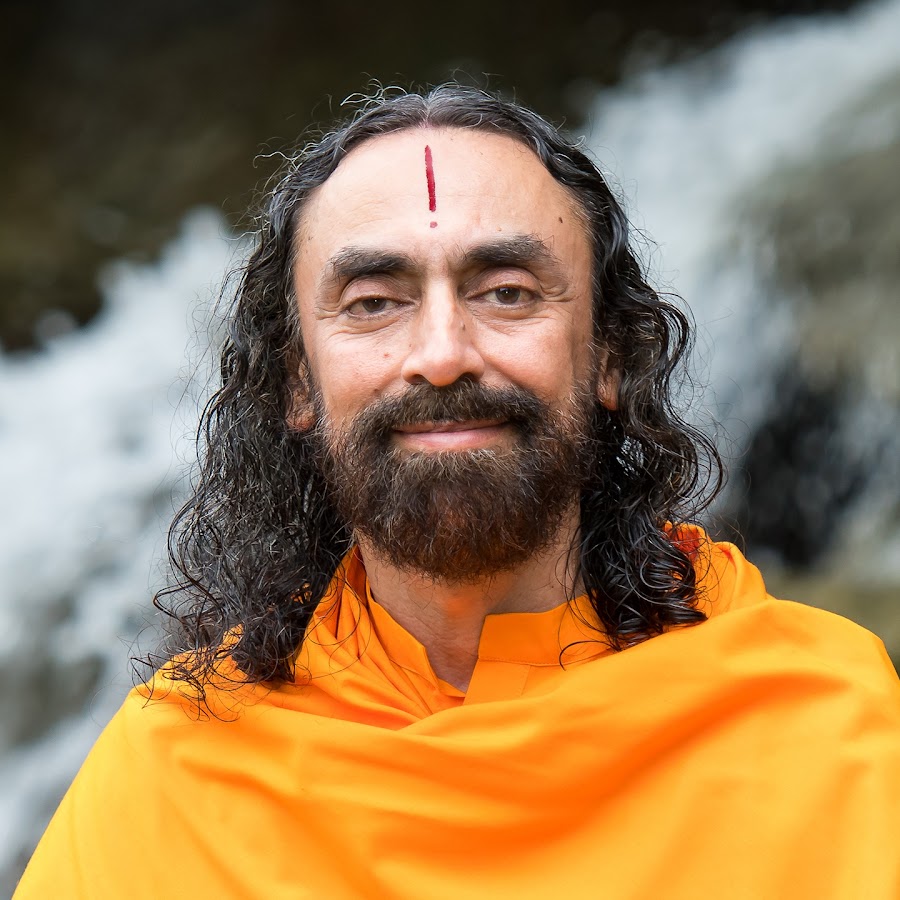
For more guidance on practicing devotion, meditation, and mind management, explore Swami Mukundananda’s enlightening talks and kirtans on his YouTube channel:

Frequently Asked Questions (FAQs)
1. How can I practice Bhakti when I am too weak to perform rituals? Focus on mental devotion — visualize God, chant softly, or simply remember His name. Even silent prayer from the heart is powerful in God’s eyes.
2. Does illness mean I am facing bad karma?
Not necessarily. While some diseases arise from past actions, illness can also result from present lifestyle factors. Regardless of cause, it offers a chance to purify the soul and strengthen faith.
3. Can Bhakti really help in healing physical illness?
Yes: Bhakti calms the mind, reduces stress, and fosters positive emotions — all of which enhance immunity and recovery, as proven by research in mind-body medicine.
4. How can I maintain devotion when I feel mentally low?
Listen to devotional talks, sing kirtan, or repeat God’s name. Surround yourself with positive spiritual content, such as Swami Mukundananda’s YouTube channel, to reignite faith and joy.
5. What is the best mindset to cultivate during illness?
Adopt gratitude and surrender. Trust that everything is happening for your highest good. Remember, God’s grace often hides behind challenges.