
One Devotee, One Year, One Continuous River of Love
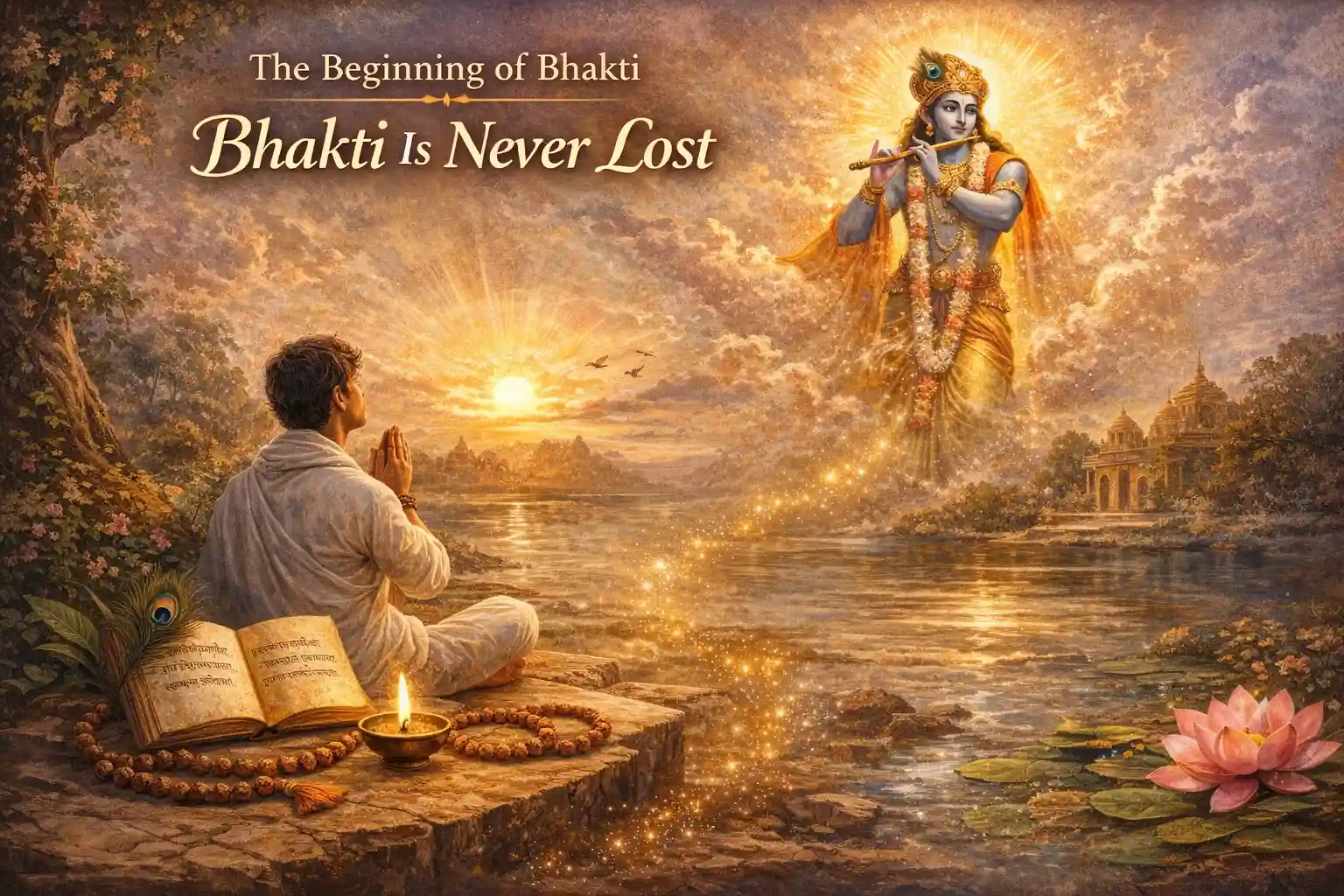
Bhakti does not usually announce itself with thunder. It arrives softly, like a lamp lit in a restless heart. One day, amid responsibilities and scattered thoughts, a devotee whispers from within: Shree Krishna, I want You. That single whisper is not small. It is the beginning of a sacred return.
The Bhagavad Gita is the Song of God, Shree Krishna’s personal invitation to step into His world: a realm of bliss, completeness, and divine abundance. It is not merely philosophy; it is a promise. Again and again, Shree Krishna assures the soul: come to Me. And as we try to walk toward Him, He promises to guide, protect, support, and uplift us with loving care, especially when we feel weak, when the mind is restless, when we fall, or when we stand in confusion and dilemma.
That is why the Gita feels so intimate. It does not ask for perfection before devotion. It teaches that even a little effort on this path is protected. Over the course of one year, that same truth deepens in the devotee’s life, from small steps of prayer and offering, to steadier remembrance, and finally to surrender. In the beginning, we look for God only in sacred places. But Bhakti slowly changes our vision until we begin sensing His presence everywhere, like Prahlad, who saw Narayan even where others saw only a stone pillar.
In the sections that follow, each Gita verse will appear with Devanagari, transliteration, meaning, and a scripture story that sustains it. Not as theory, but as living moments—each a turning point, each a reminder that Shree Krishna is not asking for perfection. He is asking for love, and love always finds its way back to Him.
The First Small Step: Bhakti is never lost
As the year opens, the devotee does not attempt something complicated. They begin with what they can sustain, few minutes of remembrance in the morning, a simple offering before meals, one small decision to pause before reacting. There is no pride in these beginnings, only sincerity. Slowly, a quiet miracle unfolds: the heart becomes softer, and Shree Krishna feels closer.
Bhagavad Gita 2.40
नेहाभिक्रमनाशोऽस्ति प्रत्यवायो न विद्यते ।
स्वल्पमप्यस्य धर्मस्य त्रायते महतो भयात् ॥ 40॥
Transliteration
nehābhikrama-nāśho ’sti pratyavāyo na vidyate
svalpam apyasya dharmasya trāyate mahato bhayā
Meaning
Working in this state of consciousness, there is no loss or adverse result, and even a little effort saves one from great danger.
In time, bhakti transforms the devotee’s vision. God is no longer sought only in temples or scriptures—He is felt everywhere. Meera Bai lived in this divine awareness. For her, Shree Krishna was not an image or an idea; He was the breath of her life. Every form she encountered reminded her of Him, every command of the world faded before His will. Joy or hardship, praise or rejection—Meera accepted all as Shree Krishna’s arrangement. In her surrender, the world lost its power to command her, because she had already given her heart completely to the Lord. Such bhakti teaches us that when love becomes absolute, God is seen everywhere, and His will becomes the devotee’s only direction.
This is how BG 2.40 lives in real life: Meera Bai “small” bhakti was not lost. It became her protection, her courage, and her divine shelter.
Bhakti takeaway (this month)
Begin with one small step you can sustain, one daily prayer, one name of Shree Krishna, one offering of the heart, and trust that Shree Krishna counts every sincere beginning.
From Small Steps to Simple Offerings: Bhakti Becomes Real
As the year moves forward, the devotee does not try to impress God with grand plans. They begin with what can be sustained, a quiet prayer before meals, and a small offering made with love. Nothing dramatically changes outside, but devotion starts shaping the inner world. The heart learns a sweet truth: Shree Krishna is not waiting for perfection. He is waiting for sincerity.
Bhagavad Gita 9.26
पत्रं पुष्पं फलं तोयं यो मे भक्त्या प्रयच्छति ।
तदहं भक्त्युपहृतमश्नामि प्रयतात्मनः ॥ 26॥
Transliteration
patraṁ puṣhpaṁ phalaṁ toyaṁ yo me bhaktyā prayachchhati
tadahaṁ bhaktyupahṛitam aśhnāmi prayatātmanaḥ
Meaning
If one offers to Me with devotion a leaf, a flower, a fruit, or even water, I delightfully partake of that item offered with love by My devotee in pure consciousness.
Sudama’s simple gift

Sudama came to meet Shree Krishna with nothing worthy of a king. In his hands was only a small bundle of beaten rice, offered shyly and with love. He felt embarrassed, thinking of Shree Krishna’s grandeur and his own poverty. But Shree Krishna did not measure the gift by its size. He received it with joy, as if it were a treasure, because the real offering was Sudama’s heart. In that exchange, devotion became visible. God showed the world that He is purchased not by opulence but by love.
This is BG 9.26 living in real life: devotion makes the simplest offering divine.
Bhakti Takeaway
Offer something small every day with love, a brief prayer, a tulsi leaf, a fruit, or even water, and let your heart feel: Shree Krishna accepts my sincerity.
When the Mind Starts Resisting: Bhakti Becomes Real
But it does not stay easy for long. As the first sweetness of beginning fades, the mind reveals its nature—restless, impatient, and easily pulled outward. Some days the devotee sits to pray and thoughts run everywhere. Some days they promise to remember Shree Krishna, and within an hour they forget. Yet this struggle is not a sign that bhakti is failing. It is a sign that real inner work has begun.
Bhagavad Gita 6.34
चञ्चलं हि मनः कृष्ण प्रमाथि बलवद्दृढम् ।
तस्याहं निग्रहं मन्ये वायोरिव सुदुष्करम् ॥ 34॥
Transliteration
chañchalaṁ hi manaḥ kṛiṣhṇa pramāthi balavad dṛiḍham
tasyāhaṁ nigrahaṁ manye vāyor iva suduṣhkaram
Meaning
Arjun to Shree Krishna: The mind is very restless, turbulent, strong and obstinate, O Krishna. It appears to me that it is more difficult to control than the wind.
Arjuna’s Human Moment

Arjuna was trained, courageous, and respected. Yet even he stood overwhelmed, his mind flooded with confusion and emotional turbulence. He did not pretend to be steady. He turned to Shree Krishna and admitted the truth of his mind. And Shree Krishna did not reject him for it but Shree Krishna guided him.
This is BG 6.34 sustained by lived reality: the mind’s restlessness is universal, and the solution begins by taking shelter of God’s guidance.
Bhakti takeaway (this month)
When your mind becomes noisy, don’t conclude you are unfit for bhakti. Conclude only this: it is time to lean on Shree Krishna more deeply.
The Gentle Return: Bhakti Trains the Wandering Mind
So, the devotee learns a gentler strength. When the mind wanders, they do not panic, they return. When distractions rise, they do not collapse, they remember. A simple name of Shree Krishna becomes their rope. Slowly, practice becomes less about “control” and more about coming back to Shree Krishna with love.
Bhagavad Gita 6.26
यतो यतो निश्चरति मनश्चञ्चलमस्थिरम् ।
ततस्ततो नियम्यैतदात्मन्येव वशं नयेत् ॥ 26॥
Transliteration
yato yato niśhcharati manaśh chañchalam asthiram
tatas tato niyamyaitad ātmanyeva vaśhaṁ nayet
Meaning
Whenever and wherever the restless and unsteady mind wanders, one should bring it back and continually focus it on God.
Ajamila and the Power of Return
Ajamila’s life is remembered as a warning and also as hope. He fell far from dharma. Yet in fear and desperation, he called out a name, Narayan. Even if his calling began imperfectly, that moment became a turning point. The Lord’s name created a return, and that return became rescue and renewal. Bhakti is powerful because it brings us back.
This is BG 6.26 in living form: the mind wanders, life wanders, but the path is always open through returning.
Bhakti Takeaway
Make your bhakti simple: when you forget, return. One name of Shree Krishna, one deep breath, one small prayer, and begin again.
When the Mind Becomes a Friend: Devotion Turns Inner Chaos into Support
With steady practice, something begins to shift. The devotee stops measuring progress by perfection and starts measuring it by sincerity. The mind that once dragged them outward slowly starts helping them come inward. The struggle does not vanish, but the relationship changes.
Bhagavad Gita 6.6
बन्धुरात्मात्मनस्तस्य येनात्मैवात्मना जितः ।
अनात्मनस्तु शत्रुत्वे वर्तेतात्मैव शत्रुवत् ॥ 6॥
Transliteration
bandhur ātmātmanas tasya yenātmaivātmanā jitaḥ
anātmanas tu śhatrutve vartetātmaiva śhatruvat
Meaning
For those who have conquered the mind, it is their friend. For those who have failed to do so, the mind works like an enemy.
Hanuman’s Single-Pointed Devotion
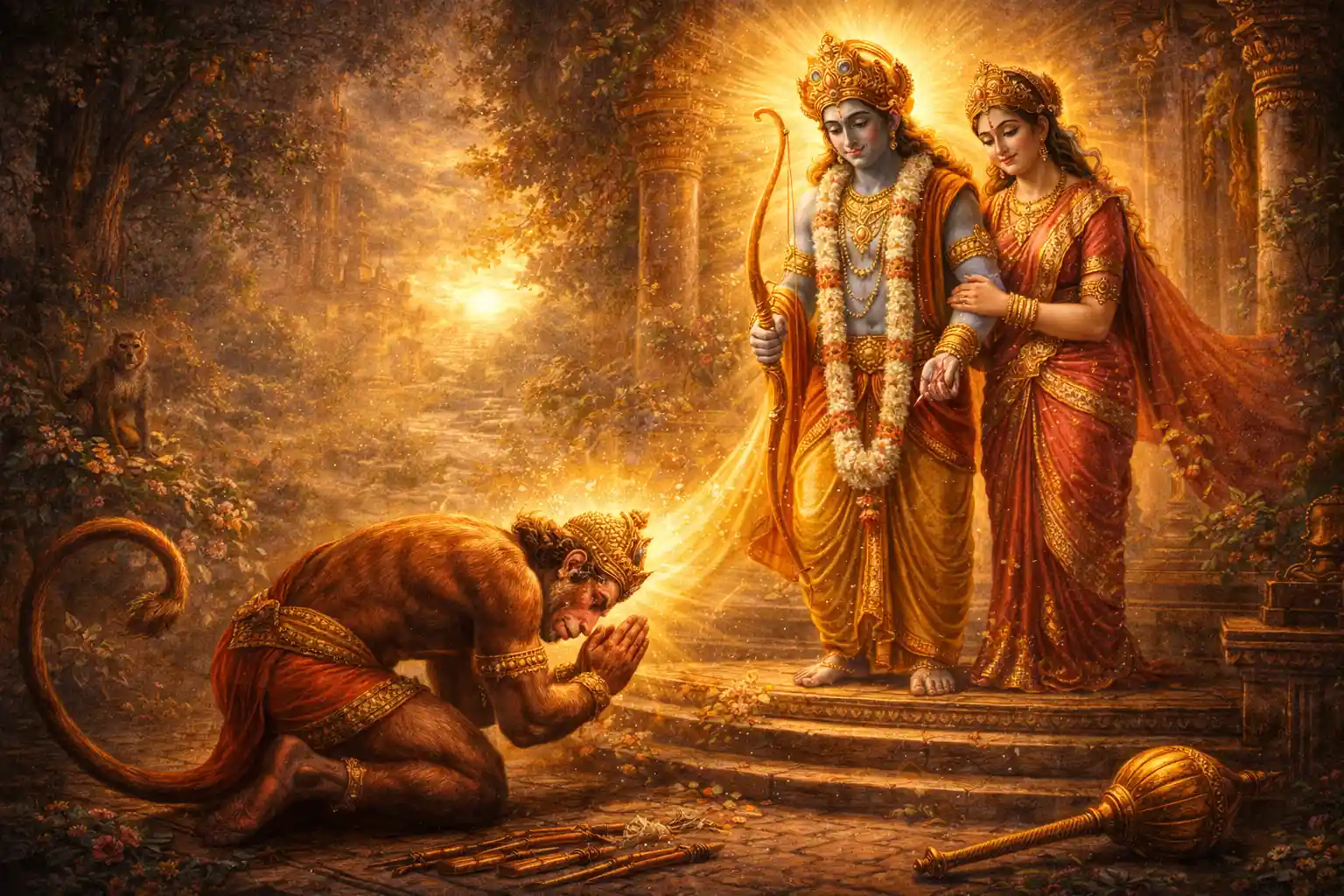
Hanuman’s strength was inner steadiness. His mind did not wander after praise, nor collapse under difficulty, because it was tied to one thing, service of Shri Ram. When the mission was hard, his mind did not argue; it moved. His devotion made his mind a powerful ally.
This is BG 6.6 made visible: the mind becomes friend when anchored in bhakti.
Bhakti Takeaway
Choose one daily anchor that trains the mind into friendship: fixed prayer time, one mala, one kirtan, or one verse.
Duty Becomes Worship: Bhakti Enters Daily Life
Devotion steps out of the prayer corner and enters ordinary life. Work becomes a place to practice humility. Family life becomes a place to practice patience. Success and failure still come, but the devotee learns to stay steady by placing results at Shree Krishna’s feet.
Bhagavad Gita 2.47
कर्मण्येवाधिकारस्ते मा फलेषु कदाचन ।
मा कर्मफलहेतुर्भूर्मा ते सङ्गोऽस्त्वकर्मणि ॥ 47॥
Transliteration
karmaṇy-evādhikāras te mā phaleṣhu kadāchana
mā karma-phala-hetur bhūr mā te saṅgo ’stv akarmaṇi
Meaning
You have a right to perform your prescribed duties, but you are not entitled to the fruits of your actions. Never consider yourself to be the cause of the results of your activities, nor be attached to inaction.
King Janaka’s Karma-yoga
King Janaka lived in the world yet stayed inwardly free. He did not abandon responsibility in the name of spirituality, nor did he become enslaved by results. Work done as service purified the heart.
This is BG 2.47 lived practically: duty offered to God becomes worship.
Bhakti Takeaway
Before starting your day, offer one line to Shree Krishna: This work is for You and then leave results at His feet.
When Grace Feels Personal: Shree Krishna Preserves and Provides
A season comes when the devotee feels held. Not because problems vanish, but because support appears, through satsang, scripture, people, and timely inner strength. Trust becomes real. Shree Krishna’s care becomes experienced.
Bhagavad Gita 9.22
अनन्याश्चिन्तयन्तो मां ये जनाः पर्युपासते ।
तेषां नित्याभियुक्तानां योगक्षेमं वहाम्यहम् ॥ 22॥
Transliteration
ananyāśh chintayanto māṁ ye janāḥ paryupāsate
teṣhāṁ nityābhiyuktānāṁ yoga-kṣhemaṁ vahāmyaham
Meaning
There are those who always think of Me and engage in exclusive devotion to Me. To them, whose minds are always absorbed in Me, I provide what they lack and preserve what they already possess.
Draupadi’s Shelter

When Draupadi faced humiliation and every human support collapsed, she turned to Shree Krishna with full dependence. Shree Krishna’s protection arrived beyond human strategy. The principle is clear: when the devotee takes shelter, the Lord becomes personally involved.
This is BG 9.22 in living form: Shree Krishna carries the burden when devotion becomes exclusive.
Bhakti Takeaway
When overwhelmed, reduce your prayer to one honest line: Shree Krishna, I take shelter in You and continue steadily.
When You Stumble, Don’t Run Away: Bhakti Restores the Heart
The journey still includes stumbles. Earlier, guilt would create distance from God. Now the devotee remembers: Shree Krishna does not wait for us to become spotless before accepting us. If the heart is sincere, bhakti itself purifies. After a fall, the devotee returns.
Bhagavad Gita 9.30
अपि चेत्सुदुराचारो भजते मामनन्यभाक् ।
साधुरेव स मन्तव्यः सम्यग्व्यवसितो हि सः ॥ 30॥
Transliteration
api chet sudurāchāro bhajate mām ananya-bhāk
sādhur eva sa mantavyaḥ samyag vyavasito hi saḥ
Bhagavad Gita 9.31
क्षिप्रं भवति धर्मात्मा शश्वच्छान्तिं निगच्छति ।
कौन्तेय प्रतिजानीहि न मे भक्तः प्रणश्यति ॥ 31॥
Transliteration
kṣhipraṁ bhavati dharmātmā śhaśhvat-chhāntiṁ nigachchhati
kaunteya pratijānīhi na me bhaktaḥ praṇaśhyati
Meaning
Even if the vilest sinners worship Me with exclusive devotion, they are to be considered righteous because they have made the proper resolve. Quickly they become virtuous, and attain lasting peace. O son of Kunti, declare it boldly that no devotee of Mine is ever lost.
Valmiki’s transformation
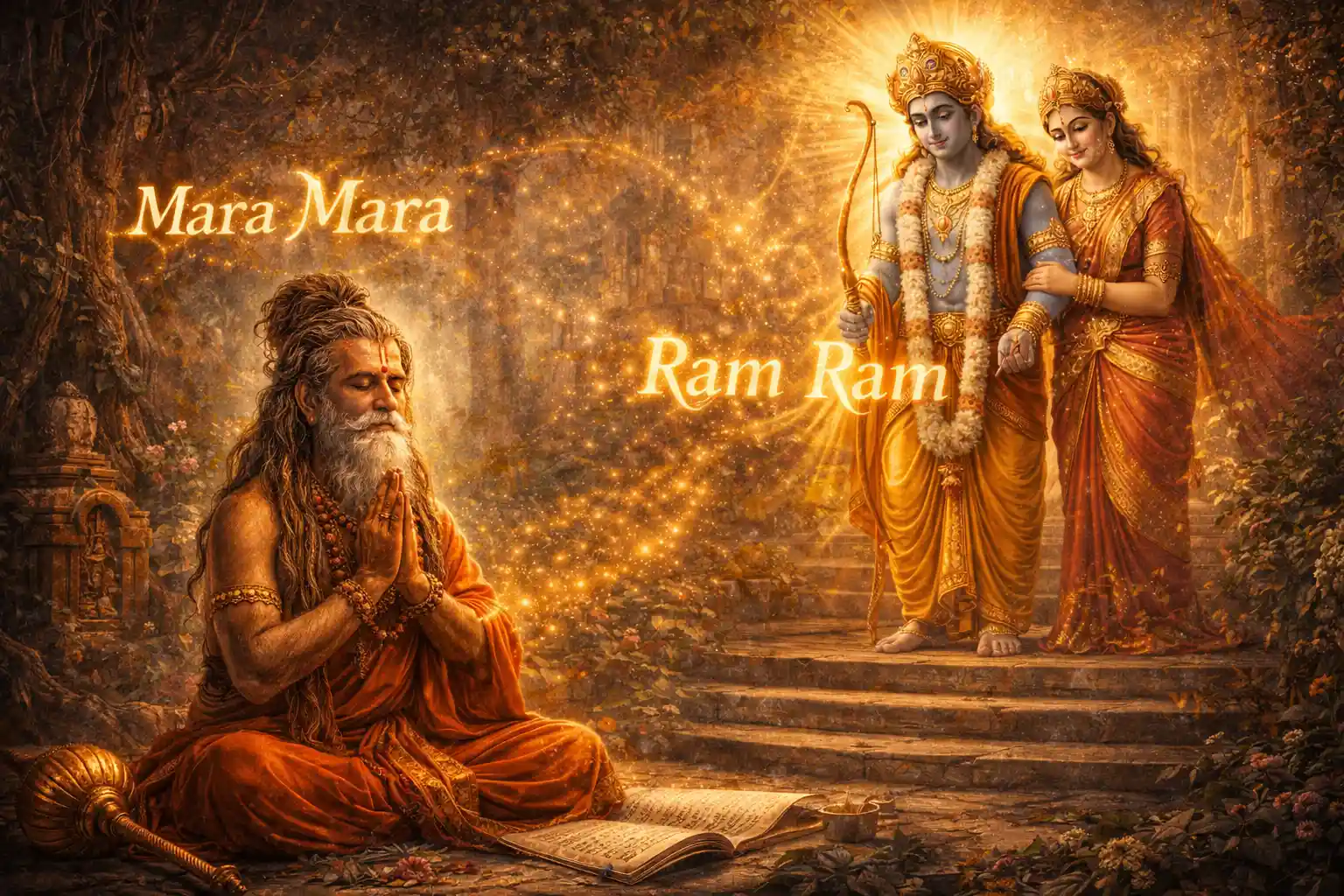
Valmiki did not begin as a saint. But when guidance came, he turned and held to remembrance. Over time, devotion rebuilds him from within. His life shows Bhakti’s power to purify and create a new future.
This is BG 9.30–31 living in history: the devotee may fall but does not perish when they return to God.
Bhakti Takeaway
After a mistake, do one brave thing: return to Shree Krishna immediately. Bhakti is what makes you worthy.
Bhakti Becomes Vision: Seeing Shree Krishna Everywhere
By the later part of the year, devotion ripens into spiritual eyesight. Sunrise feels like mercy. Difficulty feels like a lesson in dependence. Even people appear as souls and opportunities for compassion. Shree Krishna feels near, everywhere.
Bhagavad Gita 7.19
बहूनां जन्मनामन्ते ज्ञानवान्मां प्रपद्यते ।
वासुदेवः सर्वमिति स महात्मा सुदुर्लभः ॥ 19॥
Transliteration
bahūnāṁ janmanām ante jñānavān māṁ prapadyate
vāsudevaḥ sarvam iti sa mahātmā sudurlabhaḥ
Meaning
After many births of spiritual practice, one who is endowed with knowledge surrenders unto Me, knowing Me to be all that is. Such a great soul is indeed very rare.
Prahlad’s Vision of Narayan

Prahlad’s greatness was not only belief, but vision. When asked if God was in a pillar, he answered from realization: Narayan is not limited. And when the Lord appeared, devotion proved it is not blind faith, it is spiritual sight.
This is BG 7.19 embodied: the heart learns to recognize Vāsudeva everywhere.
Bhakti Takeaway
Before reacting, pause and remember: Shree Krishna is here too. Let devotion become vision.
The Highest Offering: Surrender That Removes Fear
The year arrives at its quiet climax. The devote realizes the deepest offering is not a lamp or flower, but surrender of one’s will: Shree Krishna, I am Yours. Lead me as You wish. In that surrender, fear loosens its grip. The storms may remain, but the soul has refuge.
Bhagavad Gita 18.66
सर्वधर्मान्परित्यज्य मामेकं शरणं व्रज ।
अहं त्वां सर्वपापेभ्यो मोक्षयिष्यामि मा शुचः ॥ 66॥
Transliteration
sarva-dharmān parityajya mām ekaṁ śharaṇaṁ vraja
ahaṁ tvāṁ sarva-pāpebhyo mokṣhayiṣhyāmi mā śhuchaḥ
Meaning
Abandon all varieties of dharmas and simply surrender unto Me alone. I shall liberate you from all sinful reactions; do not fear.
Gajendra’s Complete Surrender
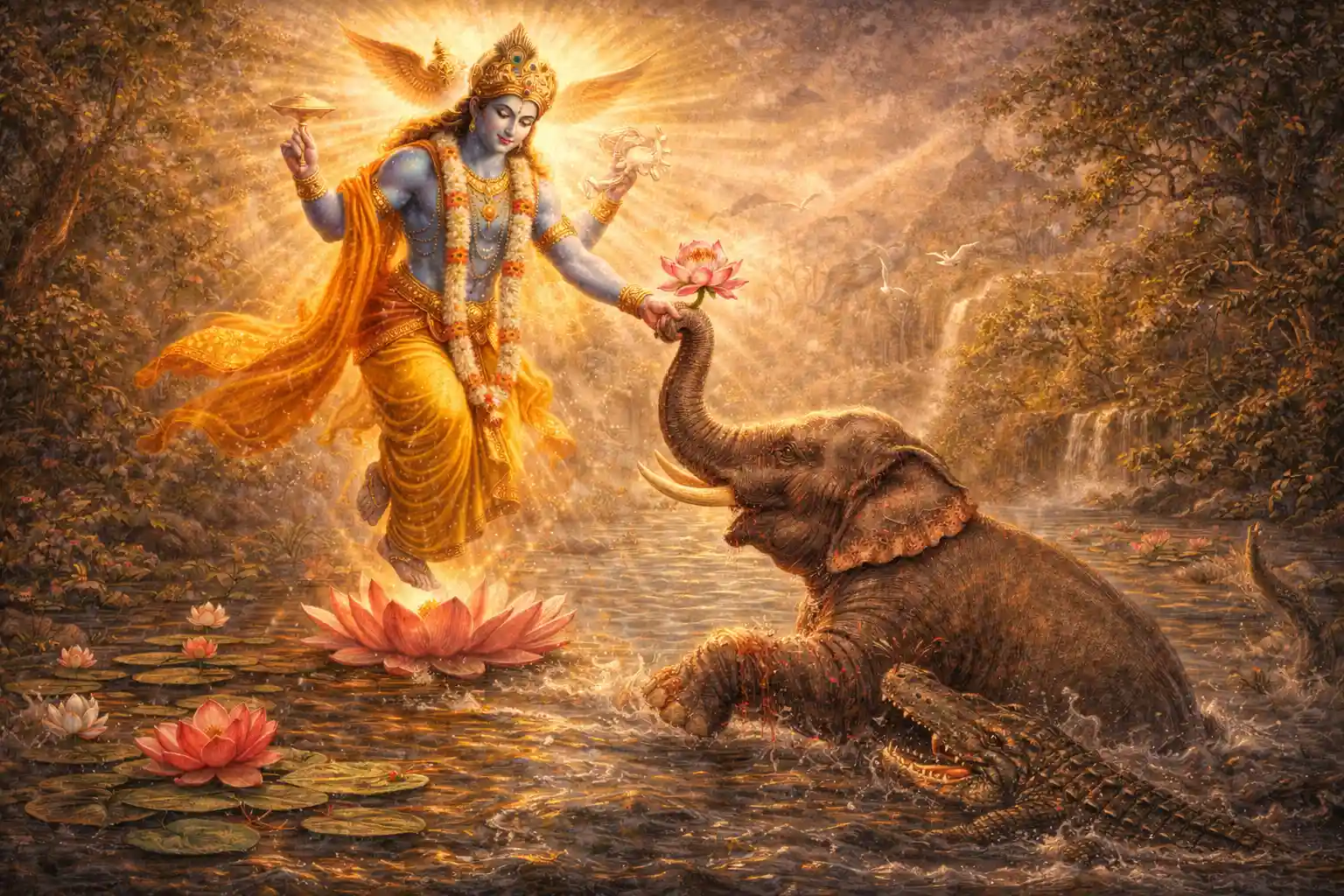
Gajendra fought with all his strength, but the crocodile’s grip did not loosen. When effort ended, surrender began. He lifted his heart in full dependence and called the Lord. Vishnu arrived swiftly, not distant, but personally protective. The story teaches: when nothing else remains, the devotee offers themselves, and that offering opens the door to grace.
This is BG 18.66 living in scripture: surrender opens the door to fearlessness and divine shelter.
Bhakti Takeaway
When life feels heavy, don’t only ask Shree Krishna to fix events. Ask Him to take your heart fully into His shelter. That surrender itself is freedom.
Conclusion: One Year, One Continuous River of Bhakti
This is how the Gita’s bhakti teachings become one continuous journey. The year began with a small sincere step that was never lost. It grew into simple offerings that Shree Krishna lovingly accepts. It passed through the honest struggle of the restless mind and matured into the gentle practice of returning again and again. The mind slowly became a friend, and devotion moved into daily duty, turning life into worship. Grace began to feel personal, and even stumbles became doorways back to mercy. Then bhakti ripened into spiritual vision until Shree Krishna felt near, everywhere. And at last, the heart offered its highest gift: surrender and found the Lord’s promise shining within it: do not fear.
If you are beginning today, begin gently. Choose one small practice you can sustain and offer it with love. Shree Krishna does not ask for perfection. He asks for a heart that keeps returning. And when devotion becomes steady, the Lord becomes nearer than the nearest—and bhakti, once begun, carries the soul all the way home.
Major Takeaways
- Bhakti begins small, but it is never lost. Even one sincere step toward Shree Krishna is protected and carried forward.
- Shree Krishna accepts love, not display. A simple offering made with devotion becomes divine.
- The restless mind is not a disqualification. The Gita expects the struggle—and bhakti teaches the gentle return.
- Progress is measured by sincerity, not perfection. Each time you return to Shree Krishna, you grow stronger inside.
- Offer your daily duties as worship. When work and relationships are offered to God, ordinary life becomes a quiet altar.
- Surrender is the highest refuge. When you take full shelter of Shree Krishna, fear reduces and grace becomes personal.
Frequently Asked Questions
1. What does the Bhagavad Gita teach about bhakti?
The Bhagavad Gita teaches that bhakti is loving devotion to God, expressed through remembrance, surrender, and offering one’s actions to Shree Krishna with sincerity.
2. Is Bhakti possible for householders and people with busy lives?
Yes. The Gita emphasizes that bhakti can be practiced through daily duties, simple offerings, and constant remembrance—without renouncing worldly responsibilities.
3. Does the Bhagavad Gita say that devotion is ever lost?
No. The Gita clearly states that even the smallest sincere effort in bhakti is protected and carried forward by Shree Krishna.
4. What should a devotee do when the mind wanders during prayer?
The Gita advises gently bringing the mind back again and again, without guilt. The act of returning itself is a form of devotion.
5. Can someone who has made mistakes still progress in bhakti?
Yes. Shree Krishna assures that even if a devotee stumbles, sincere devotion purifies the heart and the devotee is never lost.
6. What is the highest teaching of bhakti in the Bhagavad Gita?
The highest teaching is complete surrender to Shree Krishna, trusting Him fully and living without fear under His protection.
Call to Action
Take One Small Step in Bhakti Today
If your heart is longing for the closest experience of Krishna bhakti, watch Swamiji’s talk:
“LOVE God This Way — The Closest Experience of Krishna Bhakti”
https://www.youtube.com/watch?v=MTmvWptAuhs
Then do this 60-second practice (right after watching):
- Sit quietly and place your hand on your heart.
- Whisper: “Shree Krishna, help me love You the way You want to be loved.”
- Chant 11 times: Radhe Krishna (slowly, with feeling).
- Offer your next action to Him: “Shree Krishna, let this be seva.”
Remember: If you forget later, don’t feel guilty—simply return. Every return is bhakti.
Reference and Citation:
Bhagavad Gita Verses (Holy Bhagavad Gita – Swami Mukundananda)
- Bhagavad Gita 2.40 — “nehābhikrama-nāśho’sti…”
- Bhagavad Gita 9.26 — “patraṁ puṣhpaṁ phalaṁ toyaṁ…”
- Bhagavad Gita 6.34 — “chañchalaṁ hi manaḥ kṛiṣhṇa…”
- Bhagavad Gita 6.26 — “yato yato niśhcharati manaḥ…”
- Bhagavad Gita 6.6 — mind as friend/enemy
- Bhagavad Gita 2.47 — right to action, not results
- Bhagavad Gita 9.22 — “yoga-kṣhemaṁ vahāmyaham”
- Bhagavad Gita 9.30 — “api chet sudurāchāro…”
- Bhagavad Gita 9.31 — “na me bhaktaḥ praṇaśhyati”
- Bhagavad Gita 7.19 — “vāsudevaḥ sarvam iti”
- Bhagavad Gita 18.66 — “sarva-dharmān parityajya…”
Video Reference: Swami Mukundanand’s youtube channel ‘on ‘Path of Bhakti”