Introduction
Chapter 8 of the Bhagavad Gita is titled Akshar Brahma Yog, meaning “The Yoga of the Imperishable Absolute.” It delves deep into the nature of the Supreme (Brahma), the process of dying, and the soul’s journey beyond death. Shree Krishna answers Arjun’s queries on spiritual terms like Brahman, karma, adhibhuta, adhidaiva, and adhyatma, ultimately revealing the path to liberation through remembrance of God at the moment of death.
Key Verse:
Bhagavad Gita 8.5
“And whoever, at the end of life, quits his body remembering Me alone at once attains My nature. Of this there is no doubt.”
🔗 Read Verse
1. The Nature of the Supreme – What is Brahman?
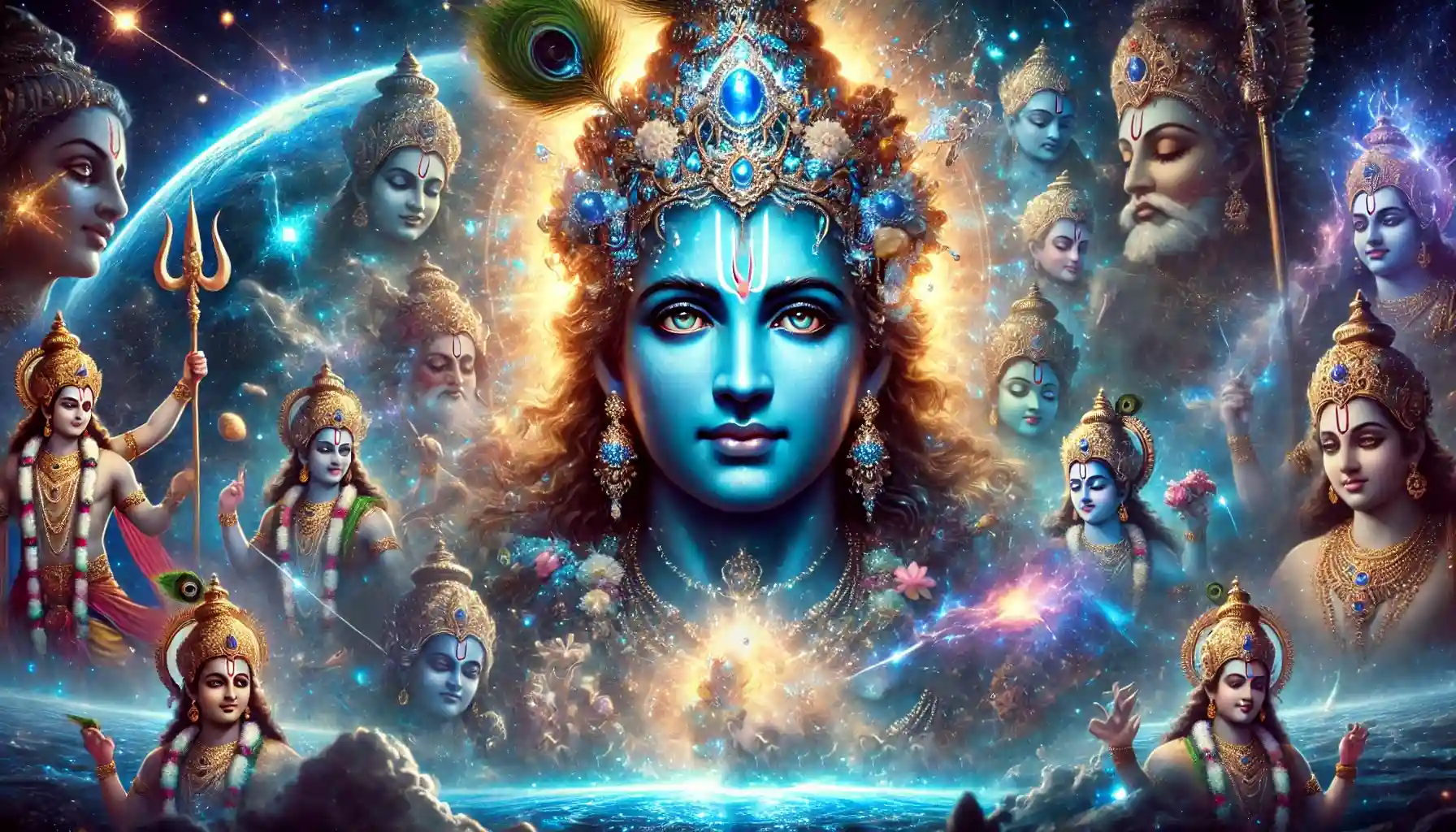
Shree Krishna begins by explaining key terms:
- Brahman – the imperishable, unmanifested reality
- Adhyatma – the individual soul
- Karma – actions that lead to bondage
- Adhibhuta – the perishable physical world
- Adhidaiva – the cosmic presiding deity (Lord Vishnu)
- Adhiyajna – the Lord dwelling in the heart as the sacrifice itself
Bhagavad Gita 8.3
“Brahman is the Imperishable, the Supreme; His essential nature is called self-knowledge; the offering of all actions to God is called karma.”
🔗 Read Verse
Brahman – The Imperishable, Unmanifested Reality
Sanskrit: “Akṣharaṁ brahma paramam”
(Gita 8.3)
🔗 Read Verse
Brahman refers to the eternal, unchanging, infinite consciousness that underlies all of existence. It is the non-dual, formless Absolute, beyond time, space, causation, and attributes. It is nirguna (without qualities) and avyakta (unmanifested). While all beings are perishable, Brahman alone is akṣhara—imperishable.
Vedic Reference:
Mandukya Upanishad states:
“Ayam ātmā brahma” – “This Self is Brahman.”
It is the substratum of the universe, the ocean in which all waves (beings) rise and fall.
Real-life Analogy:
Brahman is like the space in which everything exists. Objects may come and go, but space remains unchanged.
Adhyatma – The Individual Soul (Self within the Body)
Sanskrit: “Svabhāvaḥ adhyātmam ucyate”
(Gita 8.3)
🔗 Read Verse
Adhyatma refers to the individual soul (jivatma) residing in the body. It is the eternal spirit that identifies temporarily with the body-mind complex due to ignorance (avidya). Though divine in essence, it is bound by illusion and karma.
From Patanjali Yog Sutra:
Sutra 2.5: “Anitya aśuchi duḥkha anātmasu nitya śuchi sukha ātma-khyātiḥ avidyā”
– Mistaking the non-Self for the Self is ignorance.
Story: Lord Ram and Jatayu (Ramayan)
As Jatayu lay dying, Ram told him, “You are not this body. You are the eternal soul who fought valiantly. You shall attain the highest realm.”
Lesson:
Realizing the difference between the body and the Self (adhyatma) is the beginning of liberation.
Karma – Action that Leads to Bondage or Freedom
Sanskrit: “Karmaḥ puruṣaḥ bhāvaḥ”
(Gita 8.3)
🔗 Read Verse
Karma refers to actions performed by the embodied soul. Every action—physical, mental, or verbal—leaves an imprint (sanskar) and leads to future experiences. When performed with desire and ego, karma creates bondage. When done as offering to God (yajña), it purifies the soul.
Vedic View:
Rigveda: “As you sow, so shall you reap.”
Karma is the principle of cause and effect operating in the moral universe.
Story: King Harishchandra
Despite immense suffering, King Harishchandra fulfilled his duties and upheld truth. His selfless karma led him to divine liberation.
Lesson:
Understanding karma means choosing our actions with awareness and offering their fruits to God.
Adhibhuta – The Perishable Physical World
Sanskrit: “Adhibhūtam kṣharaḥ bhāvaḥ”
(Gita 8.4)
🔗 Read Verse
Adhibhuta is the elemental, material realm—the five elements (earth, water, fire, air, space), the body, and all sensory experiences. It is perishable (kṣhara) and constantly changing. Though it appears real, it is a projection of maya (illusion).
Upanishadic View:
Katha Upanishad 2.1.10:
“Everything born will perish. Know that which is imperishable.”
The Story of King Lavana from Yoga Vāsiṣṭha
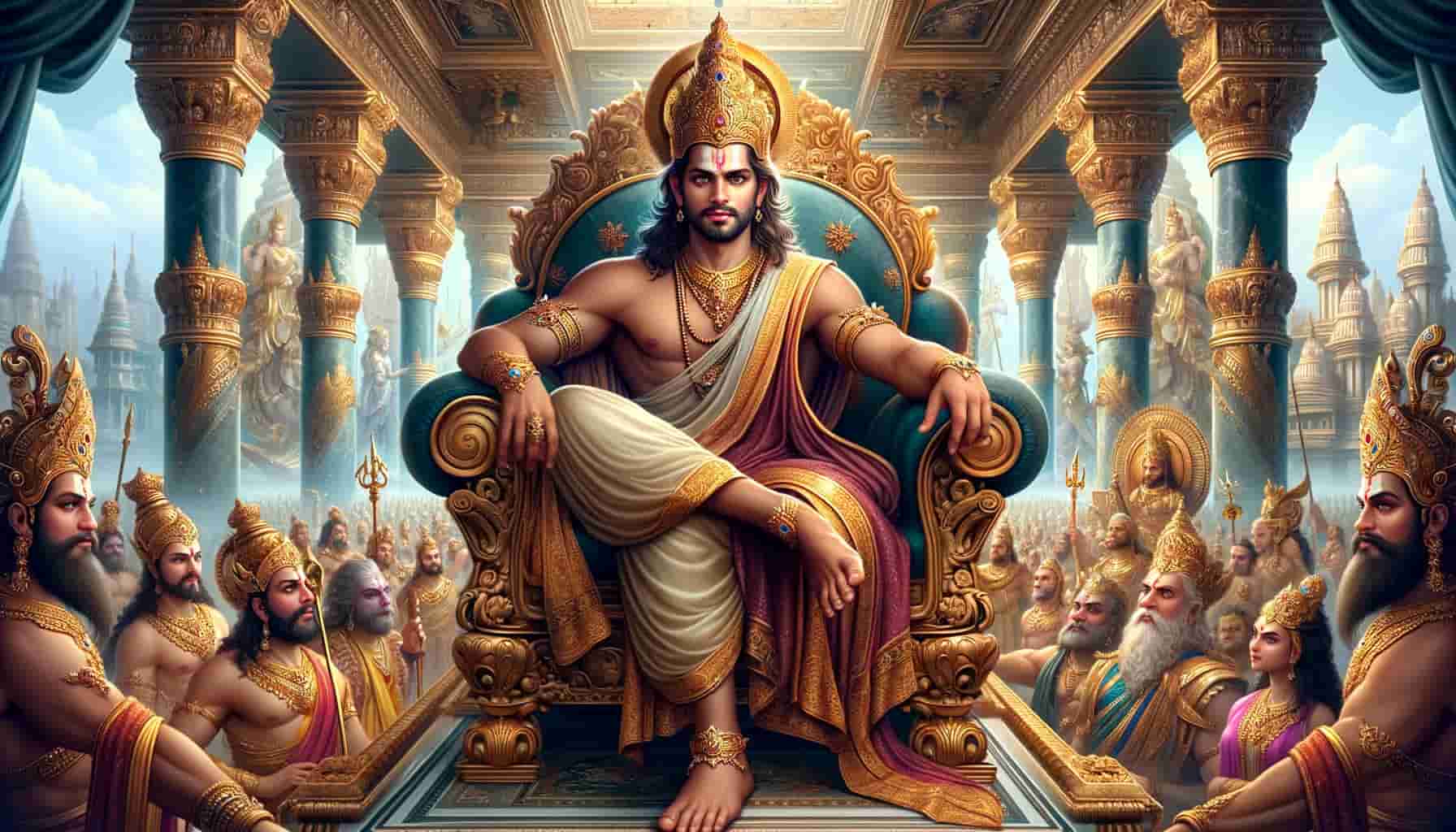
King Lavana was a righteous monarch from the Ikshvaku dynasty. One day, while sitting on his throne during court, he received a wandering sage (sannyasi) who looked somewhat eccentric. This sage gave the king a pinch of sacred ash (bhasma) and said it would give him a unique experience if he accepted it with faith.
Out of curiosity and humility, King Lavana received the ash and placed it on his forehead.
The Vision Begins
Instantly, King Lavana entered a completely different reality. He found himself in a desert—tired, hungry, and completely stripped of his identity as a king. He wandered through the wilderness and eventually came upon a poor tribal village. There, he met a low-caste woman and married her. He began working as a laborer, earning barely enough to survive.
Years passed. He had children and lived a hard life. He experienced all the joys and sorrows of household life—hunger, sickness, frustration, fleeting happiness, and pain.
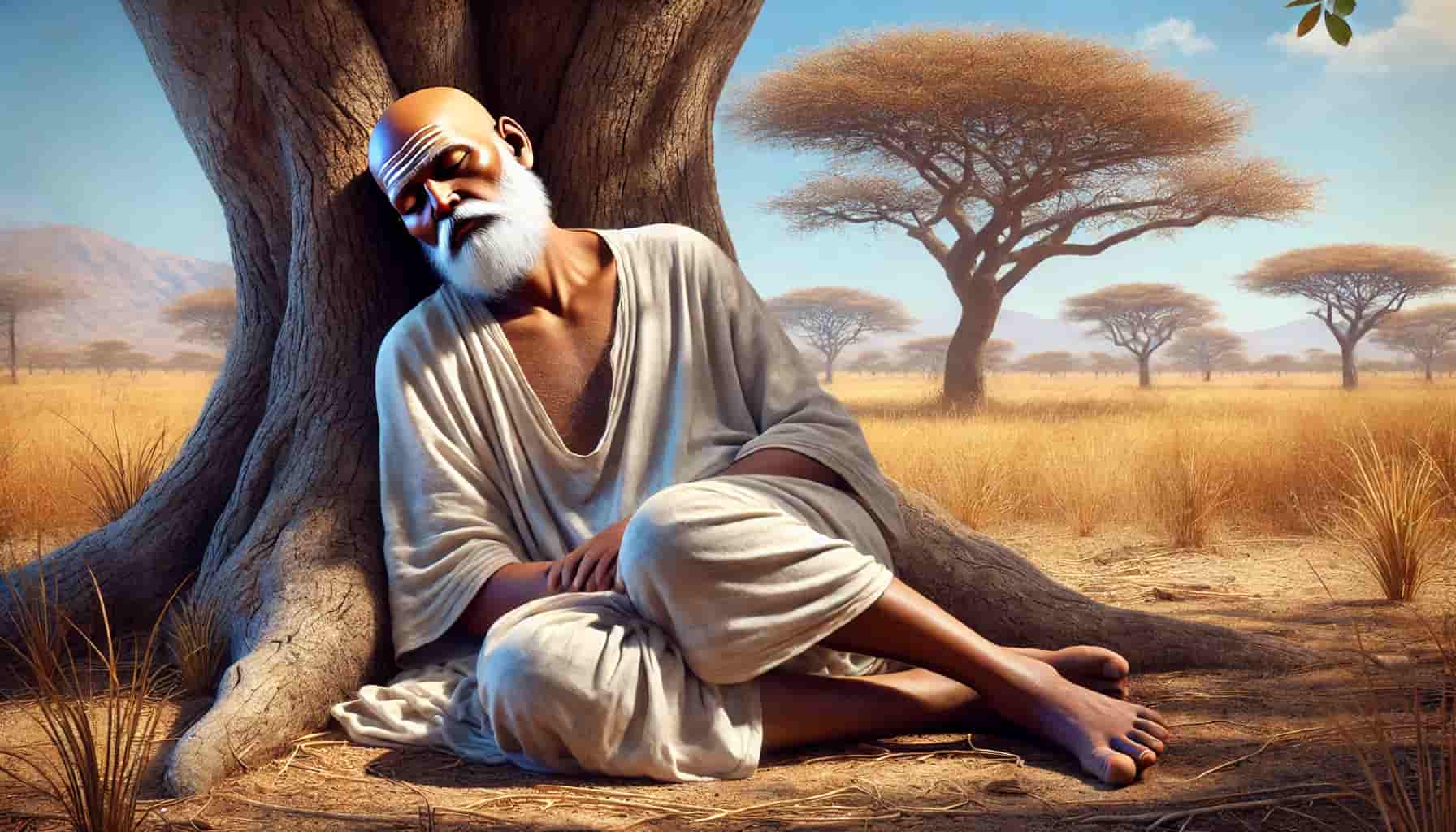
One day, a massive famine struck. His wife and children starved. He wandered again in search of food and was attacked by wild animals. In agony, he cried out.
Return to Reality
Suddenly—he found himself back on his throne, in his royal court, surrounded by ministers and guards. Only a few moments had passed in the real world.
He was stunned. The ministers said he had simply sat still for a few seconds. But for Lavana, several years of life had passed—a vivid, painful, and deeply real experience.
Teaching from Sage Vasiṣṭha
Seeing King Lavana’s astonishment, Sage Vasiṣṭha explained:
"O Rama, just as King Lavana experienced a completely convincing life within a few seconds, so too is this present life—a projection of the mind. It is maya, not because it doesn’t exist, but because it exists in a form different from how we perceive it."
He continued:
"Time, space, and objects are all mental constructs. What we experience as the world is like a long dream. Reality is the pure consciousness behind it all. The wise one sees this and lives unattached, while engaging in the world like an actor in a play."
Key Lessons on Maya from King Lavana’s Story
- Illusion of Time: Years can pass in a moment in the dream of the mind. The time-bound world is not absolute.
- Reality is Mind-Made: The world we live in is a projection of our own thoughts and perceptions.
- Suffering and Joy Are Mind-Dependent: Even great pain or joy is a play of the mind—impermanent and illusory.
- Wakefulness Within the Dream: Liberation (moksha) lies in realizing that even this waking world is a type of dream, and detaching from it.
Adhidaiva – The Cosmic Presiding Deity (Vishnu)
Sanskrit: “Adhidaivam puruṣaḥ ca”
(Gita 8.4)
🔗 Read Verse
Adhidaiva refers to the cosmic divine being that governs the senses and elements — Shree Vishnu or Purusha. It is the controller of nature and universal forces: sun, moon, fire, wind, etc. All gods are expressions of this supreme consciousness.
Vedic Reference:
Yajurveda: “The Purusha has a thousand heads and eyes... He pervades all that was and will be.”
Story: Vishnu as Vamana Avatar
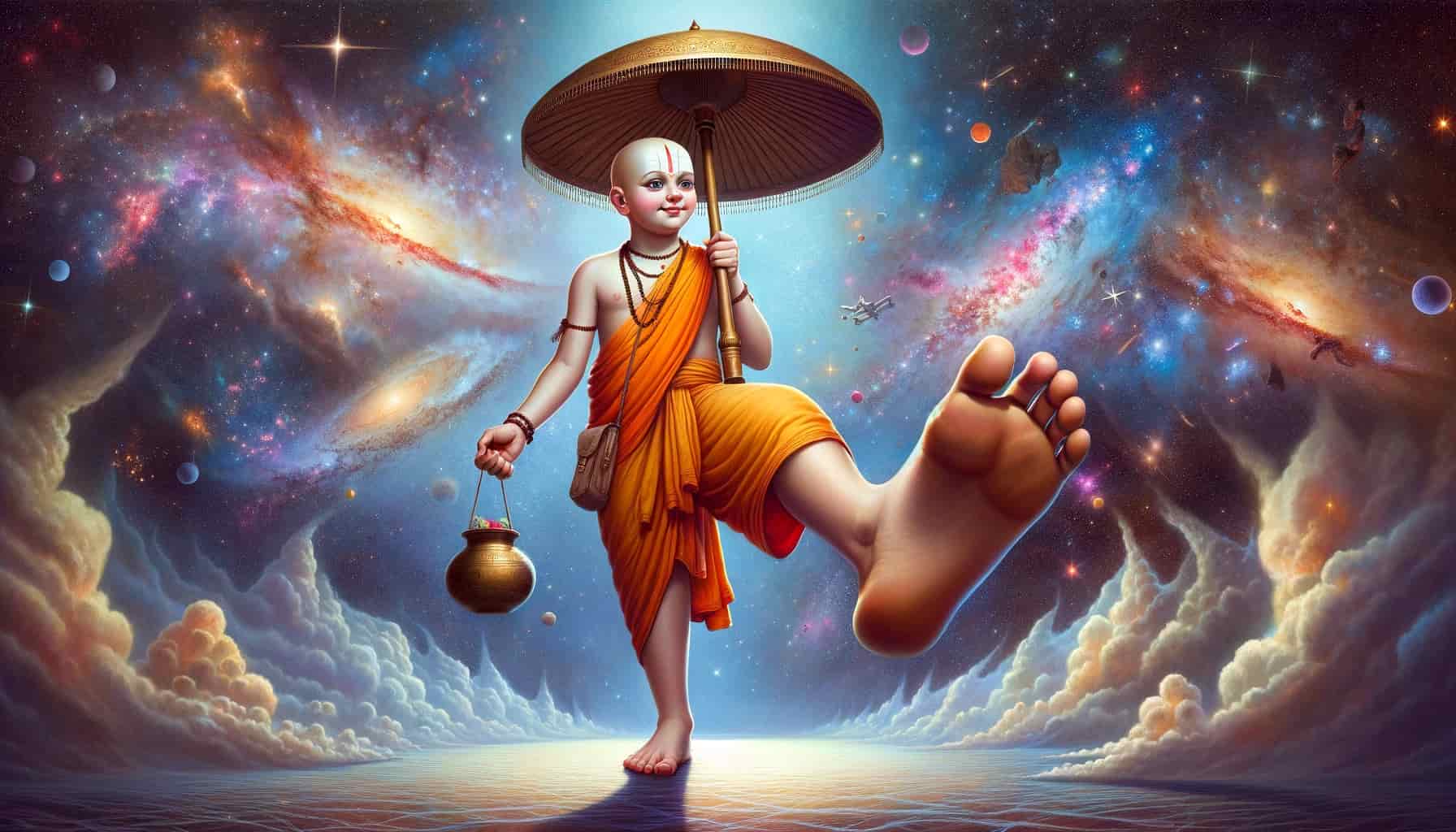
Lord Vishnu incarnated as the dwarf Brahmin Vamana, expanding to cosmic size to reclaim the universe from Bali, reminding us of the all-pervading divinity behind creation.
Lesson:
Behind every natural force is a divine controller. The senses and cosmos are divine instruments of the Supreme.
Adhiyajna – The Lord Residing in the Heart as Sacrifice
Sanskrit: “Adhiyajñaḥ aham eva atra dehe”
(Gita 8.4)
🔗 Read Verse
Adhiyajna is the Supreme Lord residing in the heart, receiving all offerings and guiding every soul from within. In the context of yogic death, it refers to the Divine Witness who accepts the final sacrifice of the body-mind.
Shree Krishna declares that He is the Adhiyajna, the inner sanctum of all sacred actions.
Upanishadic Insight:
Taittiriya Upanishad 2.7 – “He who knows Brahman, seated in the heart, reaches the supreme bliss.”
Story: Krishna Accepting Sudama’s Gift
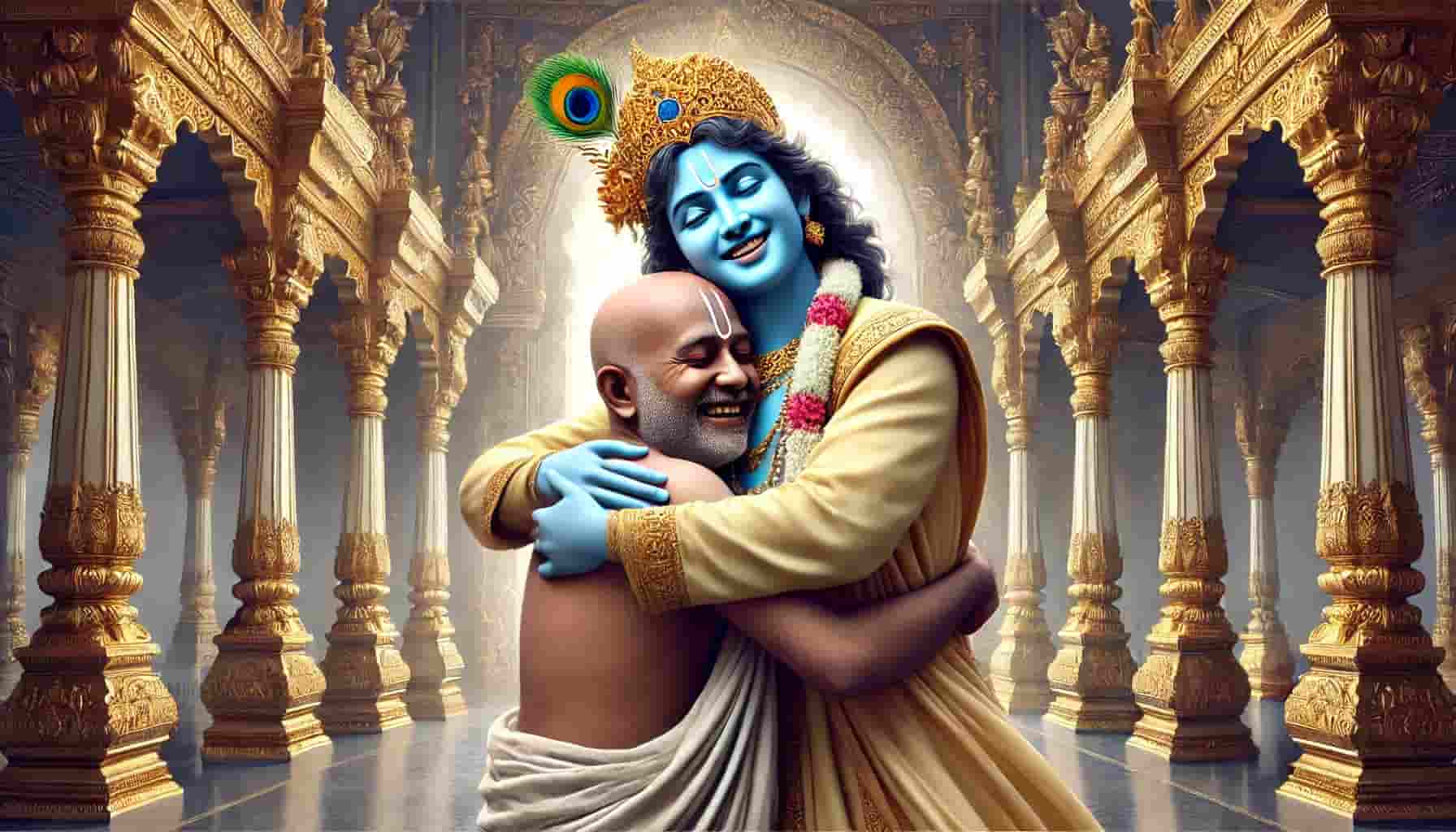
When Sudama offered Krishna a handful of dry rice, Krishna accepted it joyfully as the greatest yajña — because it came from love.
Lesson:
God is not distant. He resides in your own heart, silently witnessing your actions. Make your life a sacrifice of love to Him.
2. The Power of Final Remembrance
A central theme of this chapter is the remembrance of God at the moment of death. Whatever one remembers in the final moment determines their next destination.
Bhagavad Gita 8.6
“Whatever state of being one remembers when he quits his body, O son of Kunti, that state he will attain without fail.”
🔗 Read Verse
Story: Ajamila’s Salvation (Srimad Bhagavatam, Canto 6)
Ajamila, a sinful man, called out “Narayana” in his final moments—not as a prayer, but to summon his son. Yet that name delivered him, as he died remembering the Lord. This emphasizes the immense power of God’s name.
From Patanjali Yog Sutra:
Sutra 1.27: “Tasya vachakah pranavah” — The name of God is Om.
Chanting Om with faith draws the mind toward the divine at all times.
Lesson:
The practice of remembering God must begin in life, so that in death, remembrance flows naturally and secures liberation.
3. The Science of Dying: Departing with Awareness
Shree Krishna reveals how yogis consciously leave their body by fixing their prana between the eyebrows and meditating on God.
Bhagavad Gita 8.10
“With an unwavering mind, engaged in devotion, drawing the pranas between the eyebrows, such a yogi attains the Supreme Divine Personality.”
🔗 Read Verse
Story: Bhishma’s Iccha-Mrityu (Mahabharat)
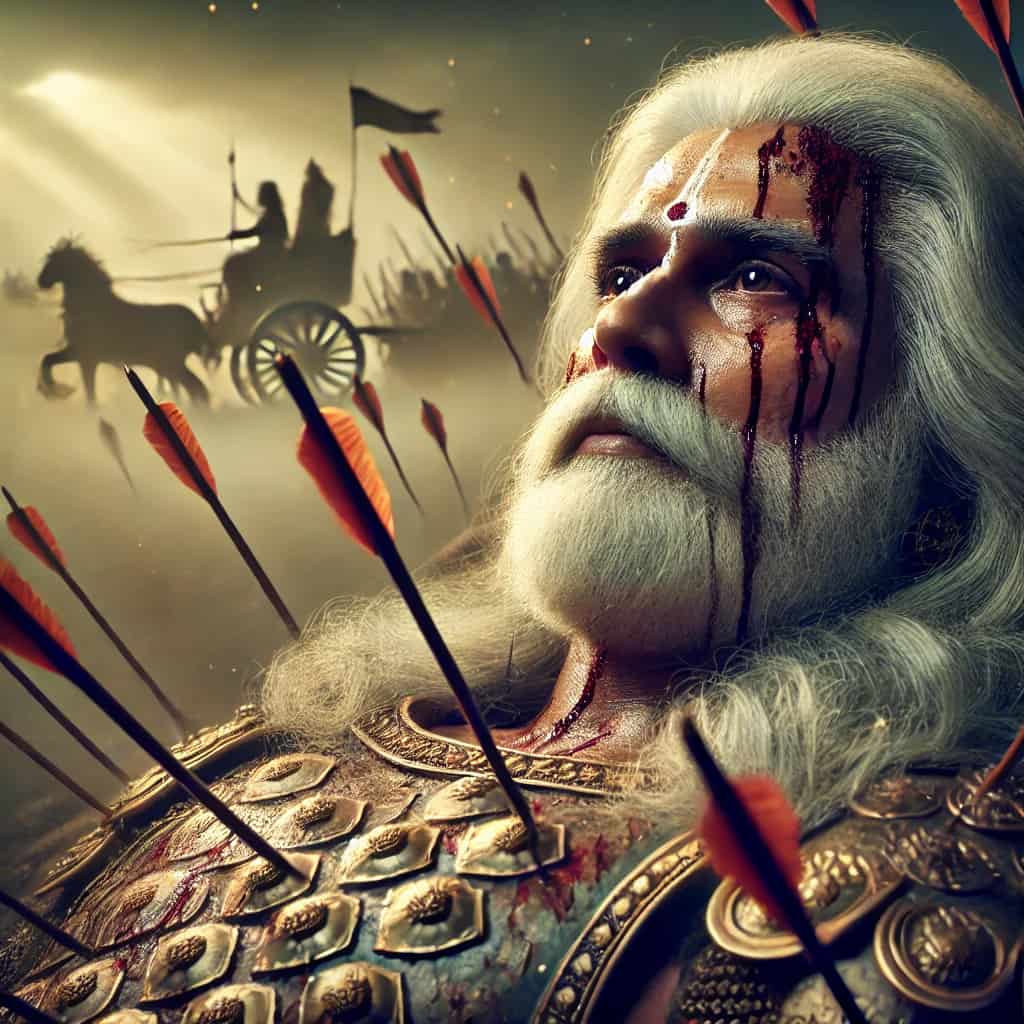
Bhishma Pitamah, the great Kuru elder, chose the time of his death. Lying on a bed of arrows, he waited for the auspicious Uttarayana to depart, his mind fixed on Krishna.
Vedic Reference:
Chandogya Upanishad 8.6.6 – “When the soul departs, it goes toward the sun. Only those with spiritual knowledge can reach higher realms.”
Lesson:
Dying is an art. If life has been spent in practice, the final moment can become a doorway to the highest liberation.
4. The Eternal Light: The Path of the Yogi
Shree Krishna describes two cosmic paths for souls:
- The path of light (archiradi-marga) – leads to Brahman (for yogis)
- The path of darkness (dhumadi-marga) – leads back to rebirth
Bhagavad Gita 8.24
“Those who know the Supreme Brahman go to the spiritual world, passing through the path of light in the six months of the northern sun...”
🔗 Read Verse
Story: Ganga’s Descent and Bhagiratha’s Devotion (Ramayan)
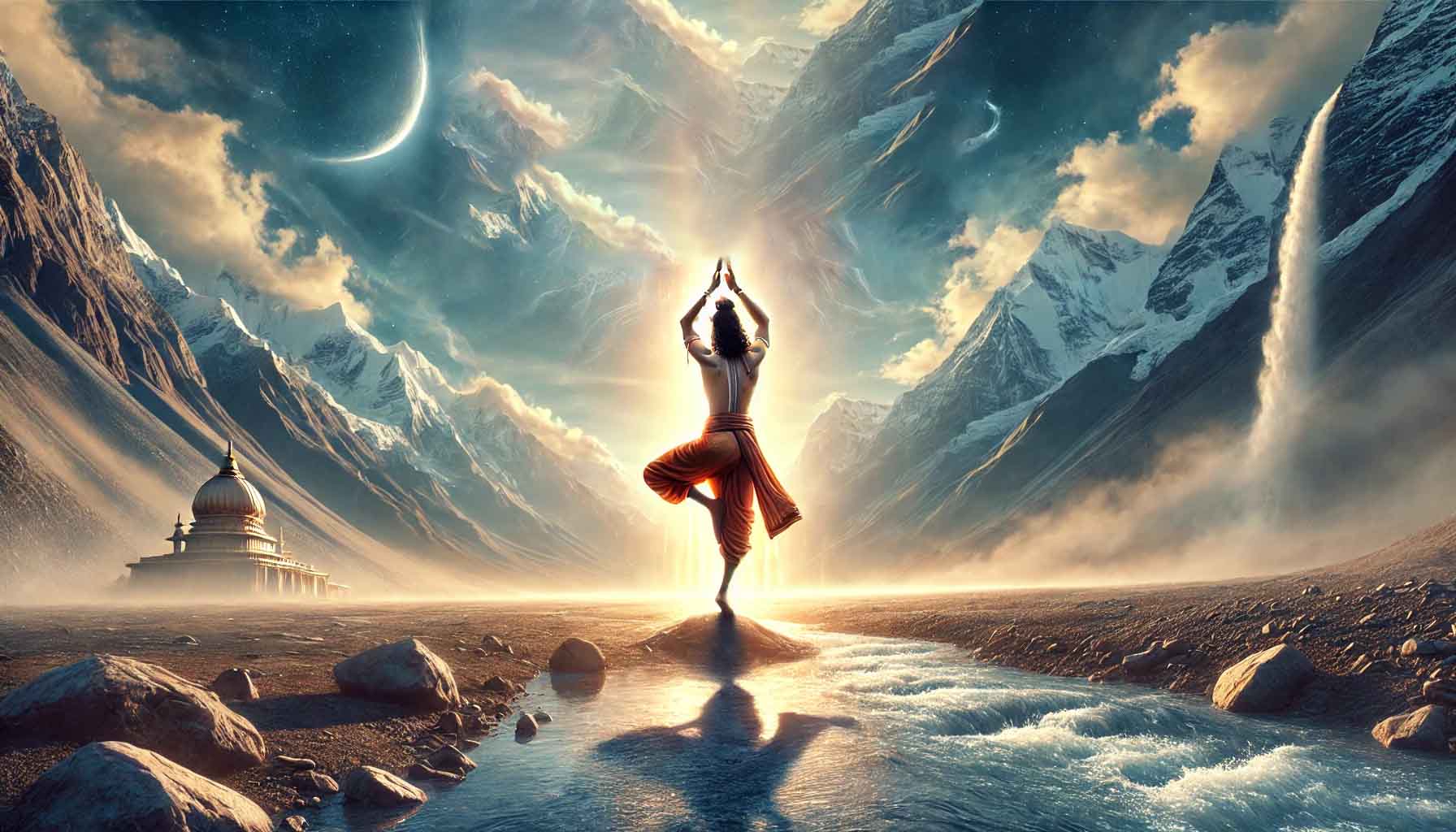
King Bhagiratha’s tapasya to bring Ganga down was driven by his ancestors’ deliverance. The Ganga represents the bright path—the divine flow that grants moksha when accessed through pure intention.
Upanishadic Support:
Katha Upanishad 2.2.12 – “There are two paths after death: one leads to freedom, the other to rebirth.”
Lesson:
The yogi who walks the inner path of light escapes the cycle of death and rebirth forever.
5. Shree Krishna: The Supreme Goal
After explaining the science of the soul’s departure, Shree Krishna declares that He is the ultimate refuge and destination for all souls.
Bhagavad Gita 8.16
“From the highest planet in the material world down to the lowest, all are places of misery wherein repeated birth and death take place. But one who comes to Me never takes birth again.”
🔗 Read Verse
Story: Vibhishan’s Surrender (Ramayan)
When Vibhishan left Ravana and took refuge at Lord Ram’s feet, he feared rejection. Yet, Lord Ram said:
"Even if Ravan himself came seeking refuge, I would accept him."
This confirms Krishna’s promise — total surrender leads to total protection.
Saint's Example: Sant Tukaram
Tukaram constantly chanted Vitthala’s name, and during his last moment, he ascended to Vaikuntha in his mortal body. His entire life had been a preparation for that moment.
Lesson:
Seek not just higher worlds, but Krishna Himself. His abode is the eternal home from which there is no return.
6. The Supreme Practice: Bhakti and Devotion
All other spiritual techniques—yoga, knowledge, austerity—are secondary to exclusive devotion to God.
Bhagavad Gita 8.22
“The Supreme Divine Personality, who is greater than all, is attainable by unalloyed devotion alone.”
🔗 Read Verse
Story: Shabari’s Bhakti (Ramayan)
Shabari, a tribal woman, knew no scriptures or rituals. Her love for Ram was her only strength. She offered him tasted berries, yet the Lord accepted them with joy. Why? Because her bhakti was pure.
From the Vedas:
Rigveda 1.164.39 – “Truth is one; sages call it by many names.” Bhakti is the heart of truth, for it brings union with the Absolute.
Lesson:
Devotion is not about qualifications. It is about surrender, longing, and love for God.
7. Transcending Time: Beyond Day and Night
Shree Krishna explains the cosmic cycles of Brahma’s day and night. Even the heavens are impermanent.
Bhagavad Gita 8.17
“By human calculation, a thousand ages taken together form the duration of Brahma's one day. And such also is the duration of his night.”
🔗 Read Verse
Story: Markandeya and the Cosmic Cycle (Puranas)
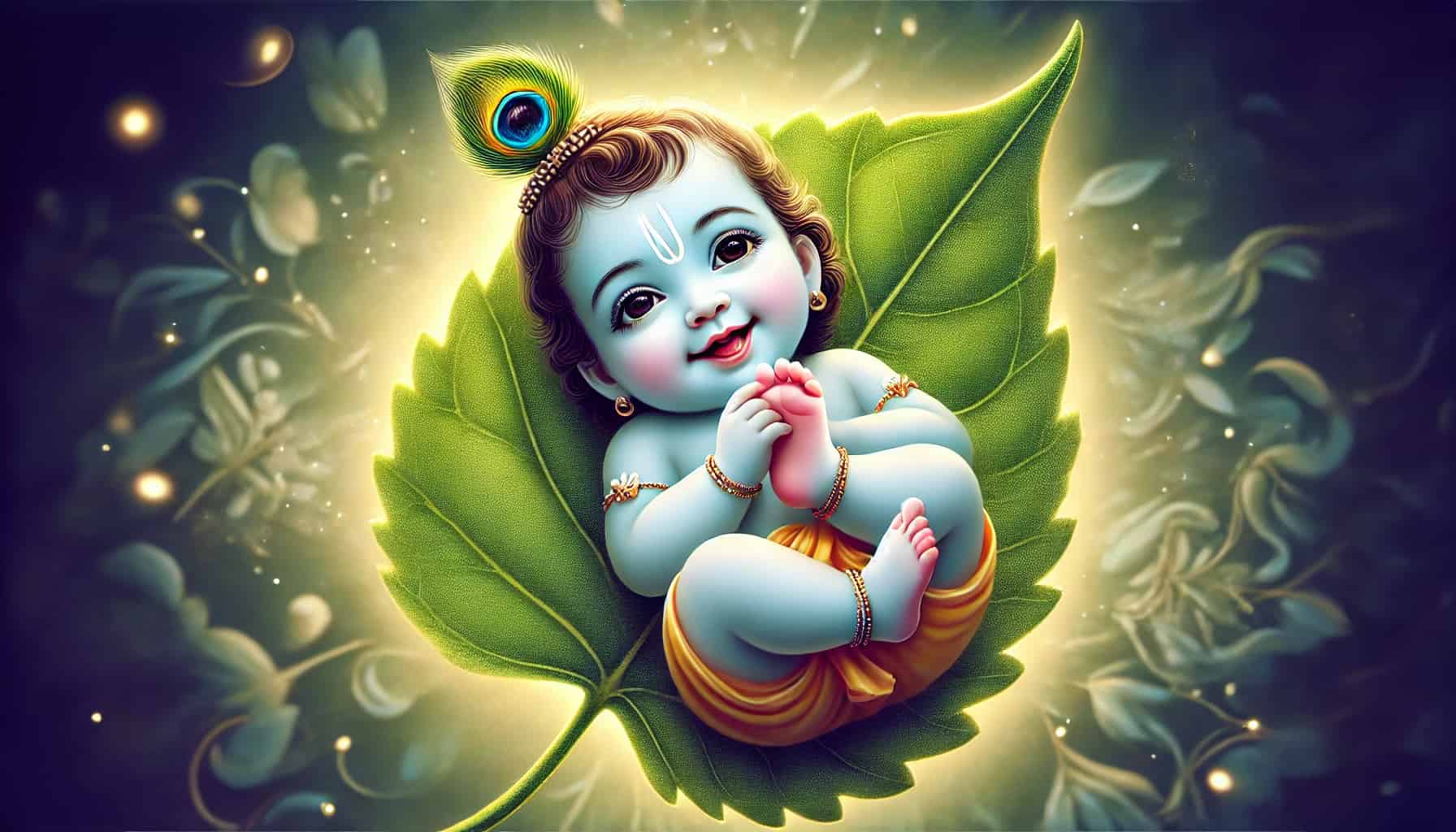
The sage Markandeya once witnessed the end of a cosmic cycle and saw baby Narayana on a banyan leaf floating in the deluge. Everything dissolves — only God remains.
Upanishadic Insight:
Mandukya Upanishad – “All this is Brahman. The Self is Brahman. This Self has four states of consciousness.”
Time dissolves in the eternal Self.
Lesson:
Even Brahma’s creation is temporary. Only devotion to God ensures eternal safety beyond time.
8. The Summary of Akshar Brahma Yoga
Bhagavad Gita 8.28
“A yogi engaged in devotional service surpasses all others—be they scholars, ascetics, or ritualists—and reaches the eternal abode.”
🔗 Read Verse
This chapter makes it clear: Remembrance of God at death ensures liberation. But remembrance at death is only possible with consistent remembrance in life. The imperishable path is not built in a day—it’s the lifelong commitment of bhakti, jnana, and surrender.
Conclusion
Akshar Brahma Yog offers a profound lesson for seekers:
- Understand the nature of the Supreme.
- Prepare for the moment of death by living with God-consciousness.
- Embrace devotion, not just rituals.
- Remember God constantly to secure liberation.
Whether we are scholars or simple devotees, the highest truth is within reach if we turn our heart toward Krishna. As the Gita says, such a soul “never returns to this world of sorrows” but reaches the divine abode of bliss.
🙏 Ready to Walk the Eternal Path?
Life may be uncertain, but your spiritual path doesn’t have to be. Let the wisdom of Bhagavad Gita Chapter 8: Akshar Brahma Yog illuminate your journey toward the eternal.
📘 Dive Deeper Into the Gita:
Explore the profound truths of the Bhagavad Gita and learn how to live with purpose, devotion, and divine remembrance.
🎓 Join Online Gita Classes with JKYog and the Radha Krishna Temple of Dallas to study the Gita systematically and apply its teachings in daily life.
📲 Download the Free “Bhagavad Gita Krishna Bhakti” App for daily verses, audio explanations, guided meditations, and more spiritual resources.
📺 Subscribe to Swami Mukundananda’s YouTube Channel for powerful spiritual discourses and inspiration.
🌐 Start now: www.holy-bhagavad-gita.org
✨ Let every breath become a prayer, and every moment a step closer to the Supreme. Your journey begins now.
FAQs:
1. What is Akshar Brahma Yog in Bhagavad Gita Chapter 8?
Akshar Brahma Yog explains the imperishable Supreme, the significance of dying with God-consciousness, and the yogic path to liberation.
2. What happens to the soul after death according to Bhagavad Gita Chapter 8?
The Gita teaches that the soul’s destination depends on its final thought—those who remember God at death attain Him eternally.
3. How can one remember God at the time of death?
Through a life of steady devotion, meditation, and surrender, one trains the mind to naturally focus on God even in the last moment.
4. What is the difference between the path of light and the path of darkness?
The path of light leads to liberation and union with Brahman, while the path of darkness leads to rebirth in the material world.
5. How is devotion superior to other paths in Chapter 8?
Shree Krishna affirms that devotion alone enables one to reach His eternal abode, surpassing the fruits of rituals, austerity, and knowledge.
References with Links
- 🔗 Bhagavad Gita Chapter 8: Read All Verses
- 🔗 Ramayan: Stories of Shabari, Bhagirath, Vibhishan
- 🔗 Mahabharat: Bhishma’s departure on Uttarayana
- 🔗 Puranas: Ajamila (Bhagavatam 6), Markandeya’s Vision
- 🔗 Upanishads: Chandogya 8.6.6, Katha 2.2.12, Mandukya
- 🔗 Patanjali Yog Sutra: 1.27 – Pranava is the name of God