Introduction: The Supreme Wisdom of Purushottam Yog
Chapter 15 of the Bhagavad Gita, known as Purushottam Yog, reveals the profound spiritual truth of the Supreme Divine Personality. It distinguishes between the perishable (kshara), the imperishable (akshara), and the transcendental Supreme Being (Purushottam). This chapter synthesizes the essence of Vedantic wisdom, unveiling the glory of God as the Supreme Being beyond body, mind, and intellect.
Verse Reference: Bhagavad Gita 15.1
1. The Cosmic Ashvattha Tree
Krishna opens the chapter with a metaphor: the material world is like an upside-down Ashvattha tree with roots above and branches below. The tree represents samsara (cycle of birth and death), rooted in the divine, but its entanglement in the material world misleads the soul.
Verse Reference: Bhagavad Gita 15.1-2
Story from the Puranas: Narada and Maya
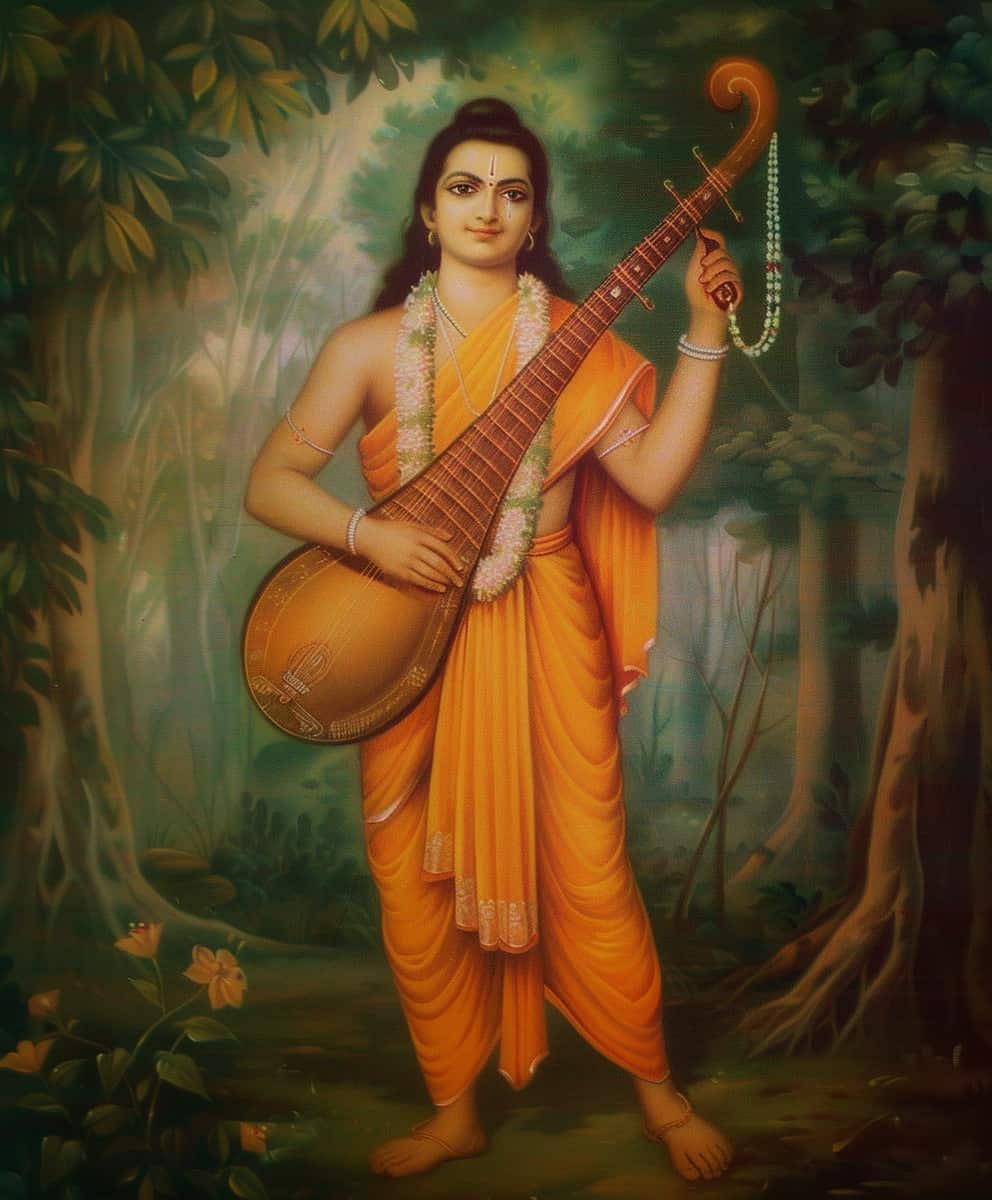
One day, Sage Narada, a devout devotee of Lord Vishnu, approached the Lord with a question that had long puzzled him. With deep humility, he asked, “O Lord, please explain to me the nature of maya—the cosmic illusion that binds the soul.”
Lord Vishnu smiled and agreed to show Narada the answer rather than merely explain it. He asked Narada to accompany Him on a walk. After a short distance, Lord Vishnu said, “Narada, I am feeling thirsty. Could you fetch me some water from the nearby village?”
Narada gladly took a vessel and went toward the village. As he approached a house, he knocked on the door, and a beautiful young woman opened it. At that moment, something stirred in Narada’s heart. He forgot his mission. He spoke with her, then with her family, and eventually asked for her hand in marriage.
Narada settled into a household life. Years passed. He became a father to children, labored in the fields, and experienced the joys and sorrows of family life. One day, a great flood swept through the village. Narada lost his home, his children, and his beloved wife to the raging waters. In utter despair and grief, he fell to his knees, crying out for help.
Suddenly, he opened his eyes—and found himself standing in front of Lord Vishnu, still holding the empty water pot. Not a single moment had passed in divine time.
Vishnu smiled and asked, “Narada, where is the water I asked for?”
In that instant, Narada understood. All that he had just lived through—his marriage, his children, their loss—was nothing but an illusion created by maya. His temporary forgetfulness of his divine mission and the deep emotional entanglements were designed to help him experience the illusory nature of the material world, rather than just hear about it.
This profound story mirrors the teaching of the inverted tree that Lord Krishna describes in the Bhagavad Gita (Chapter 15)—where the material world appears real but is merely a reflection of the eternal, spiritual realm. Just as Narada was entangled in the illusion of the world, so too do all beings become bound by attachments, forgetting their true spiritual nature. Only through detachment, knowledge, and devotion can one cut down this tree and attain the eternal abode.
2. Cutting the Tree with the Axe of Detachment
Krishna urges the seeker to cut this tree with the axe of detachment (vairagya) and seek the eternal abode.
Verse Reference: Bhagavad Gita 15.3-4
Story: King Janaka's Dispassion The Gurukul Test of Fire Before ascending the throne, Janaka was a disciple in a Gurukul, where he studied scriptures and practiced spiritual disciplines under the guidance of a realized Guru. Recognizing Janaka’s rapid progress and his exceptional detachment, his Guru decided to test the stability of his inner dispassion.
One day, while Janaka and other disciples were engaged in their daily spiritual studies, the Guru used his yogic powers to create an illusionary fire around the ashram. Flames seemed to engulf the entire Gurukul. The other disciples panicked, some rushed to save their belongings, and some ran toward the river for safety.
An attendant ran up to Janaka and shouted,
“The Gurukul is on fire!”
Janaka remained still and silent.
A few moments later, the same attendant returned, now in greater urgency, and exclaimed,
“Your personal quarters—your palace rooms—are also burning down!”
To this, Janaka calmly replied:
“Let it burn.”
He did not move an inch, nor did his expression change. He remained fully absorbed in self-awareness, unmoved by the chaos around him. His Guru, observing all this, was filled with immense joy and pride. The fire illusion disappeared as suddenly as it had appeared.
Gurudev’s Acknowledgment
After the test, the Guru addressed the disciples and said:
“Among all of you, only Janaka has passed the true test of vairagya. He has realized the Atman. His detachment is not a pretension—it is real.”
Lessons from Janaka's Dispassion
- True detachment does not mean renouncing the world but remaining unaffected by it.
- King Janaka shows that one can live in the palace yet be free from attachment.
- His mind was anchored in the Self (Atman), not in external possessions.
- The world outside may burn, but the inner yogi remains unshaken.
References in the Scriptures
- The Ashtavakra Gita—a dialogue between Sage Ashtavakra and King Janaka—is another spiritual gem that reveals Janaka’s enlightened state and wisdom.
Bhagavad Gita 3.20 refers to Janaka:
“Karmanaiva hi samsiddhim asthita janakadayah”
“Even kings like Janaka attained perfection through action alone.”
Verse link »
Lord Krishna uses Janaka as an example to Arjuna, showing that even while performing duties, one can attain spiritual perfection.
Summary
King Janaka’s story is not just a tale—it is a guiding light for every seeker. In a world full of distractions and attachments, he teaches us how to live with inner freedom. The fire was not just a test of courage but of realization—Janaka had transcended identification with body, possessions, and even ego.
His life assures us that spiritual liberation is possible, not only in renunciation but even amidst the responsibilities of the world—if one’s mind is rooted in the Self.
3. The Soul: An Eternal Fragment of God
Krishna reveals that all beings are His eternal fragments (amsa). Though entangled in the body and mind, the soul is divine and eternal.
Verse Reference: Bhagavad Gita 15.7
Story: The Jiva’s Journey in Garuda Purana

The Garuda Purana describes the soul’s journey after death. The jiva (soul) carries samskaras (impressions) and is reborn based on karma. Yet, it is inherently divine, a spark of the Supreme.
Lesson: Recognizing the divinity of the soul can free us from ego and material bondage.
4. Mind and Senses: Instruments of Experience
The soul experiences the world through the mind and senses, which are material instruments.
Verse Reference: Bhagavad Gita 15.9
Reference: Patanjali Yoga Sutra 1.2
"Yogaschitta vritti nirodhah" – Yoga is the cessation of mental fluctuations. To perceive the truth, one must quiet the senses and mind.
Lesson: Discipline of senses and mind is key to perceiving the eternal soul within.
5. The Supreme Lord: Light of All Lights
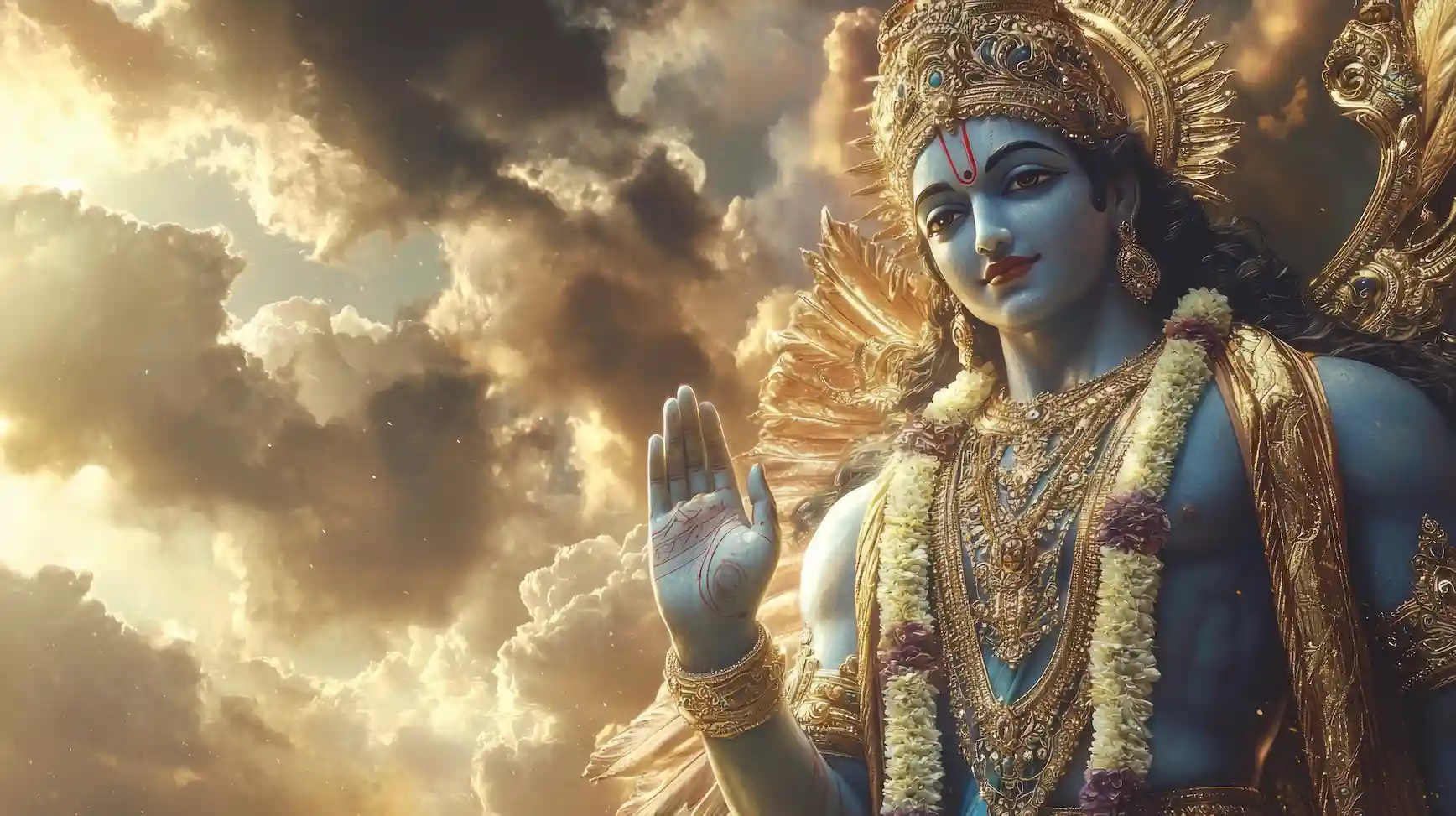
Krishna reveals that He is the light of the sun, the energy in the fire, and the vitality in beings.
Verse Reference: Bhagavad Gita 15.12-13
Story: Hanuman’s Recognition of the Divine
Hanuman, upon meeting Rama, recognized Him as the Supreme. He saw divine light radiating from Rama’s form and dedicated his life to His service.
Lesson: Recognizing God’s presence in creation inspires devotion and surrender.
6. The Supreme Nourisher and Sustainer
Krishna describes how He enters all beings and sustains life through digestion and nourishment.
Verse Reference: Bhagavad Gita 15.14
Upanishadic Reference: Taittiriya Upanishad 2.2.1
"Annam Brahmeti vyajanat" – Food is Brahman. It sustains life, and the power of digestion is divine.
Lesson: Reverence for life and food is a recognition of God's sustaining role.
7. The Knower of the Vedas is He Alone
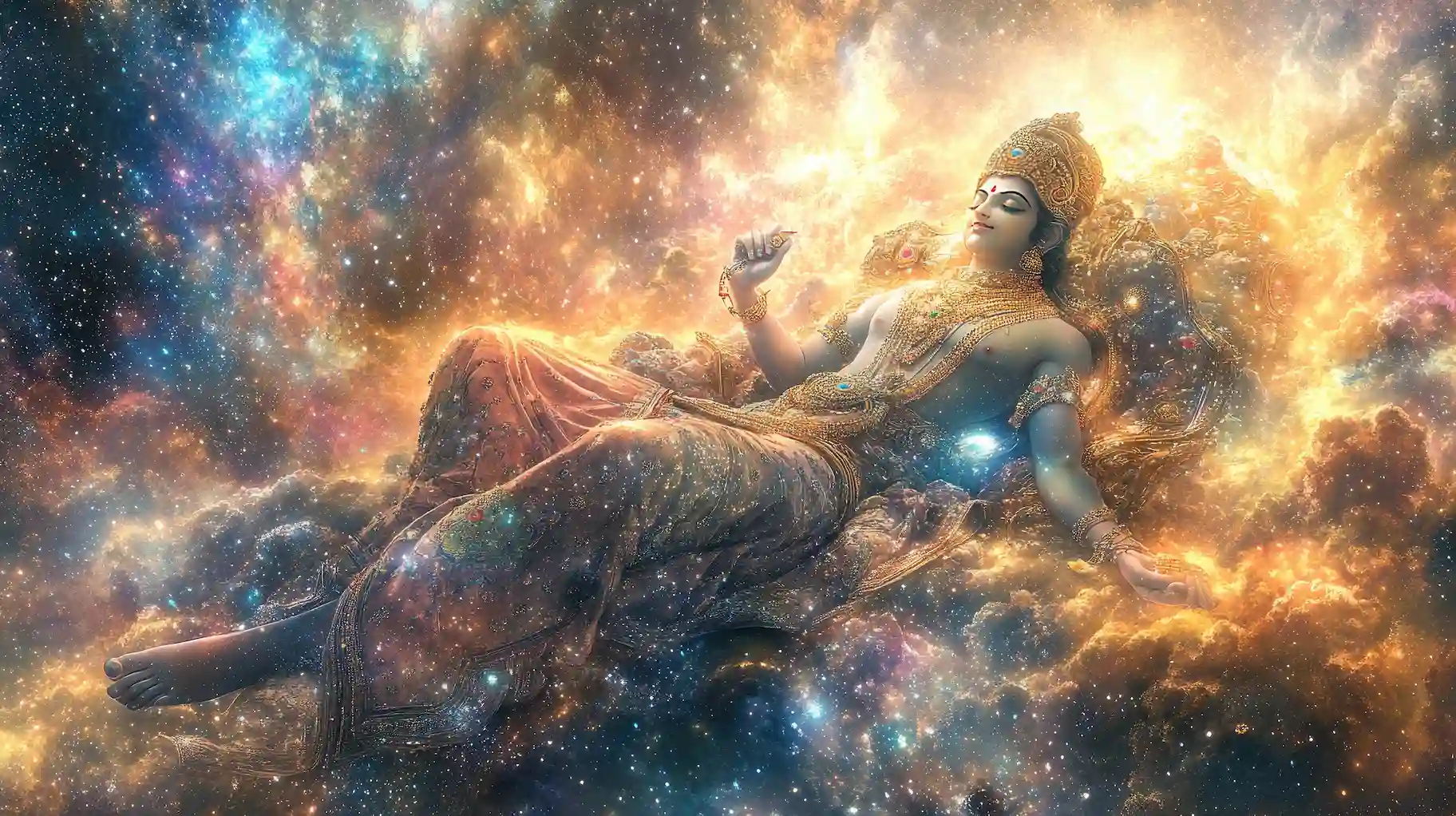
All Vedic wisdom culminates in knowing Krishna as the Supreme Purushottam.
Verse Reference: Bhagavad Gita 15.15
Story: Yajnavalkya and Maitreyi
In the Brihadaranyaka Upanishad, Yajnavalkya explains to Maitreyi that knowing the Self is superior to all rituals. That Self is Krishna, the knower of all.
Lesson: True knowledge is not scriptural scholarship, but self-realization.
8. The Three Purushas: Kshara, Akshara, and Purushottam
Krishna distinguishes three realities: the perishable (kshara), the imperishable (akshara), and the Supreme Person (Purushottam) who transcends both.
Verse Reference: Bhagavad Gita 15.16-18
Story: Gajendra Moksha
Gajendra, the elephant king, cried out to the Supreme when caught by a crocodile. Lord Vishnu descended to rescue him, transcending worldly and celestial realms.
Lesson: Only Purushottam can liberate us beyond both matter and spirit.
9. Bhakti: The Means to Realize Purushottam
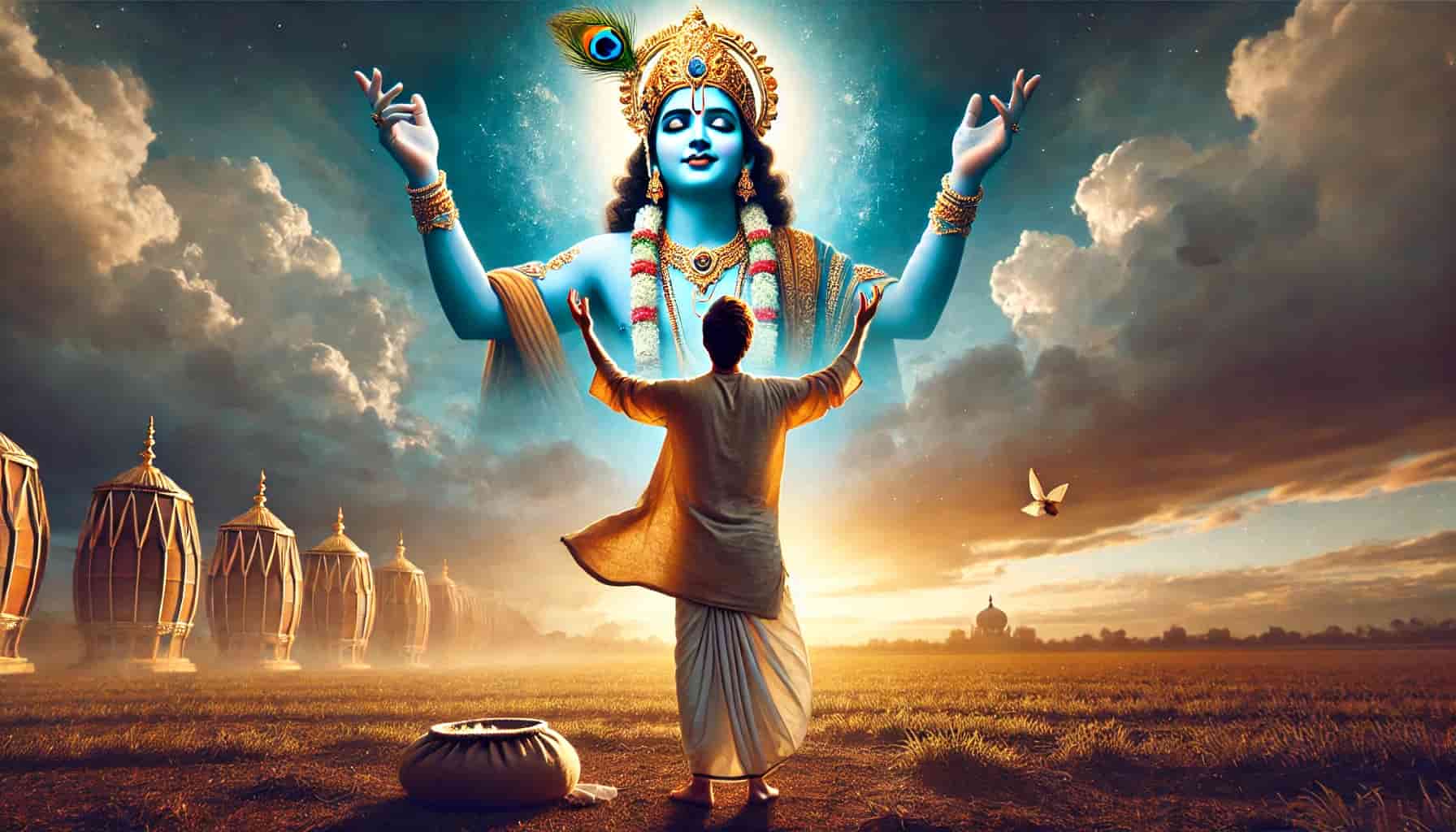
Krishna concludes by declaring that the wise who realize Him as Purushottam engage in unwavering devotion.
Verse Reference: Bhagavad Gita 15.19
Saint Reference: Sant Tukaram
Tukaram sang endlessly of Lord Vitthala (Krishna). Despite trials, he clung to bhakti. He is said to have ascended to Vaikuntha in his own body due to his supreme devotion.
Lesson: Devotion is the ultimate path to realizing the Supreme Personality.
Conclusion: Living the Wisdom of Purushottam Yog
This chapter presents a concise summary of Vedantic thought and spiritual practice. It shows how the soul, entangled in matter, can transcend duality through detachment, knowledge, and devotion to the Supreme Person.
Final Verse: Bhagavad Gita 15.20
Summary of Key Lessons:
- The world is a tree rooted in the divine but inverted by maya.
- The soul is divine and eternal, but trapped by senses and ego.
- God is both immanent and transcendent – the Purushottam.
- Bhakti, supported by detachment and discrimination, leads to liberation.
Understanding Purushottam Yog is the key to transcending the limitations of material life and attaining union with the Supreme Being.
Call to Action
Want to deepen your knowledge on Purushottam Yog?
📿 Join daily online Bhagavad Gita classes by JKYog: jkyog.org/online-classes
📲 Download the Free “Bhagavad Gita Krishna Bhakti” App:
Access daily verses, audio explanations, guided meditations, and more spiritual resources for your journey.
📺 Subscribe to Swami Mukundananda’s YouTube Channel:
Watch powerful spiritual discourses and find inspiration for your soul’s journey.
FAQs on Purushottam Yog
1. What is the main message of Chapter 15: Purushottam Yog?
Chapter 15 reveals the transient nature of the material world and introduces the concept of the Supreme Divine Personality (Purushottam), who transcends both the perishable and imperishable.
2. What is the symbolic meaning of the upside-down banyan tree in verse 15.1?
The tree represents material existence. Its roots above signify the divine origin (God), while its branches below symbolize worldly attachments and desires.
3. Who is the Purushottam according to Bhagavad Gita 15.18?
Krishna declares Himself as Purushottam—the Supreme Divine Personality who surpasses both the mortal (kshar) and the immortal soul (akshar).
4. How can one break free from the bondage of material existence as described in this chapter?
By cultivating detachment, seeking refuge in God, practicing devotion, and recognizing the soul’s divine nature.
5. What is the spiritual significance of knowing the Supreme Person (Purushottam)?
Knowing the Supreme Person enables liberation (moksha), ending the cycle of birth and death, and granting eternal divine bliss.
List of Reference Links
- Bhagavad Gita Chapter 15: Verse 1
- Bhagavad Gita Chapter 15: Verse 7
- Bhagavad Gita Chapter 15: Verse 10
- Bhagavad Gita Chapter 15: Verse 15
- Bhagavad Gita Chapter 15: Verse 18