Possess Mount Meru’s Wealth, Beauty & Fame — So what?
शरीरंसुरुपं तथावा कलत्रं
यशश्चारू चित्रंधनं मेरुतुल्यम्
मनश्चेन्न लग्नंगुरोरंघ्रिपद्मे
ततः किं ततः किं ततः किं ततः किम्
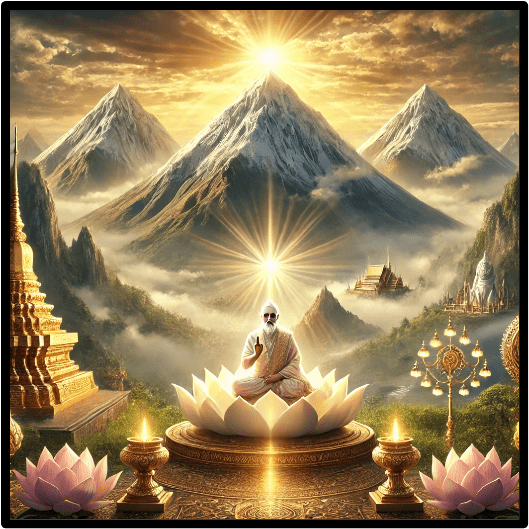
This verse expounds on various but temporary qualities associated with the human body. The first line talks about the beauty of the body, while the second delves into popularity and wealth, comparing it to Mount Meru, a five-peaked mountain. These lines also include the word ‘may,’ emphasizing that they could be acquired or lost any time.
After these lines, the next two lines profoundly praise the lotus feet of the Guru, saying these amazing traits are completely useless without surrendering to the feet of the Guru. In other words, it reminds us of the importance of the Guru, reminding us to surrender to Him/Her.
This verse reminds me of the story of Purandara Dasa, who was a great saint and the father of Carnatic Music. He had acquired vast amounts of wealth, more than anyone may possess today. He used the wealth for his own selfish desires, until God disguised himself as a Brahmin and taught Purandara Dasa a lesson. Since then, he renounced his material wealth, giving it all into charity, and started on the spiritual path with his Guru Vyasatirtha. This verse has innumerable learnings for me, including the power of the Guru on the spiritual path.
Blessed with a Spouse, Children, Home & Kin — So What?

कलत्रं धनं पुत्रपौत्रादि सर्वं
गृहं बान्धवाः सर्वमेतद्धि जातम्
मनश्चेन्न लग्नं गुरोरंघ्रिपद्मे
ततः किं ततः किं ततः किं ततः किम्
The second verse appears remarkably like the first, emphasizing different qualities. First, it talks about a huge family consisting of spouse, children, and family members, and then moves onto homes, again including the word ‘may.’ It explains that all of these have a possibility of such material blessings on anyone.
Then, it moves onto the same last lines as the previous verse, again commending the lotus feet of the Guru.
An example of a saint suitable for this verse is Parikshit, who, after the Pandavas, was the king of Hastinapur. When he committed a mistake by putting a snake around Sage Shamika’s neck while the sage was in meditation, the sage’s son cursed him saying he had only seven days left.
With this message in mind, Parikshit went back to the palace and renounced everything he possessed – family, kingdom, and a life of comfort, not worrying about who would rule after him. The rule automatically went to his son, Janmejay. In the forest, Parikshit started looking for a Guru and found Shukadev. He completely surrendered to Shukadev and listened to the divine knowledge of the Shrimad Bhagavatam from Shukadev for seven days. After seven days, the snake Takshak bit him, and with all the knowledge and faith in him, he passed away. This exceptional story emphasizes this verse tremendously that one could be the owner of all material things in the world, yet without surrendering to the lotus feet of the Guru, none of it is of any use.
Possess the Knowledge of the Vedas, Scriptures, Poetry & Prose — So What?
षडंगादिवेदो मुखे शास्त्रविद्या
कवित्वादि गद्यं सुपद्यं करोति
मनश्चेन्न लग्नं गुरोरंघ्रिपद्मे
ततः किं ततः किं ततः किं ततः किम्
The next verse declares that one with profound knowledge of the Vedas and the ability to create beautiful poetry, no matter how well versed they are, does not have any use in their skills until they surrender to the lotus feet of the Guru.
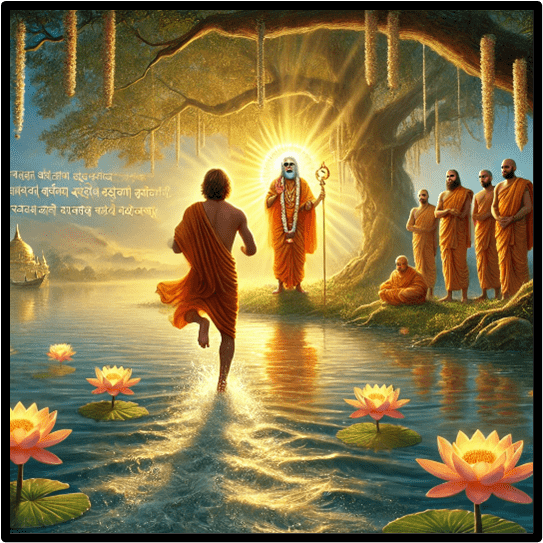
Jagadguru Adi Shankaracharya is a well-known saint. Once, his disciple, Sanand, was washing clothes on one side of the river. On the other side of the river, Shankaracharya was about to start a lecture for his disciples. All the disciples urged their Guru to start without Sanand, as he had no knowledge of the Vedas, but Shankaracharya called out to Sanand.
As soon as Sanand heard his name uttering from his Guru’s mouth, he rushed across the river not realizing that he was running on the surface of the river water. Because of his utmost faith towards his Guru, lotuses began forming under his feet whenever he placed them on the river surface! When he reached the other side, all the disciples were astonished! Shankaracharya then gave him the name “Padmapada,” meaning the feet that made lotuses blossom underneath.
Padmapada then received divine knowledge from his Guru. The story exemplifies how one with true faith and who surrenders towards the Guru automatically gets everything they need!
Global Respect and Moral Excellence — So What?
विदेशेषु मान्यः स्वदेशेषु धन्यः
सदाचारवृत्तेषु मत्तो न चान्यः
मनश्चेन्न लग्नं गुरोरंघ्रिपद्मे
ततः किं ततः किं ततः किं ततः किम्
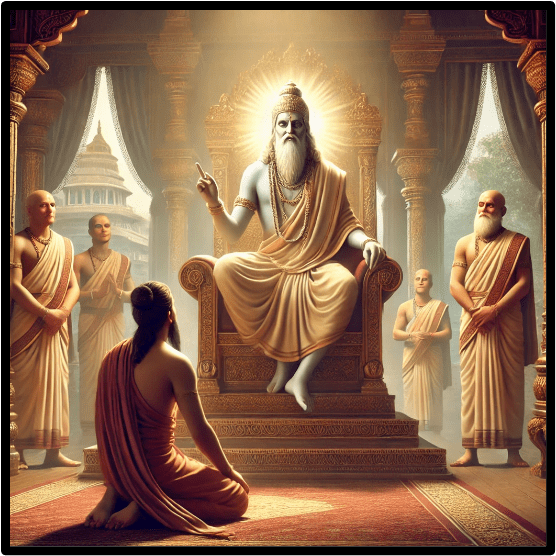
The verse describes a person who appears widely known and possesses good conduct and righteousness and is well respected by community members. Yet, their attributes become of no use unless they surrender to the feet of the Guru.
A notable example of this is that of King Janak, the father of Sita ji. He was a righteous king, and he was even videh (renounced from the body). Even then, he acquired various teachings and devoted himself to his teacher, Ashtavakra. Other kings were also popular and righteous but surrendered to a Guru. The verse highlights that spiritual growth and enlightenment come from a Guru's guidance, irrespective of one's status or virtues.
Served by Emperors and Kings — So What?
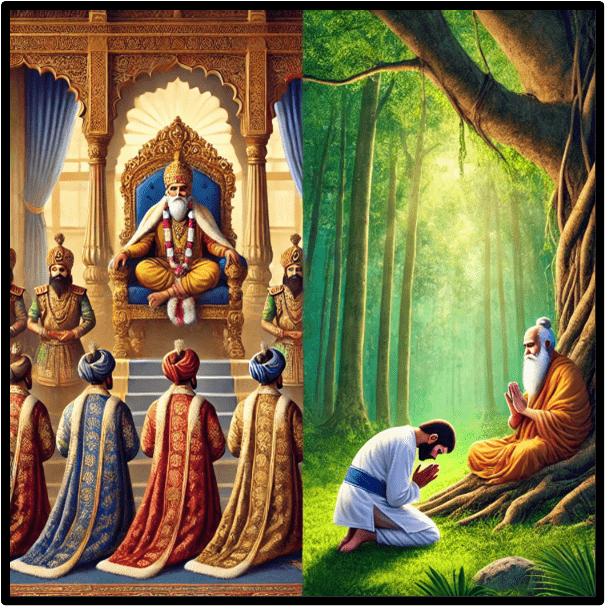
क्षमामण्डले भूपभूपालवृन्दैः
सदा सेवितं यस्य पादारविन्दम्
मनश्चेन्न लग्नं गुरोरंघ्रिपद्मे
ततः किं ततः किं ततः किं ततः किम्
In this verse, Jagadguru Shankaracharya explains that even if one is renowned and respected by emperors and kings, they must surrender to the feet of the Guru to benefit from his grace.
A fitting example of this is Sant Nabha Dass. Rulers, who admired his extensive and profound knowledge of the scriptures, often sought his counsel and wisdom on various matters of religious and moral significance.
Later, he surrendered to his Guru, Sant Ramanand, and learned divine knowledge from him. This verse proves the idea that true wisdom and spiritual growth come from the guidance of a Guru, regardless of one's worldly achievements or recognition.
Widespread Fame from Charity and Influence — So What?
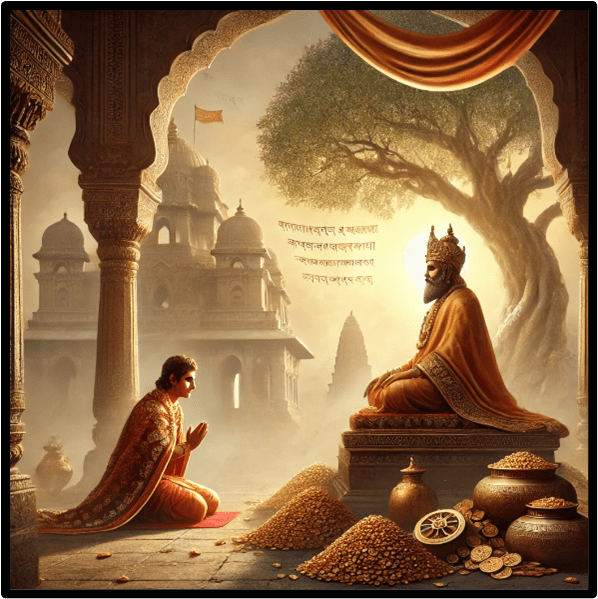
यशो मे गतं दिक्षु दानप्रतापात्
जगद्वस्तु सर्वं करे सत्प्रसादात्
मनश्चेन्न लग्नं गुरोरंघ्रिपद्मे
ततः किं ततः किं ततः किं ततः किम्
The sixth verse communicates that one may have received great accolades for philanthropic work, but all their virtuous deeds are no use unless they fixate their mind upon the lotus feet of the Guru.
King Ashoka was a ruler who contributed wealth to promote Buddhism. Despite his significant contributions, it was only after he found a Guru, Upagupta, and followed his teachings that he understood the essence of spiritual practice.
True spiritual growth comes from sincere devotion and guidance from an enlightened Guru, rather than just outward acts of charity. It emphasizes that achieving spiritual enlightenment is associated with following the teachings of the Guru.
Pleasure, Austerity, Power & Wealth — So What?
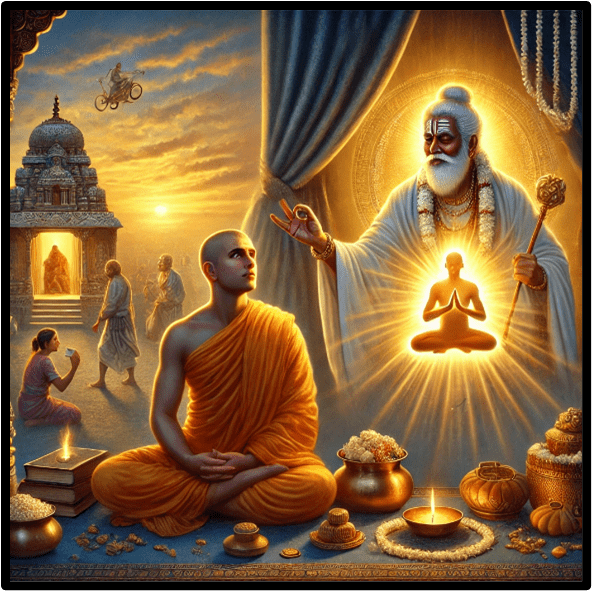
न भोगे न योगे न वा वाजिराजौ
न कान्तासुखे नैव वित्तेषु चित्तम्
मनश्चेन्न लग्नं गुरोरंघ्रिपद्मे
ततः किं ततः किं ततः किं ततः किम्
The next verse says that one who practices yoga, has great relationships, and holds infinite amounts of wealth can never be happy without surrendering to the Guru.
There are instances where ascetics have practiced rigorous austerities without achieving their objectives. Conversely, countless householders, despite leading busy and often chaotic lives, have successfully achieved spiritual enlightenment.
These cases illustrate that spiritual fulfillment is attainable in diverse contexts and lifestyles, highlighting the adaptability of spiritual practices. Raman Maharishi is an incredibly famous saint. He used to perform austerities but had great doubt in himself. Later, he surrendered himself to the teachings of Ganapati Sastri, his Guru, and started to preach divine knowledge.
Renunciation: Solitude, Body & Possessions — So What?
अरण्ये न वा स्वस्य गेहे न कार्ये
न देहे मनो वर्तते मे त्वनर्घ्ये
मनश्चेन्न लग्नं गुरोरंघ्रिपद्मे
ततः किं ततः किं ततः किं ततः किम्
The eighth and final verse goes into the perspective of a renunciant, also mentioned in the previous verse. It describes one with no worldly attachments or relationships. It ends like all the verses, saying that there is no use unless one surrenders to the lotus feet of the Guru.
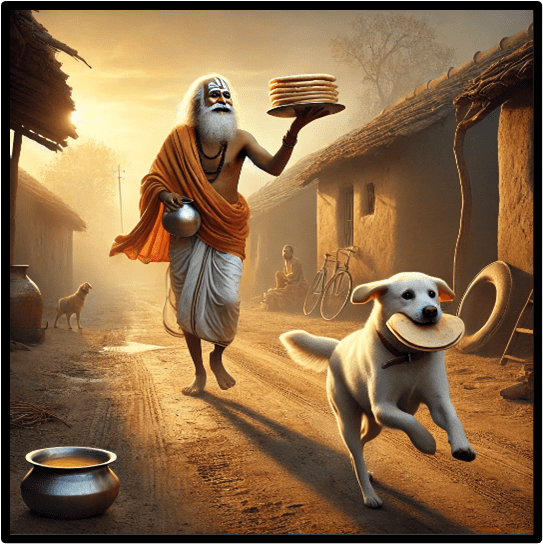
An excellent example of this is Sant Namdev, who was very spiritually elevated. He accepted God as his Guru and saw God everywhere.
A story of this is when once he was eating chapati. A dog arrived and took a few chapatis. Instead of getting angry, Namadev saw Vitthala in the dog and exclaimed for the dog to get ghee on the rotis instead of eating them dry. Such was his level of devotion!
Still, he was not feeling elevated in the spiritual path and realized that having a Guru in this world was especially important to him progressing on the spiritual path. He then found a Guru, Visoba Khechar, and progressed on the spiritual path.
Reflecting on the Eight Verses Leads to the Supreme Goal
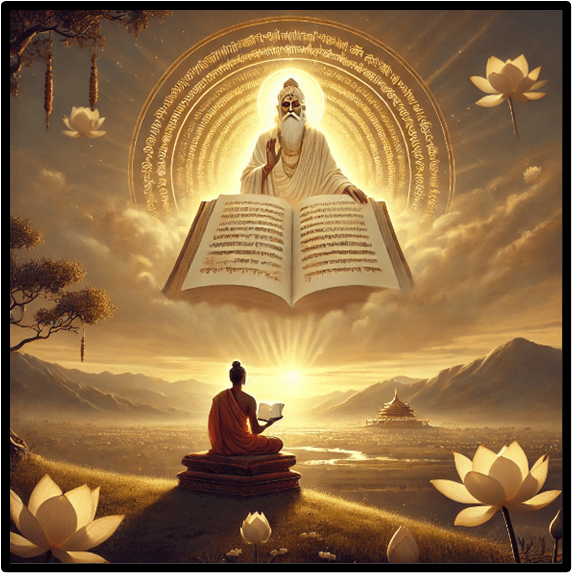
गुरोरष्टकं यः पठेत्पुण्यदेही
यतिर्भूपतिर्ब्रह्मचारी च गेही।
लभेत् वांछितार्थ पदं ब्रह्मसंज्ञं
गुरोरुक्तवाक्ये मनो यस्य लग्नम्॥
The ninth verse in the Guru Ashtakam summarizes the teachings of the first eight verses, though it is not technically a verse by itself. It presents the statement that if one reads the above eight verses and ponders over it, whoever the person is, they will attain the supreme goal, God.
This is a profound statement and mentions the attainment of the highest goal of life just by pondering over eight verses. It emphasizes the power of the Guru Ashtakam.
If the Guru Ashtakam is this powerful, how powerful is the Guru who guides material souls and takes them to God?
This Guru Ashtakam calls all of us to find a true Guru and surrender to Him/Her. Then, we will all go to the supreme goal and remain grateful forever to the teachings of our supreme, spiritual master.