
Every January, gyms overflow, grocery carts fill with aspirational foods, and calendars are packed with bold intentions. By March, much of that momentum has faded. This isn’t because people lack discipline or desire—it’s because real change requires more than a date on the calendar. It requires a shift in how we approach health, fitness, and well-being.
The truth is liberating and straightforward: we don’t need a new year to create a new routine. We only need a starting point—and that point can be right now.
The New Year Fitness Trap

The idea of the “New Year, New You” is powerful. It feels clean, hopeful, and motivating. But it also carries a hidden trap for fitness. When change is tied to a specific moment—January 1st—it becomes fragile. Miss a workout. Eat one indulgent meal. Skip a week. Suddenly, the whole plan feels broken, and we feel like we have failed.
This all-or-nothing mindset is one of the biggest reasons New Year’s resolutions rarely last. Research and real-world experience show a predictable pattern: gym attendance surges from January through March, then steadily drops off. The intention was there, but the structure to support lasting change was not.
What’s missing isn’t willpower—it’s a lifestyle shift.
Start Now, No Permission Required
Health is not seasonal. Your body doesn’t know it’s January, Monday, or the “right time.” It only responds to what you do consistently.
When you decide to start now, you remove pressure and the need for perfection from the equation. Starting now means:
- You don’t wait for motivation (a passive approach) —you build momentum (an active approach).
- You focus on today’s choices, not an idealized future version of yourself (which can cause anxiety).
- You treat health as a practice, not a performance (if we fail today, we try again tomorrow).
Small steps taken each day are more effective than grand plans postponed due to uncertainty and overwhelm.
Sustainable Health Habits: Why Lifestyle Change Matters More Than Goals Alone
For example, a goal like “work out five days a week” sounds great—but if we don't consider our schedule, energy levels, sleep habits, and stress, it quickly becomes unrealistic.
Lifestyle change asks different questions:
- What fits into my real life?
- What can I sustain on my busiest, hardest days?
- What habits support who I already am, not who I think I should be?
When our habits align with our lifestyles, consistency becomes possible—and results are sustainable. Let's explore alternatives to New Year's resolutions.
The Power of S.M.A.R.T. Health Goals

One of the most effective ways to bridge the gap between intention and action is by setting S.M.A.R.T. goals. These goals are:
- Specific – Clear and focused
- Measurable – Trackable and observable
- Achievable – Realistic for your current season of life
- Relevant – Meaningful to you
- Time-bound – Anchored within a reasonable timeframe
Instead of saying, “I want to get healthier,” a S.M.A.R.T. health goal might be:
“I will walk for 10 minutes after dinner, four days a week, for the next three weeks.”
This kind of goal removes ambiguity. We know exactly what success looks like—and you’re far more likely to achieve it.
Along with S.M.A.R.T. goals, try incorporating another technique called "habit stacking". Habit stacking is the linking of new habits to existing routines. When we link new behaviors to existing ones, we are more likely to continue doing them.
For example, if we habitually go straight to the coffee maker after waking, take a moment to step outside onto the grass and feel the sun and air, admire the sunrise, and say a mantra to set the tone for the day while the coffee brews. We can lift our spirits by humming a kirtan or hymn while brushing our teeth. Maintain momentum by listening to lectures or kirtans during lunch breaks and workouts.
For anyone living in the DFW area, habit-stack your wellness and spirituality by attending classes at the Prem Yoga Wellness Center before or after visiting the Radha Krishna Temple of Dallas.
Start Small: The 1% Rule.
One of the most overlooked truths in health and wellness is that small changes compound.
The 1% rule is simple: aim to improve just 1% at a time.
That might look like:
- Adding one serving of vegetables a day
- Drinking one extra glass of water
- Stretching for five minutes before bed
- Parking farther away to get more steps
These actions may feel insignificant in the moment, but over time, they reshape your identity. You become someone who moves daily. Someone who makes nourishing choices. Someone who practices self-care consistently.
Significant transformations are built on tiny, repeatable actions. As Swami Mukundananda states, "Discipline is the bridge that connects your present state with your dreams." Hear more about this in his video, Powerful 1% Rule to Achieve Your Dreams Faster.
Swami Mukundananda shares how we can use the 1% rule for success.
The 21-Day practice
You’ve probably heard that it takes 21 days to form a habit. While the exact number varies, the principle remains valid: repetition builds familiarity, and familiarity builds routine.
The key is not to focus on perfection during those first few weeks, but on practice.
- Show up imperfectly
- Miss a day and resume the next
- Learn what works and what doesn’t
Habits aren’t formed by never failing—they’re formed by returning. To get us started, create a plan like the example below.
S.M.A.R.T. Goal: To build muscle by weight training on Tuesdays and Thursdays after work.
| Tuesday | Thursday | |
| Week 1 | 10 Push-Ups 8 Bicep Curls 8 Upright Rows 8 Bench Presses 8 Tricep Kickbacks 8 Shoulder Presses 8 Sit-Ups 8 Leg Raises 10 Second Plank 3 Reps Each |
10 Stair Runs 8 Squats 8 Deadlifts 8 Thrusters 8 Walking Lunges 8 Step-Ups 8 Roll-Ups 8 Mountain Climbers 10 Second Dead Bug 3 Reps Each |
| Week 2 | 10 Push-Ups 8 Bicep Curls 8 Upright Rows 8 Bench Presses 8 Tricep Kickbacks 8 Shoulder Presses 8 Sit-Ups 8 Leg Raises 10 Second Plank 3 Reps Each |
10 Stair Runs 8 Squats 8 Deadlifts 8 Thrusters 8 Walking Lunges 8 Step-Ups 8 Roll-Ups 8 Mountain Climbers 10 Second Dead Bug 3 Reps Each |
| Week 3 | 10 Push-Ups 8 Bicep Curls 8 Upright Rows 8 Bench Presses 8 Tricep Kickbacks 8 Shoulder Presses 8 Sit-Ups 8 Leg Raises 10 Second Plank 3 Reps Each |
10 Stair Runs 8 Squats 8 Deadlifts 8 Thrusters 8 Walking Lunges 8 Step-Ups 8 Roll-Ups 8 Mountain Climbers 10 Second Dead Bug 3 Reps Each |
3-Week Strength & Conditioning Plan
After Week 3:
👉 Assess progress and make adjustments (increase reps, duration, resistance, or variety as needed).
Accountability: The Secret Ingredient

Even the most motivated people benefit from accountability. When change is shared, it becomes stronger.
Accountability can take many forms:
- A friend who checks in weekly
- A workout partner
- A calendar reminder
- A habit-tracking app
- A coach or supportive community
The purpose of accountability isn’t guilt—it’s awareness. It keeps your intentions visible and your progress honest. When someone else knows your goal, it’s no longer just a thought. It’s a commitment.
But sometimes, life can sabotage our accountability. For example, a mother prepares to take an online yoga class, but her child always demands her attention. In this instance, we can arrange care with another caregiver, or use this opportunity to instill healthy habits in our children by inviting them to participate!
Be Cautious of Trends
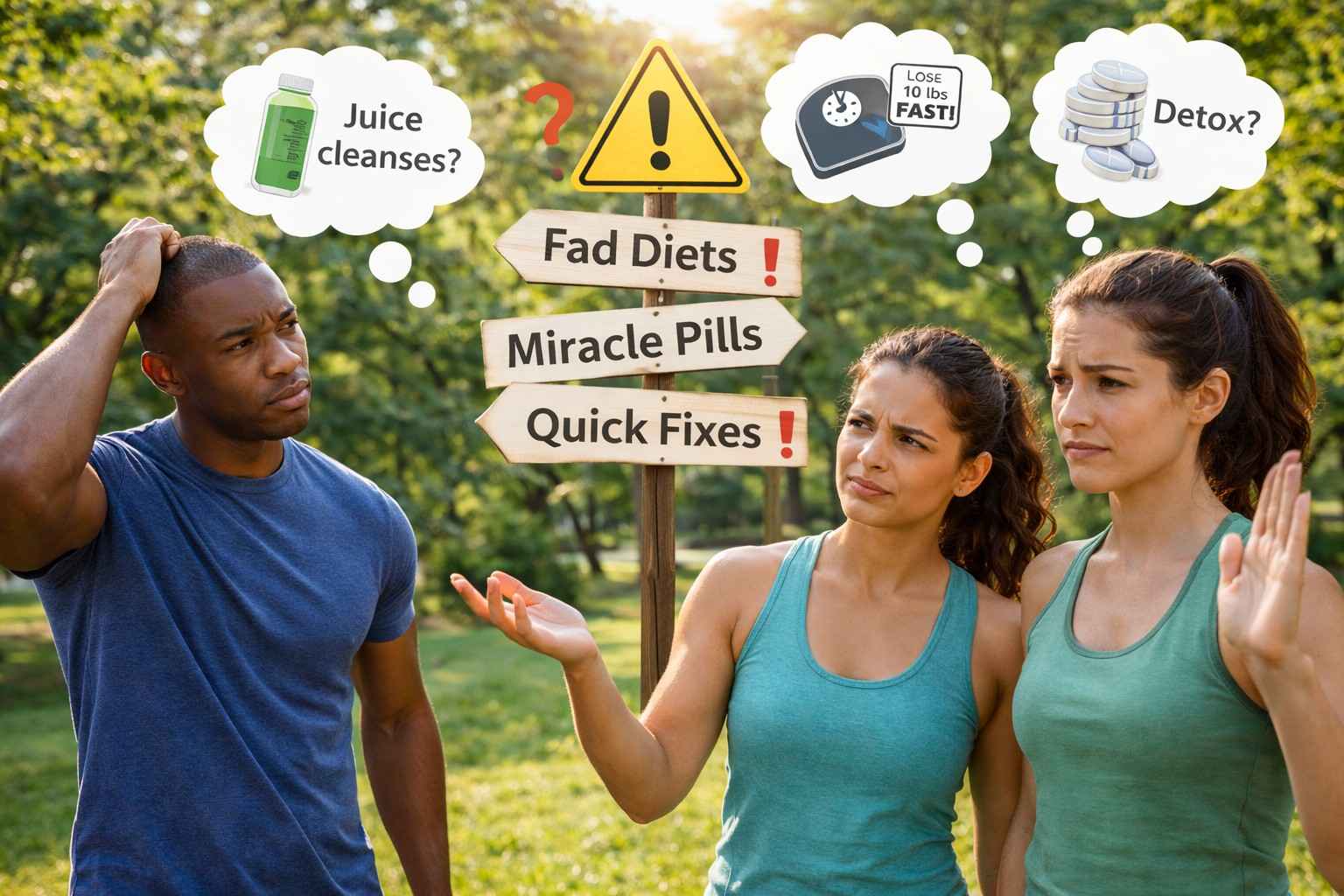
The wellness industry is full of trends—some helpful, some harmful, many simply mismatched to individual needs. Just because something is popular doesn’t mean it’s right for us. Before jumping into a trend, ask:
- Does this align with my body, age, and health history?
- Can I realistically sustain this long-term?
- Does this support my overall well-being or promise quick results (based on external appearance)?
- Is it financially reasonable?
- Is it backed by science or social media?
Proper health is personal. The most effective plan is the one you can practice consistently, not the one that looks impressive online. Before starting a health and wellness routine, especially if we have been sedentary and eating suboptimally, it is essential to consult a licensed professional, such as our primary care physician or a registered dietitian.
Practice Is the Point
Health is not something we achieve once and keep forever. It’s something we practice for our entire lives. Practice movement, nourishment, rest, and self-awareness. Some days we’ll practice well. Other days we’ll practice grace. Both count. The goal is not perfection—it’s presence and consistency.
Redefining Success

Success in health is beyond a number on the scale, a clothing size, or a streak that never breaks.
Success looks like:
- Feeling more energized, independent, and joyful
- Recovering more quickly after setbacks
- Making choices from self-respect (ownership) rather than self-criticism
- Building trust with our own bodies
When you redefine success this way, health becomes supportive rather than stressful.
Start Now, Stay Gentle, Keep Going
We don’t need a new year. We don’t need a perfect plan. We don’t need to wait until January 1st or a Monday. We need one small action, taken today, with intention. Start now. Start small. Set S.M.A.R.T. goals that fit. Create accountability. Ignore what doesn’t serve our circumstances. Practice again tomorrow. That’s how real, lasting health is built—not in a rush of January motivation, but in the quiet power of daily commitment.
And the best part? We can begin at any moment, including this one.
A Call to Action
Swami Mukundananda provides numerous lectures on developing good habits and attitudes. Subscribe to the Swami Mukundananda YouTube Channel and check out the links below for inspiration.
Resources
New Year Message by Swami Mukundananda
Transform Your Life in 2025: New Year, New You
New Year Resolution - It's Time to Improve Your Thoughts
Kick Start New Year 2025 with Inspiration