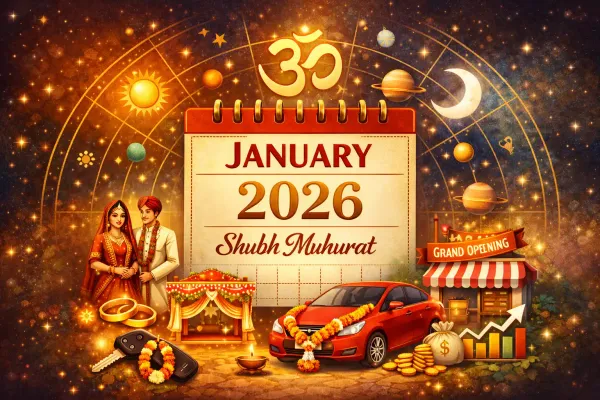

In Vedic Hindu tradition, marriage is far more than a ritual—it is a spiritual sadhana, a conscious path toward self-realization and inner harmony. Swami Mukundananda Ji teaches that a true marriage is a sacred partnership, where two individuals cultivate virtues, align with cosmic dharma, and transform daily life into a living expression of devotion and consciousness.
Marriage is a balance of the material and spiritual dimensions of life. Partners serve as mirrors for each other, offering opportunities for self-improvement, patience, compassion, and surrender. Even ordinary routines sharing responsibilities, nurturing children, supporting each other become acts of dharma and devotion when approached consciously.
Choosing a shubh muhurat is not merely about astrology; it is about aligning human effort with cosmic order. January’s serene winter energy symbolizes clarity, stability, and calm; qualities essential for a lifelong partnership rooted in spiritual growth. Weddings on auspicious dates strengthen worldly prosperity, emotional harmony, and spiritual connection, making marriage a living sadhana rather than just a ceremony.
Why January Is a Popular Month for Hindu Weddings
January is considered one of the most auspicious months for Hindu marriages, especially in North and Central India. The reasons are both astrological and practical:
- End of Chaturmas: By January, Chaturmas (the four inauspicious months) has long ended, reopening the window for weddings.
- Stable planetary alignment: Major malefic planetary transits are generally calmer during this time.
- Pleasant winter weather: Ideal for elaborate rituals, long ceremonies, and guest comfort.
- Cultural preference: Many communities believe marriages solemnized in winter bring longevity and stability to the relationship.
From a planning perspective, January winter weddings allow for better décor, richer attire, and grand daytime ceremonies without extreme weather challenges.
Significance of Shubh Muhurat in Hindu Marriage
In Hinduism, marriage is not just a social contract—it is a sacred sanskar (sacrament). Performing the wedding during a shubh muhurat is believed to:
- Remove negative planetary influences
- Strengthen marital harmony and mutual understanding
- Ensure prosperity, fertility, and emotional stability
According to Vedic astrology, a vivah muhurat is chosen after carefully analyzing the Panchang, planetary positions, and the couple’s horoscopes. Ignoring muhurat may expose the marriage to unnecessary doshas (astrological flaws) that could otherwise be avoided.
This is why families consult priests or astrologers before finalizing January 2026 wedding dates.
Overview of January 2026 Wedding Calendar
The January 2026 Hindu marriage calendar features several auspicious dates supported by favorable Tithis, Nakshatras, and Yogas. Since the Sun remains in Dhanu and later Makara Rashi, the period is considered spiritually uplifting and suitable for sacred rituals.
Key highlights of the January 2026 wedding calendar include:
- Multiple weekday and weekend marriage muhurats
- Favorable Nakshatras like Rohini and Uttar Phalguni
- Minimal interruptions from major inauspicious periods
This makes January 2026 an excellent choice for couples seeking both astrological correctness and logistical convenience.
Understanding Shubh Muhurat for Marriage
To fully appreciate why certain January 2026 marriage dates are considered auspicious, it’s important to understand the concept of Shubh Muhurat. In Vedic astrology, timing is everything—right actions performed at the right time yield the best results.
What Is a Shubh Muhurat?
A Shubh Muhurat refers to a precise time window when cosmic energies are most favorable for performing an important life event like marriage. It is calculated using:
- Planetary positions (Graha Sthiti)
- Lunar day (Tithi)
- Star constellation (Nakshatra)
- Combination of Yogas and Karanas
A wedding conducted during a shubh muhurat is believed to receive the blessings of all nine planets (Navagrahas), reducing obstacles and enhancing marital bliss.
Role of Panchang in Fixing Wedding Dates
The Hindu Panchang is the backbone of muhurat calculation. It consists of five elements:
- Tithi – Lunar day
- Vaar – Day of the week
- Nakshatra – Lunar constellation
- Yoga – Auspicious planetary combinations
- Karana – Half of a Tithi
For selecting January 2026 marriage muhurats, astrologers study the Panchang to avoid:
- Bhadra
- Rikta Tithis
- Inauspicious Yogas
Only when all Panchang elements align positively is a date declared fit for marriage.
Key Astrological Factors Considered for Marriage Muhurat
Several astrological parameters are carefully evaluated before finalizing a vivah muhurat:
- Nakshatra Shuddhi: Certain Nakshatras are ideal for marriage, while others are strictly avoided.
- Tithi Compatibility: Dates like Dwitiya, Tritiya, Panchami, and Saptami are preferred.
- Planetary Strength: Venus (Shukra), the significator of marriage, must not be combust or debilitated.
- Moon Placement: A strong Moon ensures emotional balance and harmony.
- Avoidance of Doshas: Rahu Kaal, Yamagandam, and Gulika must not coincide with the ceremony.
These factors collectively determine whether a January 2026 wedding date is truly auspicious or not.
Why These Factors Matter in January 2026
In January 2026, planetary movements provide multiple favorable windows, making it possible to choose dates that:
- Suit both horoscopes
- Fall on convenient weekdays or weekends
- Avoid major astrological defects
This makes the month especially attractive for couples who want a traditionally aligned yet well-planned wedding.
Auspicious 2026 Marriage Dates in January
January 2026 offers several highly auspicious marriage dates supported by favorable Tithis, Nakshatras, and planetary combinations. Since there is no Chaturmas, no Malmas, and no major planetary combustion of Venus during most of the month, families have multiple options to choose a shubh vivah muhurat that aligns with both tradition and convenience.
These January 2026 marriage dates are derived from Hindu Panchang calculations, keeping in mind Nakshatra purity, Tithi strength, and avoidance of major doshas such as Bhadra and Rahu Kaal during the main ceremony window.
Complete List of Shubh Marriage Dates in January 2026
Below are the most auspicious Hindu wedding dates in January 2026, suitable for traditional Vedic marriage ceremonies.
🔔 Important Note:
Muhurat timings may vary slightly based on location (Desh–Kaal–Patra). Always confirm with a local priest or astrologer before finalizin
January 2026 Marriage Muhurat Table
|
Date |
Day |
Nakshatra |
Tithi |
Auspicious Marriage Muhurat Timing |
|
16 January 2026 |
Friday |
Rohini |
Panchami |
07:18 AM – 12:42 PM |
|
18 January 2026 |
Sunday |
Mrigashirsha |
Saptami |
09:03 AM – 02:10 PM |
|
19 January 2026 |
Monday |
Mrigashirsha |
Ashtami |
07:12 AM – 10:58 AM |
|
23 January 2026 |
Friday |
Uttar Phalguni |
Dwadashi |
08:05 AM – 01:36 PM |
|
24 January 2026 |
Saturday |
Uttar Phalguni |
Trayodashi |
07:54 AM – 11:47 AM |
|
25 January 2026 |
Sunday |
Hasta |
Chaturdashi |
09:20 AM – 02:32 PM |
Day-Wise Breakdown of January 2026 Wedding Muhurats
16 January 2026 – Rohini Nakshatra
Rohini is considered one of the most powerful Nakshatras for marriage, symbolizing growth, stability, and prosperity. Weddings performed under Rohini are believed to bless couples with material abundance and emotional stability.
- Ideal for traditional daytime weddings
- Highly preferred in North Indian communities
- Strong association with family expansion and harmony
18–19 January 2026 – Mrigashirsha Nakshatra
Mrigashirsha represents gentleness, curiosity, and adaptability, making it suitable for couples who value companionship and mutual understanding.
- Good for modern and inter-cultural marriages
- Encourages emotional bonding and communication
- Favorable Moon placement enhances mental harmony
23–24 January 2026 – Uttar Phalguni Nakshatra
Uttar Phalguni is strongly linked with commitment, responsibility, and long-term stability—key pillars of married life.
- Excellent for couples seeking marital longevity
- Traditionally recommended by astrologers
- Especially auspicious for arranged marriages
25 January 2026 – Hasta Nakshatra
Hasta Nakshatra symbolizes skill, cooperation, and trust. Marriages under Hasta often result in partnerships where both individuals grow together.
- Good for couples starting joint ventures or businesses
- Favors mutual respect and teamwork
- Suitable for both religious and simple ceremonies
Best Nakshatras for Marriage in January 2026
The following Nakshatras are considered highly auspicious for weddings in January 2026:
- Rohini – Prosperity and fertility
- Mrigashirsha – Emotional balance and friendship
- Uttar Phalguni – Stability and marital duty
- Hasta – Cooperation and trust
These Nakshatras are free from Vedha and Dosha during the listed dates, making them ideal for vivah sanskar.
Why January 2026 Has Strong Wedding Muhurats
Astrologically, January 2026 benefits from:
- Favorable Moon transits
- Absence of major inauspicious yogas
- Strong placement of Venus (Shukra), the planet of marriage
- Calm planetary environment suitable for sacred rituals
This combination makes January 2026 one of the most reliable months for Hindu marriages.
Inauspicious Days to Avoid for Marriage in January 2026
While January 2026 has several shubh marriage dates, it also includes periods that are considered inauspicious for vivah sanskar. According to Hindu astrology, avoiding these dates is just as important as selecting the right muhurat, as weddings performed during unfavorable times may invite delays, misunderstandings, or unnecessary struggles in married life.
Astrologers advise families to stay cautious of dosha-prone tithis, nakshatras, and time periods when planning a January 2026 wedding.
Tithis Considered Inauspicious for Marriage
Certain lunar days are traditionally avoided for weddings due to their unstable or destructive energies:
- Amavasya (New Moon) – Symbolizes emptiness and instability
- Purnima (Full Moon) – Emotionally intense, not ideal for new beginnings
- Chaturthi – Associated with obstacles
- Navami – Considered aggressive in nature
- Chaturdashi – Linked with separation energies
Even if a day appears attractive from a logistical point of view, marriage should not be performed on these inauspicious tithis in January 2026.
Nakshatras to Avoid for January 2026 Weddings
The following Nakshatras are generally prohibited for marriage ceremonies, regardless of the month:
- Ashlesha – Associated with manipulation and emotional entanglement
- Magha – Connected to ancestral rites rather than new unions
- Jyeshtha – Indicates dominance and power imbalance
- Moola – Known for destruction and uprooting
If the Moon transits these Nakshatras in January 2026, those days are usually excluded from marriage muhurat selection.
Rahu Kaal, Yamagandam, and Gulika Kaal
Even on an otherwise auspicious date, the wedding ceremony must not be performed during certain daily inauspicious periods:
- Rahu Kaal – Brings confusion and obstacles
- Yamagandam – Associated with loss and instability
- Gulika Kaal – Linked with delays and dissatisfaction
Astrologers carefully ensure that the main wedding rituals (Kanyadaan, Mangal Pheras) are completed outside these periods when finalizing January 2026 marriage muhurat timings.
Bhadra and Other Doshas
- Bhadra Kaal: Weddings are strictly forbidden during Bhadra, as it is believed to cause marital discord.
- Combust Venus (Shukra Asta): Venus governs love and marriage. If Venus is combust on any January 2026 date, that day is avoided.
- Eclipse Days: Any Surya or Chandra Grahan day is completely inauspicious, even if it overlaps partially.
These rules are universally followed across most Hindu traditions.
Astrological Dos & Don’ts for January 2026 Weddings
Selecting a January 2026 wedding date is not only about choosing a good Panchang day—it also involves aligning the muhurat with the couple’s individual horoscopes. Following these astrological dos and don’ts helps ensure a smooth and harmonious married life.
Astrological Dos for January 2026 Weddings
Do Match Kundlis Before Finalizing the Date
Kundli Milan remains a crucial step in Hindu marriages. Matching the horoscopes helps assess:
- Guna compatibility
- Emotional alignment
- Health and progeny prospects
- Financial stability after marriage
Even the most auspicious January 2026 marriage muhurat should be validated against both horoscopes.
Do Check Mangal Dosha Carefully
If either partner has Mangal Dosha, astrologers ensure:
- Both partners are Manglik, or
- Proper dosha cancellation (Bhanga), or
- Marriage is performed during a dosha-neutralizing muhurat
Ignoring Mangal Dosha can create tension, arguments, or delays in married life.
Do Prioritize Moon Strength
A strong Moon at the time of marriage supports:
- Emotional bonding
- Mental peace
- Mutual understanding
January 2026 offers several muhurats where the Moon is well-placed, making it a favorable month astrologically.
Astrological Don’ts for January 2026 Weddings
Don’t Rely Solely on Calendar Dates
Online lists of January 2026 marriage dates are helpful, but they cannot replace personalized horoscope analysis. Factors like Mahadasha, Antardasha, and individual doshas must be considered.
Don’t Ignore Regional Panchang Differences
Marriage muhurat timings can vary based on:
- Geographic location
- Sunrise–sunset variations
- Local Panchang calculations
Always confirm timings locally before sending wedding invitations.
Don’t Perform Key Rituals at Night (Unless Specified)
Most Hindu weddings are best conducted during daytime muhurats, especially in winter months like January. Night weddings are avoided unless specifically recommended by an astrologer.
Why These Guidelines Matter in January 2026
January 2026 is astrologically promising, but discipline in following muhurat rules ensures that couples truly benefit from the month’s favorable planetary energy. When correct dates, right nakshatras, and personal horoscopes align, the marriage gains spiritual strength and long-term stability.
Final Conclusion: Choosing Marriage Dates with Wisdom, Dharma, and Devotion
According to the teachings of Swami Mukundanandji, marriage is not merely a social arrangement but a sacred spiritual journey (Yagya) in which two souls walk together on the path of dharma, devotion, and selfless service. Selecting the right January 2026 marriage dates and performing the wedding in a shubh vivah muhurat helps align the couple’s union with divine order, but Swamiji emphasizes that inner values matter more than outer rituals.
Astrology provides guidance, not destiny. A favorable marriage muhurat in January 2026 creates supportive cosmic conditions, yet lasting marital happiness depends on mutual respect, humility, patience, and devotion to God. Swami Mukundanandji teaches that when couples center their relationship around Bhakti (devotion), challenges transform into opportunities for growth, and marriage becomes a means of spiritual elevation rather than attachment.
Winter weddings in January symbolize clarity, calmness, and renewal, making them ideal for beginning a life rooted in purpose. When families combine astrological wisdom, righteous conduct, and spiritual consciousness, marriage blossoms into a source of joy, stability, and divine grace.
May every couple marrying in January 2026 be blessed with love guided by wisdom, harmony strengthened by faith, and a home filled with devotion.
Let us watch video by Swami Mukundanandji which beautifully reinforces the idea that marriage thrives not just on auspicious timing, but on spiritual understanding and emotional maturity. It helps us see marriage as a path of inner growth, selflessness, and devotion, aligning perfectly with the significance of shubh muhurat discussed in the blog. Embedding this video adds practical spiritual wisdom that couples can apply long after the wedding rituals are complete.
Frequently Asked Questions (FAQs)
Q1. Are January 2026 marriage dates truly auspicious?
Yes, January 2026 offers several shubh marriage dates free from Chaturmas and major doshas, making it ideal for Hindu weddings.
Q2. Is Shubh Muhurat mandatory for marriage?
While not compulsory, performing marriage in a shubh muhurat aligns the ceremony with favorable cosmic energies and is strongly recommended in Hindu tradition.
Q3. Should Kundli matching be done even if the date is auspicious?
Absolutely. Kundli Milan ensures personal compatibility and helps address doshas that a general muhurat cannot override.
Q4. Can spiritual practices improve married life beyond astrology?
Yes. As taught by Swami Mukundanandji, devotion, selflessness, and God-conscious living are the true foundations of a successful marriage.
Call to Action (CTA)
✨ Planning your wedding in January 2026?
Consult a qualified astrologer, match horoscopes carefully, and most importantly, build your marriage on values, devotion, and dharma.
👉 Bookmark this guide for accurate January 2026 marriage muhurats
👉 Share it with family members involved in wedding planning
👉 Begin your married life with wisdom, faith, and divine blessings
May your union be blessed today and forever. 🙏