Introduction: The Divine Realization and Supreme Surrender
As the Durga Saptashati reaches its conclusion, we witness not only the Devi’s final victories but also the deep reverence, surrender, and praise offered to her by the celestial beings. These concluding chapters shift from the battlefield to a space of devotion and realization, where stutis (hymns of praise) reveal the true nature of the Goddess as the eternal source of protection, prosperity, and liberation. The emphasis moves from external enemies to internal transformation, highlighting the spiritual rewards of surrendering fully to the Divine.
As the sacred festival of Navratri 2025 comes closer, these chapters carry a message of inner resolution. Swami Mukundananda Ji reminds us that true transformation does not occur through personal strength alone but by taking complete refuge in Yogmaya — the divine energy of God. The Devi, in her compassionate form, not only removes obstacles but also bestows wisdom, detachment, and lasting peace upon her devotees. These final passages of the Saptashati provide not just closure to the narrative but an invitation to deepen one’s surrender and connection to the Divine Mother.
📖 Chapters Covered in This Part
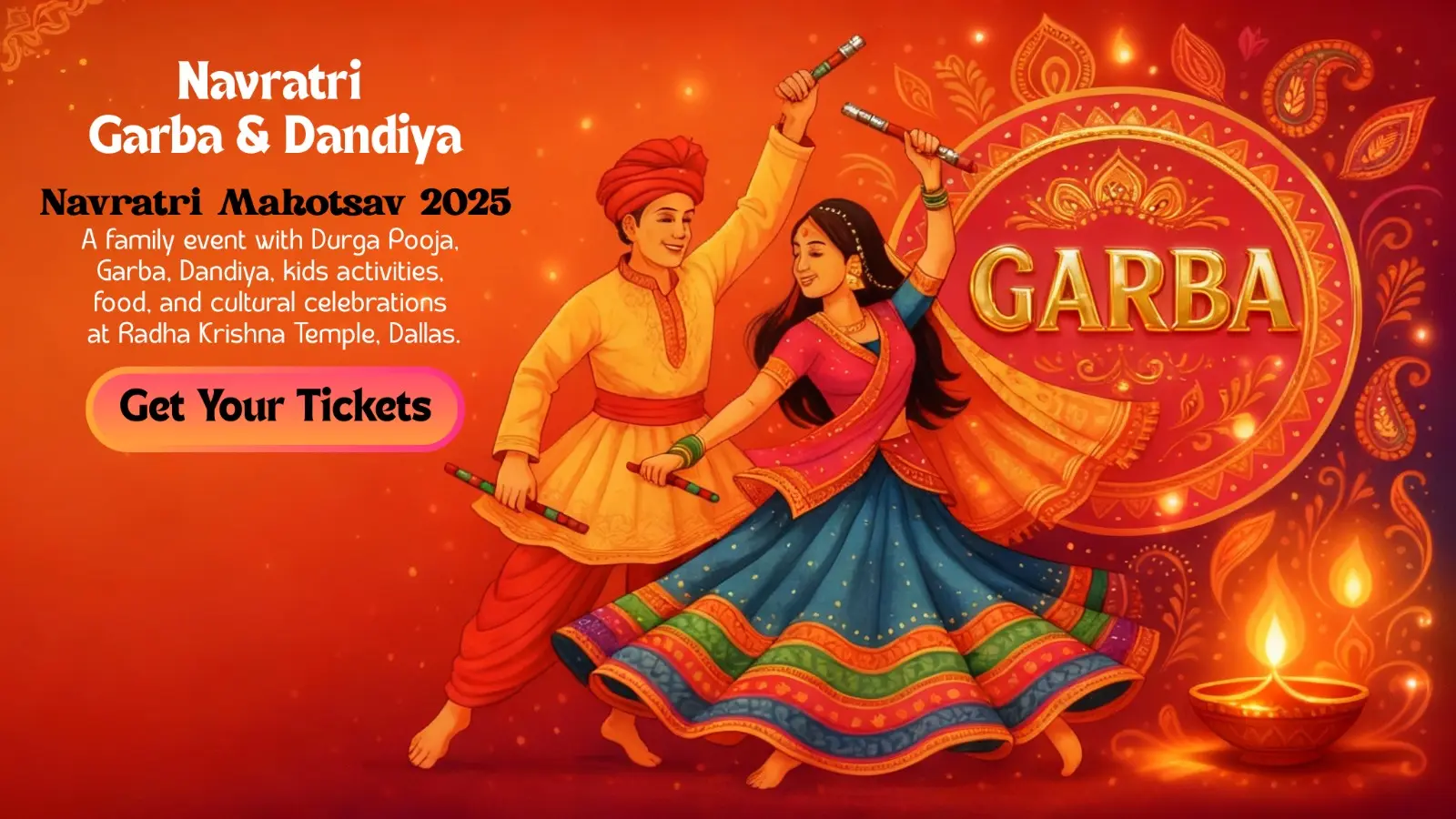
Navratri is incomplete without Garba and Dandiya, where the joyous dance celebrates Maa Durga’s victory and fills the nights with divine energy. Clad in colorful attire, devotees gather to dance, rejoice, and honor the Divine Mother in an atmosphere of joy and reverence.
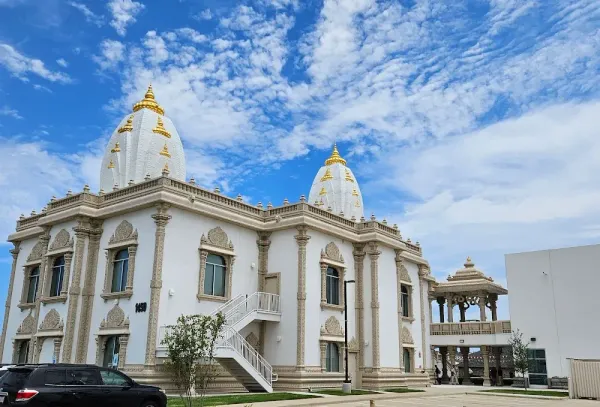
At Radha Krishna Temple of Dallas, the Navratri Mahotsav 2025 offers unforgettable evenings filled with Garba, Dandiya, Durga Pooja, children’s activities, delicious food, and vibrant cultural programs. As lamps glow and music fills the air, the community comes together in a beautiful celebration of tradition, devotion, and festivity—an experience of Navratri magic like never before.
Join us at the celebration; get your tickets today!
Lyrics
विनियोग (Viniyog)
देवता। गायत्री छन्दः। नन्दा शक्तिः। रक्तदन्तिका बीजम्। अग्निस्तत्त्वम्। ऋग्वेदः स्वरूपम्।
devatā | gāyatrī chandaḥ | nandā śaktiḥ | raktadantikā bījam | agnistattvam | ṛgvedaḥ svarūpam |
श्रीमहाकालीप्रीत्यर्थे प्रथमचरित्रजपे विनियोगः।
śrīmahākālīprītyarthe prathamacaritrajape viniyogaḥ |
ध्यानम् (Dhyānam)
ॐ खड्गं चक्रगदेषुचापपरिघाञ्छूलं भुशुण्डीं शिरः
om khaḍgaṃ cakragadeṣucāpaparighāñchūlaṃ bhuśuṇḍīṃ śiraḥ
शङ्खं सन्दधतीं करैस्त्रिनयनां सर्वाङ्गभूषावृताम्।
śaṅkhaṃ sandadhatīṃ karaistrinayanāṃ sarvāṅgabhūṣāvṛtām |
नीलाश्मद्युतिमास्यपाददशकां सेवे महाकालिकां
nīlāśmadyutimāsyapādadaśakāṃ seve mahākālikāṃ
यामस्तौत्स्वपिते हरौ कमलजो हन्तुं मधुं कौटभम्॥
yāmastautsvapite harau kamalajo hantuṃ madhuṃ kauṭabham ||
Meaning:
I worship Mahakali, whose ten faces and ten feet shine like blue sapphires, adorned with various weapons including sword, discus, mace, bow, trident, and conch. She is three-eyed, ornamented all over, and praised by Brahma when Lord Vishnu is asleep, to destroy Madhu and Kaitabha.
Chapter 9 – The Slaying of Niśumbha
Verse 1
ॐ राजोवाच ॥ १ ॥
विचित्रमिदमाख्यातं भगवन् भवता मम।
om rājo’vāca || 1 ||
vicitram idam ākhyātaṁ bhagavan bhavatā mama |
Meaning:
The king said:
O venerable sage, you have narrated to me a wondrous and marvelous story.
Verse 2
देव्याश्चरितमाहात्म्यं रक्तबीजवधाश्रितम् ॥ २ ॥
devyāś caritam āhātmyaṁ raktabīja-vadhāśritam || 2 ||
Meaning:
The divine exploits and supreme power of the Goddess,
especially her great feat of slaying Raktabīja, have been gloriously described.
Verse 3
भूयश्चेच्छाम्यहं श्रोतुं रक्तबीजे निपातिते।
चकार शुम्भो यत्कर्म निशुम्भश्चातिकोपनः ॥ ३ ॥
bhūyaś cecchāmy ahaṁ śrotuṁ raktabīje nipātite |
cakāra śumbho yat karma niśumbhaś cātikopanaḥ || 3 ||
Meaning:
Now, I wish to hear further:
After Raktabīja was slain, what actions were taken by the enraged Śumbha and Niśumbha?
Verse 4
ऋषिरुवाच ॥ ४॥
चकार कोपमतुलं रक्तबीजे निपातिते।
ṛṣir uvāca || 4 ||
cakāra kopam atulaṁ raktabīje nipātite |
Meaning:
The sage said:
When Raktabīja was slain, an immeasurable fury arose in Śumbha.
Verse 5
शुम्भासुरो निशुम्भश्च हतेष्वन्येषु चाहवे॥ ५॥
śumbhāsuro niśumbhaś ca hateṣv anyeṣu cāhave || 5 ||
Meaning:
Śumbha and Niśumbha were both enraged at the destruction of their other warriors in battle.
Verse 6
हन्यमानं महासैन्यं विलोक्यामर्षमुद्वहन् ।
अभ्यधावन्निशुम्भोऽथ मुख्ययासुरसेनया॥ ६॥
hanyamānaṁ mahāsainyaṁ vilokyāmarṣam udvahan |
abhyadhāvann iśumbho ’tha mukhyayā asurasenayā || 6 ||
Meaning:
Seeing his vast army being annihilated, Niśumbha, seething with anger, rushed forward with his principal force.
Verse 7
तस्याग्रतस्तथा पृष्ठे पार्श्वयोश्च महासुराः।
संदष्टौष्ठपुटाः क्रुद्धा हन्तुं देवीमुपाययुः॥ ७॥
tasyāgratas tathā pṛṣṭhe pārśvayoś ca mahāsurāḥ |
saṁdaṣṭauṣṭhapuṭāḥ kruddhā hantuṁ devīm upāyayuḥ || 7 ||
Meaning:
Mighty demons, biting their lips in rage, approached the Goddess from the front, rear, and flanks to destroy her.
Verse 8
आजगाम महावीर्यः शुम्भोऽपि स्वबलैर्वृतः।
निहन्तुं चण्डिकां कोपात्कृत्वा युद्धं तु मातृभिः ॥ ८ ॥
ājagāma mahāvīryaḥ śumbho ’pi svabalair vṛtaḥ |
nihantuṁ caṇḍikāṁ kopāt kṛtvā yuddhaṁ tu mātribhiḥ || 8 ||
Meaning:
Śumbha, the mighty and valorous asura, also arrived with his forces to slay Caṇḍikā, having already fought the Mothers (Mātṛs).
Verse 9
ततो युद्धमतीवासीद्देव्या शुम्भनिशुम्भयोः।
शरवर्षमतीवोग्रं मेघयोरिव वर्षतोः॥ ९॥
tato yuddham atīvāsīt devyā śumbha-niśumbhayoḥ |
śara-varṣam atīvograṁ meghayor iva varṣatoḥ || 9 ||
Meaning:
Then a fierce and terrible battle ensued between the Goddess and Śumbha-Niśumbha, with arrows raining down like storm clouds.
Verse 10
चिच्छेदास्ताञ्छरांस्ताभ्यां चण्डिका स्वशरोत्करैः।
ताडयामास चाङ्गेषु शस्त्रौघैरसुरेश्वरौ ॥ १० ॥
cicchedāstāṁśarāṁs tābhyāṁ caṇḍikā sva-śarotkaraiḥ |
tāḍayāmāsa cāṅgeṣu śastraughair asureśvarau || 10 ||
Meaning:
Caṇḍikā cut down their arrows with her own, and struck both the asura lords with a shower of weapons.
Verse 11
निशुम्भो निशितं खड्गं चर्म चादाय सुप्रभम्।
अताडयन्मूर्ध्नि सिंहं देव्या वाहनमुत्तमम्॥ ११॥
niśumbho niśitaṁ khaḍgaṁ carma cādāya suprabham |
atāḍayan mūrdhni siṁhaṁ devyā vāhanam uttamam || 11 ||
Meaning:
Niśumbha, wielding a sharp sword and shining shield, struck the lion — the noble mount of the Goddess — on the head.
Verse 12
ताडिते वाहने देवी क्षुरप्रेणासिमुत्तमम्।
निशुम्भस्याशु चिच्छेद चर्म चाप्यष्टचन्द्रकम् ॥ १२ ॥
tāḍite vāhane devī kṣurapreṇāsim uttamam |
niśumbhasyāśu ciccheda carma cāpy aṣṭacandrakam || 12 ||
Meaning:
Seeing her mount attacked, the Goddess swiftly cut Niśumbha’s shield and his eight-lunar-crested sword with her own keen-edged blade.
Verse 13
छिन्ने चर्मणि खड्गे च शक्तिं चिक्षेप सोऽसुरः।
तामप्यस्य द्विधा चक्रे चक्रेणाभिमुखागताम् ॥ १३॥
chinne carmaṇi khaḍge ca śaktiṁ cikṣepa so’suraḥ |
tām apyasya dvidhā cakre cakreṇābhimukhāgatām || 13 ||
Meaning:
Even after his sword and shield were destroyed, Niśumbha hurled a spear at the Goddess — but she split it in two with her discus before it reached her.
Verse 14
कोपाध्मातो निशुम्भोऽथ शूलं जग्राह दानवः ।
आयातं मुष्टिपातेन देवी तच्चाप्यचूर्णयत्॥
kopādhmāto niśumbho'tha śūlaṁ jagrāha dānavaḥ |
āyātaṁ muṣṭipātena devī taccāpyacūrṇayat ||
Meaning:
Blazing with rage, the demon Niśumbha seized a spear. But as he hurled it toward the Goddess, she shattered it with her fist before it could reach her.
Verse 15
आविध्याथ गदां सोऽपि चिक्षेप चण्डिकां प्रति।
सापि देव्याः त्रिशूलेन भिन्ना भस्मत्वमागता॥
āvidhyātha gadāṁ so’pi cikṣepa caṇḍikāṁ prati |
sāpi devyāḥ triśūlena bhinnā bhasmatvamāgatā ||
Meaning:
Then he hurled a mace at Caṇḍikā. But the Goddess destroyed it with her trident, reducing it to ashes.
Verse 16
ततः परशुहस्तं तमायान्तं दैत्यपुङ्गवम्।
आहत्य देवी बाणौघैरपातयत भूतले ॥
tataḥ paraśuhastaṁ tam āyāntaṁ daitya-puṅgavam |
āhatya devī bāṇaughair apātayata bhūtale ||
Meaning:
Then, as the demon approached with a battle-axe in hand, the Goddess shot a volley of arrows and brought him crashing down to the ground.
Verse 17
तस्मिन्निपतिते भूमौ निशुम्भे भीमविक्रमे।
भ्रातर्यतीव संक्रुद्धः प्रययौ हन्तुमम्बिकाम्॥
tasmin nipatite bhūmau niśumbhe bhīma-vikrame |
bhrātary atīva saṅkruddhaḥ prayayau hantum ambikām ||
Meaning:
When the mighty Niśumbha fell to the ground, his brother Śumbha was enraged and charged toward Ambikā (the Goddess) to kill her.
Verse 18
स रथस्थस्तथात्युच्चैर्गृहीतपरमायुधैः।
भुजैरष्टाभिरतुलैर्व्याप्याशेषं बभौ नभः ॥
sa rathasthas tathātyuccair gṛhīta-paramāyudhaiḥ |
bhujair aṣṭābhir atulair vyāpya āśeṣaṁ babhau nabhaḥ ||
Meaning:
Mounted on his chariot, Śumbha appeared lofty and fearsome. Wielding supreme weapons in his eight powerful arms, he filled the entire sky with his presence.
Verse 19
तमायान्तं समालोक्य देवी शङ्खमवादयत्।
ज्याशब्दं चापि धनुषश्चकारातीव दुःसहम्॥
tam āyāntaṁ samālokya devī śaṅkham avādayat |
jyāśabdaṁ cāpi dhanuṣaś cakārātīva duḥsaham ||
Meaning:
Seeing him advancing, the Goddess blew her conch and twanged her bowstring, producing a terrifying sound that shook the hearts of her enemies.
Verse 20
पूरयामास ककुभो निजघण्टास्वनेन च।
समस्तदैत्यसैन्यानां तेजोवधविधायिना॥
pūrayāmāsa kakubho nija-ghaṇṭāsvanena ca |
samasta-daitya-sainyānāṁ tejo-vadha-vidhāyinā ||
Meaning:
With the ringing of her bell, she filled the quarters of the sky — the sound itself seemed to drain the vitality and strength of the demon armies.
Verse 21
ततः सिंहो महानादैस्त्याजितेभमहामदैः ।
पूरयामास गगनं गां तथैव दिशो दश ॥
tataḥ siṁho mahānādais tyājit-ebha-mahā-madaiḥ |
pūrayāmāsa gaganaṁ gāṁ tathaiva diśo daśa ||
Meaning:
Then her lion roared with such force that maddened elephants fled in fear, and his thunderous voice filled the sky, the earth, and all ten directions.
Verse 22
ततः काली समुत्पत्य गगनं क्ष्मामताडयत्।
कराभ्यां तन्निनादेन प्राक्स्वनास्ते तिरोहिताः॥
tataḥ kālī samutpatya gaganaṁ kṣmāṁ atāḍayat |
karābhyāṁ tan-ninādena prāk-svanās te tirohitāḥ ||
Meaning:
Kālī leaped into the sky and struck the earth with her hands, and her roar drowned out all previous sounds.
Verse 23
अट्टाट्टहासमशिवं शिवदूती चकार ह।
वैः शब्दैरसुरास्त्रेसुः शुम्भः कोपं परं ययौ॥
aṭṭāṭṭahāsam aśivaṁ śivadūtī cakāra ha |
vaiḥ śabdair asurās tresuḥ śumbhaḥ kopaṁ paraṁ yayau ||
Meaning:
Śivadūtī (a fierce form of the Goddess) let out a dreadful and unholy laugh. The demons trembled at these terrifying sounds, and Śumbha became furious beyond measure.
Verse 24
दुरात्मंस्तिष्ठ तिष्ठेति व्याजहाराम्बिका यदा।
तदा जयेत्यभिहितं देवैराकाशसंस्थितैः॥
durātman tiṣṭha tiṣṭheti vyājahārāmbikā yadā |
tadā jayety abhihitaṁ devair ākāśasaṁsthitaiḥ ||
Meaning:
When Ambikā (the Goddess) called out to the wicked Śumbha, saying, “Stop, O evil one, stop!”, the gods assembled in the sky shouted “Victory!” in great joy and hope.
Verse 25
शुम्भेनागत्य या शक्तिर्मुक्ता ज्वालातिभीषणा।
आयान्ती वह्निकूटाभा सा निरस्ता महोल्कया॥
śumbhena āgatya yā śaktir muktā jvālāti-bhīṣaṇā |
āyāntī vahnikūṭābhā sā nirastā maholkayā ||
Meaning:
A terrifying fiery weapon hurled by Śumbha, resembling a blazing mass of fire, came toward the Goddess. She countered it with another blazing missile and neutralized it.
Verse 26
सिंहनादेन शुम्भस्य व्याप्तं लोकत्रयान्तरम्।
निर्घातनिःस्वनो घोरो जितवानवनीपते॥
siṁhanādena śumbhasya vyāptaṁ loka-trayāntaram |
nirghāta-niḥsvano ghoro jitavān avanīpate ||
Meaning:
Śumbha let out a terrifying lion-like roar that echoed through the three worlds. The booming, thunder-like sound seemed to proclaim his dominance, O king.
Verse 27
शुम्भमुक्ताञ्छरान्देवी शुम्भस्तत्प्रहिताञ्छरान्।
चिच्छेद स्वशरैरुग्रैः शतशोऽथ सहस्रशः॥
śumbha-muktān śarān devī śumbhas tat-prahitān śarān |
ciccheda sva-śarair ugraiḥ śataśo ’tha sahasraśaḥ ||
Meaning:
Devī cut down the hundreds and thousands of arrows launched by Śumbha with her own fierce and powerful arrows, and likewise, Śumbha destroyed hers.
Verse 28
ततः सा चण्डिका क्रुद्धा शूलेनाभिजघान तम्।
स तदाभिहतो भूमौ मूर्च्छितो निपपात ह॥
tataḥ sā Caṇḍikā kruddhā śūlenābhijaghāna tam |
sa tadābhihato bhūmau mūrcchito nipapāta ha ||
Meaning:
Then the enraged Caṇḍikā struck Śumbha with her trident. Wounded, he fell unconscious to the ground.
Verse 29
ततो निशुम्भः सम्प्राप्य चेतनामात्तकार्मुकः।
आजघान शरैर्देवीं कालीं केसरिणं तथा॥
tato niśumbhaḥ samprāpya cetanām ātta-kārmukaḥ |
ājaghāna śarair devīm kālīṁ kesariṇaṁ tathā ||
Meaning:
Regaining consciousness, Niśumbha took up his bow and launched arrows at the Goddess, at Kālī, and even at the lion, her vehicle.
Verse 30
पुनश्च कृत्वा बाहूनामयुतं दनुजेश्वरः।
चक्रायुधेन दितिजश्छादयामास चण्डिकाम्॥
punaś ca kṛtvā bāhūnām ayutaṁ danujeśvaraḥ |
cakrāyudhena ditijaḥ chādayāmāsa Caṇḍikām ||
Meaning:
Then the lord of the demons (Niśumbha), magically created ten thousand arms and began hurling many discus-like weapons at Caṇḍikā to overwhelm her.
Verse 31
ततो भगवती क्रुद्धा दुर्गा दुर्गार्तिनाशिनी।
चिच्छेद देवी चक्राणि स्वशरैः सायकांश्च तान्॥
tato bhagavatī kruddhā Durgā durgārtināśinī |
ciccheda devī cakrāṇi sva-śaraiḥ sāyakāṁś ca tān ||
Meaning:
Angered, the Goddess Durgā — the destroyer of difficulties — cut down all his discus weapons and arrows with her own sharp arrows.
Verse 32
ततो निशुम्भो वेगेन गदामादाय चण्डिकाम्।
अभ्यधावत वै हन्तुं दैत्यसैन्यसमावृतः॥
tato niśumbho vegena gadām ādāya caṇḍikām |
abhyadhāvata vai hantum daitya-sainya-samāvṛtaḥ ||
Meaning:
Then Niśumbha, surrounded by his demon army, seized a mace and rushed with great speed toward Caṇḍikā to strike her down.
Verse 33
तस्यापतत एवाशु गदां चिच्छेद चण्डिका।
खड्गेन शितधारेण स च शूलं समाददे॥
tasyāpatata evāśu gadāṁ ciccheda caṇḍikā |
khaḍgena śitadhāreṇa sa ca śūlaṁ samādade ||
Meaning:
As he charged, Caṇḍikā swiftly cut his mace with her sharp sword. Undeterred, he then picked up a spear to continue the battle.
Verse 34
शूलहस्तं समायान्तं निशुम्भममरार्दनम्।
हृदि विव्याध शूलेन वेगाविद्धेन चण्डिका॥
śūlahastaṁ samāyāntaṁ niśumbham amarārdanam |
hṛdi vivyādha śūlena vegāviddhena caṇḍikā ||
Meaning:
As Niśumbha, the tormentor of the gods, came charging with a spear in hand, Caṇḍikā swiftly pierced his heart with her own powerful spear.
Verse 35
भिन्नस्य तस्य शूलेन हृदयान्निःसृतोऽपरः।
महाबलो महावीर्यस् तिष्ठेति पुरुषो वदन्॥
bhinnasya tasya śūlena hṛdayān niḥsṛto'paraḥ |
mahābalo mahāvīryas tiṣṭheti puruṣo vadan ||
Meaning:
Though his heart was pierced, another being emerged from Niśumbha’s body, proclaiming, “Stop! I am powerful and full of might!”
Verse 36
तस्य निष्क्रामतो देवी प्रहस्य स्वनवत्ततः।
शिरश्चिच्छेद खड्गेन ततोऽसावपतद्भुवि॥
tasya niṣkrāmato devī prahasya svanavat tataḥ |
śiraś ciccheda khaḍgena tato'sāv apatad bhuvi ||
Meaning:
The Goddess laughed as the new form emerged and immediately struck off its head with her sword. The being fell dead on the battlefield.
Verse 37
ततः सिंहश्चखादोग्रदंष्ट्राक्षुण्णशिरोधरान्।
असुरांस्तांस्तथा काली शिवदूती तथापरान॥
tataḥ siṁhaś cakhāda ugradaṁṣṭrākṣuṇṇaśirodharān |
asurāṁs tāṁs tathā kālī śivadūtī tathāparān ||
Meaning:
Then the lion (of the Goddess), with fearsome teeth, devoured demons whose heads and necks had been shattered. Kālī and Śivadūtī consumed others.
Verse 38
कौमारीशक्तिनिर्भिन्नाः केचिन्नेशुर् महासुराः।
ब्रह्माणीमन्त्रपूतेन तोयेनान्ये निराकृताः॥
kaumāri-śakti-nirbhinnāḥ kecin neśur mahāsurāḥ |
brahmāṇī-mantra-pūtena toyenānye nirākṛtāḥ ||
Meaning:
Some great asuras were pierced by the spear of Kaumārī and could not fight further. Others were dispelled by sacred water sanctified by Brahmāṇī’s mantras.
Verse 39
माहेश्वरीत्रिशूलेन भिन्नाः पेतुस्तथापरे।
वाराहीतुण्डघातेन केचिच्चूर्णीकृता भुवि॥
māheśvarī-triśūlena bhinnāḥ petus tathāpare |
vārāhī-tuṇḍa-ghātena kecic cūrṇīkṛtā bhuvi ||
Meaning:
Others fell, pierced by the trident of Māheśvarī. Some were smashed into pieces on the earth by the blow of Vārāhī’s snout.
Verse 40
खण्डं खण्डं च चक्रेण वैष्णव्या दानवाः कृताः।
वज्रेण चैन्द्रीहस्ताग्रविमुक्तेन तथापरे॥
khaṇḍaṁ khaṇḍaṁ ca cakreṇa vaiṣṇavyā dānavāḥ kṛtāḥ |
vajreṇa caindrī-hastāgra-vimuktena tathāpare ||
Meaning:
Vaiṣṇavī cut some demons into pieces with her discus. Others were shattered by the thunderbolt released from the hand of Aindrī.
Verse 41
केचिद्विनेशुरसुराः केचिन्नष्टा महाहवात्।
भक्षिताश्चापरे कालीशिवदूतीमृगाधिपैः॥
kecid vineśur asurāḥ kecin naṣṭā mahāhavat |
bhakṣitāś cāpare kālī-śivadūtī-mṛgādhipaiḥ ||
Meaning:
Some asuras fled the battlefield, some perished in the great war, and others were devoured by Kālī, Śivadūtī, and the lion (mṛgādhipa).
Chapter Ending:
॥ स्वस्ति श्रीमार्कण्डेयपुराणे सावर्णिके मन्वन्तरे
देवीमाहात्म्ये निशुम्भवधो नाम नवमोऽध्यायः॥ ९॥
svasti śrī-mārkaṇḍeya-purāṇe sāvarṇike manvantare
devī-māhātmye niśumbha-vadho nāma navamo'dhyāyaḥ || 9 ||
Meaning:
Thus ends the ninth chapter titled “The Slaying of Niśumbha” in the Devī Māhātmya, occurring in the Sāvarṇika Manvantara of the Mārkaṇḍeya Purāṇa.
Chapter 10 – The Slaying of Śumbha
Verse 1
ॐ ऋषिरुवाच॥
om ṛṣir uvāca ||
Meaning:
The seer said:
Verse 2
निशुम्भं निहतं दृष्ट्वा भ्रातरं प्राणसम्मितम्।
हन्यमानं बलं चैव शुम्भः क्रुद्धोऽब्रवीद्वचः॥
niśumbhaṁ nihataṁ dṛṣṭvā bhrātaraṁ prāṇasammitam |
hanyamānaṁ balaṁ caiva śumbhaḥ kruddho'bravīd vacaḥ ||
Meaning:
Seeing his brother Niśumbha, who was as dear to him as his very life, struck down and observing his own army being destroyed, the demon Śumbha, filled with rage, spoke these words:
Verse 3
बलावलेपदुष्टे त्वं मा दुर्गे गर्वमावह।
अन्यासां बलमाश्रित्य युद्ध्यसे चातिमानिनी॥
balāvalepaduṣṭe tvaṁ mā durge garvam āvaha |
anyāsāṁ balam āśritya yuddhyase cātimāninī ||
Meaning:
“O Durgā, corrupted by pride in your strength! Don’t be so arrogant.
You rely on the power of others to fight—how boastful you are!”
(Śumbha accuses Devī of not fighting on her own, but with the help of other goddesses.)
Verse 4
देव्युवाच॥
devy uvāca ||
Meaning:
The Goddess replied:
Verse 5
एकैवाहं जगत्यत्र द्वितीया का ममापरा।
पश्यैताः दुष्ट मय्येव विशन्त्यो मद्विभूतयः॥
ekaivāhaṁ jagatyatra dvitīyā kā mamāparā |
paśyaitāḥ duṣṭa mayyeva viśantyo mad-vibhūtayaḥ ||
Meaning:
“I alone exist in this world; who else is there apart from me?
O wicked one, look! These manifestations are entering into me again—they are all my powers (vibhūtis).”
(The Goddess reveals that all other goddesses are merely her forms and powers.)
Verse 6
ततः समस्तास्ता देव्यो ब्रह्माणीप्रमुखा लयम्।
तस्या देव्यास्तनौ जग्मुरेकैवासीत्तदाम्बिका॥
tataḥ samastās tā devyo brahmāṇī-pramukhā layam |
tasyā devyās tanau jagmur ekaivāsīt tadāmbikā ||
Meaning:
Then all the goddesses, starting with Brahmāṇī, merged back into the body of the supreme Devī.
Only Ambikā remained visible in the battlefield.
Verse 7
देव्युवाच॥
devy uvāca ||
Meaning:
The Goddess said:
Verse 8
अहं विभूत्या बहुभिरिह रूपैर्यदास्थिता।
तत्संहृतं मयैकैव तिष्ठाम्याजौ स्थिरो भव॥
ahaṁ vibhūtyā bahubhir iha rūpair yadāsthitā |
tat saṁhṛtaṁ mayāikaiva tiṣṭhāmy ājau sthiro bhava ||
Meaning:
“It was by my own divine power (vibhūti) that I appeared in many forms.
Now I have withdrawn them; I alone stand here. So, come and fight me if you are steadfast.”
Verse 9
ऋषिरुवाच॥
ṛṣir uvāca ||
Meaning:
The Seer Said:
Verse 10
ततः प्रववृते युद्धं देव्याः शुम्भस्य चोभयोः।
पश्यतां सर्वदेवानामसुराणां च दारुणम् ॥
tataḥ pravavṛte yuddhaṁ devyāḥ śumbhasya cobhayoḥ |
paśyatāṁ sarva-devānām asurāṇāṁ ca dāruṇam ||
Meaning:
Then began a terrible battle between the Goddess and Śumbha. A dreadful battle that was witnessed by all the gods and demons alike.
Verse 11
शरवर्षैः शितैः शस्त्रैस्तथा चास्त्रैः सुदारुणैः।
तयोर्युद्धमभूद्भूयः सर्वलोकभयङ्करम् ॥
śaravarṣaiḥ śitaiḥ śastraiḥ tathā cāstraiḥ sudāruṇaiḥ |
tayor yuddham abhūd bhūyaḥ sarvaloka-bhayaṅkaram ||
Meaning:
With showers of sharp arrows, dreadful weapons, and powerful missiles, their fight grew fiercer and terrifying for all the worlds.
Verse 12
दिव्यान्यस्त्राणि शतशो मुमुचे यान्यथाम्बिका।
बभञ्ज तानि दैत्येन्द्रस्तत्प्रतीघातकर्तृभिः॥
divyāny astrāṇi śataśo mumuce yāni athāmbikā |
babhañja tāni daityendraḥ tat-pratīghāta-kartrbhiḥ ||
Meaning:
The Goddess Ambikā discharged hundreds of divine weapons,
but the demon king Śumbha shattered them all with his own counter-weapons.
Verse 13
मुक्तानि तेन चास्त्राणि दिव्यानि परमेश्वरी।
बभञ्ज लीलयैवोग्रहुङ्कारोच्चारणादिभिः॥
muktāni tena cāstrāṇi divyāni parameśvarī |
babhañja līlayā eva ugra-huṅkāra-ucchāraṇādibhiḥ ||
Meaning:
Even the divine weapons hurled by Śumbha were easily destroyed by the Supreme Goddess,
simply through her fierce roars and utterance of mantras like "huṅkāra."
Verse 14
ततः शरशतैर्देवीमाच्छादयत सोऽसुरः।
सापि तत्कुपिता देवी धनुश्चिच्छेद चेषुभिः॥
tataḥ śaraśatair devīm ācchādayata saḥ asuraḥ |
sāpi tat-kupitā devī dhanuḥ ciccheda ceṣubhiḥ ||
Meaning:
Then, the demon covered the Goddess with hundreds of arrows.
Enraged, she cut off his bow with her own arrows.
Verse 15
छिन्ने धनुषि दैत्येन्द्रस्तथा शक्तिमथाददे।
चिच्छेद देवी चक्रेण तामप्यस्य करे स्थिताम्॥
chinne dhanuṣi daityendraḥ tathā śaktim atha ādade |
ciccheda devī cakreṇa tām apyasya kare sthitām ||
Meaning:
When his bow was broken, the demon king took up a spear (śakti).
The Goddess immediately cut that spear in his hand with her discus (chakra).
Verse 16
ततः खड्गमुपादाय शतचन्द्रं च भानुमत्।
अभ्यधावत तां देवीं दैत्यानामधिपेश्वरः॥
tataḥ khaḍgam upādāya śata-candraṁ ca bhānumat |
abhyadhāvata tāṁ devīm daityānām adhipeśvaraḥ ||
Meaning:
Then, taking a gleaming sword (with a hundred moons on its blade),
the lord of demons charged at the Goddess.
Verse 17
तस्यापतत एवाशु खड्गं चिच्छेद चण्डिका।
धनुर्मुक्तैः शितैर्बाणैश्चर्म चार्ककरामलम्।
अश्वांश्च पातयामास रथं सारथिना सह॥
tasyāpatata eva āśu khaḍgaṁ ciccheda caṇḍikā |
dhanur-muktaiḥ śitaiḥ bāṇaiḥ carma ca arkakarāmalam |
aśvāṁś ca pātayāmāsa rathaṁ sāratinā saha ||
Meaning:
As he rushed toward her, Caṇḍikā swiftly cut his sword with arrows,
then pierced his radiant shield (that shone like the sun),
and finally brought down his horses, his chariot, and his charioteer.
Verse 18
हताश्वः स तदा दैत्यश्छिन्नधन्वा विसारथिः।
जग्राह मुद्गरं घोरमम्बिकानिधनोद्यतः॥
hatāśvaḥ sa tadā daityaś chinna-dhanvā visārathiḥ |
jagrāha mudgaraṁ ghoram ambikā-nidhano-dyataḥ ||
Meaning:
Then that demon, having lost his horses, with his bow broken and charioteer slain,
took up a terrible mace, resolved to kill Ambikā (the Goddess).
Verse 19
चिच्छेदापततस्तस्य मुद्गरं निशितैः शरैः।
तथापि सोऽभ्यधावत्तां मुष्टिमुद्यम्य वेगवान्॥
ciccheda āpatatas tasya mudgaraṁ niśitaiḥ śaraiḥ |
tathāpi so 'bhyadhāvattāṁ muṣṭim udyamya vegavān ||
Meaning:
As he rushed forward, she cut the mace to pieces with her sharp arrows.
Still, he charged at her with great speed, raising his clenched fist.
Verse 20
समुष्टिं पातयामास हृदये दैत्यपुङ्गवः।
देव्यास्तं चापि सा देवी तलेनोरस्यताडयत्॥
samuṣṭiṁ pātayāmāsa hṛdaye daitya-puṅgavaḥ |
devyās taṁ cāpi sā devī talenorasy atāḍayat ||
Meaning:
That foremost of demons struck the Goddess in the chest with his fist.
The Goddess, in turn, struck him on the chest with her palm.
Verse 21
तलप्रहाराभिहतो निपपात महीतले।
स दैत्यराजः सहसा पुनरेव तथोत्थितः॥
tala-prahārābhihato nipapāta mahītale |
sa daitya-rājaḥ sahasā punar eva tathotthitaḥ ||
Meaning:
Struck by the blow of her palm, he fell to the ground.
But the demon king quickly got up again.
Verse 22
उत्पत्य च प्रगृह्योच्चैर्देवीं गगनमास्थितः।
तत्रापि सा निराधारा युयुधे तेन चण्डिका॥
utpatya ca pragṛhya uccair devīṁ gaganam āsthitaḥ |
tatrāpi sā nirādhārā yuyudhe tena Caṇḍikā ||
Meaning:
Leaping into the sky, he seized the Goddess and stood aloft in the air.
But Caṇḍikā, though unsupported, fought with him even there.
Verse 23
नियुद्धं खे तदा दैत्यश्चण्डिका च परस्परम्।
चक्रतुः प्रथमं सिद्धमुनिविस्मयकारकम्॥
niyuddhaṁ khe tadā daityaś caṇḍikā ca parasparam |
cakratuḥ prathamaṁ siddha-muni-vismaya-kārakam ||
Meaning:
Then they fought hand-to-hand in mid-air—
a battle that amazed the perfected beings (siddhas) and sages (munis), being the first of its kind.
Verse 24
ततो नियुद्धं सुचिरं कृत्वा तेनाम्बिका सह।
उत्पाट्य भ्रामयामास चिक्षेप धरणीतले॥
tato niyuddhaṁ suciraṁ kṛtvā tenāmbikā saha |
utpāṭya bhrāmayāmāsa cikṣepa dharaṇī-tale ||
Meaning:
After fighting hand-to-hand with Ambikā for a long time,
she lifted him, whirled him around, and hurled him to the ground.
Verse 25
स क्षिप्तो धरणीं प्राप्य मुष्टिमुद्यम्य वेगवान्।
अभ्यधावत दुष्टात्मा चण्डिकानिधनेच्छया॥
sa kṣipto dharaṇīṁ prāpya muṣṭim udyamya vegavān |
abhyadhāvata duṣṭātmā caṇḍikā-nidhana-icchayā ||
Meaning:
Though hurled down to earth, the wicked one quickly rose again,
and with fist raised, rushed at Caṇḍikā, intent on slaying her.
Verse 26
तमायान्तं ततो देवी सर्वदैत्यजनेश्वरम्।
जगत्यां पातयामास भित्त्वा शूलेन वक्षसि॥
tam āyāntaṁ tato devī sarva-daitya-janeśvaram |
jagatyāṁ pātayāmāsa bhittvā śūlena vakṣasi ||
Meaning:
As he approached—the lord of all demon hosts—
the Goddess struck him in the chest with her trident and hurled him to the ground.
Verse 27
स गतासुः पपातोर्व्यां देवी शूलाग्रविक्षतः।
चालयन् सकलां पृथ्वीं साब्धिद्वीपां सपर्वताम्॥
sa gatāsuḥ papātorvyāṁ devī śūlāgra-vikṣataḥ |
cālayan sakalāṁ pṛthvīṁ sābdhi-dvīpāṁ sa-parvatām ||
Meaning:
Struck by the point of the trident, life left his body,
and he fell to the earth—his fall shaking the whole world, including the oceans, islands, and mountains.
Verse 28
ततः प्रसन्नमखिलं हते तस्मिन् दुरात्मनि ।
जगत्स्वास्थ्यमतीवाप निर्मलं चाभवन्नभः ॥
tataḥ prasannam akhilaṁ hate tasmin durātmani |
jagat svāsthyaṁ atīvāpā nirmalaṁ ca abhavan nabhaḥ ||
Meaning:
Then, with that evil-minded one (Śumbha) slain, all became peaceful.
The world attained great well-being, and the sky turned clear.
Verse 29
उत्पातमेघाः सोल्का ये प्रागासंस्ते शमं ययुः।
सरितो मार्गवाहिन्यस्तथासंस्तत्र पातिते ॥
utpāta-meghāḥ solkā ye prāg āsan te śamaṁ yayuḥ |
sarito mārga-vāhinyas tathā āsan tatra pātite ||
Meaning:
The meteoric clouds and ominous comets that had appeared earlier subsided.
Rivers began to flow peacefully along their courses, once he (Śumbha) had been slain.
Verse 30
ततो देवगणाः सर्वे हर्षनिर्भरमानसाः ।
बभूवुर्निहते तस्मिन् गन्धर्वा ललितं जगुः॥
tato deva-gaṇāḥ sarve harṣa-nirbhara-mānasāḥ |
babhūvur nihate tasmin gandharvā lalitaṁ jaguḥ ||
Meaning:
Then all the hosts of gods, their hearts overflowing with joy, rejoiced.
The Gandharvas sang sweet and melodious hymns.
Verse 31
अवादयंस्तथैवान्ये ननृतुश्चाप्सरोगणाः।
ववुः पुण्यास्तथा वाताः सुप्रभोऽभूद्दिवाकरः ॥
avādayaṁs tathaivānye nanṛtuś cāpsaro-gaṇāḥ |
vavuḥ puṇyās tathā vātāḥ suprabho 'bhūd divākaraḥ ||
Meaning:
Other celestial beings sounded instruments, and groups of Apsarās danced.
Auspicious winds blew gently, and the sun shone with radiant brilliance.
Verse 32
जज्वलुश्चाग्नयः शान्ताः शान्ता दिग्जनितस्वनाः॥
jajvaluś cāgnayaḥ śāntāḥ śāntā dig-janita-svanāḥ ||
Meaning:
The fires blazed clearly and peacefully; the directional quarters, too, became calm and quiet.
Chapter Ending:
॥ स्वस्ति श्रीमार्कण्डेयपुराणे सावर्णिके मन्वन्तरे
देवीमाहात्म्ये शुम्भवधो नाम दशमोऽध्यायः ॥
|| svasti śrī-mārkaṇḍeya-purāṇe sāvarṇike manvantare
devīmāhātmye śumbha-vadho nāma daśamo’dhyāyaḥ ||
Meaning:
Thus ends the tenth chapter, called “The Slaying of Śumbha”, in the Devī Māhātmya,
which is a part of the Mārkaṇḍeya Purāṇa in the Sāvarṇika Manvantara.
Chapter 11 – Hymn to Nārāyaṇī
Verse 1
ॐ ऋषिरुवाच॥
om ṛṣir uvāca ||
Meaning:
The seer said:
Verse 2
देव्या हते तत्र महासुरेन्द्रे
सेन्द्राः सुरा वह्निपुरोगमास्ताम्।
कात्यायनीं तुष्टुवुरिष्टलाभाद्
विकाशिवक्त्राब्जविकाशिताशाः॥ २॥
devyā hate tatra mahāsurendre
sendrāḥ surā vahnipurogamās tām
kātyāyanīṁ tuṣṭuvur iṣṭalābhāt
vikāśivaktrābja-vikāśitāśāḥ || 2 ||
Meaning:
When the goddess slew the great lord of the demons, the gods along with Indra, led by Agni, praised Kātyāyanī. Their wishes fulfilled, their faces shone bright, illuminated by the radiance of her lotus-like face.
Verse 3
देवि प्रपन्नार्तिहरे प्रसीद
प्रसीद मातर्जगतोऽखिलस्य ।
प्रसीद विश्वेश्वरि पाहि विश्वं
त्वमीश्वरी देवि चराचरस्य ॥
devi prapannārtihare prasīda
prasīda mātar jagato'khilasya |
prasīda viśveśvari pāhi viśvaṁ
tvam īśvarī devi carācarasya ||
Meaning:
O Goddess, remover of the sufferings of the surrendered, be pleased!
Be gracious, O Mother of the entire universe.
Be kind, O Sovereign of the universe, protect the world!
You are the supreme ruler of all that moves and does not move.
Verse 4
आधारभूता जगतस्त्वमेका
महीस्वरूपेण यतः स्थितासि ।
अपां स्वरूपस्थितया त्वयैतद्
आप्यायते कृत्स्नमलङ्घ्यवीर्ये ॥
ādhārabhūtā jagatas tvam ekā
mahī-svarūpeṇa yataḥ sthitāsi |
apāṁ svarūpa-sthitayā tvayaitad
āpyāyate kṛtsnam alaṅghyavīrye ||
Meaning:
You alone are the support of the entire universe,
for you are established as Earth itself.
As the essence of water, you nourish all this creation,
O Goddess of immeasurable power!
Verse 5
त्वं वैष्णवीशक्तिरनन्तवीर्या
विश्वस्य बीजं परमासि माया ।
सम्मोहितं देवि समस्तमेतत्
त्वं वै प्रसन्ना भुवि मुक्तिहेतुः ॥
tvaṁ vaiṣṇavīśaktir anantavīryā
viśvasya bījaṁ paramāsi māyā |
sammohitaṁ devi samastam etat
tvaṁ vai prasannā bhuvi muktihetuḥ ||
Meaning:
You are Viṣhṇu’s divine energy, possessing infinite power;
You are the primordial seed, the supreme Māyā of the universe.
All this is deluded by you, O Goddess,
but when you are pleased, you are the cause of liberation on earth.
Verse 6
विद्याः समस्तास्तव देवि भेदाः
स्त्रियः समस्ताः सकला जगत्सु ।
त्वयैकया पूरितमम्बयैतत्
का ते स्तुतिः स्तव्यपरापरोक्तिः॥
vidyāḥ samastāstava devi bhedāḥ
striyaḥ samastāḥ sakalā jagatsu |
tvayaikayā pūritamambayaitat
kā te stutiḥ stavyaparāparoktih ||
Meaning:
All forms of knowledge are your manifestations, O Goddess,
All women in the world are aspects of you.
You alone have filled this universe, O Mother—
What praise can suffice? What words can describe you?
Verse 7
सर्वभूता यदा देवी भुक्तिमुक्तिप्रदायिनी ।
त्वं स्तुता स्तुतये का वा भवन्तु परमोक्तयः॥
sarvabhūtā yadā devī bhuktimuktipradāyinī |
tvaṁ stutā stutaye kā vā bhavantu paramoktayaḥ ||
Meaning:
O Goddess, when you are the one who bestows both enjoyment and liberation upon all beings,
what purpose do even the loftiest praises serve? What more can be said to glorify you?
Verse 8
सर्वस्य बुद्धिरूपेण जनस्य हृदि संस्थिते ।
स्वर्गापवर्गदे देवि नारायणि नमोऽस्तु ते॥
sarvasya buddhirūpeṇa janasya hṛdi saṁsthitē |
svargāpavargadē dēvī nārāyaṇi namō'stu tē ||
Meaning:
You dwell in the hearts of all people as the form of wisdom.
O Goddess, O Nārāyaṇī, you grant both heaven and liberation—our salutations to you!
Verse 9
कलाकाष्ठादिरूपेण परिणामप्रदायिनि ।
विश्वस्योपरतौ शक्ते नारायणि नमोऽस्तु ते॥
kalākāṣṭhādirūpeṇa pariṇāmapradāyini |
viśvasyōparatau śaktē nārāyaṇi namō'stu tē ||
Meaning:
You manifest as time in its various divisions and bring about all transformations.
You are the force behind the dissolution of the universe. O Nārāyaṇī, we bow to you!
Verse 10
सर्वमङ्गलमाङ्गल्ये शिवे सर्वार्थसाधिके ।
शरण्ये त्र्यम्बके गौरि नारायणि नमोऽस्तु ते ॥
sarvamaṅgalamāṅgalyē śivē sarvārthasādhikē |
śaraṇyē tryambakē gaurī nārāyaṇi namō'stu tē ||
Meaning:
O Auspicious One among the auspicious, O Benevolent One who fulfills all desires,
O Protector, O Three-eyed Gaurī—O Nārāyaṇī, our salutations to you!
Verse 11
सृष्टिस्थितिविनाशानां शक्तिभूते सनातनि।
गुणाश्रये गुणमये नारायणि नमोऽस्तु ते॥
sṛṣṭisthitivināśānāṁ śaktibhūtē sanātani |
guṇāśrayē guṇamayē nārāyaṇi namō'stu tē ||
Meaning:
You are the eternal power behind creation, preservation, and destruction.
The very source and embodiment of all qualities—O Nārāyaṇī, we bow to you!
Verse 12
शरणागतदीनार्तपरित्राणपरायणे।
सर्वस्यार्तिहरे देवि नारायणि नमोऽस्तु ते ॥
śaraṇāgatadīnārtaparitrāṇaparāyaṇē |
sarvasyārtiharē dēvī nārāyaṇi namō'stu tē ||
Meaning:
You are always intent on protecting the distressed and those who seek refuge in you.
You remove the sorrows of all—O Goddess Nārāyaṇī, we offer our salutations!
Verse 13
हंसयुक्तविमानस्थे ब्रह्माणीरूपधारिणि ।
कौशाम्भःक्षरिके देवि नारायणि नमोऽस्तु ते ॥
haṁsayuktavimānasthē brahmāṇīrūpadhāriṇi |
kauśāmbhaḥkṣarikē dēvi nārāyaṇi namō'stu tē ||
Meaning:
Seated in a celestial chariot drawn by swans, assuming the form of Brahmāṇī,
O Goddess born of Kauśāmbhī, O Nārāyaṇī, we bow to you!
Verse 14
त्रिशूलचन्द्राहिधरे महावृषभवाहिनि ।
माहेश्वरीस्वरूपेण नारायणि नमोऽस्तु ते ॥
triśūlacandrāhidharē mahāvṛṣabhavāhini |
māhēśvarīsvarūpēṇa nārāyaṇi namō'stu tē ||
Meaning:
You bear a trident and a crescent moon and ride the great bull,
Assuming the form of Māheśvarī—O Nārāyaṇī, our salutations to you!
Verse 15
मयूरकुक्कुटवृते महाशक्तिधरेऽनघे ।
कौमारीरूपसंस्थाने नारायणि नमोऽस्तु ते ॥
mayūrakukkuṭavṛte mahāśaktidhare'naghe |
kaumārīrūpasaṁsthāne nārāyaṇi namo'stu te ||
Meaning:
O Sinless One, surrounded by peacocks and roosters, bearing immense power,
Abiding in the form of Kaumārī, O Nārāyaṇī, I bow to you!
Verse 16
शङ्खचक्रगदाशार्ङ्गगृहीतपरमायुधे ।
प्रसीद वैष्णवीरूपे नारायणि नमोऽस्तु ते ॥
śaṅkhacakragadāśārṅgagṛhītaparamāyudhe |
prasīda vaiṣṇavīrūpe nārāyaṇi namo'stu te ||
Meaning:
Wielding the conch, discus, mace, and bow Śārṅga,
O One assuming the form of Vaiṣṇavī, be gracious! O Nārāyaṇī, I bow to you!
Verse 17
गृहीतोग्रमहाचक्रे दंष्ट्रोद्धृतवसुन्धरे ।
वराहरूपिणि शिवे नारायणि नमोऽस्तु ते ॥
gṛhītogramahācakre daṁṣṭroddhṛtavasundhare |
varāharūpiṇi śive nārāyaṇi namo'stu te ||
Meaning:
Holding a mighty discus, you raised the Earth with your tusk.
O Śivā, assuming the form of Varāha, O Nārāyaṇī, I bow to you!
Verse 18
नृसिंहरूपेणोग्रेण हन्तुं दैत्यान् कृतोद्यमे ।
त्रैलोक्यत्राणसहिते नारायणि नमोऽस्तु ते ॥
nṛsiṁharūpeṇogreṇa hantuṁ daityān kṛtodyame |
trailokyatrāṇasahite nārāyaṇi namo'stu te ||
Meaning:
You assumed the fierce form of Narasiṁha to destroy the demons,
And to protect the three worlds. O Nārāyaṇī, I bow to you!
Verse 19
किरीटिनि महावज्रे सहस्रनयनोज्ज्वले ।
वृत्रप्राणहरे चैन्द्रि नारायणि नमोऽस्तु ते ॥
kirīṭini mahāvajre sahasranayanojjvale |
vṛtraprāṇahare caindri nārāyaṇi namo'stu te ||
Meaning:
O Crowned One, holding the great thunderbolt, resplendent with a thousand eyes,
Slayer of Vṛtra, in the form of Indrāṇī—O Nārāyaṇī, I bow to you!
Verse 20
शिवदूतीस्वरूपेण हतदैत्यमहाबले।
घोररूपे महारावे नारायणि नमोऽस्तु ते ॥
śivadūtīsvarūpeṇa hatadaityamahābale |
ghorarūpe mahārāve nārāyaṇi namo'stu te ||
Meaning:
Assuming the form of Śivadūtī, you annihilated the mighty demon army.
Terrible in form, with a fierce roar—O Nārāyaṇī, I bow to you!
Verse 21
दंष्ट्राकरालवदने शिरोमालाविभूषणे ।
चामुण्डे मुण्डमथने नारायणि नमोऽस्तु ते ॥
daṁṣṭrākarālavadane śiromālāvibhūṣaṇe |
cāmuṇḍe muṇḍamathane nārāyaṇi namo'stu te ||
Meaning:
O Chamundā, with a terrible mouth of protruding fangs, adorned with a garland of heads,
Crusher of Muṇḍa—O Nārāyaṇī, I bow to you!
Verse 22
लक्ष्मि लज्जे महाविद्ये श्रद्धे पुष्टि स्वधे ध्रुवे ।
महारात्रि महामाये नारायणि नमोऽस्तु ते ॥
lakṣmi lajje mahāvidye śraddhe puṣṭi svadhe dhruve |
mahārātri mahāmāye nārāyaṇi namo'stu te ||
Meaning:
O Lakṣmī, modesty, great knowledge, faith, nourishment, sacrificial offering, and the eternal one,
O Great Night, O Supreme Māyā—O Nārāyaṇī, I bow to you!
Verse 23
मेधे सरस्वति वरे भूति बाभ्रवि तामसि ।
नियते त्वं प्रसीदेशे नारायणि नमोऽस्तुते॥
medhe sarasvati vare bhūti bābhravi tāmasi |
niyate tvaṁ prasīdeśe nārāyaṇi namo'stute ||
Meaning:
O Medhā (wisdom), Sarasvatī, Vara (blessing), prosperity, tawny-hued one, embodiment of Tamas,
O Controller of destiny, be gracious—O Nārāyaṇī, I bow to you!
Verse 24
सर्वस्वरूपे सर्वेशे सर्वशक्तिसमन्विते।
भयेभ्यस्त्राहि नो देवि दुर्गे देवि नमोऽस्तु ते ॥
sarvasvarūpe sarveśe sarvaśaktisamanvite |
bhayebhyastrāhi no devi durge devi namo'stu te ||
Meaning:
O You who are the form of all, O sovereign of all, endowed with every power,
Protect us from all fears, O Durgā, O Goddess—our salutations to you!
Verse 25
एतत्ते वदनं सौम्यं लोचनत्रयभूषितम्।
पातु नः सर्वभूतेभ्यः कात्यायनि नमोऽस्तु ते॥ २५॥
etat te vadanaṁ saumyaṁ locana-traya-bhūṣitam
pātu naḥ sarva-bhūtebhyaḥ kātyāyani namo’stu te
Meaning:
May your gentle face, adorned with three eyes,
O Kātyāyanī, protect us from all beings. Salutations to you!
Verse 26
ज्वालाकरालमत्युग्रमशेषासुरसूदनम्।
त्रिशूलं पातु नो भीतेर्भद्रकालि नमोऽस्तु ते॥ २६॥
jvālā-karālam atyugram aśeṣāsura-sūdanam
triśūlaṁ pātu no bhīter bhadrakāli namo’stu te
Meaning:
May your fierce trident, blazing like fire and slayer of all demons,
protect us from fear, O Bhadrakālī. Salutations to you!
Verse 27
हिनस्ति दैत्यतेजांसि स्वनेनापूर्य या जगत्।
सा घण्टा पातु नो देवि पापेभ्यो नः सुतानिव ॥ २७ ॥
hinasti daitya-tejāṁsi svanena āpūrya yā jagat
sā ghaṇṭā pātu no devi pāpebhyo naḥ sutān iva
Meaning:
May your bell, which fills the world with its sound and destroys the demon's power, protect us from sin, O Goddess, as a mother protects her children.
Verse 28
असुरासृग्वसापङ्कचर्चितस्ते करोज्ज्वलः।
शुभाय खड्गो भवतु चण्डिके त्वां नता वयम्॥ २८ ॥
asurāsṛg-vasā-paṅka-carcitaḥ te karaḥ ujjvalaḥ
śubhāya khaḍgo bhavatu caṇḍike tvām natā vayam
Meaning:
May your shining sword, stained with demon blood and fat,
bring us auspiciousness, O Caṇḍikā — we bow to you.
Verse 29
रोगानशेषानपहंसि तुष्टा
रुष्टा तु कामान् सकलानभीष्टान्।
त्वामाश्रितानां न विपन्नराणां
त्वामाश्रिता ह्याश्रयतां प्रयान्ति॥ २९ ॥
rogān aśeṣān apahaṁsi tuṣṭā
ruṣṭā tu kāmān sakalān abhīṣṭān
tvām āśritānāṁ na vipannarāṇāṁ
tvām āśritāḥ hi āśrayatāṁ prayānti
Meaning:
When pleased, you destroy all diseases;
when displeased, you withhold every desired object.
Those who take refuge in you are never lost —
for they truly reach the supreme shelter.
Verse 30
एतत्कृतं यत्कदनं त्वयाद्य
धर्मद्विषां देवि महासुराणाम्।
रूपैरनेकैर्बहुधात्ममूर्तिं
कृत्वाम्बिके तत्प्रकरोति कान्या॥ ३० ॥
etat kṛtaṁ yat kadanaṁ tvayā adya
dharma-dviṣāṁ devi mahāsurāṇām
rūpair anekair bahudhā-ātma-mūrtiṁ
kṛtvāmbike tat prakaroti kānyā
Meaning:
This destruction you performed today, O Devi,
of the great demons, enemies of Dharma—
by manifesting yourself in many divine forms—
who else, O Ambikā, could ever accomplish such a deed?
Verse 31
विद्यासु शास्त्रेषु विवेकदीपे-
ष्वाद्येषु वाक्येषु च का त्वदन्या।
ममत्वगर्तेऽतिमहान्धकारे
विभ्रामयत्येतदतीव विश्वम्॥ ३१ ॥
vidyāsu śāstreṣu viveka-dīpeṣu
ādyeṣu vākyeṣu ca kā tvad anyā
mamatva-garte ati-mahā-andhakāre
vibhrāmayat yetad atīva viśvam
Meaning:
In knowledge, in scriptures, in the light of discrimination,
and in primordial words — who else but you reigns supreme?
Deluding this entire world, you cast it
into the deep darkness of ego and attachment.
Verse 32
रक्षांसि यत्रोग्रविषाश्च नागा
यत्रारयो दस्युबलानि यत्र।
दावानलो यत्र तथाब्धिमध्ये
तत्र स्थिता त्वं परिपासि विश्वम् ॥ ३२ ॥
rakṣāṁsi yatrograviṣāś ca nāgā
yatrārayo dasyu-balāni yatra
dāvānalo yatra tathābdhimadhye
tatra sthitā tvaṁ paripāsi viśvam
Meaning:
Where there are fierce demons, venomous serpents,
enemies, bands of robbers, forest fires, or the middle of the ocean —
there you stand, O Devi, protecting the world.
Verse 33
विश्वेश्वरि त्वं परिपासि विश्वं
विश्वात्मिका धारयसीह विश्वम्।
विश्वेशवन्द्या भवती भवन्ति
विश्वाश्रया ये त्वयि भक्तिनम्राः॥ ३३॥
viśveśvari tvaṁ paripāsi viśvaṁ
viśvātmikā dhārayasīha viśvam
viśveśa-vandyā bhavatī bhavanti
viśvāśrayā ye tvayi bhakti-namrāḥ
Meaning:
O Sovereign of the Universe, you protect all existence.
You are the Soul of the Universe, sustaining it entirely.
Those who bow to you in devotion become adored even by the lords of the world,
because they find refuge in you, the Refuge of All.
Verse 34
देवि प्रसीद परिपालय नोऽरिभीतेः
नित्यं यथासुरवधादधुनैव सद्यः।
पापानि सर्वजगतां प्रशमं नयाशु
उत्पातपाकजनितांश्च महोपसर्गान् ॥ ३४ ॥
devi prasīda paripālaya no’ribhīteḥ
nityaṁ yathāsura-vadhād adhunāiva sadyaḥ
pāpāni sarva-jagatāṁ praśamaṁ nayāśu
utpāta-pāka-janitāṁś ca mahopasargān
Meaning:
Be gracious, O Goddess! Protect us from the fear of enemies,
just as you did just now by slaying the demons.
Calm down the sins of all beings and
quickly pacify the great afflictions born of omens and karmic ripening.
Verse 35
प्रणतानां प्रसीद त्वं देवि विश्वार्तिहारिणि।
त्रैलोक्यवासिनामीड्ये लोकानां वरदा भव ॥ ३५ ॥
praṇatānāṁ prasīda tvaṁ devi viśvārtihāriṇi
trailokya-vāsinām īḍye lokānāṁ varadā bhava
Meaning:
Be pleased with those who bow to you, O Goddess,
Remover of the world’s sufferings.
You are worthy of praise by all the beings of the three worlds —
be the Bestower of Boons to all the realms.
Verse 36
देव्युवाच॥ ३६॥
devy uvāca || 36 ||
Verse 37
वरदाहं सुरगणा वरं यन्मनसेच्छथ।
तं वृणुध्वं प्रयच्छामि जगतामुपकारकम्॥ ३७॥
varadāhaṁ suragaṇā varaṁ yan manasecchatha
taṁ vṛṇudhvaṁ prayacchāmi jagatām upakārakam
Meaning:
The Goddess said:
"O hosts of gods! I am the bestower of boons.
Ask for any boon you desire in your minds.
I shall grant what is beneficial to the entire universe."
Verse 38
देवा ऊचुः॥ ३८॥
devā ūcuḥ || 38 ||
Verse 39
सर्वाबाधाप्रशमनं त्रैलोक्यस्याखिलेश्वरि।
एवमेव त्वया कार्यमस्मद्वैरिविनाशनम्॥ ३९॥
sarvābādhā-praśamanaṁ trailokyasya akhileśvari
evam eva tvayā kāryam asmad-vairi-vināśanam
Meaning:
The gods said:
“O Sovereign of All, please remove all the afflictions of the three worlds.
May you continue to destroy our enemies, just as you have done now.”
Verse 40
देव्युवाच॥ ४० ॥
devy uvāca || 40 ||
Verse 41
वैवस्वतेऽन्तरे प्राप्ते अष्टाविंशतिमे युगे ।
शुम्भो निशुम्भश्चैवान्यावुत्पत्स्येते महासुरौ ॥ ४१॥
vaivasvate’ntare prāpte aṣṭāviṁśatime yuge
śumbho niśumbhaś caivānyāv utpatsyete mahāsurau
Meaning:
The Goddess said:
In the Vaivasvata Manvantara, during the 28th Dvāpara Yuga,
two great demons named Śumbha and Niśumbha shall be born.
Verse 42
नन्दगोपगृहे जाता यशोदागर्भसम्भवा।
ततस्तौ नाशयिष्यामि विन्ध्याचलनिवासिनी ॥ ४२ ॥
nandagopa-gṛhe jātā yaśodā-garbha-sambhavā
tatas tau nāśayiṣyāmi vindhyācala-nivāsinī
Meaning:
I shall be born in the house of Nandagopa, through the womb of Yaśodā,
and as the Resident of Mount Vindhya, I shall slay those two demons.
Verse 43
पुनरप्यतिरौद्रेण रूपेण पृथिवीतले ।
अवतीर्य हनिष्यामि वैप्रचित्तांश्च दानवान् ॥ ४३ ॥
punar apy atiraudreṇa rūpeṇa pṛthivī-tale
avatīrya haniṣyāmi vaipracittāṁś ca dānavān
Meaning:
Once again, descending to earth in an exceedingly terrible form,
I shall destroy the demons known as the Vaipracittas.
Verse 44
भक्षयन्त्याश्च तानुग्रान् वैप्रचित्तान् महासुरान्।
रक्ता दन्ता भविष्यन्ति दाडिमीकुसुमोपमाः॥ ४४॥
bhakṣayantyāś ca tān ugrān vaipracittān mahāsurān
raktā dantā bhaviṣyanti dāḍimī-kusuma-upamāḥ
Meaning:
As I devour those fierce Vaipracitta demons,
my teeth shall turn crimson, like the blossoms of a pomegranate.
Verse 45
ततो मां देवताः स्वर्गे मर्त्यलोके च मानवाः।
स्तुवन्तो व्याहरिष्यन्ति सततं रक्तदन्तिकाम्॥ ४५॥
tato mām devatāḥ svarge martya-loke ca mānavāḥ
stuvanto vyāhāriṣyanti satataṁ raktadantikām
Meaning:
Then, in heaven and on earth, gods and humans shall praise me,
constantly calling me by the name Raktadantikā — “She of Red Teeth.”
Verse 46
भूयश्च शतवार्षिक्यामनावृष्ट्यामनम्भसि।
मुनिभिः संस्मृता भूमौ सम्भविष्याम्ययोनिजा ॥ ४६॥
bhūyaś ca śatavārṣikyām anāvṛṣṭyām anambhasi
munibhiḥ saṁsmṛtā bhūmau saṁbhaviṣyāmy ayonijā
Meaning:
Again, when a hundred-year drought befalls the earth and no rain falls,
I shall be remembered by sages and appear from the earth, not born from a womb.
Verse 47
ततः शतेन नेत्राणां निरीक्षिष्याम्यहं मुनीन् ।
कीर्तयिष्यन्ति मनुजाः शताक्षीमिति मां ततः ॥ ४७ ॥
tataḥ śatena netrāṇāṁ nirīkṣiṣyāmy ahaṁ munīn
kīrtayiṣyanti manujaḥ śatākṣīm iti māṁ tataḥ
Meaning:
With a hundred eyes, I shall behold the sages,
and then, people will call me Śatākṣī — “the Hundred-Eyed One.”
Verse 48
ततोऽहमखिलं लोकमात्मदेहसमुद्भवैः।
भरिष्यामि सुराः शाकैरावृष्टेः प्राणधारकैः॥ ४८ ॥
tato’ham akhilaṁ lokam ātma-deha-samudbhavaiḥ
bhariṣyāmi surāḥ śākaiḥ āvṛṣṭeḥ prāṇa-dhārakaiḥ
Meaning:
Then I shall nourish the entire world with vegetables that grow from my body,
O gods, sustaining life during that time of drought.
Verse 49
शाकम्भरीति विख्यातिं तदा यास्याम्यहं भुवि।
तत्रैव च वधिष्यामि दुर्गमाख्यं महासुरम्॥ ४९॥
śākambharīti vikhyātiṁ tadā yāsyāmy ahaṁ bhuvi
tatraiva ca vadhiṣyāmi durgamākhyaṁ mahāsuram
Meaning:
I shall then become famous on earth as Śākambharī,
and there itself, I shall slay the great demon named Durgama.
Verse 50
दुर्गादेवीति विख्यातं तन्मे नाम भविष्यति।
पुनश्चाहं यदा भीमं रूपं कृत्वा हिमाचले॥ ५० ॥
durgādevīti vikhyātaṁ tan me nāma bhaviṣyati
punaś cāhaṁ yadā bhīmaṁ rūpaṁ kṛtvā himācale
Meaning:
I shall be known as Durgā Devī, and that shall be my name.
Again, when I take on a terrifying form on Mount Himālaya…
Verse 51
रक्षांसि भक्षयिष्यामि मुनीनां त्राणकारणात्।
तदा मां मुनयः सर्वे स्तोष्यन्त्यानम्रमूर्तयः॥ ५१॥
rakṣāṁsi bhakṣayiṣyāmi munīnām trāṇakāraṇāt
tadā māṁ munayaḥ sarve stoṣyanti ānamramūrtayaḥ
Meaning:
…I will devour the rakṣasas for the protection of the sages.
At that time, all the sages, with humbly bowed forms, will sing my praises.
Verse 52
भीमादेवीति विख्यातं तन्मे नाम भविष्यति।
यदारुणाख्यस्त्रैलोक्ये महाबाधां करिष्यति ॥ ५२ ॥
bhīmādevīti vikhyātaṁ tan me nāma bhaviṣyati
yadā aruṇākhyas trailokye mahābādhāṁ kariṣyati
Meaning:
Then I will become known as Bhīmā Devī.
When the demon named Aruṇa causes great suffering in the three worlds…
Verse 53
तदाहं भ्रामरं रूपं कृत्वासंख्येयषट्पदम्।
त्रैलोक्यस्य हितार्थाय वधिष्यामि महासुरम् ॥ ५३॥
tadāhaṁ bhrāmaraṁ rūpaṁ kṛtvā asaṅkhyeya-ṣaṭpadam
trailokyasya hitārthāya vadhiṣyāmi mahāsuram
Meaning:
…I will take the form of Bhrāmarī, surrounded by countless bees,
and for the good of the three worlds, I will slay that great demon.
Verse 54
भ्रामरीति च मां लोकास्तदा स्तोष्यन्ति सर्वतः।
इत्थं यदा यदा बाधा दानवोत्था भविष्यति ॥ ५४॥
bhrāmarīti ca māṁ lokās tadā stoṣyanti sarvataḥ
itthaṁ yadā yadā bādhā dānavotthā bhaviṣyati
Meaning:
Then the people everywhere will praise me as Bhrāmarī.
Thus, whenever there arises distress caused by demons…
Verse 55
तदा तदावतीर्याहं करिष्याम्यरिसंक्षयम्॥ ५५॥
tadā tadāvatīryāhaṁ kariṣyāmy ari-saṁkṣayam
Meaning:
…I will descend again and again,
and I shall destroy the enemies completely.
Chapter Ending:
॥ स्वस्ति श्रीमार्कण्डेयपुराणे सावर्णिके मन्वन्तरे
देवीमाहात्म्ये नारायणीस्तुतिर्नामैकादशोऽध्यायः॥ ११ ॥
svasti śrīmārkaṇḍeyapurāṇe sāvarṇike manvantare
devīmāhātmye nārāyaṇīstutir nāma ekādaśo’dhyāyaḥ || 11 ||
Meaning:
Thus ends the 11th chapter, called Nārāyaṇī Stuti,
from the Devī Māhātmya, set in the Sāvarṇika Manvantara of the Śrī Mārkaṇḍeya Purāṇa.
Chapter 12 – The Promise of Blessings
Verse 1
ॐ देव्युवाच॥ १॥
om devy uvāca || 1 ||
Verse 2
एभिः स्तवैश्च मां नित्यं स्तोष्यते यः समाहितः।
तस्याहं सकलां बाधां शमयिष्याम्यसंशयम् ॥ २॥
ebhiḥ stavaiś ca māṁ nityaṁ stoṣyate yaḥ samāhitaḥ
tasyāhaṁ sakalāṁ bādhāṁ śamayīṣyāmy asaṁśayam
Meaning:
Whoever praises me daily with these hymns, with focused devotion,
I shall surely remove all his troubles—without a doubt.
Verse 3
मधुकैटभनाशं च महिषासुरघातनम् ।
कीर्तयिष्यन्ति ये तद्वद्वधं शुम्भनिशुम्भयोः॥ ३॥
madhukaiṭabha-nāśaṁ ca mahiṣāsura-ghātanam
kīrtayiṣyanti ye tadvad vadhaṁ śumbha-niśumbhayoḥ
Meaning:
Those who recite the destruction of Madhu and Kaiṭabha,
the slaying of Mahiṣāsura, and the killing of Śumbha and Niśumbha...
Verse 4
अष्टम्यां च चतुर्दश्यां नवम्यां चैकचेतसः।
श्रोष्यन्ति चैव ये भक्त्या मम माहात्म्यमुत्तमम् ॥ ४॥
aṣṭamyāṁ ca caturdaśyāṁ navamyāṁ caika-cetasaḥ
śroṣyanti caiva ye bhaktyā mama māhātmyaṁ uttamam
Meaning:
…or listen with focused devotion to my supreme Glory (Māhātmya)
on the eighth, fourteenth, or ninth lunar day...
Verse 5
न तेषां दुष्कृतं किञ्चिद्दुष्कृतोत्था न चापदः।
भविष्यति न दारिद्र्यं न चैवेष्टवियोजनम्॥ ५॥
na teṣāṁ duṣkṛtaṁ kiñcid duṣkṛtotthā na ca āpadaḥ
bhaviṣyati na dāridryaṁ na ca eva iṣṭa-viyojanam
Meaning:
…for them, no evil shall arise from past misdeeds, nor any calamity;
they shall be free from poverty, and not separated from their loved ones.
Verse 6
शत्रुभ्यो न भयं तस्य दस्युतो वा न राजतः ।
न शस्त्रानलतोयौघात् कदाचित् सम्भविष्यति ॥ ६॥
śatrubhyo na bhayaṁ tasya dasyuto vā na rājataḥ
na śastra-anala-toya-aughāt kadācit sambhaviṣyati
Meaning:
He shall not fear enemies, nor robbers, nor rulers.
Nor shall he suffer from weapons, fire, or floods at any time.
Verse 7
तस्मान्ममैतन्माहात्म्यं पठितव्यं समाहितैः।
श्रोतव्यं च सदा भक्त्या परं स्वस्त्ययनं महत् ॥ ७ ॥
tasmāt mama etat māhātmyaṁ paṭhitavyaṁ samāhitaiḥ
śrotavyaṁ ca sadā bhaktyā paraṁ svastyayanaṁ mahat
Meaning:
Therefore, this Māhātmya of mine should be recited with concentration,
and always heard with devotion, as it brings great auspiciousness.
Verse 8
उपसर्गानशेषांस्तु महामारीसमुद्भवान्।
तथा त्रिविधमुत्पातं माहात्म्यं शमयेन्मम ॥ ८ ॥
upasargān aśeṣān tu mahāmārī-samudbhavān
tathā trividhām utpātaṁ māhātmyaṁ śamayen mama
Meaning:
This Māhātmya of mine will dispel all obstacles,
including plagues and epidemics, and all three types of calamities.
Verse 9
यत्रैतत्पठ्यते सम्यङ्नित्यमायतने मम ।
सदा न तद्विमोक्ष्यामि सांनिध्यं तत्र मे स्थितम् ॥ ९॥
yatra etat paṭhyate samyaṅ nityaṁ āyatane mama
sadā na tat vimokṣyāmi sānnidhyaṁ tatra me sthitam
Meaning:
Wherever this is regularly recited in my temple or shrine,
I shall always remain present; my divine presence will never depart.
Verse 10
बलिप्रदाने पूजायामग्निकार्ये महोत्सवे।
सर्वं ममैतन्माहात्म्यमुच्चार्यं श्राव्यमेव च॥
balipradāne pūjāyām agnikārye mahotsave
sarvaṁ mamaitanmāhātmyaṁ uccāryaṁ śrāvyam eva ca
Meaning:
During offerings, worship, fire rituals, and great festivals,
this entire Mahātmya of mine must be recited and heard.
Verse 11
जानताजानता वापि बलिपूजां यथा कृताम्।
प्रतीक्षिष्याम्यहं प्रीत्या वह्निहोमं तथाकृतम्॥
jānatā-jānatā vāpi balipūjāṁ yathā kṛtām
pratīkṣiṣyāmy ahaṁ prītyā vahni-homaṁ tathā kṛtam
Meaning:
Whether the offerings and worship are performed knowingly or unknowingly, I shall still accept it with delight, along with the fire offerings made.
Verse 12
शरत्काले महापूजा क्रियते या च वार्षिकी।
तस्यां ममैतन्माहात्म्यं श्रुत्वा भक्तिसमन्वितः॥
śaratkāle mahāpūjā kriyate yā ca vārṣikī
tasyāṁ mamaitanmāhātmyaṁ śrutvā bhakti-samanvitaḥ
Meaning:
In the autumnal grand worship or the annual celebration,
one who listens to my Mahātmya with devotion...
Verse 13
सर्वाबाधाविनिर्मुक्तो धनधान्यसमन्वितः।
मनुष्यो मत्प्रसादेन भविष्यति न संशयः॥
sarvābādhā-vinirmukto dhana-dhānya-samanvitaḥ
manuṣyo mat-prasādena bhaviṣyati na saṁśayaḥ
Meaning:
…will be freed from all troubles, and blessed with wealth and grain;
by my grace, he shall prosper—without doubt.
Verse 14
श्रुत्वा ममैतन्माहात्म्यं तथा चोत्पत्तयः शुभाः।
पराक्रमं च युद्धेषु जायते निर्भयः पुमान्॥
śrutvā mamaitanmāhātmyaṁ tathā cotpattayaḥ śubhāḥ
parākramaṁ ca yuddheṣu jāyate nirbhayaḥ pumān
Meaning:
Hearing this Mahātmya and my auspicious origins,
a man becomes courageous in battle and gains fearlessness.
Verse 15
रिपवः संक्षयं यान्ति कल्याणं चोपपद्यते।
नन्दते च कुलं पुंसां माहात्म्यं मम शृण्वताम्॥
ripavaḥ saṁkṣayaṁ yānti kalyāṇaṁ copapadyate
nandate ca kulaṁ puṁsāṁ māhātmyaṁ mama śṛṇvatām
Meaning:
Enemies perish, good fortune arises,
and the families of those who hear this Mahātmya flourish.
Verse 16
शान्तिकर्मणि सर्वत्र तथा दुःस्वप्नदर्शने।
ग्रहपीडासु चोग्रासु माहात्म्यं शृणुयान्मम॥
śānti-karmaṇi sarvatra tathā duḥsvapna-darśane
graha-pīḍāsu ca ugrāsu māhātmyaṁ śṛṇuyān mama
Meaning:
In peace rituals, during bad dreams, and under planetary afflictions,
one should listen to my Mahātmya at all times.
Verse 17
उपसर्गाः शमं यान्ति ग्रहपीडाश्च दारुणाः।
दुःस्वप्नं च नृभिर्दृष्टं सुस्वप्नमुपजायते॥
upasargāḥ śamaṁ yānti graha-pīḍāś ca dāruṇāḥ
duḥsvapnaṁ ca nṛbhir dṛṣṭaṁ su-svapnaṁ upajāyate
Meaning:
All obstacles cease, even harsh astrological afflictions subside;
and bad dreams are replaced with auspicious ones.
Verse 18
बालग्रहाभिभूतानां बालानां शान्तिकारकम्।
संघातभेदे च नृणां मैत्रीकरणमुत्तमम्॥
bāla-graha-abhibhūtānāṁ bālānāṁ śānti-kārakam
saṁghāta-bhede ca nṛṇāṁ maitrīkaraṇam uttamam
Meaning:
This brings peace to afflicted children,
and causes friendship among men divided by conflicts.
Verse 19
दुर्वृत्तानामशेषाणां बलहानिकरं परम्।
रक्षोभूतपिशाचानां पठनादेव नाशनम्॥
durvṛttānām aśeṣāṇāṁ bala-hāni-karaṁ param
rakṣo-bhūta-piśācānāṁ paṭhanād eva nāśanam
Meaning:
It destroys the power of all wicked beings completely,
and banishes demons, ghosts, and evil spirits just by being recited.
Verse 20
सर्वं ममैतन्माहात्म्यं मम सन्निधिकारकम् ।
पशुपुष्पार्घ्यधूपैश्च गन्धदीपैस्तथोत्तमैः॥
sarvam mamaitanmāhātmyaṁ mama sannidhikārakam
paśupuṣpārghyadhūpaiśca gandhadīpaiḥ tathottamaiḥ
Meaning:
This entire Mahātmya invokes my divine presence when accompanied by offerings of flowers, incense, and fragrant lights.
Verse 21
विप्राणां भोजनैर्होमैः प्रोक्षणीयैरहर्निशम्।
अन्यैश्च विविधैर्भोगैः प्रदानैर्वत्सरेण या॥
viprāṇām bhojanair homaiḥ prokṣaṇīyair aharniśam
anyaiśca vividhair bhogaiḥ pradānaiḥ vatsareṇa yā
Meaning:
By feeding brāhmaṇas, fire sacrifices, ritual sprinkling, and various offerings made throughout the year...
Verse 22
प्रीतिर्मे क्रियते सास्मिन् सकृदुच्चरिते श्रुते ।
श्रुतं हरति पापानि तथारोग्यं प्रयच्छति ॥
pritir me kriyate sā asmin sakṛd uccarite śrute
śrutaṁ harati pāpāni tathā ārogyaṁ prayacchati
Meaning:
Even if this is heard once, it pleases me, removes sins, and grants good health.
Verse 23
रक्षां करोति भूतेभ्यो जन्मनां कीर्तनं मम ।
युद्धेषु चरितं यन्मे दुष्टदैत्यनिबर्हणम्॥
rakṣāṁ karoti bhūtebhyo janmanāṁ kīrtanaṁ mama
yuddheṣu caritaṁ yan me duṣṭadaitya-nibarhaṇam
Meaning:
Chanting my names protects beings from spirits. My heroic deeds in battle destroy evil demons.
Verse 24
तस्मिञ्छ्रुते वैरिकृतं भयं पुंसां न जायते ।
युष्माभिः स्तुतयो याश्च याश्च ब्रह्मर्षिभिः कृताः॥
tasmin śrute vairikṛtaṁ bhayaṁ puṁsāṁ na jāyate
yuṣmābhiḥ stutayo yāśca yāśca brahmarṣibhiḥ kṛtāḥ
Meaning:
On hearing this, fear of enemies is destroyed. Hymns composed by you and the sages grant protection.
Verse 25
ब्रह्मणा च कृतास्तास्तु प्रयच्छन्तु शुभां मतिम्।
अरण्ये प्रान्तरे वापि दावाग्निपरिवारितः॥
brahmaṇā ca kṛtās tāstu prayacchantu śubhāṁ matim
araṇye prāntare vāpi dāvāgni-parivāritaḥ
Meaning:
Those hymns grant noble thoughts—even when one is surrounded by wildfire in a remote forest.
Verse 26
दस्युभिर्वा वृतः शून्ये गृहीतो वापि शत्रुभिः।
सिंहव्याघ्रानुयातो वा वने वा वनहस्तिभिः॥
dasyubhir vā vṛtaḥ śūnye gṛhīto vāpi śatrubhiḥ
siṁha-vyāghra-anuyāto vā vane vā vana-hastibhiḥ
Meaning:
Whether surrounded by bandits, caught by foes, or chased by lions and elephants in the forest...
Verse 27
राज्ञा क्रुद्धेन चाज्ञप्तो वध्यो बन्धगतोऽपि वा।
आघूर्णितो वा वातेन स्थितः पोते महार्णवे॥
rājñā kruddhena cājñapto vadhyo bandha-gato'pi vā
āghūrṇito vā vātena sthitaḥ pote mahārṇave
Meaning:
...or sentenced by a furious king, imprisoned, or tossed by storm winds in a ship on the ocean...
Verse 28
पतत्सु चापि शस्त्रेषु संग्रामे भृशदारुणे ।
सर्वाबाधासु घोरासु वेदनाभ्यर्दितोऽपि वा ॥
patatsu cāpi śastreṣu saṅgrāme bhṛśa-dāruṇe
sarvābādhāsu ghorāsu vedanābhyardito'pi vā
Meaning:
...or in the midst of a fierce battle, pierced by weapons, or tortured by intense afflictions...
Verse 29
स्मरन् ममैतच्चरितं नरो मुच्येत सङ्कटात्।
मम प्रभावात्सिंहाद्या दस्यवो वैरिणस्तथा ॥
smaran mamaitac-caritaṁ naro mucyeta saṅkaṭāt
mama prabhāvāt siṁhādyā dasyavo vairiṇas tathā
Meaning:
...if a man remembers my deeds, he will be freed from distress.
Even lions, thieves, and enemies will be subdued by my power.
Verse 30
दूरादेव पलायन्ते स्मरतश्चरितं मम ॥ ३०॥
dūrādeva palāyante smarataś caritaṁ mama
Meaning:
Even from afar, foes flee upon remembering My divine exploits.
Verse 31
ऋषिरुवाच ॥ ३१॥
ṛṣir uvāca
Meaning:
The seer said:
Verse 32
इत्युक्त्वा सा भगवती चण्डिका चण्डविक्रमाः।
ity uktvā sā bhagavatī caṇḍikā caṇḍavikramāḥ
Meaning:
Having spoken thus, the fiercely valiant Goddess Caṇḍikā...
Verse 33
पश्यतां सर्वदेवानां तत्रैवान्तरधीयत।
तेऽपि देवा निरातङ्काः स्वाधिकारान्यथा पुरा ॥ ३३॥
paśyatāṁ sarvadevānāṁ tatraivāntaradhīyata
te'pi devā nirātaṅkāḥ svādhikārān yathā purā
Meaning:
...disappeared right before the eyes of all the gods.
And the gods, now free from fear, resumed their duties as before.
Verse 34
यज्ञभागभुजः सर्वे चक्रुर्विनिहतारयः।
दैत्याश्च देव्या निहते शुम्भे देवरिपौ युधि ॥ ३४॥
yajñabhāgabhujaḥ sarve cakrurvinihatārayaḥ
daityāś ca devyā nihate śumbhe devaripau yudhi
Meaning:
All the gods, restored to their share in the sacrifices, rejoiced,
as the goddess had slain their enemy, Śumbha, in battle along with other demons.
Verse 35
जगद्विध्वंसके तस्मिन् महोग्रेऽतुलविक्रमे।
निशुम्भे च महावीर्ये शेषाः पातालमाययुः ॥ ३५॥
jagadvidhvaṁsake tasmin mahogre'tulavikrame
niśumbhe ca mahāvīrye śeṣāḥ pātālam āyayuḥ
Meaning:
When that terrifying and immensely powerful Nishumbha, the destroyer of worlds, was slain, the remaining demons fled to the netherworld.
Verse 36
एवं भगवती देवी सा नित्यापि पुनः पुनः।
सम्भूय कुरुते भूप जगतः परिपालनम् ॥ ३६॥
evam bhagavatī devī sā nityāpi punaḥ punaḥ
sambhūya kurute bhūpa jagataḥ paripālanam
Meaning:
Thus, although eternal, O King, the Blessed Goddess again and again assumes form
to protect and preserve the universe.
Verse 37
तयैतन्मोह्यते विश्वं सैव विश्वं प्रसूयते।
सा याचिता च विज्ञानं तुष्टा ऋद्धिं प्रयच्छति ॥ ३७॥
tayaitan mohyate viśvaṁ saiva viśvaṁ prasūyate
sā yācitā ca vijñānaṁ tuṣṭā ṛddhiṁ prayacchati
Meaning:
It is she who deludes the entire world, and she herself gives birth to it.
When propitiated, she bestows true knowledge and abundant prosperity.
Verse 38
व्याप्तं तयैतत्सकलं ब्रह्माण्डं मनुजेश्वर।
महादेव्या महाकाली महामारीस्वरूपया ॥ ३८॥
vyāptaṁ tayaitat sakalaṁ brahmāṇḍaṁ manujeśvara
mahādevyā mahākālī mahāmārī-svarūpayā
Meaning:
O King, this entire universe is pervaded by that Supreme Goddess
as Mahākālī and Mahāmārī — forms of destructive and purifying energy.
Verse 39
सैव काले महामारी सैव सृष्टिर्भवत्यजा।
स्थितिं करोति भूतानां सैव काले सनातनी ॥ ३९॥
saiva kāle mahāmārī saiva sṛṣṭir bhavatyajā
sthitiṁ karoti bhūtānāṁ saiva kāle sanātanī
Meaning:
At the destined time, she becomes the great plague (Mahāmārī),
she is the unbegotten source of creation, and she alone sustains beings as the eternal force.
Verse 40
भवकाले नृणां सैव लक्ष्मीर्वृद्धिप्रदा गृहे।
सैवाभावे तथालक्ष्मीर्विनाशायोपजायते ॥ ४०॥
bhava-kāle nṛṇāṁ saiva lakṣmīr vṛddhi-pradā gṛhe
saivābhāve tathālakṣmīr vināśāyopajāyate
Meaning:
In times of prosperity, she appears as Lakṣmī, bestowing growth and wealth in homes.
In times of misfortune, she manifests as Alakṣmī, bringing about decline and destruction.
Verse 41
स्तुता सम्पूजिता पुष्पैर्गन्धधूपादिभिस्तथा।
ददाति वित्तं पुत्रांश्च मतिं धर्मे गतिं शुभाम् ॥ ४१॥
stutā sampūjitā puṣpairgandhadhūpādibhistathā
dadāti vittam putrāṁśca matim dharme gatim śubhām
Meaning:
When praised and worshipped with flowers, incense, and fragrances,
the Goddess grants wealth, children, a righteous mind, and an auspicious path.
Chapter Ending:
॥ स्वस्ति श्रीमार्कण्डेयपुराणे सावर्णिके मन्वन्तरे
देवीमाहात्म्ये भगवतीवाक्यं नाम द्वादशोऽध्यायः ॥
svasti śrī-mārkaṇḍeya-purāṇe sāvarṇike manvantare
devīmāhātmye bhagavatī-vākyaṁ nāma dvādaśo’dhyāyaḥ ||
Meaning:
Thus ends the twelfth chapter, called "The Words of the Goddess",
from the Devī Māhात्म्यं in the Sāvārṇika Manvantara of the glorious Mārkaṇḍeya Purāṇa.
Chapter 13 – The Granting of Boons to Suratha and the Merchant
Verse 1
ॐ ऋषिरुवाच
om ṛṣiruvāca
Meaning:
Om, the seer said.
Verse 2
एतत्ते कथितं भूप देवीमाहात्म्यमुत्तमम्।
एवंप्रभावा सा देवी ययेदं धार्यते जगत्॥
etatte kathitaṁ bhūpa devīmāhātmyamuttamam |
evaṁprabhāvā sā devī yayedam dhāryate jagat ||
Meaning:
O King, this supreme glory of the Goddess has been narrated to you.
It is through Her great power that the universe is sustained.
Verse 3
विद्या तथैव क्रियते भगवद्विष्णुमायया।
तया त्वमेष वैश्यश्च तथैवान्ये विवेकिनः॥
vidyā tathaiva kriyate bhagavadviṣṇumāyayā |
tayā tvameṣa vaiśyaśca tathaivānye vivekinaḥ ||
Meaning:
Even knowledge arises due to the Māyā of Lord Viṣṇu.
Through Her, you, this Vaiśya, and other wise men become deluded.
Verse 4
मोह्यन्ते मोहिताश्चैव मोहमेष्यन्ति चापरे।
तामुपैहि महाराज शरणं परमेश्वरीम्॥
mohyante mohitāścaiva mohameṣyanti cāpare |
tāmupaihi mahārāja śaraṇaṁ parameśvarīm ||
Meaning:
Some are already deluded, and others will fall into delusion.
O King, seek refuge in that Supreme Goddess.
Verse 5
आराधिता सैव नृणां भोगस्वर्गापवर्गदा॥
ārādhitā saiva nṛṇāṁ bhogasvargāpavargadā ||
Meaning:
When worshipped, She bestows enjoyments, heaven, and liberation upon humans.
Verse 6
मार्कण्डेय उवाच
mārkaṇḍeya uvāca
Meaning:
Markandeya said—
Verse 7
इति तस्य वचः श्रुत्वा सुरथः स नराधिपः॥
iti tasya vacaḥ śrutvā surathaḥ sa narādhipaḥ ||
Meaning:
Hearing these words, King Suratha, the ruler of men,
Verse 8
प्रणिपत्य महाभागं तमृषिं संशितव्रतम्।
निर्विण्णोऽतिममत्वेन राज्यापहरणेन च॥
praṇipatya mahābhāgaṁ tamṛṣiṁ saṁśitavratam |
nirviṇṇo'timamatvena rājyāpaharaṇena ca ||
Meaning:
Bowed to the noble sage of firm vows,
distressed by deep attachment and loss of his kingdom.
Verse 9
जगाम सद्यस्तपसे स च वैश्यो महामुने।
संदर्शनार्थमम्बाया नदीपुलिनमास्थितः॥
jagāma sadyastapase sa ca vaiśyo mahāmune |
sandarśanārthamambāyā nadīpulinamāsthitaḥ ||
Meaning:
At once, he and the Vaiśya went to perform austerities
on the riverbank, desiring to behold the Goddess.
Verse 10
स च वैश्यस्तपस्तेपे देवीसूक्तं परं जपन्।
तौ तस्मिन् पुलिने देव्याः कृत्वा मूर्तिं महीमयीम्॥
sa ca vaiśyastapastepe devīsūktaṁ paraṁ japan |
tau tasmin puline devyāḥ kṛtvā mūrtiṁ mahīmayīm ||
Meaning:
The Vaiśya performed penance reciting sacred hymns to the Goddess,
and both made an earthen image of Her on that riverbank.
Verse 11
अर्हणां चक्रतुस्तस्याः पुष्पधूपाग्नितर्पणैः।
निराहारौ यतात्मानौ तन्मनस्कौ समाहितौ॥
arhaṇāṁ cakratuḥ tasyāḥ puṣpadhūpāgnitarpaṇaiḥ |
nirāhārau yatātmānau tanmanaskau samāhitau ||
Meaning:
They worshipped Her with flowers, incense, and fire offerings,
fasting, self-restrained, and one-pointed in focus.
Verse 12
ददतुस्तौ बलिं चैव निजगात्रासृगुक्षितम्।
एवं समाराधयतोस्त्रिभिर्वर्षैर्यतात्मनोः॥
dadatustau baliṁ caiva nijagātrāsṛgukṣitam |
evaṁ samārādhayatostribhirvarṣairyatātmanoḥ ||
Meaning:
They even offered blood from their own bodies in sacrifice.
Thus they worshipped with austerity for three years.
Verse 13
परितुष्टा जगद्धात्री प्रत्यक्षं प्राह चण्डिका॥
parituṣṭā jagaddhātrī pratyakṣaṁ prāha caṇḍikā ||
Meaning:
Pleased, the World-Supporting Goddess Caṇḍikā appeared and spoke directly to them.
Verse 14
देव्युवाच
devyuvāca
Meaning:
The Goddess said—
Verse 15
यत्प्रार्थ्यते त्वया भूप त्वया च कुलनन्दन।
मत्तस्तत्प्राप्यतां सर्वं परितुष्टा ददामि ते॥
yatprārthyate tvayā bhūpa tvayā ca kulanandana |
mattastatprāpyatāṁ sarvaṁ parituṣṭā dadāmi te ||
Meaning:
O King and noble Vaiśya, whatever you ask for,
being pleased, I grant it all to you.
Verse 16
मार्कण्डेय उवाच
mārkaṇḍeya uvāca
Meaning:
Markandeya said—
Verse 17
ततो वव्रे नृपो राज्यमविभ्रंश्यन्यजन्मनि।
अत्रैव च निजं राज्यं हतशत्रुबलं बलात्॥
tato vavre nṛpo rājyam avibhraṁśya anyajanmani |
atraiva ca nijaṁ rājyam hataśatrubalaṁ balat ||
Meaning:
Then the king asked for his kingdom in another life without loss,
and also to regain his current kingdom by defeating his enemies.
Verse 18
सोऽपि वैश्यस्ततो ज्ञानं वव्रे निर्विण्णमानसः।
ममेत्यहमिति प्राज्ञः सङ्गविच्युतिकारकम्॥
so'pi vaiśyas tato jñānaṁ vavre nirviṇṇamānasaḥ |
mamety aham iti prājñaḥ saṅgavicyutikārakam ||
Meaning:
The Vaiśya, his mind detached, sought knowledge—
true wisdom that dissolves attachments such as “mine” and “I”.
Verse 19
देव्युवाच
devyuvāca
Meaning:
The Goddess said—
Verse 20
स्वल्पैरहोभिर्नृपते स्वं राज्यं प्राप्स्यते भवान्।
हत्वा रिपूनस्खलितं तव तत्र भविष्यति॥
svalpair ahobhir nṛpate svaṁ rājyam prāpsyate bhavān |
hatvā ripūn askhalitaṁ tava tatra bhaviṣyati ||
Meaning:
O King, within a few days you shall regain your kingdom,
flawless and secure, after vanquishing your enemies.
Verse 21
मृतश्च भूयः सम्प्राप्य जन्म देवाद्विवस्वतः।
सावर्णिको मनुर्नाम भवान्भुवि भविष्यति॥
mṛtaś ca bhūyaḥ samprāpya janma devād vivasvataḥ |
sāvarṇiko manur nāma bhavān bhuvi bhaviṣyati ||
Meaning:
After death, you will be reborn as the son of the sun-god Vivasvat
and will become the Manu named Sāvarṇi on earth.
Verse 22
वैश्यवर्य त्वया यश्च वरोऽस्मत्तोऽभिवाञ्छितः।
तं प्रयच्छामि संसिद्ध्यै तव ज्ञानं भविष्यति॥
vaiśyavarya tvayā yaś ca varo 'smat to 'bhivāñchitaḥ |
tam prayacchāmi saṁsiddhyai tava jñānaṁ bhaviṣyati ||
Meaning:
O noble Vaiśya, the boon you desired from Me—
I now grant it; you will attain perfect wisdom.
Verse 23
मार्कण्डेय उवाच
mārkaṇḍeya uvāca
Meaning:
Markandeya said—
Verse 24
इति दत्त्वा तयोर्देवी यथाभिलषितं वरम्।
बभूवान्तर्हिता सद्यो भक्त्या ताभ्यामभिष्टुता॥
iti dattvā tayor devī yathābhilaṣitaṁ varam |
babhūvāntarhitā sadyo bhaktyā tābhyām abhiṣṭutā ||
Meaning:
Thus granting the boons they desired,
the Goddess vanished instantly, having been praised with devotion.
Verse 25
एवं देव्या वरं लब्ध्वा सुरथः क्षत्रियर्षभः।
सूर्याज्जन्म समासाद्य सावर्णिर्भविता मनुः॥
evaṁ devyā varaṁ labdhvā surathaḥ kṣatriyarṣabhaḥ |
sūryāj janma samāsādya sāvarṇir bhavitā manuḥ ||
Meaning:
Thus receiving the boon from the Goddess,
the great Kṣatriya Suratha will be born of the Sun and become Manu Sāvarṇi.
Verse 26
मार्कण्डेय उवाच ॥ २६ ॥
mārkaṇḍeya uvāca || 26 ||
Meaning:
The sage Mārkaṇḍeya said:
Verse 27
इति दत्त्वा तयोः देवी यथाभिलषितं वरम्।
बभूवान्तर्हिता सद्यः भक्त्या ताभ्यामभिष्टुता॥ २७ ॥
iti dattvā tayoḥ devī yathābhilaṣitaṁ varam |
babhūv āntarhitā sadyaḥ bhaktyā tābhyām abhiṣṭutā || 27 ||
Meaning:
Having granted them the desired boons, the Goddess vanished from sight, having been praised with devotion by both of them.
Verse 28
एवं देव्या वरं लब्ध्वा सुरथः क्षत्रियर्षभः।
सूर्याज् जन्म समासाद्य सावर्णिर्भविता मनुः॥ २८ ॥
evaṁ devyā varaṁ labdhvā surathaḥ kṣatriyarṣabhaḥ |
sūryāj janma samāsādya sāvarṇir bhavitā manuḥ || 28 ||
Meaning:
Thus, blessed by the Goddess, King Suratha was reborn as the son of the Sun-god and became the Manu known as Sāvarṇi.
Chapter Ending:
॥ क्लीं ॐ ॥
|| klīṁ om ||
॥ स्वस्ति श्रीमार्कण्डेयपुराणे सावर्णिके मन्वन्तरे
देवीमाहात्म्ये सुरथवैश्ययोर्वरप्रदानं नाम त्रयोदशोऽध्यायः॥
|| svasti śrī-mārkaṇḍeya-purāṇe sāvarṇike manvantare
devī-māhātmye suratha-vaiśyayor-vara-pradānaṁ nāma trayodaśo’dhyāyaḥ ||
Meaning:
Thus ends the 13th chapter of the Devī Māhātmya in the Mārkaṇḍeya Purāṇa, during the Sāvarṇika Manvantara, titled "The Granting of Boons to Suratha and the Merchant."
Conclusion
॥ श्रीसप्तशतीदेवीमाहात्म्यं समाप्तम् ॥
|| śrī-saptaśatī devī-māhātmyaṁ samāptam ||
॥ ॐ तत् सत् ॐ ॥
|| om tat sat om ||
Meaning:
Thus ends the Śrī Durgā Saptaśatī Devī Māhātmya. Om. That is the eternal truth.
Significance: The Power of Bhakti and Divine Protection

This section moves from external battles to internal realization. The Devi is glorified by the devatas, not just for her strength, but for her compassion and grace. The essence of this section is bhakti (devotion) and sharanagati (surrender).
Spiritual takeaways:
- The real power lies in surrender — letting go of ego and accepting divine guidance.
- Bhakti is not weakness; it is spiritual strength born of humility.
- The Devi responds not to perfection, but to sincerity and faith.
Swamiji explains that Durga represents divine motherhood, ever ready to protect the soul that cries out for her, just as she responded to the devatas in distress.
Conclusion: Making the Saptashati a Way of Life
Durga Saptashati is not just for Navratri. It is a lifelong path of invoking inner Shakti, cleansing the mind, and living in remembrance of the Divine Mother.
To walk this path daily:
✅ Begin your day with a small stuti or chant to Maa Durga
✅ In moments of stress, remember: “She is with me, I am not alone”
✅ Offer your challenges, joys, and service at her feet — make life your puja
Swamiji teaches that God’s grace flows through the channel of surrender. The Devi awaits your call — not to rescue you from the world, but to empower you within it.
“The world is temporary, but not unreal. And in this world, the Divine Mother walks beside us. Let us walk with her, with faith, every day.”
Call to Action
If this blog stirred your soul and deepened your connection with Maa Durga, we invite you to take your devotion a step further.
✨ Visit the Navratri page of Radha Krishna Temple of Dallas — while it showcases last year’s celebrations, you'll find beautiful glimpses of the divine energy that filled the temple. Let it inspire you to join us this year in person or virtually, as we once again gather to chant the Durga Saptashati and celebrate the triumph of Shakti.
🕉️ Experience the bliss of Navratri like never before — with soulful Durga Path, Garba, Devi stuti, and community devotion.
If you enjoyed exploring the divine rhythm of the Durga Saptashati, you may also appreciate other sacred hymns that deepen your spiritual connection and devotion. Discover the divine power and meaning behind these timeless chants:
- Shree Ram Raksha Stotra – Click Here
- Vishnu Sahasranamam – Click Here
- Mahamrityunjay Mantra – Click Here
- Sundarkand Path – Click Here
- Shiv Tandav Stotram – Click Here
📚 Learn about all 9 forms of Goddess Durga and explore Navratri rituals in our Complete Navratri 2025 Guide »
📺 And for more such spiritually uplifting wisdom, subscribe to Swami Mukundananda’s official YouTube channel. His profound discourses, kirtans, and explanations of scriptures like the Durga Saptashati will help you stay anchored in bhakti all year round.
Let this Navratri not be a once-a-year celebration — let it be a year-round awakening of the Shakti within you.
FAQs
Q1. What is the focus of Part 3 of the Durga Saptashati
This part emphasizes surrender, divine praise (stutis), and the grace of Maa Durga in liberating the soul. It’s about peace after victory — through devotion.
Q2. How does bhakti help us in overcoming challenges
Bhakti softens the ego, purifies the heart, and aligns us with divine will. Through surrender, we allow divine grace to guide and protect us.
Q3. What is the best way to offer bhakti to Maa Durga
Chanting her names, reading the Saptashati, offering stutis, and living with humility and love are all powerful forms of bhakti.
Q4. Does the Devi respond to every prayer
Yes, when prayers come from a sincere heart. Swamiji explains that the Divine Mother is infinitely compassionate — always listening to true surrender.