Introduction
In the central chapters of the Durga Saptashati, the battlefield intensifies as Maa Durga confronts increasingly fearsome adversaries. These episodes are not only depictions of divine warfare but also profound spiritual metaphors. Among the most significant is the battle with Raktabīja, the demon who reproduces from every drop of his own blood. His very existence reflects the endlessly multiplying nature of desires and attachments. As Swami Mukundananda Ji explains, Raktabīja represents the mind’s compulsive cravings — when one is fulfilled, countless others arise.
As the sacred festival of Navratri 2025 unfolds, these chapters resonate with deeper significance. Even the gods could not overcome such an enemy; it was only through the emergence of Durga’s fierce inner form — Kali — that the cycle could be broken. Kali’s intervention symbolizes the destruction of desires at their root, not just their surface expressions. This segment of the Saptashati thus becomes a compelling guide for inner purification, self-mastery, and spiritual liberation through divine grace.
📖 Chapters Covered in This Part
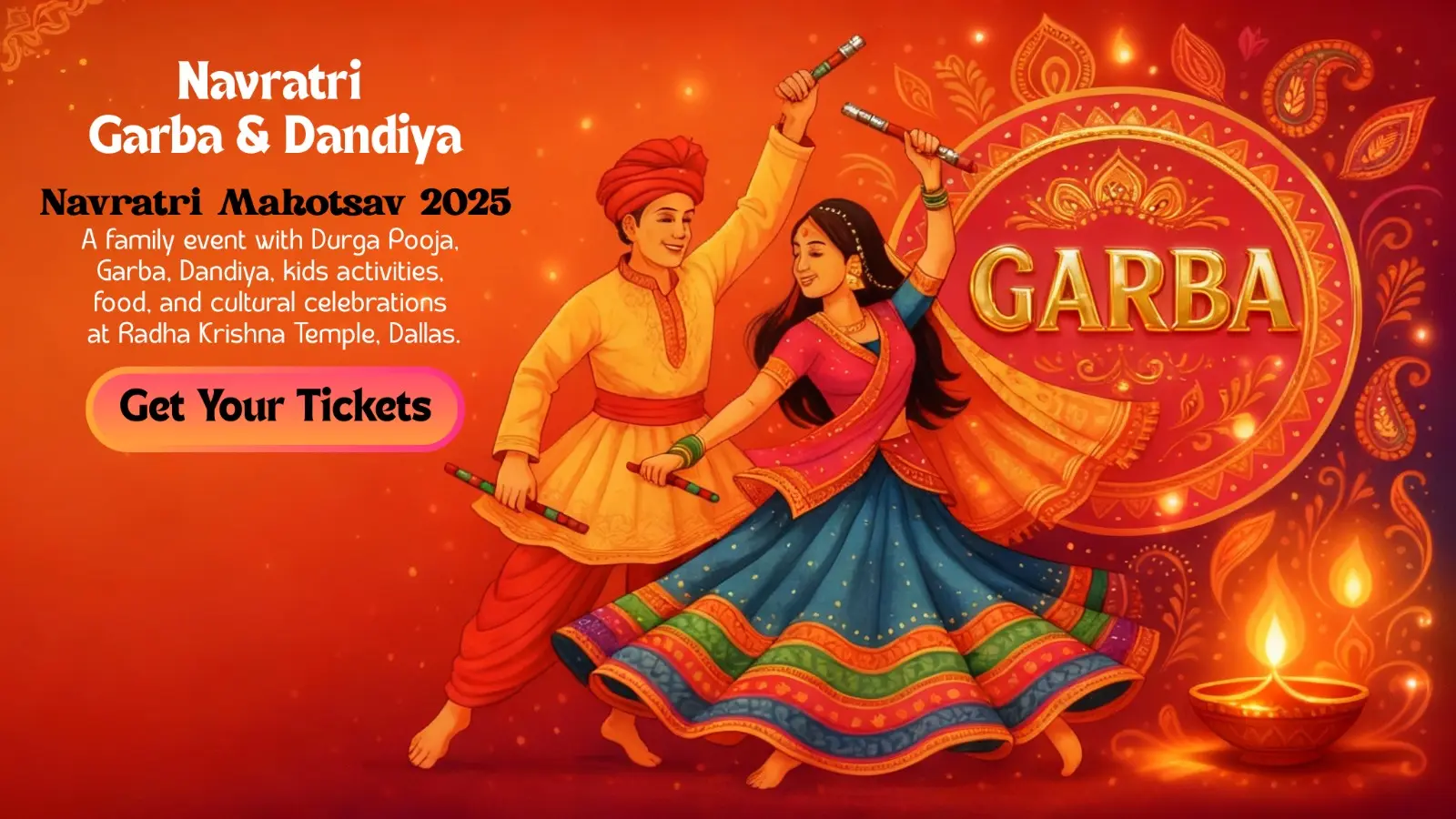
Navratri is incomplete without Garba and Dandiya, where the joyous dance celebrates Maa Durga’s victory and fills the nights with divine energy. Clad in colorful attire, devotees gather to dance, rejoice, and honor the Divine Mother in an atmosphere of joy and reverence.
At Radha Krishna Temple of Dallas, the Navratri Mahotsav 2025 offers unforgettable evenings filled with Garba, Dandiya, Durga Pooja, children’s activities, delicious food, and vibrant cultural programs. As lamps glow and music fills the air, the community comes together in a beautiful celebration of tradition, devotion, and festivity—an experience of Navratri magic like never before.
Join us at the celebration; get your tickets today!
Lyrics
विनियोग (Viniyog)
देवता। गायत्री छन्दः। नन्दा शक्तिः। रक्तदन्तिका बीजम्। अग्निस्तत्त्वम्। ऋग्वेदः स्वरूपम्।
devatā | gāyatrī chandaḥ | nandā śaktiḥ | raktadantikā bījam | agnistattvam | ṛgvedaḥ svarūpam |
श्रीमहाकालीप्रीत्यर्थे प्रथमचरित्रजपे विनियोगः।
śrīmahākālīprītyarthe prathamacaritrajape viniyogaḥ |
ध्यानम् (Dhyānam)
ॐ खड्गं चक्रगदेषुचापपरिघाञ्छूलं भुशुण्डीं शिरः
om khaḍgaṃ cakragadeṣucāpaparighāñchūlaṃ bhuśuṇḍīṃ śiraḥ
शङ्खं सन्दधतीं करैस्त्रिनयनां सर्वाङ्गभूषावृताम्।
śaṅkhaṃ sandadhatīṃ karaistrinayanāṃ sarvāṅgabhūṣāvṛtām |
नीलाश्मद्युतिमास्यपाददशकां सेवे महाकालिकां
nīlāśmadyutimāsyapādadaśakāṃ seve mahākālikāṃ
यामस्तौत्स्वपिते हरौ कमलजो हन्तुं मधुं कौटभम्॥
yāmastautsvapite harau kamalajo hantuṃ madhuṃ kauṭabham ||
Meaning:
I worship Mahakali, whose ten faces and ten feet shine like blue sapphires, adorned with various weapons including sword, discus, mace, bow, trident, and conch. She is three-eyed, ornamented all over, and praised by Brahma when Lord Vishnu is asleep, to destroy Madhu and Kaitabha.
Chapter 5 – The Devī’s Conversation with the Messenger
Verse 1
ॐ क्लीं ऋषिरुवाच॥
om klīṁ ṛṣiruvāca || 1 ||
Meaning:
Om klīṁ — the seer (ṛṣi) said:
Verse 2
पुरा शुम्भनिशुम्भाभ्यामसुराभ्यां शचीपतेः।
त्रैलोक्यं यज्ञभागाश्च हृता मदबलाश्रयात्॥
purā śumbha-niśumbhābhyām asurābhyāṁ śacīpateḥ |
trailokyaṁ yajñabhāgāś ca hṛtā madabalāśrayāt || 2 ||
Meaning:
Long ago, by the asuras Śumbha and Niśumbha,
the three worlds and the shares of sacrifice due to Indra were seized—
through reliance on pride and power.
Verse 3
तावेव सूर्यतां तद्वदधिकारं तथैन्दवम्।
कौबेरमथ याम्यं च चक्राते वरुणस्य च॥
tāveva sūryatāṁ tadvad adhikāraṁ tathāindavam |
kauberam atha yāmyaṁ ca cakrāte varuṇasya ca || 3 ||
Meaning:
They took over the realm of the sun and the moon,
and also claimed the authority of Kubera, Yama, and Varuṇa.
Verse 4
तावेव पवनर्द्धिं च चक्रतुर्वह्निकर्म च।
ततो देवा विनिर्धूता भ्रष्टराज्याः पराजिताः॥
tāveva pavanarddhiṁ ca cakratur vahnikarma ca |
tato devā vinirdhūtā bhraṣṭarājyāḥ parājitāḥ || 4 ||
Meaning:
They usurped the powers of Vāyu (wind) and Agni (fire) as well.
The gods were thus expelled, defeated, and stripped of their kingdoms.
Verse 5
हृताधिकारास्त्रिदशास्ताभ्यां सर्वे निराकृताः।
महासुराभ्यां तां देवीं संस्मरन्त्यपराजिताम्॥
hṛtādhikārās tridaśās tābhyāṁ sarve nirākṛtāḥ |
mahāsurābhyāṁ tāṁ devīṁ saṁsmaranti aparājitām || 5 ||
Meaning:
All the gods, deprived of their powers by those mighty demons,
remembered the unconquered Goddess for help.
Verse 6
तयास्माकं वरो दत्तो यथापत्सु स्मृताखिलाः।
भवतां नाशयिष्यामि तत्क्षणात्परमापदः॥
tayāsmākaṁ varo datto yathā patsu smṛtākhilāḥ |
bhavatāṁ nāśayiṣyāmi tatkṣaṇāt paramāpadaḥ || 6 ||
Meaning:
She had once given us the boon:
“If remembered during calamity, I shall immediately destroy your worst troubles.”
Verse 7
इति कृत्वा मतिं देवा हिमवन्तं नगेश्वरम्।
जग्मुस्तत्र ततो देवीं विष्णुमायां प्रतुष्टुवुः॥
iti kṛtvā matiṁ devā himavantaṁ nageśvaram |
jagmūs tatra tato devīṁ viṣṇumāyāṁ pratuṣṭuvuḥ || 7 ||
Meaning:
Resolving thus, the gods went to Himavat, king of mountains,
and there they praised the Goddess — Viṣṇu’s own Māyā.
Verse 8
देवा ऊचुः॥
devā ūcuḥ || 8 ||
Meaning:
The gods said:
Verse 9
नमो देव्यै महादेव्यै शिवायै सततं नमः।
नमः प्रकृत्यै भद्रायै नियताः प्रणताः स्म ताम्॥
namo devyai mahādevyai śivāyai satataṁ namaḥ |
namaḥ prakṛtyai bhadrāyai niyatāḥ praṇatāḥ sma tām || 9 ||
Meaning:
Salutations to the Goddess, to the Great Goddess, ever to Śivā.
Salutations to Prakṛti and Bhadrā; we bow before her with constant devotion.
Verse 10
रौद्रायै नमो नित्यायै गौर्यै धात्र्यै नमो नमः।
ज्योत्स्नायै चेन्दुरूपिण्यै सुखायै सततं नमः॥
raudrāyai namo nityāyai gauryai dhāttryai namo namaḥ |
jyotsnāyai cendurūpiṇyai sukhāyai satataṁ namaḥ || 10 ||
Meaning:
Salutations to the fierce one, to the eternal one,
to Gaurī, the sustainer; to the radiant one who resembles the moonlight, and to the bringer of joy.
Verse 11
कल्याण्यै प्रणता वृद्ध्यै सिद्ध्यै कुर्मो नमो नमः।
नैर्ऋत्यै भूभृतां लक्ष्म्यै शर्वाण्यै ते नमो नमः॥
kalyāṇyai praṇatā vṛddhyai siddhyai kurmo namo namaḥ |
nairṛtyai bhūbhṛtāṁ lakṣmyai śarvāṇyai te namo namaḥ || 11 ||
Meaning:
We offer salutations to Kalyāṇī (the auspicious one), to Vṛddhi (growth), and to Siddhi (success).
We bow to you as Nairṛtī, Lakṣmī of the kings, and Śarvāṇī, the consort of Śiva.
Verse 12
दुर्गायै दुर्गपारायै सारायै सर्वकारिण्यै।
ख्यात्यै तथैव कृष्णायै धूम्रायै सततं नमः॥
durgāyai durgapārāyai sārāyai sarvakāriṇyai |
khyātyai tathaiva kṛṣṇāyai dhūmrāyai satataṁ namaḥ || 12 ||
Meaning:
Salutations to Durgā, the savior from difficulties; to Sārā, the essence of all,
to Khyāti (fame), to Kṛṣṇā (the dark one), and Dhūmrā (the smoke-colored one).
Verse 13
अतिसौम्यातिरौद्रायै नतास्तस्यै नमो नमः।
नमो जगत्प्रतिष्ठायै देव्यै कृत्यै नमो नमः॥
atisaumyātirauḍrāyai natās tasyai namo namaḥ |
namo jagatpratiṣṭhāyai devyai kṛtyai namo namaḥ || 13 ||
Meaning:
Salutations to her who is extremely gentle and yet extremely fierce.
Salutations to the Goddess who is the very foundation of the world, to Kṛtyā (the doer).
Verses 14–16
या देवी सर्वभूतेषु विष्णुमायेति शब्दिता।
नमस्तस्यै नमस्तस्यै नमस्तस्यै नमो नमः॥
yā devī sarvabhūteṣu viṣṇumāyeti śabditā |
namastasyai namastasyai namastasyai namo namaḥ || 14–16 ||
Meaning:
To that Goddess who resides in all beings as Viṣṇu’s Māyā —
Salutations to her, again and again and again!
Verses 17–19
या देवी सर्वभूतेषु चेतनेत्यभिधीयते।
नमस्तस्यै नमस्तस्यै नमस्तस्यै नमो नमः॥
yā devī sarvabhūteṣu cetanety abhidhīyate |
namastasyai namastasyai namastasyai namo namaḥ || 17–19 ||
Meaning:
To that Goddess who resides in all beings as Consciousness —
Salutations to her, again and again and again!
Verses 20–22
या देवी सर्वभूतेषु बुद्धिरूपेण संस्थिता।
नमस्तस्यै नमस्तस्यै नमस्तस्यै नमो नमः॥
yā devī sarvabhūteṣu buddhirūpeṇa saṁsthitā |
namastasyai namastasyai namastasyai namo namaḥ || 20–22 ||
Meaning:
To that Goddess who abides in all beings as Wisdom (Buddhi) —
Salutations to her, again and again and again!
Verses 23–25
या देवी सर्वभूतेषु निद्रारूपेण संस्थिता।
नमस्तस्यै नमस्तस्यै नमस्तस्यै नमो नमः॥
yā devī sarvabhūteṣu nidrārūpeṇa saṁsthitā |
namastasyai namastasyai namastasyai namo namaḥ || 23–25 ||
Meaning:
To that Goddess who abides in all beings as Sleep (Nidrā) —
Salutations to her, again and again and again!
Verses 26–28
या देवी सर्वभूतेषु क्षुधारूपेण संस्थिता।
नमस्तस्यै नमस्तस्यै नमस्तस्यै नमो नमः॥
yā devī sarvabhūteṣu kṣudhārūpeṇa saṁsthitā |
namastasyai namastasyai namastasyai namo namaḥ || 26–28 ||
Meaning:
To that Goddess who abides in all beings as Hunger (Kṣudhā) —
Salutations to her, again and again and again!
Verses 29–31
या देवी सर्वभूतेषु छायारूपेण संस्थिता।
नमस्तस्यै नमस्तस्यै नमस्तस्यै नमो नमः॥
yā devī sarvabhūteṣu chāyārūpeṇa saṁsthitā |
namastasyai namastasyai namastasyai namo namaḥ || 29–31 ||
Meaning:
To that Goddess who abides in all beings as Shadow (Chāyā) —
Salutations to her, again and again and again!
Verses 32–34
या देवी सर्वभूतेषु शक्तिरूपेण संस्थिता।
नमस्तस्यै नमस्तस्यै नमस्तस्यै नमो नमः ॥
yā devī sarva-bhūteṣu śakti-rūpeṇa saṁsthitā |
namas tasyai namas tasyai namas tasyai namo namaḥ || 32–34 ||
Meaning:
To the Goddess who abides in all beings as Power (Śakti),
salutations to her, salutations to her, salutations to her again and again.
Verses 35–37
या देवी सर्वभूतेषु तृष्णारूपेण संस्थिता।
नमस्तस्यै नमस्तस्यै नमस्तस्यै नमो नमः ॥
yā devī sarva-bhūteṣu tṛṣṇā-rūpeṇa saṁsthitā |
namas tasyai namas tasyai namas tasyai namo namaḥ || 35–37 ||
Meaning:
To the Goddess who abides in all beings as Desire (Tṛṣṇā),
salutations to her, salutations to her, salutations to her again and again.
Verses 38–40
या देवी सर्वभूतेषु क्षान्तिरूपेण संस्थिता।
नमस्तस्यै नमस्तस्यै नमस्तस्यै नमो नमः ॥
yā devī sarva-bhūteṣu kṣānti-rūpeṇa saṁsthitā |
namas tasyai namas tasyai namas tasyai namo namaḥ || 38–40 ||
Meaning:
To the Goddess who abides in all beings as Forbearance (Kṣānti),
salutations to her, salutations to her, salutations to her again and again.
Verses 41–43
या देवी सर्वभूतेषु जातिरूपेण संस्थिता।
नमस्तस्यै नमस्तस्यै नमस्तस्यै नमो नमः ॥
yā devī sarva-bhūteṣu jāti-rūpeṇa saṁsthitā |
namas tasyai namas tasyai namas tasyai namo namaḥ || 41–43 ||
Meaning:
To the Goddess who abides in all beings as Birth / Lineage (Jāti),
salutations to her, salutations to her, salutations to her again and again.
Verses 44–46
या देवी सर्वभूतेषु लज्जारूपेण संस्थिता।
नमस्तस्यै नमस्तस्यै नमस्तस्यै नमो नमः ॥
yā devī sarva-bhūteṣu lajjā-rūpeṇa saṁsthitā |
namas tasyai namas tasyai namas tasyai namo namaḥ || 44–46 ||
Meaning:
To the Goddess who abides in all beings as Modesty (Lajjā),
salutations to her, salutations to her, salutations to her again and again.
Verses 47–49
या देवी सर्वभूतेषु शान्तिरूपेण संस्थिता।
नमस्तस्यै नमस्तस्यै नमस्तस्यै नमो नमः ॥
yā devī sarva-bhūteṣu śānti-rūpeṇa saṁsthitā |
namas tasyai namas tasyai namas tasyai namo namaḥ || 47–49 ||
Meaning:
To the Goddess who abides in all beings as Peace (Śānti),
salutations to her, salutations to her, salutations to her again and again.
Verses 50–52
या देवी सर्वभूतेषु श्रद्धारूपेण संस्थिता।
नमस्तस्यै नमस्तस्यै नमस्तस्यै नमो नमः ॥
yā devī sarva-bhūteṣu śraddhā-rūpeṇa saṁsthitā |
namas tasyai namas tasyai namas tasyai namo namaḥ || 50–52 ||
Meaning:
To the Goddess who abides in all beings as Faith (Śraddhā),
salutations to her, salutations to her, salutations to her again and again.
Verses 53–55
या देवी सर्वभूतेषु कान्तिरूपेण संस्थिता।
नमस्तस्यै नमस्तस्यै नमस्तस्यै नमो नमः ॥
yā devī sarva-bhūteṣu kānti-rūpeṇa saṁsthitā |
namas tasyai namas tasyai namas tasyai namo namaḥ || 53–55 ||
Meaning:
To the Goddess who abides in all beings as Radiance / Beauty (Kānti),
salutations to her, salutations to her, salutations to her again and again.
Verses 56–58
या देवी सर्वभूतेषु लक्ष्मीरूपेण संस्थिता।
नमस्तस्यै नमस्तस्यै नमस्तस्यै नमो नमः ॥
yā devī sarva-bhūteṣu lakṣmī-rūpeṇa saṁsthitā |
namas tasyai namas tasyai namas tasyai namo namaḥ || 56–58 ||
Meaning:
To the Goddess who abides in all beings as Prosperity (Lakṣmī),
salutations to her, salutations to her, salutations to her again and again.
Verses 59–61
या देवी सर्वभूतेषु वृत्तिरूपेण संस्थिता।
नमस्तस्यै नमस्तस्यै नमस्तस्यै नमो नमः ॥
yā devī sarva-bhūteṣu vṛtti-rūpeṇa saṁsthitā |
namas tasyai namas tasyai namas tasyai namo namaḥ || 59–61 ||
Meaning:
To the Goddess who abides in all beings as Livelihood / Activity (Vṛtti),
salutations to her, salutations to her, salutations to her again and again.
Verses 62–64
या देवी सर्वभूतेषु स्मृतिरूपेण संस्थिता।
नमस्तस्यै नमस्तस्यै नमस्तस्यै नमो नमः॥
yā devī sarvabhūteṣu smṛtirūpeṇa saṁsthitā |
namastasyai namastasyai namastasyai namo namaḥ || 62–64 ||
Meaning:
To that Goddess who resides in all beings as memory (smṛti)—
Salutations to her, again and again and again.
Verses 65–67
या देवी सर्वभूतेषु दयारूपेण संस्थिता।
नमस्तस्यै नमस्तस्यै नमस्तस्यै नमो नमः॥
yā devī sarvabhūteṣu dayārūpeṇa saṁsthitā |
namastasyai namastasyai namastasyai namo namaḥ || 65–67 ||
Meaning:
To that Goddess who abides in all beings as compassion (dayā)—
Salutations to her, again and again and again.
Verses 68–70
या देवी सर्वभूतेषु तुष्टिरूपेण संस्थिता।
नमस्तस्यै नमस्तस्यै नमस्तस्यै नमो नमः॥
yā devī sarvabhūteṣu tuṣṭirūpeṇa saṁsthitā |
namastasyai namastasyai namastasyai namo namaḥ || 68–70 ||
Meaning:
To that Goddess who abides in all beings as contentment (tuṣṭi)—
Salutations to her, again and again and again.
Verses 71–73
या देवी सर्वभूतेषु मातृरूपेण संस्थिता।
नमस्तस्यै नमस्तस्यै नमस्तस्यै नमो नमः॥
yā devī sarvabhūteṣu mātṛrūpeṇa saṁsthitā |
namastasyai namastasyai namastasyai namo namaḥ || 71–73 ||
Meaning:
To that Goddess who dwells in all beings in the form of motherhood (mātṛ)—
Salutations to her, again and again and again.
Verses 74–76
या देवी सर्वभूतेषु भ्रान्तिरूपेण संस्थिता।
नमस्तस्यै नमस्तस्यै नमस्तस्यै नमो नमः॥
yā devī sarvabhūteṣu bhrāntirūpeṇa saṁsthitā |
namastasyai namastasyai namastasyai namo namaḥ || 74–76 ||
Meaning:
To that Goddess who exists in all beings as delusion or confusion (bhrānti)—
Salutations to her, again and again and again.
Verse 77
इन्द्रियाणामधिष्ठात्री भूतानां चाखिलेषु या।
भूतेषु सततं तस्यै व्याप्त्यै देव्यै नमो नमः॥
indriyāṇām adhiṣṭhātrī bhūtānāṁ cākhileṣu yā |
bhūteṣu satataṁ tasyai vyāptyai devyai namo namaḥ || 77 ||
Meaning:
To the Goddess who governs the senses and all living beings,
and who constantly pervades all creation—salutations to her!
Verses 78–80
चितिरूपेण या कृत्स्नमेतद् व्याप्य स्थिता जगत्।
नमस्तस्यै नमस्तस्यै नमस्तस्यै नमो नमः॥
citirūpeṇa yā kṛtsnam etad vyāpya sthitā jagat |
namastasyai namastasyai namastasyai namo namaḥ || 78–80 ||
Meaning:
To that Goddess who pervades and upholds the entire universe
in the form of consciousness (citi)—salutations again and again and again.
Verse 81
स्तुता सुरैः पूर्वमभीष्टसंश्रया-
तथा सुरेन्द्रेण दिनेषु सेविता।
करोतु सा नः शुभहेतुरीश्वरी
शुभानि भद्राण्यभिहन्तु चापदः॥
stutā suraiḥ pūrvam abhiṣṭasaṁśrayā |
tathā surendreṇa dineṣu sevitā ||
karotu sā naḥ śubhahetur īśvarī |
śubhāni bhadrāṇy abhihantu cāpadaḥ || 81 ||
Meaning:
She who was once praised by the gods,
and served daily by Indra as a refuge in distress—
may that Goddess, the cause of all good, grant us happiness and auspiciousness,
and remove all misfortunes.
Verse 82
या च स्मृता तत्क्षणमेव हन्ति नः
सर्वापदो भक्तिविनम्रमूर्तिभिः॥
yā ca smṛtā tatkṣaṇam eva hanti naḥ
sarvāpado bhakti-vinamra-mūrtibhiḥ || 82 ||
Meaning:
She who, when remembered with devotion and humility,
instantly destroys all calamities—may that goddess protect us.
Verse 83
ऋषिरुवाच॥
ṛṣir uvāca || 83 ||
Meaning:
The seer said:
Verse 84
एवं स्तवाभियुक्तानां देवानां तत्र पार्वती।
स्नातुमभ्याययौ तोये जाह्नव्या नृपनन्दन॥
evaṁ stavābhiyuktānāṁ devānāṁ tatra pārvatī |
snātum abhyāyayau toye jāhnavyā nṛpanandana || 84 ||
Meaning:
As the gods were engaged in hymn-singing,
Pārvatī approached the waters of the Gaṅgā to bathe, O prince.
Verse 85
साब्रवीत्तान् सुरान् सुभ्रूर्भवद्भिः स्तूयतेऽत्र का।
शरीरकोशतश्चास्याः समुद्भूताब्रवीच्छिवा॥
sābravīt tān surān subhrūr bhavadbhiḥ stūyate'tra kā |
śarīrakośataś cāsyāḥ samudbhūtābravīt śivā || 85 ||
Meaning:
The beautifully browed Goddess asked the gods,
"Who is this you are praising?" From her own body arose a form—Śivā, who replied...
Verse 86
स्तोत्रं ममैतत्क्रियते शुम्भदैत्यनिराकृतैः।
देवैः समेतैः समरे निशुम्भेन पराजितैः॥
stotraṁ mama etat kriyate śumbha-daitya-nirākṛtaiḥ |
devaiḥ sametaiḥ samare niśumbhena parājitaiḥ || 86 ||
Meaning:
“This hymn is being offered to me by the gods who have been defeated in battle by the demons Śumbha and Niśumbha.”
Verse 87
शरीरकोशाद्यत्तस्याः पार्वत्या निःसृताम्बिका।
कौशिकीति समस्तेषु ततो लोकेषु गीयते॥
śarīrakośād yattasyāḥ pārvatyā niḥsṛtāmbikā |
kauśikī iti samasteṣu tato lokeṣu gīyate || 87 ||
Meaning:
The Ambikā who emerged from Pārvatī’s body covering
is known in all the worlds as Kauśikī.
Verse 88
तस्यां विनिर्गतायां तु कृष्णाभूत्सापि पार्वती।
कालिकेति समाख्याता हिमाचलकृताश्रया॥
tasyāṁ vinirgatāyāṁ tu kṛṣṇābhūt sāpi pārvatī |
kāliketi samākhyātā himācalakṛtāśrayā || 88 ||
Meaning:
After Ambikā (Kauśikī) emerged, Pārvatī turned dark in complexion
and is then called Kālikā, residing on Mount Himālaya.
Verse 89
ततोऽम्बिकां परं रूपं बिभ्राणां सुमनोहरम्।
ददर्श चण्डो मुण्डश्च भृत्यौ शुम्भनिशुम्भयोः॥
tato'mbikāṁ paraṁ rūpaṁ bibhrāṇāṁ sumanoharam |
dadarśa Caṇḍo Muṇḍaś ca bhṛtyau śumbha-niśumbhayoḥ || 89 ||
Meaning:
Then, Caṇḍa and Muṇḍa, the servants of Śumbha and Niśumbha,
saw the supremely beautiful form of Ambikā.
Verse 90
ताभ्यां शुम्भाय चाख्याता सातीव सुमनोहरा।
काप्यास्ते स्त्री महाराज भासयन्ती हिमाचलम्॥
tābhyāṁ śumbhāya cākhyātā sā tīva sumanoharā |
kāpy āste strī mahārāja bhāsayantī himācalam || 90 ||
Meaning:
They reported to Śumbha, saying:
"O King! A woman of unsurpassed beauty is dwelling in the Himālayas, radiating brilliance!"
Verse 91
नैव तादृक् क्वचिद्रूपं दृष्टं केनचिदुत्तमम्।
ज्ञायतां काप्यसौ देवी गृह्यतां चासुरेश्वर॥
naiva tādṛk kvacid rūpaṁ dṛṣṭaṁ kenacid uttamam |
jñāyatāṁ kāpy asau devī gṛhyatāṁ cāsureśvara || 91 ||
Meaning:
"Such beauty has never been seen before, not even among the best.
O Lord of Asuras, find out who she is and take possession of her!"
Verse 92
स्त्रीरत्नमतिचार्वङ्गी द्योतयन्ती दिशस्त्विषा।
सा तु तिष्ठति दैत्येन्द्र तां भवान् द्रष्टुमर्हति ॥
strīratnam aticāru-aṅgī dyotayantī diśas tviṣā |
sā tu tiṣṭhati daityendra tāṁ bhavān draṣṭum arhati || 92 ||
Meaning:
O Lord of the Daityas, that jewel among women, with her exquisitely beautiful form, is standing there, radiating light in all directions.
You should go and behold her.
Verse 93
यानि रत्नानि मणयो गजाश्वादीनि वै प्रभो।
त्रैलोक्ये तु समस्तानि साम्प्रतं भान्ति ते गृहे ॥
yāni ratnāni maṇayo gajāśvādīni vai prabho |
trailokye tu samastāni sāmprataṁ bhānti te gṛhe || 93 ||
Meaning:
O Lord, all the gems, jewels, elephants, horses, and treasures that exist in the three worlds are now shining in your palace.
Verse 94
ऐरावतः समानीतो गजरत्नं पुरन्दरात्।
पारिजाततरुश्चायं तथैवोच्चैःश्रवा हयः॥
airāvataḥ samānītaḥ gaja-ratnaṁ purandarāt |
pārijāta-taruś cāyaṁ tathaiva uccaiḥśravā hayaḥ || 94 ||
Meaning:
Airāvata, the elephant-jewel, has been brought from Indra; also the celestial Pārijāta tree and the divine horse Uccaiḥśravā are now yours.
Verse 95
विमानं हंससंयुक्तमेतत्तिष्ठति तेऽङ्गणे।
रत्नभूतमिहानीतं यदासीद्वेधसोऽद्भुतम्॥
vimānaṁ haṁsa-saṁyuktam etat tiṣṭhati te’aṅgaṇe |
ratna-bhūtam ihānītaṁ yad āsīd vedhasaḥ adbhutam || 95 ||
Meaning:
This chariot yoked with swan-like birds is now in your courtyard — a wondrous gem once belonging to the Creator himself.
Verse 96
निधिरेष महापद्मः समानीतो धनेश्वरात्।
किञ्जल्किनीं ददौ चाब्धिर्मालामम्लानपङ्कजाम् ॥
nidhi-reṣa mahāpadmaḥ samānītaḥ dhaneśvarāt |
kiñjalkinīṁ dadau cābdhiḥ mālām amlāna-paṅkajām || 96 ||
Meaning:
This great treasure — the Mahāpadma Nidhi — has been brought from Kubera, and the Ocean has given you a garland made of unfading lotus petals.
Verse 97
छत्रं ते वारुणं गेहे काञ्चनस्रावि तिष्ठति।
तथायं स्यन्दनवरो यः पुरासीत्प्रजापतेः॥
chatraṁ te vāruṇaṁ gehe kāñcana-srāvi tiṣṭhati |
tathā ayaṁ syandana-varo yaḥ purā āsīt prajāpateḥ || 97 ||
Meaning:
The gold-dripping parasol of Varuṇa is now in your residence, and so is the great chariot that once belonged to Prajāpati (the Lord of beings).
Verse 98
मृत्योरुत्क्रान्तिदा नाम शक्तिरीश त्वया हृता।
पाशः सलिलराजस्य भ्रातुस्तव परिग्रहे ॥
mṛtyor utkṛāntidā nāma śaktiḥ īśa tvayā hṛtā |
pāśaḥ salila-rājasya bhrātuḥ tava parigrahe || 98 ||
Meaning:
O Lord, you have taken possession of the śakti weapon called Utkrāntidā, belonging to Yama, and the noose of Varuṇa, the Lord of Waters, is also with your brother.
Verse 99
निशुम्भस्याब्धिजाताश्च समस्ता रत्नजातयः।
वह्निरपि ददौ तुभ्यमग्निशौचे च वाससी॥
niśumbhasyābdhi-jātāś ca samastā ratna-jātayaḥ |
vahniḥ api dadau tubhyaṁ agni-śauce ca vāsasī || 99 ||
Meaning:
All the ocean-born jewels have come into Niśumbha’s possession, and even Agni has given you sacred garments for ritual purity.
Verse 100
एवं दैत्येन्द्र रत्नानि समस्तान्याहृतानि ते।
स्त्रीरत्नमेषा कल्याणी त्वया कस्मान्न गृह्यते ॥
evaṁ daityendra ratnāni samastāni āhṛtāni te |
strīratnam eṣā kalyāṇī tvayā kasmān na gṛhyate || 100 ||
Meaning:
Thus, O Lord of Daityas, all the jewels in the world are now yours.
Why then, do you not take this jewel among women, this auspicious and beautiful Goddess, for yourself?
Verse 101
ऋषिरुवाच ॥
ṛṣir uvāca || 101 ||
Meaning:
The seer said:
Verse 102
निशम्येति वचः शुम्भः स तदा चण्डमुण्डयोः।
प्रेषयामास सुग्रीवं दूतं देव्या महासुरम्॥
niśamya iti vacaḥ śumbhaḥ sa tadā caṇḍamuṇḍayoḥ |
preṣayāmāsa sugrīvaṁ dūtaṁ devyā mahāsuram || 102 ||
Meaning:
Hearing these words from Caṇḍa and Muṇḍa,
Śumbha, the great demon, sent Sugrīva as a messenger to the Goddess
Verse 103
इति चेति च वक्तव्या सा गत्वा वचनान्मम।
यथा चाभ्येति सम्प्रीत्या तथा कार्यं त्वया लघु॥
iti ceti ca vaktavyā sā gatvā vacanān mama |
yathā cābhyeti saṁprītyā tathā kāryaṁ tvayā laghu || 103 ||
Meaning:
"Go to her and say this on my behalf. Speak so that she comes willingly and joyfully—do it well and quickly."
Verse 104
स तत्र गत्वा यत्रास्ते शैलोद्देशेऽतिशोभने।
तां च देवीं ततः प्राह श्लक्ष्णं मधुरया गिरा॥
sa tatra gatvā yatrāste śailoddeśe'tiśobhane |
tāṁ ca devīṁ tataḥ prāha ślakṣṇaṁ madhurayā girā || 104 ||
Meaning:
Reaching the beautiful mountain region where the Goddess resided,
he addressed her sweetly and politely.
Verse 105
दूत उवाच॥
dūta uvāca || 105 ||
Meaning:
The messenger said:
Verse 106
देवि दैत्येश्वरः शुम्भस्त्रैलोक्ये परमेश्वरः।
दूतोऽहं प्रेषितस्तेन त्वत्सकाशमिहागतः॥
devi daityeśvaraḥ śumbhas trailokye parameśvaraḥ |
dūto'haṁ preṣitas tena tvatsakāśam ihāgataḥ || 106 ||
Meaning:
O Goddess, Śumbha, lord of the asuras and master of the three worlds,
has sent me to you as his messenger.
Verse 107
अव्याहताज्ञः सर्वासु यः सदा देवयोनिषु।
निर्जिताखिलदैत्यारिः स यदाह शृणुष्व तत्॥
avyāhatājñaḥ sarvāsu yaḥ sadā devayoniṣu |
nirjitākhiladaityāriḥ sa yad āha śṛṇuṣva tat || 107 ||
Meaning:
He whose commands are never opposed among the divine beings,
who has defeated all enemies of the asuras—listen to what he says.
Verse 108
मम त्रैलोक्यमखिलं मम देवा वशानुगाः।
यज्ञभागानहं सर्वानुपाश्नामि पृथक् पृथक्॥
mama trailokyam akhilaṁ mama devā vaśānugāḥ |
yajñabhāgān ahaṁ sarvān upāśnāmi pṛthak pṛthak || 108 ||
Meaning:
"The entire three worlds are under my command;
even the gods follow my will. I alone receive the shares of all sacrifices, one by one."
Verse 109
त्रैलोक्ये वररत्नानि मम वश्यान्यशेषतः।
तथैव गजरत्नं च हृतं देवेन्द्रवाहनम्॥
trailokye vararatnāni mama vaśyāni aśeṣataḥ |
tathaiva gajaratnaṁ ca hṛtaṁ devendravāhanam || 109 ||
Meaning:
"All the finest jewels and treasures of the three worlds are under my control—
including the divine elephant, Indra’s own vehicle."
Verse 110
क्षीरोदमथनोद्भूतमश्वरत्नं ममामरैः।
उच्चैःश्रवससंज्ञं तत्प्रणिपत्य समर्पितम्॥
kṣīrodamathanodbhūtam aśvaratnaṁ mamāmaraiḥ |
uccaiḥśravasa-saṁjñaṁ tat praṇipatya samarpitam || 110 ||
Meaning:
"The celestial horse Uccaiḥśravas, born of the ocean's churning,
was respectfully offered to me by the gods."
Verse 111
यानि चान्यानि देवेषु गन्धर्वेषूरगेषु च।
रत्नभूतानि भूतानि तानि मय्येव शोभने॥
yāni cānyāni deveṣu gandharveṣu urageṣu ca |
ratnabhūtāni bhūtāni tāni mayyeva śobhane || 111 ||
Meaning:
"O Beautiful One, all beings that are considered treasures—among gods, gandharvas, and nāgas—
they all serve and shine under me alone."
Verse 112
स्त्रीरत्नभूतां त्वां देवि लोके मन्यामहे वयम्।
सा त्वमस्मानुपागच्छ यतो रत्नभुजो वयम् ॥
strīratnabhūtāṁ tvāṁ devi loke manyāmahe vayam |
sā tvam asmān upāgaccha yato ratna-bhujo vayam || 112 ||
Meaning:
O Goddess, we consider you the jewel among women in the world.
So come to us, for we are the enjoyers of all jewels.
Verse 113
मां वा ममानुजं वापि निशुम्भमुरुविक्रमम् ।
भज त्वं चञ्चलापाङ्गि रत्नभूतासि वै यतः॥
māṁ vā mamānujam vāpi niśumbham uru-vikramam |
bhaja tvaṁ cañcalāpāṅgi ratna-bhūtāsi vai yataḥ || 113 ||
Meaning:
O restless-eyed one, choose either me or my younger brother, the mighty Niśumbha, as your husband — for you are indeed the finest of jewels.
Verse 114
परमैश्वर्यमतुलं प्राप्स्यसे मत्परिग्रहात्।
एतद्बुद्ध्या समालोच्य मत्परिग्रहतां व्रज॥
paramaiśvaryam atulaṁ prāpsyase mat-parigrahāt |
etad-buddhyā samālocya mat-parigrahatāṁ vraja || 114 ||
Meaning:
If you accept me, you will gain unmatched sovereignty.
So reflect upon this wisely and become mine.
Verse 115
ऋषिरुवाच ॥
ṛṣir uvāca || 115 ||
Meaning:
The seer said:
Verse 116
इत्युक्ता सा तदा देवी गम्भीरान्तःस्मिता जगौ।
दुर्गा भगवती भद्रा ययेदं धार्यते जगत्॥
ity uktā sā tadā devī gambhīrāntaḥ-smitā jagau |
durgā bhagavatī bhadrā yayedaṁ dhāryate jagat || 116 ||
Meaning:
Thus addressed, the Divine Mother, Durga, she who supports the universe,
smiled inwardly and spoke, her expression deep and gracious.
Verse 117
देव्युवाच ॥
devy uvāca || 117 ||
Meaning:
The Goddess said:
Verse 118
सत्यमुक्तं त्वया नात्र मिथ्या किंचित्त्वयोदितम्।
त्रैलोक्याधिपतिः शुम्भो निशुम्भश्चापि तादृशः ॥
satyam uktaṁ tvayā nātra mithyā kiñcit tvayoditam |
trailokyādhipatiḥ śumbho niśumbhaś cāpi tādṛśaḥ || 118 ||
Meaning:
What you said is true — not a single false word was spoken.
Śumbha rules over the three worlds, and Niśumbha is equally mighty.
Verse 119
किं त्वत्र यत्प्रतिज्ञातं मिथ्या तत्क्रियते कथम् ।
श्रूयतामल्पबुद्धित्वात्प्रतिज्ञा या कृता पुरा ॥
kiṁ tvatra yat pratijñātaṁ mithyā tat kriyate katham |
śrūyatām alpa-buddhitvāt pratijñā yā kṛtā purā || 119 ||
Meaning:
But what can I do about a vow once taken? Can it be made false?
Hear now the promise I made long ago, though it may seem naïve.
Verse 120
यो मां जयति संग्रामे यो मे दर्पं व्यपोहति।
यो मे प्रतिबलो लोके स मे भर्ता भविष्यति ॥
yo māṁ jayati saṅgrāme yo me darpaṁ vyapohati |
yo me pratibalo loke sa me bhartā bhaviṣyati || 120 ||
Meaning:
He who defeats me in battle, subdues my pride,
and proves himself my equal — only he shall be my husband.
Verse 121
तदागच्छतु शुम्भोऽत्र निशुम्भो वा महाबलः।
मां जित्वा किं चिरेणात्र पाणिं गृह्णातु मे लघु ॥
tad āgacchatu śumbho'tra niśumbho vā mahābalaḥ |
māṁ jitvā kiṁ cireṇātra pāṇiṁ gṛhṇātu me laghu || 121 ||
Meaning:
So let Śumbha or the mighty Niśumbha come here.
Whoever conquers me, why delay? Let him quickly take my hand in marriage.
Verse 122
दूत उवाच ॥
dūta uvāca || 122 ||
अवलिप्तासि मैवं त्वं देवि ब्रूहि ममाग्रतः।
avaliptāsi maivaṁ tvaṁ devi brūhi mamāgrataḥ |
Meaning:
“O Devi, do not be so proud. Speak clearly before me now.”
Verse 123
त्रैलोक्ये कः पुमांस्तिष्ठेदग्रे शुम्भनिशुम्भयोः॥
trailokye kaḥ pumāṁs tiṣṭhet agre śumbha-niśumbhayoḥ || 123 ||
Meaning:
“Who in all the three worlds can stand against Śumbha and Niśumbha?”
Verse 124
अन्येषामपि दैत्यानां सर्वे देवा न वै युधि।
तिष्ठन्ति सम्मुखे देवि किं पुनः स्त्री त्वमेकिका॥
anyeṣām api daityānāṁ sarve devā na vai yudhi |
tiṣṭhanti sammukhe devi kiṁ punaḥ strī tvam ekikā || 124 ||
Meaning:
“Even the gods cannot face other demons in battle.
So how can you, a lone woman, stand against Śumbha and Niśumbha?”
Verse 125
इन्द्राद्याः सकला देवास्तस्थुर्येषां न संयुगे।
शुम्भादीनां कथं तेषां स्त्री प्रयास्यसि सम्मुखम्॥
indrādyāḥ sakalā devās tasthur yeṣāṁ na saṁyuge |
śumbhādīnāṁ kathaṁ teṣāṁ strī prayāsyasi sammukham || 125 ||
Meaning:
“When even mighty gods like Indra fled the battlefield,
how will you—a woman—dare face Śumbha and Niśumbha?”
Verse 126
सा त्वं गच्छ मयैवोक्ता पार्श्वं शुम्भनिशुम्भयोः।
केशाकर्षणनिर्धूतगौरवा मा गमिष्यसि॥
sā tvaṁ gaccha mayāivoktā pārśvaṁ śumbha-niśumbhayoḥ |
keśākarṣaṇa-nirdhūta-gauravā mā gamiṣyasi || 126 ||
Meaning:
“So come willingly to Śumbha and Niśumbha, as I suggest—
else you will be dragged by your hair and stripped of honor.”
Verse 127
देव्युवाच ॥
devy uvāca || 127 ||
एवमेतद् बली शुम्भो निशुम्भश्चापितादृशः।
evam etad balī śumbho niśumbhaś cāpi tādṛśaḥ || 127 ||
Meaning:
“It is true—Śumbha and Niśumbha are strong and of such nature.”
Verse 128
किं करोमि प्रतिज्ञा मे यदनालोचिता पुरा॥
kiṁ karomi pratijñā me yad anālocitā purā || 128 ||
Meaning:
“But what can I do? I made a vow long ago, without full thought.”
Verse 129
स त्वं गच्छ मयोक्तं ते यदेतत्सर्वमादृतः।
तदाचक्ष्वासुरेन्द्राय स च युक्तं करोतु यत्॥
sa tvaṁ gaccha mayoktaṁ te yad etat sarvam ādṛtaḥ |
tad ācakṣvāsurendrāya sa ca yuktaṁ karotu yat || 129 ||
Meaning:
“So go now, and convey all that I have said to your master.
Let the lord of the asuras do whatever he sees fit.”
Chapter Ending:
॥ स्वस्ति श्रीमार्कण्डेयपुराणे सावर्णिके मन्वन्तरे
देवीमाहात्म्ये देव्या दूतसंवादो नाम पञ्चमोऽध्यायः ॥
svasti śrī-mārkaṇḍeya-purāṇe sāvārṇike manvantare
devī-māhātmye devyā dūta-saṁvādo nāma pañcamo’dhyāyaḥ ||
Meaning:
Thus ends Chapter 5, titled “The Dialogue Between the Goddess and the Messenger”
from the Devī Māhātmya, in the Sāvārṇika Manvantara of the Mārkaṇḍeya Purāṇa.
Chapter 6 – The Slaying of Dhūmralocana
Verse 1
ॐ ऋषिरुवाच॥ १॥
om ṛṣir uvāca || 1 ||
Meaning:
The seer said:
Verse 2
इत्याकर्ण्य वचो देव्याः स दूतोऽमर्षपूरितः।
समाचष्ट समागम्य दैत्यराजाय विस्तरात्॥ २॥
ityākarṇya vaco devyāḥ sa dūto'marṣapūritaḥ |
samācaṣṭa samāgamya daityarājāya vistarāt || 2 ||
Meaning:
Hearing the words of the Goddess, the messenger, filled with rage,
returned and narrated everything in detail to the demon king.
Verse 3
तस्य दूतस्य तद्वाक्यमाकर्ण्यासुरराट् ततः।
सक्रोधः प्राह दैत्यानामधिपं धूम्रलोचनम्॥
tasya dūtasya tadvākyam ākarṇyāsurarāṭ tataḥ |
sakrodhaḥ prāha daityānām adhipaṁ dhūmralocanam || 3 ||
Meaning:
Hearing the messenger’s report, the demon king became furious and
spoke to Dhūmralocana, the leader of the demons.
Verse 4
हे धूम्रलोचनाशु त्वं स्वसैन्यपरिवारितः।
तामानय बलाद्दुष्टां केशाकर्षणविह्वलाम्॥
he dhūmralocana āśu tvaṁ svasainya-parivāritaḥ |
tām ānaya balād duṣṭāṁ keśākarṣaṇa-vihvalām || 4 ||
Meaning:
“O Dhūmralocana, go swiftly with your army and
bring that wicked woman by force, dragging her by the hair if needed!”
Verse 5
तत्परित्राणदः कश्चिद्यदि वोत्तिष्ठतेऽपरः।
स हन्तव्योऽमरो वापि यक्षो गन्धर्व एव वा॥
tat-paritrāṇadaḥ kaścid yadi vo 'ttiṣṭhate 'paraḥ |
sa hantavyo 'maro vāpi yakṣo gandharva eva vā || 5 ||
Meaning:
“If anyone dares defend her—be he a deva, yakṣa, or gandharva—
he must be slain immediately!”
Verse 6
ऋषिरुवाच॥
ṛṣir uvāca || 6 ||
Meaning:
The seer said:
Verse 7
तेनाज्ञप्तस्ततः शीघ्रं स दैत्यो धूम्रलोचनः।
वृतः षष्ट्या सहस्राणामसुराणां द्रुतं ययौ॥
tenājñaptaḥ tataḥ śīghraṁ sa daityo dhūmralocanaḥ |
vṛtaḥ ṣaṣṭyā sahasrāṇām asurāṇāṁ drutaṁ yayau || 7 ||
Meaning:
Commanded thus, Dhūmralocana quickly marched forth,
accompanied by sixty thousand asuras.
Verse 8
स दृष्ट्वा तां ततो देवीं तुहिनाचलसंस्थिताम्।
जगादोच्चैः प्रयाहीति मूलं शुम्भनिशुम्भयोः॥
sa dṛṣṭvā tāṁ tato devīṁ tuhinācala-saṁsthitām |
jagādoccaiḥ prayāhi iti mūlaṁ śumbha-niśumbhayoḥ || 8 ||
Meaning:
Seeing the Goddess residing on Mount Himavat,
he shouted loudly, “Come! Present yourself to Śumbha and Niśumbha, your lords!”
Verse 9
न चेत्प्रीत्याद्य भवती मद्भर्तारमुपैष्यति।
ततो बलान्नयाम्येष केशाकर्षणविह्वलाम्॥
na cet prītyā adya bhavatī mad-bhartāram upaiṣyati |
tato balād nayāmy eṣāṁ keśākarṣaṇa-vihvalām || 9 ||
Meaning:
“If you do not come willingly today to marry my master,
then I will drag you by the hair and take you by force!”
Verse 10
देव्युवाच ॥ १० ॥
devy uvāca || 10 ||
Meaning:
The Goddess said:
Verse 11
दैत्येश्वरेण प्रहितो बलवान्बलसंवृतः।
बलान्नयसि मामेवं ततः किं ते करोम्यहम् ॥ ११ ॥
daityeśvareṇa prahito balavān balasaṁvṛtaḥ |
balān nayasi mām evaṁ tataḥ kiṁ te karomy aham || 11 ||
Meaning:
You’ve been sent by the lord of the demons, and you come with great force.
Now you try to seize me by strength — tell me, what should I do for you?
Verse 12
ऋषिरुवाच ॥ १२॥
ṛṣir uvāca || 12 ||
Meaning:
The seer said:
Verse 13
इत्युक्तः सोऽभ्यधावत्तामसुरो धूम्रलोचनः।
हुंकारेणैव तं भस्म सा चकाराम्बिका तदा ॥ १३॥
ity uktaḥ so’bhyadhāvat tām asuro dhūmralocanaḥ |
huṅkāreṇaiva taṁ bhasma sā cakārāmbikā tadā || 13 ||
Meaning:
Thus addressed, the demon Dhūmralocana rushed at her,
but with a mere roar, Ambikā reduced him to ashes.
Verse 14
अथ क्रुद्धं महासैन्यमसुराणां तथाम्बिका।
ववर्ष सायकैस्तीक्ष्णैस्तथा शक्तिपरश्वधैः॥ १४॥
atha kruddhaṁ mahā-sainyam asurāṇāṁ tathāmbikā |
vavarṣa sāyakaiḥ tīkṣṇaiḥ tathā śakti-paraśvadhaiḥ || 14 ||
Meaning:
Then, angered, Ambikā showered sharp arrows, spears, and axes
upon the vast army of the demons.
Verse 15
ततो धुतसटः कोपात्कृत्वा नादं सुभैरवम्।
पपातासुरसेनायां सिंहो देव्याः स्ववाहनः॥ १५॥
tato dhuta-saṭaḥ kopāt kṛtvā nādaṁ subhairavam |
papāta asura-senāyāṁ siṁho devyāḥ sva-vāhanaḥ || 15 ||
Meaning:
Then the lion, mount of the Goddess, shook his mane in fury,
roared terribly, and leapt into the demon army.
Verse 16
कांश्चित्करप्रहारेण दैत्यानास्येन चापरान्।
आक्रान्त्या चाधरेणान्यान् जघान स महासुरान् ॥ १६ ॥
kāṁścit kara-prahāreṇa daityān āsena ca aparān |
ākrāntyā ca adhareṇa anyān jaghāna sa mahāsurān || 16 ||
Meaning:
Some demons he struck with his paws, others he tore with his jaws,
and some he crushed beneath his chest — the lion slew them all.
Verse 17
केषांचित्पाटयामास नखैः कोष्ठानि केसरी।
तथा तलप्रहारेण शिरांसि कृतवान्पृथक् ॥ १७ ॥
keṣāṁcit pāṭayāmāsa nakhaiḥ koṣṭhāni keśarī |
tathā tala-prahāreṇa śirāṁsi kṛtavān pṛthak || 17 ||
Meaning:
The lion ripped open the bellies of some with his claws,
and with the strike of his paw, severed the heads of others.
Verse 18
विच्छिन्नबाहुशिरसः कृतास्तेन तथापरे ।
पपौ च रुधिरं कोष्ठादन्येषां धुतकेसरः॥ १८॥
vicchinna-bāhu-śirasaḥ kṛtās tena tathāpare |
papau ca rudhiraṁ koṣṭhād anyeṣāṁ dhuta-keśaraḥ || 18 ||
Meaning:
He made others armless and headless;
the mane-shaking lion drank blood from their bodies.
Verse 19
क्षणेन तद्बलं सर्वं क्षयं नीतं महात्मना ।
तेन केसरिणा देव्या वाहनेनातिकोपिना ॥ १९॥
kṣaṇena tad balaṁ sarvaṁ kṣayaṁ nītaṁ mahātmanā |
tena keśariṇā devyā vāhanena ati-kopinā || 19 ||
Meaning:
In a moment, that entire army was destroyed
by the enraged lion, the great mount of the Goddess.
Verse 20
श्रुत्वा तमसुरं देव्या निहतं धूम्रलोचनम्।
बलं च क्षयितं कृत्स्नं देवीकेसरिणा ततः॥ २०॥
śrutvā tam asuraṁ devyā nihataṁ dhūmralocanam |
balaṁ ca kṣayitaṁ kṛtsnaṁ devī-keśariṇā tataḥ || 20 ||
Meaning:
Hearing that Dhūmralocana was slain by the Goddess,
and that the lion had destroyed the entire army, the demons were dismayed.
Verse 21
चुकोप दैत्याधिपतिः शुम्भः प्रस्फुरिताधरः।
आज्ञापयामास च तौ चण्डमुण्डौ महासुरौ॥ २१॥
cukopa daityādhipatiḥ śumbhaḥ prasphuritādharaḥ |
ājñāpayāmāsa ca tau caṇḍamuṇḍau mahāsurau || 21 ||
Meaning:
The demon king Śumbha became enraged, his lips quivering with fury,
and he ordered the great asuras, Caṇḍa and Muṇḍa, to act immediately.
Verse 22
हे चण्ड हे मुण्ड बलैर्बहुभिः परिवारितौ।
तत्र गच्छत गत्वा च सा समानीयतां लघु॥ २२॥
he caṇḍa he muṇḍa balairbahubhiḥ parivāritau |
tatra gacchata gatvā ca sā samānīyatāṁ laghu || 22 ||
Meaning:
“O Caṇḍa! O Muṇḍa! Take many warriors with you,
Go there at once and bring that woman quickly.”
Verse 23
केशेष्वाकृष्य बद्ध्वा वा यदि वः संशयो युधि।
तदाशेषायुधैः सर्वैरसुरैर्विनिहन्यताम्॥ २३॥
keśeṣvākṛṣya baddhvā vā yadi vaḥ saṁśayo yudhi |
tadāśeṣāyudhaiḥ sarvairasurairvinihanyatām || 23 ||
Meaning:
“If you are unsure of her strength in battle, then bind her by the hair and capture her.
Or else, slay her with all the weapons and asuras you have!”
Verse 24
तस्यां हतायां दुष्टायां सिंहे च विनिपातिते।
शीघ्रमागम्यतां बद्ध्वा गृहीत्वा तामथाम्बिकाम्॥ २४॥
tasyāṁ hatāyāṁ duṣṭāyāṁ siṁhe ca vinipātite |
śīghramāgamyatāṁ baddhvā gṛhītvā tāmathāmbikām || 24 ||
Meaning:
“When that wicked woman is slain and her lion destroyed,
seize Ambikā, bind her, and return at once!”
Chapter Ending:
॥ स्वस्ति श्रीमार्कण्डेयपुराणे सावर्णिके मन्वन्तरे देवीमाहात्म्ये शुम्भनिशुम्भसेनानीधूम्रलोचनवधो नाम षष्ठोऽध्यायः ॥
|| Svasti śrī-mārkaṇḍeya-purāṇe sāvarṇike manvantare devī-māhātmye śumbha-niśumbha-senānī-dhūmralocana-vadho nāma ṣaṣṭho'dhyāyaḥ ||
Meaning:
Thus ends the Sixth Chapter, titled "The Slaying of Dhūmralocana, Commander of Śumbha and Niśumbha", from the Devī Māhātmya in the Sāvarṇika Manvantara of the Mārkaṇḍeya Purāṇa.
Chapter 7 – The Slaying of Caṇḍa and Muṇḍa
Verse 1
ॐ ऋषिरुवाच ॥ १ ॥
om ṛṣir uvāca || 1 ||
Meaning:
The seer said:
Verse 2
आज्ञप्तास्ते ततो दैत्याश्चण्डमुण्डपुरोगमाः।
चतुरङ्गबलोपेता ययुरभ्युद्यतायुधाः॥ २॥
ājñaptās te tato daityāś caṇḍa-muṇḍa-purogamāḥ |
caturaṅga-balopetā yayur abhyudyatāyudhāḥ || 2 ||
Meaning:
Then the asuras, commanded by their king, with Caṇḍa and Muṇḍa at the lead,
advanced for battle, armed with weapons and equipped with full fourfold armies (infantry, cavalry, elephants, chariots).
Verse 3
ददृशुस्ते ततो देवीमीषद्धासां व्यवस्थिताम्।
सिंहस्योपरि शैलेन्द्रशृङ्गे महति काञ्चने ॥ ३॥
dadṛśus te tato devīm īṣad dhāsāṁ vyavasthitām |
siṁhasyopari śailendra-śṛṅge mahati kāñcane || 3 ||
Meaning:
They then saw the Goddess seated with a slight smile,
on a lion, atop a great golden peak of the Himalayan mountain.
Verse 4
ते दृष्ट्वा तां समादातुमुद्यमं चक्रुरुद्यताः ।
आकृष्टचापासिधरास्तथान्ये तत्समीपगाः॥ ४॥
te dṛṣṭvā tāṁ samādātum udyamaṁ cakrur udyatāḥ |
ākṛṣṭa-cāpāsi-dharās tathānye tat-samīpagāḥ || 4 ||
Meaning:
Seeing her, they prepared to seize her.
Some drew their bows and raised swords as they approached her.
Verse 5
ततः कोपं चकारोच्चैरम्बिका तानरीन्प्रति ।
कोपेन चास्या वदनं मषीवर्णमभूत्तदा ॥ ५॥
tataḥ kopaṁ cakāroccair ambikā tān arīn prati |
kopena cāsyā vadanaṁ maṣīvarṇam abhūt tadā || 5 ||
Meaning:
Then Ambikā grew furious at those enemies,
and in her wrath, her face darkened like ink.
Verse 6
भ्रुकुटीकुटिलात्तस्या ललाटफलकाद्द्रुतम्।
काली करालवदना विनिष्क्रान्तासिपाशिनी॥ ६॥
bhrukuṭī-kuṭilāt tasyā lalāṭa-phalakād drutam |
kālī karāla-vadanā viniṣkrāntāsi-pāśinī || 6 ||
Meaning:
From the furrow of her angry brow,
sprang forth Kālī, the terrible-faced one, holding a sword and noose.
Verse 7
विचित्रखट्वाङ्गधरा नरमालाविभूषणा ।
द्वीपिचर्मपरीधाना शुष्कमांसातिभैरवा ॥ ७॥
vicitra-khaṭvāṅga-dharā nara-mālā-vibhūṣaṇā |
dvīpi-carma-parīdhānā śuṣka-māṁsāti-bhairavā || 7 ||
Meaning:
She held a strange skull-topped club and wore a garland of human heads.
Her dress was a tiger skin; her body emaciated, terrifying in appearance.
Verse 8
अतिविस्तारवदना जिह्वाललनभीषणा ।
निमग्नारक्तनयना नादापूरितदिङ्मुखा ॥ ८ ॥
ativistāra-vadanā jihvā-lalana-bhīṣaṇā |
nimagna-rakta-nayanā nādāpūrīta-diṅmukhā || 8 ||
Meaning:
Her mouth was wide, tongue lolling frightfully;
her eyes were deep red, and her roar filled all directions.
Verse 9
सा वेगेनाभिपतिता घातयन्ती महासुरान् ।
सैन्ये तत्र सुरारीणामभक्षयत तद्बलम् ॥ ९॥
sā vegenābhipatitā ghātayantī mahāsurān |
sainye tatra surārīṇām abhakṣayat tad-balam || 9 ||
Meaning:
Rushing forward swiftly, she began slaying the mighty asuras.
In the army of the enemies of the gods, she devoured their forces.
Verse 10
पार्ष्णिग्राहाङ्कुशग्राहयोधघण्टासमन्वितान्।
समादायैकहस्तेन मुखे चिक्षेप वारणान् ॥ १० ॥
pārṣṇigrāhāṅkuśagrāha-yodha-ghaṇṭā-samanvitān |
samādāyaika-hastena mukhe cikṣepa vāraṇān || 10 ||
Meaning:
With one hand, she seized elephants along with their rear-guards, goaders, warriors, and jingling bells,
and hurled them into her mouth.
Verse 11
तथैव योधं तुरगै रथं सारथिना सह।
निक्षिप्य वक्त्रे दशनैश्चर्वयन्त्यतिभैरवम् ॥ ११॥
tathaiva yodhaṁ turagaiḥ rathaṁ sāraṭhinā saha |
nikṣipya vaktre daśanaiś carvayanty atibhairavam || 11 ||
Meaning:
Likewise, she placed a warrior, with his horses, chariot, and charioteer, into her mouth,
and terrifyingly chewed them with her teeth.
Verse 12
एकं जग्राह केशेषु ग्रीवायामथ चापरम्।
पादेनाक्रम्य चैवान्यमुरसान्यमपोथयत्॥ १२॥
ekaṁ jagrāha keśeṣu grīvāyām atha cāparam |
pādenākramya caivānyam urasānyam apothayat || 12 ||
Meaning:
She seized one by the hair, another by the neck;
one she trampled underfoot, another she crushed with her chest.
Verse 13
तैर्मुक्तानि च शस्त्राणि महास्त्राणि तथासुरैः।
मुखेन जग्राह रुषा दशनैर्मथितान्यपि ॥ १३॥
tairmuktāni ca śastrāṇi mahāstrāṇi tathāsuraiḥ |
mukhena jagrāha ruṣā daśanair mathitāny api || 13 ||
Meaning:
The weapons and mighty missiles hurled at her by the asuras,
she caught in her mouth in anger and crushed them with her teeth.
Verse 14
बलिनां तद्बलं सर्वमसुराणां दुरात्मनाम्।
ममर्दाभक्षयच्चान्यानन्यांश्चाताडयत्तदा ॥ १४ ॥
balināṁ tad-balaṁ sarvam asurāṇāṁ durātmanām |
mamardābhakṣayac cānyān anyāṁś cātāḍayat tadā || 14 ||
Meaning:
She crushed the entire might of the wicked and strong asuras,
devouring some, and striking down others.
Verse 15
असिना निहताः केचित्केचित्खट्वाङ्गताडिताः।
जग्मुर्विनाशमसुरा दन्ताग्राभिहतास्तथा ॥ १५॥
asinā nihatāḥ kecit kecit khaṭvāṅga-tāḍitāḥ |
jagmur vināśam asurā dantāgra-abhihatās tathā || 15 ||
Meaning:
Some were slain by her sword, others beaten by her skull-topped staff,
and still others perished by being struck with her teeth.
Verse 16
क्षणेन तद्बलं सर्वमसुराणां निपातितम्।
दृष्ट्वा चण्डोऽभिदुद्राव तां कालीमतिभीषणाम् ॥ १६॥
kṣaṇena tad-balaṁ sarvam asurāṇāṁ nipātitam |
dṛṣṭvā caṇḍo’bhidudrāva tāṁ kālīm atibhīṣaṇām || 16 ||
Meaning:
In a moment, all the power of the asuras was laid to waste.
Seeing this, Caṇḍa charged at the terribly fearsome Kālī.
Verse 17
शरवर्षैर्महाभीमैर्भीमाक्षीं तां महासुरः।
छादयामास चक्रैश्च मुण्डः क्षिप्तैः सहस्रशः॥ १७ ॥
śara-varṣair mahābhīmair bhīmākṣīṁ tāṁ mahāsuraḥ |
chādayāmāsa cakraiś ca muṇḍaḥ kṣiptaiḥ sahasraśaḥ || 17 ||
Meaning:
With terrifying showers of arrows, Caṇḍa attacked the fierce-eyed Kālī,
while Muṇḍa covered her with thousands of thrown discs.
Verse 18
तानि चक्राण्यनेकानि विशमानानि तन्मुखम्।
बभुर्यथार्कबिम्बानि सुबहूनि घनोदरम्॥ १८॥
tāni cakrāṇy anekāni viśamānāni tan-mukham |
babhur yathārka-bimbāni subahūni ghanodaram || 18 ||
Meaning:
Those numerous flying discs entering her mouth
shone like many suns disappearing into a thick cloud.
Verse 19
ततो जहासातिरुषा भीमं भैरवनादिनी।
काली करालवदना दुर्दर्शदशनोज्ज्वला ॥ १९॥
tato jahāsātiruṣā bhīmaṁ bhairava-nādinī |
kālī karāla-vadanā durdarśa-daśanojjvalā || 19 ||
Meaning:
Then Kālī, terrible in face, with gleaming dreadful teeth,
roared fearsomely and laughed loudly in furious anger.
Verse 20
उत्थाय च महासिंहं देवी चण्डमधावत।
गृहीत्वा चास्य केशेषु शिरस्तेनासिनाच्छिनत् ॥ २० ॥
utthāya ca mahāsiṁhaṁ devī caṇḍam adhāvata |
gṛhītvā cāsya keśeṣu śiras tenāsinācchinat || 20 ||
Meaning:
The Goddess, mounting her great lion, rushed toward Caṇḍa,
seized him by the hair, and severed his head with her sword.
Verse 21
अथ मुण्डोऽभ्यधावत्तां दृष्ट्वा चण्डं निपातितम्।
तमप्यपातयद्भूमौ सा खड्गाभिहतं रुषा ॥ २१ ॥
atha muṇḍo'bhyadhāvattāṁ dṛṣṭvā caṇḍaṁ nipātitam |
tam apy apātayad bhūmau sā khaḍgābhihataṁ ruṣā || 21 ||
Meaning:
Seeing Caṇḍa slain, Muṇḍa rushed at the Goddess.
She struck him down in anger with her sword.
Verse 22
हतशेषं ततः सैन्यं दृष्ट्वा चण्डं निपातितम्।
मुण्डं च सुमहावीर्यं दिशो भेजे भयातुरम् ॥ २२॥
hataśeṣaṁ tataḥ sainyaṁ dṛṣṭvā caṇḍaṁ nipātitam |
muṇḍaṁ ca sumahāvīryaṁ diśo bheje bhayāturam || 22 ||
Meaning:
Seeing Caṇḍa and the mighty Muṇḍa slain,
the remaining army, gripped by fear, scattered in all directions.
Verse 23
शिरश्चण्डस्य काली च गृहीत्वा मुण्डमेव च।
प्राह प्रचण्डाट्टहासमिश्रमभ्येत्य चण्डिकाम् ॥ २३॥
śiras caṇḍasya kālī ca gṛhītvā muṇḍam eva ca |
prāha pracaṇḍāṭṭahāsamiśram abhyetya Caṇḍikām || 23 ||
Meaning:
Kālī, carrying the heads of Caṇḍa and Muṇḍa,
approached Caṇḍikā with a thunderous laugh and said:
Verse 24
मया तवात्रोपहृतौ चण्डमुण्डौ महापशू ।
युद्धयज्ञे स्वयं शुम्भं निशुम्भं च हनिष्यसि ॥ २४ ॥
mayā tavātra upahṛtau caṇḍa-muṇḍau mahāpaśū |
yuddha-yajñe svayaṁ śumbhaṁ niśumbhaṁ ca haniṣyasi || 24 ||
Meaning:
I have brought you the mighty beasts, Caṇḍa and Muṇḍa.
You yourself shall slay Śumbha and Niśumbha in the sacrificial battle.
Verse 25
ऋषिरुवाच ॥ २५॥
ṛṣir uvāca || 25 ||
Meaning:
The seer said:
Verse 26
तावानीतौ ततो दृष्ट्वा चण्डमुण्डौ महासुरौ।
उवाच कालीं कल्याणी ललितं चण्डिका वचः॥ २६॥
tāv ānītau tato dṛṣṭvā caṇḍa-muṇḍau mahāsurau |
uvāca kālīṁ kalyāṇī lalitaṁ Caṇḍikā vacaḥ || 26 ||
Meaning:
Seeing the great asuras Caṇḍa and Muṇḍa brought to her,
the auspicious Caṇḍikā spoke sweetly to Kālī.
Verse 27
यस्माच्चण्डं च मुण्डं च गृहीत्वा त्वमुपागता।
चामुण्डेति ततो लोके ख्याता देवी भविष्यसि ॥ २७॥
yasmāc caṇḍaṁ ca muṇḍaṁ ca gṛhītvā tvam upāgatā |
cāmuṇḍeti tato loke khyātā devī bhaviṣyasi || 27 ||
Meaning:
Because you have brought Caṇḍa and Muṇḍa to me,
you shall henceforth be known in the world as Cāmuṇḍā.
Chapter Ending:
॥ स्वस्ति श्रीमार्कण्डेयपुराणे सावर्णिके मन्वन्तरे
देवीमाहात्म्ये चण्डमुण्डवधो नाम सप्तमोऽध्यायः ॥
svasti śrī-mārkaṇḍeya-purāṇe sāvarṇike manvantare
devīmāhātmye caṇḍa-muṇḍa-vadho nāma saptamo’dhyāyaḥ || 7 ||
Meaning:
Thus ends the Seventh Chapter, entitled ‘The Slaying of Caṇḍa and Muṇḍa’,
of the Devī Māhātmya, which is part of the Sāvarnika Manvantara
within the glorious Mārkaṇḍeya Purāṇa. May there be auspiciousness.
Chapter 8 – The Slaying of Raktabīja

Verse 1
ॐ ऋषिरुवाच॥
om ṛṣir uvāca || 1 ||
Meaning:
The seer (ṛṣi) said:
Verse 2
चण्डे च निहते दैत्ये मुण्डे च विनिपातिते।
बहुलेषु च सैन्येषु क्षयितेष्वसुरेश्वरः॥ २॥
caṇḍe ca nihate daitye muṇḍe ca vinipātite |
bahuleṣu ca sainyeṣu kṣayiteṣvasureśvaraḥ || 2 ||
Meaning:
After the asura Caṇḍa was slain and Muṇḍa was laid low,
and many of the asura forces had been destroyed, the lord of the asuras (Śumbha)...
Verse 3
ततः कोपपराधीनचेताः शुम्भः प्रतापवान्।
उद्योगं सर्वसैन्यानां दैत्यानामादिदेश ह॥ ३॥
tataḥ kopaparādhīna-cetāḥ śumbhaḥ pratāpavān |
udyogaṁ sarva-sainyānāṁ daityānām ādideśa ha || 3 ||
Meaning:
Then Śumbha, full of rage and fierce resolve,
ordered the total mobilization of all the daitya forces.
Verse 4
अद्य सर्वबलैर्दैत्याः षडशीतिरुदायुधाः।
कम्बूनां चतुरशीतिर्निर्यान्तु स्वबलैर्वृताः॥ ४॥
adya sarva-balair-daityāḥ ṣaḍaśītir-udāyudhāḥ |
kambūnāṁ caturaśītir niryāntu sva-balair vṛtāḥ || 4 ||
Meaning:
"Today, eighty-six legions of fully armed daityas
and eighty-four legions of Kambus shall march out with their respective troops."
Verse 5
कोटिवीर्याणि पञ्चाशदसुराणां कुलानि वै।
शतं कुलानि धौम्राणां निर्गच्छन्तु ममाज्ञया ॥ ५॥
koṭivīryāṇi pañcāśad-asurāṇāṁ kulāni vai |
śataṁ kulāni dhaumrāṇāṁ nirgacchantu mamājñayā || 5 ||
Meaning:
"Let fifty clans of mighty asuras, each with the strength of millions,
and one hundred clans of the Dhaumras, go forth at my command."
Verse 6
कालका दौर्हृदा मौर्वाः कालिकेयास्तथासुराः।
युद्धाय सज्जा निर्यान्तु आज्ञया त्वरिता मम॥ ६॥
kālakā daurhṛdā maurvāḥ kālikeyās tathāsurāḥ |
yuddhāya sajjā niryāntu ājñayā tvaritā mama || 6 ||
Meaning:
"Let the asuras named Kālaka, Daurhṛda, Maurva, and the Kālikeyas
be readied and march swiftly to war at my command."
Verse 7
इत्याज्ञाप्यासुरपतिः शुम्भो भैरवशासनः।
निर्जगाम महासैन्यसहस्रैर्बहुभिर्वृतः॥ ७॥
ityājñāpyāsura-patiḥ śumbho bhairava-śāsanaḥ |
nirjagāma mahā-sainya-sahasrair bahubhir vṛtaḥ || 7 ||
Meaning:
Having issued these fearsome commands,
Śumbha, the lord of the asuras, set out surrounded by countless massive armies.
Verse 8
आयान्तं चण्डिका दृष्ट्वा तत्सैन्यमतिभीषणम्।
ज्यास्वनैः पूरयामास धरणीगगनान्तरम्॥ ८॥
āyāntaṁ caṇḍikā dṛṣṭvā tat sainyam atibhīṣaṇam |
jyāsvanaiḥ pūrayāmāsa dharaṇī-gaganāntaram || 8 ||
Meaning:
Seeing that terrifying army approaching,
Caṇḍikā twanged her bowstring, filling the space between earth and sky with its sound.
Verse 9
ततः सिंहो महानादमतीव कृतवान्नृप।
घण्टास्वनेन तान्नादानम्बिका चोपबृंहयत् ॥ ९॥
tataḥ siṁho mahānādam atīva kṛtavān nṛpa |
ghaṇṭāsvanena tān nādān ambikā copabṛṁhayat || 9 ||
Meaning:
Then her lion let out an earth-shaking roar, O King,
and Ambikā amplified the sound with the ringing of her bell.
Verse 10
धनुर्ज्यासिंहघण्टानां नादापूरितदिङ्मुखा।
निनादैर्भीषणैः काली जिग्ये विस्तारितानना॥
dhanurjyāsiṁha-ghaṇṭānāṁ nādāpūrita-diṅmukhā |
ninādairbhīṣaṇaiḥ kālī jigye vistāritānanā || 10 ||
Meaning:
The quarters of the sky echoed with the terrifying sounds of the bowstring, lion’s roar, and bell.
With her dreadful roars, Kālī, her mouth agape, struck fear in the enemies.
Verse 11
तं निनादमुपश्रुत्य दैत्यसैन्यैश्चतुर्दिशम्।
देवी सिंहस्तथा काली सरोषैः परिवारिताः॥
taṁ ninādam upaśrutya daitya-sainyaiś caturdiśam |
devī siṁhas tathā kālī saroṣaiḥ parivāritāḥ || 11 ||
Meaning:
Hearing those roars, asura armies from all directions surrounded the Goddess, her lion, and Kālī, with great anger.
Verse 12
एतस्मिन्नन्तरे भूप विनाशाय सुरद्विषाम्।
भवायामरसिंहानामतिवीर्यबलान्विताः॥
etasminn-antare bhūpa vināśāya suradviṣām |
bhavāyāmara-siṁhānām ati-vīrya-bala-anvitāḥ || 12 ||
Meaning:
At that moment, O King, to destroy the enemies of the gods and to protect the lion-like gods,
powerful energies endowed with supreme strength emerged.
Verse 13
ब्रह्मेशगुहविष्णूनां तथेन्द्रस्य च शक्तयः।
शरीरेभ्यो विनिष्क्रम्य तद्रूपैश्चण्डिकां ययुः॥
brahmeśa-guha-viṣṇūnāṁ tathendrasya ca śaktayaḥ |
śarīrebhyo viniṣkramya tadrūpaiś caṇḍikāṁ yayuḥ || 13 ||
Meaning:
The energies (śaktis) of Brahmā, Śiva, Skanda (Guha), Viṣṇu, and Indra
emerged from their bodies and approached Caṇḍikā, each taking the same form and weaponry as their lords.
Verse 14
यस्य देवस्य यद्रूपं यथा भूषणवाहनम्।
तद्वदेव हि तच्छक्तिरसुरान्योद्धुमाययौ॥
yasya devasya yad rūpaṁ yathā bhūṣaṇa-vāhanam |
tad-vad eva hi tac-chaktir asurān yoddhum āyayau || 14 ||
Meaning:
Each śakti appeared just like her respective deity—matching their form, ornaments, and vehicle—
and came forth to battle the asuras.
Verse 15
हंसयुक्तविमानाग्रे साक्षसूत्रकमण्डलुः।
आयाता ब्रह्मणः शक्तिर्ब्रह्माणीत्यभिधीयते॥
haṁsa-yukta-vimāna-agre sākṣasūtra-kamaṇḍaluḥ |
āyātā brahmaṇaḥ śaktir brahmāṇīty abhidhīyate || 15 ||
Meaning:
Brahmā’s śakti came forward, seated in front of a swan-drawn chariot,
holding a rosary and water pot, and is known as Brahmāṇī.
Verse 16
माहेश्वरी वृषारूढा त्रिशूलवरधारिणी।
महाहिवलया प्राप्ता चन्द्ररेखाविभूषणा॥
māheśvarī vṛṣārūḍhā triśūla-vara-dhāriṇī |
mahāhi-valayā prāptā candra-rekhā-vibhūṣaṇā || 16 ||
Meaning:
Māheśvarī, the śakti of Śiva, appeared riding a bull, holding a trident and a boon-granting hand.
She wore bracelets of great serpents and was adorned with a crescent moon.
Verse 17
कौमारी शक्तिहस्ता च मयूरवरवाहना।
योद्धुमभ्याययौ दैत्यानम्बिका गुहरूपिणी॥
kaumārī śakti-hastā ca mayūra-vara-vāhanā |
yoddhum abhyāyayau daityān ambikā guha-rūpiṇī || 17 ||
Meaning:
Kaumārī, the power of Skanda (Guha), holding a spear in her hand and riding a peacock,
approached to battle the asuras, resembling Guha himself.
Verse 18
तथैव वैष्णवी शक्तिर्गरुडोपरि संस्थिता।
शङ्खचक्रगदाशार्ङ्गखड्गहस्ताभ्युपाययैौ॥
tathaiva vaiṣṇavī śaktir garuḍopari saṁsthitā |
śaṅkha-cakra-gadā-śārṅga-khaḍga-hastābhyupāyayau || 18 ||
Meaning:
In the same way, Vaiṣṇavī, the śakti of Viṣṇu, arrived riding Garuḍa,
holding a conch, discus, mace, bow, and sword in her many hands.
Verse 19
यज्ञवाराहमतुलं रूपं या बिभ्रतो हरेः।
शक्तिः साप्याययौ तत्र वाराहीं बिभ्रती तनुम्॥
yajña-vārāham atulaṁ rūpaṁ yā bibhrato hareḥ |
śaktiḥ sāpy āyayau tatra vārāhīṁ bibhratī tanum || 19 ||
Meaning:
The power that assumed the Yajña-Vārāha (Sacrificial Boar) form of Viṣhṇu
also arrived there, taking the form of Vārāhī, the boar-faced goddess.
Verse 20
नारसिंही नृसिंहस्य बिभ्रती सदृशं वपुः ।
प्राप्ता तत्र सटाक्षेपक्षिप्तनक्षत्रसंहतिः॥
nāra-siṁhī nṛsiṁhasya bibhratī sadṛśaṁ vapuḥ |
prāptā tatra saṭākṣepa-kṣipta-nakṣatra-saṁhatiḥ || 20 ||
Meaning:
Nārasiṁhī, the energy of Narasiṁha, appeared there assuming the exact terrifying form of Narasiṁha,
her mane shaking the very constellations as if flung into disarray.
Verse 21
वज्रहस्ता तथैवैन्द्री गजराजोपरि स्थिता।
प्राप्ता सहस्रनयना यथा शक्रस्तथैव सा ॥
vajrahastā tathaivaindrī gajarājopari sthitā |
prāptā sahasra-nayanā yathā śakras tathaiva sā || 21 ||
Meaning:
Then Aindrī, the śakti of Indra, holding a thunderbolt (vajra), arrived seated on the king of elephants (Airāvata),
with a thousand eyes, just like Indra himself.
Verse 22
ततः परिवृतस्ताभिरीशानो देवशक्तिभिः ।
हन्यन्तामसुराः शीघ्रं मम प्रीत्याह चण्डिकाम् ॥
tataḥ parivṛtas tābhir īśāno devaśaktibhiḥ |
hanyantām asurāḥ śīghraṁ mama prītyāha caṇḍikām || 22 ||
Meaning:
Surrounded by all these divine energies (śaktis), the Supreme Goddess Caṇḍikā said:
“Let the asuras be quickly destroyed to please Me.”
Verse 23
ततो देवीशरीरात्तु विनिष्क्रान्तातिभीषणा ।
चण्डिका शक्तिरत्युग्रा शिवाशतनिनादिनी ॥
tato devī-śarīrāt tu viniṣkrāntā-tibhīṣaṇā |
caṇḍikā śaktir atyugrā śivā śata-ninādinī || 23 ||
Meaning:
Then from the body of Caṇḍikā emerged a terribly fierce energy,
the most powerful Śivadūtī, who roared like a hundred howling jackals.
Verse 24
सा चाह धूम्रजटिलमीशानमपराजिता ।
दूत त्वं गच्छ भगवन् पार्श्वं शुम्भनिशुम्भयोः॥
sā cāha dhūmra-jaṭilam īśānam aparājitā |
dūtaṁ tvaṁ gaccha bhagavan pārśvaṁ śumbha-niśumbhayoḥ || 24 ||
Meaning:
That invincible goddess, her hair matted like smoke, said to Śiva:
“O Lord, go as My messenger to the asuras Śumbha and Niśumbha.”
Verse 25
ब्रूहि शुम्भं निशुम्भं च दानवावतिगर्वितौ।
ये चान्ये दानवास्तत्र युद्धाय समुपस्थिताः ॥
brūhi śumbhaṁ niśumbhaṁ ca dānavāvati-garvitau |
ye cānye dānavās tatra yuddhāya samupasthitāḥ || 25 ||
Meaning:
“Tell Śumbha and Niśumbha, who are inflated with excessive pride,
and also all the other asuras who have assembled there for battle...”
Verse 26
त्रैलोक्यमिन्द्रो लभतां देवाः सन्तु हविर्भुजः ।
यूयं प्रयात पातालं यदि जीवितुमिच्छथ ॥
trailokyam indro labhatāṁ devāḥ santu havirbhujaḥ |
yūyaṁ prayāta pātālaṁ yadi jīvitum icchatha || 26 ||
Meaning:
“Let Indra reclaim the three worlds, and the gods their sacrificial shares.
You asuras, retreat to Pātāla (netherworld) if you wish to live.”
Verse 27
बलावलेपादथ चेद्भवन्तो युद्धकाङ्क्षिणः।
तदागच्छत तृप्यन्तु मच्छिवाः पिशितेन वः ॥
balāvalepād atha ced bhavanto yuddha-kāṅkṣiṇaḥ |
tad āgacchata tṛpyantu macchivāḥ piśitena vaḥ || 27 ||
Meaning:
“But if out of arrogance for your strength you desire war,
then come—let My jackals be satisfied with your flesh!”
Verse 28
यतो नियुक्तो दौत्येन तया देव्या शिवः स्वयम्।
शिवदूतीति लोकेऽस्मिंस्ततः सा ख्यातिमागता॥
yato niyukto dautyena tayā devyā śivaḥ svayam |
śiva-dūtī iti loke’smiṁs tataḥ sā khyātim āgatā || 28 ||
Meaning:
Since Śiva himself was appointed by the Goddess as Her messenger,
she became known in the world by the name Śivadūtī ("the emissary of Śiva").
Verse 29
तेऽपि श्रुत्वा वचो देव्याः शर्वाख्यातं महासुराः।
अमर्षापूरिता जग्मुर्यत्र कात्यायनी स्थिता ॥
te’pi śrutvā vaco devyāḥ śarva-ākhyātaṁ mahāsurāḥ |
amarṣa-āpūritā jagmur yatra kātyāyanī sthitā || 29 ||
Meaning:
Hearing the words of the goddess, as conveyed by Śiva,
those great asuras, filled with rage, rushed to the place where Kātyāyanī (the Goddess) stood.
Verse 30
ततः प्रथममेवाग्रे शरशक्त्यृष्टिवृष्टिभिः।
ववर्षुरुद्धतामर्षास्तां देवीममरारयः॥ ३०॥
tataḥ prathamam evāgre śara-śakty-ṛṣṭi-vṛṣṭibhiḥ |
vavarṣur uddhatāmarsās tāṁ devīm amarārayaḥ || 30 ||
Meaning:
Then at the very outset, the enemies of the gods (asuras), filled with fierce wrath,
poured showers of arrows, spears, and javelins upon the Goddess.
Verse 31
सा च तान् प्रहितान् बाणान् शूलशक्तिपरश्वधान्।
चिच्छेद लीलयाध्मातधनुर्मुक्तैर्महेषुभिः॥ ३१॥
sā ca tān prahitān bāṇān śūla-śakti-paraśvadhān |
ciccheda līlayā dhmāta-dhanur-muktair maheṣubhiḥ || 31 ||
Meaning:
Effortlessly, with supreme arrows shot from her fully drawn bow,
the Goddess cut down the missiles—arrows, spears, axes—sent toward her.
Verse 32
तस्याग्रतस्तथा काली शूलपातविदारितान्।
खट्वाङ्गपोथितांश्चारीन् कुर्वती व्यचरत्तदा ॥ ३२॥
tasyāgratas tathā kālī śūla-pāta-vidāritān |
khaṭvāṅga-pothitāṁś cārīn kurvatī vyacarat tadā || 32 ||
Meaning:
In front of her, Kālī moved about, tearing enemies apart with spear thrusts
and smashing them with her skull-topped club (khaṭvāṅga), rendering many of them immobile.
Verse 33
कमण्डलुजलाक्षेपहतवीर्यान् हतौजसः ।
ब्रह्माणी चाकरोच्छत्रून् येन येन स्म धावति ॥ ३३॥
kamaṇḍalu-jalākṣepa-hata-vīryān hataujasaḥ |
brahmāṇī cākarot śatrūn yena yena sma dhāvati || 33 ||
Meaning:
Brahmāṇī (the power of Brahmā), as she advanced, neutralized the might and energy of the enemies
by sprinkling the sacred water from her kamaṇḍalu on them, making them lose strength wherever she went.
Verse 34
माहेश्वरी त्रिशूलेन तथा चक्रेण वैष्णवी।
दैत्याञ्जघान कौमारी तथा शक्त्यातिकोपना ॥ ३४ ॥
māheśvarī triśūlena tathā cakreṇa vaiṣṇavī |
daityān jaghāna kaumārī tathā śakty-ātikopanā || 34 ||
Meaning:
Māheśvarī struck down demons with her trident,
Vaiṣṇavī with her discus, and Kaumāri, blazing with anger, with her spear.
Verse 35
ऐन्द्री कुलिशपातेन शतशो दैत्यदानवाः।
पेतुर्विदारिताः पृथ्व्यां रुधिरौघप्रवर्षिणः॥ ३५॥
aindrī kuliśa-pātena śataśo daitya-dānavāḥ |
petur vidāritāḥ pṛthvyāṁ rudhiraugha-pravarṣiṇaḥ || 35 ||
Meaning:
Aindrī, with her thunderbolt strikes, split hundreds of daityas and dānavas (demons),
who fell to the ground gushing streams of blood.
Verse 36
तुण्डप्रहारविध्वस्ता दंष्ट्राग्रक्षतवक्षसः ।
वाराहमूर्त्या न्यपतंश्चक्रेण च विदारिताः॥ ३६॥
tuṇḍa-prahāra-vidhvastā daṁṣṭrāgra-kṣata-vakṣasaḥ |
vārāha-mūrtyā nyapataṁś cakreṇa ca vidāritāḥ || 36 ||
Meaning:
Some demons, struck by the Varāhī's beak, and others with their chests ripped open by her tusks,
fell to the ground; many were also torn apart by her discus.
Verse 37
नखैर्विदारितांश्चान्यान् भक्षयन्ती महासुरान्।
नारसिंही चचाराजौ नादापूर्णदिगम्बरा ॥ ३७॥
nakhair vidāritāṁś cānyān bhakṣayantī mahāsurān |
nārasimhī cacārājau nādā-pūrṇa-digambarā || 37 ||
Meaning:
Nārasiṁhī, with her claws, ripped apart more great asuras and devoured them;
she moved across the battlefield, her roars filling the quarters.
Verse 38
चण्डाट्टहासैरसुराः शिवदूत्यभिदूषिताः।
पेतुः पृथिव्यां पतितांस्तांश्चखादाथ सा तदा ॥ ३८ ॥
caṇḍāṭṭa-hāsair asurāḥ śivadūty-abhidūṣitāḥ |
petuḥ pṛthivyāṁ patitāṁs tāṁś cakhādaatha sā tadā || 38 ||
Meaning:
Shivadūtī, with her terrifying laughter and mocking of the asuras,
caused many of them to fall to the earth—then she devoured those fallen foes.
Verse 39
इति मातृगणं क्रुद्धं मर्दयन्तं महासुरान् ।
दृष्ट्वाभ्युपायैर्विविधैर्नेशुर्देवारिसैनिकाः॥ ३९॥
iti mātṛ-gaṇaṁ kruddhaṁ mardayantaṁ mahāsurān |
dṛṣṭvābhyupāyair vividhair neśur devāri-sainikāḥ || 39 ||
Meaning:
Seeing this ferocious group of goddesses (mātṛ-gaṇa) enraged and destroying the mighty asuras,
the enemy troops of the gods (asuras) became bewildered and could not resist, despite using many tactics.
Verse 40
पलायनपरान्दृष्ट्वा दैत्यान्मातृगणार्दितान्।
योद्धुमभ्याययौ क्रुद्धो रक्तबीजो महासुरः॥ ४०॥
palāyana-parān dṛṣṭvā daityān mātṛ-gaṇa-arditān |
yoddhum abhyāyayau kruddho raktabījo mahāsuraḥ || 40 ||
Meaning:
Seeing the asuras fleeing under the assault of the fierce Mātṛkās (goddess-forms),
the enraged great demon Raktabīja came forth to fight.
Verse 41
रक्तबिन्दुर्यदा भूमौ पतत्यस्य शरीरतः।
समुत्पतति मेदिन्यां तत्प्रमाणो महासुरः॥ ४१॥
raktabindur yadā bhūmau pataty asya śarīrataḥ |
samutpatati medinyāṁ tat-pramāṇo mahāsuraḥ || 41 ||
Meaning:
Whenever a drop of blood fell to the earth from his body,
an equally powerful asura would rise from it.
Verse 42
युयुधे स गदापाणिरिन्द्रशक्त्या महासुरः।
ततश्चैन्द्री स्ववज्रेण रक्तबीजमताडयत्॥ ४२॥
yuyudhe sa gadāpāṇir indra-śaktyā mahāsuraḥ |
tataś caindrī sva-vajreṇa raktabījam atāḍayat || 42 ||
Meaning:
Armed with a mace, the mighty demon fought with Indrāṇī.
In turn, she struck Raktabīja with her thunderbolt.
Verse 43
कुलिशेनाहतस्याशु बहु सुस्राव शोणितम्।
समुत्तस्थुस्ततो योधास्तद्रूपास्तत्पराक्रमाः॥ ४३॥
kuliśenāhatasya āśu bahu susrāva śoṇitam |
samuttasthuḥ tato yodhās tad-rūpās tat-parākramāḥ || 43 ||
Meaning:
From the wound caused by the thunderbolt, blood flowed profusely.
From each drop sprang warriors like him, equal in form and valor.
Verse 44
यावन्तः पतितास्तस्य शरीराद्रक्तबिन्दवः।
तावन्तः पुरुषा जातास्तद्वीर्यबलविक्रमाः॥ ४४॥
yāvantaḥ patitās tasya śarīrād rakta-bindavaḥ |
tāvantaḥ puruṣā jātās tad-vīrya-bala-vikramāḥ || 44 ||
Meaning:
As many drops of blood fell from his body,
so many powerful and valiant warriors were born from them.
Verse 45
ते चापि युयुधुस्तत्र पुरुषा रक्तसम्भवाः।
समं मातृभिरत्युग्रशस्त्रपातातिभीषणम्॥ ४५॥
te cāpi yuyudhus tatra puruṣā rakta-sambhavāḥ |
samaṁ mātṛbhir atyugra-śastra-pātāti-bhīṣaṇam || 45 ||
Meaning:
These warriors born of his blood fought a terrible battle
against the Mātṛkās with terrifying and intense weapons.
Verse 46
पुनश्च वज्रपातेन क्षतमस्य शिरो यदा।
ववाह रक्तं पुरुषास्ततो जाताः सहस्रशः॥ ४६॥
punaś ca vajra-pātena kṣatam asya śiro yadā |
vavāha raktaṁ puruṣās tato jātāḥ sahasraśaḥ || 46 ||
Meaning:
Again, when his head was struck by the thunderbolt and bled,
thousands more warriors emerged from the blood.
Verse 47
वैष्णवी समरे चैनं चक्रेणाभिजघान ह।
गदया ताडयामास ऐन्द्री तमसुरेश्वरम्॥ ४७॥
vaiṣṇavī samare cainaṁ cakreṇābhijaghāna ha |
gadayā tāḍayāmāsa aindrī tam asureśvaram || 47 ||
Meaning:
Vaiṣṇavī struck him in battle with her discus,
while Aindrī also hit the demon-lord with her mace.
Verse 48
वैष्णवीचक्रभिन्नस्य रुधिरस्रावसम्भवैः।
सहस्रशो जगद्व्याप्तं तत्प्रमाणैर्महासुरैः॥ ४८ ॥
vaiṣṇavī-cakra-bhinnasya rudhira-srāva-sambhavaiḥ |
sahasraśo jagad vyāptaṁ tat-pramāṇair mahāsuraiḥ || 48 ||
Meaning:
From the blood flowing out of his wounds struck by Vaiṣṇavī’s discus,
thousands of equally powerful demons spread across the world.
Verse 49
शक्त्या जघान कौमारी वाराही च तथासिना।
माहेश्वरी त्रिशूलेन रक्तबीजं महासुरम्॥ ४९॥
śaktyā jaghāna kaumārī vārāhī ca tathā asinā |
māheśvarī triśūlena raktabījaṁ mahāsuram || 49 ||
Meaning:
Kaumāri struck him with her spear, Vārāhī with her sword,
and Māheśvarī pierced Raktabīja with her trident.
Verse 50
स चापि गदया दैत्यः सर्वा एवाहनत् पृथक्।
मातृः कोपसमाविष्टो रक्तबीजो महासुरः॥ ५०॥
sa cāpi gadayā daityaḥ sarvā evāhanat pṛthak |
mātṛḥ kopasamāviṣṭo raktabījo mahāsuraḥ || 50 ||
Meaning:
The great demon Raktabīja, filled with rage, struck all the Mātṛkās individually with his mace.
Verse 51
तस्याहतस्य बहुधा शक्तिशूलादिभिर्भुवि।
पपात यो वै रक्तौघस्तेनासञ्चतशोऽसुराः॥ ५१॥
tasyāhatasya bahudhā śaktiśūlādibhirbhuvi |
papāta yo vai raktaughas tenāsañchataśo'surāḥ || 51 ||
Meaning:
From the many wounds inflicted on him by spears, tridents, and other weapons,
his blood fell to the ground, and countless asuras emerged from those drops.
Verse 52
तैश्चासुरासृक्सम्भूतैरसुरैः सकलं जगत्।
व्याप्तमासीत्ततो देवा भयमाजग्मुरुत्तमम्॥ ५२॥
taiś cāsurāsṛk-sambhūtair asuraiḥ sakalaṁ jagat |
vyāptam āsīt tato devā bhayam ājagmur uttamam || 52 ||
Meaning:
These blood-born asuras spread across the entire world,
causing the gods to be overcome with extreme fear.
Verse 53
तान् विषण्णान् सुरान् दृष्ट्वा चण्डिका प्राह सत्वरम्।
उवाच कालीं चामुण्डे विस्तीर्णं वदनं कुरु॥ ५३॥
tān viṣaṇṇān surān dṛṣṭvā caṇḍikā prāha satvaram |
uvāca kālīṁ cāmuṇḍe vistīrṇaṁ vadanaṁ kuru || 53 ||
Meaning:
Seeing the gods disheartened, Caṇḍikā quickly instructed Kāli (Cāmuṇḍā):
“O Cāmuṇḍā! Enlarge your mouth!”
Verse 54
मच्छस्त्रपातसम्भूतान् रक्तबिन्दून् महासुरान्।
रक्तबिन्दोः प्रतीच्छ त्वं वक्रेणानेन वेगिना॥ ५४॥
mac-chastra-pāta-sambhūtān raktabindūn mahāsurān |
raktabindoḥ pratīccha tvaṁ vakreṇānena veginā || 54 ||
Meaning:
“Catch all those great asuras that are born from the drops of blood
shed by my weapons, with your swift and curved mouth.”
Verse 55
भक्षयन्ती च रणे तदुत्पन्नान्महासुरान्।
एवमेष क्षयं दैत्यः क्षेण रक्तो गमिष्यति॥ ५५॥
bhakṣayantī ca raṇe tadutpannān mahāsurān |
evam eṣa kṣayaṁ daityaḥ kṣeṇa rakto gamiṣyati || 55 ||
Meaning:
“Devour the asuras as they emerge in battle.
This way, the demon Raktabīja will be quickly destroyed.”
Verse 56
भक्ष्यमाणास्त्वया चोग्रा न चोत्पत्स्यन्ति चापरे।
इत्युक्त्वा तां ततो देवी शूलेनाभिजघान तम्॥ ५६॥
bhakṣyamāṇās tvayā cogrā na cotpatsyanti cāpare |
ity uktvā tāṁ tato devī śūlenābhijaghāna tam || 56 ||
Meaning:
“As you devour them, no more will arise.”
So saying, the goddess struck Raktabīja with her trident.
Verse 57
मुखेन काली जगृहे रक्तबीजस्य शोणितम्।
ततोऽसावाजघानाथ गदया तत्र चण्डिकाम्॥ ५७॥
mukhena kālī jagṛhe raktabījasya śoṇitam |
tato'sāv ājaghānātha gadayā tatra caṇḍikām || 57 ||
Meaning:
Kāli caught the blood of Raktabīja in her mouth as it spurted.
The demon then struck Caṇḍikā with his mace.
Verse 58
न चास्या वेदनां चक्रे गदापातोऽल्पिकामपि।
तस्याहतस्य देहात्तु बहु सुस्राव शोणितम्॥ ५८॥
na cāsyā vedanāṁ cakre gadāpāto'lpikām api |
tasyāhatasya dehāt tu bahu susrāva śoṇitam || 58 ||
Meaning:
The blow had no effect on her—Caṇḍikā felt not even the slightest pain.
Meanwhile, great quantities of blood flowed again from the demon’s body.
Verse 59
यतस्ततस्तद्वक्त्रेण चामुण्डा सम्प्रतीच्छति।
मुखे समुद्गता येऽस्या रक्तपातान्महासुराः॥ ५९॥
yatastatas tad vaktreṇa cāmuṇḍā sampratīcchati |
mukhe samudgatā ye'syā raktapātān mahāsurāḥ || 59 ||
Meaning:
Wherever the blood spurted, Cāmuṇḍā swiftly caught it in her mouth,
devouring all the asuras that emerged from Raktabīja’s blood.
Verse 60
तांश्चखादाथ चामुण्डा पपौ तस्य च शोणितम्।
देवी शूलेन वज्रेण बाणैरसिभिरृष्टिभिः॥ ६०॥
tāṁś ca khādātha cāmuṇḍā papau tasya ca śoṇitam |
devī śūlena vajreṇa bāṇair asibhir ṛṣṭibhiḥ || 60 ||
Meaning:
Cāmuṇḍā devoured the newly born asuras and drank Raktabīja’s blood.
Meanwhile, the Goddess (Caṇḍikā) struck him with her trident, thunderbolt, arrows, sword, and spear.
Verse 61
जघान रक्तबीजं तं चामुण्डापीतशोणितम्।
स पपात महीपृष्ठे शस्त्रसङ्घसमाहतः॥ ६१॥
jaghāna raktabījaṁ taṁ cāmuṇḍāpītaśoṇitam |
sa papāta mahīpṛṣṭhe śastrasanghasamāhataḥ || 61 ||
Meaning:
As Cāmuṇḍā had drained him of all blood, the Goddess finally slew Raktabīja,
and he collapsed onto the ground, beaten down by a hail of divine weapons.
Verse 62
नीरक्तश्च महीपाल रक्तबीजो महासुरः।
ततस्ते हर्षमतुलमवापुस्त्रिदशा नृप॥ ६२॥
nīraktaś ca mahīpāla raktabījo mahāsuraḥ |
tatas te harṣam atulam avāpus tridaśā nṛpa || 62 ||
Meaning:
O King, with the bloodless body of the mighty Raktabīja lying slain,
the gods (Tridaśas) were filled with immense joy and relief.
Verse 63
तेषां मातृगणो जातो ननर्तासृङ्मदोद्धतः॥ ६३॥
teṣāṁ mātṛgaṇo jāto nanartāsṛṅ-madoddhataḥ || 63 ||
Meaning:
The Mātṛkās, intoxicated with blood and victory,
danced in frenzy after Raktabīja's fall.
Chapter Ending:
॥ स्वस्ति श्रीमार्कण्डेयपुराणे सावर्णिके मन्वन्तरे
देवीमाहात्म्ये रक्तबीजवधो नामाष्टमोऽध्यायः॥ ८॥
svasti śrī-mārkaṇḍeya-purāṇe sāvarṇike manvantare
devīmāhātmye raktabījavadho nāmāṣṭamo’dhyāyaḥ || 8 ||
Meaning:
Thus ends the eighth chapter of the Devī Māhātmya from the Savarṇika Manvantara of the Markandeya Purāṇa,
entitled “The Slaying of Raktabīja.”
Significance: Understanding Raktabija as the Mind's Disease
This part of the Saptashati illustrates the inner war between divine awareness and material cravings.
Swamiji explains how desires are like Raktabija — they keep multiplying when indulged, becoming uncontrollable unless cut off at the root.
Spiritual insights:
- Every uncontrolled desire becomes a breeding ground for more desires.
- The cause of anger is obstruction of desire, and greed is its fulfillment.
- Kali's emergence from Maa Durga’s forehead represents the inner awakening needed to defeat mental afflictions.
These stories help us identify our true enemy — not the world, but the untrained mind. The real Raktabija lives within, in the form of attachment, pride, and ego.
Conclusion: Embracing the Fierce Grace Within
The message is clear: conquering desire is the greatest victory. Kali’s fierce energy is the discipline and divine detachment we must summon to overcome the chaos of the mind.
How to apply this wisdom:
✅ Reflect on the root of your attachments — where does your mind cling?
✅ Practice detachment not by rejection, but by divine absorption
✅ Contemplate more on God and less on worldly gratification
Swamiji teaches that freedom from desires makes one God-like. The fierce image of Kali is not to scare us — but to ignite a fire within that says: Enough! I am ready to rise.
“You fulfill one desire, and two take its place — just like Raktabija. Let Kali awaken within, to destroy the seed of craving before it falls.”
Call to Action
If this blog stirred your soul and deepened your connection with Maa Durga, we invite you to take your devotion a step further.
✨ Visit the Navratri page of Radha Krishna Temple of Dallas — while it showcases last year’s celebrations, you'll find beautiful glimpses of the divine energy that filled the temple. Let it inspire you to join us this year in person or virtually, as we once again gather to chant the Durga Saptashati and celebrate the triumph of Shakti.
🕉️ Experience the bliss of Navratri like never before — with soulful Durga Path, Garba, Devi stuti, and community devotion.
If you enjoyed exploring the divine rhythm of the Durga Saptashati, you may also appreciate other sacred hymns that deepen your spiritual connection and devotion. Discover the divine power and meaning behind these timeless chants:
- Shree Ram Raksha Stotra – Click Here
- Vishnu Sahasranamam – Click Here
- Mahamrityunjay Mantra – Click Here
- Sundarkand Path – Click Here
- Shiv Tandav Stotram – Click Here
📚 Learn about all 9 forms of Goddess Durga and explore Navratri rituals in our Complete Navratri 2025 Guide »
📺 And for more such spiritually uplifting wisdom, subscribe to Swami Mukundananda’s official YouTube channel. His profound discourses, kirtans, and explanations of scriptures like the Durga Saptashati will help you stay anchored in bhakti all year round.
Let this Navratri not be a once-a-year celebration — let it be a year-round awakening of the Shakti within you.
FAQs
Q1. What does Raktabija represent spiritually
Raktabija symbolizes uncontrolled desires. Like him, when one desire is fulfilled, many more arise. It’s a metaphor for the restless mind.
Q2. Why does Kali emerge from Durga in this section
Kali represents fierce inner discipline and divine intervention. She helps Durga eliminate desires at their root — before they grow and multiply.
Q3. What is the solution to conquering desires
According to Swamiji, desires can’t be fulfilled or suppressed — they must be eliminated by detachment and redirecting the mind toward God.
Q4. How does this relate to our daily life
The inner battle with thoughts, attachments, and emotions is constant. Maa Durga’s battle with Raktabija teaches us to identify and eliminate root causes.