Introduction
The full moon night of Sharad Purnima holds a special place in the hearts of devotees of Shree Krishna. Unlike other full moons in the lunar calendar, this particular night is believed to be suffused with spiritual energy and divine vibrations. In the Indian tradition, Sharad Purnima is considered the brightest and most spiritually potent full moon of the year. Scriptures narrate that it was on this night that the immortal Raas Leela between Shree Krishna and the Gopis, led by Radha Rani, unfolded in the sacred groves of Vrindavan.
This mystical dance is not just a cultural or devotional celebration; it is a profound symbol of divine love. The Raas Leela of Sharad Purnima is often described as the pinnacle of Bhakti, where the soul unites with God in a spirit of selfless devotion, transcending all worldly limitations.

In 2025, Sharad Purnima will be observed on Monday, October 6th, 2025. This makes it a significant date for devotees worldwide who wish to immerse themselves in meditation, fasting, kirtan, and reflections on divine love.
In this blog, we will explore:
- The significance of Sharad Purnima in Hindu tradition.
- The story of the Raas Leela on this night.
- The spiritual symbolism of Krishna’s dance with the Gopis and Radha Rani.
- The teachings of Swami Mukundananda on developing Gopi Prem (divine love for God as one’s beloved).
- Frequently asked questions (FAQ) about Sharad Purnima and Raas Leela.
For readers interested in further reflections, you may also visit this related post: Janmashtami 2025 – Raas Leela of Radha and Krishna.
Sharad Purnima: The Night of Divine Grace
Sharad Purnima occurs in the Hindu month of Ashwin (September–October). In the agrarian tradition, this marks the harvest season and is associated with abundance, prosperity, and well-being. Yet its spiritual significance goes far deeper.
It is said that the moon on Sharad Purnima radiates cooling nectar-like rays that rejuvenate both body and mind. Many devotees prepare kheer (a sweet dish of milk and rice) and place it under the moonlight, believing that the moon infuses it with healing properties. This practice, however, symbolizes something greater—the pouring down of divine love and grace from the celestial realm into the hearts of seekers.
Sharad Purnima is celebrated in many parts of India, but for devotees of Radha Krishna, it is inseparable from the Raas Leela that took place in Vrindavan’s forests on this night. In 2025, when devotees observe Sharad Purnima on October 6th, many will commemorate it with fasting, night-long satsangs, and meditations on the Raas Leela.
The Raas Leela of Sharad Purnima
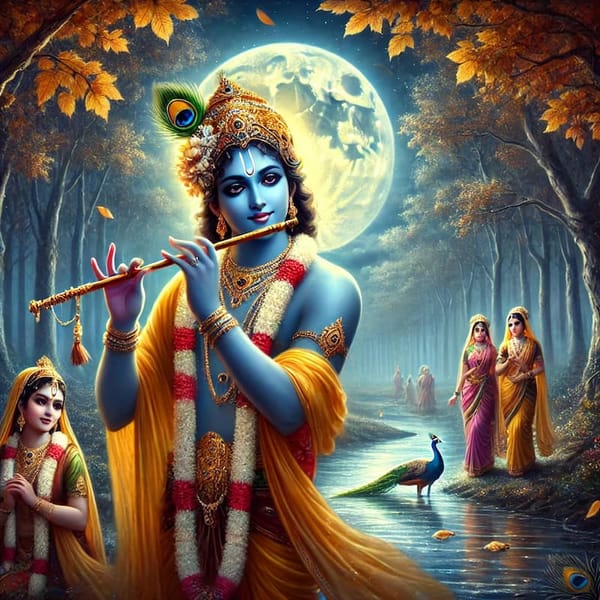
The scriptures narrate that on this radiant night, the sound of Krishna’s flute reverberated through Vrindavan, calling out to the Gopis. These cowherd maidens, who were deeply devoted to Krishna, dropped everything—family duties, societal norms, and worldly concerns—and rushed to Him. Drawn by the irresistible melody, they reached the forest of Vrindavan, where Krishna awaited them.

There, under the silver light of the full moon, Krishna expanded Himself into countless forms so that each Gopi felt He was dancing with her alone. Radha Rani, the supreme devotee and embodiment of divine love, was at the center of this dance. The Raas was not a worldly gathering but an expression of the highest form of Bhakti, where souls surrender completely to God, seeking nothing in return but the joy of divine union.
The Raas Leela is described in sacred texts like the Bhagavata Purana and has inspired countless saints, poets, and devotees throughout centuries. It stands as a living symbol of the soul’s eternal relationship with the Divine.
Symbolism of the Raas Leela
The Raas Leela is layered with profound spiritual meaning:
- The Call of the Flute: Krishna’s flute represents the divine call—the inner yearning of the soul for God. When the soul hears this call, nothing in the material world can hold it back.
- Leaving the Worldly Behind: The Gopis’ act of abandoning their homes and duties symbolizes the soul’s courage to renounce worldly attachments for the sake of spiritual love.
- Multiplicity of Krishna: By manifesting with each Gopi individually, Krishna demonstrated that the Divine belongs wholly and uniquely to every devotee.
- Radha Rani’s Central Role: Radha represents the highest devotion, pure and unconditional love. Her presence ensures that the Raas is not merely a mystical dance, but the ultimate consummation of divine love.
- The Circle (Raas): The circle formation of the dance reflects the eternal, unbroken bond between the Divine and the soul.
Through these symbols, the Raas Leela conveys that the ultimate goal of human life is not worldly pleasure but union with God in love and devotion.

Gopi Prem: The Pinnacle of Bhakti
The devotion of the Gopis is celebrated as the purest form of Bhakti, often called Madhurya Bhav—the sentiment of loving God as one’s beloved. Unlike worldly love, Gopi Prem is devoid of selfishness. It is unconditional, unmotivated, and utterly selfless.
This is why saints often say that the Raas Leela of Sharad Purnima is not about physical attraction but about transcendental love. The Gopis did not seek anything from Krishna—no wealth, no liberation, not even recognition. They simply desired to love and serve Him.
Swami Mukundananda’s Teachings on Developing Gopi Prem
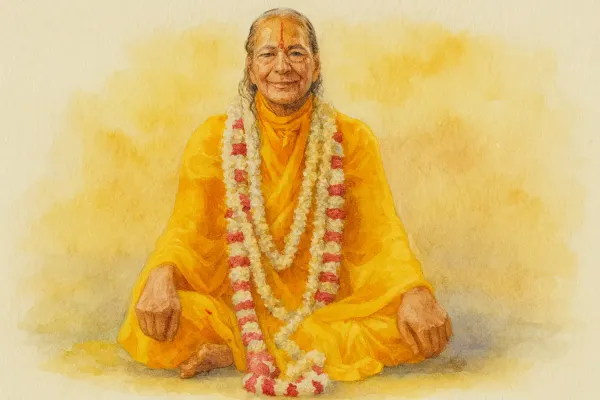
Swami Mukundananda, in his discourses on Sharad Purnima, beautifully explains how devotees can cultivate this divine sentiment of love toward God. He emphasizes that the journey of Bhakti involves three key practices:
- Shravan, Manan, Nididhyasan: First, we must listen to spiritual knowledge (Shravan). Then reflect deeply upon it (Manan). Finally, internalize it with firm conviction (Nididhyasan). This process transforms intellectual understanding into living faith.
- Faith in Three Realities: To develop divine love, we must nurture three kinds of faith:
- Faith in God (Radha Krishna as the Supreme).
- Faith in the Guru (as a realized guide who can lead us to God).
- Faith in the path of Bhakti itself, knowing that loving surrender is sufficient to attain the Divine.
- Stages of Bhakti: Swamiji explains that spiritual progress unfolds in stages:
- Shraddha (faith)
- Satsang (association with saints)
- Bhajan Kriya (devotional practices)
- Anartha Nivritti (purification of the heart)
- Nishtha (steadfastness)
- Ruchi (relish in devotion)
- Asakti (attachment to God)
- Bhav (divine emotions)
- Prem (divine love)
- The Essence of Gopi Prem: When love for God becomes so intense that one naturally sees Him as one’s beloved, this is Gopi Prem. It is not guaranteed for everyone, but as love deepens, many devotees experience this sentiment spontaneously.
In essence, Swamiji encourages us to cultivate the inner mindset of a Gopi—not literally, but in spirit. To see Krishna as the dearest beloved, to surrender the ego, and to immerse ourselves in devotion is the way to taste the sweetness of Raas Leela even in our daily lives.
Relevance of Raas Leela in Our Lives
The Raas Leela is not just a historical or mythological event; it is an eternal truth unfolding within the human heart. Each of us is a soul longing for divine union. The flute of Krishna still plays—through scriptures, saints, and the whispers of our conscience. The question is: do we hear it, and are we ready to respond like the Gopis?
When we let go of worldly attachments and direct our love to God, our life itself becomes a Raas—a dance of joy, harmony, and divine bliss.

Conclusion
Sharad Purnima reminds us of the boundless love between the soul and God. The Raas Leela of Krishna and Radha Rani is not only a sacred pastime but a map of the soul’s journey towards divine love.
By reflecting on Swami Mukundananda’s guidance, we realize that the way to participate in this eternal Raas is to cultivate faith, devotion, and purity of heart. Gopi Prem is the highest ideal, where we love God not for what He gives us, but simply because He is our eternal beloved.
On this Sharad Purnima, may we resolve to awaken that love in our hearts and join the divine dance of Raas within.
For a related reflection, read: Janmashtami 2025 – Raas Leela of Radha and Krishna.
FAQs on Sharad Purnima and Raas Leela
Q1. What is the significance of Sharad Purnima and When is it in 2025?Sharad Purnima is considered the brightest full moon of the year, associated with prosperity, health, and spiritual awakening. It is especially significant because of the Raas Leela of Krishna with Radha and the Gopis. It is on October 6th in the year 2025.
Q2. What is Raas Leela?Raas Leela is the divine dance performed by Shree Krishna with Radha and the Gopis on Sharad Purnima night. It symbolizes the union of the soul with God in selfless love.
Q3. Why did Krishna dance with all the Gopis at once?Krishna manifested Himself with each Gopi to show that God gives His complete love to every devotee, as if they were the only one.
Q4. What does Radha Rani represent in Raas Leela?Radha Rani represents the highest form of Bhakti—pure, unconditional love for God. She is the guiding force of devotion in Raas Leela.
Q5. How can we experience Raas Leela in our lives?By cultivating love for God, practicing Bhakti, and following the teachings of saints, we can spiritually experience the bliss of Raas Leela in our hearts.
Q6. What is Gopi Prem, and how can one develop it?Gopi Prem is the selfless love the Gopis had for Krishna, loving Him as their dearest beloved. Swami Mukundananda explains that it develops through faith, purification of the heart, devotional practice, and seeing God as our ultimate beloved.
Call to Action:
Subscribe to Swami Mukundananda's YouTube channel for regular insights, teachings, and devotion that will guide you in your quest for inner transformation and spiritual awakening.