
Introduction: The Breakthrough That Arrived During the Pause
Henri Poincaré was one of the greatest mathematicians of his era. In the late nineteenth century, he had been wrestling intensely with a difficult mathematical problem involving what came to be known as Fuchsian functions.
He worked. He calculated. He tried different approaches.
And then he stopped.
Poincaré left his desk to go on a geological excursion. The change of scenery pulled his conscious attention completely away from mathematics. Then, while stepping onto an omnibus in Coutances, something remarkable happened.
The solution suddenly appeared.
Poincaré later described the moment as arriving without anything in his immediate thoughts seeming to prepare the way for it. He had not been sitting at his desk. He was not calculating. He was not consciously trying to solve the problem.
The breakthrough arrived during the pause.
Later, another mathematical insight came to him after he had stepped away again, this time while spending several days by the seaside and thinking about something else.
Poincaré's experiences became famous examples in the study of creativity because they challenge one of our deepest assumptions about achievement:
More effort is not always better effort.
We tend to believe that when we encounter a difficult problem, the answer is to push harder. Think longer. Work later. Try one more approach.
Sometimes that is exactly what we should do.
But research on what psychologists call the incubation effect suggests something surprisingly different: after working seriously on a problem, temporarily stepping away from it can sometimes improve our ability to solve it when we return.
This is the Science of Sacred Pauses.
And when we place that science alongside spiritual wisdom, an even deeper possibility emerges.
Perhaps a pause is not necessarily empty time.
Perhaps some of the most important things happen precisely when we stop trying to fill every moment.
What Is the Science of Sacred Pauses?

The Science of Sacred Pauses begins with a simple observation: the conscious mind does not always produce its best work through uninterrupted effort.
Psychologists have studied the incubation effect for decades. The basic process is straightforward. We work on a problem, reach an impasse, temporarily set it aside, and then return later. Under the right conditions, that interval can increase the likelihood of fresh insight.
A major 2009 meta-analysis by Ut Na Sio and Thomas Ormerod examined decades of research on incubation and found an overall positive effect on problem-solving, although the size of the benefit depended on the kind of problem and what people did during the break. Divergent-thinking tasks, which require generating creative possibilities, showed particularly meaningful benefits. That nuance matters.
The Science of Sacred Pauses does not tell us that every break will magically produce an "aha!" moment. Nor does it mean hard work is unnecessary. In fact, Poincaré's story reveals the opposite. The pause came after intense engagement with the problem.
The mind first had something to incubate.
The pattern often looks something like this:
- Preparation: We focus deeply on a problem and explore possible solutions.
- Incubation: We temporarily step away and turn our attention elsewhere.
- Illumination: A new possibility or insight may emerge.
- Verification: We return to deliberate thinking and test whether the insight actually works.
The pause, then, is not the opposite of productive work.
Sometimes it is part of productive work.
Why Can Stepping Away Help Us Think Better?
Researchers still debate precisely why incubation works, and there may be more than one mechanism.
One possibility is that stepping away loosens mental fixation. When we work on something for a long time, we can become trapped inside the same assumptions and repeatedly follow pathways that are not leading anywhere.
We are thinking harder—but not necessarily differently.
A pause interrupts that cycle.
When we return, we may be better able to see possibilities that our previous fixation obscured.
Another possibility involves new associations. Creativity often depends upon connecting ideas that initially seem unrelated. When intense conscious control relaxes, the mind may become freer to make unexpected connections.
Research also suggests that what we do during the pause matters. In one well-known study, participants who engaged in an undemanding task that encouraged mind-wandering subsequently showed greater creative improvement on problems they had previously encountered than participants assigned a demanding task, pure rest, or no break.
This gives us an important practical lesson from the Science of Sacred Pauses:
A break filled with more cognitive strain may not really be a break.
If we step away from a difficult project only to answer stressful emails, scroll rapidly through social media, or tackle another mentally demanding task, we may simply be replacing one form of cognitive load with another.
Sometimes the mind needs genuine spaciousness.
A walk.
A shower.
A quiet cup of tea.
A few moments looking out the window.
Prayer.
Meditation.
Or simply permission not to solve anything for a little while.
Why Is Pausing So Difficult for Us?
There is something almost countercultural about the Science of Sacred Pauses.
We live in a world that celebrates visible activity.
We answer emails while eating lunch. We fill quiet moments by reaching for our phones. We measure productivity through how much we accomplish, how quickly we respond, and how efficiently we move from one task to another. Even rest can become another achievement project. And underneath all of this may be an assumption:
If I am not doing something, I am wasting time.
But Poincaré's experience suggests otherwise. So does modern research. The pause is not necessarily wasted space between productive moments. It may itself be productive. And spirituality takes this insight one beautiful step deeper.
Science asks:
What can happen when we give the mind some space?
Bhakti asks:
What do we do with that space?
Swami Mukundananda's Wisdom: Creating Space Within

Swami Mukundananda teaches that our ordinary mind is seldom still. It moves constantly among desires, sensory impressions, memories of the past, plans for the future, worries, and distractions.
Meditation gathers these scattered energies.
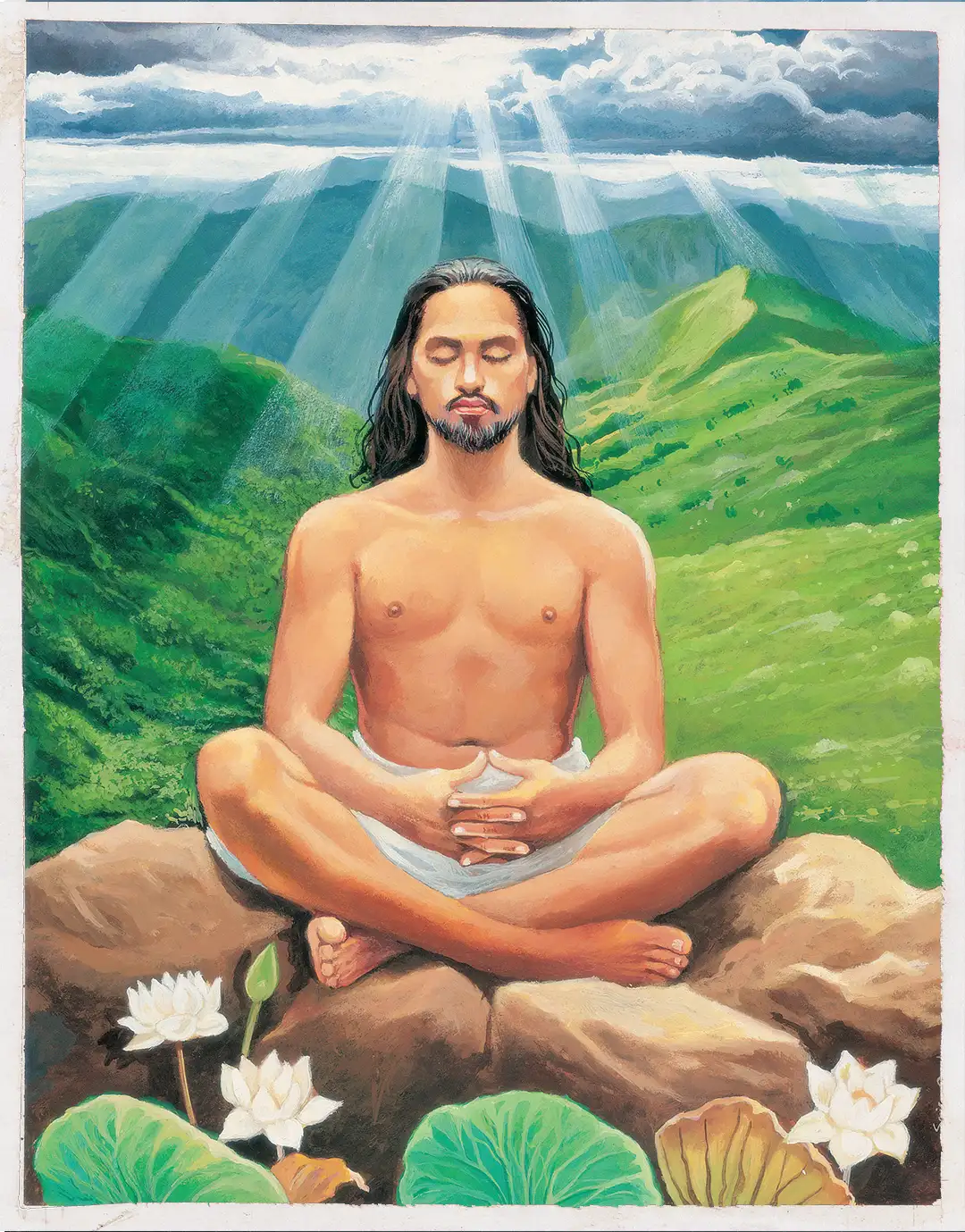
In his teachings on Dhyan, Swamiji describes meditation not simply as relaxation or the absence of thought, but as the deliberate training of the mind toward a chosen object of contemplation.
"Dhyan is the practice of absorbing the mind in its chosen object of contemplation."
This distinction is crucial.
The spiritual pause is not merely about thinking about nothing.
It is about creating space for something higher.
Through sadhana, contemplation, prayer, and meditation, we temporarily withdraw some of our attention from the relentless noise of the external world and redirect the mind inward—and ultimately toward God.
We pause not because nothing matters.
We pause because something deeper matters.
The Science of Sacred Pauses teaches that loosening our grip on a problem can create room for insight.
Bhakti teaches that loosening our grip on worldly noise can create room for God.
The Bhagavad Gita: Where Should the Wandering Mind Return?
The Bhagavad Gita offers a beautiful teaching on precisely this process of redirecting the restless mind.
यतो यतो निश्चरति मनश्चञ्चलमस्थिरम् ।
ततस्ततो नियम्यैतदात्मन्येव वशं नयेत् ॥ 26॥
yato yato niśhcharati manaśh chañchalam asthiram
tatas tato niyamyaitad ātmanyeva vaśhaṁ nayet
BG 6.26: Whenever and wherever the restless and unsteady mind wanders, one should bring it back and continually focus it on God.
This verse reveals something important about spiritual stillness.
The goal is not to become frustrated because the mind wanders. The mind will wander.
The practice is the returning. Again and again, we gently bring the mind away from worldly absorption and toward the Divine.
Swamiji's commentary on this verse emphasizes that meditation requires repeated practice. Each time the mind moves outward, we bring it back toward God. Over time, its attachment to the Divine strengthens.
The sacred pause therefore becomes something much richer than inactivity.
It becomes a practice of reorientation.
From Incubation to Contemplation
There is a beautiful parallel here between psychology and spirituality, even though their goals are different.
In psychological incubation, we stop forcing the conscious mind down the same familiar pathway.
In spiritual contemplation, we stop allowing the mind to be endlessly pulled along the same familiar worldly pathways.
Both involve interrupting automatic mental momentum. But spirituality asks us to go further. Once we create that space, what will we place within it?
Swami Mukundananda's teachings emphasize chintan, or deep reflective thought. Spiritual wisdom is not meant merely to be heard and forgotten. We contemplate it repeatedly until it begins shaping our convictions, attitudes, and behavior.
A sacred pause can therefore become a place where knowledge turns into wisdom.
Instead of immediately reaching for another distraction, we might sit with a single divine thought.
A verse.
A teaching.
A quality of God.
A moment of gratitude.
A prayer.
Sometimes transformation does not require more information.
It requires enough stillness for the wisdom we already possess to sink deeper.
When Rest Is Not Really Rest
The Science of Sacred Pauses also invites us to rethink what we call a "break."
Imagine finishing two intense hours of work and immediately opening your phone.
Within seconds, your mind is processing messages, headlines, images, notifications, and other people's lives. Technically, you have stopped working. Mentally, you may not have paused at all. This is why a sacred pause needs some openness within it.
That does not mean every break must become formal meditation. The incubation research itself suggests that an undemanding activity can sometimes be particularly helpful for creative thought.
But it does mean we might become more intentional about protecting small pockets of mental space. Instead of automatically filling every pause, we can occasionally allow ourselves to experience one. That might mean walking without a podcast. Eating without scrolling. Sitting quietly for five minutes before the next meeting. Looking at the sky. Taking a few conscious breaths. Repeating the name of God. Or simply noticing what the mind does when we stop feeding it constant stimulation.
These small pauses may seem insignificant. But a life is built from small moments.
And what we repeatedly do with those moments shapes the quality of our inner world.
Science and Spirituality: The Wisdom of the Pause
Science and spirituality approach the pause from different directions.
Poincaré wrote of his travels: "The incidents of the travel made me forget my mathematical work."
Yet in that very interval, one of his breakthroughs appeared.
Swami Mukundananda teaches:
"Dhyan is the practice of absorbing the mind in its chosen object of contemplation."
One perspective reveals the value of temporarily releasing conscious effort.
The other reveals the value of intentionally directing consciousness toward the Divine.
Together, they offer a beautiful unified insight:
Science teaches us when to stop pushing.
Spirituality teaches us where to turn when we stop.
A pause is not necessarily empty. Sometimes it is where an old mental pattern loosens. Where a new association emerges. Where an answer quietly surfaces. Where we finally hear something our busyness was drowning out. Or where, in the silence beneath all our activity, we remember God.
Five Ways to Create More Sacred Pauses
The Science of Sacred Pauses becomes most meaningful when it changes the way we actually live. We do not need hour-long retreats throughout the day. Small shifts can create surprising amounts of inner spaciousness.
1. Step Away When You Are Truly Stuck
If you have worked seriously on a problem and find yourself repeating the same unsuccessful approaches, give yourself permission to stop temporarily.
A short walk or another low-demand activity may be more useful than another hour of frustrated effort.
2. Protect Some Breaks From Digital Noise
Not every empty moment needs to be filled with a screen.
Try leaving a few minutes deliberately unoccupied and notice what arises.
3. Create a Daily Spiritual Pause
Set aside time for sadhana, meditation, prayer, scriptural contemplation, or remembrance of God.
Swamiji emphasizes the importance of daily practice because spiritual transformation develops through consistency, not occasional intensity.
4. Contemplate One Teaching Deeply
Instead of continually consuming more wisdom, pause over one insight.
Ask: What would change if I actually lived this today?
5. Let Silence Be Something, Not Nothing
We often experience silence as an absence that must be filled.
Try experiencing it instead as a presence—an opening in which awareness, wisdom, gratitude, and devotion can deepen.
Key Takeaways: The Science of Sacred Pauses
The Science of Sacred Pauses reminds us that relentless effort is not always the path to our best thinking.
Research on the incubation effect suggests that temporarily setting aside a problem can sometimes enhance later problem-solving and creativity, particularly when the break does not impose heavy cognitive demands. Poincaré's famous mathematical breakthroughs offer a vivid historical example of insight arriving after intense work had been followed by genuine disengagement. But spirituality reveals another dimension. A pause does not merely give the brain room to reorganize. It gives us room to reorient. Through meditation, contemplation, and sadhana, we can redirect the restless mind away from constant worldly absorption and toward God.
So perhaps the deepest lesson is not simply: Take more breaks.
It is: Become more intentional about what your pauses are for.
Final Reflection: Leave Something Open
We spend so much of life filling things.
We fill our calendars.
We fill silence with conversation.
We fill waiting rooms with our phones.
We fill uncertainty with plans.
We fill our minds with information.
And when a problem refuses to yield, we often fill even more time with effort.
But Henri Poincaré discovered something remarkable.
He worked intensely.
Then he walked away.
And while he was no longer chasing the answer, something within him was still moving toward it.
The Science of Sacred Pauses reminds us that sometimes the most productive thing we can do is stop trying for a little while.
And Bhakti offers an even deeper invitation.
When we quiet some of the noise within us, we create space not merely for another idea—but for remembrance of the Divine.
So the next time we are stuck, perhaps we do not always need to push harder.
Maybe we walk.
Maybe we sit quietly.
Maybe we meditate.
Maybe we contemplate one gem of divine wisdom.
Maybe we simply stop filling the space.
Because a pause is not necessarily empty. It may be where the mind reorganizes. Where wisdom emerges. Where the heart becomes receptive. Where we finally become quiet enough to listen. We spend so much of life trying to fill every moment. Perhaps some moments are sacred precisely because... we leave them open.
Frequently Asked Questions About the Science of Sacred Pauses
What is the incubation effect?
The incubation effect refers to improved problem-solving or creative performance after a person temporarily stops consciously working on a problem and returns to it later. Research suggests the effect is real but varies depending on the task, preparation, and type of activity performed during the break.
Does taking a break really improve creativity?
It can. A 2009 meta-analysis found an overall positive incubation effect, particularly for divergent-thinking tasks. Research has also found that certain low-demand activities that permit mind-wandering can facilitate creative incubation. However, taking a break does not guarantee insight.
What should I do during an incubation break?
Research suggests that highly demanding secondary tasks may reduce incubation benefits. Walking, doing a simple routine activity, or engaging in another low-demand task may be useful. The goal is not necessarily to force yourself to "think creatively" during the break.
Is meditation the same thing as the incubation effect?
No. They should not be conflated. Incubation is a psychological phenomenon related to problem-solving and creativity. Meditation, or dhyan, has a different and much deeper spiritual purpose in Swami Mukundananda's teachings: training and purifying the mind and ultimately attaching it to God. The two ideas complement one another around the value of mental space, but they are not the same process.
What does the Bhagavad Gita teach about a wandering mind?
Bhagavad Gita 6.26 teaches that whenever the restless mind wanders, we should repeatedly bring it back and focus it upon God. Swami Mukundananda explains that this returning is part of the practice itself; gradually, repeated effort strengthens the mind's attachment to the Divine.
How can I create sacred pauses in a busy life?
Start small. Protect a few moments from digital stimulation, take an undistracted walk, sit quietly between activities, contemplate a spiritual teaching, or establish a regular meditation and sadhana practice. The goal is not simply to "do nothing," but to create intentional space for clarity, reflection, and devotion.
Call to Action: Create Space for Something Higher
If this exploration of the Science of Sacred Pauses resonated with you, consider going beyond simply giving your mind a break and discovering what can happen when you intentionally turn that mind toward the Divine.
Swami Mukundananda offers extensive teachings on meditation, mind management, contemplation, and Bhakti—including practical guidance for learning how to quiet, train, and elevate the mind.
Subscribe to Swami Mukundananda on YouTube
You may also enjoy Swamiji's teaching featured in the original Tidbit:
 Swami Mukundananda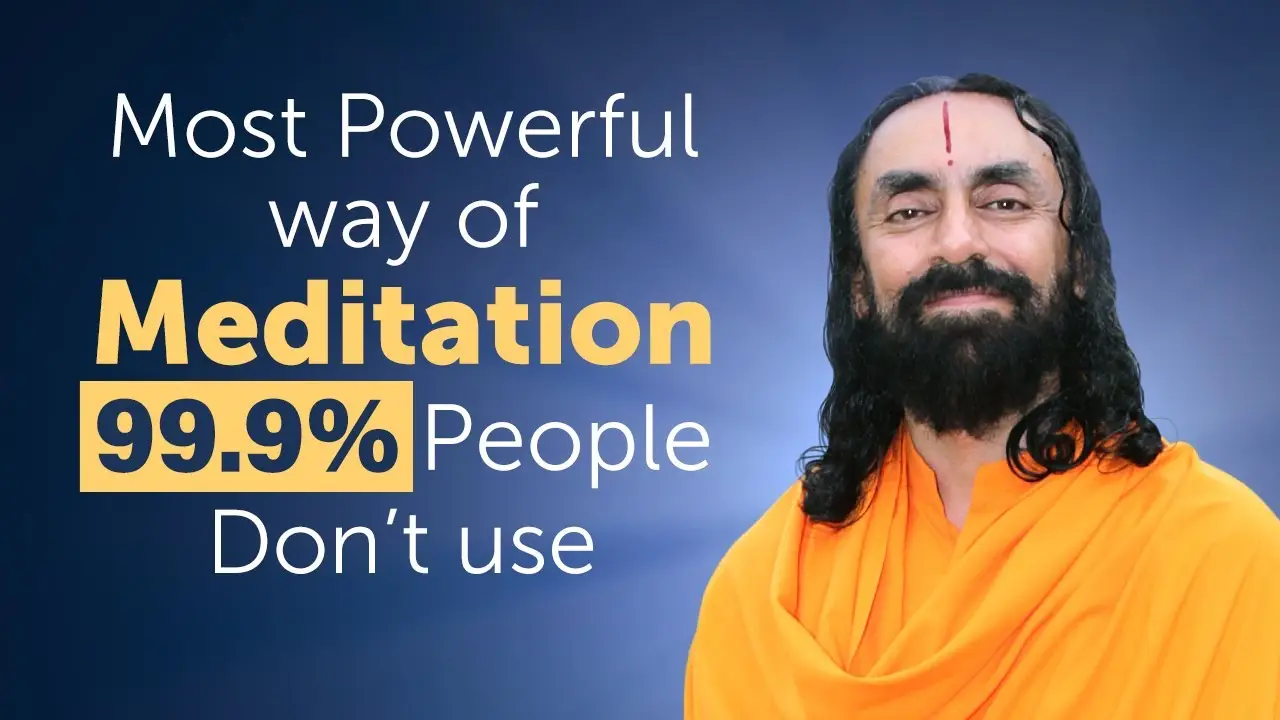
Because sometimes we need to stop pushing long enough for a new idea to emerge.
And sometimes we need to become quiet enough for something infinitely greater:
to remember God.