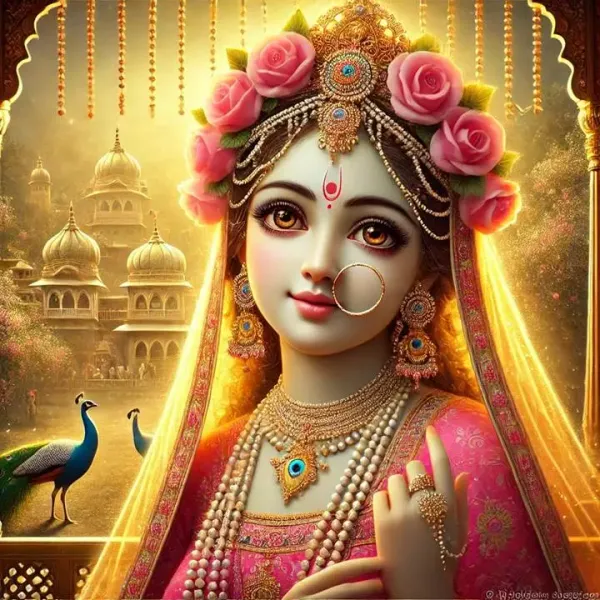
Radha Ashtami marks the birth anniversary of Goddess Radha, Lord Krishna's chief consort in Hindu tradition. This most important festival comes fifteen days after Krishna Janmashtami and will be celebrated on Sunday, August 31, 2025 .
Radha Rani has a special place in Vaishnavism. She is revered as Krishna's eternal consort and worshiped for her unconditional love and steadfast dedication . Hindu mythology tells us that Radha was born in Barsana village near Mathura more than 5,000 years ago . Temples of all traditions, including Gaudiya Vaishnavism, Nimbarka Sampradaya, and Pushtimarg, celebrate Radhashtami .
Devotees perform special rituals at specific times during this auspicious celebration. The Ashtami Tithi starts at 10:46 PM on August 30, 2025, and ends at 12:57 AM on September 1, 2025. The Madhyahna Puja Muhurat, the most auspicious time for worship, runs from 11:05 AM to 01:38 PM, lasting 2 hours and 33 minutes . The festival has unique traditions. Devotees decorate Radha Krishna idols completely with flowers and get a rare chance to receive darshan of Radha's feet .
Radha Ashtami 2025: Date, Tithi, and Puja Muhurat
The exact date and timing of Radha Ashtami are the foundations of celebrating the sacred feminine energy in Hindu tradition. Devotees need to know specific muhurtas and tithi details to get maximum spiritual benefits from their rituals.
When is Radha Ashtami in 2025?

Radha Ashtami in 2025 will be celebrated on Sunday, August 31. This revered occasion is observed annually on the eighth day (Ashtami) of the Shukla Paksha—the bright phase of the moon—in the Hindu month of Bhadrapada. According to the lunar calendar, it naturally follows Krishna Janmashtami by fifteen days.
The timing has deep symbolic meaning that shows the sacred bond between Radha and Krishna. Lord Krishna's birthday starts a two-week period of devotion, and Radha Ashtami completes this spiritual journey by honoring his eternal consort. Temples dedicated to Radha-Krishna in places like Mathura, Vrindavan, and Barsana create beautiful decorations and special programs on this day.
Madhyahna Puja Muhurat and its importance
The Madhyahna Puja Muhurat is considered the most auspicious period for carrying out Radha Ashtami rituals. In 2025, this sacred window spans 2 hours and 33 minutes—from 11:05 AM to 01:38 PM—during which devotees are encouraged to perform their main worship.
According to Hindu cosmological understanding, this time holds particular significance. Madhyahna Kaal aligns with the midday period in the traditional Hindu division of time and enhances the spiritual bond with Goddess Radha. The divine energy peaks during this period.
Devotees usually perform these activities during this muhurat:
- Abhishek (ritual bathing) of Radha's idol
- Offering of special bhog (food offerings)
- Recitation of dedicated mantras and stotras
- Performance of aarti with special lamps and flowers
Rituals performed during this muhurat bring the most spiritual rewards, though devotional activities continue throughout the day.
Ashtami Tithi start and end timings
According to lunar calculations, the Ashtami Tithi marks the height of Radha Ashtami’s spiritual energies. The Ashtami Tithi begins at 10:46 PM on August 30, 2025, and lasts until 12:57 AM on September 1, 2025.
These tithi timings work with the Hindu lunar calendar system. Each tithi usually lasts about 24 hours but can vary based on astronomical calculations. Traditional jyotish principles and modern astronomical calculations help astrologers determine the exact start and end times.
Most people will celebrate on August 31, but traditional practitioners see the entire Ashtami Tithi as spiritually significant. Some rituals might start on August 30 evening and continue until early September 1, following the complete tithi period instead of just the calendar date.
It’s important to note that these timings are based on the standard time zone of New Delhi, India. People living in other time zones should check their local panchang (Hindu almanac) to get the right timings for their area, especially to observe the Madhyahna Muhurat correctly.
Spiritual Significance of Radhashtami

Radha Ashtami's spiritual essence goes way beyond the reach and influence of a birthday celebration. This sacred day pays tribute to the feminine energy that completes cosmic wholeness and helps devotees connect deeply with spiritual realization.
Radha as the soul of Lord Krishna
Hindu scriptures affirm that Radha embodies the very essence of Krishna. The Skanda Purana portrays Radha as Krishna’s soul, expressing the idea that “Radha is Krishna and Krishna is Radha.” Ancient writings use vivid analogies such as “milk and its whiteness” or “fire and its heat” to convey their inseparable bond.
Vaishnava traditions explore this theological perspective in depth. Radha represents Krishna’s hladini shakti (the bliss-bestowing energy)—the core force through which divine love manifests across creation. She is understood as his internal divine power, essential to his spiritual wholeness.
Without Radha, Krishna is seen as incomplete. Sacred texts refer to Krishna as Poonam Purushottam Brahma (the fully perfect Supreme Being), yet emphasize that even he requires Radha’s presence. Their relationship surpasses human comprehension—both unified as one and yet distinct as two, allowing divine love to flow in its purest form.
Symbol of divine love and devotion
Radha is revered as the highest embodiment of bhakti (devotion) in Hindu thought. Her unwavering commitment to Krishna serves as a supreme example for anyone aspiring to form a spiritual bond with the divine. Radha's love transcends ordinary emotion and reflects a level of devotion free from material attachments.
This form of divine love holds profound spiritual depth. Scholars refer to Radha’s devotion as Madanakhya Mahabhav—a state of ultimate, selfless love. She represents the soul’s deep longing for union with the divine and acts as a guiding force for devotees seeking closeness to Krishna.
Radha Ashtami offers an opportunity to contemplate this pure form of devotion. Spiritual leaders emphasize that “participating in Radha Ashtami is a valuable way of earning devotion and submission to the Lord.” Devotees honor her divine love to develop qualities like surrender, selflessness, and focused spiritual realization.
Why Radha is worshiped as a Hindu goddess
Radha holds an exalted position in Hindu theology that justifies her worship as a supreme goddess, though she first appeared as a gopi (cowherd girl). Her divine status rests on several deep theological foundations:
Divine Origin: Radha is considered an incarnation of Goddess Lakshmi and the embodiment of Mula Prakriti (primordial energy). She is revered as Jagat Janani (Mother of the Universe), symbolizing the creative feminine force behind all existence.
Theological Centrality: In several Vaishnava traditions such as the Nimbarka Sampradaya and Gaudiya Vaishnavism, Radha is viewed as theologically inseparable from Krishna. Together, they are believed to represent the complete expression of the Absolute Truth.
Spiritual Authority: Radha is regarded as having spiritual supremacy, even over Krishna himself. Though Krishna is worshipped throughout countless universes, he lovingly serves Radha—pressing her divine feet and attending to her needs—demonstrating her elevated spiritual position.
Radha worship offers a powerful path for spiritual aspirants. Her name in Sanskrit translates to “prosperity,” reflecting the spiritual richness she bestows upon her devotees. Those who revere her are guided toward pure love, inner purification, and ultimate liberation.
The Divine Birth of Radha Rani: Mythology and Origins

The story of Radha Rani's earthly appearance weaves a captivating tale that serves as the foundation for Radha Ashtami celebrations throughout India. Hindu texts share various accounts of her miraculous birth, each emphasizing her unique position in the cosmic order.
The story of King Vrishabhanu and Queen Kirtida
Many devotees believe that Radha took birth as the daughter of King Vrishabhanu and Queen Kirtida in Barsana. In a previous life, the couple was known as King Suchandra and Queen Kalavati, who were blessed by Lord Brahma with the promise that Goddess Lakshmi would incarnate as their daughter during the Dvapara Yuga. One day, while King Vrishabhanu was engaged in his midday rituals at the Yamuna River, he witnessed a wondrous sight—a radiant golden lotus drifting toward him.
Drawn by the flower’s divine glow, he discovered a beautiful infant girl resting inside its petals. This miraculous child was Radha, who, according to some traditions, was born in Raval, a small village near Gokul in present-day Uttar Pradesh. Another version of the story says that Lord Brahma appeared before King Vrishabhanu, revealed the child’s divine origin, and instructed him to raise her with great reverence.
Radha's first sight of Krishna

Radha’s birth tale is unique because she was found with her eyes gently closed. During Radha Ashtami, devotees recall how the infant Radha did not open her eyes to view the material world. Her parents became increasingly concerned, fearing their child might remain blind forever.
Their worries eased when Nanda Maharaja and Yashoda visited King Vrishabhanu’s home with their young son, Krishna. As Krishna came near Radha’s cradle and touched her, she opened her eyes for the very first time. This sacred moment fulfilled a divine vow—Krishna had promised Radha that, during their earthly pastimes, his face would be the first she would ever behold.
Scriptural references from the Padma and Skanda Puranas
Radha’s divine origin is clearly emphasized in several sacred scriptures. According to the Padma Purana, she appeared to Vrishabhanu as still, sightless, and unresponsive until the sage Narada offered spiritual insight. In Chapter 71 of the Patala Khanda, the Purana recounts Narada’s visit to Vrishabhanu’s residence, where he instantly recognized Radha’s divinity.
The Skanda Purana describes Radha as the foremost among Krishna’s 16,000 gopis. The Brahma Vaivarta Purana identifies her as the embodiment of Mūlaprakriti—the primal source behind all physical creation. These ancient texts affirm that Radha’s appearance was not a typical birth, but rather the manifestation of divine feminine power entering the world to support Krishna’s cosmic leela.
How to Celebrate Radha Ashtami at Home and Temples
Radha Ashtami celebrations fill homes and temples with sacred rituals that honor the divine feminine energy. Devotees throughout India follow specific traditions to connect with Radha Rani's presence.
Morning rituals and preparations
Devotees commence the celebration during Brahm Muhurat, the early pre-dawn hours. The ritual begins with a sacred bath, often using a mixture of Gangajal (Ganges water) and regular water for spiritual purification. They wear clean or new clothes, usually in yellow or pink colors that represent Radha. Their homes and puja rooms need to be spotless. This physical cleanliness mirrors the pure mindset needed for true devotion.
Decorating the altar and offering bhog
Devotees create a dedicated altar at home featuring images or idols of Radha and Krishna. They decorate it with fresh flowers, with the lotus holding special significance for Radha. After being ritually bathed in panchamrit—a sacred blend of milk, yogurt, honey, sugar, and ghee—the idols are placed on wooden platforms. The deities are then dressed in elegant clothing, adorned with jewelry, and draped in floral garlands.
Food offerings are a central part of the celebration. In temples across Vrindavan and Barsana, the elaborate Chhappan Bhog—a feast of 56 different dishes—is prepared. At home, devotees cook traditional sweets such as malpua, kheer, and panjiri, along with seasonal fruits and other festive foods.
Bhajans, kirtans, and Raslila performances
Devotional songs and cultural performances help set a deeply spiritual mood. Bhajans honoring Radha are sung with devotion. “Radha Naam Param Sukhdayi” and “Mithe Ras Se Bharyo Radha Rani Lage” are among the most cherished renditions. Many communities also stage Raslila—traditional dance dramas that portray the divine love shared between Radha and Krishna.
Special darshan of Radha's feet
Radha Ashtami offers a unique opportunity for devotees to have darshan of Radha’s lotus feet. On this sacred day alone, her feet—normally kept covered throughout the year—are unveiled. At the Radha Rani Temple in Barsana, this revered moment takes place around midnight. Priests gently reveal her feet while laying out flower chaddars (sacred sheets), as the temple resonates with the sound of bells and drums in joyous celebration.
Radha Ashtami Vrat Vidhi and Mantras
Radha Ashtami observances center around fasting and ritual worship that create a direct connection with the divine feminine energy.
Types of fasting: Nirjala, Phalahar, Satvik
Devotees observe different levels of fasting based on their individual strength and devotion. Nirjala Vrat is considered the most intense form of spiritual discipline, involving complete abstinence from both food and water. Phalahar Vrat offers a moderate approach, allowing consumption of fruits, milk, and nuts to maintain energy. Satvik Vrat includes eating simple vegetarian meals before sunset and emphasizes inner purification through mindful eating.
Step-by-step puja vidhi
The day starts in the early hours before sunrise with a ritual bath. The area designated for worship is thoroughly cleaned before setting up a wooden platform. Devotees perform an abhishek of the Radha-Krishna idols using panchamrit—a sacred mixture of milk, yogurt, honey, ghee, and sugar. The deities are then dressed in elegant clothes, adorned with jewelry and decorated with fresh flowers. A cow ghee diya is lit to sanctify the space, and offerings of seasonal fruits, sweets, and blossoms are placed before the altar. The ritual begins with the proper chanting of mantras to invoke the divine presence.
Powerful mantras to chant on Radhashtami
The Radha Gayatri Mantra is regarded as the primary chant for this occasion: “Om Vrashbhanujaye Vidmahe, Krishnapriyaye Dhimahi, Tanno Radha Prachodayat.” Another widely recited mantra is “Om Hreem Shri Radhikaye Namah.” Devotees are encouraged to repeat each of these mantras 108 times during their prayer sessions.
Breaking the fast and post-puja rituals
The fast is traditionally concluded in the evening, once all worship rituals have been completed. Devotees begin by partaking of Radha Rani’s prasad as the first act of breaking the fast. This sacred offering is then shared with family members and close friends. As part of the concluding rituals, devotees may also offer food to Brahmins or engage in acts of service like feeding cows.
Conclusion
Radha Ashtami ranks among the most important celebrations in Hindu tradition. This sacred festival honors the divine feminine energy of Goddess Radha. Devotees throughout India will celebrate on August 31, 2025, with heartfelt prayers, joyful festivities and meaningful rituals. The celebration goes beyond religious duties and represents a deep spiritual bond with Lord Krishna's divine consort.
Radha and Krishna's unique relationship shows the purest form of devotion. Their cosmic union symbolizes perfect harmony between the soul and divine consciousness. Krishna represents the supreme deity, yet Radha holds an equally exalted position. She embodies his essence - they remain as inseparable as "milk and its whiteness."
Families prepare their homes and altars with great care on this auspicious day. They offer special bhog, sing devotional bhajans, and maybe even witness the rare darshan of Radha's lotus feet. The Madhyahna Puja Muhurat from 11:05 AM to 01:38 PM provides the most spiritually powerful time to perform these devotional activities.
Radha Ashtami is a chance for devotees to engage in deep spiritual reflection. This festival reminds us that true devotion needs complete surrender, selflessness, and absolute focus - qualities that Radha embodied perfectly. Her divine love sets the spiritual standard that all devotees can work toward.
This sacred celebration connects today's worshippers with ancient traditions that span thousands of years. These sacred rituals bridge the gap between daily life and the eternal spiritual realm. The special day reminds us that divine love remains the strongest force in spiritual practice. It elevates consciousness and brings devotees closer to ultimate realization.
Call to Action
Attend Radha Ashtami Celebrations at Radha Krishna Temple of Dallas
FAQs
Q1. How can I celebrate Radha Ashtami at home?
To celebrate Radha Ashtami at home, wake up early, take a holy bath, and clean your puja space. Set up an altar with Radha-Krishna idols, decorate it with flowers, and offer bhog (food offerings). Sing devotional songs, recite mantras, and observe a fast according to your capacity. Break the fast in the evening after completing all rituals.
Q2. What is the spiritual significance of Radha Ashtami?
Radha Ashtami celebrates the divine feminine energy embodied by Goddess Radha. It symbolizes the perfect harmony between the soul and divine consciousness, exemplifying the highest form of devotion. This day reminds devotees that true spiritual love requires complete surrender, selflessness, and unwavering focus.
Q3. Are there any dietary restrictions during Radha Ashtami?
Yes, it's recommended to avoid non-vegetarian food and alcohol during Radha Ashtami. Many devotees observe fasting, either partially or fully, depending on their capacity. Some may choose to consume only fruits and milk (Phalahar), while others may opt for a complete fast without food or water (Nirjala).
Q4. What offerings are considered appropriate for Radha Ashtami?
Traditional offerings for Radha Ashtami include fresh flowers (especially lotus blossoms), fruits, sweets like malpua and kheer, and other vegetarian delicacies. Some devotees prepare Chhappan Bhog (56 different food items) as an elaborate offering. Additionally, offering food to the poor or feeding cows is considered a powerful act of devotion.
Q5. When is the most auspicious time to perform Radha Ashtami rituals in 2025?
The most spiritually potent time for Radha Ashtami rituals in 2025 is during the Madhyahna Puja Muhurat, which falls between 11:05 AM and 01:38 PM. This 2-hour and 33-minute window is considered especially sacred for worshiping Goddess Radha and performing the main puja activities.