A Story of Lights and Devotion
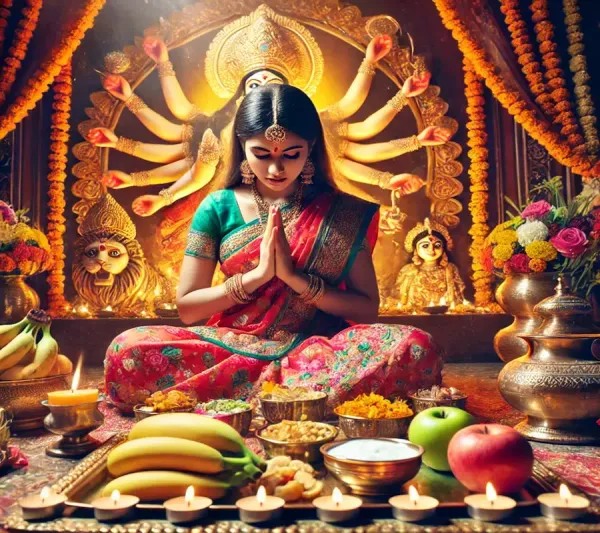
In the warm glow of a Texas autumn evening, Maya stepped out of her home in Allen, feeling a flutter of excitement and a sense of sacred anticipation. The house had been perfumed with marigolds and sandalwood all day; inside, she could hear the faint strains of drums and devotional music, echoing through her neighborhood. Tonight was the opening night of Navratri at the Radha Krishna Temple of Dallas, and Maya was determined not only to just take part but also to let the festival change something within her.
She had grown up far from India, the child of immigrants who carried with them memories of vibrant celebrations. Navratri in her Grand mother's village, nine nights illuminated by diyas, the air alive with dancing. But this year, in Dallas, she sought more than nostalgia—she wanted to feel that same power of transformation, to bring her heart closer to the Divine, to renew her faith in her capacity for devotion, for inner discipline, for community.
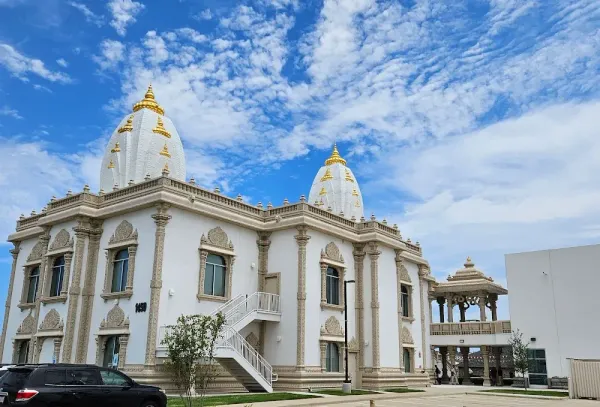
As Maya walked along the path leading into the temple grounds, she saw scores of families gathering, women in bright chaniya cholis and men in kurtas, children chasing after laughter, and elders exchanging blessings. The aroma of delicious food stalls mingled with the scent of flowers as lights bordered temporary stages, tents, and vendor booths. She paused in front of the temple’s façade, its intricately carved towers gleaming in the soft dusk. Inside, priests chanted; outside, a youth Garba group began practicing the steps for the night’s dance.
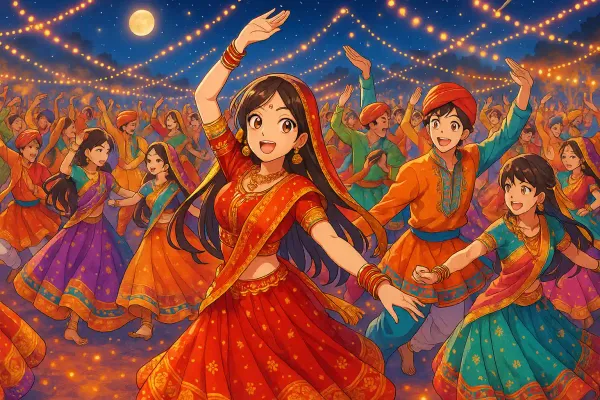
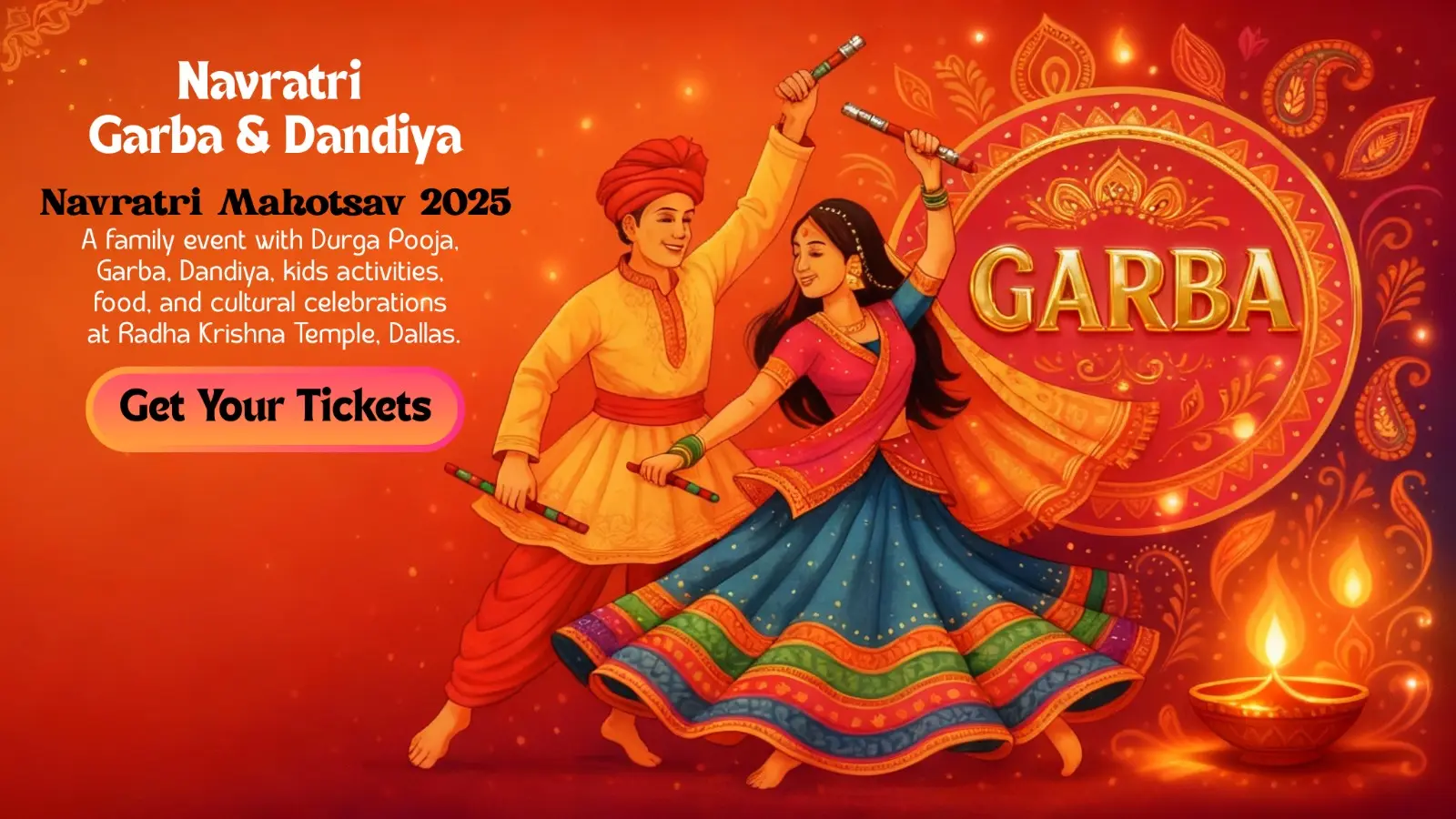
Navratri is incomplete without Garba and Dandiya, where the joyous dance celebrates Maa Durga’s victory and fills the nights with divine energy. Clad in colorful attire, devotees gather to dance, rejoice, and honor the Divine Mother in an atmosphere of joy and reverence.
At Radha Krishna Temple of Dallas, the Navratri Mahotsav 2025 offers unforgettable evenings filled with Garba, Dandiya, Durga Pooja, children’s activities, delicious food, and vibrant cultural programs. As lamps glow and music fills the air, the community comes together in a beautiful celebration of tradition, devotion, and festivity—an experience of Navratri magic like never before.
Join us at the celebration; get your tickets today!
Navratri: Meaning, Roots, and Resonance in the USA
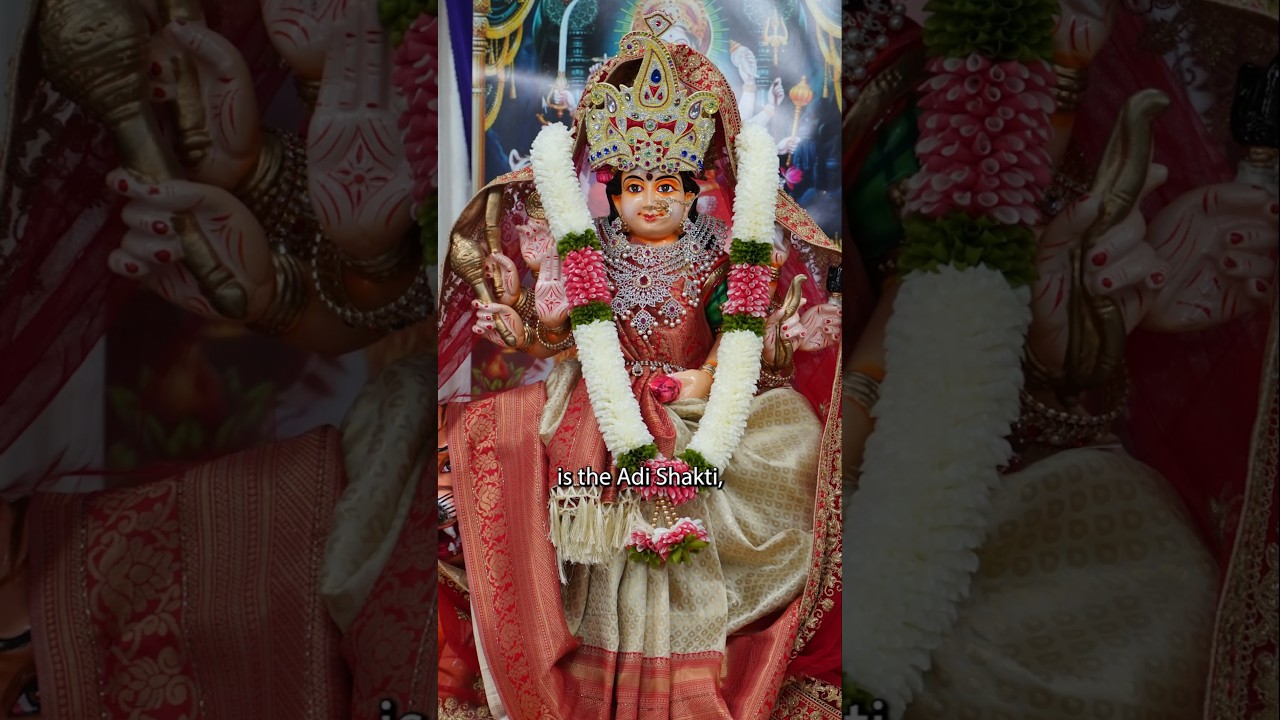
Navratri, meaning “nine nights,” is one of Hinduism’s most vibrant and widely celebrated festivals, dedicated to the worship of the Divine Feminine—Goddess Durga in her many forms. Each day honors a different aspect of the Goddess, and devotees engage in fasting, puja (ritual worship), dancing, and singing of hymns (bhajans, kirtans). The festival climaxes with Dussehra, which celebrates the victory of good over evil, symbolized by Rama’s triumph over Ravana, or Durga’s defeat of Mahishasura. Maya realized: Navratri here was more than a festival—it was a living bridge between worlds, between memory and present, between her desire for spiritual grounding and the reality of being in a new land. And she remembered something Swami Mukundananda often taught: that devotion is not in the grand gesture alone, but in the small earnest offering of one’s heart, every day—even when the world around seems distant.
In the USA, and particularly in immigrant communities, Navratri carries extra layers of meaning. It is an opportunity to preserve cultural identity, to pass on values to children born here, to gather as a community, to recreate traditions in new contexts. It is also a spiritual retreat of sorts—a chance to step outside ordinary routines, to fast or purify one’s mind and body, to devote time to spiritual practices.
Navratri 2025 in the USA
Dates & Significance
- Sharadiya (Autumn) Navratri in 2025 begins on Monday, September 22, and concludes with Vijaya Dashami / Dussehra on Thursday,
- In many places, the festival is observed over nine nights but the final tenth day (Vijaya Dashami) marks the triumph of good over evil.
Observances Across the USA
- Though Navratri is not a public holiday in the USA, many Hindu temples, cultural centers, and communities hold special events — pujas, Garba/dandiya nights, Satsangs (spiritual gatherings), fasting, devotional singing, cultural programs.
- It’s a time when diaspora communities revive traditions, especially through dance (Garba, Dandiya), communal worship, food festivals, youth and children’s programs.
- Temples also use this period to offer special pujas like Durga Puja, Ghatasthapana (Kalash establishment), and observing major days like Durga Ashtami.
Why These Dates?
- Navratri is tied to the lunar-calendar months of Ashwin (in the Hindu calendar) and the tithis (phases). The timing of the first day (Pratipada), the eighth (Ashtami), ninth (Navami), and tenth (Vijaya Dashami / Dussehra) are determined by astronomical calculations.
- Depending on locality, puja timings (muhurtas) for rituals like Ghatasthapana, Durga Ashtami, etc. are observed based on local time
Navratri 2025 at Radha Krishna Temple of Dallas: Traditions, Rituals, and Community
The Radha Krishna Temple of Dallas, located in Allen, Texas, celebrates Navratri 2025 as Navratri Mahotsav from September 21 to October 1, offering a rich blend of devotion, culture, music, dance, food, and spiritual practice.
Here are the highlights and traditions of this celebration:

Rituals and Worship
- Daily Durga Puja & Sacred Pujas
Each of the nine nights includes a Durga Puja, with special offerings, archanas, and rituals such as Sahasranam Archana (chanting Durga’s thousand names), Pushpa & Kumkum Archana, Kesar Abhishek etc. - Ghat Sthapana
The festival officially begins with Ghat Sthapana on September 22. This ritual involves invoking the divine presence of Durga by establishing a “ghat” (a symbolic structure which signifies the Goddess energy

- Durga Ashtami Havan (Sept 30)
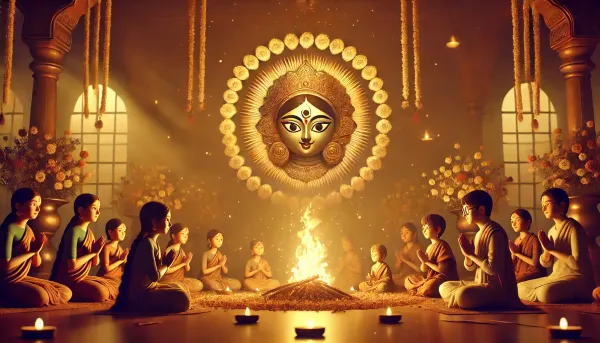
On the eighth day, devotees gather for a havan, a sacred fire ceremony, seeking blessings for protection, strength, prosperity. - Dussehra & Ravan Dahan (Oct 1)
The festival culminates with Dussehra: cultural performances (Ram Leela), Ravan Dahan (burning of the effigy of Ravana), symbolic of the triumph of Dharma over Adharma (righteousness over evil). - Garba & Dandiya Nights
Each evening from 7:00 PM, there will be Garba & Dandiya—dance events, which are some of the most joyous parts of Navratri. There are children’s and youth performances; stages set up; music; dancing under lights; everyone invited to wear traditional attire.

- Garba Workshops
For those new to the dances, or to refine skills, workshops are offered (on e.g., Sept 13 and 20) before the start of Mahotsav. These teach traditional steps, Dandiya moves, rhythm, making dances accessible to all ages - Food Festival & Vendor Booths
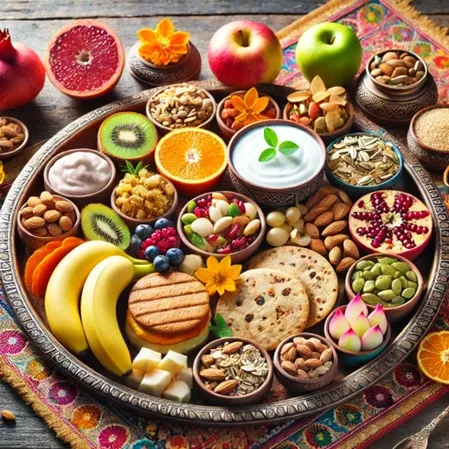
Alongside spiritual and cultural events, there will be food vendors, food stalls, festival food (vegetarian), and children’s activities—allowing families and communities to gather, socialize, and celebrate together.

- Cultural Programs, Satsangs, Bhajan Sandhyas
Evenings often include devotional music performances (bhajan, kirtan), storytelling (katha), satsangs (spiritual discourses), and cultural presentations by community members. - The Temple provides volunteer roles, opportunities for seva (service), sponsorships, and inviting participation from all—young, old, long-time devotees, newcomers.
Swami Mukundananda: Teachings, Wisdom, and Relevance to Navratri
Swami Mukundananda is the founder of the Radha Krishna Temple, established under JKYog, teaching widely on bhakti yoga, mind management, spiritual discipline, purity of heart, and the inner life.
His teachings are especially relevant during Navratri, when devotees are already turning inward, seeking purification, devotion, and transformation. A few key teachings and quotations of his bring clarity to how one might approach Navratri not just as a cultural festival, but as a time of deep inner growth.
Selected Teachings and Quotations
Overcoming Uncertainty, Cultivating Surrender: Life in a diaspora context can bring its share of uncertainties: identity, belonging, balancing cultural expectations, and being away from family. Swami Mukundananda speaks about courage and faith:
“Ultimately, the root cause of all fear is attachment… Any excessive attachment creates fear, while detachment bestows freedom.
And, in offering surrender, he says that even in adverse circumstances, progress is shown by calmness, steadfastness, and discipline. Devotion helps with that.
Managing the Mind and Inner States: One of Swamiji’s central themes is how to handle the restless mind, how to convert struggle into growth. For instance, from his book The Science of Mind Management:
“The sentiment of gratitude has a very powerful positive impact upon the mind. In fact, it is the second most positive sentiment after selfless love."
Navratri’s practices—fasting, repeating names, meditating, performing puja—are all helpful tools to change the habitual patterns of the mind.
Purification of the Heart: Swami Mukundananda often uses the metaphor of the heart as a temple:
“Make your heart a temple of God in which we bring Radha Krishna and our Gurudev alone."
Devotees allow worldly attachments (relationships, ego, materialism) to crowd that inner temple, making it impure. The festival of Navratri is ideally a time to cleanse: of negative habits, harmful attachments, anger, fear - so that God may reside more purely in one' heart.
Devotion and Love over Ritual Swami Mukundananda emphasizes that true devotion (bhakti) is measured not by external display or grand ritual, but by sincerity of heart. The quality of love manifests in how one offers even simple things. For example:
“Bhakti is not a task—it is a longing. It's the soul’s cry to return to its Source."
“Bhakti is very easy to practice. God does not need anything from us; He is attained very naturally if we can learn to love Him."
In the context of Navratri, this means that the purpose of the fasts, pujas, offerings, and dance is not display or obligation, but to awaken the feeling of love, surrender, gratitude, and purity.
How Swami Mukundananda’s Wisdom Shapes Navratri Experience
Given the richness of both the festival and Swamiji’s teachings, one can see how they inform each other in practice. Here are ways in which his guidance may deepen a devotee’s Navratri 2025 experience:
- Intentional Participation vs Passive Attendance: If one attends the daily pujas, garba nights, rituals merely out of tradition, it is enjoyment. But if one attends with awareness—choosing one’s offerings, focusing on purity of heart, being conscious of one’s thoughts—then those same rituals become transformative. Swamiji’s emphasis on ananya bhakti—devotion that is single-minded—encourages devotees to bring dedication even in small acts: wearing clean clothes, speaking kindly, offering flowers with attention, dancing not for show but in joy.
- Using Fasting, Kirtan, and Garba as Spiritual Tools: The fasts during Navratri are not simply abstentions of food; they are about self-control & purification. Swamiji’s teachings about managing the mind suggest that fasting helps calm the body, sharpen the mind, and bring attention inward. Kirtan and devotional music help evoke bhava, mood, emotional surrender; dancing Garba and Dandiya foster joy, communal energy, breaking inhibition, but also the discipline of the body.
- Community and Seva as Expression of Inner Bhakti: Serving at the food stalls, helping in volunteer roles, supporting the organization of events, becomes Seva. Swami Mukundananda views selfless service as an expression of devotion. When one works without seeking reward, dedicating the fruits to the Divine, that is spiritual progress. In the Temple’s Navratri Mahotsav, this plays out through community volunteering, collective worship, and inclusive events.
- Culmination in Dussehra as Symbolic Victory: The culminating event, Dussehra—that burning of Ravana, enactment of Ram Leela—serves as a vivid external symbol of victory over inner vices. At the same time, Swamiji reminds us that the real victories are inner: over fear, attachment, negativity, and ego. The fire of Ravana’s effigy is external; the internal fires one battles are desire, anger, and pride. Celebrating Dussehra invites devotees to reflect: What am I ready to burn away in myself, to walk away renewed?
Practical Suggestions: How One Might Enter Into Navratri 2025 Deeply
For those attending the Radha Krishna Temple in Dallas—or even celebrating Navratri elsewhere—these practices might help make the festival more than a ritual: to make it a turning point, however small.
- Set a personal intention: Before Ghat Sthapana or the first puja, spend time in silence to ask: What inner quality do I want to cultivate this Navratri. Compassion, Detachment, Patience or Strength? Let that be your guiding light.
- Choose one night to fast or partially fast mindfully: Use that evening for additional reflection or reading.
- Attend Garba Workshops: (if available) To learn not just steps but meaning—the songs, their lyrics; let dance be devotion, not performance. Radha Krishna Temple offers workshops before Navratri.
- Engage in satsang or listen to Swami Mukundananda’s discourses: To absorb a deeper understanding of Durga’s forms, of the meaning of Shakti, of stories from the Devi-Mahatmyam or Bhagavad Gita.
- Practice gratitude daily: Even if small, offering thanks for food, shelter, loved ones, in quiet moments. Swamiji singles out gratitude as a powerful sentiment.
- Volunteer or Serve: Giving time, helping others, and making the festival run for the community—these acts anchor devotion in action.
- Reflect on the inner Ravan: After Dussehra, consider what negative tendency you want to burn away in yourself: anger, envy, fear, or laziness. Make a plan to continue working on it beyond the festival.
Heart of the Matter: What Navratri 2025 Offers
Navratri 2025 at Radha Krishna Temple of Dallas is not simply a sequence of nights filled with colorful dance and delicious food ( though those are beautiful parts ). It is an invitation:
- An invitation to celebrate the Divine Feminine—the power that protects, destroys negativity, and nurtures life.
- An invitation to deepen devotion, to look inward, to purify the heart.
- An invitation to community: being among people who share similar longings: for meaning, for spiritual growth, for cultural connection.
- An invitation to experience transformation: through discipline, surrender, love.
Swami Mukundananda’s teachings help one see that festivals like Navratri are not ends in themselves but gateways. The external splendor is the support; the real journey is internal. As he says, quoting from his meditative writings:
“The mind is the cause of bondage and the mind is the cause of liberation.”
And also: “Ultimately, the root cause of all fear is attachment… Any excessive attachment creates fear, while detachment bestows freedom.”
Conclusion
Maya, at the end of Navratri’s first night, stepped out of the Garba circle, sweat and laughter on her face, seeing the temple lights glitter, hearing the echo of drums still in her heart. She felt something had shifted—a small clearing inside her, a softening, a promise.
Navratri 2025 at Radha Krishna Temple of Dallas offers that possibility to all who come: of being more awake, more devoted, more connected—to the Divine, to one’s values, to community. Swami Mukundananda’s wisdom provides guidance on how to walk this path—through love, through purification, through discipline, through surrender.
For those who plan to join, the Temple’s doors, its lights, its voices are ready. What remains is how each individual will choose to enter—not just physically, but spiritually. To let the festival not drift by as a beautiful memory, but leave its mark: a renewed heart, a calmer mind & a deeper devotion.

Navratri 2025 – Radha Krishna Temple (Allen, TX) Schedule
- Sept 21 (Sun) – Opening Night: Garba
- Sept 22 (Mon) – Ghat Sthapana & Durga Puja, Garba for All
- Sept 23 (Tue) – Durga Sahasranam Archana, Garba
- Sept 24 (Wed) – Rajopchar Maha Puja, Garba
- Sept 25 (Thu) – Pushpa Archana, Garba
- Sept 26 (Fri) – Kumkum Archana, Mata Ki Chowki, Garba
- Sept 27 (Sat) – Dusshera Special Online Session, 108 Deep Daan, Garba
- Sept 28 (Sun) – Navratri Special Satsang, Devi Maha Puja, Kids Garba, Garba for All
- Sept 29 (Mon) – Kesar Abhishek (Shiv Abhishek), Garba
- Sept 30 (Tue) – Durga Ashtami Havan & Kanya Puja, Garba, Mata Ki Chowki
- Oct 1 (Wed) – Dussehra Celebration: Ram Leela, Ravan Dahan & Final Garba
⏰ Timings:
- Pujas/rituals usually start 5:30–6:00 PM.
- Garba/Dandiya for all starts around 7:00 PM each night.
- Special morning session on Sept 27 (Sat) for Dusshera Online.
📝 Notes & Observations
- Garba/Dandiya starts around 7:00 PM most nights; pujas begin earlier.
- Rituals like Archana, Abhishek, Havan are spread across all nine nights.
- Sept 30 (Durga Ashtami) is especially significant with Havan & Kanya Puja.
- Oct 1 features Ram Leela & Ravan Dahan as the grand final.
FAQ's
1. When will Navratri 2025 be celebrated at the Radha Krishna Temple of Dallas in Allen, Texas?
Navratri Mahotsav 2025 at the Radha Krishna Temple of Dallas will run from September 21 to October 1, 2025, spanning opening events, daily pujas, Garba nights, and concluding with Ravan Dahan on Dussehra.
2. What types of rituals and cultural activities are planned during the festival?
Each day features traditional Hindu rituals such as Ghat Sthapana, Durga Sahasranam Archana, Pushpa Archana, Kumkum Archana, Kesar Abhishek, Durga Ashtami Havan, and Kanya Puja. Evenings include Garba and Dandiya for youth and adults, Kids Garba, Mata Ki Chowki, and cultural performances culminating with Ram Leela and Ravan Dahan.
3. What time does Garba start each night during Navratri at the temple?
Most nights, Garba and Dandiya begin around 7:00 PM, following the daily pujas that start at approximately 5:30–6:00 PM. On weekends and special ritual days, children’s Garba or extra sessions may occur earlier.
4. Is the festival family-friendly? Can children participate?
Yes. The temple organizes Kids Garba on the opening Sunday (Sept 22) and again on Sunday (Sept 24), making the festival welcoming for families. Children may also observe or participate in devotional rituals like Kanya Puja during Durga Ashtami.
5. Do I need to register or buy tickets to attend Garba nights or pujas?
Radha Krishna Temple typically offers free entry for daily darshan and puja, but online registration is recommended for Garba and Dandiya nights to manage capacity and provide dandiya sticks. Registration links and updates are posted on the temple’s official website: radhakrishnatemple.net/navratri-garba-dallas.
Call to Action
🌸 Navratri Mahotsav 2025 🌸
Radha Krishna Temple of Dallas
1. Navratri Mahotsav Opening
Dates: Sept 21 – Oct 1, 2025
What: Daily Durga Pooja, Aarti, Garba & Dandiya, satsangs & cultural programs.
Register2. Garba Workshops
Dates: Sept 13, 6–7 PM | Sept 20, 6–7 PM
What: Learn traditional Garba & Dandiya steps, perfect for newcomers!
Register3. Daily Evening Garba/Dandiya
Time: 7 PM onwards, each evening during Navratri
What: Community Garba & Dandiya with live devotional music.
Register4. Durgashtami Havan
Date: Sept 30, 2025
What: Sacred fire ritual seeking blessings of Goddess Durga.
Register5. Vijaya Dashami / Dussehra
Date: Oct 1, 2025
What: Celebration with prayers & symbolic Ravana effigy burning.
RegisterReferences
Radha Krishna Temple of Dallas, Allen, TX – Official Website
- Navratri & Garba Events
- Dussehra & Ram Leela
- Swami Mukundananda Teaching's
Swami Mukundananda, Discourses on Devotion, Fearlessness, and Spiritual Growth.