Introduction
Navaratri 2025, witnessed from September 22, 2025, to October 2, 2025, signifies a sacred period of the ancient Hindu tradition.
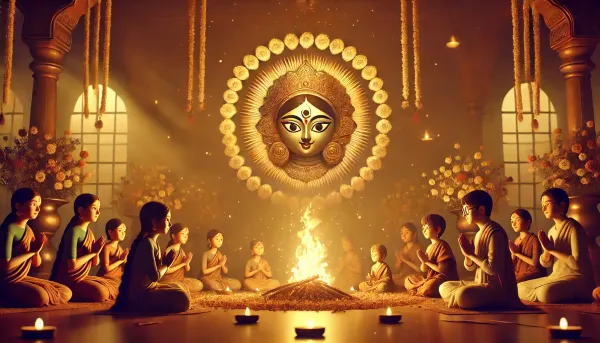
Navaratri is a festival full of energy, devotion, and dazzling ritual, devoted to the Divine Mother Durga. One of its very first and most vital steps is Ghatasthapana (also referred to as Kalash Sthapana) – the installation of the sacred pot, invoking Divine presence.
This ritual marks the very start of Sharad Navaratri 2025, the autumn Navaratri, which honors Goddess Durga in her nine forms. It is the seed ritual: what you plant now will grow through the nine nights in devotion, purification, and inner transformation.
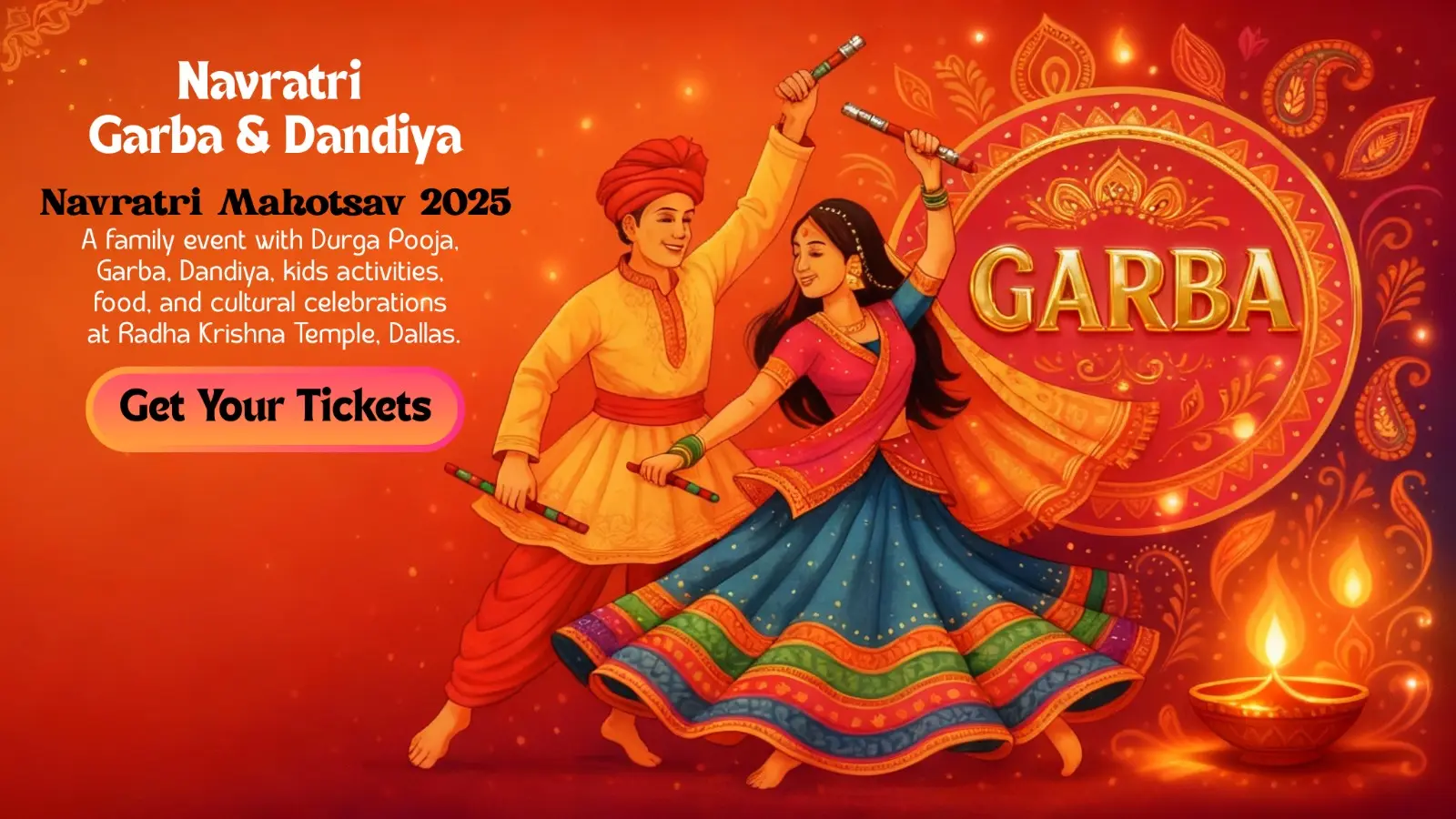
Navratri is incomplete without Garba and Dandiya, where the joyous dance celebrates Maa Durga’s victory and fills the nights with divine energy. Clad in colorful attire, devotees gather to dance, rejoice, and honor the Divine Mother in an atmosphere of joy and reverence.
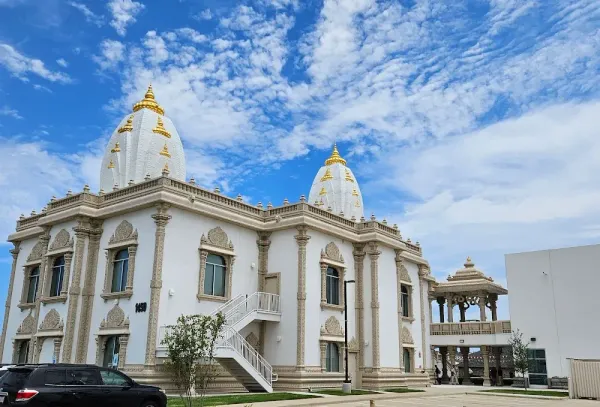
At Radha Krishna Temple of Dallas, the Navratri Mahotsav 2025 offers unforgettable evenings filled with Garba, Dandiya, Durga Pooja, children’s activities, delicious food, and vibrant cultural programs. As lamps glow and music fills the air, the community comes together in a beautiful celebration of tradition, devotion, and festivity—an experience of Navratri magic like never before.
Join us at the celebration; get your tickets today!
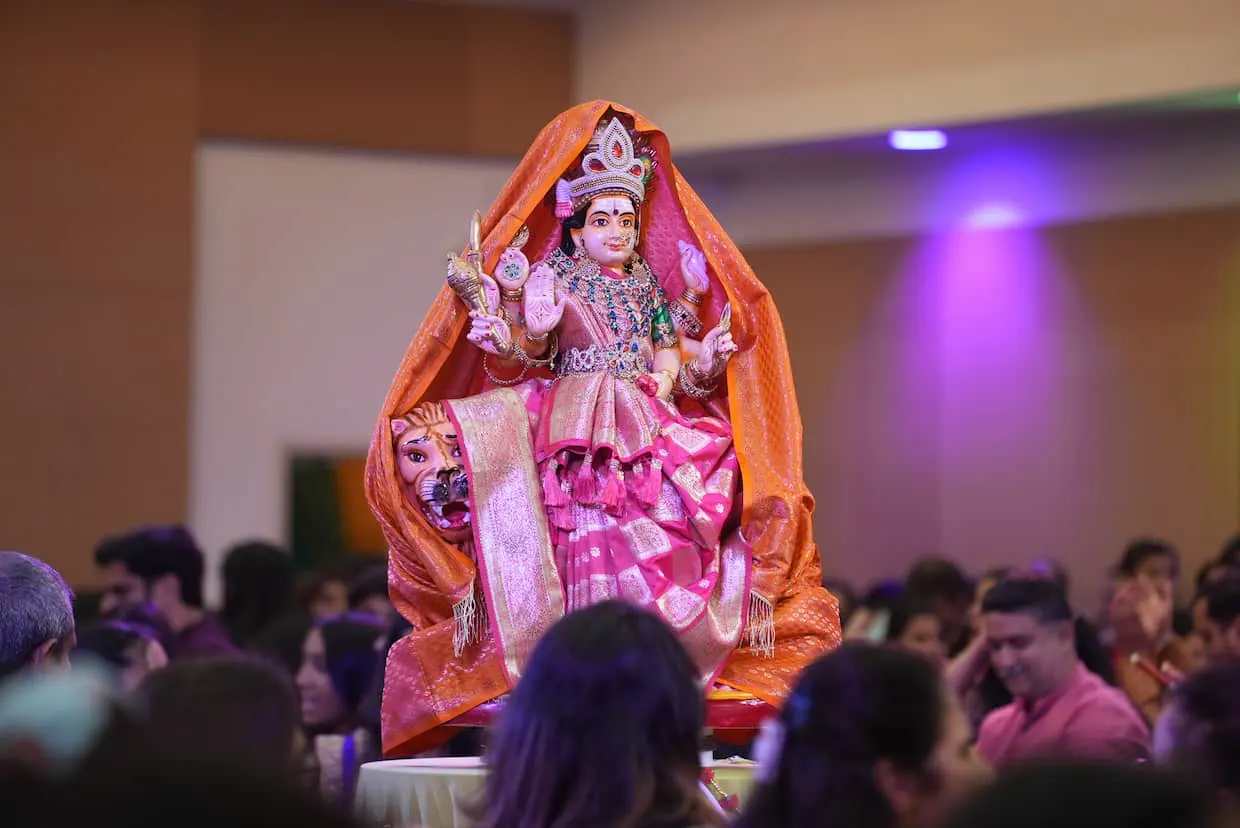
🌺 Navratri Mahotsav 2025 Dallas – Durga Puja, Garba & Dandiya Nights 🌺
Celebrate Navratri 2025 at Radha Krishna Temple of Dallas from Sept 21–Oct 1! Click here to sign up for 9 Days of Durga Pujas and Durgashtami Havan.
As the vibrant festival approaches in 2025, devotees across the globe prepare to welcome the divine feminine energy with devotion, color, and joy. One of the most auspicious and spiritually significant rituals that marks the beginning of this nine-night celebration is Ghatasthapana. This sacred ritual symbolizes the invocation of Goddess Durga and sets the spiritual tone for the entire festival. During Ghatasthapana, a ceremonial earthen pot (kalash) filled with holy water, grains, and adorned with mango leaves and a coconut is installed, representing prosperity, purity, and the cosmic womb of creation. The ritual is performed during a specific and auspicious muhurat (time), which is determined according to the Hindu lunar calendar, ensuring maximum positive energy and divine blessings. As Navaratri celebrates the victory of good over evil and the nurturing power of the Goddess, Ghatasthapana serves as the foundation for invoking her divine presence into our homes and hearts.
The complete Sharad Navratri 2025 calendar is as follows:
What does Navaratri connotate?
The word Navaratri is derived from two Sanskrit words—“Nava” meaning nine and “Ratri” meaning nights. Thus, Navaratri refers to a festival spanning nine nights and ten days, during which devotees worship the nine forms of Durga, collectively known as the Navadurga. Each night is dedicated to a different manifestation of the goddess, symbolizing various aspects of feminine divine power such as courage, wisdom, compassion, and prosperity. It is considered a period of spiritual rejuvenation, discipline, and purification of the mind and body.
Why is the Navaratri tenure considered auspicious?
Navaratri is not only a cultural festival but also a deeply spiritual observance. It celebrates the triumph of good over evil, with each form of Durga embodying the energy needed to overcome different forms of negativity. Devotees undertake fasting, meditation, and prayers to cleanse their inner selves and strengthen their spiritual connection. This festival is believed to realign one’s energy with cosmic forces, thereby bringing balance, harmony, and prosperity into life.
The Origin of Navaratri in Divine Scriptures
The origins of Navaratri are rooted in ancient Hindu scriptures and mythology. According to the Markandeya Purana, the goddess manifested during a cosmic crisis to slay the buffalo demon Mahishasura, who had terrorized the three worlds. The epic battle lasted for nine days and nights, ending with the demon’s defeat on the tenth day, celebrated as Vijayadashami or Dussehra. This story symbolizes the victory of righteousness (dharma) over arrogance and evil (adharma).
Historical Roots and Regional Custom
Navaratri’s origins can also be traced to seasonal changes and agrarian traditions of ancient India. It is celebrated at the transition from the monsoon to autumn, marking the harvest period. Historically, kings and warriors also performed rituals to invoke the goddess’s blessings for strength and victory in battles. Over centuries, these practices evolved into the diverse cultural expressions seen today across India—from the Durga Puja celebrations in West Bengal to the vibrant Garba dances in Gujarat and the traditional Golu displays in Tamil Nadu.
Philosophical Essence
Beyond myth and ritual, Navaratri represents the inner spiritual journey of an individual—from darkness to light, from chaos to clarity. The first three days are dedicated to overcoming one’s inner negativities (tamas), the next three days to cultivating positive energy (rajas), and the final three days to achieving spiritual wisdom (sattva). This progression symbolizes self-purification and spiritual elevation, reminding devotees that the divine feminine energy (Shakti) resides within every being.
🌼 Ghatasthapana Puja Vidhi for Navaratri 2025

Ghatasthapana is the traditional ritual performed on the first day of Navaratri, symbolizing the invocation of the divine feminine energy, Durga. This ritual sets the spiritual tone for the entire festival and is done during a specific auspicious muhurat (time period) as per the Hindu calendar.
Preparation: Samagri (Items) required
- Kalash (pot) - copper, brass, or clay works fine.
- Clean soil or sand under the Kalash.
- Seven types of seed (barley, broken wheat, etc.) for sowing beneath the pot so they sprout during the sacred festival.
- Mango leaves, clean water, betel nuts, durva grass, rice grains, coins.
- Coconut (wrapped in red cloth on top of the Kalash).
- Sacred thread, turmeric, sandalwood paste, flowers, lamp, incense, vermillion or kumkum powder.
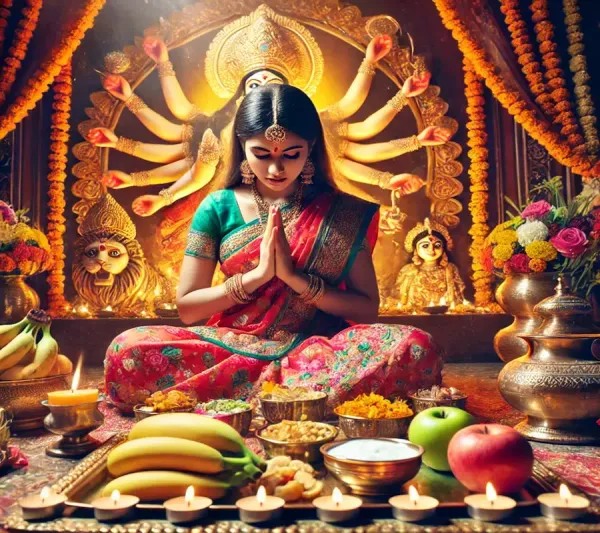
Ghatasthapana Setup with Sacred Offerings
📅 Step 1: Choosing the Auspicious Muhurat
- Look into the Calendar to find the Pratipada Tithi (first lunar day of the Shukla Paksha) of the Ashwin month, which marks the start of Navaratri.
- Ensure the ritual is performed during Abhijit Muhurat or morning hours before midday, avoiding Rahu Kalam (inauspicious time).
- In 2025, this will fall on September 22, 2025 (Monday).
🌾 Step 2: Preparing the Puja Space
- Clean the puja area thoroughly to make it sattvic (pure and peaceful).
- Spread a layer of clean soil or sand in a wide clay or brass pot (bedi) and sow seven types of grains (sapta-dhanya or navadhanya) in it.
- Place the pot on this bed of soil — this symbolizes the seed of creation and fertility.
🪷 Step 3: Setting Up the Kalash (Sacred Pot)

- Fill an earthen or metal kalash with clean water, a few drops of Ganga jal, and place:
- Coins, rice, turmeric, and betel nuts inside.
- Tie a red sacred thread (kalawa) around its neck.
- Decorate the kalash with five mango leaves arranged like a crown, and place a coconut wrapped in red cloth on top of it.
- Draw a Swastika symbol on the kalash with turmeric or vermillion.
- Place the kalash in the center of the puja area on the prepared soil bed.
🔥 Step 4: Invoking the Goddess
- Light a diya (lamp) and incense sticks.
- Chant Sankalpa Mantra (resolution prayer) to formally begin Navaratri worship.
- Offer flowers, rice, kumkum, turmeric, and sandalwood paste to the kalash while chanting Durga Suktam or Navadurga Mantras.
- Invoke Durga and her nine forms (Navadurga) to reside in the kalash during the nine days.
🍎 Step 5: Beginning the Akhand Jyoti

- Light an Akhand Jyoti (eternal flame) near the kalash, which should remain lit throughout the nine days of Navaratri as a symbol of the Goddess’s eternal energy and protection.
🥗 Step 6: Daily Worship During Navaratri
- Every day, offer fresh flowers, fruits, and sweets to the kalash and the goddess.
- Recite Durga Chalisa, Devi Mahatmyam (from the Markandeya Purana) to seek divine blessings.
- Perform arati (lamp waving ceremony) both morning and evening.
🌸 Step 7: Visarjan (Immersion) on the 10th Day
- On Vijayadashami / Dussehra (the 10th day), perform a Purna Ahuti (final offering) and respectfully immerse the kalash water in a river or sacred water body, completing the ritual.
What to Avoid:
- Conducting the ritual at night or during Amavasya, according to Pratipada tithi the best time to perform it is in the morning hours.
- Avoid tamasic foods, impure thoughts, arguments, or acts that disturb peace. Maintain cleanliness and purity.
Spiritual Significance of Ghatsthapana 2025
Why is this ritual so powerful, and why do many devotees themselves to doing it exactly, observing every point?
- It is symbolic of planting the Divine seed of Shakti in the heart; the Kalash is a symbol of the universe, life, and abundance.
- The sprouting grains under the pot represent growth, renewal, fertility—material and spiritual.
- The ritual ushers in nine days of aligning with higher consciousness, rising above distractions, purifying the mind, body, and actions.
- It invites protection, blessings, prosperity, courage, and strength from the Goddess.
- Also, it is an act of surrender: one invites what is beyond oneself into one’s life, acknowledging dependence on Divine Grace.
Summary of Key Points
- Ghatsthapana 2025 falls on 22 September 2025, Sharad Navaratri’s first day.
- Ritual includes preparing Kalash, soil and seeds, coconut, sacred symbols, mantras, and maintaining purity.
- Spiritual aim: invoke Goddess Shakti, purify, grow spiritually and materially over nine days.
- Inculcate purity in thoughts, actions, and environment; avoid negative behavior; maintain devotion.
- While rituals are important to connect with Maa Durga. The most important is our pure attachment of the Mind to the Mother during this Navratri.
- Along with performing physical Pooja, we should do the Bhakti of Mother in our mind through Roopdhyan Meditation.
- Roopdhyan Meditation refers to bringing the image of God to mind while meditating and serving him in the mind.
Call to Action
If you wish to relish many such inspiring spiritual content. Subscribe to Swami Mukundananda's Youtube Channel.
📚 Learn about all 9 forms of Goddess Durga and explore Navratri rituals in our Complete Navratri 2025 Guide »
Radha Krishna Temple of Dallas is celebrating Navratri 2025 from 22nd September to 1st October, 2025, which will end with Dusshera. Join us for the celebration if you're located in the Dallas Area.
Durga Pujas
Participate in 9 Sacred Durga Pujas
Durgashtami Havan
Reserve your Spot
Food Festival
Celebrate with Every Bite
Ravan Dahan
Celebrate Dussehra with Devotion
⏳ Countdown to Navratri
Navratri begins on Sunday, Sept 21, 2025. Evening Garba starts at 7:00 PM.
Sacred Offerings for Durga Maa
Offer your devotion through seva.
Garba Workshops
Get ready for Navratri! 💃🕺 Join our Garba Workshop at Radha Krishna Temple, Dallas and learn traditional steps, Dandiya moves, and rhythm with ease.
Dates
Sept 13, 6pm - 7pm
Sept 20, 6pm - 7pm
Price
Garba Workshop: $7
Dandiya Sticks : $5

Cherished Moments of Past Navratri Celebrations
Relive the inspiring moments from past Navratri celebrations! Experience the joy, devotion, and vibrant festivities that make this event so special.


Serve, Grow, Inspire! — Volunteer for Navratri Mahotsav
Join us as a volunteer for the Navratri & Dussehra Celebrations! Experience the joy of devotion, build lifelong friendships, and serve the community while being part of these grand festivities. Sign up today to make this celebration truly special
FAQs:
Q1: What is the correct timing to start Ghatsthapana 2025? The preferred auspicious time is 06:11 AM to 07:52 AM IST on 22 September, during Pratipada Tith; but the Abhijit Muhurat: 11:51 AM to 12:39 PM (midday window) is also acceptable.
Q2: Can Ghatsthapana be done after these auspicious windows? Traditionally, It’s recommended to perform within the main Muhurat. If impossible, Abhijit Muhurat is acceptable. Beyond that, many believe the ritual loses some potency.
Q3: What mantra should one chant during Ghatsthapana? Ideally Durga Saptashati / Chandi Path can be chanted. Moreover, Shorter stotras or Devi Stuti verses are also recited.
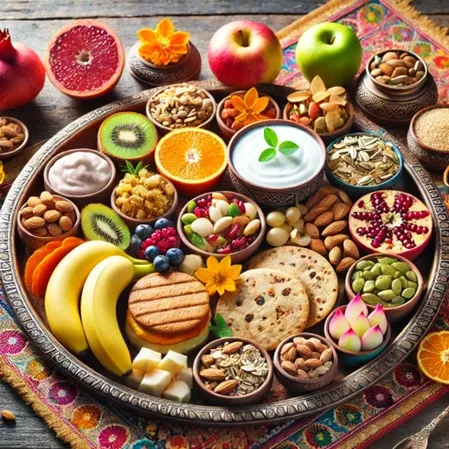
Q4: What food and activity restrictions apply during Navaratri (after Ghatsthapana)? Fasting or partial fasting; avoiding meat, onion, garlic, tamasic foods, and taking sattvic foods, for example, fruits, milk, nuts, special vrat foods. Maintain purity in thoughts, avoid negative behavior, and alongside keep the environment clean.
Q5: What is the symbolism of the Kalash and sprouting seeds? The sacred pot symbolizes cosmos, life, fertility, abundance, the womb of creation. Sprouting seeds beneath point out growth, renewal, hopes that one’s spiritual effort will bear fruit across the nine days.