Makar Sankranti is one of the most profound festivals in the Hindu spiritual calendar, distinguished by the fact that it is governed not by lunar cycles but by a precise cosmic movement: the transition of the Sun into the zodiac sign of Capricorn, known as Makara. This astronomical shift gives the festival a universal and timeless quality, connecting human life to the rhythms of the cosmos. Celebrated across India with immense devotion and cultural vibrancy, Makar Sankranti 2026, observed on Wednesday, 14 January 2026, is far more than a ceremonial date. It represents a spiritual threshold, an invitation for humanity to move from darkness to light, from inertia to conscious effort, and from ego-centered living to a life anchored in divine love.
Yet, amid the color, festivity, and rituals, a deeper truth quietly awaits discovery. As emphasized repeatedly by Swami Mukundananda, the essence of any sacred occasion does not lie in external performance alone but in internal transformation. Rituals, however ancient or elaborate, derive their true power only when they are infused with sincere intent, humility, and loving remembrance of God. Without this inner alignment, even the most sacred observances risk becoming habitual actions rather than transformative experiences.
This exploration of Makar Sankranti 2026 seeks to illuminate the deeper meaning behind its traditional elements, which include Punya Kaal timings, the Sun’s transit, holy bath rituals, charity, and celebration, while anchoring each practice in its higher spiritual purpose. Through this lens, Makar Sankranti becomes not merely a festival to observe, but a sacred opportunity to evolve.

.png)
Astronomical Significance of Makar Sankranti

Makar Sankranti marks the moment when the Sun enters Capricorn, beginning the auspicious phase of Uttarayan, the northward journey of the Sun. In Vedic cosmology, this movement is considered highly significant, as it symbolizes a shift toward light, warmth, and growth. The Sun, revered as a visible manifestation of divine energy, is not merely a celestial body but a spiritual symbol representing consciousness, vitality, and illumination.
In Vedic thought, the Sun embodies divine consciousness itself. It is associated with clarity of intellect, awakening of wisdom, and the soul’s aspiration to rise above ignorance. The transition into Uttarayan is thus regarded as spiritually favorable, suggesting an upward movement of awareness and a time when higher pursuits are more easily embraced. Scriptures often associate Uttarayan with positive momentum, discipline, and spiritual clarity.
However, while the cosmos may move according to divine order, human transformation does not occur automatically. Swami Mukundananda offers a profound reminder that reframes the festival’s significance:
“God does not become closer because the Sun changes direction; God becomes closer when the heart turns toward Him.”
This insight redirects attention from the sky to the self. The celestial shift is indeed sacred, but it is our inner orientation; the direction of our thoughts, desires, and intentions, that truly defines the spiritual power of Makar Sankranti. Without inner effort, even the most auspicious cosmic alignment remains external to our lived experience.
Makar Sankranti 2026: Date and Punya Kaal Timings

In 2026, Makar Sankranti is observed on Wednesday, 14 January. Like many Hindu observances, the day is associated with specific auspicious periods known as Punya Kaal and Maha Punya Kaal. These timings are traditionally believed to enhance the spiritual merit of actions performed during them.
Punya Kaal generally spans from the early morning hours until mid-afternoon, while Maha Punya Kaal refers to the most auspicious window, typically the first two to three hours after sunrise. While exact timings may vary slightly depending on geographic location, the essence of these periods lies not in mathematical precision but in spiritual preparedness.
The word “punya” translates to spiritual merit or virtue. Punya Kaal is thus understood as a time when actions such as prayer, charity, mantra chanting, and holy bathing are believed to yield multiplied spiritual benefit. For centuries, devotees have structured their observances around these timings, rising early to bathe, pray, and give in charity.
Yet Swami Mukundananda gently cautions against reducing spirituality to a timetable. His words strike at the heart of ritualistic thinking:
“Merit is not earned by the clock on the wall but by the sincerity in the heart.”
This teaching does not negate the value of auspicious timings; rather, it restores balance. Punya Kaal serves as a supportive framework, but the real sanctity of the moment arises from devotion, humility, and conscious intent. Without these, time itself cannot confer spiritual elevation.
The Sacred Tradition of the Holy Bath (Snan)
One of the most widespread and visually striking rituals of Makar Sankranti is the practice of snan, or the holy bath. Millions of devotees immerse themselves in sacred rivers such as the Ganga, Yamuna, and Godavari, while others perform ritual bathing at home using sanctified water. This act is deeply embedded in Hindu tradition and is believed to cleanse sins and purify the soul.
Symbolically, the holy bath represents the washing away of past negativities, the renewal of spiritual resolve, and the surrender of ego at the feet of the Divine. Water, as a universal purifier, serves as a powerful metaphor for transformation. The act of immersion reflects a willingness to let go of regrets, impurities, and burdens carried from the past.
However, Swami Mukundananda offers a crucial clarification that elevates the ritual from action to awareness:
“Water can cleanse the body, but only devotion can cleanse the soul.”
Without repentance, humility, and a genuine desire for self-improvement, even the holiest river becomes merely water. The bath is not an end in itself; it is a reminder. True purification occurs when external cleansing is accompanied by internal introspection and when the heart resolves to abandon harmful tendencies and cultivate virtues such as compassion, honesty, and self-restraint.
Charity (Daan): Giving with the Heart

Charity, or daan, is an inseparable aspect of Makar Sankranti. Traditionally, people donate sesame seeds, jaggery, food grains, warm clothing, and other essentials. These items are not chosen arbitrarily; they reflect both seasonal needs and symbolic meaning. Sesame seeds symbolize endurance and spiritual resilience, while jaggery represents sweetness in speech and relationships, reminding individuals to cultivate harmony in their interactions.
Yet the deeper significance of charity lies not in the object given, but in the consciousness behind the act. Swami Mukundananda emphasizes that charity should never be mechanical or driven by social expectation. He states with striking clarity:
“When charity is given to impress society, it inflates ego; when given to please God, it purifies the heart.”
True daan dissolves selfishness and awakens compassion. It shifts the focus from accumulation to contribution, from self-centeredness to service. On Makar Sankranti, charity becomes a spiritual discipline and a way of loosening the grip of attachment and expressing love in action.
Regional Celebrations, One Spiritual Message
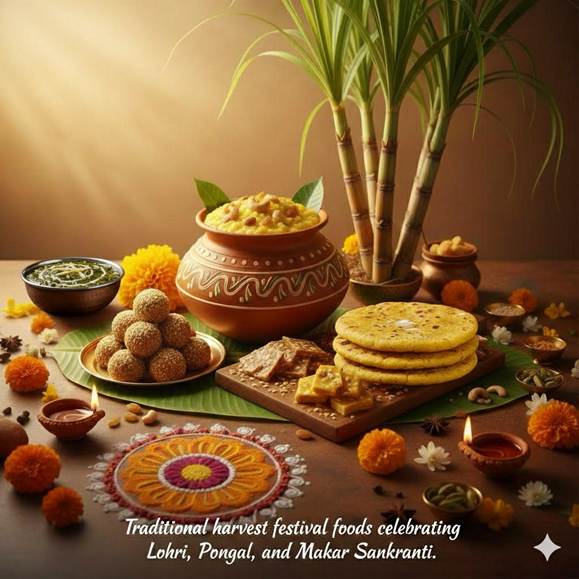
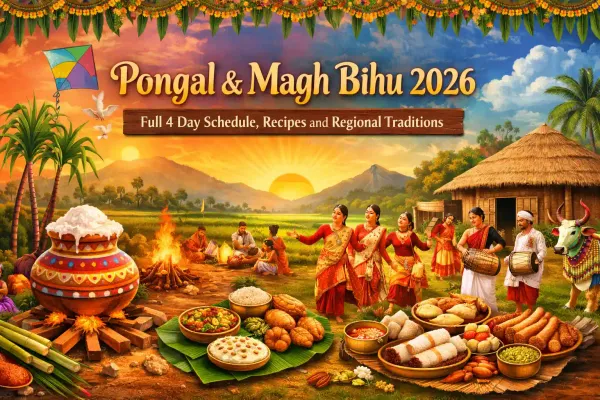
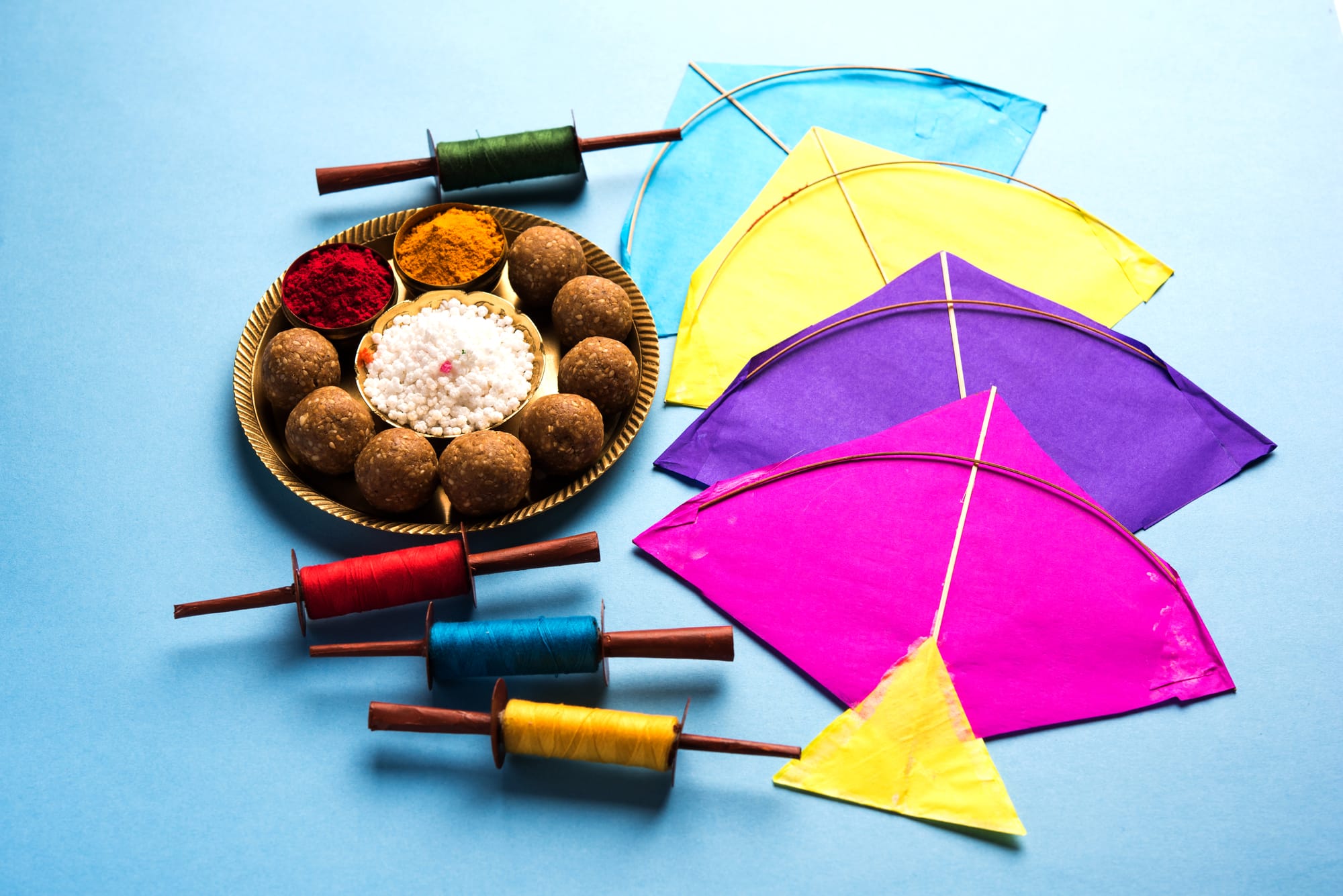
Makar Sankranti is celebrated across India under various names and forms. In Tamil Nadu, it is observed as Pongal, a harvest festival honoring the Sun and nature’s abundance. In Punjab, Lohri marks the festival with bonfires and songs, celebrating warmth and community. Gujarat’s Uttarayan fills the sky with kites, while Assam’s Magh Bihu emphasizes feasting and gratitude.
Despite this outward diversity, the inner message remains remarkably unified. Across regions, Makar Sankranti celebrates gratitude to nature, joy in self-discipline, and the triumph of light over darkness. These cultural expressions provide a rich tapestry through which spirituality is lived and shared.
As Swami Mukundananda eloquently teaches:
“Culture is the body of spirituality; devotion is its soul.”
When cultural practices are infused with devotion, they become vehicles of transformation rather than mere tradition. The festival thus serves as a reminder that unity lies not in uniformity, but in shared spiritual intent.
Uttarayan and the Inner Ascent of Consciousness
In the Bhagavad Gita, Lord Krishna speaks of the path of light, symbolizing higher consciousness and liberation. Uttarayan aligns symbolically with this path, representing ascent, clarity, and divine orientation. Yet this ascent is not automatic, nor is it guaranteed by the calendar.
Swami Mukundananda explains this truth with sobering clarity:
“One may live during Uttarayan and still walk the path of ignorance if ego and desire rule the mind.”
The real Uttarayan occurs when the intellect rises above impulse, when love replaces fear, and when devotion replaces pride. It is an inner journey that requires effort, awareness, and surrender. Without this internal movement, the external transition of the Sun remains symbolic rather than transformative.
Rituals vs. Realization: The Deeper Lesson
Makar Sankranti gently but persistently reminds us that rituals are meant to lead toward realization. Bathing should inspire purification of habits. Charity should soften the heart. Celebration should deepen gratitude and humility. When rituals are disconnected from these inner outcomes, they risk becoming empty shells , representing actions performed without awareness or growth.
Swami Mukundananda captures this essence in a single, powerful statement:
“God looks not at what you do, but at why you do it.”
This teaching invites sincere introspection. It encourages devotees to examine motivation, intent, and consciousness, transforming rituals into opportunities for self-refinement.
How to Celebrate Makar Sankranti 2026 Spiritually
To celebrate Makar Sankranti meaningfully, one need not seek elaborate ceremonies. Simple, conscious practices rooted in sincerity can make the day deeply transformative. Beginning the day with gratitude and prayer sets a devotional tone. Chanting God’s names with love purifies the mind. Donating quietly without expectation nurtures humility. Reflecting on personal growth goals aligns the festival with self-improvement. Resolving to reduce anger, greed, and ego translates spirituality into daily life.
These small inner steps ensure that the festival’s impact endures long after the day has passed.
Modern Relevance of Makar Sankranti
In today’s fast-paced, consumption-driven world, Makar Sankranti offers a rare pause for self-reflection. It reminds us of our alignment with nature and calls us to shift from consumerism to consciousness. Rather than serving as an escape from life, the festival becomes a guide for living more meaningfully.
As Swami Mukundananda teaches, festivals are not meant to distract us from reality but to transform it. They are spiritual checkpoints, inviting us to realign with higher values.
Conclusion: From Sun’s Transit to Heart’s Transformation
Makar Sankranti 2026 is more than a cosmic event—it is an invitation. An invitation to turn inward, rise above ego, replace ritualism with devotion, and allow divine love to become the true offering. When rituals are infused with bhakti, every moment becomes Punya Kaal, and every action becomes sacred.
Call to Action
This Makar Sankranti, go beyond tradition. Let your prayers be sincere, your charity selfless, and your heart devoted. Celebrate not just the Sun’s ascent but the soul’s awakening.
FAQs: Makar Sankranti 2026
1. When is Makar Sankranti in 2026?
Makar Sankranti will be celebrated on 14 January 2026 (Wednesday).
2. What is the significance of Punya Kaal?
Punya Kaal is the auspicious period when spiritual actions are believed to yield multiplied merit, especially when done with sincere devotion.
3. Is taking a holy bath mandatory on Makar Sankranti?
No. According to Swami Mukundananda, inner purity and sincere remembrance of God matter more than physical rituals.
4. Why is charity important on Makar Sankranti?
Charity reduces ego and cultivates compassion, aligning the soul with divine love.
5. How can one celebrate Sankranti meaningfully at home?
Through prayer, gratitude, self-reflection, mantra chanting, and acts of kindness done with pure intent.
Further Resources

 RKT Blog Team
 RKT Blog Team