As the Bells of Faith Ring: Welcoming Goddess Chandraghanta on Magh Navratri Day 3
As the first light of dawn spreads across the winter sky, temple bells echo softly and lamps glow with steady devotion. On Magh Navratri Day 3, households awaken with a quiet determination to honor Goddess Chandraghanta, the fierce yet compassionate form of Durga. Her crescent moon shines like a promise that courage and peace can coexist. Devotees believe that even a simple prayer offered with faith on this sacred day can dissolve fear and invite strength into everyday life.
Magh Navratri, a sacred nine-day festival, continues its spiritual ascent with the worship of Goddess Chandraghanta, the third form of Navdurga, who represents the awakening of inner courage and spiritual clarity. If Shailaputri establishes the foundation of faith, Chandraghanta ignites the power of conscious awareness and fearless devotion.
She governs the Ajna Chakra (Third Eye Chakra) — the center of intuition, insight, and higher perception. On this day, seekers move beyond survival and grounding into spiritual vision and divine will.
This is not merely worship.
It is the moment when fear dissolves into faith.
It is the soul learning to stand in its divine strength.
Who is Goddess Chandraghanta?
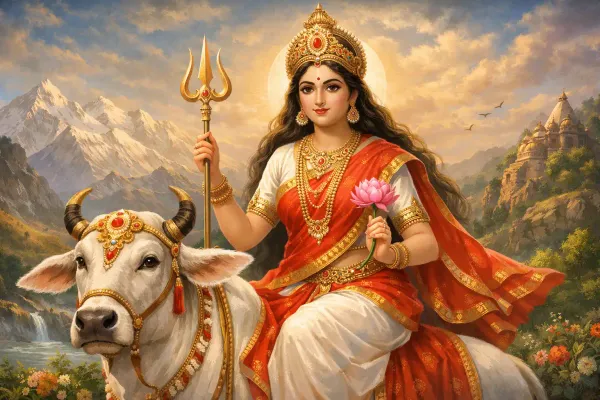
Goddess Chandraghanta seated upon her tiger, adorned with the crescent moon bell on her forehead, symbolizing the fusion of warrior strength and divine compassion
Goddess Chandraghanta is the fierce yet benevolent form of Goddess Parvati who emerged after her union with Lord Shiva. Her name comes from the crescent moon shaped like a bell (Ghanta) that adorns her forehead, whose divine sound is said to destroy negativity and awaken higher consciousness.
She is the embodiment of spiritual bravery, divine discipline, and inner awakening.
Her Name Reveals Her Spiritual Essence
|
Word |
Meaning |
Inner Significance |
| Chandra | Moon | Mind, awareness, and higher consciousness |
| Ghanta | Bell | Divine call that awakens spiritual alertness and destroys negativity |
| Chandraghanta | Moon-Bell Goddess | The awakened soul that conquers fear through divine wisdom and inner strength |
Goddess Chandraghanta derives her name from the crescent moon shaped like a bell
Spiritual Meaning of Worshipping Goddess Chandraghanta
Worshipping Goddess Chandraghanta on Magh Navratri Day 3 is believed to awaken the Manipura chakra, which governs confidence, self control, and personal power. This makes the day especially meaningful for those seeking inner strength and emotional stability.
Spiritually, Goddess Chandraghanta teaches that true power does not come from aggression but from balanced awareness. Her energy helps devotees overcome hesitation, anxiety, and self doubt.
Those who meditate on her form often report a sense of calm courage, enabling them to face challenges without anger or fear.
🌸 Iconography of Goddesschandraghanta & Hidden Symbolism
The iconography of Goddess Chandraghanta reflects her dual nature as both a fierce warrior and a compassionate mother. Key elements include:

| Iconographic Element | Description |
| Crescent Moon (Ghanta) | A moon-shaped bell on her forehead that gives her the name Chandraghanta, symbolizing the destruction of evil and the awakening of divine consciousness. |
| Complexion | Golden or radiant complexion representing purity, spiritual illumination, and divine energy. |
| Ten Arms (Dashabhuja) | Signify her immense power and ability to protect devotees in all directions. |
| Weapons and Symbols | Holds a trident (trishul), mace (gada), sword (khadga), bow (dhanush), arrow, lotus, kamandal (water pot), and rosary (japa mala), symbolizing both destruction of negativity and nurturing of spirituality. |
| Vahana (Mount) | Tiger, symbolizing courage, strength, and fearless authority. |
| Facial Expression | Serene yet determined expression reflecting compassion combined with readiness to confront injustice. |
| Third Eye | Represents heightened perception, divine wisdom, and spiritual insight. |
| Posture | Dynamic, battle-ready stance emphasizing her role as protector of righteousness (dharma). |
Magh Navratri Day 3 Puja Vidhi for Goddess Chandraghanta
Performing the puja vidhi of Goddess Chandraghanta on Magh Navratri Day 3 with devotion and mindfulness is believed to bring courage, peace, and divine protection. The ritual does not need to be elaborate; sincerity and purity of intention are most important. Below is a step by step traditional puja method suitable for home worship.
Here is a clean, easy-to-read table format of the Magh Navratri Day 3 Puja Vidhi for Goddess Chandraghanta,
|
Step |
Ritual Name |
What to Do |
Spiritual Significance |
|
Step 1 |
Early Morning Purification |
Wake up during Brahma Muhurta, take a bath, wear clean yellow, light brown, or golden clothes. Calm your mind and avoid distractions. |
Prepares the body and mind for sacred worship and spiritual focus. |
|
Step 2 |
Preparation of Puja Area |
Clean the puja space, place a chowki with red/yellow cloth, install idol or picture facing east or north. Arrange flowers, diya, incense, fruits, and prasad. |
Creates a pure and sacred environment for divine presence. |
|
Step 3 |
Sankalp (Resolution) |
Sit calmly, state your name, place, and purpose of worship. Dedicate the puja to Goddess Chandraghanta. |
Aligns intention with devotion and strengthens spiritual connection. |
|
Step 4 |
Dhyana (Meditation) |
Visualize Goddess Chandraghanta seated on a lion, glowing with golden light and a crescent moon bell on her forehead. Feel her protective energy. |
Deepens focus and invites divine presence into the ritual. |
|
Step 5 |
Panchopchar (Offerings) |
Offer water, flowers (yellow/red), incense, diya, kumkum, turmeric, and rice. If murti, offer water/milk/honey at feet. |
Expression of devotion, purity, and gratitude to the Goddess. |
|
Step 6 |
Mantra & Stotra |
Chant “Om Devi Chandraghantayai Namah” 108 times. Recite Durga Saptashati or Chandraghanta Stotra. |
Invokes divine blessings, courage, and mental peace. |
|
Step 7 |
Bhog & Naivedya |
Offer fruits, sweets, kheer, halwa, or milk-based prasad. |
Symbolizes surrender, gratitude, and receiving divine grace. |
|
Step 8 |
Aarti |
Perform aarti with a lit diya, singing Durga Aarti. |
Expression of reverence and devotion. |
|
Step 9 |
Prarthana |
Fold hands and pray for courage, peace, and protection. |
Strengthens faith and spiritual fulfillment. |
|
Step 10 |
Prasad Distribution |
Share prasad with family members. |
Spreads blessings and divine energy in the home. |
Performing the puja vidhi of Goddess Chandraghanta on Magh Navratri Day 3 with devotion and mindfulness is believed to bring courage, peace, and divine protection. The ritual does not need to be elaborate; sincerity and purity of intention are most important. Below is a step by step traditional puja method suitable for home worship.

Step 1 Early Morning Purification
Begin the day by waking up early, preferably during Brahma Muhurta. Take a bath to cleanse the body and wear fresh, clean clothes. Yellow, light brown, or golden colored attire is considered auspicious for Goddess Chandraghanta, as these colors symbolize strength and positivity.
Before starting the puja, calm your mind by avoiding unnecessary distractions. Maintaining a peaceful mindset is considered an essential part of the ritual.
Step 2 Preparation of the Puja Area
Clean the puja room or a quiet corner of your home thoroughly. Place a clean wooden chowki or platform and cover it with a red or yellow cloth.
Install the idol or picture of Goddess Chandraghanta facing east or north. Arrange the puja items neatly, including flowers, incense sticks, diya, water, fruits, sweets, and prasad ingredients.
Light a diya using ghee or sesame oil to purify the environment and symbolize the presence of divine light.
Step 3 Sankalp (Sacred Resolution)
Sit comfortably in front of the altar and close your eyes for a few moments. Take deep breaths to center yourself.
With folded hands, take a sankalp by mentally stating your name, place, and purpose of worship. Dedicate the puja to Goddess Chandraghanta and seek her blessings for courage, clarity, protection, and removal of fear and obstacles.
This step aligns your intention with the ritual and enhances spiritual focus.
Step 4 Dhyana (Meditation on the Goddess)
Meditate on the form of Goddess Chandraghanta. Visualize her seated on a lion, glowing with golden light, with a crescent moon bell shining on her forehead.
Imagine her calm yet powerful presence surrounding you with protection. This dhyana helps establish a deeper spiritual connection before offerings begin.
Step 5 Abhishek and Shodashopachara Puja

If you have a murtGoddess Chandraghanta, radiant and fearless by offering water, milk, or honey. If worshipping a picture, symbolically offer water in a small vessel.
Offer the following items one by one with devotion:
- Water for cleansing
- Flowers, especially yellow or red
- Incense sticks for fragrance
- Diya for light
- Kumkum, turmeric, and rice
Each offering should be accompanied by a silent prayer or mantra.
Step 6 Mantra Chanting and Stotra Recitation
Chanting is the most powerful part of the puja. Recite the mantra:
Om Devi Chandraghantayai Namah
Repeat the mantra 108 times using a mala if possible. Chant slowly and with concentration, focusing on the Goddess’s form.
If time permits, recite Durga Saptashati verses or Chandraghanta stotras. Even listening attentively to these hymns is considered auspicious.
Step 7 Offering of Bhog and Naivedya

Prepare simple satvik food as bhog. Milk based offerings such as kheer, milk sweets, or plain milk with fruits are especially favored on Day 3.
Place the bhog before the Goddess and mentally request her to accept the offering. Leave it untouched for a few minutes as a mark of respect.
Step 8 Aarti and Final Prayers

Perform the aarti using a lit lamp while singing or reciting a Durga aarti. Move the lamp in a circular motion in front of the Goddess.
After aarti, offer heartfelt prayers. Express gratitude and ask for strength to overcome fear, wisdom to make righteous choices, and peace of mind.
Step 9 Distribution of Prasad
Once the puja is complete, distribute the prasad among family members. Sharing prasad is believed to spread divine blessings and positivity within the household.
If fasting, consume the prasad as part of the vrat according to your tradition.
Step 10 Maintaining the Spirit of the Day
The puja does not end with rituals alone. Throughout Magh Navratri Day 3, maintain purity in thoughts, speech, and actions. Avoid anger, harsh words, and negativity.
Spending time in quiet reflection, chanting, or reading devotional texts further enhances the spiritual benefits of worshipping Goddess Chandraghanta.
Mantras for Goddess Chandraghanta
Chanting the mantras of Goddess Chandraghanta invokes courage, calmness, and divine protection. These mantras help remove fear, negativity, and mental unrest while strengthening inner confidence. Chant them with devotion, preferably facing east, after lighting a diya.
1. Beej Mantra of Goddess Chandraghanta
This is the most powerful and commonly used mantra during Navratri.
ॐ देवी चन्द्रघण्टायै नमः
Om Devi Chandraghantayai Namah
Benefits:
- Removes fear and anxiety
- Brings courage and mental strength
- Protects from negative energies
How to chant:
Chant 108 times using a mala for best results.
2. Dhyana Mantra (Meditation Mantra)
This mantra is ideal for visualization and inner connection with the Goddess.
पिण्डजप्रवरारूढा चण्डकोपास्त्रकैर्युता।
प्रसादं तनुते मह्यं चन्द्रघण्टेति विश्रुता॥
Meaning:
I meditate upon Goddess Chandraghanta, who rides a lion, is armed with powerful weapons, and blesses her devotees with peace and protection.
Benefits:
- Enhances meditation and focus
- Awakens inner courage
- Calms the mind
3. Stuti Mantra for Strength and Protection
This mantra praises the fierce yet compassionate nature of the Goddess.
या देवी सर्वभूतेषु साहस-रूपेण संस्थिता।
नमस्तस्यै नमस्तस्यै नमस्तस्यै नमो नमः॥
Benefits:
- Increases bravery and confidence
- Helps overcome obstacles
- Strengthens willpower
4. Simple Chant for Daily Devotion
This mantra is ideal for beginners or busy devotees.
ॐ चन्द्रघण्टायै नमः
Om Chandraghantayai Namah
Benefits:
- Maintains positive energy
- Reduces stress and fear
- Suitable for daily chantin
Best Time and Tips for Chanting
- Chant during Brahma Muhurta or after sunrise
- Use a rudraksha or crystal mala
- Sit calmly and focus on the Goddess’s form
- Maintain purity in thoughts and actions
Even chanting once with true devotion is considere
Benefits of Worshipping Goddess Chandraghanta
|
Category |
Benefits of Worshipping Goddess Chandraghanta (Magh Navratri Day 3) |
|
Mental & Emotional Benefits |
Reduces fear, anxiety, and restlessness; brings mental clarity, calmness, and emotional stability. |
|
Spiritual Benefits |
Strengthens devotion; helps awaken inner consciousness; removes inner obstacles; supports progress on the spiritual path. |
|
Material & Life Benefits |
Brings success, protection, and family harmony; supports righteous action (dharma) and courage in decision-making. |
|
Day 3 Message / Essence |
Invoke Goddess Chandraghanta to awaken inner strength, bravery, and serenity through sacred Puja Vidhi. |
Devotees believe that sincere worship on Magh Navratri Day 3 brings multiple benefits.
Connecting Maa Chandraghanta with Yogic Philosophy
|
Aspect |
Yogic Interpretation of Maa Chandraghanta |
|
Soul’s Journey |
Maa Chandraghanta represents the soul’s movement toward self-realization, guiding the seeker from fear and limitation to inner strength and awareness. |
|
Manipura Chakra |
She is associated with the Manipura (Solar Plexus) Chakra, the center of fire energy and transformation, which governs confidence, willpower, and personal power. |
|
Blocked Energy State |
When the Manipura Chakra is blocked, one experiences fear, doubt, insecurity, and lack of motivation. |
|
Awakened Energy State |
When awakened through devotion and worship, it grants power, confidence, courage, and spiritual maturity. |
|
Tapas (Inner Discipline) |
She symbolizes tapas, the inner fire of discipline that burns away mental and emotional impurities, preparing the devotee for deeper meditation. |
|
Spiritual Outcome |
Her energy purifies the mind and supports the seeker’s journey toward union with the Divine and higher states of consciousness. |
Modern Relevance of Goddess Chandraghanta
In today’s fast paced world, Goddess Chandraghanta represents balanced strength. She teaches that courage does not mean aggression and peace does not mean weakness.
Her energy inspires individuals to stand firm against injustice while remaining compassionate. This message is especially relevant in modern personal and professional life.
Conclusion
Magh Navratri Day 3 is a powerful reminder that true strength lies in balance. Goddess Chandraghanta stands as a beacon of courage, protection, and inner calm. By following the puja vidhi with devotion, chanting her mantras, and reflecting on her teachings, devotees invite her divine energy into their lives.
Whether through a detailed ritual or a simple heartfelt prayer, honoring Goddess Chandraghanta on this sacred day can bring clarity, fearlessness, and peace. May her crescent moon light guide every seeker toward courage wrapped in compassion and strength guided by wisdom.
Call To Action
🌙🔔 Invoke Courage and Protection Today 🔱✨
Perform Magh Navratri Day 3 Puja Vidhi for Goddess Chandraghanta and welcome fearlessness, clarity, and inner peace into your life. Light a diya 🪔, offer your prayers 🙏, and chant her sacred mantras 📿 to feel her divine blessings.
Frequently Asked Questions (FAQs)
1. Which goddess is worshipped on Magh Navratri Day 3
Goddess Chandraghanta, the third form of Maa Durga, is worshipped on Magh Navratri Day 3 for courage, peace, and protection.
2. What is the color of Magh Navratri Day 3
Yellow is considered the auspicious color for Day 3, symbolizing positivity, strength, and spiritual clarity.
3. What is the main mantra of Goddess Chandraghanta
The most powerful mantra is Om Devi Chandraghantayai Namah, chanted to remove fear and gain inner strength.
4. What bhog is offered to Goddess Chandraghanta
Milk based offerings such as kheer, milk sweets, and fruits are traditionally offered as bhog on Day 3.
5. Is fasting compulsory on Magh Navratri Day 3
No, fasting is not compulsory. Devotion, purity of thought, and sincere prayer are more important than strict fasting rules.
Related blogs you might be interested
Related Navratri Reads
Keep readers engaged by linking to closely related Navratri Puja Vidhi and Devi stotra/Chalisa explainers.
Day 3 of Navratri: Worshiping Maa Chandraghanta
Day 3 focus: Maa Chandraghanta—courage, serenity, and divine protection.
Mahishasura Mardini Stotram (Meaning & Translation)
English guide with verse-wise meaning and explanation of the powerful Durga stotram.
Durga Chalisa (Meaning, Translation & Benefits)
Verse-by-verse English translation with devotional context and chanting benefits.
Navratri 2025 Ghatasthapana Puja Vidhi
Start-of-Navratri ritual guide: Ghatasthapana/Kalash setup, significance, and traditions.