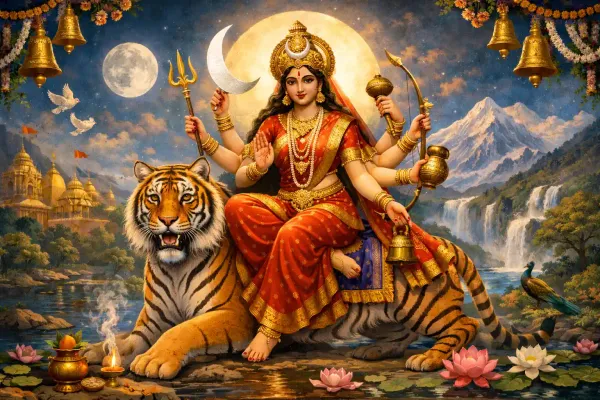
Magh Navratri, a sacred nine-day festival, is dedicated to the worship of the divine feminine energy. It typically falls in the month of Magh (January-February) according to the Hindu lunar calendar, and this occasion holds immense spiritual significance. The festival is celebrated with great fervor by millions of devotees across India and around the world, offering prayers, chanting mantras, and fasting in reverence of the nine different forms of Goddess Durga. Each day of Navratri is associated with a different form of the Goddess, and Day 1 of Magh Navratri is particularly special, as it is dedicated to Goddess Shailputri, the first of the nine forms of Durga.
What makes Magh Navratri truly unique is that, in some years, devotees also observe Gupt Navratri, the hidden or secret form of Navratri that is practiced quietly and discreetly. Gupt Navratri occurs twice a year, once during the Magh month and again during the Ashadha month (June/July).
While public Navratri is often celebrated with grandeur and outward expression, Gupt Navratri turns the seeker inward. It is a time for deep self-reflection, personal sadhana (spiritual practice), and a more intimate connection with the Divine. Devotees observe it in seclusion, offering silent prayers and engaging in meditative worship.
This period is not merely a ritualistic beginning, it is the planting of the soul’s intention, a sacred moment to nurture inner transformation and spiritual awakening.
In this in-depth spiritual guide on Magha Navratri Day 1: Worshipping Goddess Shailaputri during Gupta Navratri, you will explore:
- Who Goddess Shailaputri truly is
- Why Day 1 is spiritually crucial in Gupta Navratri
- Hidden symbolism behind her form
- Step-by-step Puja Vidhi & sacred rituals
- Powerful mantras with meaning
- Psychological & yogic interpretation
- Life lessons for modern seekers
🌸 Let us begin the journey from the mountain of faith to the summit of divine realization.
Who is Goddess Shailputri?

Goddess Shailaputri is the first manifestation of Navdurga and represents the root chakra (Muladhara) — the foundation of spiritual energy in the human system.
Her name reveals her essence:
|
Word |
Meaning |
Inner Significance |
|
Shaila |
Mountain |
Stability,
strength, stillness |
|
Putri |
Daughter |
Divine energy
in human form |
|
Shailaputri |
Daughter of
the Mountain |
The soul
rooted in spiritual truth |
She is the daughter of King Himavan (the Himalayas) and the incarnation of Goddess Parvati — the consort of Lord Shiva.
Spiritually, she represents:
- Faith before knowledge
- Surrender before realization
- Stability before spiritual ascent
Without Shailaputri, the spiritual journey has no foundation.
🌸 Iconography of Goddess Shailaputri & Hidden Symbolism
Goddess Shailaputri is often depicted riding a bull (Nandi) and holding a trident and lotus.
Inner Meaning
She teaches that:
Spiritual power is not aggressive, rather it is steady.
The bull does not run wildly. It walks with purpose.
The lotus grows in mud, yet remains pure.
So does the seeker in the world.
🔥 The Divine Story of Goddess Shailaputri
Her Previous Birth as Sati

In her earlier incarnation, Shailaputri was Goddess Sati, the daughter of King Daksha.
Despite her father’s hatred for Lord Shiva, Sati married him, choosing divine love over social approval.
When Daksha insulted Shiva publicly, Sati could not bear the disrespect and self-immolated in yogic fire.
Rebirth as Shailaputri
She was reborn as Parvati, daughter of the Himalayas, and later reunited with Shiva through devotion and tapasya.
Spiritual Meaning
This story teaches:
- Faith may be tested
- Devotion may face resistance
Shailaputri represents the rebirth of spiritual determination.
- The soul may fall, but it rises stronger
🧠 Psychological Meaning of Shailaputri Worship
Modern life creates:
- Anxiety
- Rootlessness
- Emotional instability
- Lack of direction
Shailaputri restores inner grounding.
|
Modern Struggle |
Her Teaching |
Transformation |
|
Confusion |
Faith |
Clarity |
|
Fear |
Stability |
Courage |
|
Restlessness |
Stillness |
Peace |
|
Insecurity |
Surrender |
Confidence |
“Faith is not simply believing God exists.
Faith is living as if God is guiding every step.”
🪔 Inner Preparation for Day 1 Worship
Before ritual comes readiness.
Inner Checklist
|
Area |
Practice |
|
Mind |
Let go of
doubts |
|
Speech |
Avoid
negativity |
|
Diet |
Simple,
sattvic food |
|
Time |
Fixed prayer
schedule |
|
Intention |
Spiritual
growth, not wish-fulfillment |
Even one sincere prayer offered with faith pleases Shailaputri more than elaborate rituals done mechanically.
Day 1 is spiritually crucial in Gupta Navratri
Day 1 of Gupt Navratri is spiritually crucial because it marks the setting of inner intention for the entire sacred period. It is believed to be the moment when the seeker plants the seed of sadhana, aligning the mind, body, and soul toward purification and spiritual discipline. Worship on this day focuses on turning inward, awakening dormant spiritual energy, and beginning the journey of self-transformation in silence and devotion.
Rituals of Day 1: Worshipping Goddess Shailputri

On Day 1 of Magh Navratri, devotees wake up early in the morning, take a ritual bath, and prepare for the day’s prayers. The atmosphere is filled with a sense of calm and devotion as families come together to offer prayers. The altar or prayer area is decorated with flowers, incense, and offerings of fruits and sweets to please the Goddess.
🛕 Step-by-Step Puja Vidhi for Magha Navratri Day 1
🌅 Best Time
- Brahma Muhurta (4–6 AM)
- Or any quiet, consistent time
🪔 Puja Steps
Key Reminder
Shailaputri values sincerity, not show.
🌼 Sacred Offerings & Their Meaning
|
Offering |
Symbolism |
|
Cow Milk |
Purity &
nourishment |
|
White Flowers |
Faith |
|
Fruits |
Simplicity |
|
Ghee Lamp |
Divine wisdom |
|
Water |
Humility |
Devotees offer the traditional "Nava-dhanya" (nine types of grains) to the Goddess, which symbolizes the worship of the earth and its fertility. This offering is made to ensure prosperity and sustenance for the family. In addition to this, devotees offer flowers, especially white lotus and hibiscus, which are considered auspicious for this form of Goddess Durga.
For those who observe a fast, the day is dedicated to eating only sattvic (pure) foods such as fruits, milk, and simple vegetarian meals. Fasting helps in cleansing the body and mind, enabling the devotee to focus on the divine energy of Goddess Shailputri.
The rituals are followed by the recitation of the Shailputri Ashtakshari Mantra:
"ॐ शैलपुत्रि नमोऽस्तुते।"
This simple yet powerful chant is believed to invoke the blessings of Goddess Shailputri and lead the devotee on a path of spiritual growth and self-realization.

📿 Powerful Mantras of Goddess Shailaputri
🌸 Dhyana Mantra
Sanskrit
ॐ देवी शैलपुत्र्यै नमः
Meaning
Salutations to the Goddess who grounds my soul in divine faith.
🌸 Stuti Mantra
वन्दे वाञ्छितलाभाय चन्द्रार्धकृतशेखराम्।
वृषारूढां शूलधरां शैलपुत्रीं यशस्विनीम्॥
Meaning
I bow to Goddess Shailaputri, who fulfills pure desires and blesses the soul with stability and righteousnes
🌸 Navdurga Mantra (Day 1)
या देवी सर्वभूतेषु श्रद्धा रूपेण संस्थिता।
नमस्तस्यै नमस्तस्यै नमस्तस्यै नमो नमः॥
Meaning
Salutations to the Goddess who resides in all beings as fait
🧘 Benefits of Chanting
|
Level |
Effect |
|
Mental |
Calm &
clarity |
|
Emotional |
Trust &
confidence |
|
Spiritual |
Root chakra
activation |
|
Behavioral |
Discipline |
“Mantra is faith given sound.”
Significance of Day 1 of Gupt Navratri

While Magh Navratri is widely celebrated, Gupt Navratri carries an even deeper spiritual meaning. Unlike the open celebration, Gupt Navratri is a time of solitude and secret devotion. It is believed that during this period, the devotee should engage in intense sadhana, fasting, and meditation in order to purify the mind and heart. The goal of Gupt Navratri is to create an environment conducive to inner reflection and personal transformation.
On Day 1 of Gupt Navratri, devotees worship Goddess Shailputri in the privacy of their homes or spiritual sanctuaries. The focus is on creating a sacred space for personal connection with the Goddess, devoid of any distractions. In this hidden form of Navratri, prayers are offered with deep sincerity, asking for divine grace to overcome personal struggles, cleanse karmic debt, and gain the strength to carry out one's spiritual duties.
Gupt Navratri and Inner Discipline

Fasting during Gupt Navratri is considered especially powerful. It helps calm the senses and sharpen awareness. Along with fasting, practices such as mantra japa, meditation, and scriptural study are encouraged. Silence and solitude play an important role, allowing the mind to settle and connect with higher consciousness.
This period is also ideal for resolving past karmic patterns and letting go of deep rooted fears, attachments, and distractions. The energy of Gupt Navratri supports sincere efforts toward self purification and spiritual growth.
Inner Awakening Through Hidden Worship
Gupt Navratri teaches an important spiritual lesson: true devotion does not need recognition. When worship is done quietly, with sincerity and discipline, it leads to lasting inner change. The divine grace received during this time strengthens faith, sharpens intuition, and brings emotional and mental balance.
In essence, Gupt Navratri is a sacred invitation to step away from outer noise and reconnect with the divine presence within. Those who observe it with dedication often experience clarity, peace, and a renewed sense of spiritual direction that continues well beyond the nine days.
🌱 Life Lessons from Goddess Shailaputri
|
Life Area |
Lesson |
|
Goals |
Build
foundations |
|
Relationships |
Stay grounded |
|
Spirituality |
Trust the
path |
|
Challenges |
Stand firm |
Quotes to Carry
- “Faith is silent courage.”
- “Strong roots create tall trees.”
Shailaputri in Modern Life
|
Aspect of Modern Life |
Lesson from Maa Shailaputri |
|
Stress and Instability |
Teaches how to stay grounded and calm amidst chaos and constant change. |
|
Ambition and Success |
Guides devotees to balance material ambition with inner peace and ethical living. |
|
Material Pursuits |
Encourages purity of intention even while engaging in worldly responsibilities. |
|
Challenges and Setbacks |
Inspires resilience, courage, and steady faith when facing difficulties. |
|
Symbolic Meaning |
Riding the bull represents mastering life’s challenges with courage and righteousness, while the trident signifies discipline and the lotus represents purity. |
Spiritual Insights from Swami Mukundananda
Swami Mukundananda, a renowned spiritual teacher and motivational speaker, offers profound insights into the spiritual significance of Navratri. His teachings emphasize the deeper, transformative aspects of worship during Navratri, especially in the context of Gupt Navratri.
Swami Mukundananda explains that Navratri is a sacred time to renew one’s commitment to spiritual growth. Through fasting, prayer, and meditation, devotees awaken their inner divine energy and move beyond ego and material desires toward true spiritual liberation.
He highlights the significance of the first day of Magh Navratri, dedicated to Goddess Shailputri, as a reminder to cultivate inner strength, devotion, and purity to face life’s challenges. During Gupt Navratri, he emphasizes that true spirituality lies not in outward display, but in deep self-reflection, inner purification, and silent connection with the Divine, seeking inner transformation and selfless love of God rather than only external blessings.
Conclusion
Magh Navratri, and particularly Day 1 dedicated to Goddess Shailputri, is a time for spiritual awakening, self-purification, and divine connection. Whether you are celebrating openly or observing Gupt Navratri in solitude, this sacred festival invites you to reflect on your own spiritual journey and cultivate the strength and devotion needed to overcome life's challenges.
By worshipping Goddess Shailputri, devotees seek not just blessings for material success but also the divine grace to grow spiritually, purify their hearts, and lead lives of righteousness. As Swami Mukundananda beautifully puts it, the true essence of Navratri lies not in external rituals but in the inner transformation it brings. By dedicating these nine days to the worship of the Goddess, we open ourselves to the possibility of becoming stronger, purer, and more aligned with the divine energy that guides the universe.
May Goddess Shailputri’s blessings be with you as you embark on this sacred journey of transformation.
Call To Action
Embrace the Divine Blessings of Goddess Shailputri!
On this auspicious Day 1 of Magh Navratri, worship Goddess Shailputri and experience the transformation of your mind and soul. Learn more about the deeper significance of this day and its spiritual practices through the teachings of Swami Mukundananda.
👉 Watch this insightful video by Swami Mukundananda on the spiritual essence of Navratri and Goddess Shailputri’s divine blessings
Watch Now: Maa Durga’s Ultimate Navratri Wisdom – Swami Mukundananda
Dive deeper into the rituals and prayers for Day 1, and let the teachings of Swami Mukundananda elevate your Navratri celebrations.
FAQs on Magh Navratri and Goddess Shailputri
1. What is Magh Navratri and why is it important?
Magh Navratri is a nine day spiritual festival dedicated to the worship of Goddess Durga in her nine forms. It is observed in the month of Magh and is especially significant for inner purification, spiritual discipline, and quiet devotion, particularly during Gupt Navratri.
2. Who is Goddess Shailputri and why is she worshipped on Day 1?
Goddess Shailputri is the first form of Goddess Durga and represents strength, purity, and stability. She is worshipped on the first day of Navratri as she symbolizes the foundation of the spiritual journey and blesses devotees with inner strength and clarity.
3. What is Gupt Navratri and how is it different from Sharad Navratri?
Gupt Navratri is a lesser known Navratri observed quietly without public celebrations. It focuses on inner worship, meditation, mantra chanting, and personal spiritual practice, unlike Sharad Navratri which is celebrated openly with rituals and festivities.
4. What are the main spiritual practices followed during Gupt Navratri?
Common practices include fasting, mantra japa, meditation, silence, and study of spiritual texts. These practices help purify the mind, strengthen discipline, and deepen the connection with divine energy.
5. How can the symbolism of Goddess Shailputri be applied in daily life?
The symbolism of Goddess Shailputri encourages living with stability, moral strength, and purity of thoughts and actions. By staying grounded, disciplined, and spiritually focused, one can face life’s challenges with calmness and resilience.