A spiritual reflection inspired by Swami Mukundananda’s teachings
Introduction: A Warrior’s Dilemma, A Seeker’s Confusion
Imagine standing at the edge of a battlefield, not just in a literal war but a battle within your own heart. You are torn between your responsibilities and your desire to escape, between the voice of duty and the longing for peace.
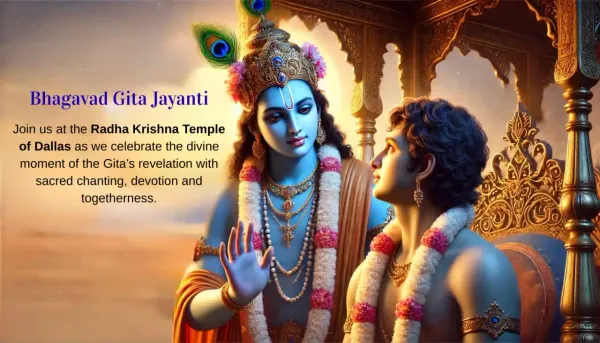
This was Arjun’s state of mind when he faced the battlefield of Kurukshetra. A fierce warrior, noble by nature, yet suddenly shaken by emotions, attachments, and fear. The people standing against him were not just enemies—they were his kin, his teachers, and his friends.
He turned to his charioteer—who was none other than Shree Krishna—and asked, "Why should I fight? Wouldn’t it be better to just walk away and seek inner peace?"
This moment of hesitation gave birth to one of the greatest spiritual teachings known to humanity—Karm Yog, the path of selfless action.
What Is Karm Yog, Really?
Karm Yog is not just a theory or philosophy—it’s a lifestyle. It is the practice of engaging fully in our responsibilities, not to satisfy ego or desire, but to fulfill our divine role in the cosmic order. It means working with focus, offering the results to God, and remaining internally detached—free from the rollercoaster of success and failure.
But what does this look like in real life?
To answer that, let’s explore some powerful stories and reflections that bring this wisdom to life.
The Story of the Nurse and the Mother

Swamiji often shares a compelling comparison between a nurse and a mother in a hospital.
Both may be attending to the same patient—a sick child. The mother is emotionally entangled, her joy and sorrow are tied to every heartbeat of the child. If the child recovers, she rejoices; if the condition worsens, she sinks.
On the other hand, the nurse tends to the same child with care and precision, but her inner peace remains unaffected. She gives her best, but her identity and happiness are not tied to the result.
This is the essence of Karm Yog: to perform every action sincerely, but without clinging to the outcome.
False Renunciation: The Story of Tavrit and Suvrit

The Puranas tell us of two brothers—Tavrit and Suvrit—who set off to attend a sacred discourse. On the way, a storm forced them to seek shelter in the nearest building, which turned out to be a brothel.
Tavrit, the elder, immediately left in disgust and continued toward the temple. Suvrit, younger and practical, chose to wait inside, eyes lowered, mind focused on God.
Tavrit arrived at the satsang but soon his thoughts wandered: “Maybe Suvrit is enjoying himself. I shouldn’t have been so rigid...” Meanwhile, Suvrit sat in the brothel with remorse, praying and yearning for divine company.
Both died that night. When the messengers of death arrived, they took Tavrit—not Suvrit.
The message is clear: In God’s eyes, it’s not where your body is, but where your mind is, that matters.
The Monkey Mind and the Mantra

Swamiji shares another story, light-hearted but profound.
A man once begged a sage for a powerful mantra to attain spiritual powers. Reluctantly, the sage said, “Here is the mantra: Om. But there’s one condition—you must not think of monkeys while chanting it.”
The man laughed. “Monkeys? Why would I think of monkeys?”
But as soon as he started chanting, all he could think about were monkeys—climbing, jumping, invading his every thought. He became obsessed, frustrated, and eventually gave up.
This is the human mind. Even when we sit still, our inner chatter runs wild. Karm Yog doesn’t ask us to suppress the mind through force—it teaches us to engage the mind with purpose. By dedicating our actions to God, we purify both the action and the actor.
Why Running Away Doesn’t Work

Many people feel that spirituality means giving up everything—quitting jobs, renouncing families, moving to forests or temples. But Shree Krishna clarifies that for most people, renunciation is not the path to success.
Swamiji humorously explains: if a born administrator tries to live as a renunciate in a forest, he will soon gather a group of tribals and start organizing them into a system. We are all driven by our inner nature, and our duty is not to suppress it, but to spiritualize it.
You may be a teacher, a business owner, an artist, a parent—whatever your calling, Karm Yog means fulfilling it as an offering to God, without ego, without greed, without fear.
The Mind in Modern Life: Practicing Karm Yog in the Office

Picture this: a busy office buzzing with phone calls, emails, deadlines, and tension. Among this chaos, one person sits calmly at his desk, focused, composed, unaffected by the storm of stress around him.
On his desk is a small image of Lord Krishna, and in his mind is a silent mantra: “I work for you, my Lord—not for praise, promotion, or applause.”
He attends meetings, sends emails, solves problems—but his mind is not agitated, because he has let go of the fruits. This is Karm Yog in the modern world.
Spirituality doesn’t require saffron robes or secluded caves. It requires a shift in intention.
Conclusion: The Freedom of Selfless Action
Karm Yog is not about passivity or indifference. It is the highest form of engagement, where we act with full intensity, yet remain internally untouched.
- Work hard, but don’t cling to outcomes.
- Serve others, but don’t expect recognition.
- Live in the world, but stay anchored in the soul.
This path does not pull us away from life—it elevates life itself.
Swami Mukundananda puts it beautifully:
“The greatest yogi is not the one who escapes the world, but the one who can smile and serve, even in the midst of it—without fear, without pride, and without regret.”
Live the Wisdom of Karm Yog
🕉️ Ready to turn your daily life into a spiritual practice?
🎥 Subscribe to Swami Mukundananda’s YouTube Channel for daily inspiration and Gita insights:
👉 Swami Mukundananda Official
📖 Read and reflect on the Bhagavad Gita with verse-by-verse guidance:
👉 Holy Bhagavad Gita – Explore Now