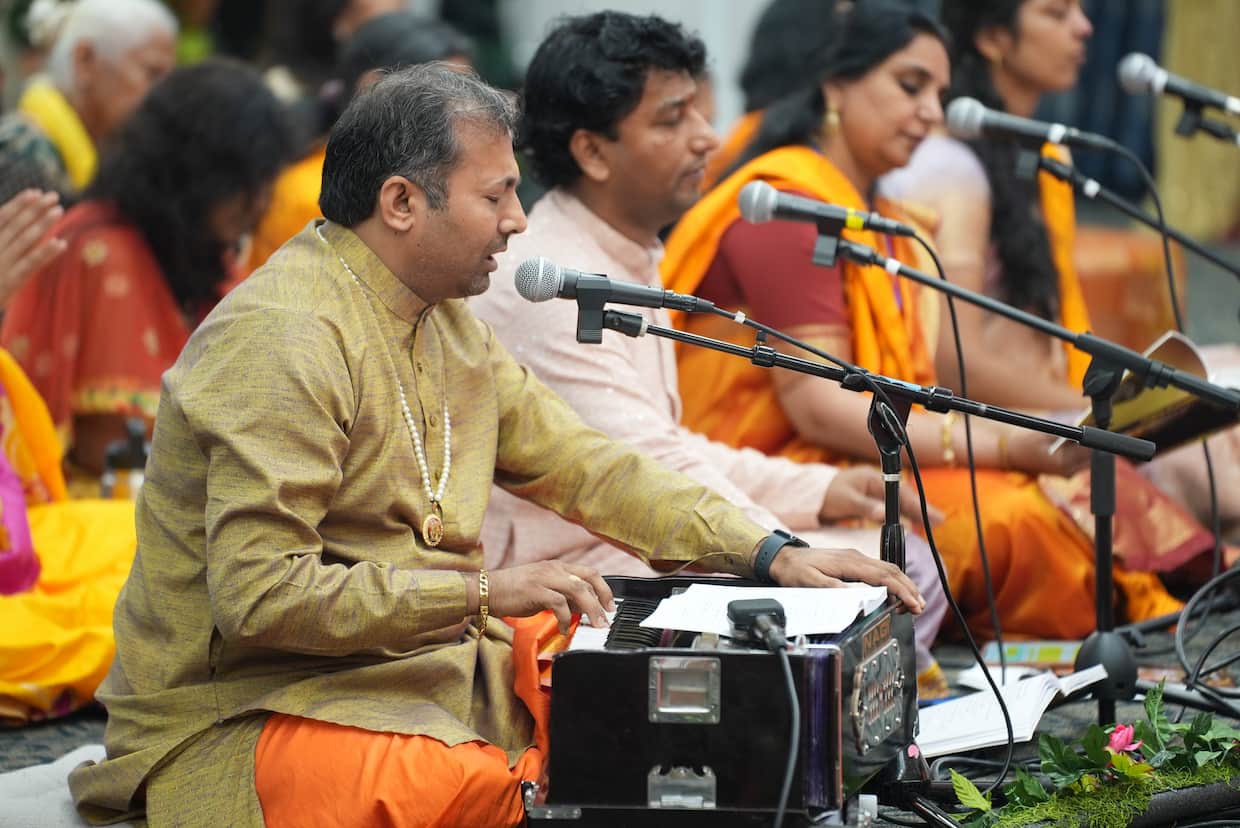
“A full moon in Purushottam Maas is not only a light in the sky. It is a reminder that the soul, too, can become full again through devotion.”
The Rare Full Moon of Purushottam Maas
Imagine a rare cosmic alignment where an extra month appears in the Hindu calendar, a month that does not belong to the usual twelve-month cycle. It is a time so unique that it is claimed by the Supreme Divine Himself. This sacred month is known as Adhik Maas or Purushottam Maas, and when the full moon rises during this period, it becomes a powerful spiritual doorway.
Jyeshtha Adhik Purnima 2026 is this hidden portal of grace. It is an extraordinary full moon that occurs during the Hindu intercalary month, the additional lunar month added to balance the lunar and solar calendars. Governed directly by Lord Purushottam, a divine form of Lord Vishnu, this Purnima is believed to act as a spiritual amplifier. Devotion becomes deeper, charity becomes more purifying, meditation becomes more peaceful and sincere prayers carry extraordinary spiritual weight.
Falling on May 31, 2026, Jyeshtha Adhik Purnima is not just another sacred date. It is a rare opportunity for karma cleansing, emotional healing, inner renewal and divine remembrance. The full moon represents completeness, while Purushottam Maas represents purification. Together, they create a sacred moment for seekers who wish to pause worldly distractions and turn the heart back toward God.
This day invites devotees to worship Lord Vishnu, perform Satyanarayan Puja, chant divine names, offer charity, practice Tridha Bhakti and reflect on the deeper purpose of life. It is not merely about observing a ritual. It is about entering a sacred rhythm where the mind becomes calm, the heart becomes humble and the soul remembers its eternal relationship with the Divine.
Why 2026 Is Special
Jyeshtha Adhik Purnima 2026 is rare because it falls during Adhik Jyeshtha Maas, creating a spiritually powerful full moon within an extra lunar month. This makes it a unique opportunity for Vishnu worship, Satyanarayan Puja, daan, japa and inner purification.
What Makes Jyeshtha Adhik Purnima Spiritually Powerful?
Every Purnima has its own spiritual beauty. The full moon represents fullness, clarity, nourishment and completion. It is a time when the mind becomes more sensitive, emotions become more visible, and spiritual practices can feel more powerful.
But Jyeshtha Adhik Purnima is not an ordinary full moon.
It comes during Adhik Maas, the sacred extra month that belongs especially to Lord Vishnu in His Purushottam form. The word “Purushottam” means the Supreme Person, the highest divine being beyond all limitations. For Vaishnav devotees, this month is especially connected with Lord Krishna, who is worshipped as the Supreme Purushottam.
This is why Jyeshtha Adhik Purnima 2026 becomes a rare spiritual meeting point. It carries the brightness of the full moon, the austerity of Jyeshtha, and the divine grace of Purushottam Maas. It is a day for cleansing karma, renewing devotion, offering charity, reading sacred texts, chanting divine names and returning to the soul’s real purpose.
Many festivals celebrate outer joy. This day invites inner purification.
Quick Spiritual Meaning at a Glance
| Aspect | Meaning |
|---|---|
| Adhik Maas | Extra month for spiritual correction |
| Jyeshtha | Tapas, heat, discipline and charity |
| Purnima | Fullness, clarity and emotional healing |
| Lord Vishnu | Protection, preservation and divine grace |
| Daan | Compassion expressed through action |
| Tridha Bhakti | Hearing, chanting and remembering God |
Date and Tithi of Jyeshtha Adhik Purnima 2026
In the Hindu calendar, each tithi, month, season and moon phase carries a spiritual mood. Jyeshtha Adhik Purnima 2026 is especially significant because it falls during Adhik Maas, also known as Purushottam Maas or Mal Maas. This extra lunar month appears roughly once every two to three years to keep the lunar calendar aligned with the solar cycle.
| Detail | Information |
|---|---|
| Festival | Jyeshtha Adhik Purnima 2026 |
| Observance Date | Sunday, May 31, 2026 |
| Month | Jyeshtha Adhik Maas / Purushottam Maas |
| Also Known As | Adhik Maas, Purushottam Maas, Mal Maas |
| Jyeshtha Adhik Maas Begins | Sunday, May 17, 2026 |
| Purnima Tithi Begins | Saturday, May 30, 2026, at 11:57 AM |
| Purnima Tithi Ends | Sunday, May 31, 2026, at 2:14 PM |
| Adhik Maas Ends | Monday, June 15, 2026 |
| Main Observances | Snan, daan, puja, japa, vrat, Satyanarayan Puja, Vishnu Puja |
| Timing Note | Timings are based on New Delhi panchang listings. Devotees should check their local panchang for exact vrata, puja and snan timings. |
For many devotees, May 31, 2026 will be treated as the central day for snan, daan, puja, japa and spiritual observances. Those planning a vrat, temple visit, Satyanarayan Puja, Vishnu Puja, Govardhan Parikrama, Yamuna snan or special daan should check the local panchang or consult a family priest.

Meaning of Adhik Maas
The word “Adhik” means extra or additional. Adhik Maas is the extra month inserted into the Hindu lunar calendar to keep it aligned with the solar year. A lunar year is shorter than a solar year, so after a certain period, an extra month is added to balance the difference.
On the surface, this is a calendar correction. On a deeper level, it is a divine correction.
Life also falls out of alignment. Our outer actions may move faster than our inner growth. Our ambitions may run ahead of our values. Our duties may become mechanical. Our mind may become crowded with desire, comparison and restlessness. Adhik Maas arrives like a sacred pause. It says, “Stop. Return. Realign.”
This is why Adhik Maas is not usually considered ideal for major worldly beginnings like marriage, griha pravesh or certain business launches. It is not because the month is negative. Rather, the focus of the month is inward. It is a time to begin spiritual habits, not worldly expansions. It is a time to reduce ego, not increase display. It is a time to cleanse the mind, not decorate the outer life.
Why Is It Called Purushottam Maas?
The most beautiful explanation comes from the Padma Purana.
According to the traditional story, all the twelve months had their presiding deities. Each month had honor, identity and sacred purpose. But the extra month had no such position. Since it did not belong to the regular cycle, people began to avoid it. They did not choose it for auspicious ceremonies. They did not celebrate it like other months. It came to be known as Mal Maas, the neglected or impure month.
The month felt rejected.
Out of compassion, Lord Vishnu took pity on the neglected month, declared Himself its ruling deity, and gave it His own name—Purushottam. He blessed the month, making it one of the most spiritually potent periods in the Hindu calendar for devotion, charity, and inner purification.
Every person carries some rejected part of the self. A forgotten prayer. A wounded memory. A failed effort. A habit we regret. A longing we hide. A feeling that we are not worthy of grace. The story of Purushottam Maas says that what the world rejects, God can accept. What seems impure can become sacred when offered to the Divine.
That is the heart of Jyeshtha Adhik Purnima.
It is the full moon of divine acceptance.
A Purana Story: Draupadi, Krishna and the Power of Purushottam Maas

A lesser-used story connected with Purushottam Maas speaks of Draupadi and the Pandavas. In one of her previous births, Draupadi was born as a Brahmin girl. She had devotion, purity and religious inclination, yet she failed to understand the greatness of Purushottam Maas. Through ignorance, she neglected the sacred month and did not honor its vrata with proper faith.
Time moved forward, and the same soul was born as Draupadi, the queen of the Pandavas. Though she was blessed with greatness, courage and closeness to Lord Krishna, her life was not free from suffering. She faced humiliation in the royal court, exile in the forest, separation from comfort, and the painful sight of adharma rising before her eyes.
During those difficult years, Lord Krishna revealed to the Pandavas the glory of Purushottam Maas. He explained that this sacred month is not ordinary time. It is a divine opportunity for cleansing past karma, strengthening devotion and receiving the grace of the Supreme Lord. Following Krishna’s advice, Draupadi and the Pandavas observed Purushottam Maas with faith, worship, charity, humility and remembrance of God.
The story teaches that sacred time should not be neglected. A person may be strong, learned or noble, but without humility before divine timing, life can still become heavy with karmic lessons. Yet the story also gives hope. When Draupadi and the Pandavas turned toward Krishna’s instruction, their path changed. Their suffering became a means of purification, and their lost kingdom was eventually restored.
For Jyeshtha Adhik Purnima 2026, this story carries a powerful message. The full moon of Purushottam Maas is not only a day for ritual. It is a day to repair spiritual neglect. It is a day to return to the practices we postponed, the prayers we forgot, the vows we broke and the devotion we allowed to become weak. Like Draupadi, the devotee can stand before Lord Krishna and say, “I may have forgotten sacred time before, but today I return with faith.”
This makes Jyeshtha Adhik Purnima a day of renewal. The light of the full moon becomes the light of remembrance, and the grace of Purushottam Maas becomes a path back to dharma.
“This story makes Jyeshtha Adhik Purnima 2026 especially relevant for devotees who want to correct past neglect and restart their spiritual life with sincerity.
Swami Mukundananda’s Insight:
Swami Mukundananda often emphasizes that spirituality is not limited to outer rituals. Real devotion begins when the mind is purified and lovingly turned toward God. This insight is especially relevant for Jyeshtha Adhik Purnima 2026, because Purushottam Maas is not merely a calendar event; it is a sacred opportunity to reshape the inner world.
According to Swami ji’s teachings, practices such as chanting, meditation, satsang and daily sadhana help refine consciousness and bring the devotee closer to Lord Krishna. Therefore, Jyeshtha Adhik Purnima should not be treated as a one-day observance only. It can become a turning point for regular spiritual discipline.
A devotee may begin with simple practices such as chanting the divine names, reading the Bhagavad Gita, meditating on Radha Krishna, practicing gratitude and offering daily actions to God. In this way, snan, daan, fasting, mantra and remembrance become more than rituals; they become steps toward inner purification and true bhakti.
Trida Bhakti: A Threefold Practice for Jyeshtha Adhik Purnima

One meaningful way to observe Jyeshtha Adhik Purnima 2026 is through Trida Bhakti, the threefold practice of devotion taught by Jagadguru Shri Kripaluji Maharaj and shared by Swami Mukundananda. It includes Shravan, Kirtan and Smaran, which means hearing God’s glories, chanting His names and remembering Him with the mind.
On this sacred Purnima, devotees can practice Shravan by listening to the Bhagavad Gita, Shrimad Bhagavatam, Vishnu Sahasranama, Radha Krishna katha or the teachings of saints. Kirtan can be practiced by chanting mantras such as “Om Namo Bhagavate Vasudevaya,” “Om Namo Narayanaya,” or the Hare Krishna Mahamantra. Smaran means sitting quietly and remembering the names, form, qualities and pastimes of Lord Krishna.
Through Trida Bhakti, even those who cannot visit a temple can observe the day meaningfully at home. By hearing, chanting and remembering Shree Krishna, Jyeshtha Adhik Purnima becomes a living experience of devotion, purification and inner connection with God.
The Spiritual Mood of Jyeshtha Adhik Purnima
Jyeshtha usually falls during the intense heat of summer in many parts of India. The sun is strong, water becomes precious, and the body feels the weight of heat. This is why Jyeshtha teaches tapas, discipline and endurance. It reminds devotees that comfort is not the goal of spiritual life; purity is.
During this month, acts such as water donation, feeding the needy, helping travelers, serving cows, offering shade and supporting the poor are considered especially meaningful. In the burning heat of Jyeshtha, even a simple act of giving water becomes a sacred offering.
Purnima, the full moon day, adds another layer of meaning. In Hindu thought, the moon is closely connected with the mind. A full moon symbolizes fullness of awareness, emotional clarity and spiritual illumination. On Jyeshtha Adhik Purnima 2026, the discipline of Jyeshtha joins the grace of Purushottam Maas and the fullness of Purnima.
This makes the day ideal for inner reflection. The devotee may ask, “What part of my life needs to return to God?” It may be anger, anxiety, greed, pride, jealousy, laziness or spiritual dryness. The full moon does not hide things; it reveals them. Jyeshtha Adhik Purnima is a day to let that light fall on the inner life.
Spiritual Significance of Jyeshtha Adhik Purnima 2026
According to Vaishnava traditions:
“Purushottama māse kṛtaṁ sarvaṁ akṣayaṁ bhavati.”
All spiritual acts done in Purushottam Maas become inexhaustibly fruitful.
According to Vaishnava tradition, spiritual practices performed during Purushottam Maas are believed to bring lasting merit. Since Jyeshtha Adhik Purnima falls during this sacred extra month dedicated to Lord Vishnu, the day is considered especially powerful for prayer, fasting, charity, meditation and remembrance of God.
This Purnima is observed as a time for inner purification and karma cleansing. Devotees worship Lord Vishnu with tulsi leaves, flowers, lamps, fruits and sattvic bhog. Many chant Vishnu Sahasranama, recite the Bhagavad Gita, or repeat mantras such as “Om Namo Bhagavate Vasudevaya” and “Om Namo Narayanaya.” These practices help turn the mind toward the Supreme and bring peace, purity and steadiness.
Many families also perform Satyanarayan Puja on this day. Satyanarayan, a compassionate form of Lord Vishnu, is associated with truth, protection, gratitude and righteous fulfillment. Performing this puja on Jyeshtha Adhik Purnima is considered especially meaningful because the power of Purnima joins with the sanctity of Purushottam Maas.

Shiva Worship, Charity and Inner Purification
Another unique aspect of Jyeshtha Adhik Purnima is its connection with Lord Shiva. Although Adhik Maas is primarily associated with Lord Vishnu, many devotees also worship Lord Shiva on this day by performing Shiva Abhishekam and offering water, milk, bel leaves and prayers. This gives the observance a beautiful message of spiritual harmony, reminding devotees that sincere worship ultimately leads the heart toward the same Supreme Divine.
The offering of bel leaves carries deep symbolism. The three leaves are often seen as representing purity of thought, word and action, or the surrender of the three gunas to the Divine. On this sacred Purnima, the offering becomes a reminder that true worship is not only outward ritual, but also inner purification.
Charity is also an important part of this day. Since Jyeshtha falls during the heat of summer, donating water, food, fruits, buttermilk, earthen pots, clothes or other useful items is considered especially meaningful. Jal daan, or offering water, becomes a direct form of seva to those in need.
In this way, Jyeshtha Adhik Purnima brings together worship, purification and compassion. It invites devotees to honor Lord Vishnu, seek Lord Shiva’s blessings, calm the mind through prayer and turn devotion into service.
This keeps the new information and removes the repeated full moon/emotional healing/inner beginning points.
Dos and Don’ts for Jyeshtha Adhik Purnima
Dos
- Begin the day with an early bath, a clean puja space and a sincere sankalp.
- Worship Lord Vishnu, Lord Krishna or Lord Satyanarayan with tulsi, flowers, lamp, fruits and sattvic bhog.
- Chant divine names such as “Om Namo Bhagavate Vasudevaya,” “Om Namo Narayanaya,” or the Hare Krishna Mahamantra.
- Read or listen to the Bhagavad Gita, Vishnu Sahasranama, Satyanarayan Katha or Radha Krishna katha.
- Keep the mind sattvic by speaking gently, thinking positively and acting with compassion.
- Give charity according to your capacity, especially water, fruits, food, clothes or support to the needy.
- Observe fasting or simple sattvic eating if health and tradition allow.
- Use the day for prayer, purification, forgiveness and self-correction.
Don’ts
- Do not treat the day like an ordinary routine or rush through spiritual practices.
- Avoid anger, harsh speech, gossip, jealousy and unnecessary arguments.
- Avoid overeating, laziness, wasteful habits and distractions that pull the mind away from devotion.
- Do not perform charity with pride, show or expectation of praise.
- Avoid major worldly beginnings during Adhik Maas, such as weddings, housewarming ceremonies or large material purchases, according to tradition.
- Do not reduce the day to a ritual checklist. The real purpose is inner transformation, humility and devotion.
Simple Sadhana Plan for May 31, 2026
Morning: Begin with bath, sankalp, and Vishnu or Krishna puja.
Afternoon: Perform charity, offer water donation, and read the Bhagavad Gita.
Evening: Perform Satyanarayan Puja, chant divine names, and meditate under the full moon.
Night: End the day with gratitude prayer and quiet remembrance of God.
Inner Meaning: The Rejected Month and the Human Heart

The story of Purushottam Maas has a special relevance in modern life.
Many people today feel spiritually disconnected. They may have success but no peace. They may have relationships but no inner rest. They may have information but no wisdom. They may know many things but not know themselves.
Some feel rejected by others. Some feel rejected by God. Some feel they have made too many mistakes to return to prayer.
Purushottam Maas answers this pain.
The rejected month did not become sacred because it was perfect. It became sacred because it surrendered to Lord Vishnu.
This is the secret of Jyeshtha Adhik Purnima. The soul does not need to pretend. It needs to turn toward God.
If your mind is restless, offer it.
If your heart is tired, offer it.
If your past is heavy, offer it.
If your devotion is weak, offer it.
If your faith is small, offer it.
The Lord who accepted the forgotten month can also accept the forgotten corners of your heart.A Simple Home Puja Vidhi for Jyeshtha Adhik Purnima 2026
Ask Yourself on Jyeshtha Adhik Purnima
Before the day ends, take a few quiet moments for self-reflection. The power of this Purnima is not only in rituals, but also in honest inner change.
- What spiritual practice have I neglected?
- Which habit do I want to release?
- Whom do I need to forgive?
- How can I serve someone today?
- What can I offer to Lord Vishnu or Shree Krishna with sincerity?
This small section will make the blog feel more personal, practical and unique.
Conclusion: Let the Full Moon Become a Turning Point
Jyeshtha Adhik Purnima 2026 is more than a rare date in the Hindu calendar. It is a sacred opportunity to pause, purify and return to Lord Vishnu with a sincere heart. During Purushottam Maas, every prayer, mantra, act of charity and moment of remembrance becomes a step toward inner transformation.
The story of Draupadi and the Pandavas reminds us that even hardship can become a path to grace when guided by Lord Krishna. This Purnima invites devotees to restart forgotten prayers, leave behind negative habits, forgive with humility and strengthen daily sadhana.
On May 31, 2026, let the full moon become a symbol of renewal. Light a lamp, chant the Lord’s name, offer water or food in charity and sit for a moment in quiet remembrance. As the moon becomes full in the sky, may devotion become full in the heart, and may the grace of Purushottam guide every sincere seeker toward peace, purity and divine love.
Key Takeaways
- Jyeshtha Adhik Purnima 2026 falls on May 31, 2026.
- It occurs during Purushottam Maas, the sacred extra month dedicated to Lord Vishnu.
- The day is ideal for Satyanarayan Puja, Vishnu worship, japa, daan, fasting and meditation.
- Tridha Bhakti helps devotees practice Shravan, Kirtan and Smaran.
- The day reminds seekers to restart spiritual discipline and return to God with sincerity.
Call to Action
How will you observe Jyeshtha Adhik Purnima 2026? Inspired by Swami Mukundananda’s teachings, let this sacred day become more than a ritual. Choose one sincere practice that brings your mind closer to God, chanting the divine names, meditating on Radha Krishna, listening to satsang, reading the Bhagavad Gita, practicing gratitude or offering charity.
Even a small step taken with devotion can become the beginning of inner transformation. This Jyeshtha Adhik Purnima, pause for a moment and ask yourself: “What can I offer to God today : my time, my prayer, my service or my heart?” Let the full moon of Purushottam Maas inspire you to strengthen your daily sadhana and deepen your loving remembrance of Shree Krishna.
FAQs
1. When is Jyeshtha Adhik Purnima 2026?
Jyeshtha Adhik Purnima 2026 will be observed on May 31, 2026. The Purnima tithi begins on May 30, 2026, at 11:57 AM and ends on May 31, 2026, at 2:14 PM, according to New Delhi panchang timings. Devotees should check their local panchang for exact observance timings.
2. Why is Jyeshtha Adhik Purnima 2026 special?
This Purnima is special because it falls during Adhik Maas, also known as Purushottam Maas, the sacred extra month dedicated to Lord Vishnu. A regular Purnima is already considered auspicious, but when it occurs in Purushottam Maas, it becomes especially meaningful for prayer, fasting, charity, mantra chanting and inner purification.
3. Which deity is worshipped on Jyeshtha Adhik Purnima?
Devotees primarily worship Lord Vishnu, Lord Krishna or Lord Satyanarayan on this day. Many families also perform Satyanarayan Puja. Some devotees also worship Lord Shiva through Shiva Abhishekam, especially by offering water, milk, bel leaves and prayers.
4. What should devotees do on Jyeshtha Adhik Purnima?
Devotees may take an early bath, clean the puja space, worship Lord Vishnu with tulsi, flowers, fruits and a diya, chant mantras such as “Om Namo Bhagavate Vasudevaya” or “Om Namo Narayanaya,” read the Bhagavad Gita or Vishnu Sahasranama, observe vrat, offer charity and spend time in meditation or remembrance of God.
5. What is the significance of Trida Bhakti on Jyeshtha Adhik Purnima?
Trida Bhakti, which includes Shravan, Kirtan and Smaran, is a meaningful way to observe Jyeshtha Adhik Purnima. Devotees can practice Shravan by listening to the Bhagavad Gita, Shrimad Bhagavatam, Vishnu Sahasranama or satsang. Kirtan can be practiced by chanting the divine names of Lord Vishnu or Shree Krishna. Smaran means remembering God with love and devotion. Through these three practices, devotees can turn this sacred Purnima into a day of inner connection, purification and bhakti.
Let this full moon not only brighten the sky, but also illuminate the forgotten temple within the heart
Further Reading:
 JKYog Team