Introduction: The Crisis Within
Low self-esteem is one of the most paralyzing internal struggles of our age. It breeds self-doubt, comparison, hopelessness, and even depression. We may appear successful externally, yet battle a deep void of inadequacy within. The Bhagavad Gita, one of the greatest spiritual guides, does not ignore this human predicament—it addresses it head-on through the character of Arjuna.
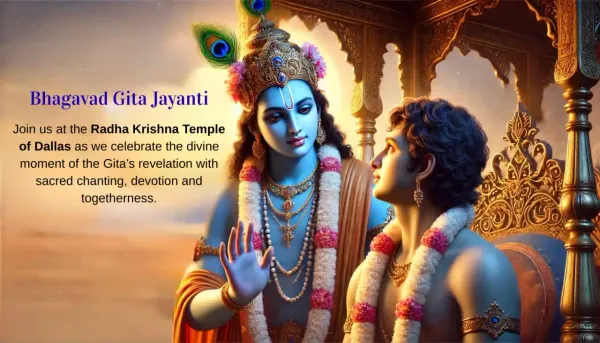
Standing on the battlefield of Kurukshetra, Arjuna experiences complete psychological collapse. Overwhelmed by self-doubt and attachment, he drops his bow and declares he will not fight. This moment of intense internal conflict gives birth to one of the most profound dialogues in human history—the Bhagavad Gita.
Let us explore how the teachings of the Gita, supported by timeless stories from the Ramayan, Puranas, Mahabharat, and the wisdom of saints, can help us overcome low self-esteem and reclaim our spiritual strength.
1. Recognize the Divine Within You
📖 Bhagavad Gita 2.13
“Just as the boyhood, youth, and old age come to the embodied Soul in this body, in the same manner, is the attaining of another body; the wise man is not deluded at that.”
🔗 Read Verse
Lord Krishna begins by correcting Arjuna’s misconception about identity. We are not our mind, body, or emotions—we are the ātman, the eternal soul. When we forget our divine identity, we measure our worth based on fleeting standards—appearance, success, or others’ opinions.
Story: Lord Hanuman’s Awakening: A Story from the Ramayana

In the great Indian epic Ramayana, Lord Hanuman is one of the central and most revered characters. He is known for his immense strength, unwavering devotion to Lord Rama, and divine qualities. However, there’s a lesser-known episode in the Ramayana that beautifully illustrates how even the mightiest can forget their true potential—and how it takes inner awakening to rise again.
The Curse That Clouded Hanuman’s Memory
As a child, Hanuman was exceptionally powerful and mischievous. He was so strong and playful that he often disrupted the sages during their prayers and spiritual practices. In frustration—but also with a noble intention—some sages placed a unique curse on him:
“You will forget your own strength and power until someone reminds you of it.”
This wasn’t a punishment but rather a way to ensure Hanuman would use his powers wisely and only when needed. It made Hanuman humble and kept his strength dormant, like fire concealed under ashes.
The Crisis That Sparked Awakening
Years later, when Sita (Lord Rama’s wife) is abducted by Ravana and taken to Lanka, Rama’s army of Vanaras (monkey warriors) is searching for her. They arrive at the ocean’s edge, unsure how to cross the vast sea to reach Lanka. That’s when the question arises: Who among them is capable of leaping across the ocean?
Everyone is silent, until Jambavan, the wise elder bear-warrior, turns to Hanuman.
Jambavan’s Words of Wisdom
Jambavan begins to praise Hanuman and recount his past glories. He reminds Hanuman of the time he soared into the skies to eat the sun, mistaking it for a fruit. He recalls Hanuman’s divine parentage—being the son of Vayu, the wind god—and his extraordinary strength, speed, and wisdom.
As Jambavan speaks, something magical happens.
Hanuman’s inner memory awakens.
The fog of forgetfulness lifts.
His divine nature resurfaces.
Suddenly, Hanuman remembers who he truly is.
The Mighty Leap Across the Ocean

With full confidence restored, Hanuman roars with energy, grows in size, and prepares for his epic journey. He chants Lord Rama’s name and leaps across the ocean with such force that mountains shake and waves rise.
This leap is not just physical—it’s symbolic of rising above self-doubt and stepping into one’s dharma (divine duty).
Hanuman then finds Sita in Lanka, assures her of Rama’s coming rescue, burns part of Lanka to weaken Ravana’s morale, and returns triumphantly. This act becomes one of the most iconic moments in the Ramayana.
The Inner Message: A Metaphor for Us All
This story is deeply symbolic of the human condition.
Just like Hanuman:
- We often forget our own divine identity and inner strength due to life's challenges, limiting beliefs, or past experiences (the curse).
- We look outward for validation, but true self-esteem comes from within.
- It takes the words of a spiritual guide (like Jambavan) or inner reflection to remind us of who we really are.
- When we remember our spiritual nature—our eternal soul, our connection with God—we become fearless, purposeful, and capable of extraordinary feats.
Swami Mukundananda often explains that:
“Self-esteem is not built by accumulating external achievements, but by realizing your inherent divinity as a soul—a part of God.”
Life Lessons from Hanuman’s Awakening
- We are more powerful than we believe.
- Our limitations are often self-imposed or born from forgetfulness of our true nature.
- Spiritual guidance is essential.
- Just as Jambavan reminded Hanuman, a true guru or mentor can awaken our dormant potential.
- Devotion gives strength.
- Hanuman didn’t act for pride or fame. His power was rooted in love and devotion for Lord Rama.
- Remembering who we are changes everything.
- We are not mere bodies or minds—we are divine souls with infinite potential.
2. Replace Self-Doubt with Svadharma (Your Sacred Duty)
📖 Bhagavad Gita 2.31
“Considering your dharma, you should not waver. For a warrior, there is nothing more honorable than a righteous war.”
🔗 Read Verse
Arjuna is paralyzed by doubt—questioning his capacity and morality. Krishna urges him to perform his svadharma—his personal duty aligned with his nature. When we forget our unique role in the universe, we fall into envy, comparison, and guilt.
3. Let Go of the Fruits of Action
📖 Bhagavad Gita 2.47
“You have a right to perform your prescribed duties, but you are not entitled to the fruits of your actions.”
🔗 Read Verse
Perfectionism and fear of failure fuel low self-worth. Krishna liberates us by teaching karma yoga—to act sincerely without attachment to results. Your value does not depend on success; your sincerity and intention are what matter most.
Saint’s Story: Swami Vivekananda’s Early Failure
Before becoming famous, Swami Vivekananda faced rejection and ridicule. But he continued serving with integrity, not seeking fame. Eventually, the world recognized his worth.
🪷 Lesson: You are worthy, not because you succeeded, but because you tried with sincerity and offered it to God.
4. Conquer the Mind, Conquer the Self
📖 Bhagavad Gita 6.5
“Elevate yourself through the power of your mind, and not degrade yourself. The mind alone can be the friend and the enemy of the self.”
🔗 Read Verse
Low self-esteem is often a result of a negative, undisciplined mind. Krishna teaches that the mind is both a battlefield and a chariot—if untrained, it will sabotage us; if tamed, it will elevate us.
The Puranic Story of King Yayati: A Journey from Desire to Detachment

King Yayati, a powerful and illustrious monarch from the Chandravansha (Lunar dynasty), is a memorable figure in the Mahabharata and the Puranas. His story is a profound lesson on the consequences of unchecked desires and the power of repentance and wisdom.
Indulgence and the Curse
Yayati was a righteous king by most accounts, but he was also deeply attached to sensual pleasures. He married Devayani, the daughter of the sage Shukracharya, and also took Sharmishtha, her companion, as his second wife under controversial circumstances. This enraged Shukracharya, who cursed Yayati with premature old age, turning him into an aged man with grey hair and a weak body.
Yayati, distressed by the sudden end to his youth, pleaded for mercy, expressing his desire to continue enjoying the pleasures of life. Shukracharya, though stern, gave him a way out — if any of Yayati’s sons were willing to exchange their youth for his old age, the curse could be reversed temporarily.
Exchange of Youth
Yayati approached each of his sons, but only Puru, his youngest and most obedient son, agreed to take on his father’s old age. Yayati regained his youth and resumed his pursuit of sensual enjoyment. He indulged in pleasures not for days or years, but for a thousand years — surrounded by luxury, beauty, and comfort.
Yet, no amount of indulgence satisfied him.
Realization and Regret
Eventually, Yayati came to a powerful realization. He declared:
"Desire is never satisfied by indulgence. Like fuel added to fire, it only blazes more brightly."
He understood that no matter how much one chases external pleasure, the thirst of desire remains unquenched. True fulfillment lies not in gratifying the senses, but in mastering the mind and turning inward toward higher truths.
Filled with remorse, Yayati returned his youth to Puru and took back the old age. As a gesture of deep appreciation, he crowned Puru as his successor, stating that Puru's obedience and sacrifice made him the most deserving.
Legacy and Spiritual Wisdom
Yayati then retired to the forest, choosing a life of tapasya (austerity) and self-reflection. Through penance and inner transformation, he restored his spiritual dignity and attained peace.
His life story serves as a vivid reminder of the illusion of sensory pleasures and the importance of self-discipline. The Bhagavad Gita echoes this theme when Lord Krishna says:
"He who is not disturbed by the incessant flow of desires... attains peace, and not the man who strives to satisfy such desires."
(Bhagavad Gita 2.70)
Lessons from Yayati’s Life
- Desire is insatiable – The more it is fed, the stronger it becomes.
- True youth is not physical – It lies in a mind disciplined by wisdom.
- Regret, when followed by reflection and repentance, leads to growth.
- Spiritual realization often begins only after worldly pleasures prove hollow.
King Yayati’s transformation from indulgence to introspection, and from regret to renunciation, offers a timeless lesson for anyone seeking fulfillment in a world full of distractions.
5. Embrace Detachment, Not Indifference
📖 Bhagavad Gita 5.10
“One who performs their duty, renouncing the results and placing them in the hands of God, is unaffected by sinful reactions.”
🔗 Read Verse
Krishna teaches the art of detachment—not carelessness, but emotional resilience. Often, low self-esteem arises from over-identification with mistakes, opinions, or losses.
6. See the Three Gunas at Work
📖 Bhagavad Gita 14.5
“Sattva, rajas, and tamas—the three modes—bind the soul to the body.”
🔗 Read Verse
Our personality and mental states are influenced by the gunas—Sattva (purity), Rajas (passion), and Tamas (ignorance). Tamas fosters self-pity and inertia, while Sattva brings clarity and confidence.
Certainly! Here's a detailed and engaging explanation of Karna’s inner struggle in the Mahabharata, along with the spiritual lessons it teaches, especially in light of the three gunas—Tamas, Rajas, and Sattva—as described in the Bhagavad Gita.
Mahabharat Insight: Karna’s Inner Struggle – A Battle Within

Among the many complex characters in the Mahabharata, Karna stands out as one of the most tragic and deeply conflicted. A warrior of extraordinary valor, generosity, and skill, Karna could have been a hero of dharma. Instead, he found himself entangled in a web of inner turmoil and external misjudgments, driven not just by fate, but by the inner forces of Tamas and Rajas.
Karna’s Birth and Identity Crisis
Karna was born to Kunti and the Sun God (Surya) before her marriage, through a divine boon. Abandoned at birth and raised by a charioteer’s family, Karna grew up constantly battling social rejection, identity struggles, and a deep sense of injustice. Though he rose through sheer merit to become a great archer and warrior, his heart remained bruised by feelings of exclusion and low self-worth.
This unresolved inner pain became fertile ground for the Tamasic guna (quality of darkness, ignorance, and delusion) to take root.
Manipulated by Tamas: Victimhood and Resentment
The Tamasic mindset often expresses itself through self-pity, bitterness, and mental inertia. Karna’s attachment to his victim narrative made him vulnerable to Duryodhana’s manipulations. Duryodhana did not befriend Karna out of pure love or respect, but because he saw in him a powerful pawn against the Pandavas.

Karna’s blind loyalty to Duryodhana stemmed less from gratitude and more from a deep need for validation, a trait of Rajasic craving mixed with Tamasic delusion. Even when he learned about his true identity as Kunti’s son and the rightful heir to the Pandava legacy, he rejected her plea for peace—unable to detach from the life he had invested himself in.
Driven by Rajas: Ambition, Ego, and Revenge
The Rajasic guna is characterized by passion, ambition, pride, and attachment to results. Karna was driven by:
- A desire to prove his worth to the world,
- Ego fueled by being labeled “sutaputra” (charioteer’s son),
- A burning need for revenge against those who mocked him,
- And loyalty rooted more in emotion than in dharma.
Even when his conscience pricked him—such as during the episode of Draupadi’s disrobing or when Krishna offered him the throne—Karna suppressed his inner voice. The pull of Rajas clouded his judgment and kept him on the path of adharma, despite knowing it would lead to destruction.
Spiritual Lesson: Lift Yourself Out of Tamas
Karna’s downfall was not because he lacked power or wisdom—it was because he did not overcome the darkness within. The Bhagavad Gita teaches that true transformation begins by identifying and transcending the lower gunas:
“Tamas binds the soul through negligence, laziness, and sleep.”
(Bhagavad Gita 14.8)
“Rajas binds one through attachment to action and the fruits of action.”
(Bhagavad Gita 14.7)
To evolve spiritually and emotionally, one must:
✅ Let go of Tamasic thoughts like victimhood, resentment, and apathy.
✅ Control Rajasic impulses like ego, ambition, and unhealthy attachments.
✅ Embrace Sattva through:
- Clean living and routine
- Association with noble, spiritually grounded individuals
- Scriptural study and reflection (Svadhyaya)
- Service (Seva) and detachment from outcomes
Conclusion: Karna’s Inner Battle is Our Own
Karna symbolizes the struggle of the noble soul caught in lower tendencies. His story teaches us that external success means little if inner clarity is absent. Each of us, in moments of hurt, pride, or temptation, faces our own "Karna moment." The question is—will we rise with Sattva, or fall under the weight of Tamas and Rajas?
"Let a man lift himself by his own mind; let him not degrade himself. For the mind alone is the friend of the self, and the mind alone is the enemy of the self."
— Bhagavad Gita 6.5
7. Cultivate Bhakti (Devotion) for Inner Confidence
📖 Bhagavad Gita 9.22
“To those who are devoted to Me, I carry what they lack and preserve what they have.”
🔗 Read Verse
When you anchor your identity in God’s love, not in the world's judgment, you become unshakable. Bhakti helps us see ourselves as unconditionally loved.
Life of Saint: Surdas
Surdas was blind and ridiculed. Yet, through intense devotion to Krishna, he attained wisdom, poetic brilliance, and divine vision. His self-worth came not from sight but spiritual insight.
🪷 Lesson: Bhakti rewrites your self-image—from unworthy to God’s beloved.
8. Understand the Five Causes of Action
📖 Bhagavad Gita 18.14
“The seat of action, the doer, the instruments, the various kinds of efforts, and Divine will—these are the five causes of action.”
🔗 Read Verse
You are not the sole architect of outcomes. Krishna reveals that success and failure depend on many factors, including Divine will.
Story: Gajendra Moksha

Gajendra tried to free himself from a crocodile’s grip but failed. Only when he surrendered to Lord Vishnu was he saved. Recognizing higher forces restores humility and relieves self-blame.
🪷 Lesson: Do your best, but surrender the rest. Self-worth is not tied to outcomes.
9. Seek the Right Association
📖 Bhagavad Gita 3.39
“Knowledge is covered by selfish desire—eternal enemy of the wise.”
🔗 Read Verse
Krishna warns how our clarity is clouded by negative influences. In the Patanjali Yog Sutra (1.33), it’s said that cultivating friendship with the joyful, compassion for the sorrowful, and detachment from the wicked brings mental peace.
Story: Prahlad and Hiranyakashipu

Prahlad, though born in a demonic family, thrived due to his association with Lord Narayana. His clarity, faith, and confidence shone even in adversity.
🪷 Lesson: Associate with the wise and spiritual—your environment shapes your esteem.
10. Final Liberation Lies in Surrender
📖 Bhagavad Gita 18.66
“Abandon all varieties of dharma and just surrender unto Me. I shall deliver you from all sinful reactions. Do not fear.”
🔗 Read Verse
The ultimate cure for low self-esteem is divine surrender. Krishna doesn’t demand perfection—He asks for trust. When you surrender, your burdens, regrets, and doubts are all carried by the Divine.
Ramayan Insight: Vibhishan’s Refuge

Vibhishan left his demonic brother Ravan and surrendered at Ram’s feet. Despite doubts from others, Lord Ram accepted him with open arms. Vibhishan’s dignity was restored through surrender.
🪷 Lesson: Surrender is not weakness—it is the gateway to divine empowerment.
Conclusion: You Are More Than Enough
The Bhagavad Gita shows that the solution to low self-esteem is not external validation, but inner revelation. Arjuna’s journey—from despair to clarity—is symbolic of our own. By:
- Understanding our divine nature (2.13)
- Letting go of fruit-based anxiety (2.47)
- Training the mind (6.5)
- Cultivating devotion (9.22)
- Surrendering to God (18.66)
…we can heal the wounds of the ego and rise in spiritual confidence.
🌸 As Swami Mukundananda beautifully puts it:
“When you surrender your life to God, you stop measuring your worth by worldly standards. You start seeing yourself through His eyes—eternally loved, eternally worthy.”
Transform Your Life with Bhagavad Gita
Join the Bhagavad Gita online course on JKYog Online Classes!
Download the Bhagavad Gita Krishna Bhakti app: Android | iOS and start your spiritual journey!
FAQs
1. How does the Bhagavad Gita help overcome low self-esteem?
The Bhagavad Gita teaches us to recognize our divine soul beyond body and mind, encouraging self-worth based on spiritual identity rather than external validation.
2. What can Arjuna’s story teach us about dealing with self-doubt?
Arjuna’s crisis shows that self-doubt is natural, but reconnecting with one’s svadharma (personal duty) and inner divinity can restore courage and clarity.
3. How does detachment from outcomes improve self-esteem?
By focusing on sincere effort instead of results, as Krishna teaches in Karma Yoga, one frees the mind from fear of failure and builds self-confidence.
4. What role do the three gunas play in self-esteem?
Sattva (purity) promotes confidence and clarity, Rajas (passion) can cause restlessness, and Tamas (ignorance) leads to inertia and self-pity; cultivating Sattva helps overcome low self-esteem.
5. Can stories like Hanuman’s and Yayati’s help in personal transformation?
Yes, these stories symbolize awakening to inner strength, mastering desires, and realizing true self-worth beyond worldly attachments.
Reference Links
- Bhagavad Gita - Chapter 2, Verse 13
- Bhagavad Gita - Chapter 2, Verse 31
- Bhagavad Gita - Chapter 2, Verse 47
- Bhagavad Gita - Chapter 6, Verse 5
- Bhagavad Gita - Chapter 5, Verse 10
- Bhagavad Gita - Chapter 14, Verse 5
- Ramayana - Hanuman’s Story (Summary)
- Swami Mukundananda’s Teachings on Self-Esteem